April 22, 2026

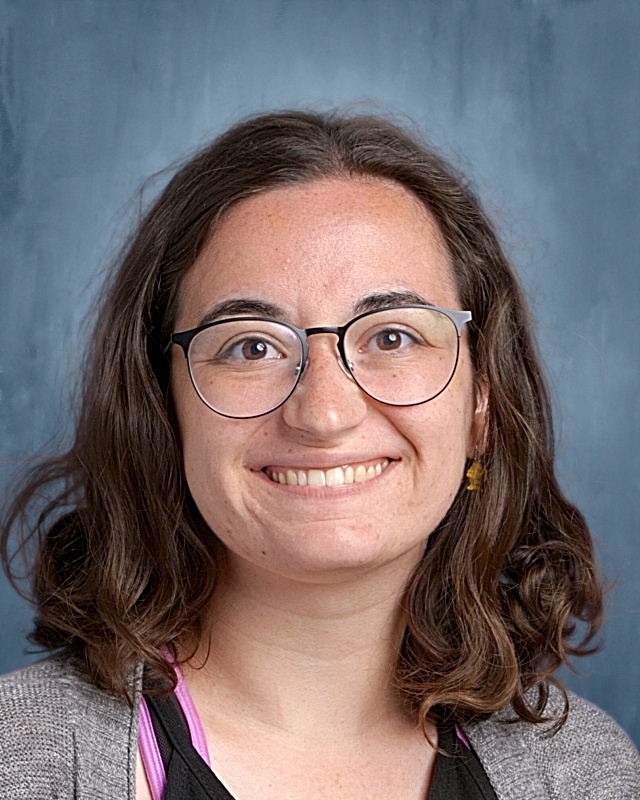
Ms. Atkins holds a master’s degree in Classics, specializing in the languages, cultures, and history of the ancient Mediterranean world. She is particularly fond of the Roman Empire, which has been her lifelong passion, and she can’t wait to introduce BASIS Independent Dublin students to her favorite Latin authors.
In addition to Latin, Ms. Atkins has a broad academic background. She studied ancient Greek as part of her master’s program, translating epic poems, religious texts, and slapstick comedy. Her bachelor’s degree is in history, and she is fascinated by the common humanity that people share across time and culture.
Are there any highlights you’d like to share about your teaching philosophy or approach?
My teaching approach emphasizes creativity and critical thinking. In Classics, my goal is for students to imagine history in fresh, complex ways, noticing the similarities between us and ancient people while also recognizing our significant differences. Students should expect to read and write quite a bit of historical fiction. They should also expect a variety of hands-on projects, such as grinding wheat and mummifying apples.
My approach to Latin is similarly focused on narrative, critical thinking, and historical reasoning. As the language of the ancient Roman Empire, Latin is the closest thing we have to a time machine because it allows students to understand ancient people on their own terms. Reading stories is the primary method of instruction, though I also include hands-on projects to visualize different aspects of Roman culture.
Latin education has traditionally focused on grammar — and I love grammar! However, I don’t simply give my students a textbook and expect them to regurgitate the rules. Instead, I prefer that students study a sentence as though it were a point of scientific data, then work backwards and investigate why, exactly, words are chosen, structured, and arranged in a particular way. This approach helps the students understand that grammar is meaningful, not an arbitrary collection of rules, and that every choice of word reveals something about the author.
After the first two years of Latin, students will have an advantage in many different academic and professional areas. As the origin of the modern Romance Languages, Latin is useful for studying Spanish, French, Italian, and Portuguese. Knowledge of Latin will also come in handy when learning medical terminology, legal jargon, and advanced English vocabulary. Finally, students will gain a broad understanding of European art and literature, which will enrich their lives no matter what career they pursue. Those who continue with Latin beyond the first two years will find these advantages multiplied even further as they explore advanced grammar, epic poetry, and ancient history.
What are some of the most rewarding parts of being a Subject Expert Teacher and working with BASIS Independent School students?
When I first began teaching at BASIS Independent Schools, I was consistently amazed at the students’ passion for learning. These are the type of kids who teach themselves pigpen cipher for fun and draw diagrams of Hannibal’s forces at Cannae. My students ask such thoughtful questions that I am always challenged to dig deeper into Latin and history.
Latin is a subject that I’d imagine can be daunting to students. What advice do you give to students to help them succeed in your class?
Latin is a language – the fact that it’s ancient doesn’t make it more difficult than Spanish, Hindi, French, Mandarin, or any other language still spoken today. In fact, since Latin focuses on reading more than speaking, it may come more naturally to students who enjoy solving puzzles and express themselves best in writing.
To succeed in Latin, students should pay attention, take notes, do their homework, and take advantage of my office hours – the same good study habits that help in any class. However, learning a language does present some unique challenges. I recommend that students review vocabulary often. They should also make sure that they know how to conjugate verbs and decline nouns, which I explain in depth during class.
Are there any thoughts you’d like to share with families who are joining – or who are thinking of joining – the BASIS Independent Dublin community?
If you’re joining the BASIS Independent Dublin community, then welcome! Meeting new students is one of my greatest joys every Fall and I can’t wait to see how we will all grow over the course of the year.
If you’re thinking about joining BASIS Independent Dublin, then I would love to connect with you during one of our open house events! There, you can get a tour of the school, ask questions about our curriculum, and get a feeling for our school culture.
BASIS Independent Dublin is a Grades 5 – 12 private school, providing students with an internationally benchmarked liberal arts and sciences curriculum, with advanced STEM offerings. Considering joining the BASIS Independent Dublin community? To join our interest list for the next school year and receive admissions updates and more, please click here.