May 22, 2026
At BASIS Independent Bellevue, science comes to life through hands-on experiments, collaborative projects, and engaging investigations that encourage students to think critically and creatively. Across every division, from Primary School to High School, students are actively exploring the world around them in a variety of capacities.
Primary School: Building Curiosity Through Exploration
In Primary School, students are introduced to the wonders of science and engineering through engaging, project-based learning experiences. Throughout the primary years students deepen their knowledge of essential science concepts while teachers inspire a sense of wonder and excitement about the natural world, encouraging them to see themselves as young scientists ready to explore and discover.
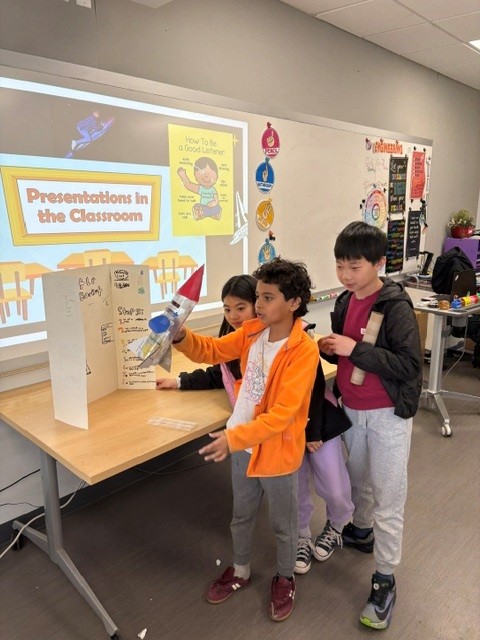
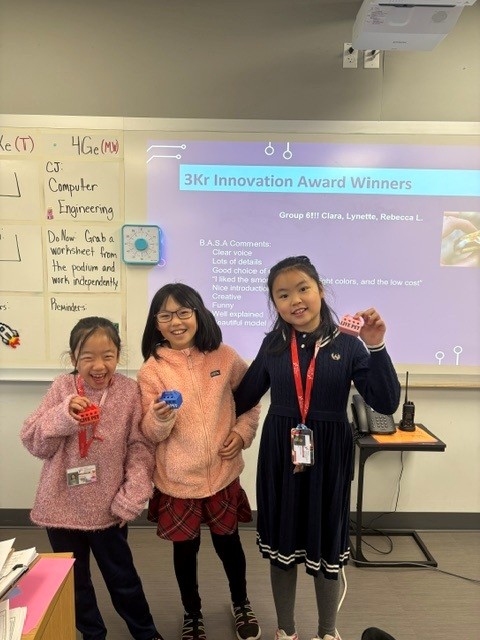
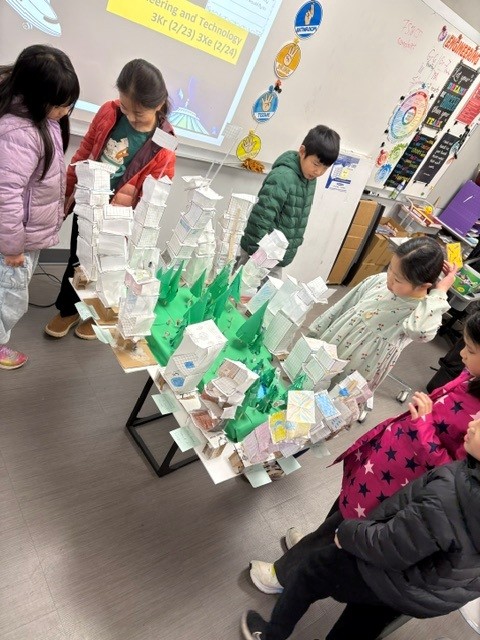
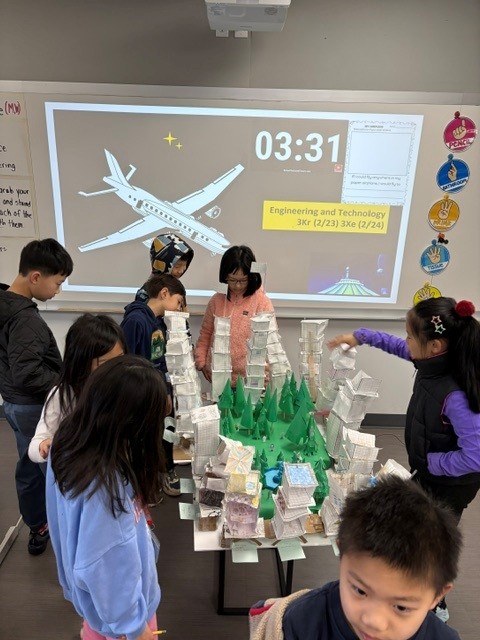
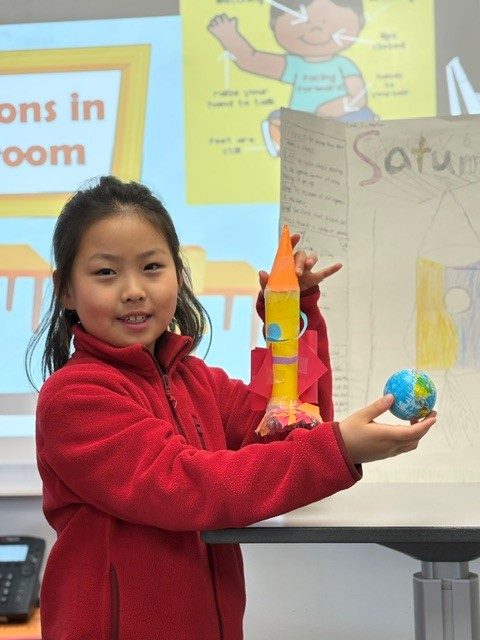
In engineering classes, students explored various aspects of STEAM through units on civil and aerospace engineering. During the civil engineering unit, students worked collaboratively to design free-standing paper skyscrapers and environmentally informed cities centered around green spaces. In aerospace engineering, students designed rockets inspired by the Artemis II launch. During presentations, the BASIS Aeronautics Space Administration (B.A.S.A.) voted on the most innovative rocket design, with one winning all-girls team, impressing classmates by designing a rocket capable of cooking s’mores for astronauts during takeoff.
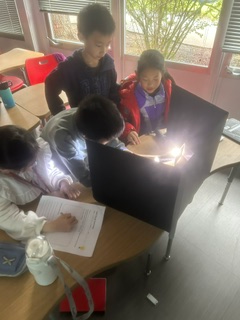
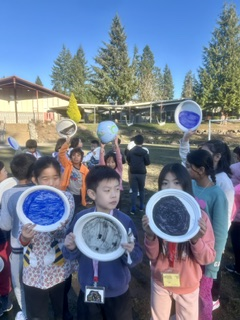
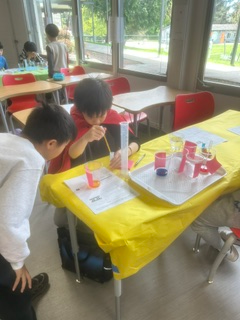
Students also participated in several exciting scientific investigations throughout the year. During a month-long moon phase project, students observed and documented the moon each night in moon journals before reenacting the positions of the Earth, moon, and sun to better understand lunar phases. Students also explored light energy through learning centers focused on how light travels and reflects off surfaces. Another favorite activity came during the measurement unit, where students practiced measuring liquids and following detailed lab instructions. If completed correctly, the experiment resulted in a colorful rainbow, making science both educational and exciting.
Middle School: Applying Science Through Hands-on Learning
Middle School students take scientific exploration to the next level through challenging labs, engineering projects, and interactive investigations. From grade 6–grade 8 students take three separate, concurrent science classes, biology, chemistry, and physics.
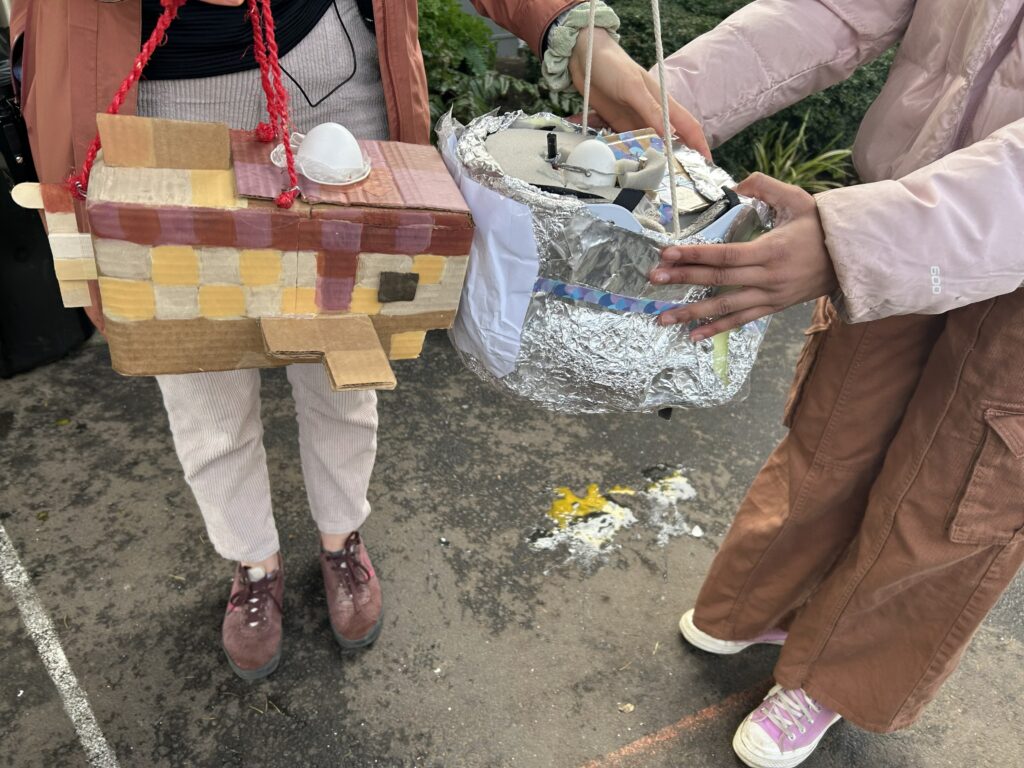
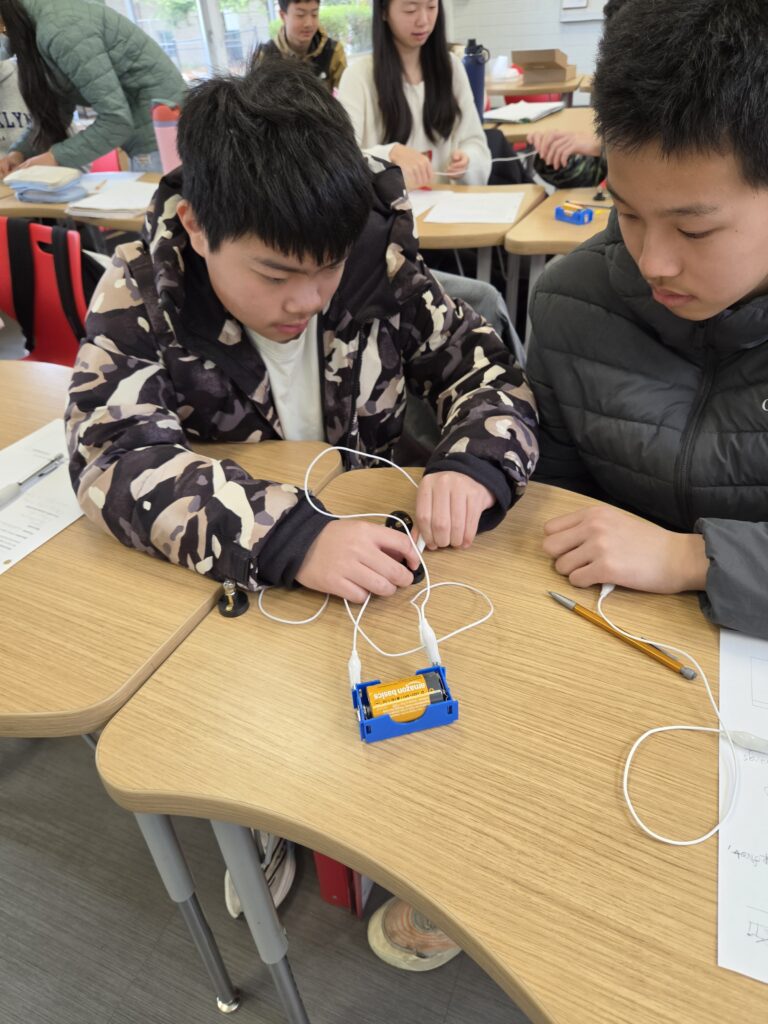
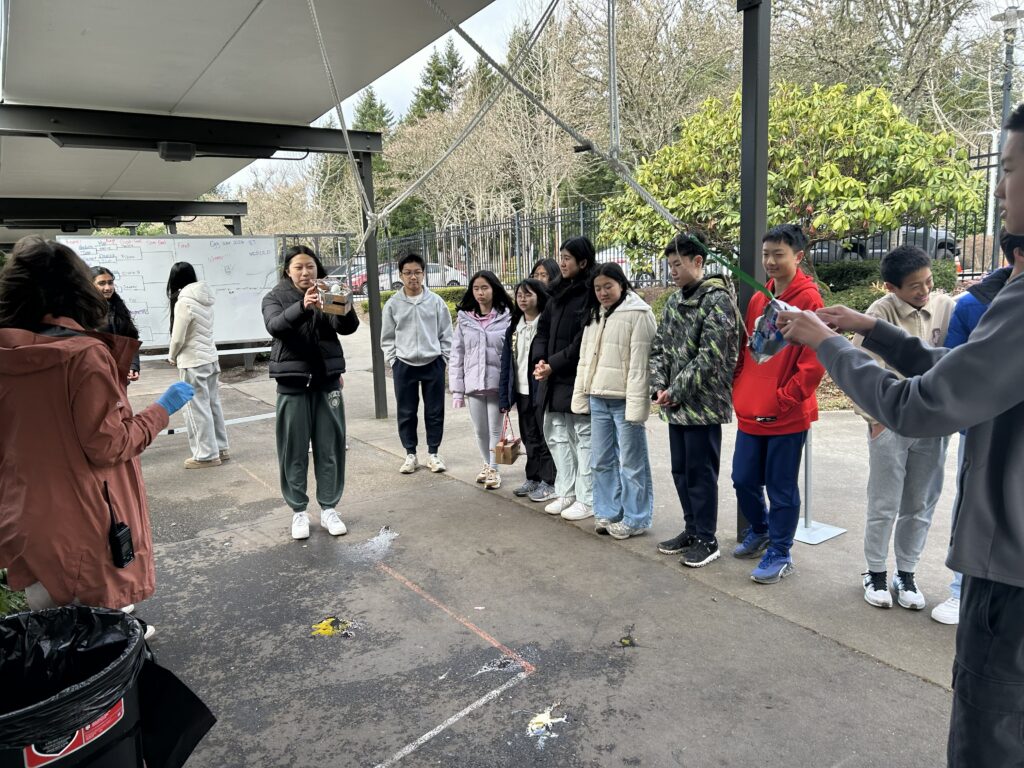
In physics classes, students participated in the “Egg War,” where they applied concepts such as Newton’s Laws, momentum, impulse, and kinematics to design vehicles capable of protecting an egg during a head-on collision. Students also explored electricity by building a variety of circuits using batteries, wires, and light bulbs, gaining firsthand experience with electrical systems and experimentation.
Engineering electives have also provided students with opportunities to collaborate and innovate. In grade 6 Introduction to Engineering, students worked together to build and code robots capable of competing in friendly robot battles. Through this project, students strengthened their skills in coding, construction, teamwork, and problem-solving.
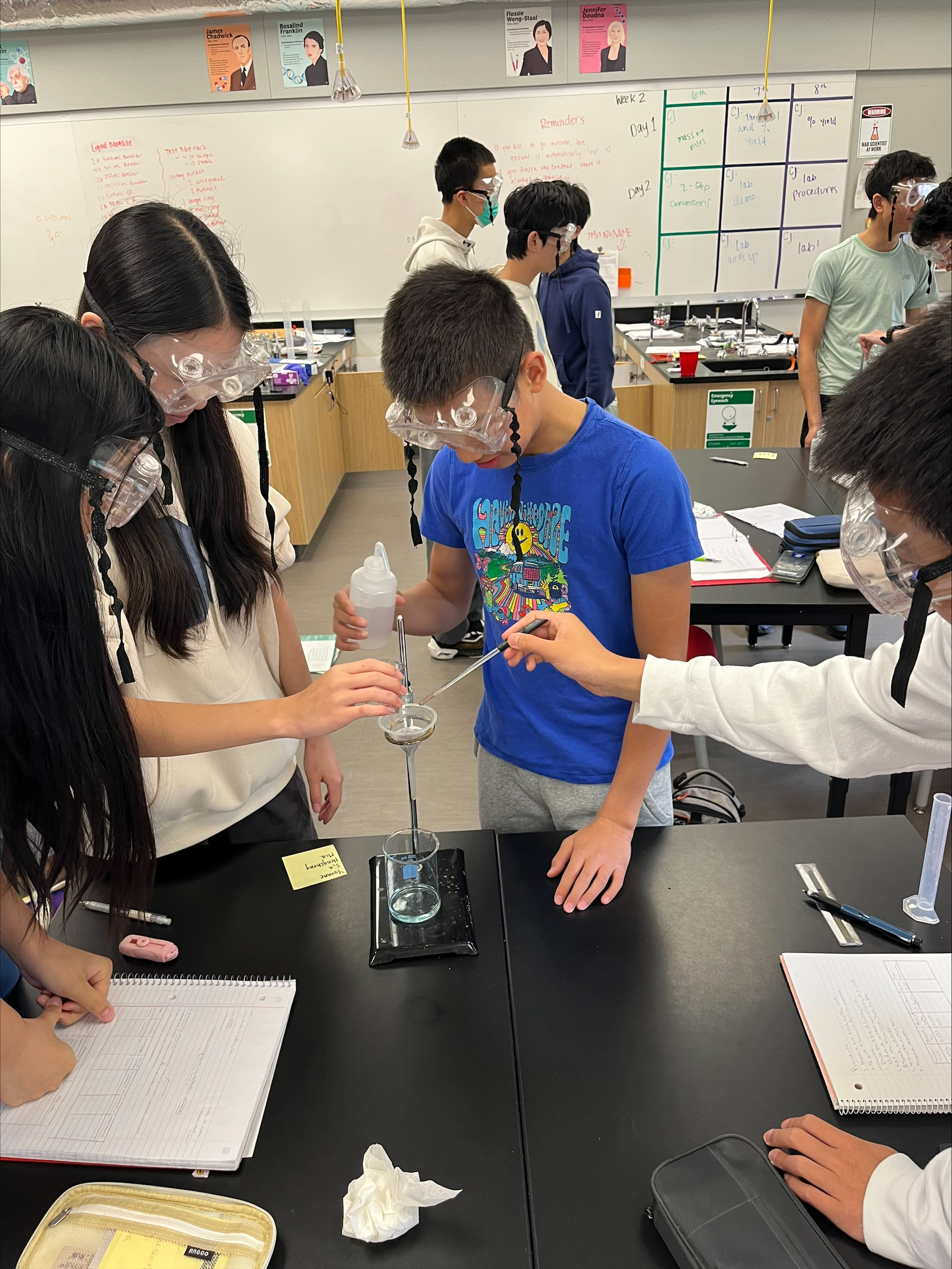
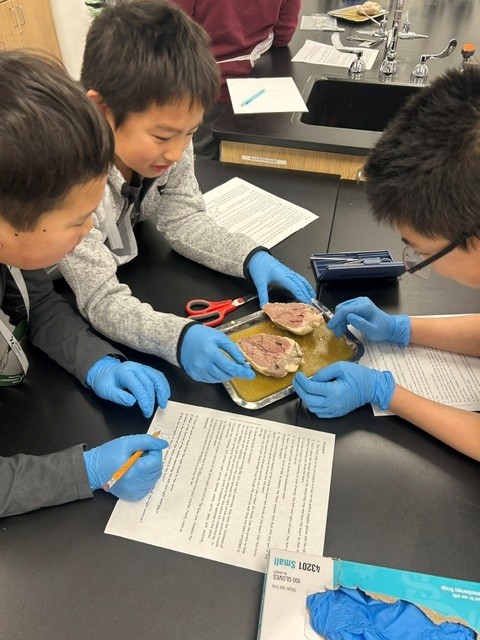
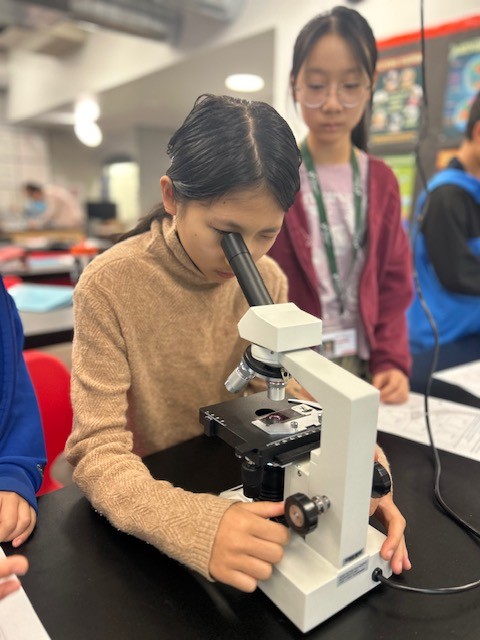
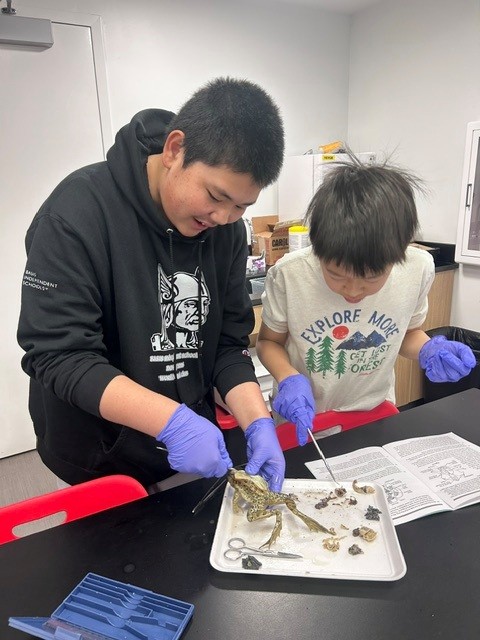
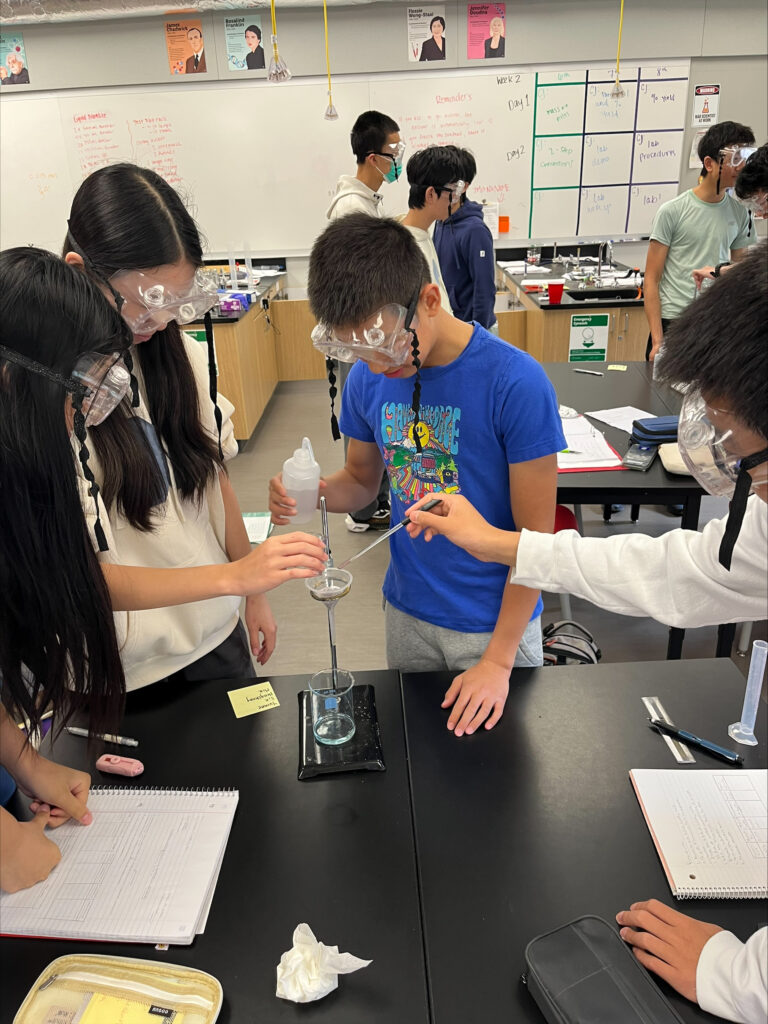
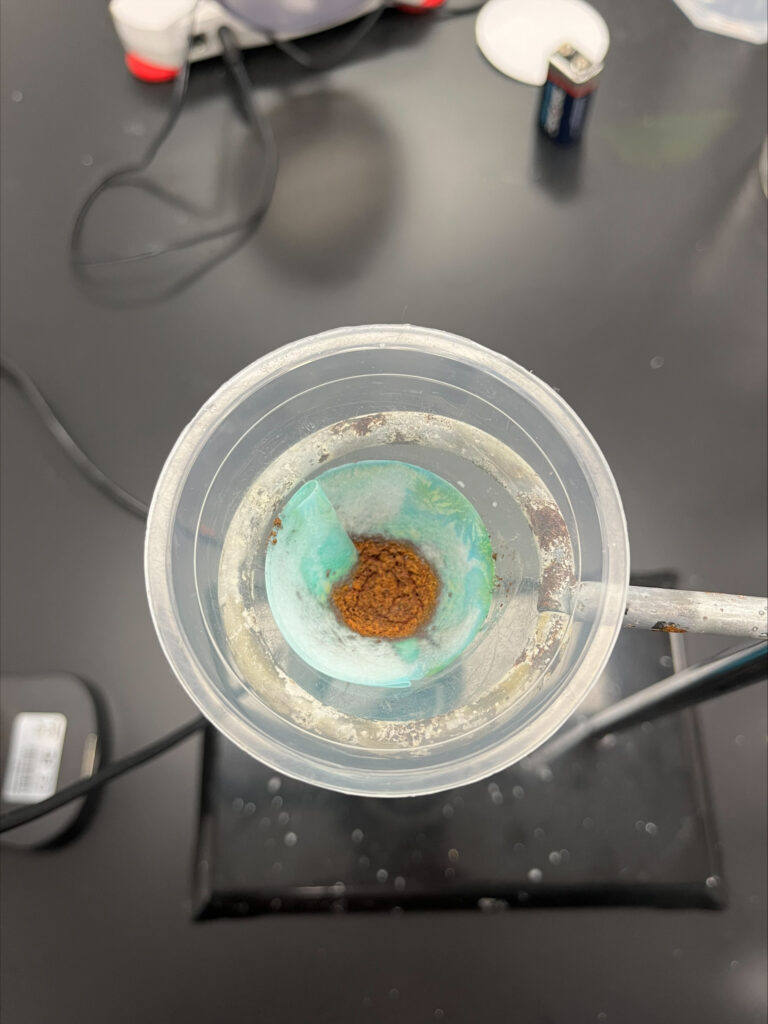
Middle School chemistry students recently completed a stoichiometry lab involving a single replacement reaction between Copper (II) Sulfate and Aluminum. Students calculated theoretical yields, conducted the reaction, and analyzed their percent yield based on the copper produced. Biology students have also immersed themselves in the study of anatomy and life sciences through a variety of dissections, including cow hearts, cow eyes, frogs, and owl pellets. In addition, students explored the microscopic world by using microscopes to observe tissues, organisms, and cellular structures.
High School: Connecting Theory to Real-World Science
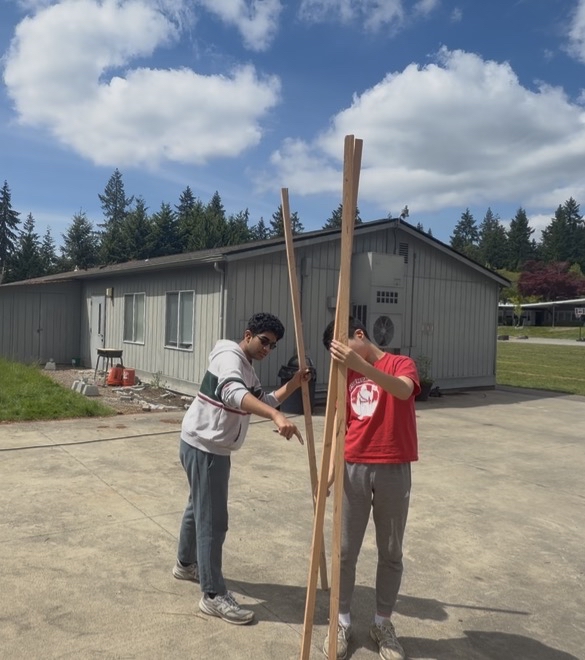
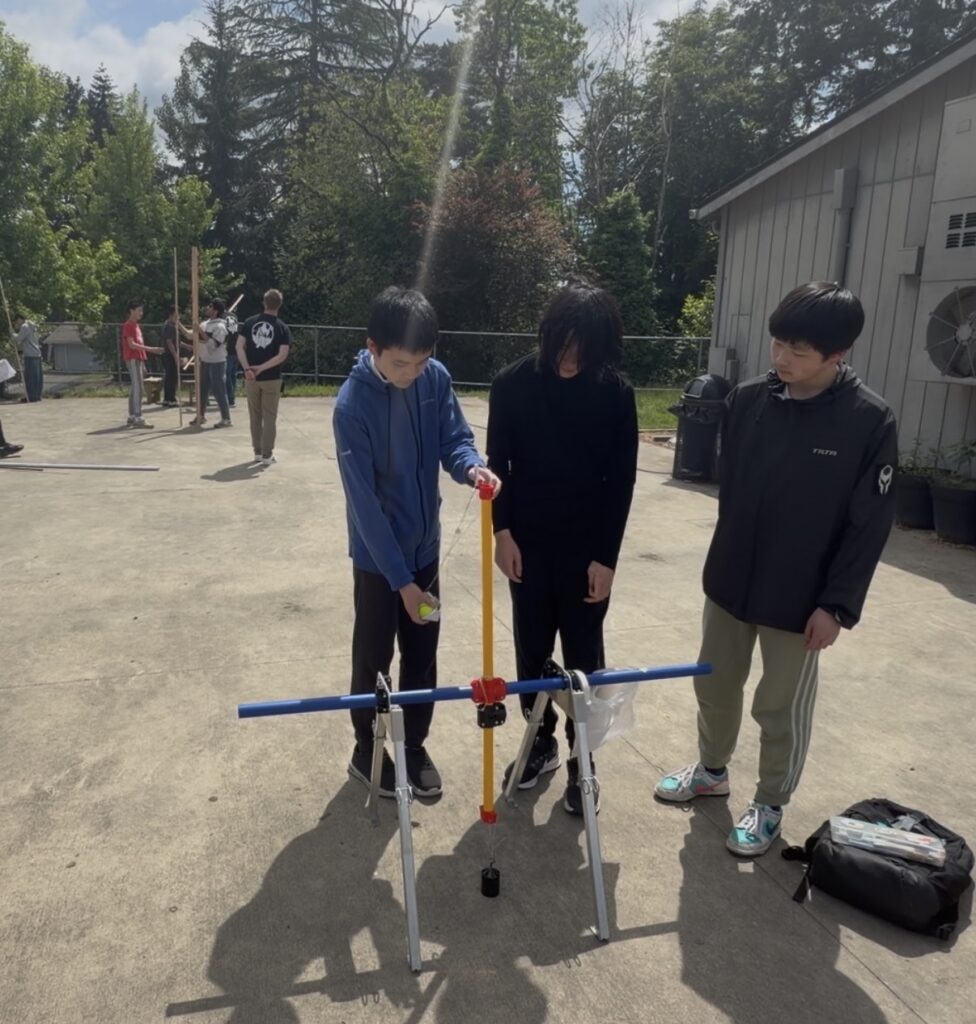
In high school science courses, students deepen their understanding of scientific concepts through advanced laboratory experiences and independent inquiry. In AP Physics 2, students conducted a capacitance lab in which they built parallel-plate capacitors using aluminum foil and textbooks. By testing how effectively paper functioned as a dielectric material, students were able to apply classroom equations to real-world experimentation and engineering design. In AP Physics 1, students got to build model trebuchets, a medieval siege engine powered by a counterweight. They explored the forces and torques acting on the system and how their design choices affected the range and accuracy of their models.
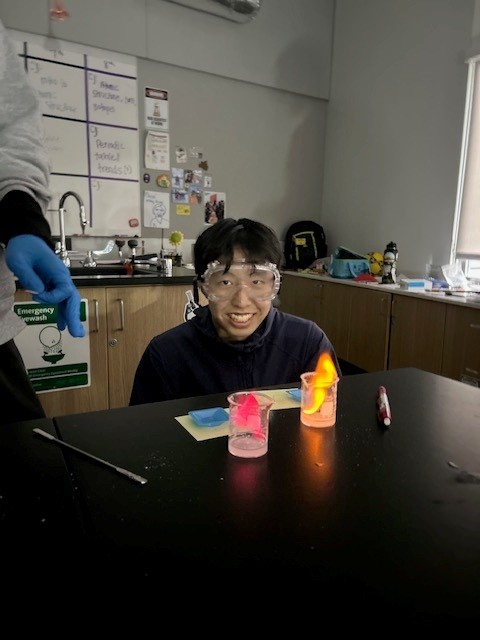
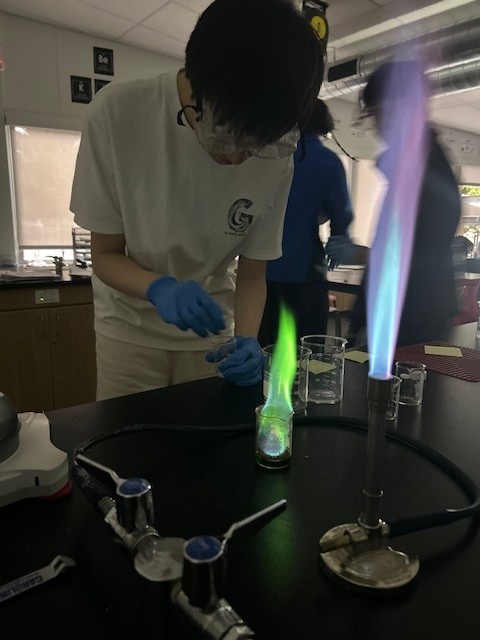
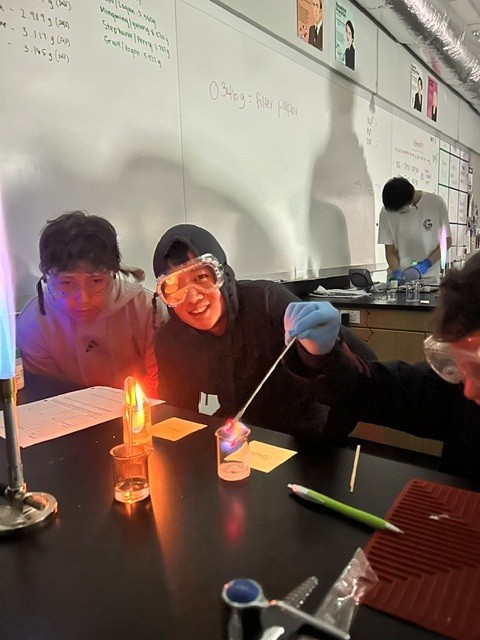
Honors and AP Chemistry students have also engaged in a wide variety of labs throughout the year, including titrations, acids and bases investigations, and experimental procedure design. Students are often challenged to create their own methods for achieving a scientific goal using only a provided set of materials, encouraging creativity and critical thinking in the lab. But what is the fun in chemistry without some fire? One particularly memorable experiment involved testing metals in flames to demonstrate properties of matter. By combining alcohol with different salts, students produced brilliantly colored flames that brought chemistry concepts vividly to life!
From designing rockets and building robots to conducting advanced chemistry and physics experiments, students across all grade levels are discovering that science is more than just a subject. It is an opportunity to explore, create, and innovate. Through these engaging lab experiences, our students continue to develop the problem-solving skills that will assist them in their future endeavors.