
Week 1: Introduction + Background
March 4, 2026
Hey everyone! I’m Michelle and welcome to my first blog post! For my senior project, I aspire to create an affordable, wireless, IMU-sensor-based wearable system which tennis players can use to improve their swing.
Tennis can be a rather expensive sport for many people to get into, and coaching lessons are getting more and more expensive by the second. I wondered if I could alleviate this problem by making a somewhat “24-7” available coach to many kids. After researching affordable sensor options, I discovered WitMotion IMU sensors. I placed a bulk order, and once they arrived, I started experimenting with them and quickly saw opportunities to expand the project further.
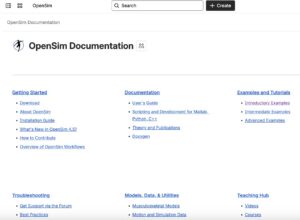
Through utilizing tools already available on the internet such as the Stanford OpenSim software, I hope to use the features of the software (specifically the scaling, inverse dynamics, and inverse kinematics tools) to develop an interface which the user can upload their own swing data captured by the IMU sensors into the software and compare it with motion with one of a high-level tennis player’s to identify the areas in which they can improve their swing.
This first week, I conducted background research on existing products and performed a literature review on tennis sensor technologies. Although many current options provide valuable feedback, a lot of them are either impractical to wear during match play or extremely expensive. There are also numerous video-based analysis tools, but inconsistent camera angles can lead to perspective errors and less accurate biomechanical feedback. By using WitMotion sensors, I hope to address these issues by developing a wireless device that emphasizes practicality, affordability, and improved motion accuracy.
Then, through the online tutorials provided by the Stanford OpenSim software, I learned how to operate and navigate the main tools I’ll need for my project—specifically inverse dynamics, kinematics, and scaling. I also experimented with the WitMotion sensors, testing movement in multiple directions to better understand how the data is recorded and formatted. In addition, I organized previously collected tennis swing data from my friends and me into structured folders for easier analysis.
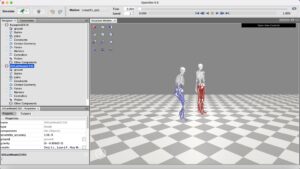
My next step is to figure out how to properly format and input my sensor data into the software so I can generate a visual model of my swing. Currently, the Stanford OpenSim software is primarily designed to accept data from more expensive, research-grade sensors, so I will need to adapt and convert my WitMotion data into a compatible format before I can run a full analysis. See everyone in Week 2!
Reader Interactions
Comments
Leave a Reply
You must be logged in to post a comment.
Hi Michelle! I’m very excited to follow your project and see how you end up tying tennis and tech together. I was just wondering about how you’ll decide which high-level tennis player’s swing to choose. Since everyone’s anatomy is different, how will you objectively decide which professional player has the most standard swing, or will you be choosing multiple players to compare against?
Hi Chloe, great question! For the high-level tennis player’s, I was thinking of tracking down some of my fellow top NorCal tennis players and record their data, as it would be quite hard to actually get a professional down here and try my device 😅. I would gather a good number of player’s data so people have many options for which swing they would like to compare theirs to! Like you said, everyone does have different mechanics, so finding the “best” technique for each individual does take some trial-and-error! But overall, I think the general mechanics of each person would have some similarities (e.g. hip turns, body weight moving forward into the shot), so even if people compare it to a player’s swing that’s slightly different, they can still learn something! This device is mainly used for beginners so I’m hoping that my program is able to generate some more general tips that are applicable to a lot of people! 😊
Your project sounds really interesting! As someone who plays tennis, I think this is such a creative route of transforming typical lessons that involve swing analysis into a more affordable, long-term, and accessible solution for players. I’m excited to see your final product!