June 5, 2026
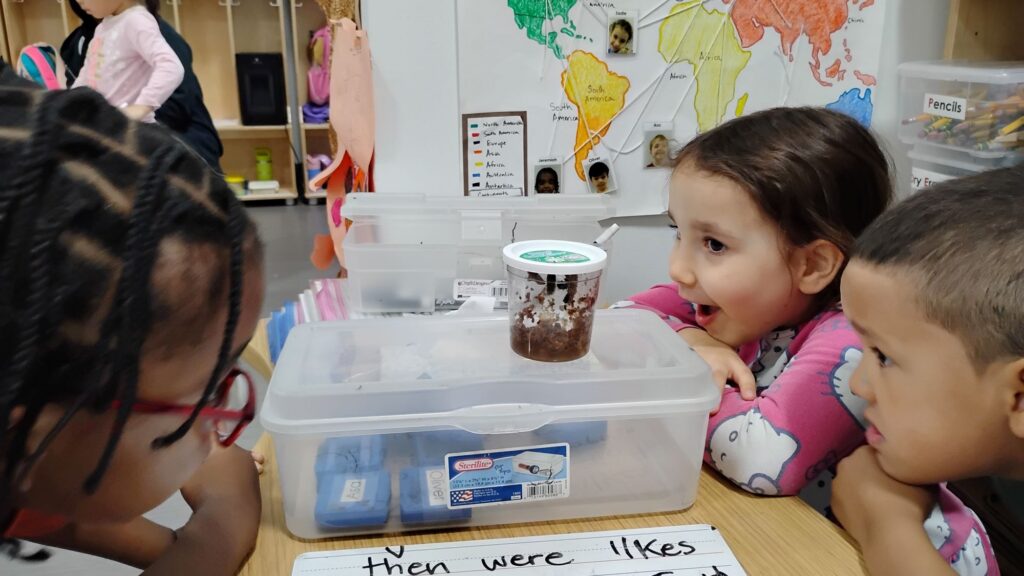
There’s a moment that happens every spring in our Lower School classrooms when a hush falls over a group of young Cubs as they peer into a glass container and watch, with wide eyes, as something that was once a tiny egg or a wriggling larva becomes something entirely different. It’s the kind of moment no worksheet or video can replicate.
That’s exactly why, for several weeks each spring, our Lower School dedicates itself to one of science’s most wondrous stories: the life cycle.
“In an urban environment where kids don’t get as much exposure on a day-to-day basis to nature, anything we can do to bring the natural world to life for students is really important,” commented Head of the Lower School Ms. Miller-Sims. “When you can put a living creature in front of them and observe the life cycle from the beginning, you just see it light up in their eyes in a completely different way than learning about it on a screen, or learning about it in a textbook, or talking about it through a discussion in class. Those moments are just so pivotal, because it is what the children will remember and constantly go back to, even as they age, remembering these foundational experiences.”
Engaging, Experiential Learning
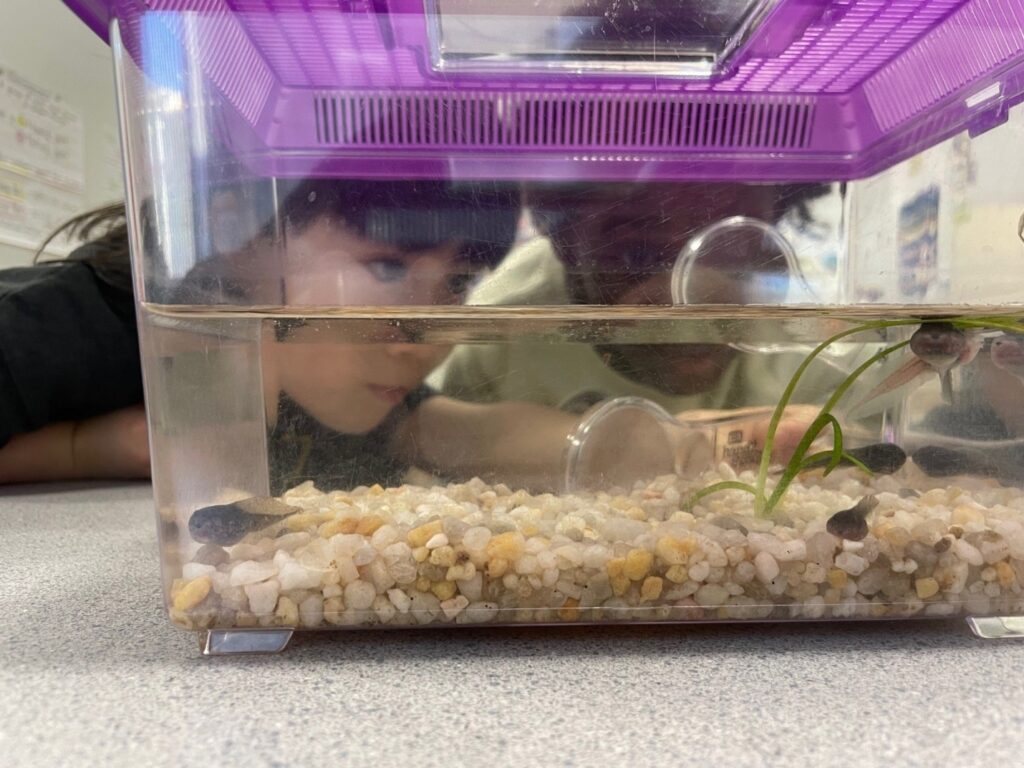
From PreK through Grade 2, our students don’t just read about how living things grow and change; they witness it. Each year, our campus becomes a living science lab as we welcome a carefully chosen cast of creatures: caterpillars that spin themselves into chrysalises, tadpoles paddling in tanks, ladybug larvae inching along leaves, and eggs nestled in a warm incubator, waiting to hatch.
The goal isn’t just to teach biology. It’s to give children a visceral, unforgettable understanding of transformation, and allow them to see that living things change, grow, and become something new, right in front of their eyes.
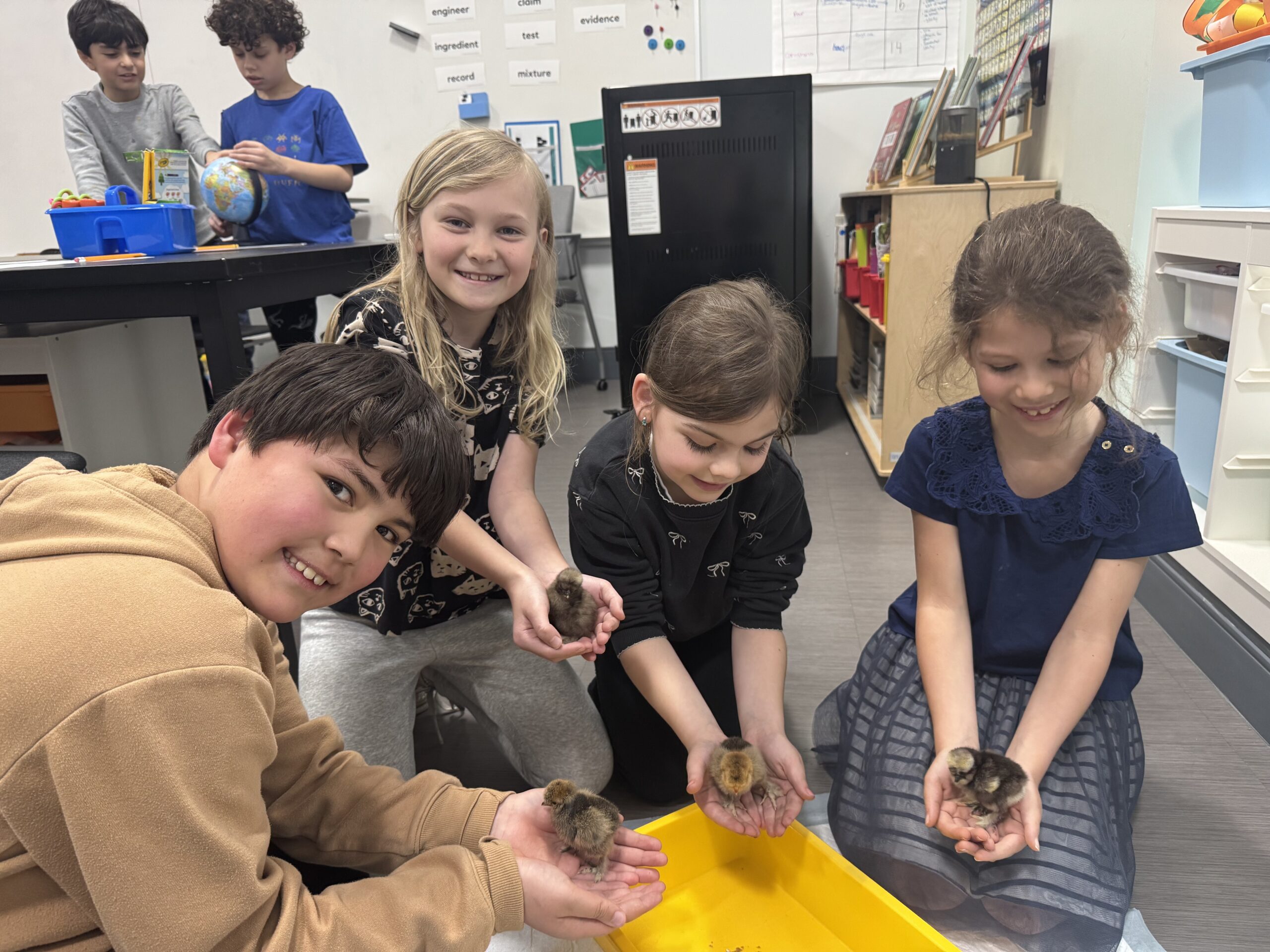
“When students see something happening in real time, they really learn the best that way,” stated Grade 2 Math and Science Subject Expert Teacher Ms. Witherspoon. “When we have our eggs in our incubator, they can see how they are growing inside. Yes, we have a chart where they can see inside the egg. It’s different when you see it day by day. Once the chicks hatch, they can see how fast they may grow, or that not all chicks are yellow, learning about different colors and different breeds. The joy on their faces when they learn something and see it in person is just really unforgettable.”
Why Hands-On Learning Matters
Young children learn best when they can touch, observe, and wonder. Watching a tadpole sprout tiny legs over the course of a week is a lesson in patience, curiosity, and scientific observation all at once. Checking on a tray of eggs each morning teaches children to look closely for details, to notice small changes, and to ask questions. When a chrysalis finally opens, the room fills with a kind of collective awe that’s impossible to manufacture and impossible to forget.
“The whole school gets involved by the time our chicks are hatching,” said Ms. Witherspoon. “I get parents, all the time, sharing that they are learning just as much as their children are learning. It’s great just to see from our littlest ones in the PreK classrooms to our oldest ones in Grade 2 how they are all just curious at the end of the day.”
These experiences also build a foundation for scientific thinking that will serve our Cubs for years to come. They begin to understand that nature operates on its own timeline, that change is a process, and that the world is full of living things undergoing their own remarkable journeys.
The Lineup This Spring
Each creature we bring to campus represents a different kind of life cycle story:
Caterpillars to chrysalises to butterflies: Students observe the transformation from larva to winged insect, learning about metamorphosis up close.
Tadpoles: The classic frog life cycle unfolds in a classroom tank, day by day.
Ladybug larvae: These spotted favorites go through a dramatic transformation that surprises even the adults in the room.
Chick eggs: Perhaps the most anticipated of all, children gather around the incubator and wait (and wait and wait) for the first signs of hatching. “Chick watch” is the term we use, and this year, Ms. Witherspoon helped welcome the great-grand chicks of the first chicks hatched in her classroom three years ago!
A Tradition Worth Protecting
In an age of screens and simulations, there’s something quietly radical about putting a living creature in a child’s classroom and saying: watch what happens. Our Lower School’s life cycle unit is one of those rare school experiences that students carry with them long after the school year ends- the spring they saw a chick hatch, the morning they noticed the tadpole had legs.
We’re proud to offer our Cubs this window into the natural world, and we are committed to nurturing their curiosity in such engaging ways for years to come.