
Week 4: Practice Makes Perfect
March 23, 2026
For decades, aspiring professionals have been buzzing about training with the best ballet academies in Eastern Europe. But what makes Russian ballet so elite?
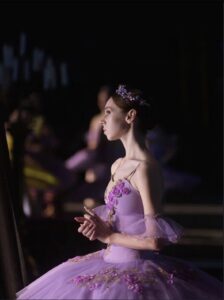
I interviewed Anna Maria Myachina, VBA Class of 2022 graduate and professional at the Astrakhan State Theatre, a couple days ago. Myachina used her own experience to talk about the elements of Russian ballet that don’t make the highlight reel. Dancers live in a reality where they aren’t just taught to dance; they’re bullied into becoming the best.
Beauty is Pain
We see this phenomenon quite often with Russian art—the belief that suffering is a necessary evil for greatness. Russian literature like Crime and Punishment or The Brothers Karamazov is notorious for not having happy endings. More often than not, both the author and characters of the book suffer to reach genius. Gold medals are almost expected from elite gymnastics and ice skating at every Olympic appearance, but coaches constantly push athletes to their limit. Take, for example, composers like Dmitri Shostakovich. His music is famous for the heavy, “dark” sound of his orchestras; Shostakovich composed during Stalin’s totalitarian regime, living in constant fear of arrest or execution. Notice the common denominator: “elite” is a status earned through literal blood, toil, sweat, and tears.
This mindset of greatness through grit is exactly what distinguishes VBA from other academies. What Myachina describes as the distinguishing factor of Russian ballet is essentially its toxicity. Rather than focusing solely on technique or production, it seems to almost manufacture the best dancers through a survival-of-the-fittest training system.
Artistry in Words
In a country as diverse as the United States, the Russian training system indubitably produces different results. Myachina herself recalls her gymnastics coach getting fired for being “too strict” when she was still in the U.S. As you can imagine, that would never happen in Russia.
Consequently, Russian teachers sanitize how they deliver their messages. Their feedback to students is often the same as it would be in Russia—they just have to get more creative with the insults. They might say “I can see your lunch” as an alternative for “you’re fat.” Can you imagine which would be more problematic in the United States?
Works Cited
Anna Maria Myachina [@anna.myachina]. “Sleeping Beauty – Lilac Corps (or the first dance in a marathon of a ballet” Instagram, 6 October 2025. https://www.instagram.com/p/DPeHjydDrD2/?igsh=NTc4MTIwNjQ2YQ==.
Leave a Reply
You must be logged in to post a comment.