
Week 8: Child's Play
April 20, 2026
I bet you’ve heard the saying “if you think you’re good at something, there’s always a child doing it better than you.” But for ballet dancers, the case is generally a ten-year-old ten times more flexible, strong, and disciplined. And, shockingly, said child isn’t always Russian… but sometimes Asian?
The Proxy Prodigy
Believe it or not, the Vaganova Ballet Academy actually has a YouTube channel. Their page has several videos of selection processes, ballet evaluations, and rehearsal clips.
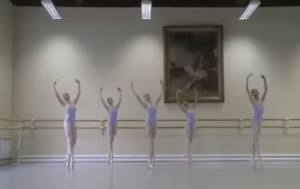
The Russian government has officially blocked YouTube because of its refusal to remove illegal content. Ironically, it seems they’ve made an exception for VBA to continue flexing their superior ballet training. We all feel a sense of deprivation when we see other people outperforming us in our specialty—that feeling is only magnified tenfold when we realize said virtuosos are children. Perhaps that shame in our own performance translates to forced admiration for those better than us, a subtle way of making the entire world look up to an otherwise politically hated Russia.
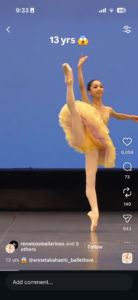
In part, Asian countries have adopted the Russian teaching methods. Primarily seen with Japan welcoming Russian choreographers and pedagogy in the twentieth century (Russian Ballet and Japan), Asian countries have integrated ballet into their own culture. Notable examples include the Tokyo Ballet in Japan, Beijing Dance Academy in China, and Asia Ballet Academy in Malaysia. Both Eastern European and Asian cultures value early talent identification, dedication, and hard work; all three of which make up an almost perfect formula for an exceptional ballet dancer. Some Asian states (e.g. China and South Korea) sponsor ballet education and give generous scholarships for students of the arts. Much like Russian schools, the selection process is intense and young children are subject to extreme stress and physical exertion. Parents are willing to send their kids to these rigorous academies in hopes for social mobility and stability.
Age Is Just a Number (of Turns)
We have already established that Russian dancers are essentially bullied into being the best. The same applies to Asian dancers in classical dance companies that have adopted the Vaganova method. But the bullying extends far beyond dancers in their own countries; recreational dancers, particularly in the Western hemisphere, are completely awed by such young talent. Consequently, we find ourselves unable to look away from the technical perfection of the child prodigy. Long live the “artistic authority” of Russian theaters that override our moral or political critiques of the systems that created it.
So, the blueprint moves southeast. Elements of Eastern Europe’s classical dance culture are what make several Asian countries excel in performing arts today. And, for the untalented Americans who can’t do twenty turns by age twelve, these kids on social media serve as a masterclass in humbling yourself. Just remember: there is always a child in Asia or Russia doing your life’s passion better than you.
Works Cited
“Russian Ballet and Japan – from First Ballet School to Close Friendship with the Bolshoi Ballet Academy.” Moscow State Academy of Choreography, 15 Jan. 2021, https://en.balletacademy.ru/media/news-events/russian-ballet-and-japan-from-first-ballet-school-to-close-friendship-with-the-bolshoi-ballet-academ/.
Hernández, Javier C. “‘Princes Can Be Asian, Too’: A Dancer Breaks Barriers in Ballet.” The New York Times, 28 Jul. 2022, https://www.nytimes.com/2022/07/28/arts/dance/chun-wai-chan-new-york-city-ballet.html.
Só Bailarinos [@renatosobailarinos] “13 yrs 😱 @annetakahashi_balletlove” Instagram, 15 Apr. 2026, https://www.instagram.com/reel/DXKaA1QCVAf/?igsh=NTc4MTIwNjQ2YQ==.
Vaganova Academy, “Classical Dance Exam, Vagnova Ballet Academy (5/9), December 2015.” YouTube, 22 Dec. 2025, https://www.youtube.com/watch?v=ozyczQLCBVM&t=849s.
Leave a Reply
You must be logged in to post a comment.