
Week 4: First Bump in the Road...
March 25, 2026
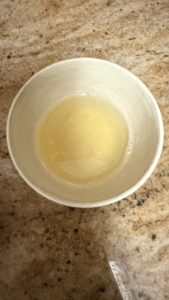
Hey everyone! As the title of the blog post would suggest, I have encountered the first bump in the road: making gelatin hydrogels, or at least getting them to simulate different “hydration levels.” The process of making hydrogels was actually pretty easy: I mixed store-bought gelatin powder with water, warmed it up, stirred until the gelatin was dissolved, and then poured the solution into molds to cool and solidify. After letting them sit at room temperature, I was able to get stable, flexible gel samples that looked and felt similar to soft tissue:
Originally, I thought that I could simulate different hydration levels by simply changing the temperature of the gelatin. The idea was that heating the gel could make it “less hydrated,” and cooling it could make it “more hydrated,” since I could be using my temperature sensors as indicators of dehydration as well. However, when I tested this, it didn’t work the way I expected. While the temperature changes affected the surface, they didn’t change the actual water content inside the gel. The gelatin stayed at basically the same hydration level regardless of temperature when measuring with the temperature sensor. This is a big problem because my device is meant to detect dehydration, and I needed clear differences in hydration levels to test it properly.
So instead, I decided not to focus too much on the temperature of the gelatin, and instead focus on the amount of water present in the gelatin hydrogels by making multiple gelatin samples with different water-to-gelatin ratios, which essentially made some “more hydrated” than others. I haven’t gotten down to which different gelatin-to-water ratios I will be using yet, since most of what I was doing was experimental to see if I could get clear differences between the samples. But I will include my different ratios in the next blog. I also plan on leaving some samples exposed to air to allow for evaporation, which will gradually reduce the samples’ water content and simulate dehydration over time. This approach will work better since it will create real, measurable differences in hydration levels.
In addition to testing on hydrogels, I am also planning on doing some self-testing. Based on two research studies, the elbow region is one of the most reliable areas for detecting hydration changes because of its skin properties and consistent signal readings. I will place my sensors on my elbow and record data with my Arduino setup.
Even though my first idea didn’t work, this process helped me better understand both my materials and sensors. Instead of focusing too much on trying to simulate temperature readings, I now have another way to simulate dehydration as a whole. Combining this with self-testing, in the future, gives me a stronger foundation for improving my device. Next week, I plan on building a data recording system by writing code/creating a platform that logs sensor readings over time, so I can collect and analyze trends. I will also get down my gelatin-to-water ratios and use my device on them to start data collection. See you guys in the next one!
Leave a Reply
You must be logged in to post a comment.