At BASIS Independent Manhattan, we believe that strong parent-teacher partnerships are essential to student success. Our dedicated teachers are passionate about providing a nurturing and supportive learning environment and are committed to open communication and collaboration with parents.
In this blog post, our teachers offer experiential advice on how to start the school year off right. Building lasting relationships is possible with these top three tips for parents of students at any age:
Attend events
Reach out
Meet in person
Tips for Parents: Start Strong with Effective Communication from Day One
Attend back-to-school events to establish initial connections with teachers.
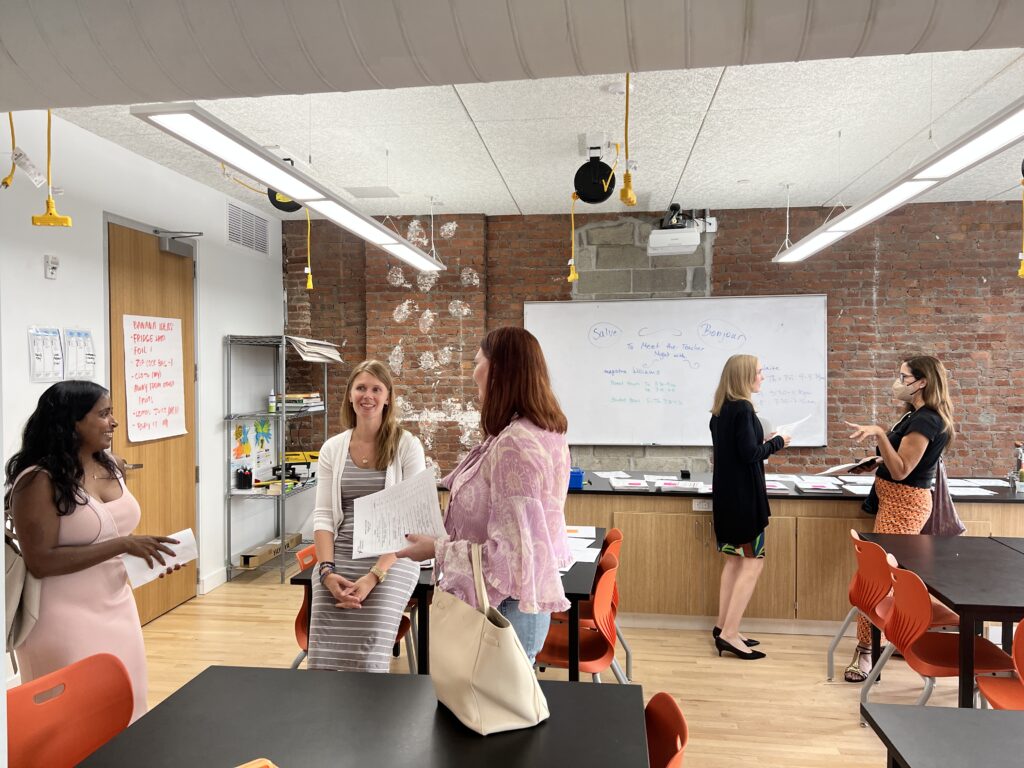
At the start of the year, we emphasize relationship-building within our Wildcat community! In addition to Meet the Teacher nights, we also have welcome-back carnivals at both the Upper and Lower Schools for socializing in a relaxed atmosphere.
Attending parent events has been a game-changer for me. It’s great to get to know parents and build a personal connection. This has really strengthened my relationships with families and helped me better support their children.
Mr. Smith Visual Arts SET, Upper School
0
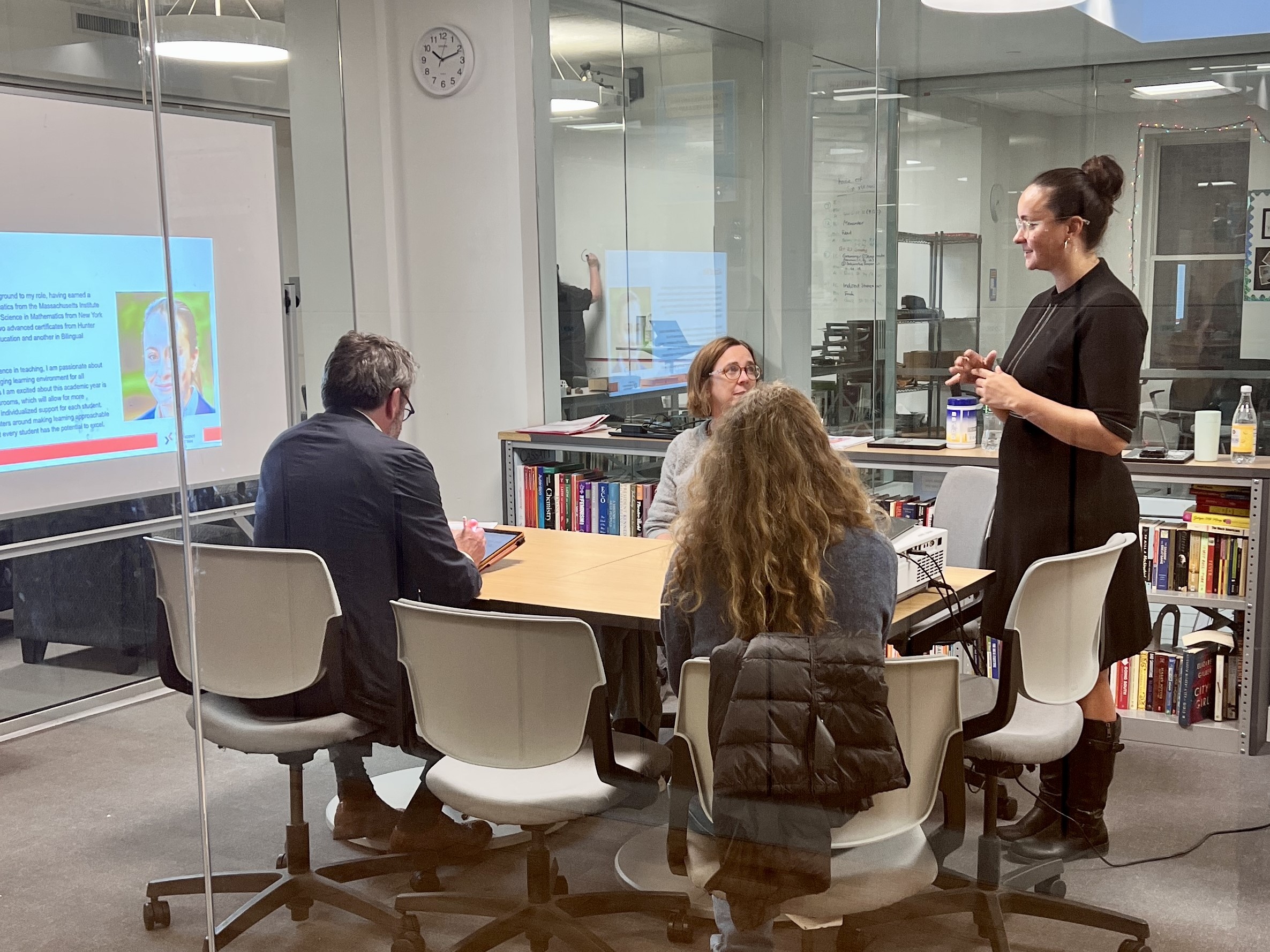
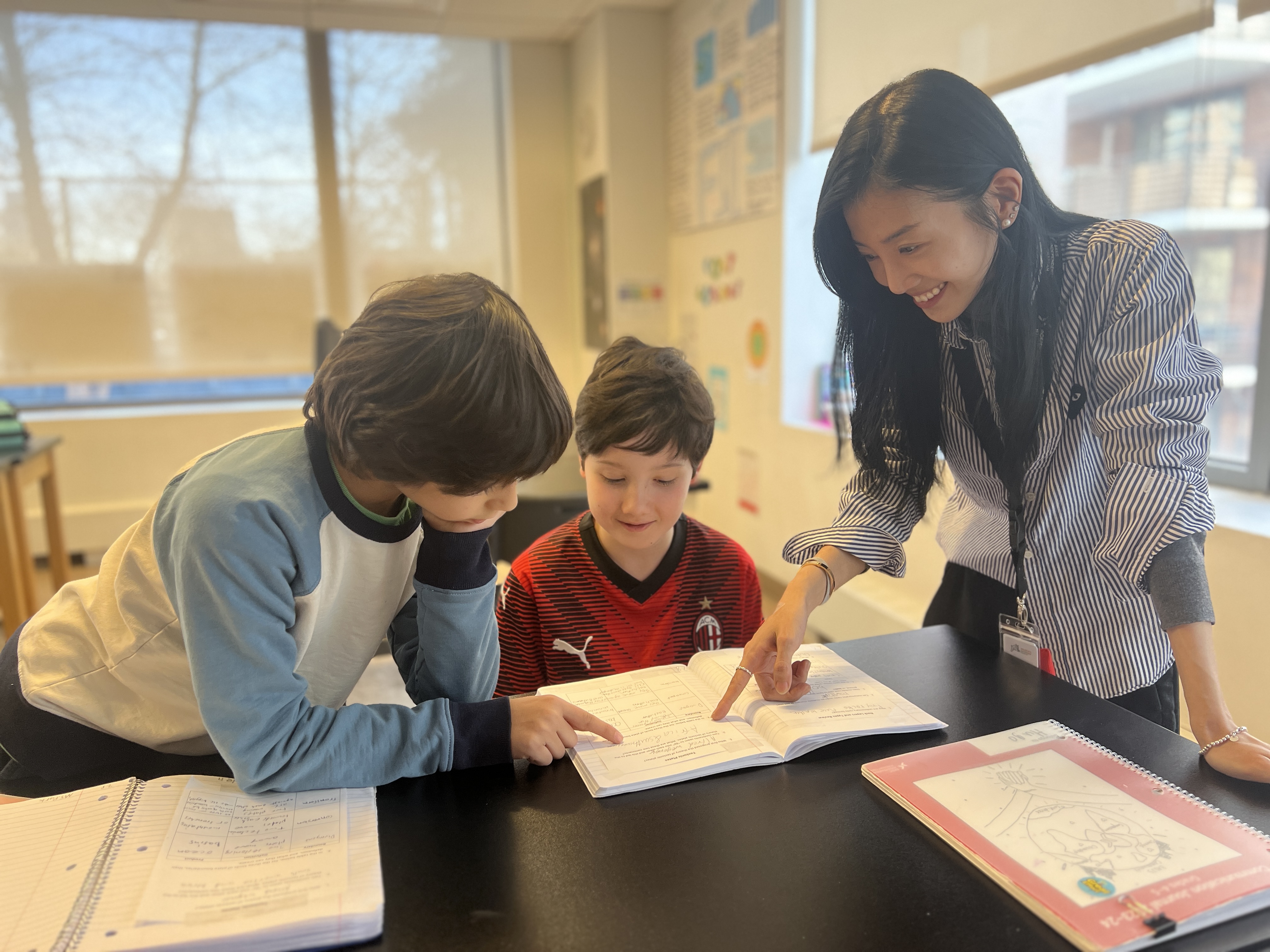
Proactively reach out to teachers with questions or concerns, especially at the beginning of the year. You can share your child’s strengths, interests, and any challenges they may be facing, but be prepared to work in partnership with the teacher. Math Subject Expert Teacher, Ms. Perez remembers when a parent reached out to share that their upper school student struggles with math even though they put in a lot of effort. Establishing that connection early opened up so many options for support.
This insight helped me better prepare for supporting the student, ensuring I worked with the parent to address difficulties before they became overwhelming. It also allowed me to be more understanding and patient with the challenges the student faced.
Ms. Perez Math SET, Upper School
0
Our Learning and Subject Expert Teachers subscribe to this trust-building type of collaboration that requires impactful two-way communication. In our experience, a strong teacher-parent partnership addresses specific student needs, increases learning, and benefits the child’s well-being.
BASIS Independent Manhattan has a unique system that replaces traditional parent-teacher conferences, typically hosted twice for only 15-20 minutes, with weekly parent hours. Teachers are accessible to parents to discuss their child’s progress, set goals, and identify a support plan if needed.
Our teachers have found that it is best when parents come prepared to ask specific questions and follow up on any action items discussed during these meetings. Mr. Smith also notes, “Parents play a huge role in keeping students accountable outside the classroom, which ensures that when they are at school, we are able to be as productive as possible.”
By fostering a team sensibility, we create a supportive and collaborative learning environment that benefits our students. Remember, open communication, mutual respect, and a shared commitment to your child’s success are key to building lasting relationships.
Thank you to our amazing teachers for their dedication and passion. We are grateful for your commitment to our students and our school community.
If you are interested in this kind of parent-teacher relationship or would like to meet our incredible teachers, please attend one of our Fall Open Houses.
We are excited to meet the many wonderful families considering a BASIS Independent Brooklyn experience for their family!
During each admissions season we field a wide range of questions about our curriculum and various programs, student life, electives, extracurriculars, and so much more. We have observed topics that are commonly brought up and want to provide you with answers to frequently asked questions raised each year.
What is the difference between your two Brooklyn campuses?
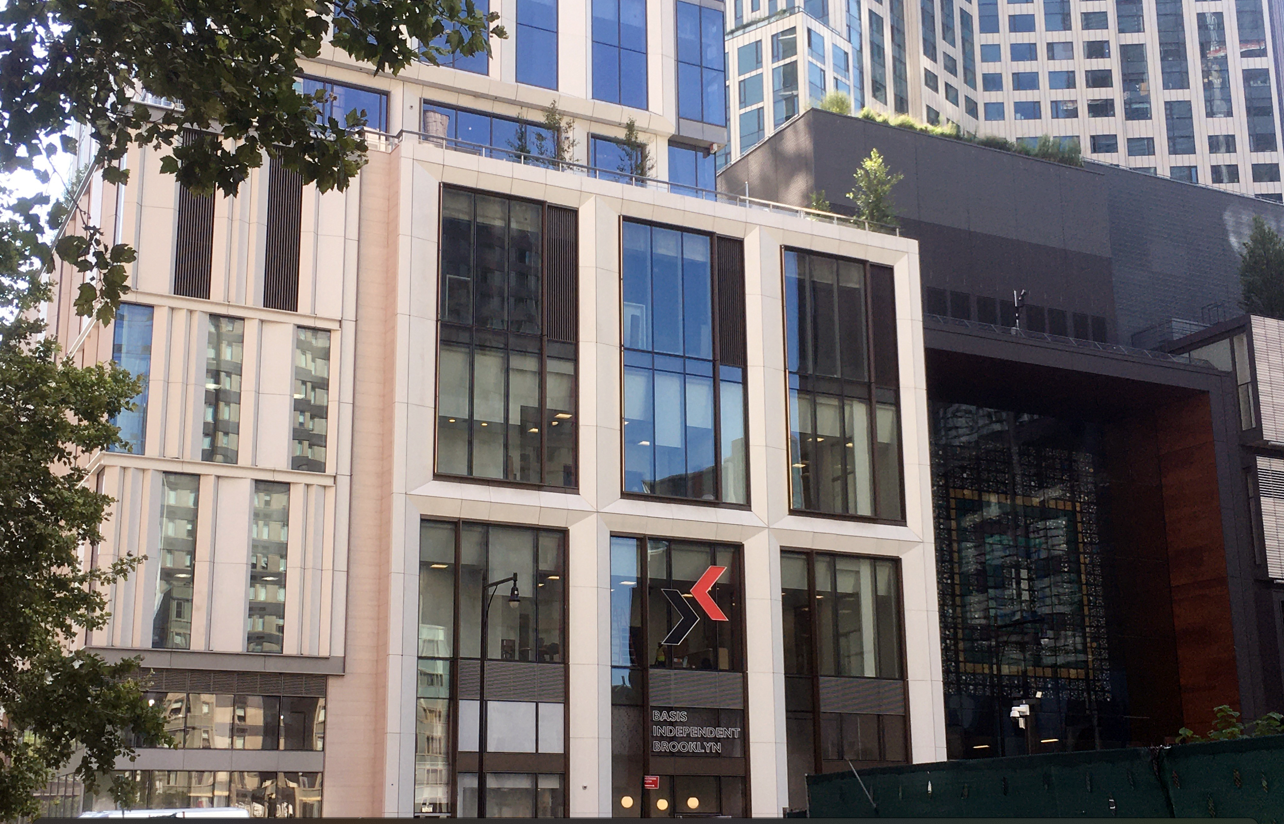
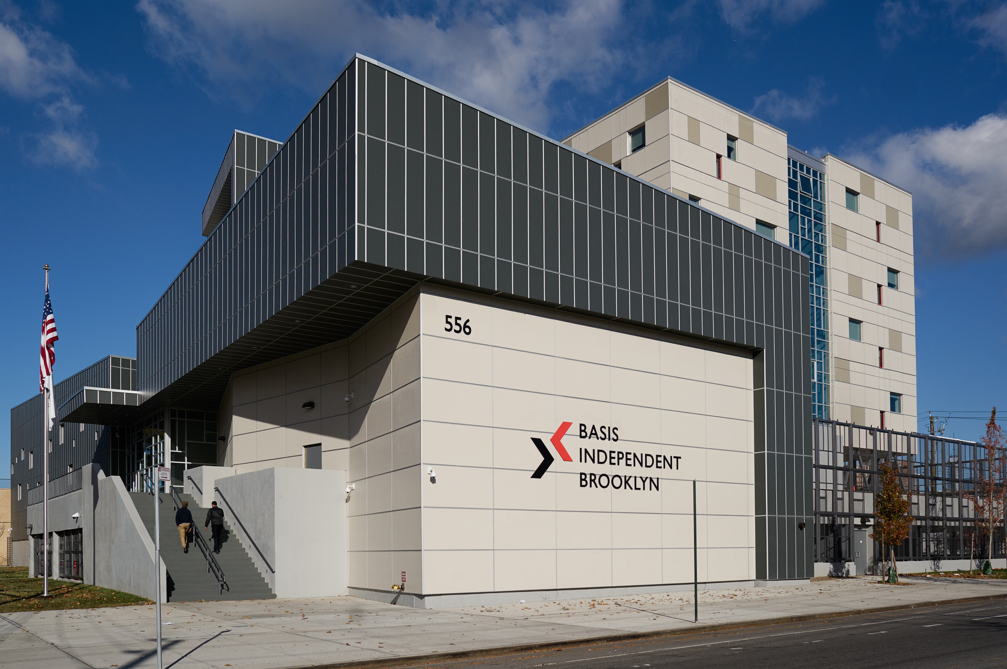
BASIS Independent Brooklyn was established in 2014. We are one school with two campuses. The Lower School in Downtown Brooklyn supports approximately 150 students in PreK–Grade 2 while the Upper School in Red Hook supports about 530 students in Grades 3–12.
What is the teacher model at your school?
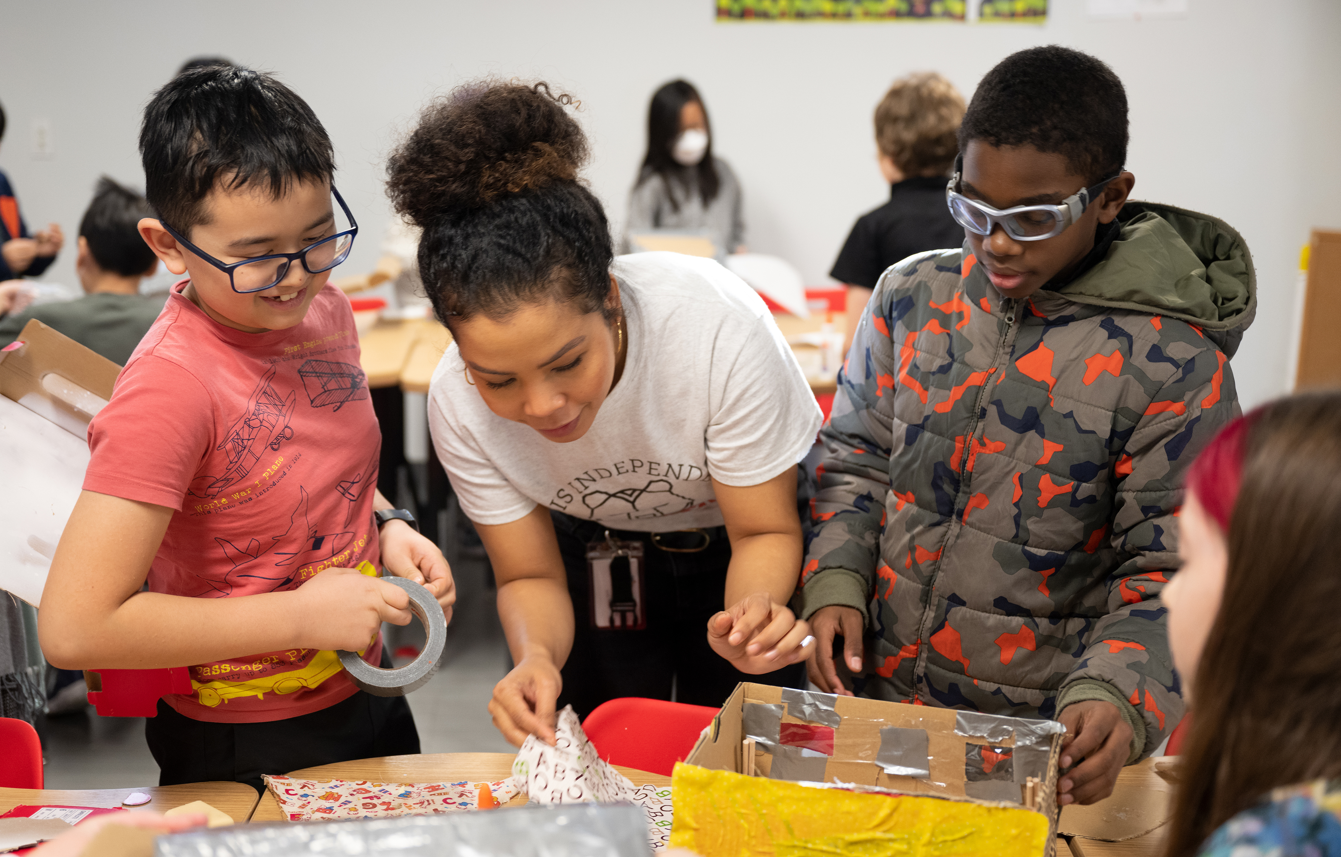
Beginning in grade 1, our students have one Subject Expert Teacher (SET) for each discipline. SETs either hold advanced degrees or are experts in their discipline. SETs use their subject-area passion to inspire students while teaching them at a higher level than what is typically expected of students in their age group.
Learning Expert Teachers (LETs) work in tandem with SETs to co-teach in all grade 1–4 classrooms. LETs accompany their students all day, from class-to-class, and are masters of the learning process and social-emotional growth in children. They are instrumental in ensuring that students are appropriately supported and challenged in each subject. In grade 4, the LET shifts their focus to promoting independence, autonomy, and teaching students how to use their resources. This shift prepares students for grade 5 and beyond where students have just one teacher, their SET, for each subject.
Unlike the Primary, Middle, and High School programs, the Early Learning Program is primarily self-enclosed. Students remain in their vibrant classroom for most of the day, rotating classes only for their daily special (Art, Music, Drama, Engineering, Mandarin, or PE/Movement). Early Learning Teachers lead our PreK and Kindergarten classrooms and are responsible for delivering most of the content to students by bringing their own pedagogical expertise to the classroom, with the consistent support from an Early Learning Teaching Fellow.
What are your elective offerings?
In the Early Learning and Primary programs, students will take Art, Music, Drama, Engineering, and PE/Movement. In the Middle and High School programs, students can continue to take those courses or elect to take Band/Orchestra, Computer Science, Choir, Creative Writing, Introduction to Philosophy, Digital Photography, Introduction to Film Production, Sustainable Fashion, Topics in Economics, or a number of Advanced Placement (AP) courses.
What are your athletic offerings?
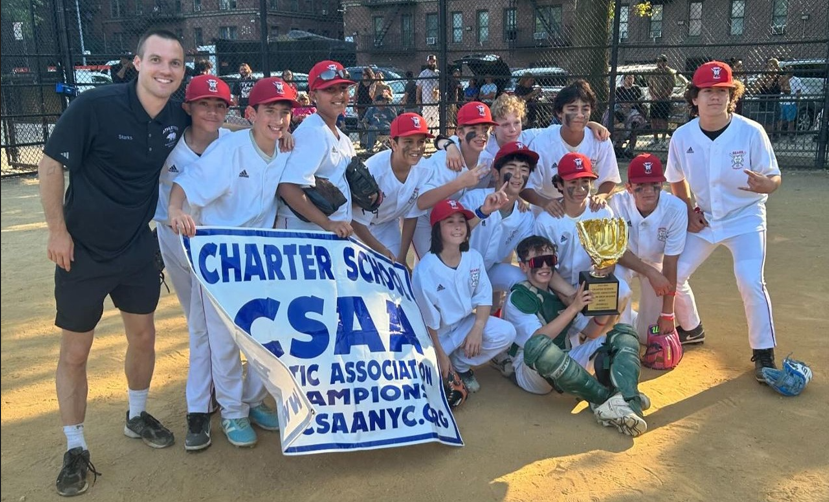
We have competitive and league sports for students to play. Offerings for our Middle and High School students include basketball, tennis, flag football, track (cross country, indoor and outdoor), soccer, volleyball, baseball, ultimate frisbee, and competitive cheer and dance. Next year we are planning on adding a squash and fencing team. Every year our club and athletic offerings grow in number and vary based on student interest.
What are your club offerings?
We offer over 60 clubs at our Lower School and Upper School campuses! Our students can participate in AI for Kids, Chess Team, Leadership Club, Math Team, Science Bowl, Student Newspaper, Black Student Union, LatinX Affinity, and more.
Do you offer early or late care for students?
At both campuses, we offer supervised early and late care. Early care, called Early Bird, is offered beginning at 7:00 AM at our Lower School and 7:15 AM at our Upper School. We offer two types of late care. The first is called Late Bird, which runs until around 4:00 PM. The second is called Cub Care (PreK-Grade 2)/Bear Care (Grades 3-8), and these begin following dismissal. Cub Care/Bear Care is more structured and involves a range of activities from sciences to sports to arts. After-school programs for High School students take place in the form of athletics and clubs.
Why do you teach your students Mandarin?
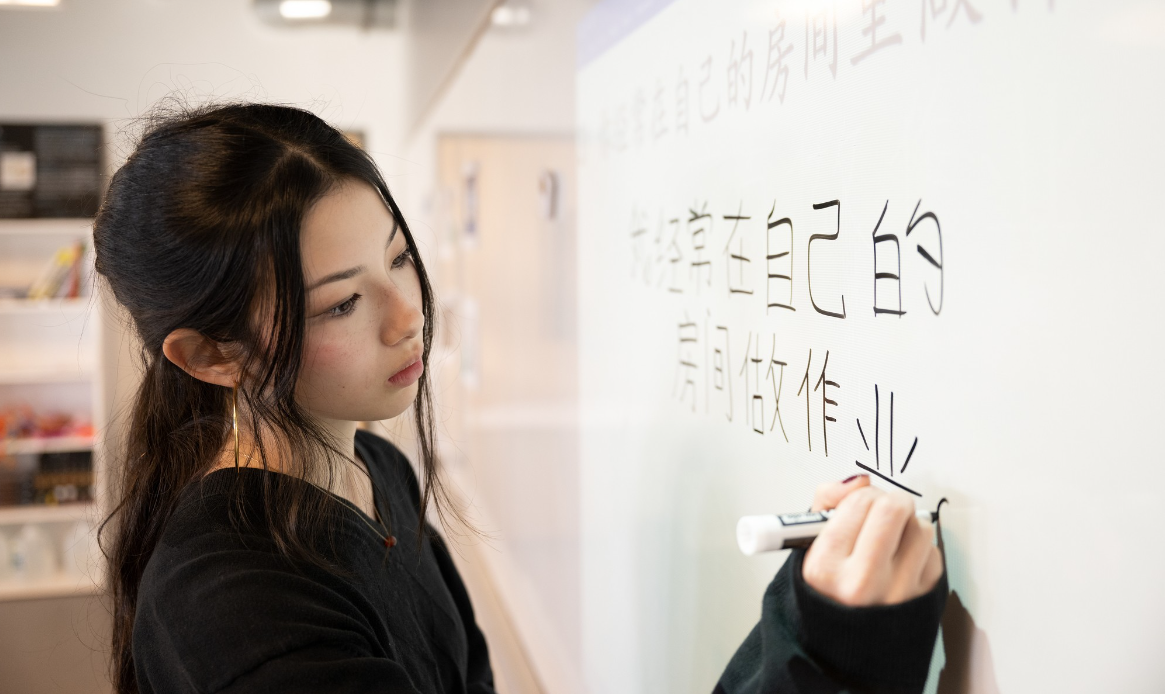
The co-founders of the BASIS Curriculum intentionally designed our Early Learning and Primary programs to include Mandarin. Mandarin is a global language, and researchers found that learning the language develops new pathways in the brain and uses both the left and right temporal lobes simultaneously. Studies also show that Mandarin helps students grow their mathematical abilities due to the emphasis on ordering, grouping, and distinguishing between similarities and differences in character writing and intonation. While Mandarin is required in PreK-Grade 4, Latin is required in grades 5 and 6. Beginning in grade 7, students will select a world language from French, Latin, Mandarin and Spanish, which they will continue throughout High School.
Do your campuses have any outdoor spaces?
Our Lower School has direct access to a new, beautiful, big park and playground right across our street! Our Upper School has three outdoor spaces. This includes one fully covered space, one partially covered space, and an uncovered playground.
What is your student-to-teacher ratio?
From PreK to grade 4, there are two teachers in each classroom. Beginning in grade 1, students will have one teacher for each subject as they rotate from classroom-to-classroom and teacher-to-teacher during the school day. Generally, our PreK classrooms average around 15 students with two teachers in the classroom and Kindergarten averages around 12 students per classroom with two teachers in the classroom. Grades 1-12 average around 21 students in each classroom.
What is the diversity of your student population?
Brooklyn is wonderfully diverse, and our student population reflects this. 53% of students identify as a person of color and 41 languages are spoken throughout our community.
Do you offer financial aid?
At this time, financial aid is not available. We offer families three types of tuition payment plans: one payment, two payments, or ten monthly payments. We award scholarships based on academic merit to a highly selective group of current BASIS Independent Brooklyn students in grade 8 who are planning to stay for high school.
Do you offer transportation?
We encourage families at both campuses to make use of nearby public transportation options. We offer free or reduced fare MetroCards for students who plan to use public subways or buses. The Lower School is located centrally in Downtown Brooklyn near stops for the 2, 3, 4, 5, A, C, D, F, G, N, Q, and R trains; the LIRR at Atlantic Terminal; and the B25, B26, B38, B52, B54, B57, B61, B62, and B67 MTA bus lines. The Upper School campus in Red Hook is conveniently located near stops for the B61 and B57 buses, and accessible from the F and G trains at Smith & 9th Street Station. Families are welcome to use bikes, strollers, skateboards, and scooters. We have storage at both campuses for these modes of transportation.
Our fee-based transportation program at the Red Hook campus includes morning and afternoon bus services throughout Brooklyn and Lower Manhattan. We carefully plan our bus routes each school year to try to accommodate student demand and the requested stops. However, bus stops are not guaranteed and are subject to change. For families with students at both our Upper and Lower School campuses, BASIS Independent Brooklyn offers a free “Connector” bus. Please inquire directly for more details on our current routes.
What is parent involvement like at your school?
Parents have many opportunities to get involved! The first way is through BIB Committees. These committees include the Teacher Appreciation Committee, Social Committee, World Fest Committee, and Community Outreach Committee. We also have a wonderful group called our Parent Ambassadors. These leaders work closely with our Admissions Team on events and connecting with new families.
What community opportunities will my student have if they join your program?
We have very active National Junior Honor Society and National Honor Society chapters at our school leading regular service initiatives. Moreover, our student leadership society, Leadership Club, has prioritized building both a culture of service and sustainability at the school. The students lead annual drives and regularly promote ways to volunteer with Red Hook and Downtown Brooklyn organizations throughout the school year. Our High School students participate in an Annual Day of Service before Thanksgiving Break.
Our school community has worked to develop partnerships with impactful non-profits making a difference in the community. One great example is the Red Hook Art Project (RHAP), which provides tutoring and mentoring for under-served children and youth. The organization offers free classes and tutoring in visual art, music, and homework help. Our students have volunteered for the homework help program and are teaching guitar classes. They also work to ensure our leftover school lunches are transported to RHAP and given to students and their families.
How can I visit your school?
This admissions season, we are hosting a variety of events including Information Sessions, Campus Tours, Open Houses, and Shadow Days. Please click here to register for an upcoming event!
One of the defining features of a high-quality private school education is the advantage of small class sizes. At BASIS Independent Fremont, we understand that the number of students in a classroom significantly impacts the learning experience. Smaller class sizes allow for a more personalized approach to education, enabling teachers to meet the unique needs of each student and foster an environment where academic excellence can thrive.
Individualized Attention for Every Student
In smaller classrooms, teachers can get to know each student personally. This close teacher-student relationship allows for a deeper understanding of each child’s strengths, challenges, and learning styles. Teachers can tailor their instruction to meet the needs of individual students, offering extra support where needed or providing advanced materials to challenge those who are excelling. This level of personalized attention is often difficult to achieve in larger classes, where teachers may struggle to address the varied needs of many students simultaneously.
Enhanced Classroom Engagement and Participation
Smaller class sizes also encourage greater student engagement and participation. With fewer students in the room, each child has more opportunities to contribute to discussions, ask questions, and interact with both the teacher and their peers. This active participation reinforces learning and builds confidence and communication skills. Students in smaller classes are less likely to feel overlooked, and teachers can facilitate a more inclusive and dynamic classroom environment where every voice is heard.
Stronger Academic Outcomes
Research consistently shows that students in smaller classes perform better academically. The combination of personalized attention, increased participation, and a supportive learning environment leads to stronger academic outcomes. At BIF, our commitment to maintaining small class sizes ensures that each student receives the guidance and resources they need to succeed. Whether it’s mastering foundational skills or exploring more advanced concepts, students benefit from an educational setting that prioritizes their individual growth and development.
In conclusion, the benefits of small class sizes extend far beyond the classroom. At BASIS Independent Fremont, we believe that a more personalized and engaged learning experience is key to fostering academic excellence. By maintaining small class sizes, we create an environment where every student can thrive, ensuring that they are not just meeting academic standards but exceeding them.
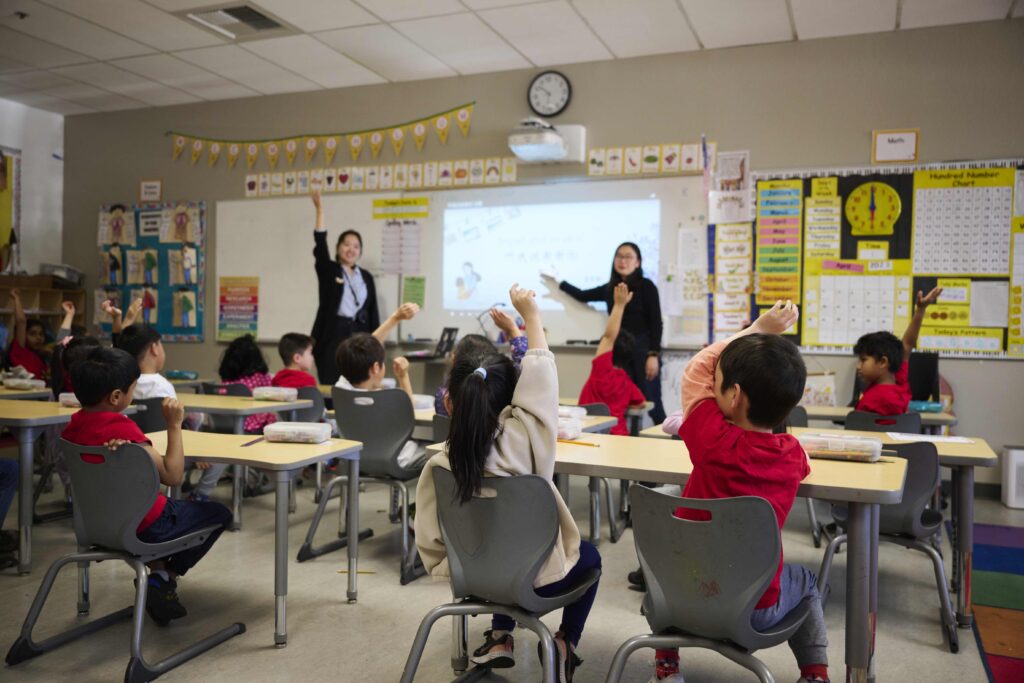
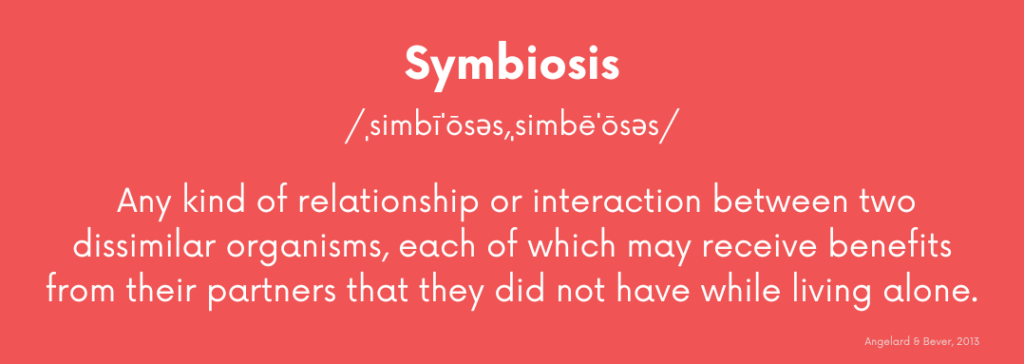
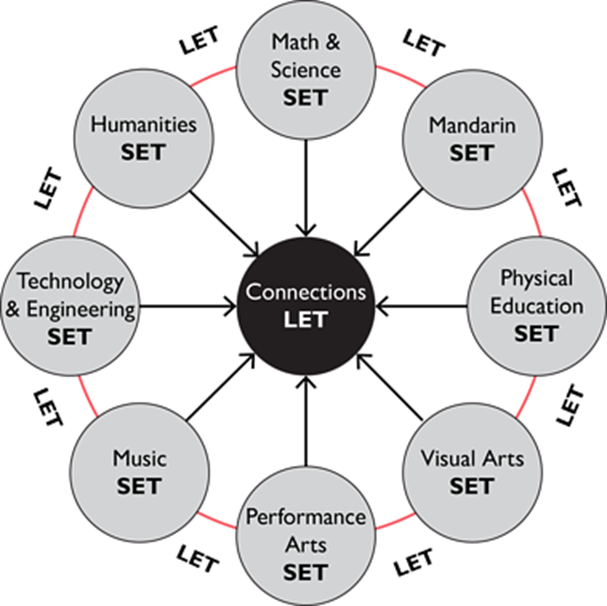
The Symbiotic Classroom is a hallmark element of our Primary Program, but what does that mean to a parent? How do our students benefit? We take this biology term and translate it into a successful teaching model that pairs a Subject Expert Teacher (SET) and a Learning Expert Teacher (LET). Read on to have this SET/LET relationship explained.
Imagine being back at school, sitting in a class where you already know the material, feeling like you’re “ahead” of everyone else. This is boring! Then you head to a class you don’t like, but it is only because you are struggling to understand the lesson. The teacher is going too fast! Now imagine there was a second teacher in those classes who really knows you. They recognize your strengths and provide enrichment when needed. They identify your areas of growth and provide support to help you achieve your highest potential. This approach best describes the SET/LET model at BASIS Independent Manhattan.
Meet the SET
Subject Expert Teachers (SETs) are just that—experts in their field of study—teaching classes in the subjects for which they received their degrees and are, therefore, most passionate about them. Their area of expertise is their sole focus, allowing them to concentrate on creating captivating, in-depth lessons for all grade levels they teach. Students in grades 1 and above have one SET for each discipline rather than one teacher who teaches multiple subjects.
Meet the LET
Learning Expert Teachers (LETs) span across grades 1—4 and are responsible for one class of students whom they stay with for the entire academic day. In addition to co-teaching with the SETs, LETs provide customized support in those classes, as needed. Because LETs are with just one class all day, they build trust and understanding with their students to better guide them throughout their academics.
The Benefits
Together, these expert teachers focus on building a classroom culture of social-emotional support and academic excellence. The SETs and LETs collaborate to create lesson plans that are both advanced and accessible to all students. The symbiotic relationship between these two teachers in the classroom helps provide:
Minimal distractions and maximum learning,
Flexibility for one-on-one and small group work,
An infectious passion for subjects passed on from teacher to student, and
Individualized attention on student progress and overall happiness.
At BASIS Independent Manhattan, the SET/LET relationship is at the heart of our goal to instill a lifelong passion for learning in our students.
Finding a Connection
In addition to co-teaching with SETs, LETs lead a weekly class called Connections. This course encourages students to utilize their knowledge in a creative way. Students are presented with project-based scenarios that require the use of problem-solving, creativity, and collaboration as they establish links across subjects. Connections shows our students how each subject is related to the other while gaining a deeper understanding of the material.
One of our most exciting Connections projects happens in grade 1 when students combine everything they learn about Ancient Egypt in Humanities, art, science, and engineering. The real-world connections across disciplines occur when they:
Write their name and phrases in hieroglyphs,
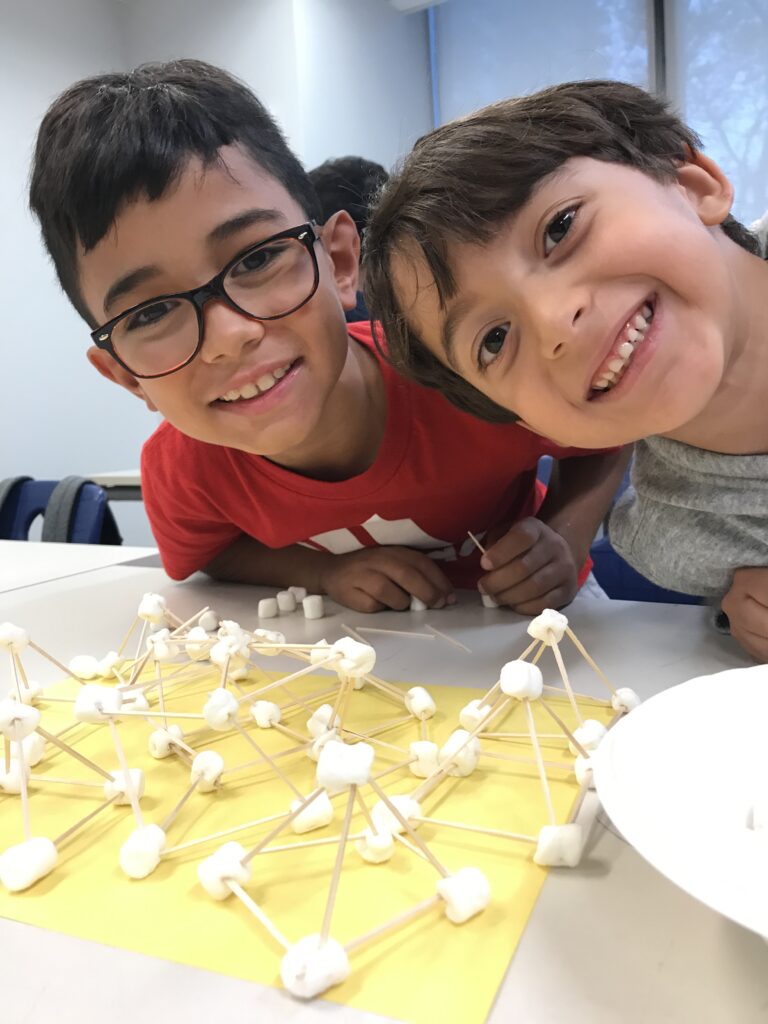
Construct pyramids using marshmallows and toothpicks,
Learn about mummies and recreate the mummification process with a stuffed animal and shoebox, and
BASIS Independent Manhattan, a private school offering PreK through Grade 12, is based in Manhattan, New York. Students thrive alongside Subject Expert Teachers as they engage in a liberal arts program with STEM offerings.
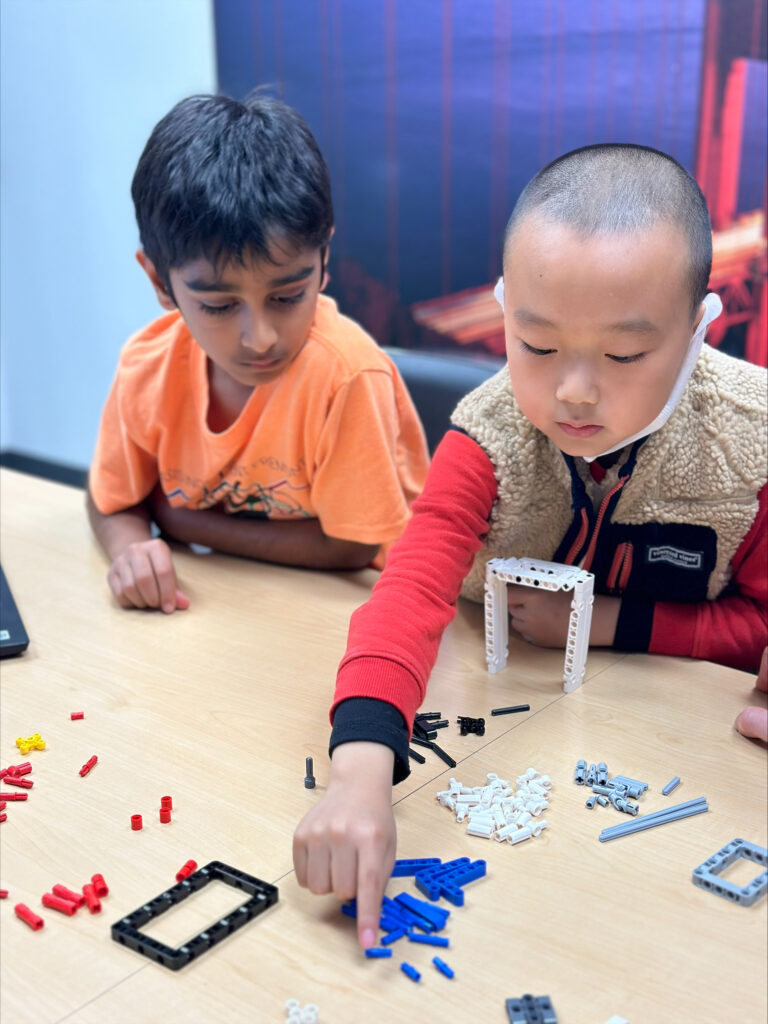
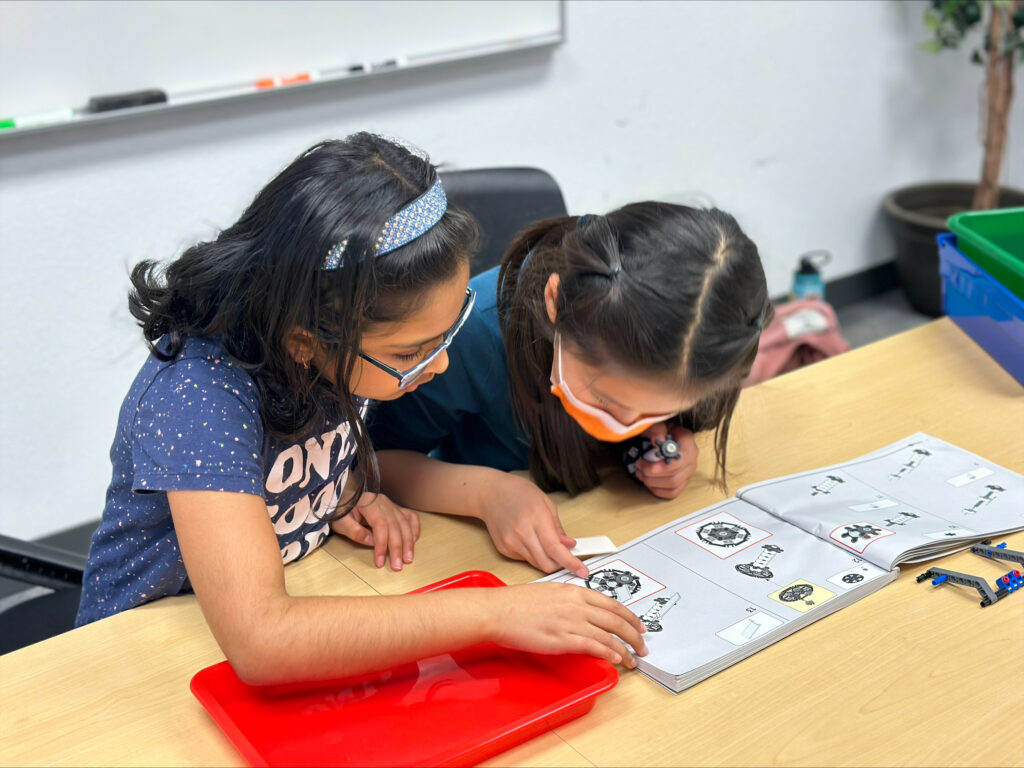
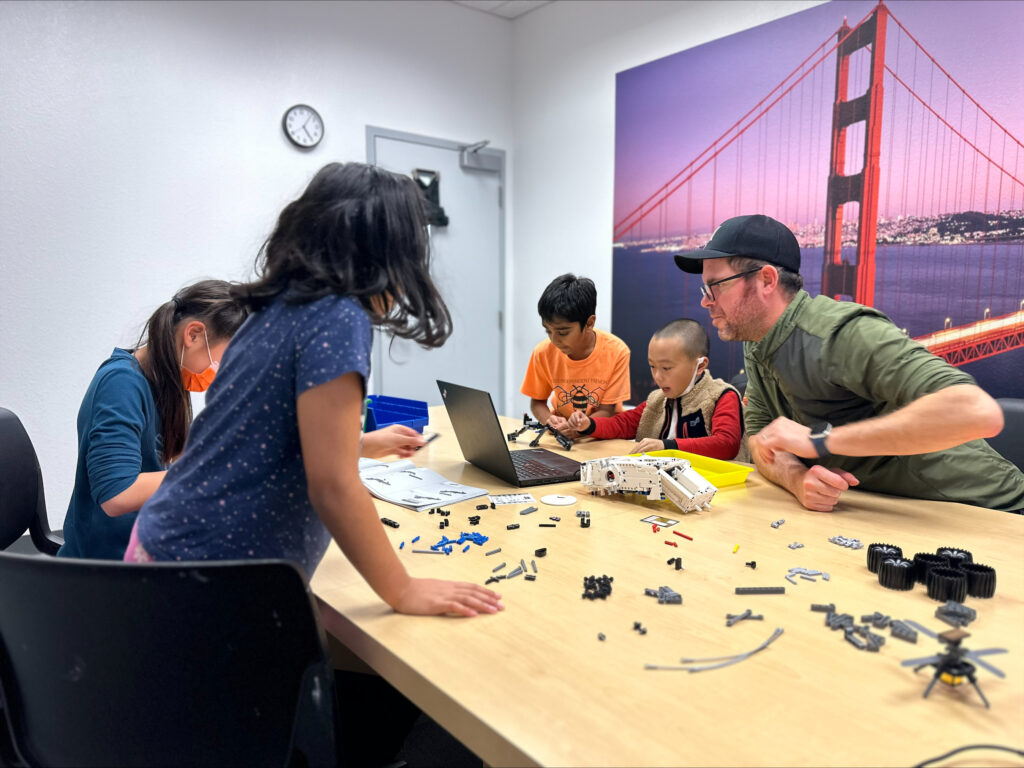
In the heart of BASIS Independent Fremont Lower School, a remarkable event unfolded that took our students on an interstellar journey beyond the confines of our classroom and into the vast challenge of space exploration. Celebrating the two-year anniversary of NASA’s Perseverance Rover landing on Mars, we hosted a special science session that dove deep into the marvels of this monumental achievement in human exploration. This event was not just about building a LEGO model; it was about igniting the flames of curiosity, innovation, and teamwork in our young learners.
Day of Discovery
The session kicked off with a dive into the scientific achievements of the NASA Perseverance Rover. Our students were captivated by the intricate fields of mechanical engineering, material science, computer engineering, and communications technology that play pivotal roles in the success of space missions. The discussion also covered the logistical challenges of launching spacecraft and the critical reasons for sending robots instead of humans to explore distant worlds. This foundation set the stage for understanding not just the ‘what’ and ‘how’ of space exploration but the ‘why’ behind these incredible scientific pursuits.
Exploring Engineering
With minds filled with new knowledge, our students embarked on the “Exploring Engineering” phase. This was where the theoretical met the practical. The challenge: to plan and execute the building of the LEGO Perseverance Rover as a team. This task demanded more than just following instructions; it required students to think like engineers, strategizing the most efficient paths to completion, foreseeing potential obstacles, and applying their newfound understanding of the rover’s design and purpose. Witnessing the transformation of individual LEGO pieces into the iconic rover was a testament to the power of applied learning and critical thinking.
Teamwork Triumphs
No part of modern science is accomplished alone. Perhaps the most remarkable aspect of the day was the lesson on teamwork. Students were grouped into pairs and tasked with constructing different sections of the rover, which would later be assembled into the final model. This exercise in collaboration required not just technical skills but the soft skills of patience, communication, and mutual support. Through this process, our students learned that complex problems are best solved together, with encouragement and patience, mirroring the collaborative spirit of real-world scientific endeavors.
The Value of STEM Education
As we reflect on this extraordinary day at BASIS Independent Fremont, it’s clear that events like these exemplify the value of STEM education in fostering not only academic growth but also critical life skills like teamwork, problem-solving, and perseverance. In a world that is rapidly advancing, creating new and exciting learning opportunities like this ensures our students are not just prepared for the future but are inspired to shape it.
At BASIS Independent Fremont, we are committed to continuing this journey of exploration, innovation, and discovery. Together, we will keep reaching for the stars, pushing the boundaries of what is possible, and inspiring the next generation of scientists, engineers, and explorers. Here’s to many more adventures that lie ahead and to the endless possibilities that STEM education can unlock.
BASIS Independent Fremont is a grades TK-12 private school based in Fremont, California, providing students with an internationally benchmarked liberal arts and sciences curriculum.
For Ms. Park, teaching Grade 4 at BASIS Independent Manhattan is more than a profession; it’s a calling fueled by a passion to shape lives. In this Teacher Feature, Ms. Park shares insights into how BASIS Independent Manhattan goes beyond academics to foster collaboration, address parental concerns, personalize learning, and celebrate the unexpected in the journey of education.
How does BASIS Independent Manhattan help students develop essential life skills like collaboration, communication, and resilience?
That is what I love about this school. We prioritize holistic development, recognizing that success extends beyond academic achievements. Each day, my goal is to create a collaborative learning environment where my students engage in group projects, discussions, and activities that help develop essential life skills. For example, we have recently been working on a unique interdisciplinary project in art and Mandarin, recreating traditional Chinese tales in stop-motion animation. The students designed and built the puppets and sets, brainstormed story sequences, and took turns at the animation station. Although the art-making process was slow, methodical, and frustrating at times, I saw the students display patience and teamwork, resulting in an impressive final project that was presented to the school.
What are some common concerns parents have about their 4th grader’s education?
I commonly hear worries about middle school readiness, including handling academic challenges and managing schedules with extracurricular activities. I am able to address these with families by providing a nurturing environment focused on individualized learning.
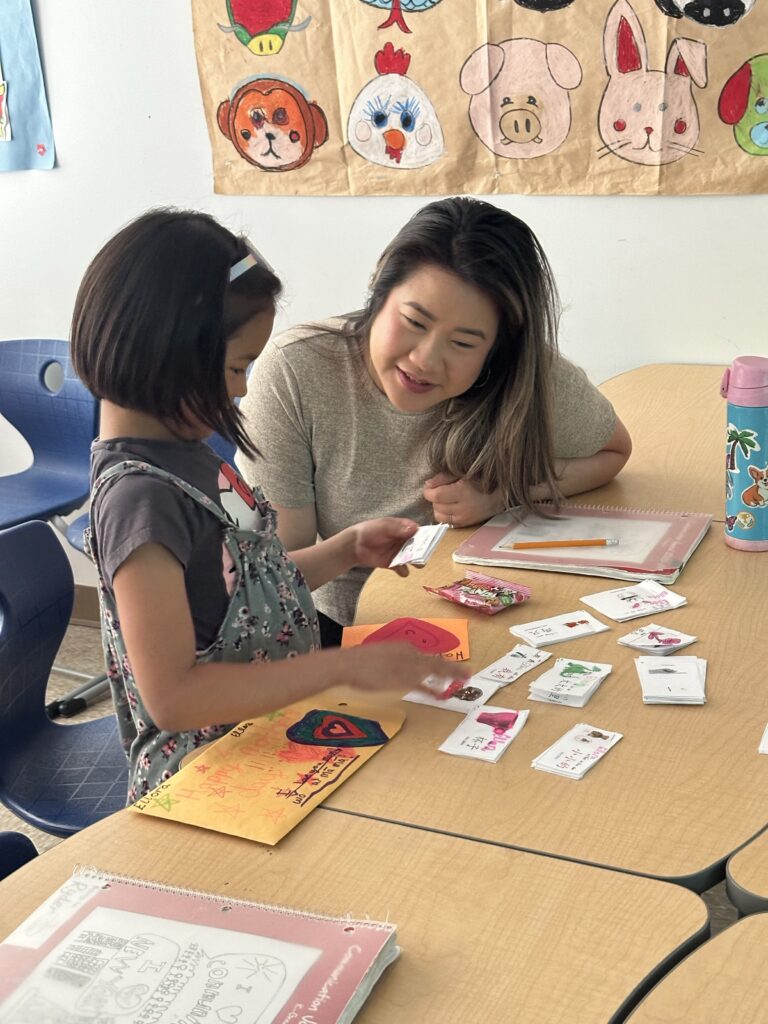
Having a close and collaborative relationship with parents/guardians and my co-teachers, we maintain consistent and transparent communication about student progress using the Communication Journal (known as the CJ). I also hold twice-a-week student and parent hours that provide personalized attention.
As a Learning Expert Teacher, how do you personalize learning for each student?
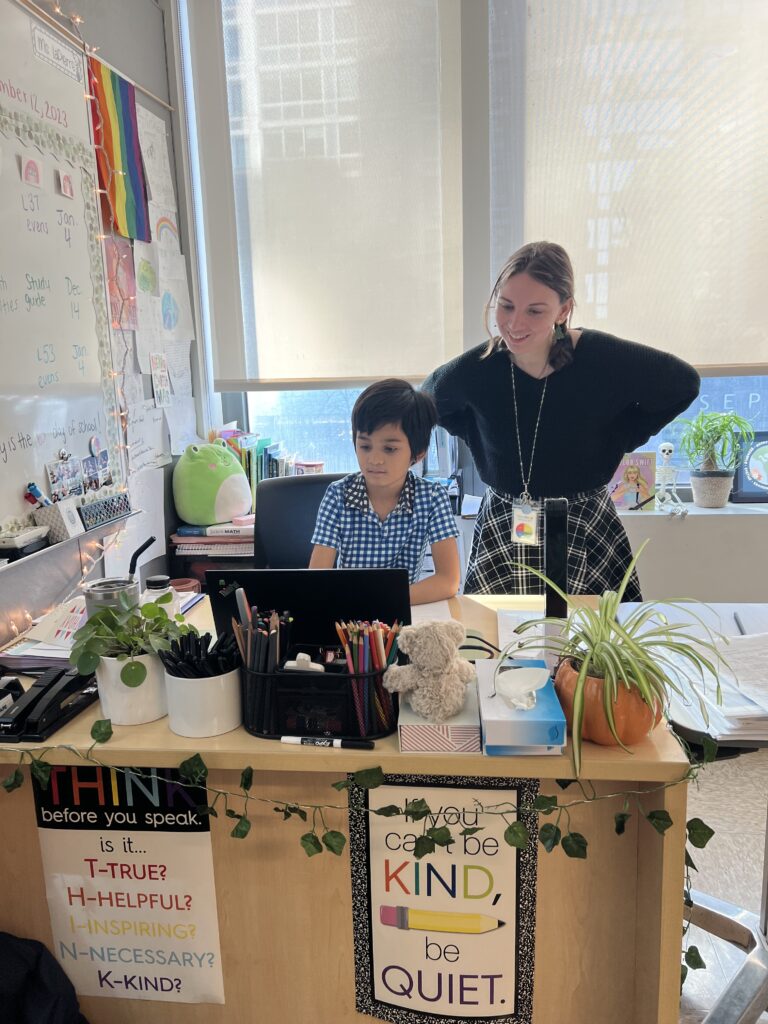
Differentiation is at the core of our educational philosophy at BASIS Independent Manhattan. As a LET, I’m committed to understanding each student’s unique needs and talents. I always look for opportunities to get to know my students such as engaging in morning meeting check-ins and conducting personal academic and individual check-ins during study hall. This allows me to tailor my support precisely to each student. Additionally, collaboration with SETs is crucial, as it helps identify students who may benefit from pull-out groups for additional support. This individualized approach ensures that each student achieves their full potential.
What’s the most unexpected thing you’ve learned from your students at BASIS Independent Manhattan?
One of the most remarkable aspects of teaching at BASIS Independent Manhattan is the constant curiosity and unexpected insights from our students. I am astounded at the unique perspectives my students bring to constructing skyscrapers in engineering and the innovative problem-solving they use in math. As their teacher, I love to couple that curiosity with a growth mindset and see how these students positively approach challenges. I see them use the “power of yet” to confidently navigate their educational journey, and I am thrilled to be along for the ride.
We are grateful to Ms. Park for sharing her insights that provide a glimpse into the vibrant educational ecosystem at BASIS Independent Manhattan where collaboration, personalized learning, and a celebration of curiosity combine to create a unique and enriching experience for students. Having a teacher like Ms. Park who has close relationships with students and families is a treasure, resulting in a rewarding experience of witnessing daily growth and enthusiasm.
BASIS Independent Manhattan is a PreK – Grade 12 private school, providing students with an internationally benchmarked liberal arts and sciences curriculum, with advanced STEM offerings.
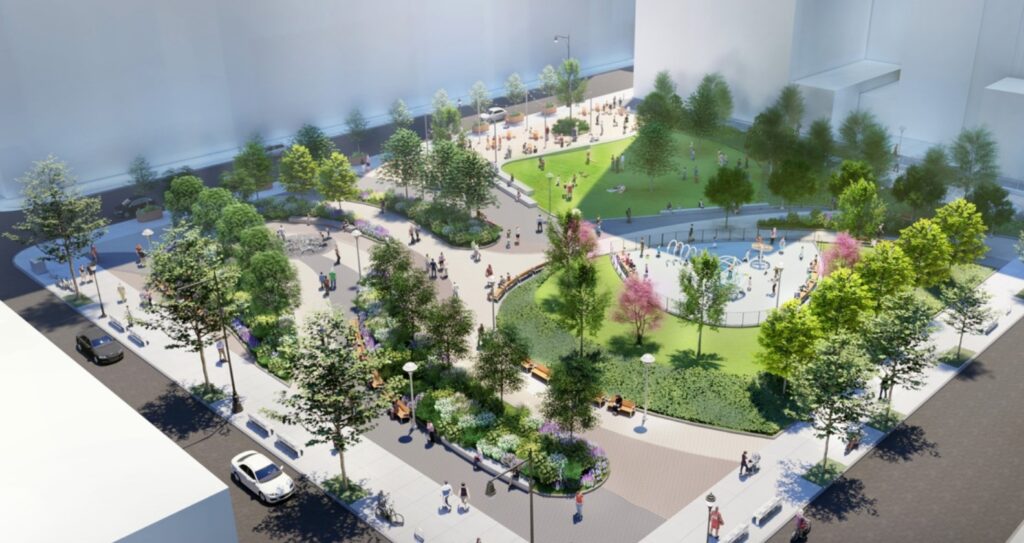
Nearly two years ago our Cub Community moved into a brand new Lower School campus, PreK – Grade 2, at 405 Gold Street in Downtown Brooklyn. The campus was deliberately designed to support the growth of our youngest learners. Now we are pleased to share that the Downtown Brooklyn Alliance is in the final stages of building a brand-new park right across the street.
The lovely new 1.15-acre site of outdoor space is nestled between Gold, Willoughby, and Duffield Streets right across the street from our school. Designed by landscape architecture firm Hargreaves Jones, plans include a new playground, lawn space, dog park, ornamental plantings, and multiple seating areas.
The neighboring green space will be a wonderful resource for recess breaks, and families will be able to enjoy a convenient playtime after school.
Rendering of Abolitionist Place by Hargreaves Jones
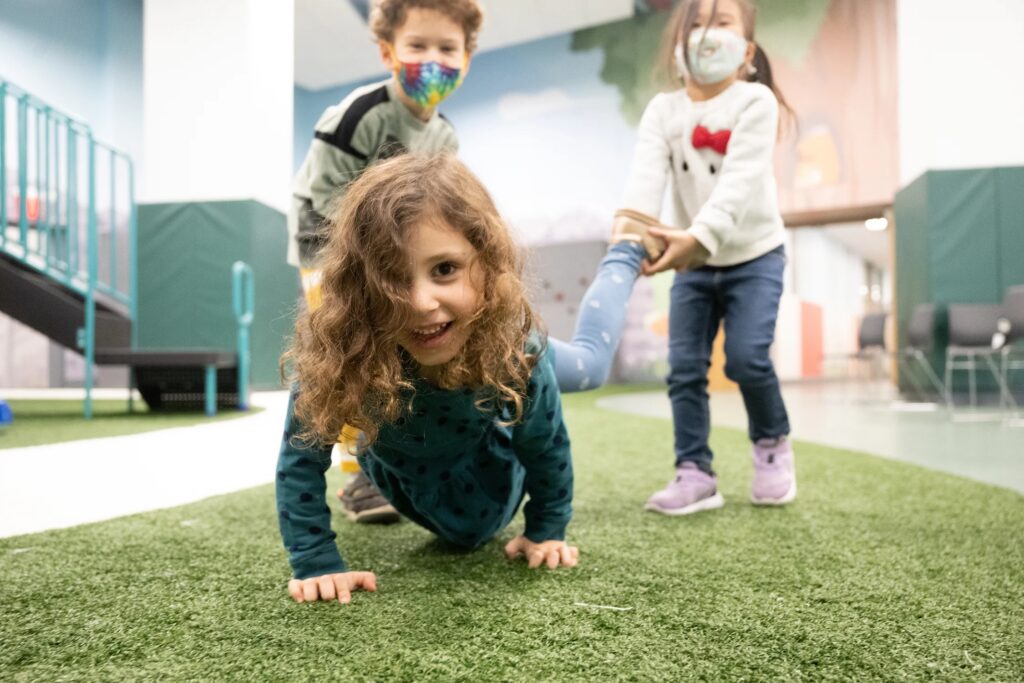
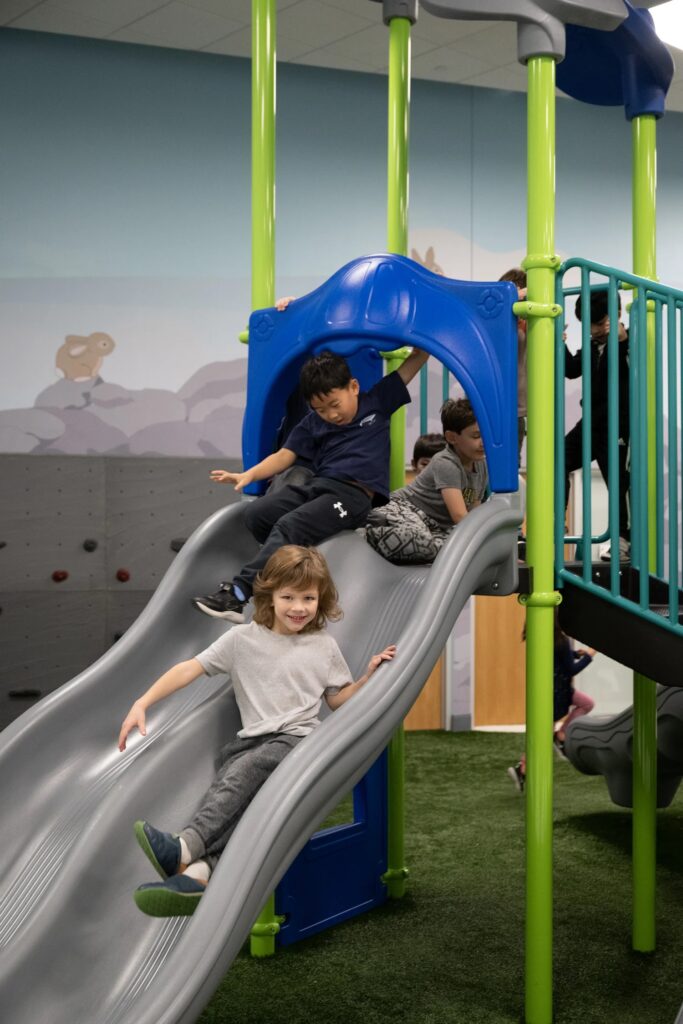
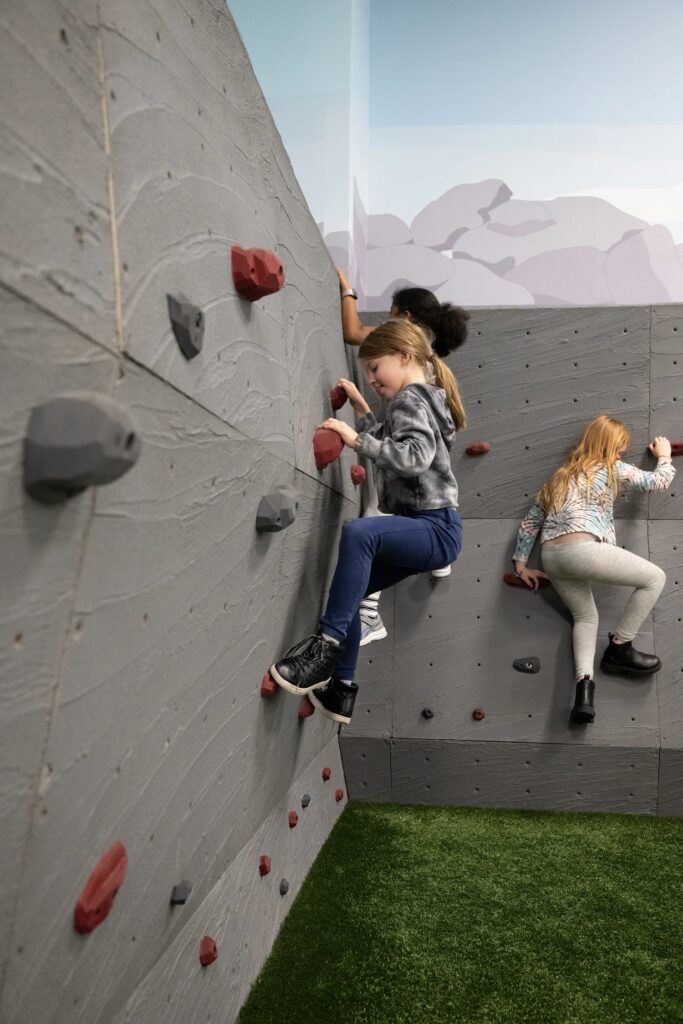
In the meantime, one of the most popular spaces at the Lower School campus is the Bear’s Den — a huge indoor play space completed with rock climbing walls, areas for soccer games, and a theater. Recess breaks are an important way to break up our school day, and the Bear’s Den paired with trips to nearby Fort Greene Park have been wonderful ways to get the wiggles out for our Cubs.
Our team of staff and educators are watching the progress of the park daily. Now the play structures have been installed, and the trees are being planted. The grand opening for the park is slated for March 2024, and our community will come out in full force to support all those who made it possible.
BASIS Curriculum Schools have always associated their classes with elements from the periodic table. At BASIS Independent Silicon Valley Lower, we have thoughtfully organized our grade bands into distinct elemental characteristics to provide a structured and inclusive educational experience for each student that creates a sense of belonging and pride. Our chosen elements include transition metals, the lightest elements, alkaline earth metals, alkali metals, expensive transition metals, and radioactive elements created in California. Each grade level has unique characteristics, and we assign them diverse and meaningful names to reflect their individuality.
Transitional Kindergarten and Kindergarten
Starting with our youngest students, Transitional Kindergarten and Kindergarten are represented by the transition metals on the periodic table. These four sections include zinc (Zn) for Transitional Kindergarten, with copper (Cu), cobalt (Co), and nickel (Ni) representing Kindergarten. Transition metals are also great conductors of heat and electricity. TK and K represent an academic time where students can absorb a vast amount of information while simultaneously learning how to be BASIS Independent students.
Kindergarten Cobalt (KCo) heading back to class after lunch with their Early Learning Teacher, Ms. Ocampo
Grade 1
The lightest gasses on the periodic table represent Grade 1: hydrogen (H), helium (He), and neon (Ne). Two elements are members of the noble gas family, which represent elements that function independently. However, with the advances in modern science, we now know that is not the case. While hydrogen is not a noble gas like helium or neon, it represents a compound that quickly pairs with carbon compounds that make up all life on Earth. Even though all three of these elements are not a member of the same family, they represent two essential characteristics to students within Grade 1; making social connections while simultaneously practicing independence.
Grade 1 Hydrogen (1H) starting their new book Beezus and Ramona by Beverly Cleary in their Humanities class
Grade 2
Grade 2 consists of alkaline earth metals, including calcium (Ca), radium (Ra), and barium (Ba). These three elements all have the characteristic of being basic rather than acidic. Metaphorically, this basic quality represents the solidification of academic foundations, which is very characteristic of Grade 2 within our program.
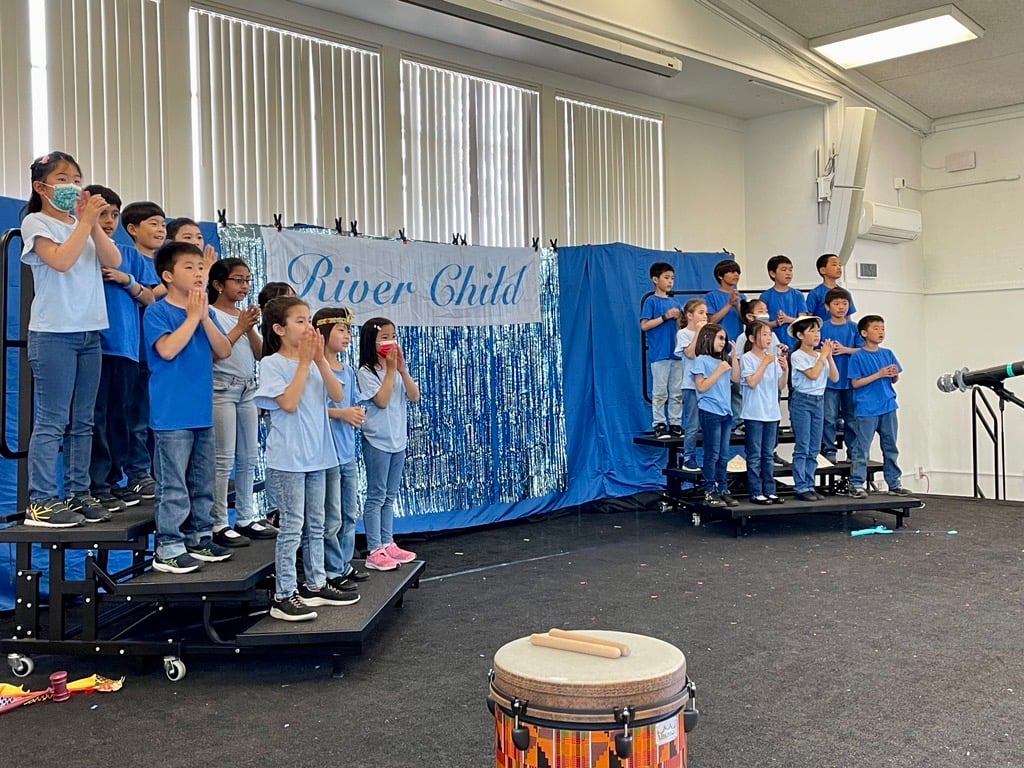
Grade 2 Calcium (2Ca)performing River Child at their Spring Musical Performance
Grade 3
Our Grade 3 goes by potassium (K), lithium (Li), and sodium (Na), also known as alkali metals. These types of metals are all known for their ability to react with water forming alkalis that neutralize acids. Grade 3 is a time of combining academic and social knowledge to gain more independence as a learner.
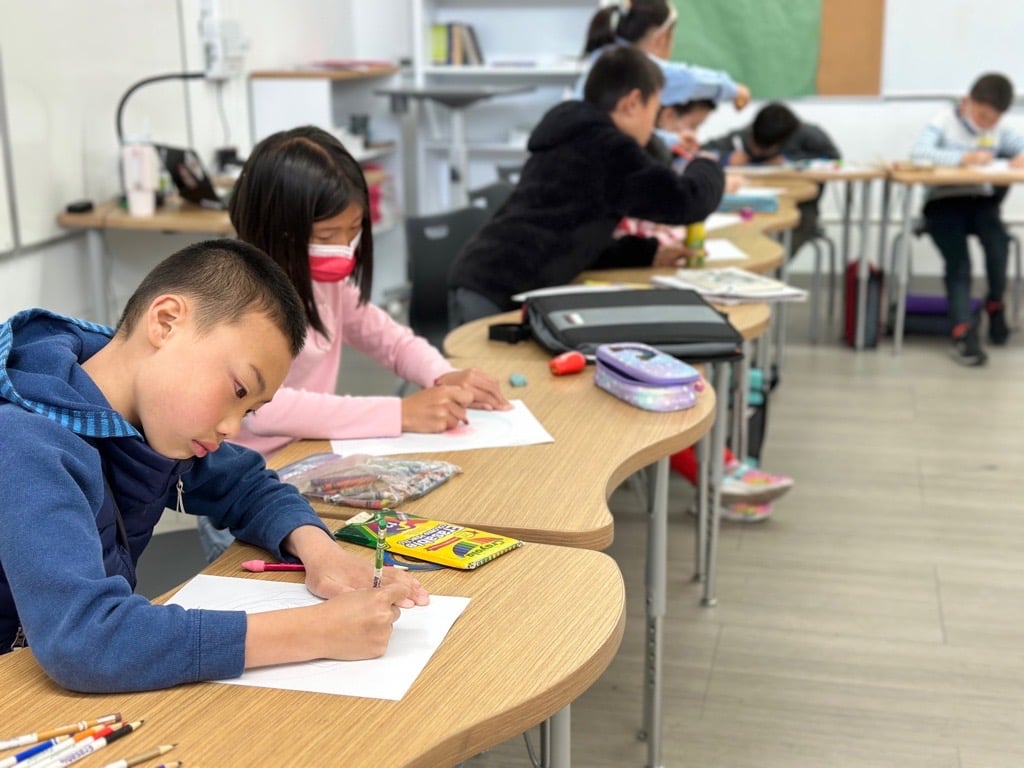
Grade 3 Lithium (3Li) enjoying their Mindful Mandala Drawing exercise in their Connections class
Grade 4
Grade 4 consists of the “precious” transition metals; platinum (Pt), palladium (Pd), and rhodium (Rh). These three metals are also known as platinum group metals because they share similar characteristics and are considered rare. Grade 4 embodies a rich academic foundation ready for the second most amount of independence within our school. These students get many opportunities to let their academic and social skills shine. This is the last year they will have a Learning Expert Teacher (LET) to guide them, and they gradually become ready to take on a self-reliant scholarly role.
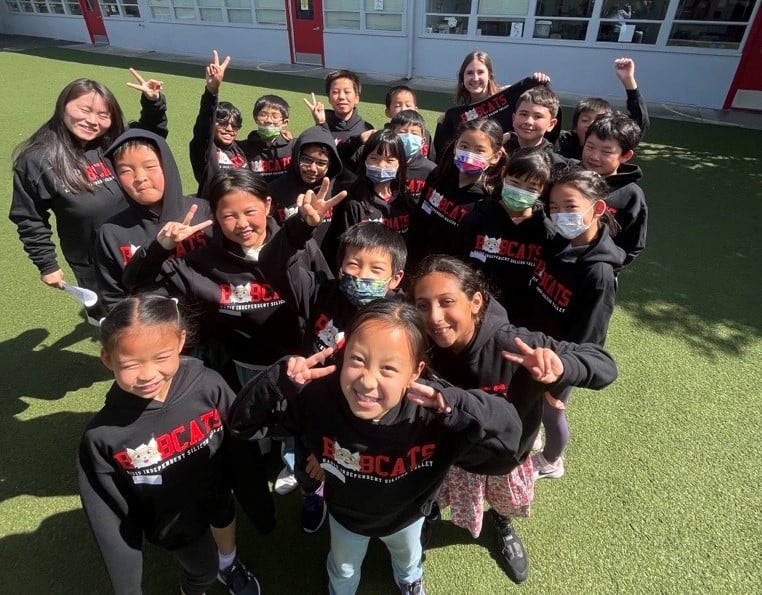
Grade 4 Palladium (4Pd) showing off their Bobcat pride in their matching sweatshirts
Grade 5
Lastly, Grade 5 consists of the radioactive elements created in California, including berkelium (Bk), californium (Cf), and lawrencium (Lr). These three elements fall within the transuranic element group, also known as man-made elements. Grade 5 features the shortest time of complete academic independence within our lower school campus, much like the short life of most radioactive elements. These three elements were also created within our state, giving our BASIS Independent Silicon Valley Lower students a connection to the state of their education.
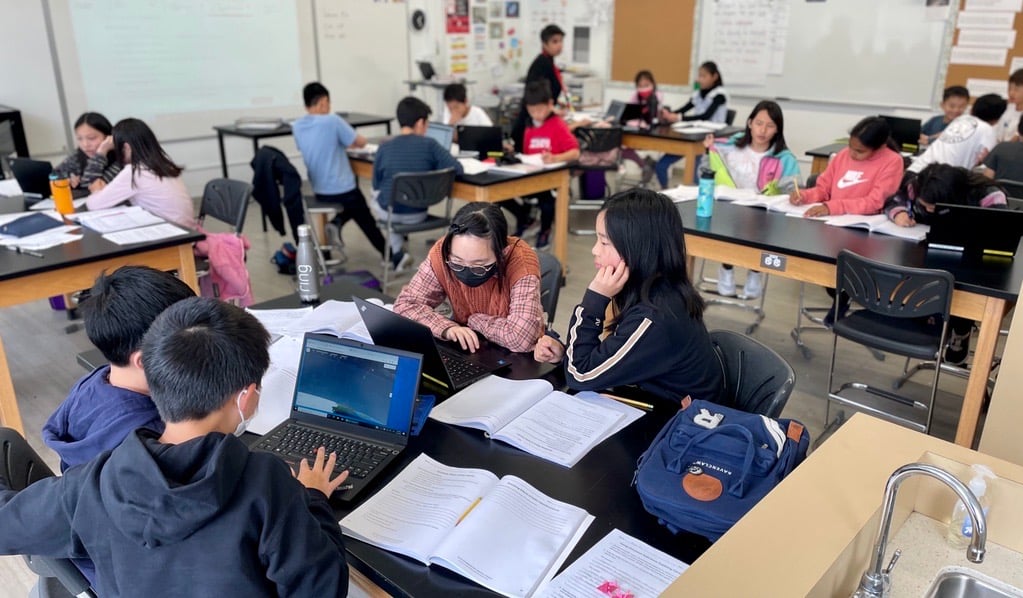
Grade 5 Californium (5Cf) engaging in group work on their laptops
Element assignment per class is used within all of the BASIS Independent Schools. However, the specific elements we selected represent our campus to show what we cherish within our BE A LINK value system. Our Bobcats have truly embraced the connection between academia and self-identity, creating a remarkable synergy that fuels their growth and success. They have come to understand that their unique talents, passions, and experiences are not separate from their academic pursuits, but rather integral elements that shape their learning journey here at BASIS Independent Silicon Valley Lower.
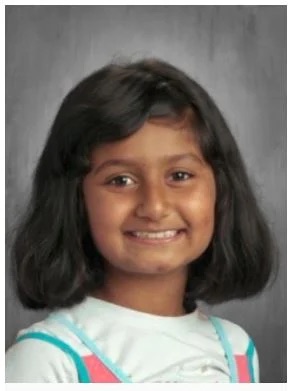
Our Day in the Life series for this school year continues with Grade 4 student Nitya, Class of 2031!
Grade 4 students travel from classroom to classroom with their Learning Expert Teacher (LET). This is the last year they have an LET as their Grade 5 year helps prepare them for our Middle School Program. They have eight classes a day with their Subject Expert Teachers (SET), a mid-morning recess, along with their lunch and recess time. Their first class of the day begins at 8:00 AM and their last class ends at 3:35 PM.
Nitya begins her day in Morning Meeting with her Learning Expert Teacher,Nitya Meeting (LET) Ms. Kato. In Morning Meetings, students will receive school announcements, reminders about upcoming events, and review their social and emotional concepts for the day through the Second Step Curriculum.
Nitya’s first class of the day is English! She has English five times a week with her Subject Expert English Teacher (SET) Dr. Ubellacker. This course focuses on four major components: reading, writing, conventions, and scholarship. In reading, students will be able to recognize basic genre differences and demonstrate comprehension of a variety of texts by identifying the main idea. In writing, students will also be able to produce short fictional and nonfictional written works, demonstrate mastery of basic paragraph organization, and respond to text-dependent questions by providing specific textual evidence.
Next, Nitya heads to Performing Arts with her SET, Ms. Fisk. Nitya has all her Fine Arts courses – Performing Arts, Music, Engineering &Technology, and Visual Arts – twice a week. This course will encourage students to build upon their performance arts vocabulary as they engage in scene work, improvisation, and pantomime. Students will expand their knowledge of theatrical styles as they explore melodrama, commedia dell’arte, and shadow puppetry.
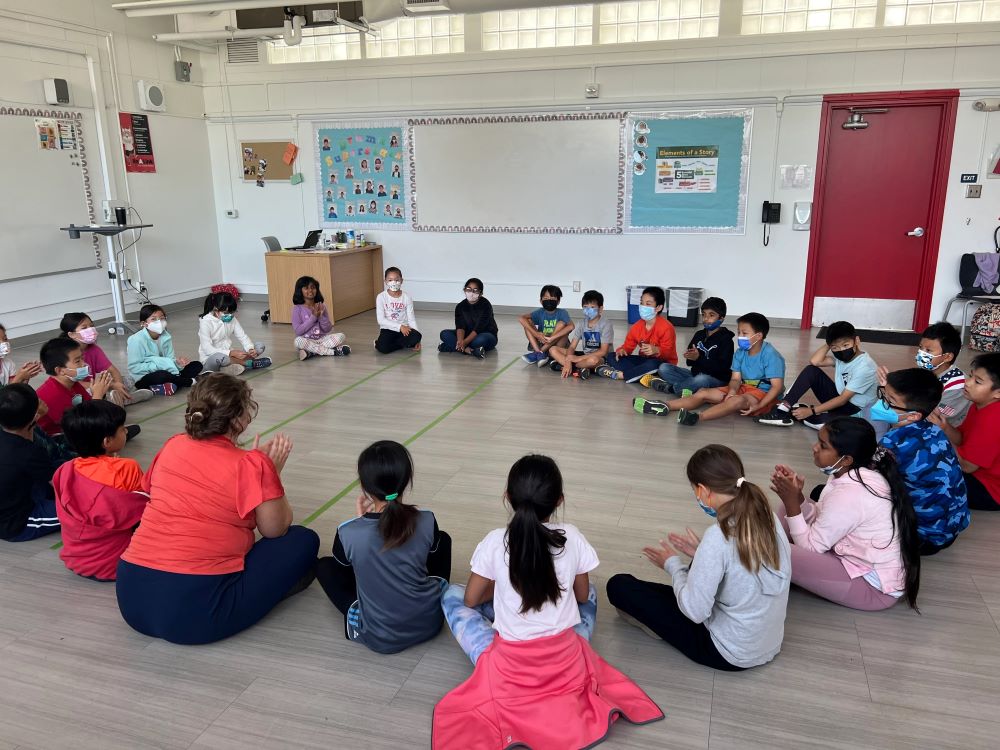
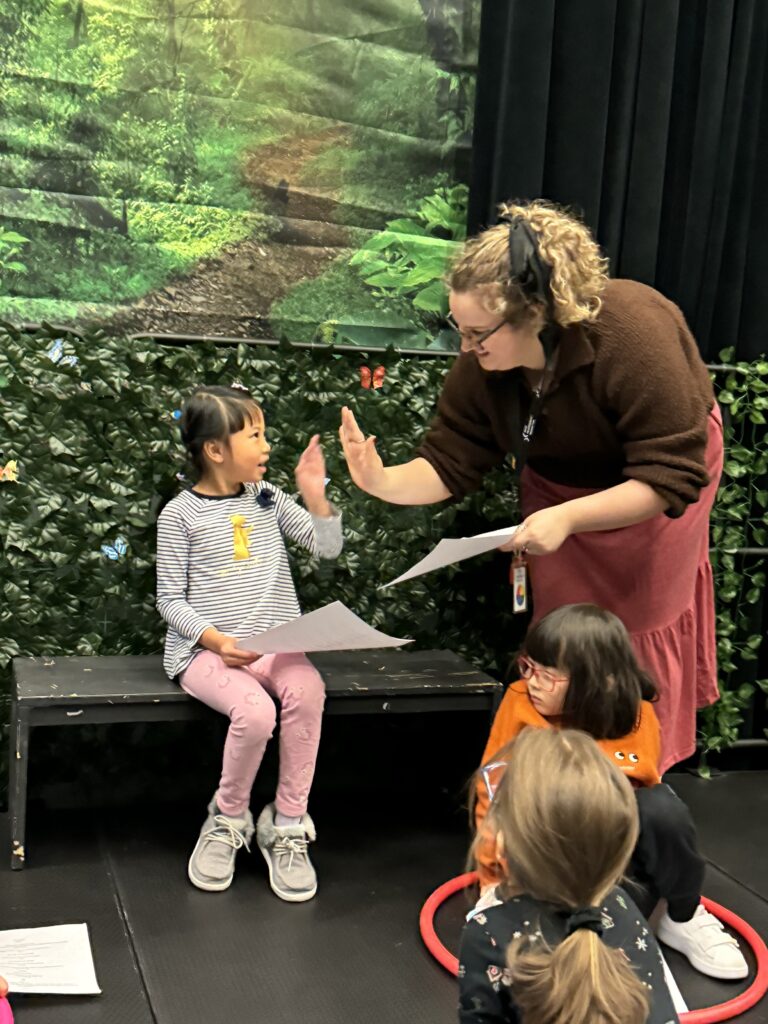
Subject Expert Drama Teacher, Ms. Fisk, works with students in a circle sit down
After Performing Arts, Nitya has a quick recess break. Grade 4 students have a mid-morning recess every day.
Nitya HistoryThen it’s on to History class with SET Ms. Mokhber Shahin! This course is held every day and is designed to introduce students to social studies and history as discrete subjects within the humanities. Students will begin developing important skills needed to understand and think critically about the past and present. These skills include analyzing primary sources, close-reading non-fiction material, connecting historical events through chronology and cause-and-effect relationships, and evidence-based writing. Students will practice and apply these skills while exploring historical topics such as state and local history and the history of the 20th century. Students will also survey different ways of investigating the human world through archaeology, geography, and government.
After History, Nitya heads to Math with SET, Dr. Xue. Dr. Xue’s goal is for students to gain knowledge of foundational mathematics by focusing on five key areas: operational thinking, number sense, measurement and data, geometry, and mathematical practices. Students have math class five times a week.
Dr. Xue (SET) and Ms. Kato (LET) work together to check student work
Finally, its lunch time! Grade 4 students eat their lunch in our multipurpose room before heading outside to the field for recess. Their lunch period is 40 minutes long.
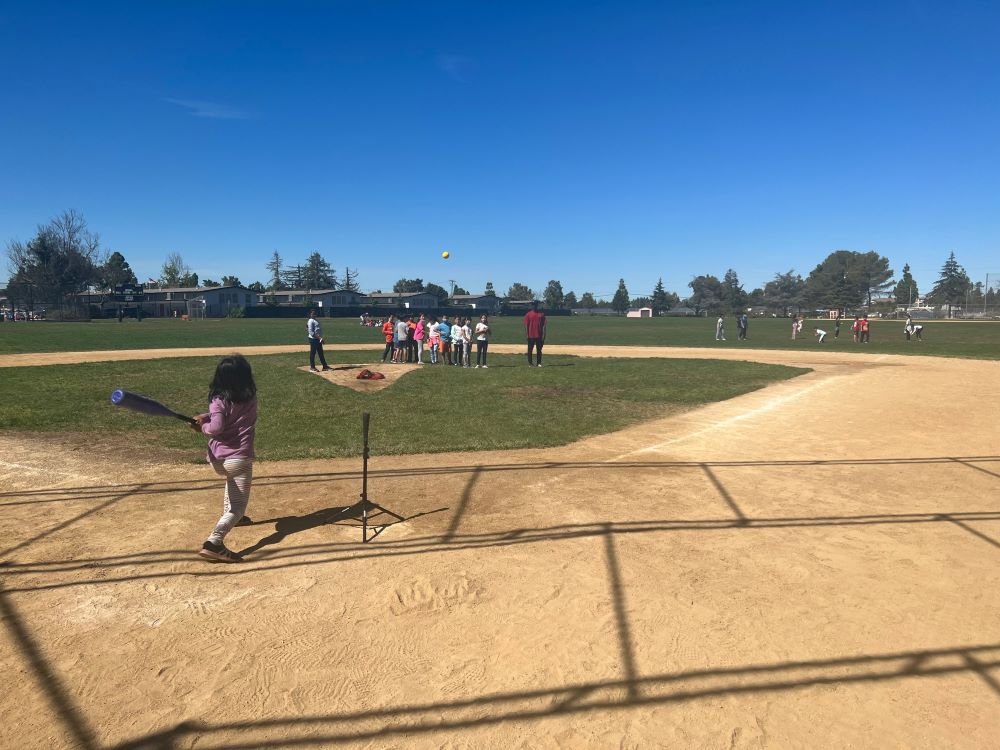
When Nitya gets back from lunch, it’s PE time! Nitya has PE & Sports with SET, Coach Hicks four times a week. Today they are out on the baseball fields practicing hitting and catching. Nice swing Nitya!
Nitya cracks one past the pitcher’s mound while her classmates wait for their turn to bat
After being on the field for PE, it’s back to a classroom for Mandarin with SET, Ms. Han. Nitya is a new learner of Mandarin so she is in a non-heritage class three times a week. This course is designed to help our primary students learn Mandarin through lessons that are rich in oral language, interactive, and project-based.
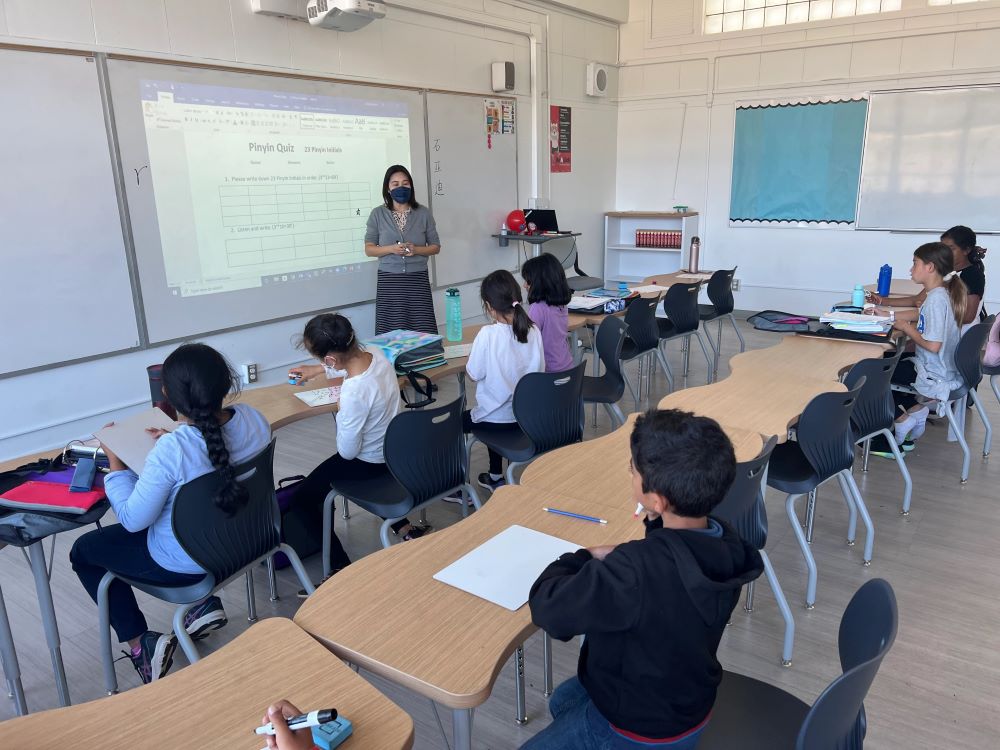
SET Ms. Han reviews a quiz with students
For her last class of the day, Nitya has Science with SET, Ms. Martosoetjipto. This is her last class of the day every day of the week. This course is designed to teach essential science topics, as well as organizational and study skills. Science topics include ecology, biology, chemistry, and physics along with the scientific process. This course is taught with the use of hands-on approaches, investigations, and inquiry as much as possible.
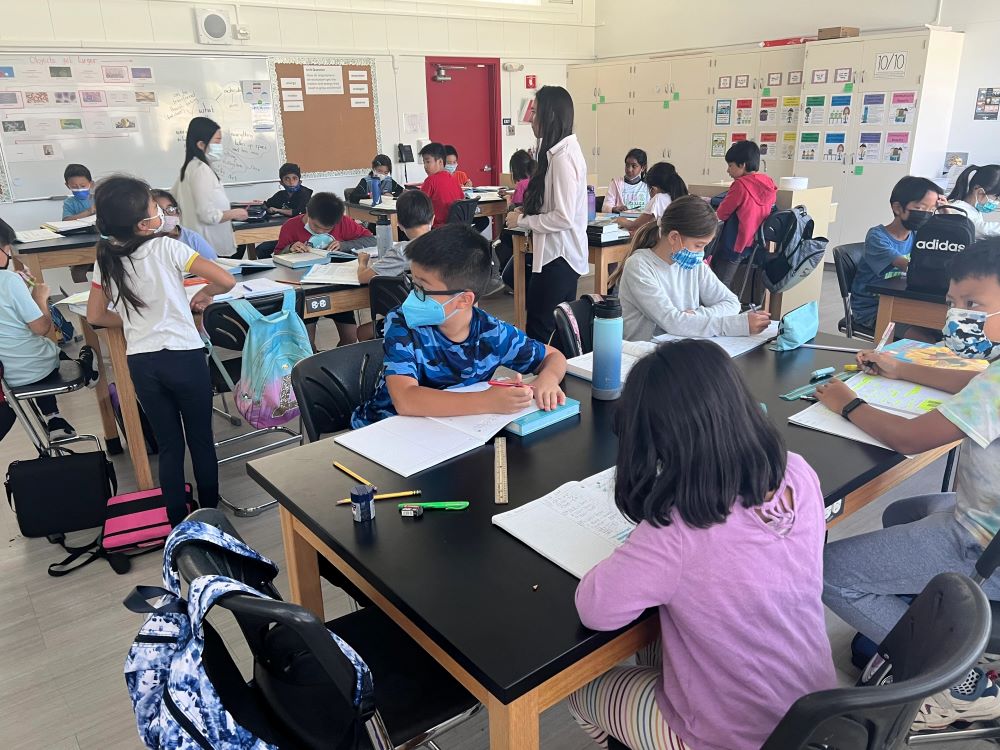
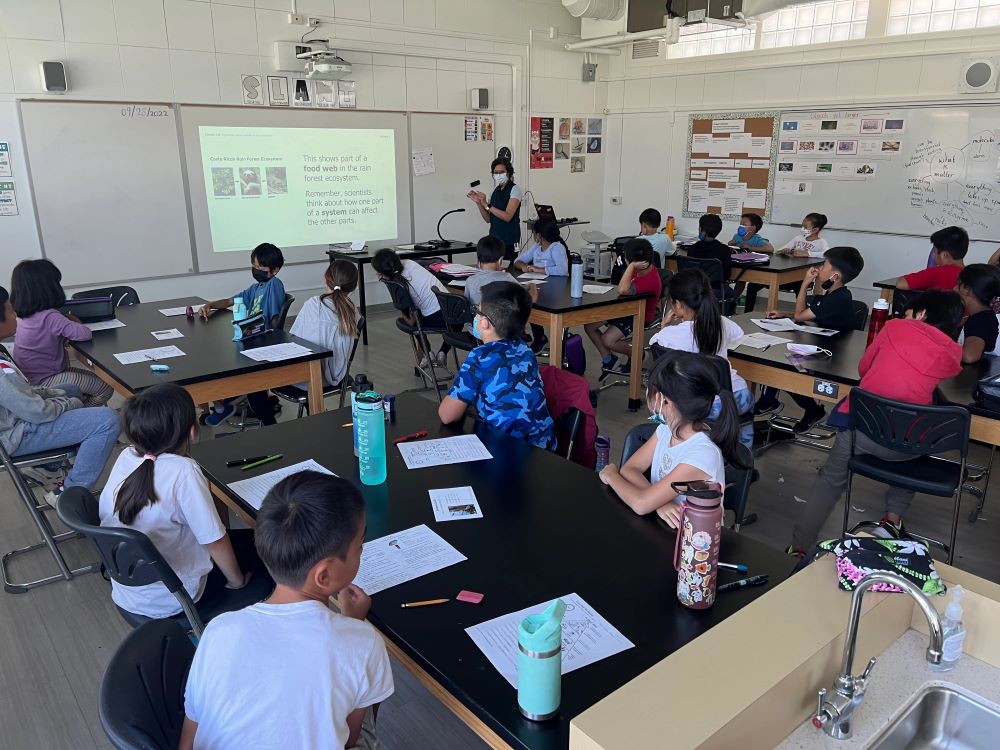
Ms. Martosoetjipto, SET, review the lab guidelines before the groups can start their project
Thank you to Nitya and her family for allowing us to document a day in her life at BASIS Independent Silicon Valley Lower School!
BASIS Independent Silicon Valley is a TK – Grade 12 private school, providing students with an internationally benchmarked liberal arts and sciences curriculum, with advanced STEM offerings.



.png)
.png)