
• Skip to primary navigation
  • Skip to main content

BASIS Independent Schools

BASIS Independent SchoolsBASIS Independent Schools
  • About
    • Why BASIS Independent Schools?
    • Mission & Philosophy
    • Diversity & Citizenship
    • History
  • Academics
    • Curriculum
    • Early Learning Program
    • Primary Program
    • Middle School Program
    • High School Program
    • The Senior Year
    • Summer Programs
    • International Student Program
  • Achievements
    • International Performance
    • College Admissions
    • Advanced Placement
    • National Merit
  • Find Your School
Inquire

High School

Meet Our New Subject Expert Teacher: Mr. Rohit Ravikumar

April 23, 2026 by nathanielyinger Leave a Comment

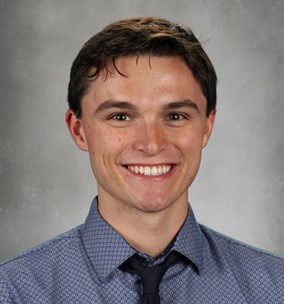
Mr. Ravikumar holds a bachelor’s degree from the University of California, Davis, where he double-majored in Economics and History. He then went on to complete a master’s degree in Economics from Boston University, focusing on applied economic theory and social policy. Outside the classroom, he worked for several years in the industry as a data scientist, utilizing economic principles to analyze business policies.

Mr. Ravikumar first joined BASIS Independent Schools as a Subject Expert Teacher in Economics and Computer Science at BASIS Independent Silicon Valley, where he taught courses ranging from AP Economics to an Econometrics Capstone Course. His teaching philosophy is centered around a dynamic learning environment that connects theoretical concepts to real-world examples and critically engages with political and social implications of the course material. As an educator, he takes pride in developing a classroom milieu that is both rigorous and approachable: scaffolding challenging concepts with the support necessary for students to succeed at their fullest potential. 

In his free time, Mr. Ravikumar enjoys video games, reading a good book, and spending quality time with his wife and cat.

What originally drew you to teach at BASIS Independent Schools, and what brought you back now?

I was originally inspired to teach at BASIS Independent Schools by the environment of genuinely inquisitive and curious students and families I saw. It was a joy to see teachers, parents, and students collaborate to foster an open, inclusive, and understanding learning environment. I am excited to return to a new community that holds learning in such esteem across a variety of subjects and the development of critical thinking along with reasoning skills.

What is one of your favorite memories from your previous time at BASIS Independent Silicon Valley?

I found it deeply rewarding to see my Econometrics capstone students take everything they had learned about statistical techniques and apply it to their own term projects. My students chose a wide variety of topics, from optimal basketball plays to stock market performance to competitive video game results, using their own skills and newfound knowledge to devise hypotheses, collect data, and present their completed projects. Seeing them do it all on their own was one of the greatest joys I had as a teacher.

What are you most looking forward to as you join a new school community? 

I’m excited to meet my new students! Building this new community will be the collective work of the teachers, staff, students, and parents, and I can’t wait to meet the students who will play such a major role in shaping it. I also look forward to helping students develop new relationships with the world around them through a deeper understanding of history.

BASIS Independent Dublin is a Grades 5 – 12 private school, providing students with an internationally benchmarked liberal arts and sciences curriculum, with advanced STEM offerings. Considering joining the BASIS Independent Dublin community? To join our interest list for the next school year and receive admissions updates and more, please click here.

Filed Under: Faculty & Staff, High School, Middle School

Meet Our New Subject Expert Teacher: Ms. Leah Atkins

April 22, 2026 by nathanielyinger Leave a Comment

Ms. Atkins holds a master’s degree in Classics, specializing in the languages, cultures, and history of the ancient Mediterranean world. She is particularly fond of the Roman Empire, which has been her lifelong passion, and she can’t wait to introduce BASIS Independent Dublin students to her favorite Latin authors.

In addition to Latin, Ms. Atkins has a broad academic background. She studied ancient Greek as part of her master’s program, translating epic poems, religious texts, and slapstick comedy. Her bachelor’s degree is in history, and she is fascinated by the common humanity that people share across time and culture.

Are there any highlights you’d like to share about your teaching philosophy or approach?

My teaching approach emphasizes creativity and critical thinking. In Classics, my goal is for students to imagine history in fresh, complex ways, noticing the similarities between us and ancient people while also recognizing our significant differences. Students should expect to read and write quite a bit of historical fiction. They should also expect a variety of hands-on projects, such as grinding wheat and mummifying apples.

My approach to Latin is similarly focused on narrative, critical thinking, and historical reasoning. As the language of the ancient Roman Empire, Latin is the closest thing we have to a time machine because it allows students to understand ancient people on their own terms. Reading stories is the primary method of instruction, though I also include hands-on projects to visualize different aspects of Roman culture.

Latin education has traditionally focused on grammar — and I love grammar! However, I don’t simply give my students a textbook and expect them to regurgitate the rules. Instead, I prefer that students study a sentence as though it were a point of scientific data, then work backwards and investigate why, exactly, words are chosen, structured, and arranged in a particular way. This approach helps the students understand that grammar is meaningful, not an arbitrary collection of rules, and that every choice of word reveals something about the author.

After the first two years of Latin, students will have an advantage in many different academic and professional areas. As the origin of the modern Romance Languages, Latin is useful for studying Spanish, French, Italian, and Portuguese. Knowledge of Latin will also come in handy when learning medical terminology, legal jargon, and advanced English vocabulary. Finally, students will gain a broad understanding of European art and literature, which will enrich their lives no matter what career they pursue. Those who continue with Latin beyond the first two years will find these advantages multiplied even further as they explore advanced grammar, epic poetry, and ancient history.

What are some of the most rewarding parts of being a Subject Expert Teacher and working with BASIS Independent School students?

When I first began teaching at BASIS Independent Schools, I was consistently amazed at the students’ passion for learning. These are the type of kids who teach themselves pigpen cipher for fun and draw diagrams of Hannibal’s forces at Cannae. My students ask such thoughtful questions that I am always challenged to dig deeper into Latin and history.

Latin is a subject that I’d imagine can be daunting to students.  What advice do you give to students to help them succeed in your class?

Latin is a language – the fact that it’s ancient doesn’t make it more difficult than Spanish, Hindi, French, Mandarin, or any other language still spoken today. In fact, since Latin focuses on reading more than speaking, it may come more naturally to students who enjoy solving puzzles and express themselves best in writing.

To succeed in Latin, students should pay attention, take notes, do their homework, and take advantage of my office hours – the same good study habits that help in any class. However, learning a language does present some unique challenges. I recommend that students review vocabulary often. They should also make sure that they know how to conjugate verbs and decline nouns, which I explain in depth during class.

Are there any thoughts you’d like to share with families who are joining – or who are thinking of joining – the BASIS Independent Dublin community?

If you’re joining the BASIS Independent Dublin community, then welcome! Meeting new students is one of my greatest joys every Fall and I can’t wait to see how we will all grow over the course of the year.

If you’re thinking about joining BASIS Independent Dublin, then I would love to connect with you during one of our open house events! There, you can get a tour of the school, ask questions about our curriculum, and get a feeling for our school culture.

BASIS Independent Dublin is a Grades 5 – 12 private school, providing students with an internationally benchmarked liberal arts and sciences curriculum, with advanced STEM offerings. Considering joining the BASIS Independent Dublin community? To join our interest list for the next school year and receive admissions updates and more, please click here.

Filed Under: Faculty & Staff, High School, Middle School

Senior Project Spotlight: Patrick Z. Weeks 3 – 4

April 9, 2026 by mirandamartinez Leave a Comment

The Senior Project is an independent, student-led culmination of our high school experience. After three years of academic preparation, our seniors are ready to spend the last trimester of their high school careers applying the skills and knowledge they have gained to develop a project that is insightful, academically rigorous, and professional in nature. This year, we are proud to showcase a senior from one of our neighboring campuses, BASIS Independent Fremont, Patrick Z.

Week 3: My Qubits Can Count, Just Not to Ten

Last week, I hit a major computational roadblock. I had to wait half of an entire day for the quantum simulations to finish. Oftentimes, they did not even work. However, I found my breakthrough with Amazon SageMaker. While I spent the final part of last week struggling with Google Colab’s limitations, this week I decided to port my notebook to Amazon’s machine learning platform: SageMaker. This gave me greater access to more powerful computational abilities. I had been spending hours training models on Colab, but now I could train models in only a fraction of that time. I could experiment, tweak, and retrain much more quickly than before, which is necessary for model development. With SageMaker, I could finally achieve what had been my goal for weeks: training all three models and getting preliminary accuracy numbers on the board.

I ran initial training jobs on all three of my models using the clean MNIST dataset from Keras. For the first time, I had actual figures to refer to. The full-resolution CNN was the strongest out of the three models, and this was honestly expected because it had the full 28×28 pixel images. To give you an idea of what this looks like, here’s an example of the input the full CNN receives.

The fair CNN, my MLP running on the same 4×4 binarized input as the QNN, was less performant but still showed the ability of a simple classical neural network to squeeze a decent amount of data out of the compressed input. Here’s what the compressed input looks like.

The QNN also produced its first accuracy figures. While the accuracy was nowhere near as good as the full CNN’s, seeing the quantum circuit learning and improving its accuracy was still exciting. For the first time, my project was more like an actual experiment than a debugging exercise.

But then I got greedy. Feeling good about having working models, I wanted to try to push the limits. I tried to have the QNN classify all ten digits rather than just the simple subset the initial version was trained on. So, I reworked the output layer as well as the loss function and started the training. It was so painfully slow. While the new hardware Amazon SageMaker provides is great, every additional output class of the QNN means more parameters in the quantum circuit, more calculations using the parameter shift rule, and more simulated quantum operations. These simulated quantum operations stacked on top of one another and made the program extremely slow. I tried different learning rates and tweaked the number of entangling layers, but it was just too slow. By the time I realized the ten-class approach was not going to work, I had already wasted the better part of two days on it with very few results to show.

However, I am not discouraged by this setback because I believe that the preliminary results I achieved prior to the ten-digit experiment are promising. In the future, I’m planning to work on optimizing the quantum circuit architecture itself and exploring different combinations of quantum gates beyond just XX and ZZ. I want to see if reorganizing the quantum circuit can help increase the classification power of the same 16 qubits. Specifically, I aim to determine the sweet spot where I can confidently mitigate noise, which is the whole purpose of the project. Beyond that, I am also interested in exploring how the models can be applied to more meaningful datasets than just MNIST. While MNIST is a great benchmark, classifying handwritten digits does not fully capture the challenges of the noisy data that these systems would encounter in more practical applications, such as medical imaging and autonomous driving.

Week 4: The Dataset Dilemma

Last week ended on a pretty high note for me. After many days of frustration, I was finally able to get the ten-digit QNN classification working with Amazon SageMaker. I did this by optimizing batch sizes and being more aggressive with my learning rate schedule to make sure that my quantum circuit was able to converge before my patience gave in. Seeing all ten digit classes separate out in my predictions seemed like a small miracle to me. So, I was looking forward to continuing with more datasets in Week 4. But then, my datasets caused quite a lot of trouble.

After having MNIST in the bag, I was feeling quite confident with my project, so I decided to try to apply my project to some real-world problems beyond just recognizing handwritten digits. So, I decided to test my models out with something more challenging than MNIST. During the first half of this week, I was looking into using the Fashion MNIST dataset, which contains images of various clothing items such as shirts and shoes. I felt like replacing my MNIST data with this new, more complex set of visual data meant more.

The results were a disaster. The full CNN performed reasonably well with the Fashion-MNIST dataset and its full resolution images. However, the fair CNN and QNN plummeted. This was because compressing a t-shirt and a pullover into 16 pixels makes them almost indistinguishable. The loss of information was fine for the digit dataset but disastrous for clothing items with only subtle visual differences. My QNN was basically guessing.

I tried different binarization thresholds and only used visually distinct classes, such as distinguishing between shoes and bags. However, even these simple two-class problems were not reliable. After two days of failed experiments, I gave up and accepted that my 4×4 input resolution was a hard constraint dictated by the limits of quantum simulation. It was simply not capable of capturing enough information to classify more complex images. MNIST worked because of the simplicity of the digit images. Fashion-MNIST did not.

So, I made a decision. I’m temporarily abandoning the Fashion-MNIST dataset and going back to MNIST. But, I might search for some more datasets of traffic lights to experiment with. Looking back, my experiment was never about Fashion-MNIST anyways, it was more about determining whether quantum computing’s properties provide noise resilience. I can still do this experiment with sufficient rigor using other datasets.

Next week, I’m also ready for more in-depth noise injection. Stay tuned.

BASIS Independent Dublin is a Grades 6 – 12 private school, providing students with an internationally benchmarked liberal arts and sciences curriculum, with advanced STEM offerings. Considering joining the BASIS Independent Dublin community? To join our interest list for the next school year and receive admissions updates and more, please click here.

Filed Under: High School, Senior Projects

Senior Project Spotlight: Aarohi G. Weeks 3 – 4

April 7, 2026 by mirandamartinez Leave a Comment

The Senior Project is an independent, student-led culmination of our high school experience. After three years of academic preparation, our seniors are ready to spend the last trimester of their high school careers applying the skills and knowledge they have gained to develop a project that is insightful, academically rigorous, and professional in nature. This year, we are proud to showcase a senior from one of our neighboring campuses, BASIS Independent Silicon Valley, Aarohi G.

Week 3: A Party Problem

This week, I prepare to replicate my methodology for the next legislative variable: Automatic Voter Registration, a policy with similar intentions to Same-Day Voter Registration, boosting voting and increasing accessibility. But before I seek these results, I aimed to research a major challenge to my findings and how I could correct for it.

Political Parties & The Youth Vote

Does the political party in charge influence efforts to appeal to the youth vote? The Democratic and Republican parties have historically prioritized it differently according to their reach with these age groups; In 2024, around two-thirds of 18-24 year-old voters aligned themselves to the Democratic Party, indicating a clear advantage gained by the youth vote for Democrats (Pew). As a result, great divides have formed on the opinions surrounding early voting or decreasing registration requirements. Where 84% of Democrats and Democratic-leaners agree with the concept of Automatic Voter Registration, only 38% of Republican and Republican-leaning responders agree (Pew, 2021).

So time and time again, we see legislation specifically catering to the youth vote and needs during elections. The Youth Voting Rights Act, sponsored by the Democratic Sen. Warren and Sen. Williams, exemplifies this as it proposes pre-registration and on-campus polling sites among other additions. And as Sen. Warren was quoted claiming Republicans responsible for voter suppression laws that “silence youth voices,” the issue of target demographic reflects in policy-making and both parties’ agendas.

Correcting This Influence

So how do I ensure that the changes I notice are from the laws themselves and their effects over time, not simply due to the political party in charge? First, the current method of comparing a treatment state to a control group helps, and can be improved by creating a treatment group of similar states as well. The treatment states would all have to adopt the policy simultaneously, offering a more limited view to compare my previous results to, rather than a new method to rely on.

As a secondary analysis after checking for the effects of legislation, I can additionally monitor campaign spending and how it is directed to young voters. In this way I can assess if it differs between parties, and identify periods of constant campaigning to use for my studies (rather than times with more fluctuation).

AVR Data Collection

Once again, I’ll be referring to the National Conference of State Legislatures for their data on the Automatic Voter Registration laws in each state. With each state implementing AVR in a much more recent range of the past 2 decades, comparing a treatment group to a control group is significantly more practical.

Week 4: Automatic Advantage

It’s time to discuss the second policy under review for impact on voter turnout: Automatic Voter Registration. Let’s get some context on the subject.

What is Automatic Voter Registration?
We’ve discussed how registration is often a barrier to voting, and AVR is just another way to streamline the process. It allows eligible voters can become registered when interacting with certain government agencies, like the DMV, and their information will pass on to election officials as necessary. 24 states and Washington D.C. have adopted this legislation in some form. The main two types are front-end opt-out and back-end opt-out.

Front-end opt-out: Whether the voter is asked to “continue” to register or “decline” to register, the choice is presented to them on a screen at the government agency.

Back-end opt-out: While interacting with said agency, the voter will provide all necessary registration information, later receiving a post-transaction mailer that they will be registered unless they respond and decline.

So, two different approaches, with the intention to reduce time costs and inform people on the official steps leading up to voting.

Current Literature
Like Same-Day Voter Registration, many credit this policy with diversifying a state’s voting population. In 2019, Oregon governor Katie Brown views the success of AVR as a direct factor in the increase of people of color registered to vote. And when it comes to the youth vote, a working paper from 2024 finds that the prescence of AVR increased voting turnout for those aged 18-24 by 3.2% (Christy, Hankins, et al.).

On the note of bureaucratic efficiency, the practice has been studied to reduce confusion and delays, both due to human error in paper forms, and also the fact that voter registration does not update when a voter moves (a fact many learn too late).

Progress
This week, I replicated my methodology from Week 2 used for SDVR, finding treatment states that adopted AVR in the 2014 to 2024 range and comparing them to their three control states. These control states were determined by their Euclidean distance — the smaller it is, the more similar their fluctuations in turnout were.

The color-coding below for the pre-AVR distance of the first control state means:

Green: Within 0 and 0.05 — a very strong match

Yellow: Within 0.05 and 0.1 — a fairly strong match

Red: Greater than or equal to 0.1 — a weak match

We know their distance, but not the direction, so to understand if their subsequent difference in path is positive or negative, I take the average turnout of treated state and the 3 control states to find their difference: the net impact value.

An increase in turnout (as shown in green) means their divergence is positive, and a decrease in turnout (red) means their divergence is negative.

Key Takeaways
First, some states have been ruled out for weak matches. As a potential solution, I’ll look for turnout data older than 2014 for a better range.

Second, AVR seems to overwhelmingly increase turnout rather than decrease, but it’s important to note that the decrease could either mean a real decrease in turnout, or a failure to keep pace with the control group. This should be further studied.

At the moment, I’m re-evaluating Delaware’s data to derive the net impact value.

I’m in the process of repeating this last step of finding the direction for SDVR, and will add it to next week’s update!

BASIS Independent Dublin is a Grades 6 – 12 private school, providing students with an internationally benchmarked liberal arts and sciences curriculum, with advanced STEM offerings. Considering joining the BASIS Independent Dublin community? To join our interest list for the next school year and receive admissions updates and more, please click here.

Filed Under: High School, Senior Projects

Founding Subject Expert Teacher Spotlight – Mr. Tyler

March 27, 2026 by jaydahsherman Leave a Comment

In Fall of 2022 our school opened it’s doors for the very first time at the direction of our wonderful Head of School, Dr. Thies. What was just a vision grew quickly into a vibrant learning community. In the first year we welcomed students in grades 2–7, as well as a group of dedicated founding Subject Expert Teachers. They turned empty classrooms into spaces filled with curiosity and growth. What began that year was not only just a school, but a community that these educators would build from the ground up. Let’s take a walk down memory lane with one of our founding Subject Expert Teachers, Mr. Tyler!


Introducing Mr. Tyler

Mr. Tyler is one of our incredible Subject Expert History Teachers here at BASIS Independent Bellevue. He currently teaches all AP Courses in our History Department. When he moved to the greater Seattle area, he had just finished up his fifth year of teaching and was halfway through a Master’s program in gifted education. He became familiar with BASIS Curriculum Schools during his time as a teacher in Arizona. At this time in his career, he was at a place where he knew where he wanted to be in education. When he learned that BASIS Independent Schools was opening its first school in Washington, he knew instantly that he wanted to apply and felt the timing was perfect. He had always felt that the philosophy behind BASIS Independent Schools aligned with his beliefs and goals as an educator. When the opportunity presented itself, he took the position without hesitation. He was bound to be a Mountaineer!


The Founding Year

Mr. Tyler described the first day as dynamic. There was an opening assembly where the students met their teachers and were given an introduction to their new school. He candidly stated that when he looked into the crowd of students and parents, he was imagining all the names he’d have to remember. It was an overwhelming feeling, but he knew this year was going to be greatly rewarding. While the students were eager to meet their teachers, their teachers were just as eager to meet them. The giddiness remained for some time over the next couple weeks, as everyone got their footing.

Mr. Tyler described his first cohort of students as surprising. Their ability to think deeper and persevere through challenges shocked him. A distinct memory he recalls from his first year was during a unit on the Americans’ involvement in the Philippines after the Spanish War. He assigned his grade 7 class a college-level article with some quite advanced questions. He shared how they were able to not only keep up with the content, but also added new perspectives and deep inquiry. Throughout the year he often spent a lot of time trying to make his content more challenging. The students had a great ability to complete and conquer work that was beyond what most would expect. He began to realize that these students were different, their affinity for learning was evident. The complex perspectives and nuance of history was welcomed by the students.

Along with new students coming in that year, came a passionate group of educators. Although they’d met weeks before school began, adding all the moving parts really brought them together. At BASIS Independent Bellevue, the Subject Expert Teachers were set up for success from the beginning. Mr. Tyler described the founding group of Subject Expert Teachers as a “Truly great team committed to excellence and creating a environment where everyone would succeed”. That first year fortified the strong connections that make this school great. Mr. Tyler expressed how he not only gained new coworkers that year but also lifelong friends.


Life In The History Department

The History Department at BASIS Independent Bellevue is one we take pride and joy in. The history curriculum is spiraled, from Kindergarten through grade 12, every skill taught before is relevant and crucial to the year following. Our History Department is always asking how does each skill build into the next? There is a clear continuum of skills that are developed as students progress through the BASIS Curriculum. This methodology is intentional to ensure our students success in challenging AP courses and beyond. They are able to think critically because of practice and support from previous lessons years in advance.

Now, of course, none of this would be possible without a strong team behind it, which Mr. Tyler has expressed is his favorite part of the History Department – his colleagues. He works alongside our other wonderful Subject Expert History Teachers, Ms. Rieger and Mr. De Monnin. He feels that they are a great team with similar beliefs and goals. They align in intention and the outcomes of their courses. They meet formally once a trimester, but also have many informal meetings and general day to day discourse. Those meetings include looking at current student successes, lesson planning and talking about their experiences with each different cohort. A short-term aspiration the History Department wants to meet is creating a clearly aligned framework of a students first to last history class and a roadmap to what success looks like along the way. Beyond working together, they are also great friends.

Since the first cohort of grade 9 students joined us, Mr. Tyler has worked diligently to curate an AP program that our students greatly enjoy. He shared that the AP History Program is the thing he is most proud of building. He claims to be a “nerd” for anything and everything AP. Our students share his passion in the AP Program. One of our students, who Mr. Tyler has had since the founding year, describes him as:

“Mr. Tyler is a dedicated and passionate teacher. As a student I find him very knowledgeable. I have really enjoyed being in his class. He immerses his students into the history and creates a great experience.” – Lucas F. Grade 10

Mr. Tyler’s favorite class to teach is AP Government and Politics, particularly the topic of political socialization. He shared how students fall into different parts of the political spectrum, but often don’t think about where those beliefs derive from. When teaching this topic it opens up a lot of conversation and introspection for students. He feels it is very formative for them in discovering who they are and how they have developed their own beliefs. This unit is often the first time students question, “What am I absorbing? What life experiences have shaped my world?” Students get to pause, reflect, and look back. He loves this subject because he gets to watch students have eye-opening moments. He feels it is important to have a solid “Why” behind your belief system.


Thank You, Mr. Tyler

Joining a school in it’s founding year presents it’s own unique challenges. We appreciate our founding Subject Expert Teachers and their confidence in creating the school we know today. Mr. Tyler has been a vital part of that. We look forward to seeing all the amazing things that will surely follow as our school continues to grow!

BASIS Independent Bellevue is a Kindergarten – Grade 12 private school, providing students with an internationally benchmarked liberal arts and sciences curriculum, with advanced STEM offerings. Considering joining the BASIS Independent Bellevue community? To join our interest list for the next school year and receive admissions updates and more, please click here.

Filed Under: Academics, Administration & Staff, AP Scholars, Culture of Support, Department Spotlight, Faculty & Staff, High School, History, Middle School, Student Learning, Uncategorized

Senior Project Spotlight: Patrick Z. Weeks 1 – 2

March 26, 2026 by mirandamartinez Leave a Comment

The Senior Project is an independent, student-led culmination of our high school experience. After three years of academic preparation, our seniors are ready to spend the last trimester of their high school careers applying the skills and knowledge they have gained to develop a project that is insightful, academically rigorous, and professional in nature. This year, we are proud to showcase a senior from one of our neighboring campuses, BASIS Independent Fremont, Patrick Z.

Week 0: It’s a Bit… It’s a Qubit… It’s a Computational Cage Math!

Hi everyone! My name is Patrick Zhou, and welcome to the very first entry of my Senior Project blog. Over the next few months, I invite you to join me as I dive into the complex and often invisible war between classical computing and the emerging frontier of quantum mechanics. My project, formally titled Comparative Analysis of Error Mitigation for Quantum Systems and Artificial Neural Networks under Additive White Gaussian Noise, is a bit of a mouthful, but the core mission is actually quite simple: I want to find out if a quantum brain is sturdier than a classical one when the world gets messy.

My journey into this high-tech rabbit hole didn’t actually start with a love for physics, but rather through a study of cybersecurity and encryption. It was during a high school class on qubits that I had a sudden, slightly frightening realization: quantum algorithms have the theoretical power to render our existing security measures obsolete. That fear quickly turned into fascination. I needed to understand the future of computation before it arrived, which led me to a summer research program at UCSB where I coded my first quantum circuits using Python and Qiskit. Now, I am systematically expanding that experience to answer a burning question about how these systems handle noise.

In the context of machine learning, noise isn’t just loud sounds; it’s static, corruption, and interference that ruins data. Think of a grainy photo taken in low light or a fuzzy MRI scan. Classical Convolutional Neural Networks (CNNs), the kind of AI currently running on your phone, are great at reading clean data, but they often stumble when the picture gets blurry. My project pits these classical networks against a Quantum Neural Network (QNN). The theory is that quantum properties like superposition (being in two states at once) and entanglement (where parts of the system are linked across space) might allow the QNN to see the big picture better than a classical computer, making it more robust against errors.

To test this, I am designing a computational cage match. I will be building three distinct models: a standard high-resolution CNN, a fair low-resolution CNN, and a hybrid QNN. I will first train all three on the famous MNIST dataset, essentially the Hello World of machine learning consisting of handwritten digits, and then bombard them with Additive White Gaussian Noise. By forcing both the classical and quantum models to look at low-quality, pixelated inputs, I aim to level the playing field. This ensures that if the quantum model wins, it’s not because it had superior data, but because its architecture is genuinely smarter at filling in the gaps.

This matters because the real world is rarely noise-free. From autonomous vehicles driving through rain to financial algorithms parsing corrupted data, we need AI that doesn’t break when conditions aren’t perfect. If my research shows that QNNs are naturally more resilient to noise, it could validate the theoretical benefits of quantum computing for industries like healthcare and defense. I have a long road of coding in Google Colab ahead of me, complete with the challenges of simulating quantum hardware on classical machines, but I am ready to see if the future of AI really is quantum. Stay tuned for the results!

Week 1: Building the Quantum and Classical Models

This week, the theoretical planning phase ended and the real construction began. I spent the bulk of my time in Google Colab building the three neural network models that will eventually go head-to-head, and I quickly learned that designing an experiment on paper is a very different beast from wiring it up in code.

The first model I tackled was the full-resolution CNN, which is the heavyweight of this experiment. This is a LeNet-style Convolutional Neural Network that takes in the full 28×28 pixel MNIST images, meaning it gets to see every detail of each handwritten digit. I built it with two convolutional layers, pooling layers to compress the spatial information, and dropout layers to prevent overfitting, which is essentially when a model memorizes the training data instead of actually learning patterns. Getting this one up and running was the smoothest part of the week because classical CNNs are extremely well-documented and the TensorFlow library makes the architecture almost plug-and-play. Think of this model as the student who gets to read the textbook with perfect lighting and a magnifying glass; it has every advantage in terms of input quality, and it will serve as my performance ceiling.

The second model, the fair CNN, was where things got more conceptually interesting. This is a much simpler Multi-Layer Perceptron with just one hidden layer, and the critical twist is that it only receives 4×4 pixel binarized images, the exact same degraded input that the quantum model will see. I talked in my last post about how previous studies comparing QNNs and CNNs often gave the classical model a full high-definition image while the quantum model worked with a pixelated thumbnail, which is hardly a fair fight. This fair CNN is my solution to that problem. By stripping the classical model down to the same resolution, I am isolating the variable of architecture itself. If the quantum model outperforms this one, it won’t be because of an unfair data advantage; it will be because the quantum design is genuinely better at extracting meaning from limited information.

The third and most challenging model is the QNN, the hybrid quantum-classical network that sits at the heart of this entire experiment. Building it required me to dive into TensorFlow Quantum, which is a framework that lets you design quantum circuits and integrate them into a standard machine learning pipeline. The idea is to take each 4×4 binarized image and encode it onto 16 qubits, where each pixel maps to one qubit. From there, a Parameterized Quantum Circuit uses XX and ZZ entangling gates to create correlations between the qubits, theoretically allowing the model to capture global patterns in the data that a classical network might miss. If superposition lets each qubit exist in multiple states at once and entanglement links those states together, then in theory this circuit should be able to see relationships across the entire image simultaneously rather than scanning it piece by piece. In practice, however, setting up the circuit encoding and making sure the data pipeline correctly binarizes and maps each image to the quantum layer took a significant chunk of my week and a lot of debugging.

The biggest challenge I ran into this week was honestly just the sheer difference in workflow between classical and quantum model building. With the classical CNNs, errors were usually straightforward: a mismatched tensor shape here, a wrong activation function there. With the QNN, debugging felt like navigating in the dark because the abstraction layer between the quantum circuit and the classical optimizer made it harder to pinpoint where things were going wrong. I also had a minor scare when I realized how long even a simple quantum simulation takes on a classical machine, which is a reminder that I am not running on an actual quantum computer but rather simulating one, and that simulation cost grows fast. This is why the 4×4 input size is non-negotiable; scaling up to 28×28 would require 784 qubits and an astronomical runtime that my laptop and Google Colab would simply refuse to handle.

Looking ahead to next week, my goal is to finalize the architecture of all three models and begin the training phase on the clean MNIST dataset. I plan to train each model for 10 epochs and start logging the baseline accuracy and loss metrics before any noise is introduced. If all goes well, by the end of next week I will have three trained models sitting in my notebook, ready to be thrown into the noisy gauntlet. Stay tuned for the results, and wish my qubits luck.

Week 2: The Speed Wall

Last week I finished constructing all three models and was eager to jump straight into the training phase. My plan was to start with the QNN first since it is the most complex and unpredictable of the three, get it working well, and then breeze through the two classical CNNs afterward. That plan sounded great on paper. In practice, the quantum model decided to humble me.

When I first attempted to train the QNN on the full 10-digit MNIST classification task, the accuracy was, to put it politely, rough. The model was struggling to meaningfully distinguish between all ten digit classes when each image is compressed down to a 4×4 binarized grid mapped onto 16 qubits. The loss curves were not converging the way I needed them to, and the predictions felt almost random for several of the digit classes. This was not entirely shocking given how much information is lost when you crush a handwritten digit into 16 binary pixels, but it still meant I could not just accept the results and move on. I started experimenting with adjustments to the circuit, tweaking the number of entangling layers, adjusting the learning rate, and modifying how the Parameter Shift Rule interacts with the optimizer to update the quantum circuit’s trainable parameters.

Here is where the real problem hit. Every single one of those adjustments requires retraining the model from scratch, and each training run on the QNN is agonizingly slow. The fundamental issue is that I am simulating a quantum computer on classical hardware, so every quantum gate operation, every state vector update, and every gradient calculation has to be brute-forced through classical linear algebra. A single epoch takes orders of magnitude longer than it would for either CNN. When I was just building and testing the circuit with small batches during Week 1, the slowness was manageable. Now that I am trying to iterate rapidly on a real training set, each failed experiment costs me hours of waiting. I would tweak a hyperparameter, start a run, watch a progress bar crawl, and then discover the change did not help. That debugging loop I described last week is exponentially more painful when every attempt takes half a day to evaluate.

Because of this bottleneck, I have not yet trained the two classical CNNs either. There is no point in collecting their baseline numbers until I have a QNN that actually works well enough to make the comparison meaningful, and I cannot get the QNN to that point when every iteration takes this long. The solution I am currently pursuing is procuring access to a faster server. Google Colab, even with GPU acceleration, is not cutting it for the volume of quantum simulation I need. I have been working on getting access to a more powerful machine that can handle the computational overhead more efficiently, compressing those multi-hour runs into something manageable so I can actually iterate at a reasonable pace.

Despite the frustration, this week has been a grounding reminder of why the quantum computing field is pouring billions into building real quantum hardware. Simulating even 16 qubits at scale already pushes classical machines to their limits. Next week, I am hoping to have the new server set up so I can break through this wall and finally get all three models trained on clean data. Stay tuned.

BASIS Independent Dublin is a Grades 6 – 12 private school, providing students with an internationally benchmarked liberal arts and sciences curriculum, with advanced STEM offerings. Considering joining the BASIS Independent Dublin community? To join our interest list for the next school year and receive admissions updates and more, please click here.

Filed Under: High School, Senior Projects

Senior Project Spotlight: Aarohi G. Weeks 1 – 2

March 24, 2026 by mirandamartinez Leave a Comment

The Senior Project is an independent, student-led culmination of our high school experience. After three years of academic preparation, our seniors are ready to spend the last trimester of their high school careers applying the skills and knowledge they have gained to develop a project that is insightful, academically rigorous, and professional in nature. This year, we are proud to showcase a senior from one of our neighboring campuses, BASIS Independent Silicon Valley, Aarohi G.

Week 1 – The Beginning

Hi everyone! My name is Aarohi, and I’m excited to delve into the nuanced topic of civic engagement, how state governments can influence and encourage it, and my first week’s progress on this journey.

Background
From passionately researching and delivering politically-focused speeches to feeling a sense of helplessness watching the news, I noticed a unique combination of interest and inaction that characterizes my experience with civics. For years, I observed this same perspective in my peers and corroborated it with the common statistics that surrounded me; I knew well that the 18 to 24 age demographic of voters historically has had the lowest turnout, with a little over half voting in the 2020 election. As a result, young people are often perceived as apathetic to political concerns; however, CIRCLE at Tufts hopes to discredit these beliefs, indicating through research that an uneven civic education and other barriers to participation are major contributors to these trends.

I realized then that, to navigate this complex issue, I must understand how the government can extend a hand to these age groups and inspire increased participation.

Which brings me to my research question: how can state governments engage young voters (18-24 year-olds) and high schoolers in sustained civic participation through programs and legislation?

Method
To investigate this, I’ll draw from available datasets and analyze them across two stages: the first studying the impact on voter turnout, and the second researching non-voting methods of participation.

Stage 1
In this stage, I’ll assess the impact of Same-Day Voter Registration, where people can register and vote on Election Day; Automatic Voter Registration, where eligible individuals are automatically registered when interacting with government agencies such as the DMV; access to polling sites on college campuses; and the ability to pre-register to vote. To study this, I will conduct a difference-in-differences analysis of states within groups that have similar levels of fluctuation in their voter turnout rate over time. With this similarity, I’ll be able to clearly determine how, as one or more states incorporate a new policy, their voter turnout trends shift or diverge.

Stage 2
Second, to measure interest among the nonvoting population, this project will explore the impact of optional engagement and volunteering opportunities such as being a member of a Youth Advisory Council, or abiding by a mandatory civics education requirement in high school. I’ll quantify engagement as the frequency of voluntary petition-signing or submission of public comment–a direct communication to government agencies about proposed regulations or policies.

Stage 3
Finally, to augment the analysis with qualitative data, I will study existing interviews with local officials, students, and young voters, then conduct new ones.

Thus, this project will provide a comprehensive and refined list of improved strategies that can aid states with low engagement and truly include the youth in civic issues.

Week 1
To kick off the first stage, I’ve gathered voter turnout data from KFF, an independent information organization. I compiled the information on voter turnout of 18-24 year olds as a share of their voting population in every national and midterm election from 2014 to 2024. Then, I calculated the coefficient of variation for each state’s turnout over this period of time, categorizing them as Low, Medium, and High Volatility states. Within these categories, I aimed to find the best matches by determining the similarities of these states’ trends to each other through calculating their Euclidean Distance to each other. With these two metrics, I organized the most similar states in groups of three. In the next steps, I’ll be assessing any differences in behavior after the introduction of Same-Day Voter Registration.

Week 2 – Same-Day Success?

Last week, we discussed Stage 1 of my methodology, where I assess the impact of legislation on voter turnout. In pursuing this goal, I start by comparing states’ turnout trends to each other before and after one adopts the policy of Same Day Voter Registration (SDVR).

What is Same Day Voter Registration?
While registration to vote is a requirement to participate with a deadline before Election Day, SDVR allows eligible voters to register and cast their ballot on the same day. Whether that’s only during Election Day, the early voting period alone, or both, depends on the state. As of October, 2024, twenty-three states and Washington D.C have adopted this legislation across a several decades-long timeframe; Wyoming, Washington, and Wisconsin implemented it in the 1970s, while Colorado and Idaho did in 2022 and 2023 respectively.

Current Literature
Same Day Voter Registration has historically elicited mixed reactions. Proponents applaud it for accommodating voters who face accessibility barriers, such as transportation or scheduling costs, and those who wish to get involved very close to the election. Others share concerns about administrative disarray and increases in uninformed or rushed decision-making on the voters’ parts.

Studies on the subject point to hopeful results, where SDVR successfully encourages voter participation. In a study by Grumbach and Hill, published in the Chicago Journals, young voters (aged 18-24) suffer from the usual registration rules since they move frequently yet do not interact with government agencies regularly to update registration information. And according to their Differences-in-differences analysis, SDVR increases turnout among young voters by 3.1 to 7.3 percentage points.

Week 2
Entering the week with this context, I aimed to identify states that would implement Same Day Voter Registration within my range of 2014 to 2024, since my voter turnout data encompasses this time frame. Then, I identify three control states whose voter turnout rates fluctuate similarly before SDVR was implemented, and finally, compare the level of change in their voter turnout afterwards.

Eight states had adopted this policy within my required timeline: New York, Virginia, Nevada, New Mexico, Maryland, Michigan, Utah, and Washington.

Using the strategy tested and refined in Week 1, I grouped similar control states by first calculating their coefficient of variation to categorize them as Low, Medium, and High Volatility states. Within these groups, I found the Euclidean distance of their data to each other, identifying the top 3 best matches to the state with SDVR.

Finally, I calculated the Euclidean distance post-enactment of Same Day Voter Registration, to measure divergence by the increase in the distance value.

This increase occurred for nearly every state in comparison to each of the three control states, with the exceptions of: Virginia to its first and third closest control, and New York to its second and third closest controls.

BASIS Independent Dublin is a Grades 6 – 12 private school, providing students with an internationally benchmarked liberal arts and sciences curriculum, with advanced STEM offerings. Considering joining the BASIS Independent Dublin community? To join our interest list for the next school year and receive admissions updates and more, please click here.

Filed Under: High School, Senior Projects

Meet Our New Subject Expert Teacher: Ms. Mayra Jones

March 20, 2026 by mirandamartinez Leave a Comment

Ms. Jones earned her Bachelor’s degree in Multiple Subject Teaching (K–8) with an emphasis in English as a Second Language from Interamerican University of Puerto Rico. She brings extensive experience teaching Spanish and has previously taught courses ranging from middle school Spanish to AP Spanish Language and Culture at BASIS Independent Silicon Valley. For the past six years, she has served as an AP Spanish Language and Culture Reader for the College Board, evaluating student exams from across the United States. She also holds the State of California Certification as a Bilingual Services Provider.

As a proud Hispanic educator, Ms. Jones is passionate about sharing her language and culture with students and helping them develop strong communication skills in Spanish. She believes that learning another language opens the door to understanding diverse perspectives and building meaningful connections across cultures. Her goal is to inspire students to develop confidence, curiosity, and a lifelong appreciation for language learning.

Ms. Jones is proud to return to the BASIS Independent Schools community and is excited to continue supporting students in their academic and personal growth.

In her free time, Ms. Jones enjoys spending time with her family, especially with her husband and her grandchildren.

What originally drew you to teach at BASIS Independent Schools, and what brought you back now? 
What originally drew me to BASIS Independent Schools was the strong academic environment and the opportunity to work with motivated students who are excited about learning. I was also impressed by the commitment of families who actively support their children’s education and partner with our Subject Expert Teachers to help students succeed. That level of collaboration between the school and parents creates a very special learning community. Returning now feels very meaningful to me because BASIS Independent has always felt like a place where academic excellence, curiosity, and dedication to learning are truly valued. I am excited to once again be part of a community that encourages students to challenge themselves and grow both academically and personally. 

What is one of your favorite memories from your previous time at BASIS Independent Silicon Valley? 
One of my favorite memories from my time at BASIS Independent Silicon Valley was watching my students grow in confidence as they developed their Spanish language skills. It was especially rewarding to see my AP Spanish students challenge themselves through advanced discussions, cultural topics, and authentic materials in Spanish. I loved witnessing the moment when students realized they could express complex ideas and opinions in another language. Seeing their confidence grow and their curiosity about Hispanic cultures deepen was one of the most rewarding parts of teaching and a reminder of how powerful language learning can be. 

What are you most looking forward to as you join a new school community? 
I am most looking forward to getting to know my students and building a supportive classroom environment where they feel comfortable practicing Spanish and learning about Hispanic cultures. I am excited to help students develop confidence in their language skills while discovering how language connects people and cultures around the world. I also look forward to collaborating with colleagues and becoming part of a vibrant school community that values learning, curiosity, and academic excellence. My hope is to inspire students to see language not only as a subject to study, but as a powerful way to connect with others and understand the world more deeply. 

BASIS Independent Dublin is a Grades 6 – 12 private school, providing students with an internationally benchmarked liberal arts and sciences curriculum, with advanced STEM offerings. Considering joining the BASIS Independent Dublin community? To join our interest list for the next school year and receive admissions updates and more, please click here.

Filed Under: Faculty & Staff, High School

Senior Project Spotlight: Patrick Z.

March 18, 2026 by mirandamartinez Leave a Comment

The Senior Project is an independent, student-led culmination of our high school experience. After three years of academic preparation, our seniors are ready to spend the last trimester of their high school careers applying the skills and knowledge they have gained to develop a project that is insightful, academically rigorous, and professional in nature.

Our seniors start by designing a research question that is often centered on a subject they are passionate or curious about. Then they embark on a journey to answer it, documenting and analyzing their findings as they go. They partner with both an internal and external advisor to support and guide their research. Students may choose to conduct their research in the form of internships or experimental research at university research labs, field work abroad, or research conducted remotely from home. From explorations into new-age technology to cutting-edge medical advancements to social justice, the Senior Project offers students the opportunity to channel their innate curiosity. This experience readies them for the type of self-direction and self-discipline expected in an undergraduate and graduate setting.

This year, we are proud to showcase a senior from one of our neighboring campuses, BASIS Independent Fremont, Patrick Z.

Project Title: Comparative Analysis of Error Mitigation for Quantum Systems and Artificial Neural Networks Under Noisy Inputs

BASIS Independent Advisor: Ms. Shahin

Internship Location: Google, 1600 Amphitheatre Pkwy, Mountain View, CA 94043

Onsite Mentor: Mr. Peng Xiang Li

Abstract: Artificial Intelligence is increasingly vital to high-stakes industries like healthcare and finance, yet these systems often falter when processing the noisy, imperfect data found in real-world environments. While Convolutional Neural Networks (CNNs) are the standard for image classification, Quantum Neural Networks (QNNs) theoretically offer superior noise resilience through quantum properties such as superposition and entanglement. However, existing comparative research is often inconsistent, frequently pitting high-resolution classical models against hardware-limited, low-resolution quantum simulations. This research addresses that disparity by conducting a comparative analysis of error mitigation between QNNs and CNNs under Additive White Gaussian Noise (AWGN). My methodology involves developing three distinct models within TensorFlow Quantum using the MNIST dataset: a standard full-resolution CNN, a hybrid QNN, and a resolution-matched fair CNN to ensure a direct architectural comparison. All models will be trained on clean data and subsequently tested against noise-injected datasets to measure classification accuracy and loss. Through this research, I aim to quantify whether quantum architectures inherently outperform classical ones in signal-to-noise processing. Observing superior robustness in the QNN would validate the practical viability of quantum machine learning for critical applications where data integrity is compromised.

BASIS Independent Dublin is a Grades 6 – 12 private school, providing students with an internationally benchmarked liberal arts and sciences curriculum, with advanced STEM offerings. Considering joining the BASIS Independent Dublin community? To join our interest list for the next school year and receive admissions updates and more, please click here.

Filed Under: High School, Senior Projects

Senior Project Spotlight: Aarohi G.

March 18, 2026 by mirandamartinez Leave a Comment

The Senior Project is an independent, student-led culmination of our high school experience. After three years of academic preparation, our seniors are ready to spend the last trimester of their high school careers applying the skills and knowledge they have gained to develop a project that is insightful, academically rigorous, and professional in nature.

Our seniors start by designing a research question that is often centered on a subject they are passionate or curious about. Then they embark on a journey to answer it, documenting and analyzing their findings as they go. They partner with both an internal and external advisor to support and guide their research. Students may choose to conduct their research in the form of internships or experimental research at university research labs, field work abroad, or research conducted remotely from home. From explorations into new-age technology to cutting-edge medical advancements to social justice, the Senior Project offers students the opportunity to channel their innate curiosity. This experience readies them for the type of self-direction and self-discipline expected in an undergraduate and graduate setting.

This year, we are proud to showcase a senior from one of our neighboring campuses, BASIS Independent Silicon Valley, Aarohi G.

Project Title: State of the Nation: A Critical Analysis of State-Funded Resources for Youth Civic Participation

BASIS Independent Advisor: Dr. Van Dusen

Internship Location: Remote

Onsite Mentor: Dr. Biplav Srivastava, Professor of Computer Science, University of South Carolina

Abstract: This research project aims to understand how state governments can effectively engage high schoolers and the 18-24 year-old voter demographic in sustained civic engagement through a combination of immersive initiatives and legislation. This work will get to the root of the issues blocking young individuals from involvement, compare and contrast states, and identify successes and pitfalls of current efforts. To do so, this research will first involve data analysis from publicly available datasets and be performed in two stages. To understand the impact of legislation on the voting population, a difference in difference analysis of twelve sample states with varying levels of voter turnout can show the effects of each new policy. Second, to measure interest among the nonvoting population, this project will explore the impact of optional engagement and volunteering opportunities on voluntary petition-signing, public commenting, and other official methods of outreach. To augment the analysis with qualitative insights, a final stage will involve studying existing interviews with local officials, students, and young voters, then conducting new ones. Thus, this project will provide a comprehensive and refined list of improved strategies that can truly engage the youth in civic issues.

BASIS Independent Dublin is a Grades 6 – 12 private school, providing students with an internationally benchmarked liberal arts and sciences curriculum, with advanced STEM offerings. Considering joining the BASIS Independent Dublin community? To join our interest list for the next school year and receive admissions updates and more, please click here.

Filed Under: High School, Senior Projects

  • « Go to Previous Page
  • Page 1
  • Page 2
  • Page 3
  • Page 4
  • Interim pages omitted …
  • Page 11
  • Go to Next Page »

© BASIS Independent Schools

  • Contact Us
  • Media Recognition
  • Careers
  • Privacy Policy
  • CA Privacy
  • Terms of Use

Headquartered in Campbell, California, Spring Education Group is majority-owned by investment funds administered by Primavera Holdings Limited, an investment firm owned by Chinese persons and principally based in Hong Kong with operations in the United States, China and Singapore.

Sitemap