
• Skip to primary navigation
  • Skip to main content

BASIS Independent Schools

BASIS Independent SchoolsBASIS Independent Schools
  • About
    • Why BASIS Independent Schools?
    • Mission & Philosophy
    • Diversity & Citizenship
    • History
  • Academics
    • Curriculum
    • Early Learning Program
    • Primary Program
    • Middle School Program
    • High School Program
    • The Senior Year
    • Summer Programs
    • International Student Program
  • Achievements
    • International Performance
    • College Admissions
    • Advanced Placement
    • National Merit
  • Find Your School
Inquire

Student Learning

Why Latin? – A Language That Opens Doors You Never Expected

January 9, 2026 by emilyhughes Leave a Comment

Families are often intrigued to learn that the study of Latin as a World Language is an important part of the curriculum at BASIS Independent Bellevue. All students study Latin in grades 5 and 6, building a strong foundation in language, history, and critical thinking. Beginning in grade 7, students may choose their World Language that they intend to take up through the high school level. The World Language choices are Latin, Mandarin, Spanish, or French. Remarkably, when given the choice in grade 7, many students elect to continue their Latin studies. So why Latin?

To provide a window into what Latin looks like at BASIS Independent Bellevue, one of our exceptional teachers, Mr. Ballantyne, has agreed to share his experiences with Latin, both inside and outside the classroom. A former professor at Baylor University, Mr. Ballantyne brings over a decade of experience teaching Latin, Roman Archaeology, and Art History at the college and high school levels, including IB and AP Latin. From excavation sites in Pompeii to the classroom at BASIS Independent Bellevue, we invite you to step into his journey with Latin!

Latin Beyond the Classroom with Mr. Ballantyne

When people find out I teach Latin, they often ask, “Why Latin? Isn’t it a dead language?” I usually smile, because Latin has taken me places, I could never have imagined when I first encountered it as a student— ancient cities, museums, excavation trenches, and even crime scenes—Roman ones, at least.

Latin is everywhere, even when we don’t notice it. We hear it in law and medicine, see it in mottos like Ad astra per aspera, “To the stars, through hardship,” and recognize it in popular culture—from Harry Potter spells, like expelliarmus, to the Latin-inspired worlds of Percy Jackson and Star Trek. But what surprised me most was how Latin connects us to ordinary people in the past.

As an archaeologist, I study Roman graffiti—the everyday words scratched onto walls in places like Pompeii. These are not polished speeches or epic poems. They are messages like, “Marcus loves Julia,” advertisements for bakeries, jokes between soldiers, and complaints about bad service. In many ways, they are the ancient equivalent of social media. When students translate them, they realize something powerful: people two thousand years ago worried, joked, loved, and complained just like we do.

Latin has also led me quite literally into the ground at an archaeological dig near Pompeii, where I was a part of an international team of students excavating just beyond the walls of Pompeii. For weeks, we carefully dug and documented the site, expecting to uncover evidence of Roman life. Instead, we found almost nothing. Day after day, trench after trench, the ground remained frustratingly empty.

Then one afternoon, we uncovered a small, broken object: an ivory smoking pipe. It wasn’t Roman at all. At first glance, the pipe didn’t seem important, but it turned out to be the key to understanding the entire site. Pipes weren’t used until the discovery of tobacco in the New World. In fact, it dated to the 1700s, when Pompeii was first explored under Charles VII, the king of Naples.

The pipe told us that people had already been there long before us. In the eighteenth century, Pompeii was often dug not by archaeologists as we know them today, but by treasure hunters working for royalty. They searched for impressive objects to display, removing items without carefully recording where they came from. As a result, many areas were quietly emptied centuries ago.

That broken pipe explained why our excavation felt so puzzling. We weren’t failing to find Roman artifacts, but rather the site had already been picked clean. The emptiness of the ground was itself the evidence. This experience taught us an important lesson: archaeology isn’t just about discovering objects. It’s about uncovering the past, including the stories of people who came before us, even earlier excavators. Sometimes a small, unexpected find can answer bigger questions than a spectacular treasure ever could.


Bringing the Ancient World into the Classroom

As we begin this new academic year, I want my students to feel that same spark of excitement and discovery I felt when I translated my first Latin inscription, coin, or monument. When they conjugate verbs or translate sentences, they’re not only doing grammar drills. They are decoding the voices of a lost world.

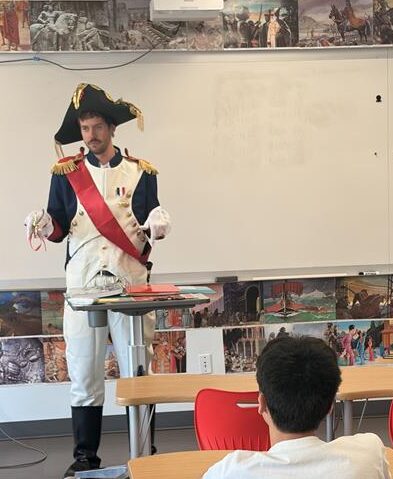
One way I ignite that spark with students is through a murder mystery I designed called, Murder at the Roman Baths, set at the Roman baths of Aquae Sulis, which is in modern Bath, England. The choice in settings offers one of the richest archaeological and epigraphic datasets in Roman Britain. Alongside monumental architecture and votive deposits, the site preserves over one hundred curse tablets—personal, fragmentary inscriptions that record conflict, theft, and desperation. This combination of material and textual evidence makes Aquae Sulis an ideal setting for an inquiry-based learning experience centered on historical reconstruction.

In this mystery, students have to investigate a fictional murder that occurred within the bath complex. Working as historical detectives, they are given a map, a list of suspects with their motives written in Latin, and make their way around the room to several stations in order to decipher Latin based clues. Students translate these clues from Latin to English and evaluate how these clues reflect personal motives that may fit with the suspect’s opportunity.

No single clue provides a definitive answer. Instead, students must weigh competing interpretations and build a plausible narrative grounded in what they know about Roman culture. Would a slave really “do in” their master? Suspects include desperate slaves, a rival merchant, a jealous wife, a friend who owed the deceased a debt, each one reflecting different aspects of Roman daily life, and therefore eliciting a student’s empathy.

Pedagogically, the mystery emphasizes both linguistic precision as well as historical reasoning. Who is most likely to have committed the crime. Translation becomes a tool rather than an endpoint, as students must decide how meaning, omission, and formulaic language affect interpretation. Archaeological evidence—the layout of the baths, patterns of votive deposition, and access to restricted spaces—provides constraints on possibility, reinforcing the importance of context.

The final product is a great example of how Latin can be made more relatable to students who presented with evidence, have to use their linguistic skills to uncover clues and defend a reasonable conclusion. This assessment prioritized reasoning over correctness, rewarding students who justify their interpretations with both linguistic and material evidence. The gamification of Latin and historical context in our bathhouse mystery helps transform the study of Latin from passive decoding into active inquiry, demonstrating how the ancient world can be reconstructed, maybe imperfectly, but at least persuasively, through careful analysis.


Why Latin Still Matters

Latin has a unique way of opening students’ minds. It trains students to notice patterns, think critically, and piece together meaning from fragments—whether those fragments are words, objects, or clues. Latin roots make English vocabulary clearer—especially in science, law, and medicine. Reading inscriptions teaches patience and creativity: how to piece together meaning from fragments. Studying Latin is not just about the past. It is about learning how to ask good questions, how to listen to overlooked voices—not just the emperors and the generals, but also the slave, the farmer, the baker, or the soldier who left a doodle on a wall before marching off to war, and how to uncover stories hidden in plain sight. It is not what I ever imagined Latin would lead me to in high school, and that sense of discovery is why I am so passionate about bringing this ancient language to life for my students each day.


Filed Under: Academics, Administration & Staff, Department Spotlight, Faculty & Staff, Latin, Student Learning

Build the Future at Our Senior Robotics Camp

December 31, 2025 by jogoldfarb Leave a Comment

This summer, we’re opening the doors to innovation at BASIS Independent Brooklyn with our Senior Robotics Camp—an intensive, hands-on experience designed for students in grades 6–12 who are eager to explore the cutting edge of technology.

From June 29 to July 3, aspiring engineers and problem-solvers will spend their afternoons (12:00–4:00 p.m.) immersed in the fundamentals of robotics at our Upper School campus in Red Hook. Students will master mechanical design, dive into coding, explore circuitry, and learn sensor integration—all while building and programming their own robots from the ground up.

What Makes This Camp Special?

This program isn’t just about following instructions. Campers will tackle real-world challenges, from navigating complex obstacle courses to programming robots to complete automated tasks. Working both independently and collaboratively, students will develop critical STEM skills, including:

  • Critical thinking and analytical reasoning
  • Teamwork and communication
  • Creative problem-solving under pressure
  • Technical proficiency in coding and engineering

Whether your student is taking their first steps into robotics or looking to level up their existing skills, our supportive environment encourages experimentation, iteration, and bold thinking.

BASIS Independent Brooklyn’s Robotics Coach Nicholas will oversee the camp, and he shared: “I’m really excited about the Robotics Summer Camp, where students get hands-on experience building and programming robots using Arduino and other electronics.”

Coach Nicholas continued: “Whether students are new to robotics or have prior experience, this camp is a great opportunity to explore, problem-solve, and build something awesome together.”

Details at a Glance

  • Grades: 6–12
  • Dates: June 29 – July 3
  • Time: 12:00–4:00 p.m.
  • Investment: $850

Allow your teen to turn curiosity into capability. Space is limited—registration opens on January 6, 2026. Watch them build the future, one robot at a time. See our Summer 2026 website for more information.

Coach Nicholas and his high school robotics team prepare for their FIRST Competition demonstration.

Filed Under: Academics, STEM, Student Learning, Summer Camp

Best Practices: The Co-Teaching Model in Our Primary Program

December 18, 2025 by jogoldfarb Leave a Comment

BASIS Independent Brooklyn’s co-teaching model in Gr. 1-4 pairs teachers together to deliver tailored instruction and support for Primary Program students. This co-teaching model consists of a Learning Expert Teacher, who draws on childhood development and pedagogical expertise to teach one class of students throughout the day, and Subject Expert Teachers, who focus on the content area they are most passionate about from their years of study. Their combined expertise energizes students and deepens engagement in specific subjects, such as math, science, and humanities, while providing differentiated instruction to challenge each student at the appropriate level of mastery.

Head of School for BASIS Independent Brooklyn’s Lower School, Ms. Rose Miller-Sims, cites the co-teaching model as one of the reasons that she was first drawn to BASIS Independent Brooklyn. Ms. Miller-Sims started her long career in education, first teaching at the collegiate and adult level and then shifting to primary school. She first joined our school as a Gr. 3 Learning Expert Teacher in 2017.

“This is a really unique model of co-teaching,” shared Head of School Rose Miller-Sims. “In other schools, co-teachers are focused on one very specific aspect of learning, such as supporting English Language Learners or students with diagnosed learning differences. In our model, we have two experts in teaching in a classroom, each with a different lens for how to support student learning. That is a big part of how we ensure that foundational skills are fully solidified in the primary years. The model leads to tailored instruction that really helps students fill gaps.”

“We have two experts in teaching in a classroom, each with a different lens for how to support student learning.”
– Rose Miller-Sims, Head of School at BASIS Independent Brooklyn Lower School

Our Learning Expert Teachers focus on students’ social, emotional, and academic needs, building deep relationships to support individualized learning and behavior. Learning Expert Teachers greet students in the morning, help students prepare for what to expect over the course of the day, and continuously monitor their progress toward individualized goals. These teachers also lead the “Connections” class, which helps guide students to draw connections across their classes through interdisciplinary projects, fostering collaboration and social skills. They work very hard to ensure every student, whether in need of extra support or advanced challenges, receives instruction suited to their current level of achievement.

“The Learning Expert Teacher is focused on one specific class of students,” commented Ms. Miller-Sims. “They get to know that group of students really well and make sure each child is getting what they need- not just on an academic level, but also behaviorally and socially. They spend a lot of time with students throughout the day. I like to say that they are the expert in their group of students and how they learn best.”

Subject Expert Teachers, on the other hand, focus on their passionate content area, designing lesson plans and managing academic learning outcomes in areas such as math, science, humanities, physical education, languages, and the fine arts. These teachers construct syllabi and communicate learning goals to parents in collaboration with the Learning Expert Teacher.

Proprietary research conducted by BASIS Independent Schools staff on our LET/SET model found that a true partnership between two actively engaged teachers working in tandem to bring out the best in one another and design lessons that best fit the needs of their particular students is unique.

Our Learning and Subject Expert Teachers raise the standard of learning in the classroom. While we set advanced goals for student learning, we also have a strong culture of support. We want to make sure that students have the confidence to take on what is presented to them each day in the classroom and throughout their school experience at BASIS Independent Brooklyn.

BASIS Independent Brooklyn is a PreK–Grade 12 private school, providing students with an internationally benchmarked liberal arts and sciences curriculum, with advanced STEM offerings. Considering joining the Bears community? To join our interest list for the next school year and receive admissions updates and more, please click here.

Filed Under: Culture of Support, Faculty & Staff, Head of School, Primary Program, Student Achievement, Student Learning, Uncategorized

Step Inside Grade 8 at BASIS Independent Bellevue with Megna P.!

December 17, 2025 by emilyhughes Leave a Comment

Meet Megna P., a beloved grade 8 student at BASIS Independent Bellevue! Megna is a brand new student to our campus, having just joined BLV in fall 2025 and we couldn’t be more excited to have her as a part of our Mountaineer Community!

Although it is just her first year at BASIS Independent Bellevue, Megna was eager to get involved on campus and is already a part of National Junior Honor Society and our Student Ambassador program. Outside of school Megna loves music. She enjoys playing the flute, violin, and singing! Megna was kind enough to let us follow her around for a day, so we could highlight all of the wonderful aspects of being a grade 8 student at BASIS Independent Bellevue.


Period 1: Algebra and Geometry II

Megna begins each day in Algebra and Geometry II with Ms. Illiescu. When students join BASIS Independent Bellevue in grade 5–9 they are all invited to take an optional math placement exam, which allows us to asses their skills and appropriately determine their math level. Algebra and Geometry II build upon the concepts introduced in Algebra and Geometry I, such as solving equations and inequalities with absolute value quadratic and logarithmic equations, and working with complex numbers and trigonometric functions of right triangles. Students will also be introduced to proofs in geometry with similar and congruent figures, circles and their parts, lines, and planes. With this knowledge, next year Megna will be ready to take on a Pre-Calc course in grade 9!

Period 2: Biology

At BASIS Independent Bellevue, students take Physics, Chemistry, and Biology as separate classes for all three years of middle school. This prepares the students to be ready to take honors and AP level science classes when they enter high school!

On this day, Megna is headed to Biology for period 2. Biology is her favorite subject. She loves how Dr. Dornhoffer encouragers her to ask questions and creates engaging labs that amplifying her knowledge and interest in the subject even further. In this course students study and apply the scientific method, describe the chemistry of life, analyze cell structure and function, and explain the drivers of cellular transport. Students also describe the processes of living organisms like photosynthesis and cellular respiration. To demonstrate her learning of the cell cycle, Megna got to design and create a board game based on the cell cycle.


Period 3: Chemistry

After Biology Megna is headed off to Chemistry with Ms. Abele. This course includes more advanced principles of atomic structure, elements, compounds, molar quantities, and the periodic table. Students are also introduced to high level concepts such as gas laws, stoichiometry, and types of reactions. Megna’s favorite lab so far this year has been the density lab. In the density lab, Megna measured the mass and volume of an aluminum foil shape and calculated the density based on the ratio of mass to volume. The class then compiled their data to test if they were accurate and precise with their measurements and calculations.


Period 4: U.S. History

Megna is then headed to U.S. History with Mr. Tyler! Megna enjoys having Mr. Tyler as a teacher for his keen ability to bring history to life through stories and his well timed jokes. This course is specifically focused on the history of the United States from the Pre-Columbian Era through the turn of the 20th century. In grade 6-8 our history department prepares students to be ready to take AP level history courses beginning in grade 9. Megna shared that this year she enjoyed creating a trifold for their Founding Father’s Project. Megna chose to research and create the trifold about Robert R. Livingston.

After a busy morning Megna is off to a well-deserved lunch and recess break. All students at BLV get a recess break after their lunch. This is a chance for students to connect with their friends outside of class and enjoy a break from their studies.

Period 5: Physics

Megna’s next period of the day is Physics with Ms. Englert-Erickson. In this course students will learn topics such as kinematics, forces, energy, gravitation, momentum, electrostatics, electricity, and light waves throughout the course of the year. Using the concepts learned, students will develop the ability to pose a scientific argument and present scientific evidence to support a claim.

Period 6: AE (Academic Enrichment)

Following Physics, Megna has her Academic Enrichment or AE course with Mr. Ballantyne. AE is a daily twenty-minute period that students have for studying and homework completion. Additionally, every Monday during AE time is Mountaineer Monday, a dedicated time for students to engage in social-emotional learning with their AE teacher, using our wellness curriculum CharacterStrong.


Period 7: English

Megna then heads to Period 7, English, with Ms. Forrest. In this course, students broaden their exposure to a variety of literary genres, including fiction, nonfiction, poetry, and drama, while learning to produce thoughtful, well-argued analyses. This year, students read the novel Frankenstein, and Megna especially enjoyed creating a castle-shaped trifold project that highlighted the novel’s gothic themes.

Period 8: Creative Writing

Megna then ends each day in her Creative Writing course with Ms. Fischer. In grade 8, students get to choose one elective course that they would like to take for the year. This year our grade 8 students could choose Creative Writing, Art Studio 2D, or Band. Megna chose Creative Writing as her elective because she has always had a passion for writing her own stories. This year she is most proud of her creation myth about how the sun and moon came to be.


Mandarin

Another important part of Megna’s school day is her Mandarin class that she has three times a week. Starting in grade 7 students get to choose a world language they would like to study. Currently at BLV we offer Mandarin, Latin, Spanish or French for student to choose from. Megna has been taking Mandarin with a teacher outside of school for a few years before she chose it as her world language this year.

When asked why she chose to study Mandarin as her world language, Megna shared, “I felt that as a non-native Mandarin speaker, taking Mandarin would allow me to explore a new language. Mandarin has two components to it, characters and Pinyin, which makes it challenging, especially for non-native speakers. It has been rewarding to see my progress.” Reflecting on her first year of Mandarin at BLV, Megna added, “Ms. Zhang, my Mandarin teacher, has also been very supportive and encouraging since my first day here, and the small class size provides each student with a lot of individual attention. A special memory that comes to mind is that all my classmates in my Mandarin class came up with a Chinese name for me, which made me connect with my peers.”

As students join BLV in different grade levels our World Language teachers are experts in differentiation and supporting students at their various levels in the language they are learning.


After school Megna is headed home to practice her flute or violin. Megna is a fabulous representative of what it means to be a BASIS Independent Bellevue Mountaineer. Megna exemplifies our community values of PACE which stand for, perseverance, active, community and empathy. Megna has shown her perseverance in all of her classes by working hard to excel in the rigorous curriculum at BLV. You can always count on Megna for a warm smile and hello when you see her around campus. We are so grateful to Megna and her family for allowing her to partner with us on creating this blog!


Filed Under: Academics, Admissions, Community Values, Electives, Fine Arts, History, Humanities, Mandarin, Math, Middle School, School Community, Science, Student Learning, Student Life, Student Perspectives, Student Spotlight, Uncategorized

More Than a STEM School: Highlighting Our Humanities Curriculum

November 21, 2025 by christineklayman Leave a Comment

At BASIS Independent Manhattan, our reputation for excellence in math and science is well-established. Families often choose us because they know their children will master calculus, physics, and engineering years ahead of national averages.

However, a truly exceptional education requires more than STEM mastery. We are a Liberal Arts school with a distinct focus on STEM, and that distinction shapes every classroom. The same high standards that define our science labs are present in our English and history courses.

Our mission is to cultivate well-rounded students who are as confident analyzing a complex novel as they are solving a differential equation.

two elementary school students read a book together

Why a Content-Rich Curriculum Matters

Our unique approach and advanced academics are supported by research and cognitive science. Studies, such as those highlighted in “The Knowledge Gap” by Natalie Wexler, demonstrate that early exposure to a deep, content-rich curriculum is the key to long-term academic success.
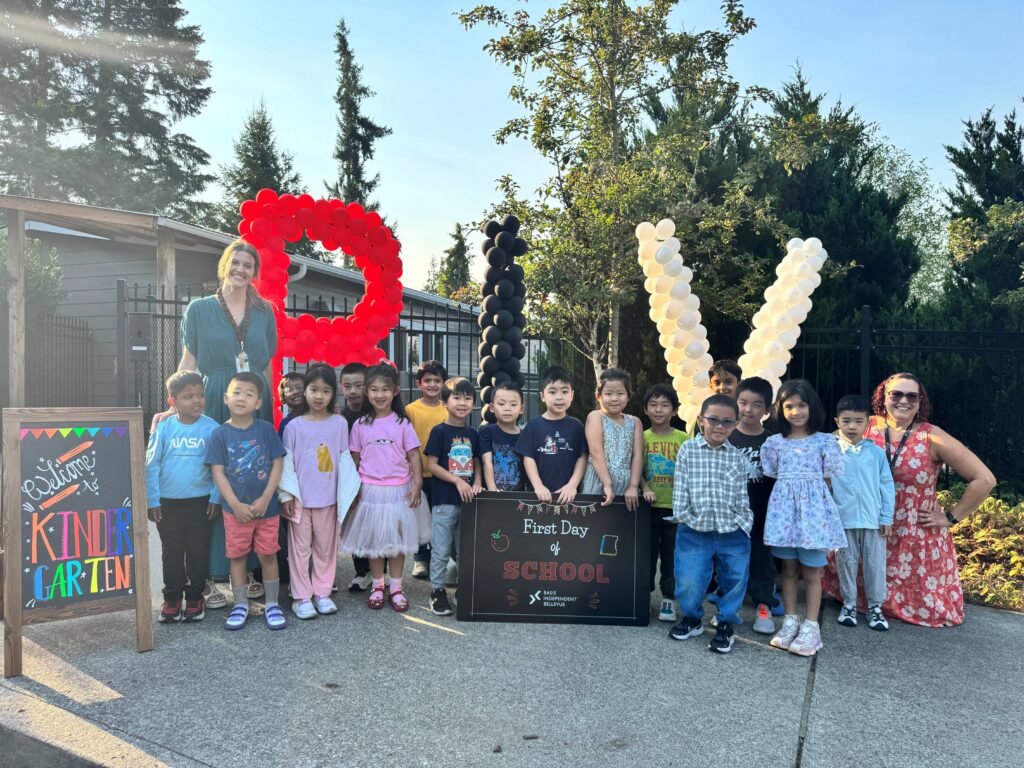
Wexler’s research confirms what we see in our classrooms: when students build a broad base of knowledge in history, geography, and literature starting in the early years, they develop superior reading comprehension and critical thinking skills. This foundation empowers them to excel in high-level courses later on.

This is why we believe in and uphold our curriculum. From PreK through grade 12, every subject is an opportunity to challenge students and expand their understanding of the world.

Consistency Across the Board

To ensure our humanities program consistently meets these high standards, we have made a strategic investment in our curriculum. We have adopted the Savvas/Pearson program for our core English and history instruction. This resource provides the robust structure and depth necessary to support our advanced learning outcomes.

This alignment ensures that rigor is a constant across every grade level.

two male elementary school students read a picture book together
  • Building the Foundation: In the Lower School, we focus on critical reading and writing. Even our youngest students in PreK and kindergarten are engaging with texts that ask them to think, not just decode.
  • Advanced Placement Readiness: Our humanities courses are taught a grade level ahead. This intentional pacing challenges students to take on sophisticated ideas earlier, preparing them for the demands of AP coursework in high school.
  • Connecting Disciplines: By coordinating our curriculum, we create opportunities for students to see connections between subjects. A history lesson on the Industrial Revolution might overlap with a science unit on energy, deepening understanding in both areas.
high school students in English class doing an activity with notecards spread across the floor

Interdisciplinary Curriculum: Preparing for High-Level Coursework

Our grade 4 students recently explored New York State Native American history. Rather than simply memorizing facts, they built detailed dioramas and wrote analytical explanations of tribal societies.

This project required them to use their research and writing skills along with hands-on creativity to connect geography, culture, and economics—the exact kind of multidimensional thinking they will need for future AP History courses.

grade 4 student shows her history diorama and research writing project

Voices from the Classroom

The heart of our program is our faculty. Our teachers are subject matter experts who are passionate about their fields and their students.

Abigail Bandarenko (Director of Student Affairs, Lower School PreK—5)

Ms. Bandarenko brings a wealth of experience to her leadership role, holding a dual master’s degree in elementary education and literacy from Bank Street and a bachelor’s in English. Having served as a Subject Expert Teacher in humanities herself, she possesses a deep, practical understanding of how literacy develops in the classroom.

Ms. Bandarenko interacts smiling with two early learning program students

“In my role, I see firsthand how a strong foundation in literacy powers everything else. At its core, literacy is the ability to communicate clear understanding through language to express needs and ideas. By fostering these skills in the early years, we give students the tools to succeed in every subject, from science to history. It’s not just about reading and writing. It’s about equipping students to be confident communicators and curious, capable learners for life.”

Ms. Bond discussing topics with a student.

Emma Bond (English Subject Expert Teacher, Upper School grades 9—12)

Ms. Bond’s expertise is grounded in her academic background in English and theology, as well as her immersive study of Shakespeare and philosophy at the University of Oxford. With five years of teaching experience, she brings a rigorous, scholarly approach to her high school English classes.

“In our Upper School English courses, we go far beyond plot summaries. We dive into the ‘why’ and ‘how’ of great literature. Whether we are reading Shakespeare or modern dystopian fiction, students are learning to analyze arguments, understand nuance, and articulate their own unique perspectives. These are the skills that shape future leaders.”

The Full Picture of Academic Excellence

True academic success is about balance. The critical thinking skills developed in a rigorous humanities seminar make our students better scientists, just as the logic learned in math makes them sharper writers.
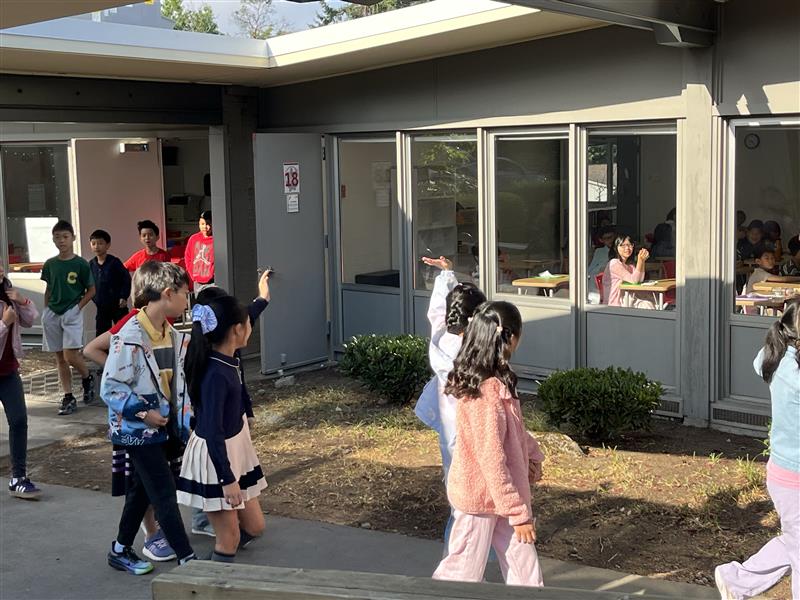

We invite you to see this dynamic education in action. Come explore how BASIS Independent Manhattan prepares students for future success in the real world.

student author holds his book and stands with his parents at a publishing party

Learn More

about our balanced curriculum, join our interest list, and meet with Admissions.

Visit Us

Filed Under: Academics, Humanities, Lower School, Middle School, Primary Program, STEM, Student Learning

Mountaineer Athletics Fall 2025 Recap: A Season of Growth and Grit 

November 7, 2025 by emilyhughes Leave a Comment

This fall was one to remember for the BASIS Independent Bellevue Mountaineers. From the volleyball court to the soccer field to our very first swim season, our student-athletes brought energy, teamwork, and heart to every practice and competition. Under the leadership of our passionate coaches, the Mountaineers continue to climb higher, building a foundation of excellence that will carry into our expanding high school program. 


Girls Volleyball

The Mountaineer volleyball program, led by Coach Fischer, embodied the heart of what it means to be a developing athletic program. A program built on growth, teamwork, and skill development over wins and losses. The team finished the season 3–8, but the record was never the measure of success. Coach Fischer emphasized progress, communication, and confidence, and her players responded with remarkable unity and improvement across every level of play. 

Both the D1 and D2 teams grew steadily throughout the season, building chemistry and trust with every match. Their commitment to learning and supporting one another defined the fall and set a foundation that will strengthen the program for years to come. 

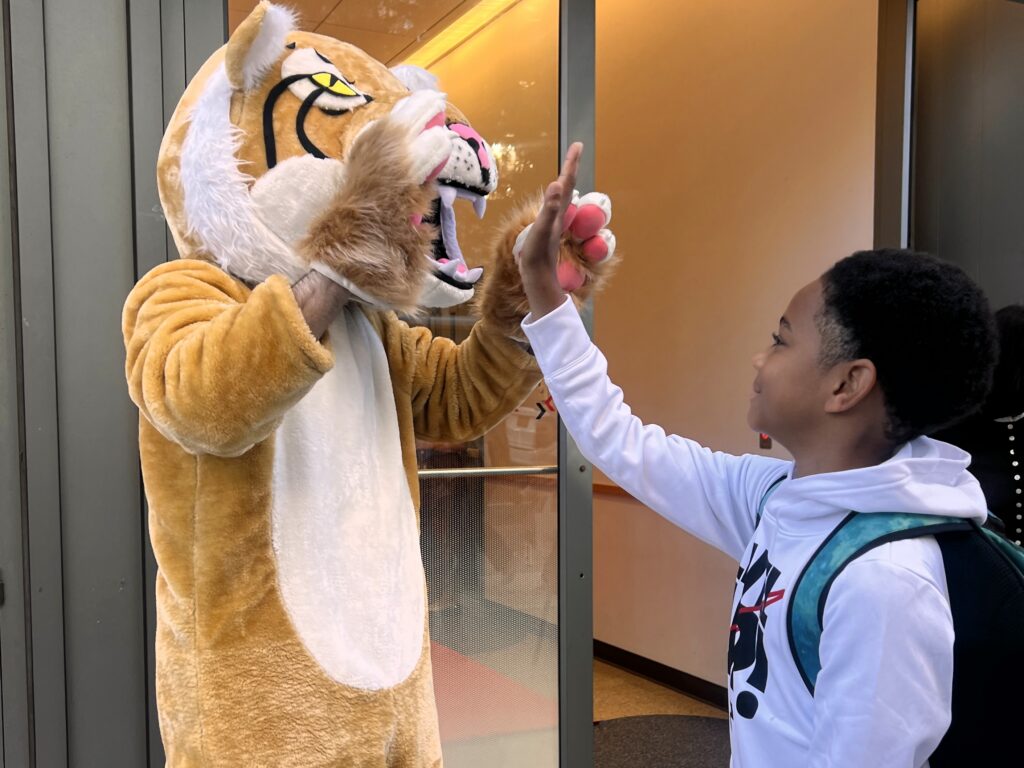
One of the most memorable moments came during the Blackout Game, which brought the entire BASIS community together for a night of excitement and pride. Monty the Mountaineer made a special appearance as students, families, and staff filled the gym to cheer on their team. A halftime serving challenge and school raffle added to the fun, creating a celebration that perfectly captured how athletics unites our campus. 

At the October 27 Jamboree, the D1 team showcased their development, earning two hard-fought wins over Eastside Christian. The team’s serving game was anchored by Vivian L., whose accuracy and consistency made her a standout all season, while Yvonne Q. provided steady leadership and inspired her teammates through her composure and hustle. 

The D2 team finished their season with an impressive 4–0 record at the October 28 Jamboree, claiming the championship title. Their teamwork, communication, and consistent serving, led by Carry and Melody, were key to their success and a reflection of the program’s overall progress. 

Coach Fischer shared that her focus this season was on sportsmanship, team bonding, and foundational skill-building, emphasizing that improvement, not the scoreboard, was the true goal. The Mountaineer volleyball teams have set the standard for a culture of growth, effort, and excellence that will continue to elevate the program for years to come. 


Co-Ed Soccer 

The Mountaineer soccer season was a story of endurance, growth, and heart from start to finish. It began with the very first team meeting, when Coach Thies and Coach Abele set the tone for the year. They told the players that they may or may not be the most talented team, but they would be the most conditioned. That message became the team’s identity, a commitment to effort, perseverance, and pride in representing their school. 

Together, Coach Abele and Coach Thies led the Mountaineers through a season defined by determination and growth. Every match tested their endurance, as the team often only had 11 players, yet the players grew stronger with each challenge. Through long minutes and relentless competition, they learned to communicate under pressure, support one another, and play with courage. 

Arosh S. and Aiden S. powered the offense with standout performances that became defining moments of the season. Their chemistry and creativity fueled the attack, highlighted by a thrilling game where Arosh scored five goals. Meanwhile, Mingming G. stepped into a brand-new role as goalkeeper, showing remarkable adaptability and composure. His courage and consistency anchored the defense and reflected the leadership and selflessness that define Mountaineer athletics. 

As the season progressed, the team’s transformation was undeniable. Reflecting on the journey, Coach Abele shared, “It was really cool to see them come together as one. It was night and day from the beginning of the season.” She added, “They were really a team out there. The growth has been incredible to see.”

The Mountaineers closed their season on November 4 against KSDA, finishing 3–5 overall, a record that only hints at how far they came. From that first meeting to the final whistle, this team’s story was one of perseverance, unity, and belief in one another, a season as inspiring as it was competitive. 


Swim Team 

This fall marked the beginning of a new chapter for Mountaineer Athletics with the launch of the first-ever BASIS Independent Bellevue Swim Team, led by Coach EE. What started as an early morning experiment has quickly become one of the most exciting and promising programs on campus. 

The swimmers trained with discipline and focus, meeting for early morning practices on Tuesdays and Thursdays from 6:45–7:45 a.m. and dry-land workouts on Wednesdays after school. The commitment required to show up and train before sunrise showed their dedication and desire to improve every day. 

While this inaugural season was focused on training rather than competition, the team made great strides in technique, endurance, and overall confidence in the water. Each practice built momentum, as swimmers refined their strokes, learned race fundamentals, and supported one another through challenging sets. The sense of teamwork and encouragement within the group set the tone for the future of the program. 

Coach EE has been intentional about building a strong foundation for the seasons ahead, focusing on consistency, technical growth, and team culture. The swimmers have embraced that vision, laying the groundwork for a program that will continue to grow and thrive as BASIS Independent Bellevue expands into high school competition. 

The Mountaineer Swim Team is off to an incredible start, and the waves they have made this fall are only the beginning. 


Looking Ahead 

This fall was a season defined by growth, grit, community, and pride. Our athletes and coaches have built something special, an athletic culture rooted in sportsmanship, camaraderie, and excellence. From thrilling rallies to record-setting goals to 6:00 a.m. workouts, every moment reflected the heart of what it means to be a Mountaineer. 
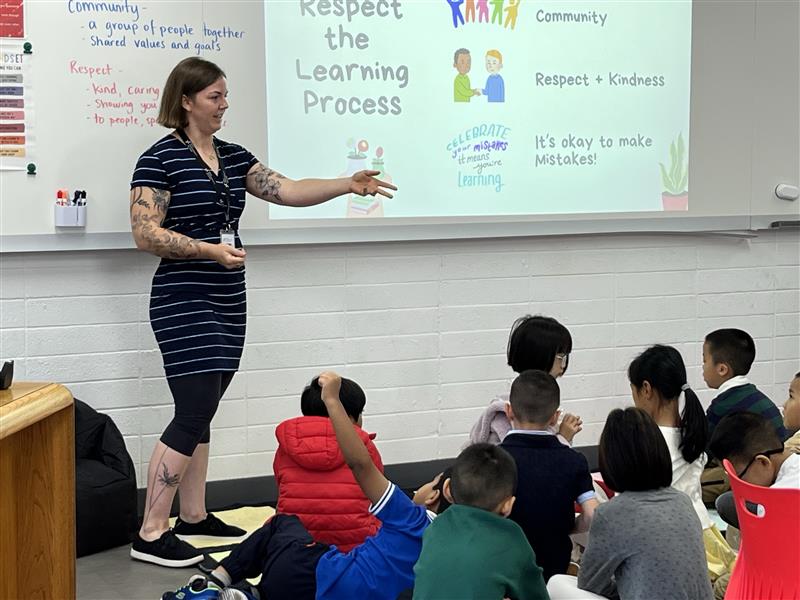
As our program continues its journey of growth in the winter season, the Mountaineers are ready, stronger, prouder, and united in spirit. 

Go Mountaineers! Onward and upward! 
“We never lose, We either win or we grow.”

Filed Under: Clubs & Activities, Community Values, Current Events, Extracurriculars, Faculty & Staff, Middle School, School Community, Sports & Athletics, Student Learning, Student Life

Why BASIS Independent Manhattan is the Essential Bridge to High School Success

November 5, 2025 by christineklayman Leave a Comment

The transition to middle school is one of the most exciting shifts in a student’s academic life. For our grade 5 Wildcats in New York City, the “Bridge Years” (grades 4–5) have already marked a powerful trajectory toward independence and abstract thinking. By focusing on skills like self-advocacy, growing responsibility, and enhancing a fundamental love of learning, your student is uniquely prepared.
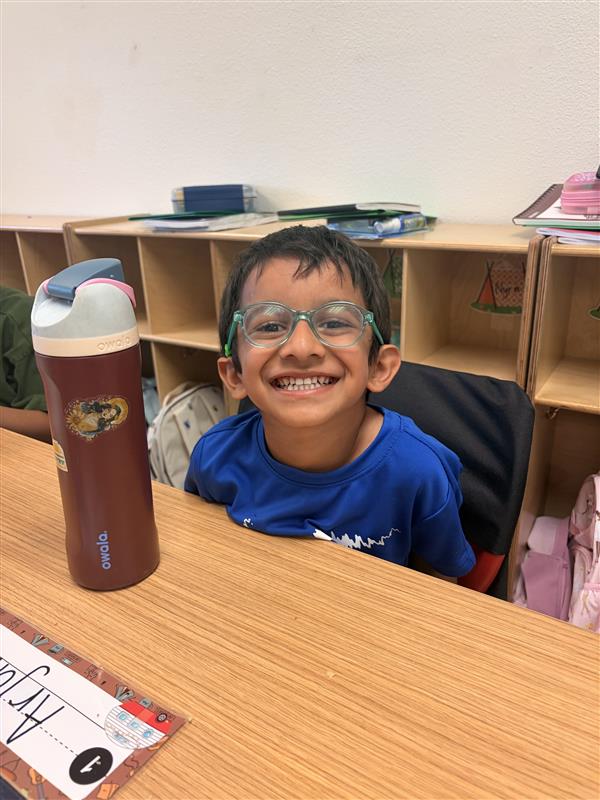
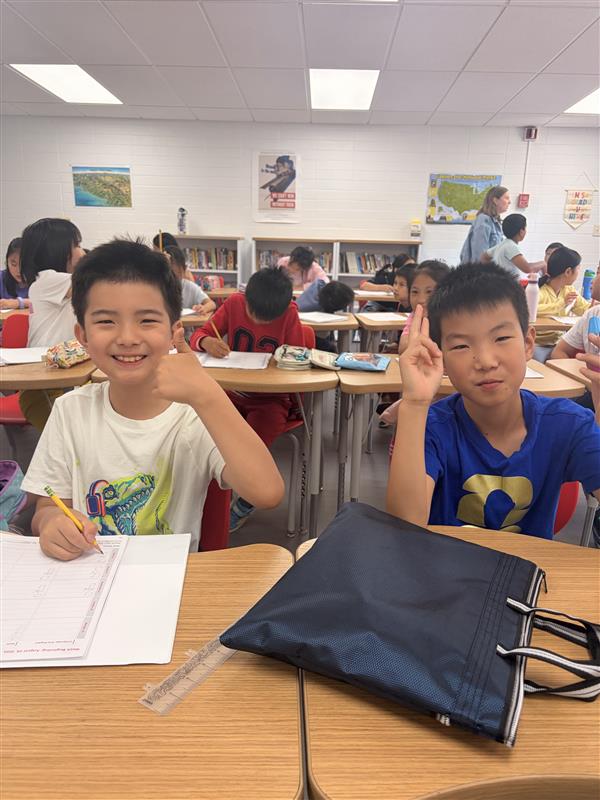
Staying at BASIS Independent Manhattan for grades 6–8 ensures that this momentum continues. Our private middle school in NYC is engineered to be a college preparatory pathway, teaching students to use knowledge as fuel for deeper understanding, unlimited exploration, and a strong basis for high school.

male student holiding up a latin project

The Grade 6 Academic Advantage

Our grade 6 curriculum intentionally introduces a level of rigor and organization that builds the intellectual foundation for our High School Program, which is designed for AP success.

Your grade 6 student’s schedule shifts to a fully departmentalized model guided by our Subject Expert Teachers:

  • Advanced STEM Curriculum: Students participate in a full course covering biology, chemistry, and physics three days per week. This integrated science sequence gives them a significant head start.
  • Differentiated Math Daily: Students are placed into either Pre-Algebra or the accelerated Algebra and Geometry I track, ensuring they are challenged at their precise level.
  • Core Humanities: Students receive daily instruction in English, Latin IB, and World History and Geography I.
  • Well-Rounded Student Experience: The week includes three days of electives (art, band, or drama), plus Physical Education and Sports at our partner facility Chelsea Piers.
students conducting a hands on activity in grade 6
female student in a lab coat mixing a solution in chemistry
grade 6 students looking through a microscope
upper school students act out math with their teacher in the classroom

Mastering Executive Functioning and High-Stakes Assessments

Exposure to a challenging curriculum is strategically coupled with intentional lessons that develop critical executive functioning skills. Grade 6 is where students adopt study habits and organization systems that lead to success in high school, college, and beyond.

To prepare students for college-level final exams, our middle school utilizes Pre-Comprehensive Exams (Pre-Comps), which are formative assessments, and Comprehensive Exams (Comps), which are summative. Students learn how to manage and synthesize a large body of knowledge in a supportive environment.

This growth succeeds through our robust student support system, including:

  • Peer Tutoring: One-on-one study help from experienced high school students who have mastered the material.
  • Homeroom and Advisory: Structured time for community building and guidance.
  • Student Hours: Opportunities to meet directly with Subject Expert Teachers for personalized academic support.

Our Middle School is intentionally designed as a safe place to explore, take risks, make mistakes, and find passions, all while gaining exposure to the content and skills that will set them up for future success.

two female students in front of their organized lockers

What Our Parents Say

Word of mouth, online reviews, and parent testimonials are an important part of the search for the best middle schools in NYC. One Wildcat family, who are in their seventh school year with us, shares why they chose BASIS Independent Manhattan middle school for their current grade 9 student, as they prepare for their younger daughter to make the transition to middle school in 2026-27.

“We are so happy we stayed for middle school. Our ninth-grade daughter, Emma, is thriving in high school because of the strong foundation built throughout her school experience at BASIS Independent Manhattan.
While the academics are advanced, I see how students, including my daughter, are now truly ahead of the game in life skills—she’s come a long way and has acquired fantastic organizational systems and time management skills. She takes ownership for her failures as much as her successes, which is huge.
All of this happens in a supportive environment provided by the teachers and staff, but even more so among her classmates. I love seeing how much they root for one another and work to build each other up.”
— Leila G., Parent of Emma (Grade 9) and Lina (Grade 5)

Another middle school parent Alex B., explains why our students are “monumentally more prepared” for high school rigor, AP coursework, and critical thinking challenges—because they’ve been building those skills since middle school. Watch the video:


Learn More

See how the BASIS Independent Manhattan Middle School Program prepares students for a competitive high school and college path.

Visit Our School
four students playing chess and socializing on the roof

Filed Under: Academics, Culture of Support, High School, Middle School, Student Learning, Student Support

Parent Perspectives Shared at Our Fall Open House

November 3, 2025 by jogoldfarb Leave a Comment

At BASIS Independent Brooklyn’s recent Open House, several parents spoke on a panel about what drew them to our school and what stands out most based on their years in our community. We wanted to capture the conversation to help others understand what makes our school stand apart. Many thanks to all our parents for sharing their experiences!

Paul C. (Dad to Jasper in Gr. 10)

We were talking to one of my wife’s aunts, who lives in Arizona, and she told us that they’re building a BASIS [Independent] School in Brooklyn, and she told us that we needed to do whatever we could to get our kid into it. She’s an educator in Arizona, so she was very familiar with the BASIS Curriculum. That’s why we came to the school and took the tour, and it was so inspirational. Literally, my wife was crying because it just felt like this is what we’re looking for.

This school has a reputation for being a really challenging school. However, the truth is, in our experience – and it’s been about 10 years now – that BASIS [Independent Brooklyn] is going to make your kid a better student, no matter what their capabilities are. That’s what’s most important.

The other thing that I loved in this whole process and journey, are the relationships that my son has developed with the teachers along the way. They talk about classes; they talk about movies and more. He’s leaned into a lot of different and varying interests here. I think that is possible when you are at a school that has a smaller student body. The school and the teachers You’re able to have a more meaningful relationship with the students and nurture their interests.

Seema S. (Mom to Sonia in Gr. 6):

My daughter, Sonia, started here in third grade, so this is her fourth year at Basis. Our family is very happy with Basis.  When we started looking at schools, we were looking at different public and private schools. My husband was very keen on BASIS Independent Brooklyn. He’s an engineer by background. So, he was looking for a rigorous STEM education. I was a little bit skeptical because I wanted a more well-rounded, and I thought BASIS [Independent Brooklyn] might be too STEM-heavy.

 We’ve been really impressed with the breadth of the curriculum.   For example, Basis offers classes in creative writing, philosophy, drama, music, and choir. The administration has been building out its sports program as well. In fourth grade, the kids put on a school play – Alice in Wonderland, and it was amazing. It was so impressive. The students even designed the props, and the acting was great. My daughter loves her creative writing class. So, I think it’s a very well-rounded education.

Ralf S. (Dad to Frankie in Gr. 5 and Alba in Gr. 7):

I’m the very lucky father of two daughters here at BASIS Independent Brooklyn. Frankie is a fifth grader, and it’s her eighth year at the school. Alba is a seventh grader, and it’s her tenth year at BASIS Independent Brooklyn. We came to the school for many of the same reasons as the other parents mentioned. In 2014, there was a newspaper article about a new school in Brooklyn with a world-class learning culture and high-level education that combines that with the joy of learning. It sounded great on paper because that’s a virtuous circle: The more they learn, the more they enjoy learning, the more they learn. It’s just this positive upwards spiral, and that’s definitely been proven to be so over the past 10 years.

Let me just pick a couple of specific reasons why we love the school.

One, my daughters learn a lot overall, but they also learn how to learn. And that’s almost more important to me than any specific subject matter. For example, they learn about time management and organizational skills. It is so important that they learn how to organize themselves, how to communicate, and how to deal with “struggle”. These kids have the skills to learn.

Second, we love that the school normalizes failure. I actually think BASIS [Independent Brooklyn] is a super nurturing school. If you look up the word nurturing in the dictionary, it says that it means “to help somebody develop and succeed.” And that’s exactly what the school and the teachers do.

As mentioned, one example is to normalize failure. For example, in science, let’s say you have a project to build a bridge, you build your project while working with your team. Then let’s say the bridge doesn’t hold the weight that you wanted it to hold. Okay, that’s fine. You deal with it. You talk to your classmates. You talk to teachers, you go to student hours, and you just try again. It’s okay to fail. And then you pick yourself up and try again.

In my opinion, one of the most important things to succeed in life is developing resilience and grit and never giving up. And BASIS [Independent Brooklyn] kids have an abundance of that because they’ve just learned this throughout their classes. I think it’s much better to have these experiences and to learn skills dealing with failure now rather than when you’re going into college.

Rajashree C. (Mom to Leandra in Gr. 5):

My daughter has been at BASIS [Independent Brooklyn] from Kindergarten. Now she is in fifth grade, so we are entering middle school. We have a lot of respect for how they manage the transition from primary to middle school. This year, we’re really navigating what it means to not have what they call a Learning Expert Teacher. Students navigate classes of their own, move from one class to another. A couple of weeks ago I came in for the Meet the Teacher Night, and sometimes I’m surprised by all my daughter learning. I went home, and I asked her, “Do you feel like this is okay?” And she responds very confidently, “Yeah, it’s fine.” And this is how it’s been. It’s been an evolution.

Whatever level your students are at, based on my experience, BASIS [Independent Brooklyn] will help your students grow and be more responsible for their own journey and their own sort of pathways. That’s what’s been most interesting to me – how Leandra has grown.

=================

Thank you to our parents for sharing their experiences with prospective families, and thank you for the honor and privilege of educating your children!

BASIS Independent Brooklyn is a PreK–Grade 12 private school, providing students with an internationally benchmarked liberal arts and sciences curriculum, with advanced STEM offerings. Considering joining the Bears community? To join our interest list for the next school year and receive admissions updates and more, please click here.

Filed Under: Academics, Admissions Events, Community Values, Culture of Support, Fine Arts, Humanities, STEM, Student Learning, Uncategorized

Rigorous Curriculum, Personalized Support: How We Help Every Student Thrive

October 31, 2025 by sarahpeterson Leave a Comment

When prospective families learn about our spiraling curriculum—where students typically work one year ahead of traditional schools and high schoolers manage 3-5 AP courses simultaneously—we often hear the same question: “Will my child be able to handle this?”

It’s a valid question, especially for families considering transferring from public school programs. But here’s what makes our approach different: academic rigor doesn’t mean leaving students to sink or swim. Our commitment to challenge goes hand in hand with an equally strong commitment to educating the whole student and providing individualized support.

Meeting Students Where They Are

Every student’s academic journey is unique. Some arrive ready to sprint ahead, while others need time to build confidence in new areas. That’s why we’ve designed comprehensive support systems that ensure each student receives exactly what they need to progress and thrive.

Throughout the school year, we use internal testing data to gain a clear picture of where each student stands. This information doesn’t just sit in a file—it drives action. Our educators use these insights to identify students who would benefit from our Enrichment and Intervention programs, creating a responsive learning environment that adapts to each child’s needs.

Enrichment: Challenging Students to Reach Higher

For students who are ready for additional challenges, our Enrichment Program provides opportunities to dive deeper and think bigger. At the Lower School, these students work with their teachers and our Specialist Expert Teacher on advanced individual or group projects that go beyond the standard curriculum.

These aren’t just “extra” assignments—they’re carefully designed experiences that integrate higher-order thinking skills like analysis, creation, and evaluation. Students apply their knowledge in new and innovative ways through hands-on activities that make learning come alive.

Take, for example, a project currently underway with third graders. Our Specialist Expert Teacher, Ms. Bhora, is working with students who have mastered multiplication by arrays. Rather than simply moving on to the next concept, these students are designing farms with differently sized animal pens—a real-world application that brings multiple mathematical concepts together.

“The students and I are having a wonderful time creating a Farm Map and Budget while applying multi-digit multiplication using estimation, partial product method, standard algorithm, and fractions,” Ms. Bhora explains. “So far, the students have designed a farm map featuring six different farm animals. They calculated how much area each animal will need, the fraction of the farm’s total area per animal, and added the fractions to double-check their work. They have now started working on the budgeting portion. I gave them the annual cost of raising an animal. They need to calculate the total cost per animal and estimate whether a given amount will be enough to run the farm each year. The kids and I are having a lot of fun doing this enrichment project.”

This is enrichment in action—taking mastered skills and applying them in engaging, complex scenarios that prepare students for real-world problem-solving.

Intervention: Providing Support When Students Need It

Just as some students need additional challenges, others benefit from extra support in certain subjects or content areas. Our Intervention Program ensures that no student falls through the cracks.

When a student is identified for intervention support, they don’t work with just one teacher—they work with a whole team. This includes their Learning Expert Teacher, Subject Expert Teacher, Specialist Expert Teacher, Dean of Students, and Director of Student Affairs. Together, this team creates an individualized plan tailored to address the student’s specific needs.

These customized plans might include support with organization and project management skills, in-class assistance to ensure understanding of new concepts, or one-on-one and small group sessions with our Specialist Expert Teacher at the Lower School or Director of Student Affairs at the Upper School.

What’s crucial is that this isn’t a “set it and forget it” approach. The team continuously tracks the student’s progress, adjusting the plan as needed to ensure it’s having the desired outcome and the student is moving forward.

Student Office Hours: Support on Demand

Beyond our structured programs, teachers at both our Lower and Upper School campuses offer Student Office Hours throughout the week. This open-door approach gives students the flexibility to seek help when they need it.

During these sessions, students can work with teachers one-on-one or in small groups. Some use this time to ask clarifying questions, while others work through challenging assignments with guidance. Still others seek additional challenges to deepen their understanding of subjects they’re passionate about.

This accessibility sends a powerful message to students: asking for help is encouraged, not stigmatized. Seeking challenges is celebrated. Your teachers are your partners in learning.

The Bottom Line

Yes, our curriculum is rigorous. Yes, we challenge students to reach higher than they might in traditional settings. We recognize that challenge without support isn’t education—it’s just stress.

Our approach ensures that every student—whether they need an extra push forward or a helping hand along the way—receives the personalized attention they need to succeed. Academic excellence isn’t about pushing every student through the same program at the same pace. It’s about helping each student discover what they’re capable of achieving when they have the right support system behind them.

That’s the difference between rigor and rigidity, and it’s what allows our students to not just survive our challenging curriculum, but to truly thrive within it.

Ready to see how personalized support and academic rigor work together? Schedule a campus tour to experience our learning environment firsthand and discuss how we can help your child thrive.

BASIS Independent Fremont is a TK – Grade 12 private school, providing students with an internationally benchmarked liberal arts and sciences curriculum, with advanced STEM offerings. Considering joining the BASIS Independent Fremont community? To join our interest list for the next school year and receive admissions updates and more, please click here.

Filed Under: Academics, Student Learning, Uncategorized

A Day in the Life of a Grade 4 LET – Ms. Strider!

October 23, 2025 by emilyhughes Leave a Comment

My name is Ms. Strider and I am the Grade 4 LET (Learning Expert Teacher) at BASIS Independent Bellevue. I stay with my class of students throughout the day, supporting both their academic development and personal growth. While Grade 4 students follow a full schedule similar to upper grades, my role is to help them build responsibility and independence as they prepare for Grade 5. I work closely with our Subject Expert Teachers (SETs) to collaboratively teach each subject, ensuring lessons are engaging and connected across disciplines. Because I see my students in every class, I gain a deep understanding of their learning needs and strengths. This allows me to form meaningful relationships with families and provide thoughtful, and accurate updates on student progress throughout the year.

My day with Grade 4 begins at 7:55 AM when I pick my students up from the multi-purpose room and we head to our lockers to get ready for our day. Students get to say hello to their friends each morning, catch each other up on their fencing practice or dance rehearsal, and get the last of their wiggles out before it is time for class.

Period 1: Science with Ms. Delp!

The first five minutes of each class look fairly similar throughout the day. Students are filling out their CJs (communication journals) and following any directions on the board as a warm up. In Science, students’ daily warm up is to copy down the notes from the board into their science folders so they have all the necessary information ready to go when it is time for a discussion or to start collecting data. Ms. Delp and I work together to provide Grade 4 students with materials, guidelines, and data points for a variety of different scientific activities. In the first month of school, we have measured our wingspans and compared our lengths to that of birds, tested if double stuffed Oreos are actually doubled stuffed, and explored surface tension by adding singular water droplets to pennies. Once we have our notes, completed our experiments, and graphed our data, it is time to clean up, pack up, and line up for our next class.


Period 2: Specials—Music, Art, Drama or Engineering!

Primary students have a variety of specials throughout the week. This morning’s special is Engineering with Ms. DiBattista! Our Specials classes look different than the classic LET/SET model. During these classes, I sometimes work with small groups of students in various levels of reading groups conduct interventions or enrichment. Today, I pulled a few of my students to conduct a reading intervention activity, while the rest of my class did an engineering lesson with Ms. DiBattista. Students’ reading levels are decided by our process of reading assessments that happen once per trimester. With that data, students are placed into small groups, of 3–5 students, and work directly with me on various reading strategies such as identifying the main idea, providing text evidence, or determining character motivation. Building these skills will help students in English class, advance their literacy skills, and most importantly, allow them to be able to read and understand texts independently.


Period 3: English with Ms. Tseng!

Just like in Science class, students begin class by filling out their CJ’s, noting any homework or upcoming assessments, and working independently on their warm ups. Ms. Tseng and I usually collect this work and begin getting students ready for their Novel Study. Currently, we are reading The Phantom Tollbooth! We take turns reading pages in the book between Ms. Tseng, myself, and the students. Learning to annotate texts is a skill we are building and growing in Grade 4. The Phantom Tollbooth is great practice for these skills, as it has several settings and characters. Ms. Tseng may pause the reading to point out a vocabulary word that we need to write down. I may also pause when we meet a new character to take notes about their description and add a sticky note annotation. English class flies by when everyone is so invested in the story! Time to clean up, pack up, and line up for lunch and recess.


Period 5: Math with Ms. Tessler!

These consistent classroom routines make a huge difference in the lives of the students and the teachers. No matter what subject, students know exactly how each class is going to start and exactly what each teacher is expecting their behaviors should be. Grade 4 enters math class, fills out their CJs, and begins their math warm up. Math warm ups are usually a set of problems covering material that we learned the day before. I will go over the warm up with the class, model the work on the board, and answer any questions. Ms. Tessler will get the class set up and ready for notes in their math notebooks. As students are taking notes or working on their independent math assignment, this is a great time for me to look for students who are exhibiting qualities of P.A.C.E (perseverance, active, community, and empathy). Students who show one or more of these qualities at any time during the day receive a PACE Pass. Students turn in their earned passes to the front office to enter the grade level weekly raffle for a chance to win a small prize every Friday. Once all of our daily math tasks have been completed, it is time to clean up, pack up, and line up!


Period 6: Specials or Mandarin!

Three days of the week, Grade 4 has Mandarin class. There are two different Mandarin classes that students are sorted into from the beginning of the year based on ability-level. I do not attend Mandarin class, so I spend this time meeting with SETs, planning reading groups, or having an extra cup of coffee and a snack.

However, this afternoon is Drama with Mr. Mullens! Once all of the students have entered the drama space, filled out their CJs, and listened to Mr. Mullens’ daily expectations, I begin pulling another round of small reading groups. Groups can meet once, twice, or three times a week depending on students’ needs for reading and decoding texts. In Drama class, students are working in three different casts to write their own scripts for the upcoming spring performance. Even though some students are pulled away during the script writing, the entire cast works collaboratively and is able to quickly and effectively fill in any students upon their return to the classroom.


AE (Academic Enrichment) Time!

All students Grade 4 and above have a 20-minute AE period each afternoon. There are a variety of ways to spend a Grade 4 AE period: study hall, brain breaks, or most often, SEL (Social Emotional Learning), lessons and activities. For our SEL lessons we utilize a program called CharacterStrong at BASIS Independent Bellevue. Each month is centered around a character trait theme—October’s is Responsibility. Throughout the month, our class engages in mini-lessons, discussions, videos, and games designed to help students learn about and practice being responsible in their daily lives. Because academic expectations are high on this campus–even in the primary grades–it’s important to remind students that they are more than their grades, and that being a kid is about learning and growing in all areas of life.


Period 7: History with Ms. Rieger!

Our last core class of the day, but procedures and expectations remain the same. Students enter the classroom quietly, fill out their CJs with today’s topic, homework, and upcoming tests. Warm ups in History require students to have their binders and answer the questions on the board neatly on a piece of notebook paper. When the five–minute timer goes off, I read each question with the students and go over the answers. Often in this course there is some background information to read before students can dive deep into the new content, analyze cause and effects, and collect evidence. At the beginning of class I will read the passages with the students and have some student helpers annotate for vocabulary and important details. Then Ms. Rieger will share her slides, photographs, or stories about the time period we are focusing on and begin to ask critical thinking questions to the class. After notes, worksheets, or discussions, it is time to clean up, pack up, and line up once again.


Period 8: PE with Coach Shelp!

“Welcome to your favorite class!” is the way Coach Shelp begins PE. This class is different from Art, Music, and Drama because I always attend PE with my class. PE is a great way to get moving and learn about sportsmanship. Students begin each PE class by jogging some laps around the gym. Once we are warmed up, it is time to play—dodgeball, soccer, pickleball and more! We congratulate our teammates and exchange kind words with our opponents. Time flies in PE and then it is time to grab all of our belongings from our lockers and go home!

After all of my students have been picked up from dismissal, I meet with my co-teaching SETs to collaborate on lessons for the following week. After school you will find me at home in the coziest pajamas crocheting or snuggling with my cat. Another great day in Grade 4!


Filed Under: Academics, Community Values, Faculty & Staff, History, Humanities, Lower School, Mandarin, Math, Primary Program, Recess, School Community, Science, Student Learning, Student Life

  • Page 1
  • Page 2
  • Page 3
  • Interim pages omitted …
  • Page 5
  • Go to Next Page »

© BASIS Independent Schools

  • Contact Us
  • Media Recognition
  • Careers
  • Privacy Policy
  • CA Privacy
  • Terms of Use

Headquartered in Campbell, California, Spring Education Group is majority-owned by investment funds administered by Primavera Holdings Limited, an investment firm owned by Chinese persons and principally based in Hong Kong with operations in the United States, China and Singapore.

Sitemap