

What happens when some of the world’s leading institutional investors step inside an NYC private school powered by fearless, independent thinking?
[Read more…] about Global Finance And Fearless Curiosity Collide: Brookfield Investors Visit Our Upper SchoolSenior Projects
Senior Project Spotlight: Aarohi G. Weeks 9 – 10
The Senior Project is an independent, student-led culmination of our high school experience. After three years of academic preparation, our seniors are ready to spend the last trimester of their high school careers applying the skills and knowledge they have gained to develop a project that is insightful, academically rigorous, and professional in nature. This year, we are proud to showcase a senior from one of our neighboring campuses, BASIS Independent Silicon Valley, Aarohi G.
Week 9: Second Stages
This week, my priority continues to be wrapping up my work with civics education requirements and on-campus polling. Results and progress on this front will come next week two, as I wrap up with analysis that keeps high-schoolers and non-voting methods of participation in mind.
Civics Education
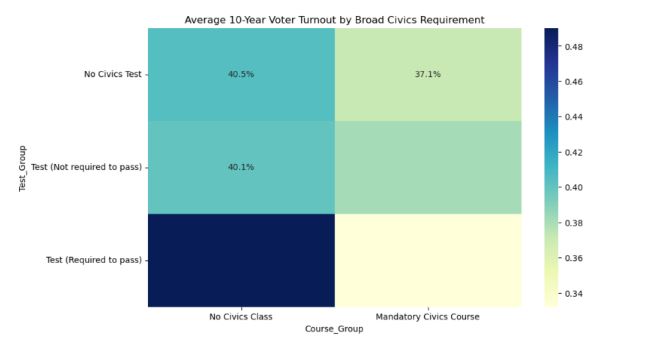
To study civics education, I chose to see if there was a correlation between states’ requirements and their average voter turnout over the timeframe of 2014 to 2024. To do this, I first compiled the data from a study by Craiutu and Ngalande titled “State Civics Requirements In 2024.” This article detailed the states that participated in each combination of civics course and test (ex. no course and no test, no course and test not required to pass, etc.)
Then, I found the average voter turnout for each state and created a heatmap showing, as a scale which combinations corresponded to the least and highest voter turnout.
On-Campus Polling
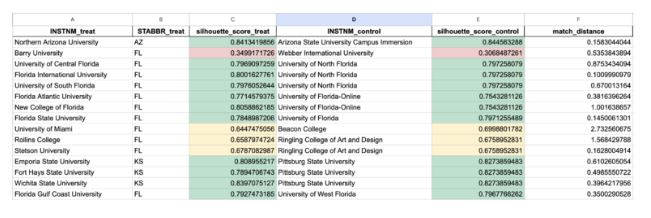
The states selected for this study appeared neither in SDVR or AVR lists, to remove possibility of impact from these legislations. As manually entering the data proved to be the only option, I began for the first three states on the list. Using the College Scorecard dataset, which contains comprehensive details on each college in the U.S., I clustered similar colleges by factors like tuition, acceptance rate, and type (private, for-profit, non-profit, etc.).
From these clusters, I paired the most similar colleges within the state, where one college was a treatment university found in the list offering on-campus polling sites, and the other is a control. Finally, I affirmed each college’s validity to belong within their own clusters by calculating their silhouette score (colorcoded indicating green as very reliable, yellow as fairly reliable, and red is unreliable).
For the next week, I’ll be tackling the second step to this analysis: comparing the number of registered voters in each college in the pair. To do this, I’ll be accessing the college’s NSLVE reports. While some are easily found online, and colleges who participate are found on a website called All In Challenge, that website often allows colleges to hide their reports from public view. So, for those that I cannot find online, I’ll be reaching out to All In representatives for the reports, as suggested on the website.
Week 10: Forward Steps
This week, I got to make major improvements to my process for studying on-campus polling sites that will help me wrap up this stage.
As we discussed last week, my two main sources for this section of the project were Voter Friendly Campus and College Scorecard. The first offers a list of the voter-friendly campuses per state that offer a polling site in two-school-year intervals. The states I chose, which never had Same Day or Automatic Voter Registration, were Arizona, Florida, Kansas, Kentucky, Missouri, and North Carolina. College Scorecard offers comprehensive information on each U.S. college, which I used to determine the most similar pairs of control and treatment colleges.
Now, I increased the number of parameters used to judge whether two colleges were similar, now being able to determine the size of colleges (to avoid comparing very big colleges to small ones) and separate community colleges from 4-year institutions.
When making the new pairs, I included both of their individual silhoutte scores (determining how well they belonged in their own college groups) and their match distance (how closely the two colleges were related to each other). This two-method approach ensures I picked the best pairs. From there, I chose the best from each state.

Now the challenge was one that I had discussed last week, finding the voter registration counts within each college. It’s the best way to see real effects of polling sites. To do this, I was searching the internet for each college’s NSLVE reports, where they disclose information like this.
And while a lot of these pairs can’t be counted because their information isn’t online, the ones that can will be the specific case studies I’ll focus on in my final analysis. It seems like an inevitable limitation of studying on-campus polling sites.
So while finding the data for this wasn’t as straightforward as some other variables I studied, I’m glad I can still move forward.
BASIS Independent Dublin is a Grades 6 – 12 private school, providing students with an internationally benchmarked liberal arts and sciences curriculum, with advanced STEM offerings. Considering joining the BASIS Independent Dublin community? To join our interest list for the next school year and receive admissions updates and more, please click here.
Senior Project Spotlight: Patrick Z. Weeks 9 – 10
The Senior Project is an independent, student-led culmination of our high school experience. After three years of academic preparation, our seniors are ready to spend the last trimester of their high school careers applying the skills and knowledge they have gained to develop a project that is insightful, academically rigorous, and professional in nature. This year, we are proud to showcase a senior from one of our neighboring campuses, BASIS Independent Fremont, Patrick Z.
Week 9: Lifting the Paper Weight
Hi everyone and welcome to Week 9 of my senior project blog! This entire week has been spent working on scientific communication. I drafted the full research paper, which was as mentally taxing as debugging my quantum circuits. I used the noise sweep experiment results to draw conclusions using principles of entanglement and superposition, and made sure to explain the theoretical advantages of quantum neural networks without overusing complex TensorFlow codes. The majority of my time was actually spent aligning my references to perfection, in ACS format, and trying to fix the problem of not having enough bolded years or italicized volume numbers.
As soon as the paper was done, I started planning out visuals for my Senior Project Exhibition. Transforming a large scientific paper into an attractive poster and a compelling presentation involves many different challenges. I decided to start with designing my poster and its hierarchy. I put the circuit architecture side by side with a graph of the model breaking down under Additive White Gaussian Noise: a visual contrast intended to help my audience grasp my argument. In parallel, I started outlining my presentation slides so that I could tell a clear story from my eureka moment about how qubits are disrupting cryptography and leading to accurate traffic light classification models.
Doing all this work, an even bigger revelation came to me: Commit Day is coming on Friday! It’s crazy how, while discussing the future of quantum computing, I’m about to finalize my own plans for college. It’s incredible how close we are to graduation, and working on this project makes me realize how everything is ending. This process is pretty emotional, but it’s amazing how everything is falling into place. Next week, I’m going to concentrate on rehearsing my speech and finishing the last touches of my interactive web app demo.
Week 10: Pixels and Practice
Hello, and welcome back to Week 10 of my senior project blog! With Commit Day finally behind me, a huge weight has been lifted off my shoulders, and I now have the freedom to focus fully on preparing for my capstone exhibition. This week’s major victory has definitely been completing my presentation slides, and the primary hurdle I had to overcome has been ensuring that I don’t bore my audience to death with dry TensorFlow metrics and technicalities. Instead, I decided to craft a compelling narrative: a story of classical AI’s inability to cope with the chaos inherent to real-life data, such as blurry dashcam footage, and how QNN entanglement acts as a natural buffer against errors.
While crafting my presentation, I have also been busy working on my exhibition poster. I am almost finished with it, but one final element still needs some work. At the moment, I find myself struggling immensely with the visual hierarchy, specifically placing two contrasting sets of clear, static-filled traffic light images precisely next to the degradation curves to highlight the difference in performance between my QNN and its classical counterpart. With only a couple more tweaks to the poster design, it’ll be ready for printing.
I worked hard to make sure my visual deliverables look great. However, the true horror of capstone presentations is finally dawning on me. I actually have to verbalize and explain all of this content within a limited time to a live audience. While playing with circuit designs in Google Colab is certainly much more relaxing than presenting them aloud, I will be doing the latter next week.
BASIS Independent Dublin is a Grades 6 – 12 private school, providing students with an internationally benchmarked liberal arts and sciences curriculum, with advanced STEM offerings. Considering joining the BASIS Independent Dublin community? To join our interest list for the next school year and receive admissions updates and more, please click here.
Senior Project Spotlight: Patrick Z. Weeks 7 – 8
The Senior Project is an independent, student-led culmination of our high school experience. After three years of academic preparation, our seniors are ready to spend the last trimester of their high school careers applying the skills and knowledge they have gained to develop a project that is insightful, academically rigorous, and professional in nature. This year, we are proud to showcase a senior from one of our neighboring campuses, BASIS Independent Fremont, Patrick Z.
Week 7: The Noise Sweep
And here we are with a new entry in the series, right back from my Spring Break hiatus! The looming deadline for the final exhibition of this senior project looms far closer than I would like to admit at the moment. After trying to implement my very own fancy quantum circuit right up until the spring break started, and failing miserably, I decided to take a step back and start experimenting with putting external stress on my QNN instead of tinkering with the circuit design. So far, I’ve only been running simulations where the QNN and fair classical model compete in the face of a single level of AWGN noise. While that was enough to convince me that my hypothesis was correct, the true proof would come from watching the classical system fail as the noise increases.
For this week’s simulation run, I created a noise sweep test on Amazon SageMaker that progressively adds noise multipliers to the image of my traffic lights, starting from the slightest amount of fuzz all the way up to a full-blown whiteout of static on each of the images in my dataset, and then I ran those images through both networks. And guess what? Just as I hoped, the results showed a clear superiority of the quantum model even without any additional fancy modifications. At low noise levels, the QNN performed about the same as the fair CNN. However, once the noise multiplier grew above 3 or so, the performance of the classical model tanked, as the algorithm could no longer tell apart red from green because the pixel core got so corrupted by the added noise. On the contrary, the QNN degraded gracefully thanks to the fact that, since the qubits are entangled, they seem to evaluate the connection between all four pixels within the traffic light in their classification decision.
With this great progress made, my next task will be learning how to distill all these quantum physics equations into plain text for the discussion section of my research paper. Until next time!
Week 8: Frontend Magic, Backend Data
I must say, the euphoria of finally seeing your work compile successfully is pretty amazing, but sooner or later you have to step back from the coding process and actually explain it. Welcome back to my senior project week 8! I finally hung up the coder’s hat and donned the author’s hat. After experiencing a few adrenaline rushes during last week’s noise sweep experiment runs, I found myself staring at a blinking cursor with the task of actually writing a full-fledged research paper based on my results. Even though my results’ discussion and conclusion are not ready yet as I’m still processing the final batch of data, I’ve managed to do quite a bit of writing this week. First, I outlined my document in meticulous detail. Then, I carefully formatted my bibliography according to the ACS style guidelines. Finally, I edited both the Introduction and the Methodology chapters, so now I can proceed with my paper once I receive the final set of results.
While working on my paper, I realized one thing, there is no one other than researchers within my area of expertise who will want to look at a web page of nothing but raw TensorFlow code and console output screenshots. As the date of my senior capstone exhibition comes closer, it is time to stop caring about the process of creating models and start thinking hard about their audience reception. I need some sort of tangible way of presenting my theory to my potential readers. I decided I need an application which would allow me to show people first-hand the discrepancy in resistance of my models against static.
I have begun sketching the design of the website which would be used for my final demonstration. The main goal is to create an interface which would feature a slider where the audience would have to increase the Additive White Gaussian Noise (AWGN). As the level of static increases, graphs depicting my classical and quantum models’ behavior against the same exact static level would appear on my website screen. The viewer would experience firsthand the moment when the classical architecture fails while the quantum one stays stable and accurate. Besides this interactive website, I have been pondering over the layout of my physical exhibition poster, considering ways of including the architectural diagram of my quantum gates and the underlying logic behind them.
BASIS Independent Dublin is a Grades 6 – 12 private school, providing students with an internationally benchmarked liberal arts and sciences curriculum, with advanced STEM offerings. Considering joining the BASIS Independent Dublin community? To join our interest list for the next school year and receive admissions updates and more, please click here.
Senior Project Spotlight: Aarohi G. Weeks 7 – 8
The Senior Project is an independent, student-led culmination of our high school experience. After three years of academic preparation, our seniors are ready to spend the last trimester of their high school careers applying the skills and knowledge they have gained to develop a project that is insightful, academically rigorous, and professional in nature. This year, we are proud to showcase a senior from one of our neighboring campuses, BASIS Independent Silicon Valley, Aarohi G.
Week 7: No Updates
No updates for this week!
Week 8: Education is Everything
This week, I wanted to share an update on the next steps of my research and Week 8 featured a pivot and a new plan.
Public Comment & Petition
First, I had planned to study the age groups submitting public comments or signing petitions. Public commenting is an action citizens can take where they respond to new legislation detailed by their state governments, pointing out improvements or concerns that can lead to real action. Petition-signing was something I was looking to measure from sources like online websites like Change.org, more than official government forums.
Unfortunately, most of this data hides the writers’ ages, and in the case of location/state data, petition websites may be more hidden than public commenting sites. These two variables were my ways of measuring “interest.” Therefore, I’ll first still draw the insights I can on petition-signing per state or county to get a sense of civically-active states. Then, for public commenting, one website used often by these agencies called Public Input seems to have more readily available demographic data. In addition to my plans of measuring civics education requirements and youth advisory councils (a future blog post!), this pivot can still reveal the insights I need.
Civics Education
To generate interest early, historical and political knowledge becomes a huge factor, which can be taught at any point in the K-12 curriculum. At school, apart from home or any limits of social media and local news, students often learn the basics of their political system and where they fit. While a course is one way to teach, some states will give a civics test.
This test can be unique or the USCIS test, the citizenship test that immigrants take in order to naturalize as American citizens. When researchers raised doubts that the average American student could pass it, it became an easy benchmark for civic awareness.
But across the nation, there’s a lot of variety in state requirements. 10 states require neither a course nor test of any kind, 13 states opt for a half or full year course instead of a test, and some states offer the test but don’t require students to pass.
This week, I compiled the data on civics education requirements in different states and charted it. I compared it to the states with the highest to lowest average voter turnout from 2014 to 2024, hoping to point out a correlationary relationship.
BASIS Independent Dublin is a Grades 6 – 12 private school, providing students with an internationally benchmarked liberal arts and sciences curriculum, with advanced STEM offerings. Considering joining the BASIS Independent Dublin community? To join our interest list for the next school year and receive admissions updates and more, please click here.
Senior Project Spotlight: Patrick Z. Weeks 3 – 4
The Senior Project is an independent, student-led culmination of our high school experience. After three years of academic preparation, our seniors are ready to spend the last trimester of their high school careers applying the skills and knowledge they have gained to develop a project that is insightful, academically rigorous, and professional in nature. This year, we are proud to showcase a senior from one of our neighboring campuses, BASIS Independent Fremont, Patrick Z.
Week 3: My Qubits Can Count, Just Not to Ten
Last week, I hit a major computational roadblock. I had to wait half of an entire day for the quantum simulations to finish. Oftentimes, they did not even work. However, I found my breakthrough with Amazon SageMaker. While I spent the final part of last week struggling with Google Colab’s limitations, this week I decided to port my notebook to Amazon’s machine learning platform: SageMaker. This gave me greater access to more powerful computational abilities. I had been spending hours training models on Colab, but now I could train models in only a fraction of that time. I could experiment, tweak, and retrain much more quickly than before, which is necessary for model development. With SageMaker, I could finally achieve what had been my goal for weeks: training all three models and getting preliminary accuracy numbers on the board.
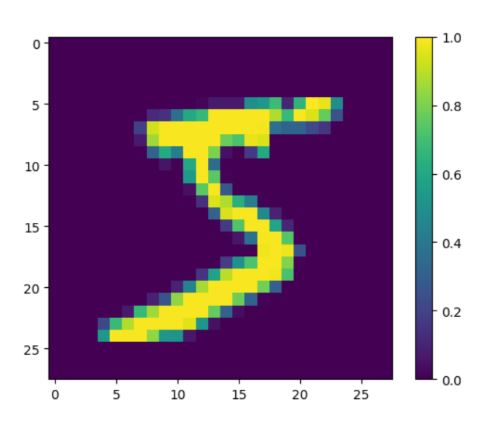
I ran initial training jobs on all three of my models using the clean MNIST dataset from Keras. For the first time, I had actual figures to refer to. The full-resolution CNN was the strongest out of the three models, and this was honestly expected because it had the full 28×28 pixel images. To give you an idea of what this looks like, here’s an example of the input the full CNN receives.
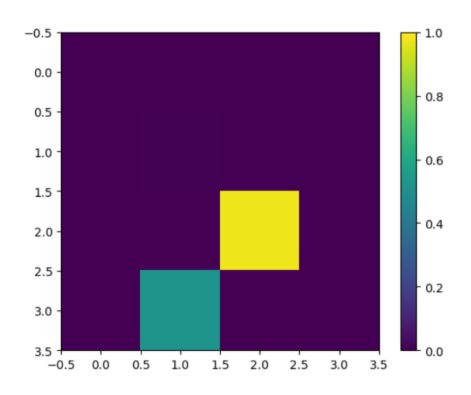
The fair CNN, my MLP running on the same 4×4 binarized input as the QNN, was less performant but still showed the ability of a simple classical neural network to squeeze a decent amount of data out of the compressed input. Here’s what the compressed input looks like.
The QNN also produced its first accuracy figures. While the accuracy was nowhere near as good as the full CNN’s, seeing the quantum circuit learning and improving its accuracy was still exciting. For the first time, my project was more like an actual experiment than a debugging exercise.
But then I got greedy. Feeling good about having working models, I wanted to try to push the limits. I tried to have the QNN classify all ten digits rather than just the simple subset the initial version was trained on. So, I reworked the output layer as well as the loss function and started the training. It was so painfully slow. While the new hardware Amazon SageMaker provides is great, every additional output class of the QNN means more parameters in the quantum circuit, more calculations using the parameter shift rule, and more simulated quantum operations. These simulated quantum operations stacked on top of one another and made the program extremely slow. I tried different learning rates and tweaked the number of entangling layers, but it was just too slow. By the time I realized the ten-class approach was not going to work, I had already wasted the better part of two days on it with very few results to show.
However, I am not discouraged by this setback because I believe that the preliminary results I achieved prior to the ten-digit experiment are promising. In the future, I’m planning to work on optimizing the quantum circuit architecture itself and exploring different combinations of quantum gates beyond just XX and ZZ. I want to see if reorganizing the quantum circuit can help increase the classification power of the same 16 qubits. Specifically, I aim to determine the sweet spot where I can confidently mitigate noise, which is the whole purpose of the project. Beyond that, I am also interested in exploring how the models can be applied to more meaningful datasets than just MNIST. While MNIST is a great benchmark, classifying handwritten digits does not fully capture the challenges of the noisy data that these systems would encounter in more practical applications, such as medical imaging and autonomous driving.
Week 4: The Dataset Dilemma
Last week ended on a pretty high note for me. After many days of frustration, I was finally able to get the ten-digit QNN classification working with Amazon SageMaker. I did this by optimizing batch sizes and being more aggressive with my learning rate schedule to make sure that my quantum circuit was able to converge before my patience gave in. Seeing all ten digit classes separate out in my predictions seemed like a small miracle to me. So, I was looking forward to continuing with more datasets in Week 4. But then, my datasets caused quite a lot of trouble.
After having MNIST in the bag, I was feeling quite confident with my project, so I decided to try to apply my project to some real-world problems beyond just recognizing handwritten digits. So, I decided to test my models out with something more challenging than MNIST. During the first half of this week, I was looking into using the Fashion MNIST dataset, which contains images of various clothing items such as shirts and shoes. I felt like replacing my MNIST data with this new, more complex set of visual data meant more.
The results were a disaster. The full CNN performed reasonably well with the Fashion-MNIST dataset and its full resolution images. However, the fair CNN and QNN plummeted. This was because compressing a t-shirt and a pullover into 16 pixels makes them almost indistinguishable. The loss of information was fine for the digit dataset but disastrous for clothing items with only subtle visual differences. My QNN was basically guessing.
I tried different binarization thresholds and only used visually distinct classes, such as distinguishing between shoes and bags. However, even these simple two-class problems were not reliable. After two days of failed experiments, I gave up and accepted that my 4×4 input resolution was a hard constraint dictated by the limits of quantum simulation. It was simply not capable of capturing enough information to classify more complex images. MNIST worked because of the simplicity of the digit images. Fashion-MNIST did not.
So, I made a decision. I’m temporarily abandoning the Fashion-MNIST dataset and going back to MNIST. But, I might search for some more datasets of traffic lights to experiment with. Looking back, my experiment was never about Fashion-MNIST anyways, it was more about determining whether quantum computing’s properties provide noise resilience. I can still do this experiment with sufficient rigor using other datasets.
Next week, I’m also ready for more in-depth noise injection. Stay tuned.
BASIS Independent Dublin is a Grades 6 – 12 private school, providing students with an internationally benchmarked liberal arts and sciences curriculum, with advanced STEM offerings. Considering joining the BASIS Independent Dublin community? To join our interest list for the next school year and receive admissions updates and more, please click here.
Senior Project Spotlight: Aarohi G. Weeks 3 – 4
The Senior Project is an independent, student-led culmination of our high school experience. After three years of academic preparation, our seniors are ready to spend the last trimester of their high school careers applying the skills and knowledge they have gained to develop a project that is insightful, academically rigorous, and professional in nature. This year, we are proud to showcase a senior from one of our neighboring campuses, BASIS Independent Silicon Valley, Aarohi G.
Week 3: A Party Problem
This week, I prepare to replicate my methodology for the next legislative variable: Automatic Voter Registration, a policy with similar intentions to Same-Day Voter Registration, boosting voting and increasing accessibility. But before I seek these results, I aimed to research a major challenge to my findings and how I could correct for it.
Political Parties & The Youth Vote
Does the political party in charge influence efforts to appeal to the youth vote? The Democratic and Republican parties have historically prioritized it differently according to their reach with these age groups; In 2024, around two-thirds of 18-24 year-old voters aligned themselves to the Democratic Party, indicating a clear advantage gained by the youth vote for Democrats (Pew). As a result, great divides have formed on the opinions surrounding early voting or decreasing registration requirements. Where 84% of Democrats and Democratic-leaners agree with the concept of Automatic Voter Registration, only 38% of Republican and Republican-leaning responders agree (Pew, 2021).
So time and time again, we see legislation specifically catering to the youth vote and needs during elections. The Youth Voting Rights Act, sponsored by the Democratic Sen. Warren and Sen. Williams, exemplifies this as it proposes pre-registration and on-campus polling sites among other additions. And as Sen. Warren was quoted claiming Republicans responsible for voter suppression laws that “silence youth voices,” the issue of target demographic reflects in policy-making and both parties’ agendas.
Correcting This Influence
So how do I ensure that the changes I notice are from the laws themselves and their effects over time, not simply due to the political party in charge? First, the current method of comparing a treatment state to a control group helps, and can be improved by creating a treatment group of similar states as well. The treatment states would all have to adopt the policy simultaneously, offering a more limited view to compare my previous results to, rather than a new method to rely on.
As a secondary analysis after checking for the effects of legislation, I can additionally monitor campaign spending and how it is directed to young voters. In this way I can assess if it differs between parties, and identify periods of constant campaigning to use for my studies (rather than times with more fluctuation).
AVR Data Collection
Once again, I’ll be referring to the National Conference of State Legislatures for their data on the Automatic Voter Registration laws in each state. With each state implementing AVR in a much more recent range of the past 2 decades, comparing a treatment group to a control group is significantly more practical.
Week 4: Automatic Advantage
It’s time to discuss the second policy under review for impact on voter turnout: Automatic Voter Registration. Let’s get some context on the subject.
What is Automatic Voter Registration?
We’ve discussed how registration is often a barrier to voting, and AVR is just another way to streamline the process. It allows eligible voters can become registered when interacting with certain government agencies, like the DMV, and their information will pass on to election officials as necessary. 24 states and Washington D.C. have adopted this legislation in some form. The main two types are front-end opt-out and back-end opt-out.
Front-end opt-out: Whether the voter is asked to “continue” to register or “decline” to register, the choice is presented to them on a screen at the government agency.
Back-end opt-out: While interacting with said agency, the voter will provide all necessary registration information, later receiving a post-transaction mailer that they will be registered unless they respond and decline.
So, two different approaches, with the intention to reduce time costs and inform people on the official steps leading up to voting.
Current Literature
Like Same-Day Voter Registration, many credit this policy with diversifying a state’s voting population. In 2019, Oregon governor Katie Brown views the success of AVR as a direct factor in the increase of people of color registered to vote. And when it comes to the youth vote, a working paper from 2024 finds that the prescence of AVR increased voting turnout for those aged 18-24 by 3.2% (Christy, Hankins, et al.).
On the note of bureaucratic efficiency, the practice has been studied to reduce confusion and delays, both due to human error in paper forms, and also the fact that voter registration does not update when a voter moves (a fact many learn too late).
Progress
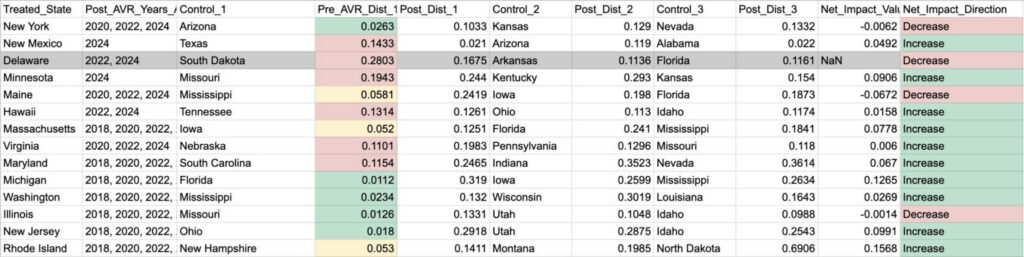
This week, I replicated my methodology from Week 2 used for SDVR, finding treatment states that adopted AVR in the 2014 to 2024 range and comparing them to their three control states. These control states were determined by their Euclidean distance — the smaller it is, the more similar their fluctuations in turnout were.
The color-coding below for the pre-AVR distance of the first control state means:
Green: Within 0 and 0.05 — a very strong match
Yellow: Within 0.05 and 0.1 — a fairly strong match
Red: Greater than or equal to 0.1 — a weak match
We know their distance, but not the direction, so to understand if their subsequent difference in path is positive or negative, I take the average turnout of treated state and the 3 control states to find their difference: the net impact value.
An increase in turnout (as shown in green) means their divergence is positive, and a decrease in turnout (red) means their divergence is negative.
Key Takeaways
First, some states have been ruled out for weak matches. As a potential solution, I’ll look for turnout data older than 2014 for a better range.
Second, AVR seems to overwhelmingly increase turnout rather than decrease, but it’s important to note that the decrease could either mean a real decrease in turnout, or a failure to keep pace with the control group. This should be further studied.
At the moment, I’m re-evaluating Delaware’s data to derive the net impact value.
I’m in the process of repeating this last step of finding the direction for SDVR, and will add it to next week’s update!
BASIS Independent Dublin is a Grades 6 – 12 private school, providing students with an internationally benchmarked liberal arts and sciences curriculum, with advanced STEM offerings. Considering joining the BASIS Independent Dublin community? To join our interest list for the next school year and receive admissions updates and more, please click here.
Senior Project Spotlight: Patrick Z. Weeks 1 – 2
The Senior Project is an independent, student-led culmination of our high school experience. After three years of academic preparation, our seniors are ready to spend the last trimester of their high school careers applying the skills and knowledge they have gained to develop a project that is insightful, academically rigorous, and professional in nature. This year, we are proud to showcase a senior from one of our neighboring campuses, BASIS Independent Fremont, Patrick Z.
Week 0: It’s a Bit… It’s a Qubit… It’s a Computational Cage Math!
Hi everyone! My name is Patrick Zhou, and welcome to the very first entry of my Senior Project blog. Over the next few months, I invite you to join me as I dive into the complex and often invisible war between classical computing and the emerging frontier of quantum mechanics. My project, formally titled Comparative Analysis of Error Mitigation for Quantum Systems and Artificial Neural Networks under Additive White Gaussian Noise, is a bit of a mouthful, but the core mission is actually quite simple: I want to find out if a quantum brain is sturdier than a classical one when the world gets messy.
My journey into this high-tech rabbit hole didn’t actually start with a love for physics, but rather through a study of cybersecurity and encryption. It was during a high school class on qubits that I had a sudden, slightly frightening realization: quantum algorithms have the theoretical power to render our existing security measures obsolete. That fear quickly turned into fascination. I needed to understand the future of computation before it arrived, which led me to a summer research program at UCSB where I coded my first quantum circuits using Python and Qiskit. Now, I am systematically expanding that experience to answer a burning question about how these systems handle noise.
In the context of machine learning, noise isn’t just loud sounds; it’s static, corruption, and interference that ruins data. Think of a grainy photo taken in low light or a fuzzy MRI scan. Classical Convolutional Neural Networks (CNNs), the kind of AI currently running on your phone, are great at reading clean data, but they often stumble when the picture gets blurry. My project pits these classical networks against a Quantum Neural Network (QNN). The theory is that quantum properties like superposition (being in two states at once) and entanglement (where parts of the system are linked across space) might allow the QNN to see the big picture better than a classical computer, making it more robust against errors.
To test this, I am designing a computational cage match. I will be building three distinct models: a standard high-resolution CNN, a fair low-resolution CNN, and a hybrid QNN. I will first train all three on the famous MNIST dataset, essentially the Hello World of machine learning consisting of handwritten digits, and then bombard them with Additive White Gaussian Noise. By forcing both the classical and quantum models to look at low-quality, pixelated inputs, I aim to level the playing field. This ensures that if the quantum model wins, it’s not because it had superior data, but because its architecture is genuinely smarter at filling in the gaps.
This matters because the real world is rarely noise-free. From autonomous vehicles driving through rain to financial algorithms parsing corrupted data, we need AI that doesn’t break when conditions aren’t perfect. If my research shows that QNNs are naturally more resilient to noise, it could validate the theoretical benefits of quantum computing for industries like healthcare and defense. I have a long road of coding in Google Colab ahead of me, complete with the challenges of simulating quantum hardware on classical machines, but I am ready to see if the future of AI really is quantum. Stay tuned for the results!
Week 1: Building the Quantum and Classical Models
This week, the theoretical planning phase ended and the real construction began. I spent the bulk of my time in Google Colab building the three neural network models that will eventually go head-to-head, and I quickly learned that designing an experiment on paper is a very different beast from wiring it up in code.
The first model I tackled was the full-resolution CNN, which is the heavyweight of this experiment. This is a LeNet-style Convolutional Neural Network that takes in the full 28×28 pixel MNIST images, meaning it gets to see every detail of each handwritten digit. I built it with two convolutional layers, pooling layers to compress the spatial information, and dropout layers to prevent overfitting, which is essentially when a model memorizes the training data instead of actually learning patterns. Getting this one up and running was the smoothest part of the week because classical CNNs are extremely well-documented and the TensorFlow library makes the architecture almost plug-and-play. Think of this model as the student who gets to read the textbook with perfect lighting and a magnifying glass; it has every advantage in terms of input quality, and it will serve as my performance ceiling.
The second model, the fair CNN, was where things got more conceptually interesting. This is a much simpler Multi-Layer Perceptron with just one hidden layer, and the critical twist is that it only receives 4×4 pixel binarized images, the exact same degraded input that the quantum model will see. I talked in my last post about how previous studies comparing QNNs and CNNs often gave the classical model a full high-definition image while the quantum model worked with a pixelated thumbnail, which is hardly a fair fight. This fair CNN is my solution to that problem. By stripping the classical model down to the same resolution, I am isolating the variable of architecture itself. If the quantum model outperforms this one, it won’t be because of an unfair data advantage; it will be because the quantum design is genuinely better at extracting meaning from limited information.
The third and most challenging model is the QNN, the hybrid quantum-classical network that sits at the heart of this entire experiment. Building it required me to dive into TensorFlow Quantum, which is a framework that lets you design quantum circuits and integrate them into a standard machine learning pipeline. The idea is to take each 4×4 binarized image and encode it onto 16 qubits, where each pixel maps to one qubit. From there, a Parameterized Quantum Circuit uses XX and ZZ entangling gates to create correlations between the qubits, theoretically allowing the model to capture global patterns in the data that a classical network might miss. If superposition lets each qubit exist in multiple states at once and entanglement links those states together, then in theory this circuit should be able to see relationships across the entire image simultaneously rather than scanning it piece by piece. In practice, however, setting up the circuit encoding and making sure the data pipeline correctly binarizes and maps each image to the quantum layer took a significant chunk of my week and a lot of debugging.
The biggest challenge I ran into this week was honestly just the sheer difference in workflow between classical and quantum model building. With the classical CNNs, errors were usually straightforward: a mismatched tensor shape here, a wrong activation function there. With the QNN, debugging felt like navigating in the dark because the abstraction layer between the quantum circuit and the classical optimizer made it harder to pinpoint where things were going wrong. I also had a minor scare when I realized how long even a simple quantum simulation takes on a classical machine, which is a reminder that I am not running on an actual quantum computer but rather simulating one, and that simulation cost grows fast. This is why the 4×4 input size is non-negotiable; scaling up to 28×28 would require 784 qubits and an astronomical runtime that my laptop and Google Colab would simply refuse to handle.
Looking ahead to next week, my goal is to finalize the architecture of all three models and begin the training phase on the clean MNIST dataset. I plan to train each model for 10 epochs and start logging the baseline accuracy and loss metrics before any noise is introduced. If all goes well, by the end of next week I will have three trained models sitting in my notebook, ready to be thrown into the noisy gauntlet. Stay tuned for the results, and wish my qubits luck.
Week 2: The Speed Wall
Last week I finished constructing all three models and was eager to jump straight into the training phase. My plan was to start with the QNN first since it is the most complex and unpredictable of the three, get it working well, and then breeze through the two classical CNNs afterward. That plan sounded great on paper. In practice, the quantum model decided to humble me.
When I first attempted to train the QNN on the full 10-digit MNIST classification task, the accuracy was, to put it politely, rough. The model was struggling to meaningfully distinguish between all ten digit classes when each image is compressed down to a 4×4 binarized grid mapped onto 16 qubits. The loss curves were not converging the way I needed them to, and the predictions felt almost random for several of the digit classes. This was not entirely shocking given how much information is lost when you crush a handwritten digit into 16 binary pixels, but it still meant I could not just accept the results and move on. I started experimenting with adjustments to the circuit, tweaking the number of entangling layers, adjusting the learning rate, and modifying how the Parameter Shift Rule interacts with the optimizer to update the quantum circuit’s trainable parameters.
Here is where the real problem hit. Every single one of those adjustments requires retraining the model from scratch, and each training run on the QNN is agonizingly slow. The fundamental issue is that I am simulating a quantum computer on classical hardware, so every quantum gate operation, every state vector update, and every gradient calculation has to be brute-forced through classical linear algebra. A single epoch takes orders of magnitude longer than it would for either CNN. When I was just building and testing the circuit with small batches during Week 1, the slowness was manageable. Now that I am trying to iterate rapidly on a real training set, each failed experiment costs me hours of waiting. I would tweak a hyperparameter, start a run, watch a progress bar crawl, and then discover the change did not help. That debugging loop I described last week is exponentially more painful when every attempt takes half a day to evaluate.
Because of this bottleneck, I have not yet trained the two classical CNNs either. There is no point in collecting their baseline numbers until I have a QNN that actually works well enough to make the comparison meaningful, and I cannot get the QNN to that point when every iteration takes this long. The solution I am currently pursuing is procuring access to a faster server. Google Colab, even with GPU acceleration, is not cutting it for the volume of quantum simulation I need. I have been working on getting access to a more powerful machine that can handle the computational overhead more efficiently, compressing those multi-hour runs into something manageable so I can actually iterate at a reasonable pace.
Despite the frustration, this week has been a grounding reminder of why the quantum computing field is pouring billions into building real quantum hardware. Simulating even 16 qubits at scale already pushes classical machines to their limits. Next week, I am hoping to have the new server set up so I can break through this wall and finally get all three models trained on clean data. Stay tuned.
BASIS Independent Dublin is a Grades 6 – 12 private school, providing students with an internationally benchmarked liberal arts and sciences curriculum, with advanced STEM offerings. Considering joining the BASIS Independent Dublin community? To join our interest list for the next school year and receive admissions updates and more, please click here.
Senior Project Spotlight: Aarohi G. Weeks 1 – 2
The Senior Project is an independent, student-led culmination of our high school experience. After three years of academic preparation, our seniors are ready to spend the last trimester of their high school careers applying the skills and knowledge they have gained to develop a project that is insightful, academically rigorous, and professional in nature. This year, we are proud to showcase a senior from one of our neighboring campuses, BASIS Independent Silicon Valley, Aarohi G.
Week 1 – The Beginning
Hi everyone! My name is Aarohi, and I’m excited to delve into the nuanced topic of civic engagement, how state governments can influence and encourage it, and my first week’s progress on this journey.
Background
From passionately researching and delivering politically-focused speeches to feeling a sense of helplessness watching the news, I noticed a unique combination of interest and inaction that characterizes my experience with civics. For years, I observed this same perspective in my peers and corroborated it with the common statistics that surrounded me; I knew well that the 18 to 24 age demographic of voters historically has had the lowest turnout, with a little over half voting in the 2020 election. As a result, young people are often perceived as apathetic to political concerns; however, CIRCLE at Tufts hopes to discredit these beliefs, indicating through research that an uneven civic education and other barriers to participation are major contributors to these trends.
I realized then that, to navigate this complex issue, I must understand how the government can extend a hand to these age groups and inspire increased participation.
Which brings me to my research question: how can state governments engage young voters (18-24 year-olds) and high schoolers in sustained civic participation through programs and legislation?
Method
To investigate this, I’ll draw from available datasets and analyze them across two stages: the first studying the impact on voter turnout, and the second researching non-voting methods of participation.
Stage 1
In this stage, I’ll assess the impact of Same-Day Voter Registration, where people can register and vote on Election Day; Automatic Voter Registration, where eligible individuals are automatically registered when interacting with government agencies such as the DMV; access to polling sites on college campuses; and the ability to pre-register to vote. To study this, I will conduct a difference-in-differences analysis of states within groups that have similar levels of fluctuation in their voter turnout rate over time. With this similarity, I’ll be able to clearly determine how, as one or more states incorporate a new policy, their voter turnout trends shift or diverge.
Stage 2
Second, to measure interest among the nonvoting population, this project will explore the impact of optional engagement and volunteering opportunities such as being a member of a Youth Advisory Council, or abiding by a mandatory civics education requirement in high school. I’ll quantify engagement as the frequency of voluntary petition-signing or submission of public comment–a direct communication to government agencies about proposed regulations or policies.
Stage 3
Finally, to augment the analysis with qualitative data, I will study existing interviews with local officials, students, and young voters, then conduct new ones.
Thus, this project will provide a comprehensive and refined list of improved strategies that can aid states with low engagement and truly include the youth in civic issues.
Week 1
To kick off the first stage, I’ve gathered voter turnout data from KFF, an independent information organization. I compiled the information on voter turnout of 18-24 year olds as a share of their voting population in every national and midterm election from 2014 to 2024. Then, I calculated the coefficient of variation for each state’s turnout over this period of time, categorizing them as Low, Medium, and High Volatility states. Within these categories, I aimed to find the best matches by determining the similarities of these states’ trends to each other through calculating their Euclidean Distance to each other. With these two metrics, I organized the most similar states in groups of three. In the next steps, I’ll be assessing any differences in behavior after the introduction of Same-Day Voter Registration.
Week 2 – Same-Day Success?
Last week, we discussed Stage 1 of my methodology, where I assess the impact of legislation on voter turnout. In pursuing this goal, I start by comparing states’ turnout trends to each other before and after one adopts the policy of Same Day Voter Registration (SDVR).
What is Same Day Voter Registration?
While registration to vote is a requirement to participate with a deadline before Election Day, SDVR allows eligible voters to register and cast their ballot on the same day. Whether that’s only during Election Day, the early voting period alone, or both, depends on the state. As of October, 2024, twenty-three states and Washington D.C have adopted this legislation across a several decades-long timeframe; Wyoming, Washington, and Wisconsin implemented it in the 1970s, while Colorado and Idaho did in 2022 and 2023 respectively.
Current Literature
Same Day Voter Registration has historically elicited mixed reactions. Proponents applaud it for accommodating voters who face accessibility barriers, such as transportation or scheduling costs, and those who wish to get involved very close to the election. Others share concerns about administrative disarray and increases in uninformed or rushed decision-making on the voters’ parts.
Studies on the subject point to hopeful results, where SDVR successfully encourages voter participation. In a study by Grumbach and Hill, published in the Chicago Journals, young voters (aged 18-24) suffer from the usual registration rules since they move frequently yet do not interact with government agencies regularly to update registration information. And according to their Differences-in-differences analysis, SDVR increases turnout among young voters by 3.1 to 7.3 percentage points.
Week 2
Entering the week with this context, I aimed to identify states that would implement Same Day Voter Registration within my range of 2014 to 2024, since my voter turnout data encompasses this time frame. Then, I identify three control states whose voter turnout rates fluctuate similarly before SDVR was implemented, and finally, compare the level of change in their voter turnout afterwards.
Eight states had adopted this policy within my required timeline: New York, Virginia, Nevada, New Mexico, Maryland, Michigan, Utah, and Washington.
Using the strategy tested and refined in Week 1, I grouped similar control states by first calculating their coefficient of variation to categorize them as Low, Medium, and High Volatility states. Within these groups, I found the Euclidean distance of their data to each other, identifying the top 3 best matches to the state with SDVR.
Finally, I calculated the Euclidean distance post-enactment of Same Day Voter Registration, to measure divergence by the increase in the distance value.
This increase occurred for nearly every state in comparison to each of the three control states, with the exceptions of: Virginia to its first and third closest control, and New York to its second and third closest controls.
BASIS Independent Dublin is a Grades 6 – 12 private school, providing students with an internationally benchmarked liberal arts and sciences curriculum, with advanced STEM offerings. Considering joining the BASIS Independent Dublin community? To join our interest list for the next school year and receive admissions updates and more, please click here.
Senior Project Spotlight: Patrick Z.
The Senior Project is an independent, student-led culmination of our high school experience. After three years of academic preparation, our seniors are ready to spend the last trimester of their high school careers applying the skills and knowledge they have gained to develop a project that is insightful, academically rigorous, and professional in nature.
Our seniors start by designing a research question that is often centered on a subject they are passionate or curious about. Then they embark on a journey to answer it, documenting and analyzing their findings as they go. They partner with both an internal and external advisor to support and guide their research. Students may choose to conduct their research in the form of internships or experimental research at university research labs, field work abroad, or research conducted remotely from home. From explorations into new-age technology to cutting-edge medical advancements to social justice, the Senior Project offers students the opportunity to channel their innate curiosity. This experience readies them for the type of self-direction and self-discipline expected in an undergraduate and graduate setting.
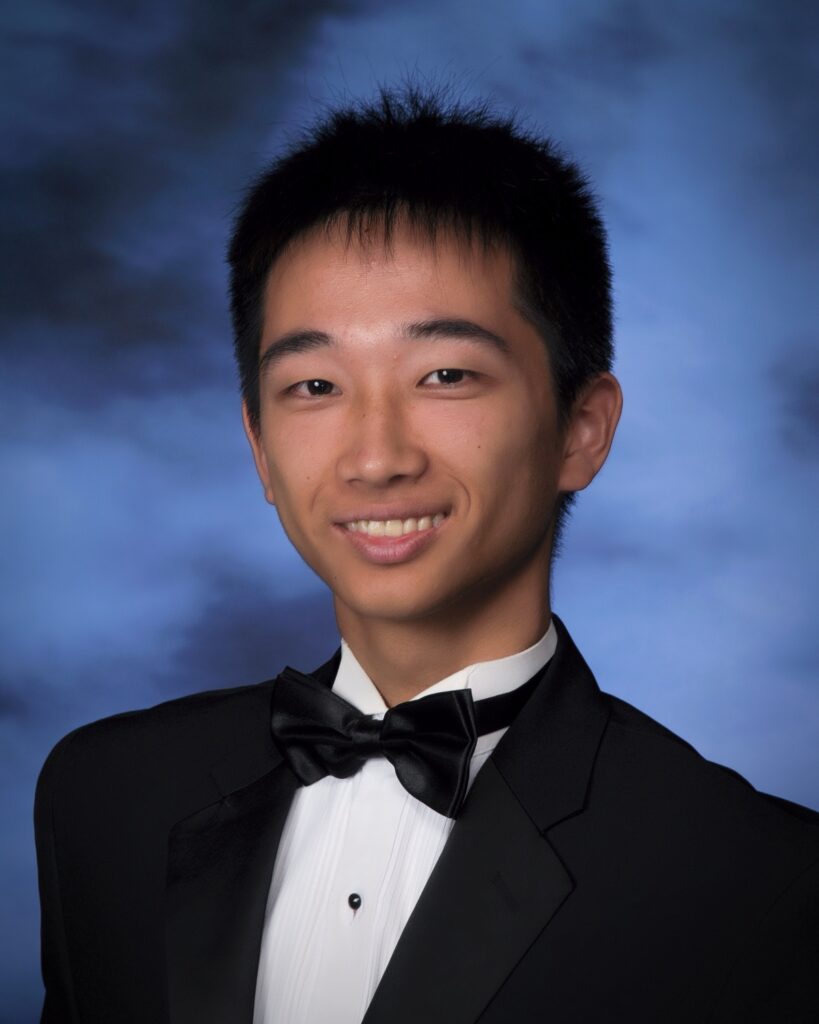
This year, we are proud to showcase a senior from one of our neighboring campuses, BASIS Independent Fremont, Patrick Z.
Project Title: Comparative Analysis of Error Mitigation for Quantum Systems and Artificial Neural Networks Under Noisy Inputs
BASIS Independent Advisor: Ms. Shahin
Internship Location: Google, 1600 Amphitheatre Pkwy, Mountain View, CA 94043
Onsite Mentor: Mr. Peng Xiang Li
Abstract: Artificial Intelligence is increasingly vital to high-stakes industries like healthcare and finance, yet these systems often falter when processing the noisy, imperfect data found in real-world environments. While Convolutional Neural Networks (CNNs) are the standard for image classification, Quantum Neural Networks (QNNs) theoretically offer superior noise resilience through quantum properties such as superposition and entanglement. However, existing comparative research is often inconsistent, frequently pitting high-resolution classical models against hardware-limited, low-resolution quantum simulations. This research addresses that disparity by conducting a comparative analysis of error mitigation between QNNs and CNNs under Additive White Gaussian Noise (AWGN). My methodology involves developing three distinct models within TensorFlow Quantum using the MNIST dataset: a standard full-resolution CNN, a hybrid QNN, and a resolution-matched fair CNN to ensure a direct architectural comparison. All models will be trained on clean data and subsequently tested against noise-injected datasets to measure classification accuracy and loss. Through this research, I aim to quantify whether quantum architectures inherently outperform classical ones in signal-to-noise processing. Observing superior robustness in the QNN would validate the practical viability of quantum machine learning for critical applications where data integrity is compromised.
BASIS Independent Dublin is a Grades 6 – 12 private school, providing students with an internationally benchmarked liberal arts and sciences curriculum, with advanced STEM offerings. Considering joining the BASIS Independent Dublin community? To join our interest list for the next school year and receive admissions updates and more, please click here.