
• Skip to primary navigation
  • Skip to main content

BASIS Independent Schools

BASIS Independent SchoolsBASIS Independent Schools
  • About
    • Why BASIS Independent Schools?
    • Mission & Philosophy
    • Diversity & Citizenship
    • History
  • Academics
    • Curriculum
    • Early Learning Program
    • Primary Program
    • Middle School Program
    • High School Program
    • The Senior Year
    • Summer Programs
    • International Student Program
  • Achievements
    • International Performance
    • College Admissions
    • Advanced Placement
    • National Merit
  • Find Your School
Inquire

High School

Redefining Student Agency in the Financial World

May 1, 2026 by christineklayman Leave a Comment

Josh A. (Class of 2027) remembers watching the markets long before he had a portfolio of his own. Seeing the data move on a Bloomberg terminal at home sparked a curiosity about what it takes to “see the green” on a trade. During high school at BASIS Independent Manhattan, he found peers who shared that same drive. Along with fellow juniors Aidan B. and Finn B., they launched the Upper School Investment Club—a student-led initiative that has quickly become a standout example of high-level academic application and student initiative.

Recently, these student leaders met with Michael Collins, CEO of Spring Education Group (SEG), at the Upper School campus in Chelsea to discuss the future of financial literacy and their club’s unprecedented trajectory in the New York City education landscape.

The founding investors club students stand on the staircase inside the Upper School with CEO of Spring Education Group (SEG) Michael Collins and club advisor, Kirk Murphy.
From L to R: Mr. Murphy (Club Advisor), Josh A., Aidan B., Finn B., and Mr. Collins (CEO, SEG)

A Flight Simulator for Money Management

At BASIS Independent Manhattan, our students can begin taking economics in grade 8 and complete the AP level by the end of their junior year. What makes our students unique is how they engage with finance and the economy as active participants.

Like a pilot practicing in a “flight simulator,” our Investment Club leaders have created a space to implement practical skills in real-life situations without the immediate risk of real-world capital. They run mock trials, build separate portfolios, and rigorously analyze their performance every two weeks. This methodology has already yielded results: in the Trading Day Competition hosted by the Stevens Institute of Technology, Josh A. secured 1st place and Aidan B. took 3rd place among over 800 participants.

A classroom for economics class has a game set up with a Market Tally sheet on the board, worksheets on a desk, and buyer-trader cards laid out.
During their required economics course in high school, BASIS Independent Manhattan students get a taste of the real financial world when they act as buyers and sellers trying to make the highest profits by trading in an “In The Chips” activity.

The Path to a Real-World Endowment

However, for these students, simulations are only the beginning. The meeting with Mr. Collins represented a major milestone: presenting a “proof of concept” to secure SEG leadership’s support for an unprecedented high school model.

The club’s ultimate goal is to transition from mock portfolios to managing a real-money endowment that stays with the school’s Investment Club. By demonstrating their rigorous risk-management strategies and analytical mastery, the students are seeking the buy-in and investment necessary to trade with real capital—a level of responsibility not traditionally seen at the high school level.

Mastery Through Winning and Losing

To prepare for that responsibility, the students have developed a sophisticated understanding of risk. They have learned that true mastery often means learning what not to do through winning, and learning what to do through losing.

While their 1st and 3rd place finishes at Stevens brought returns of up to 400% in a month, the students reflected on the experience with a critical eye. “The Stevens competition actually taught us the wrong things,” the leaders shared during the roundtable. “You can go ‘all in’ every time and win in a simulation, but that is just not true in the real world.”

The club saw a different kind of value when they competed in the Wharton Global Youth Program Investment Competition. Though they didn’t take home the top prize, the experience was a catalyst for growth. “Here’s what we did wrong: we didn’t meet the client’s expectations. What we need to do is change our philosophy,” they noted. This ability to identify failure and pivot is exactly why their Investment Club has a strong future.

The 11 students in the 2025-26 Young Investors Club stand in a classroom taking a photo for the yearbook.

Redefining Student Agency in NYC

The conversation with Michael Collins highlighted a core belief at our school: that student agency has no age limit.

“You guys are a concrete example that any high schooler can do this,” shared Mr. Collins. “There’s no requirement to be an adult or a college graduate. At any point in your life, you can start managing money.”

Mr. Collins was particularly impressed by how the founders translated their personal success into a structured peer-to-peer mentorship program, demystifying complex financial systems for the rest of the student body.

The Wildcat Edge

  • For colleges and universities, Aidan, Finn, and Josh represent the gold standard of grit. They go beyond the BASIS Curriculum, applying the logic learned from their Subject Expert Teachers to identify market trends and manage real-world risk.
  • For NYC families, this club represents our mission in practice. Students take the techniques acquired in the classroom and apply them to their own inquiries, developing the resilience required for the world’s most competitive environments.

Join Our Wildcat Community

Are you curious about how the BASIS Independent Manhattan experience prepares each child for success? We invite prospective families to visit our campuses and speak with our leadership and students.

  • Middle School Program Tour (Grades 5-8): May 13
  • High School Program Tour (Grades 9-12): May 21

Register to Visit Our School Today

Related Links:

  • Explore Our High School Academics
  • Learn More About Student Life

Filed Under: Academics, Clubs & Activities, Competitions, Economics, Electives, Featured, High School, School Community, Student Achievement, Student Learning, Student Life, Student Spotlight

Meet Our New Subject Expert Teacher: Ms. Kendall Goldschmidt

April 29, 2026 by nathanielyinger Leave a Comment

Ms. Kendall holds a Bachelor’s degree in Economics from the University of Oregon and a Master’s degree in Secondary Education, with a focus in the social sciences, from the University of San Francisco. This provides her with the skills necessary to create and maintain a welcoming educational environment for all learners. She is a strong believer that social studies classrooms are the perfect place for developing skills and interacting with content relevant to students’ lives. 

Ms. Kendall is a strong believer in developing a student’s enthusiasm for learning through hands-on activities, class discussion, and individualized assistance.

In her free time, Ms. Kendall likes to crochet and spend time with her family and friends.

What drew you to join our school community?

What drew me most to join this school community was the strong academic environment that has been developed, and the opportunity to work with students who have a love for learning and who have been very successful in meeting their academic goals!

What are you most excited about in your first year here?

I am most excited to get to know all my students and to develop a strong classroom community. Social studies classes are some of the best places to develop important literacy skills and confidence that can help students in other areas of study. I am also excited to interact with and get to know my peers at BASIS Independent Dublin and to help foster a strong and welcoming environment for all learners.

What advice do you give to students who want to succeed in your class?

Come to class with an open mind and be ready to learn new things! History is an exciting subject that connects to each person’s past while helping them prepare for the future. Ask questions, make connections, and challenge yourself to be the best student you can be every day, and you will be successful. 

What do you hope students will remember most about your class years from now?

I hope that students remember all the skills they will be developing and strengthening in my classes years from now. History and social studies are classes that are best taught when students are hands-on learning, but from these activities students are also working on important literacy and interpersonal skills that they will use in academic, professional, and personal settings for years to come.

BASIS Independent Dublin is a Grades 5 – 12 private school, providing students with an internationally benchmarked liberal arts and sciences curriculum, with advanced STEM offerings. Considering joining the BASIS Independent Dublin community? To join our interest list for the next school year and receive admissions updates and more, please click here.

Filed Under: Faculty & Staff, High School, Middle School

Meet Our New Subject Expert Teacher: Mr. Clifford Rawls

April 28, 2026 by nathanielyinger Leave a Comment

A San Francisco native and life-long musician, Mr. Cliff received Bachelors of Arts degrees in Music and English in 2009 from Santa Clara University where he studied performance and screenwriting. He then began his career as an educator, teaching guitar, drums, and music theory throughout the Bay Area. He soon returned to school, earning a Master’s of Music in Music Education in 2014 from Boston University. During this time, Mr. Cliff continued his career as a music educator, teaching modern band, music theory, instrumental performance, and music history throughout the East Bay. While continuing his teaching career, Mr. Cliff found himself bitten by the education bug once again; he returned to Boston University in 2017 to pursue a Doctor of Musical Arts, where he is currently finishing his degree as a doctoral candidate.

Mr. Cliff is a passionate music educator who believes that music is for everyone – he also thinks it’s important to provide students with music education experiences that will transcend the classroom. Students can look forward to learning to play new instruments, getting better at instruments they can already play, performing live, learning to record, and listening to lots and lots of music together!

When Mr. Cliff is not busy teaching, you can find him spending time with his family in the city, on the hunt for the best burgers and hot wings with his friends in the East Bay, at the driving range, at the skatepark, on his laptop finishing his dissertation, and, of course, in his music room practicing!

What drew you to join our school community?

BASIS Independent Dublin seems like a place where the teachers and students are enthusiastic, and the prospect of building a music program from scratch with new students sounded like a can’t miss opportunity!

What are you most excited about in your first year here?

I’m excited to meet all the students, pick our first few songs, and to play the first notes in our brand new building together!

What advice do you give students who want to succeed in your class?

Some advice I would give to my students is to remember that “we are all musicians.” Whether you’ve been playing music for 30 years like me, or you’re just starting, it’s OK! You’re a musician, and as long as you keep practicing, you’ll be able to play and learn new things.

What do you hope students will remember most about your class years from now? 

I hope when you look back on our time together as a class, you’ll remember the fun you had learning and growing, choosing and playing repertoire you loved, and the joy we shared as a community of musicians.

BASIS Independent Dublin is a Grades 5 – 12 private school, providing students with an internationally benchmarked liberal arts and sciences curriculum, with advanced STEM offerings. Considering joining the BASIS Independent Dublin community? To join our interest list for the next school year and receive admissions updates and more, please click here.

Filed Under: Faculty & Staff, High School, Middle School

Meet Our New Subject Expert Teacher: Coach Jacqueline Bateman

April 27, 2026 by nathanielyinger Leave a Comment

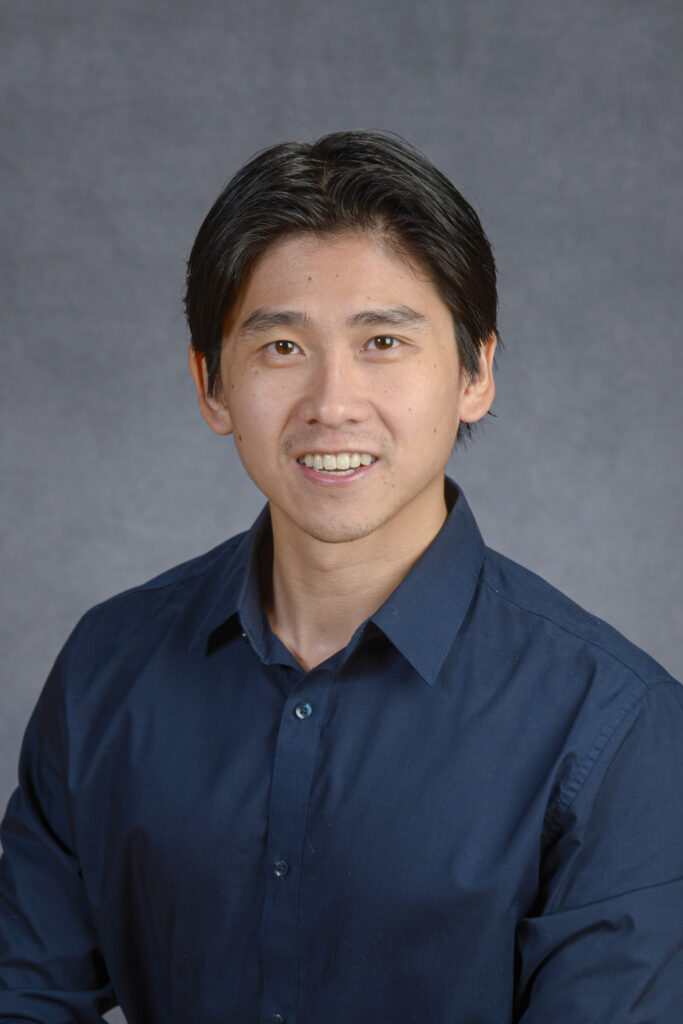
Coach Jacki is a dedicated Physical Education teacher with a background in exercise science and a passion for helping students develop confidence and discipline, as well as a lifelong commitment to health and fitness. She holds a Master’s degree in Exercise Science with a concentration in Performance Enhancement and Injury Prevention, and brings experience from both school-based teaching and athletic training environments. Her approach focuses on creating a structured, positive, and engaging learning environment where students can build skills, improve their physical abilities, and learn the value of teamwork and sportsmanship. Drawing from her own experience playing multiple sports including basketball, soccer, water polo, softball, and baseball, Coach Jacki strives to expose students to a wide range of activities and to help them discover ways to stay active for life.

What drew you to join our school community?

I was drawn to BASIS Independent Schools because of its strong emphasis on high standards, student accountability, and overall excellence. I appreciate that the school values both academic success and the development of the whole student. I believe physical education plays an important role in building discipline, confidence, and teamwork, and I was excited about the opportunity to contribute to a community that prioritizes those qualities.
What are you most excited about in your first year here?

In my first year, I’m most excited about building strong connections with students and creating an environment where they feel supported and motivated. I look forward to helping students grow in their skills and confidence, while also establishing routines and expectations that keep them engaged and active.

Are there any highlights you’d like to share about your teaching philosophy or approach?

My teaching approach focuses on helping students feel both supported and appropriately challenged as they develop their skills. I design lessons that allow for steady progress so students can recognize their growth, while also promoting collaboration and accountability. I adapt activities to meet different ability levels, ensuring all students remain engaged and have opportunities to succeed.

What goals do you have for your students to take away from your PE classes?

My goal is for students to leave my class with confidence in their physical abilities and a positive attitude toward staying active. I want them to develop strong movement skills, understand the importance of fitness and injury prevention, and build lifelong habits around health, teamwork, and perseverance.
BASIS Independent Dublin is a Grades 5 – 12 private school, providing students with an internationally benchmarked liberal arts and sciences curriculum, with advanced STEM offerings. Considering joining the BASIS Independent Dublin community? To join our interest list for the next school year and receive admissions updates and more, please click here.

Filed Under: Faculty & Staff, High School, Middle School

7 Red-Tailed Hawks Accepted to VA Governor’s Schools or World Language Academy

April 24, 2026 by aixuanwang Leave a Comment

We are proud to announce that seven BIM students have been accepted to a Virginia Governor’s School or Governor’s World Language Academy, with two more students named as alternates. The list:

  • Colin B. ’27 – Latin (at Virginia Commonwealth University)
  • Sumer C. ’28 – Engineering (at Jefferson Laboratories)
  • Peter D. ’28 – Agriculture (at Virginia Tech)
  • Suraiya F. ’27 – Spanish (at Washington and Lee)
  • Adrith K. ’28 – Voice (at Radford)
  • Richard P. ’28 – Humanities (at Radford)
  • Manya R. ’27 – Acting (at Radford)
  • Sarah R. ’27 – Agriculture (at Virginia Tech)
  • Bethel W. ’27 – French (at Washington and Lee)
From left to right: Manya R. ’27, Suraiya F. ’27, Dr. Hight (Student Advancement Manager), Bethel W. ’27, Adrith K. ’28, Richard P. ’28, Colin B. ’27, Sarah R. 27, Sumer C. ’28, and Peter D. ’28

This is a significant achievement! Admittance to the Governor’s School and World Language Academy programs is extremely competitive. First, students must compete to be one of our school’s nominees in a subject area, then they must be nominated in our region, and finally they must be selected from nominees from all over the state. Spots in the program are limited. The engineering program at Jefferson Laboratories only takes 11 students from the entire state.

Attending the Governor’s School or a World Language Academy is one of the best ways a high school student can spend their summer. Top students from all over Virginia spend three weeks on a college campus doing college-level work under the guidance of college professors, and all at a fraction of the cost of other summer programs. It is a great opportunity that our previous students have unanimously enjoyed.

We are extremely proud of the hard work these students have done – on their applications, in the classroom, and beyond – to receive these nominations!


BASIS Independent McLean is an Age 2–Grade 12 private school, providing students with an internationally benchmarked liberal arts and sciences curriculum, with advanced STEM offerings. Considering joining the Red-Tailed Hawks community? To join our interest list for the next school year and receive admissions updates and more, please click here.

Filed Under: Featured, High School, Student Achievement

Meet Our New Subject Expert Teacher: Mr. Rohit Ravikumar

April 23, 2026 by nathanielyinger Leave a Comment

Mr. Ravikumar holds a bachelor’s degree from the University of California, Davis, where he double-majored in Economics and History. He then went on to complete a master’s degree in Economics from Boston University, focusing on applied economic theory and social policy. Outside the classroom, he worked for several years in the industry as a data scientist, utilizing economic principles to analyze business policies.

Mr. Ravikumar first joined BASIS Independent Schools as a Subject Expert Teacher in Economics and Computer Science at BASIS Independent Silicon Valley, where he taught courses ranging from AP Economics to an Econometrics Capstone Course. His teaching philosophy is centered around a dynamic learning environment that connects theoretical concepts to real-world examples and critically engages with political and social implications of the course material. As an educator, he takes pride in developing a classroom milieu that is both rigorous and approachable: scaffolding challenging concepts with the support necessary for students to succeed at their fullest potential. 

In his free time, Mr. Ravikumar enjoys video games, reading a good book, and spending quality time with his wife and cat.

What originally drew you to teach at BASIS Independent Schools, and what brought you back now?

I was originally inspired to teach at BASIS Independent Schools by the environment of genuinely inquisitive and curious students and families I saw. It was a joy to see teachers, parents, and students collaborate to foster an open, inclusive, and understanding learning environment. I am excited to return to a new community that holds learning in such esteem across a variety of subjects and the development of critical thinking along with reasoning skills.

What is one of your favorite memories from your previous time at BASIS Independent Silicon Valley?

I found it deeply rewarding to see my Econometrics capstone students take everything they had learned about statistical techniques and apply it to their own term projects. My students chose a wide variety of topics, from optimal basketball plays to stock market performance to competitive video game results, using their own skills and newfound knowledge to devise hypotheses, collect data, and present their completed projects. Seeing them do it all on their own was one of the greatest joys I had as a teacher.

What are you most looking forward to as you join a new school community? 

I’m excited to meet my new students! Building this new community will be the collective work of the teachers, staff, students, and parents, and I can’t wait to meet the students who will play such a major role in shaping it. I also look forward to helping students develop new relationships with the world around them through a deeper understanding of history.

BASIS Independent Dublin is a Grades 5 – 12 private school, providing students with an internationally benchmarked liberal arts and sciences curriculum, with advanced STEM offerings. Considering joining the BASIS Independent Dublin community? To join our interest list for the next school year and receive admissions updates and more, please click here.

Filed Under: Faculty & Staff, High School, Middle School

Meet Our New Subject Expert Teacher: Ms. Leah Atkins

April 22, 2026 by nathanielyinger Leave a Comment

Ms. Atkins holds a master’s degree in Classics, specializing in the languages, cultures, and history of the ancient Mediterranean world. She is particularly fond of the Roman Empire, which has been her lifelong passion, and she can’t wait to introduce BASIS Independent Dublin students to her favorite Latin authors.

In addition to Latin, Ms. Atkins has a broad academic background. She studied ancient Greek as part of her master’s program, translating epic poems, religious texts, and slapstick comedy. Her bachelor’s degree is in history, and she is fascinated by the common humanity that people share across time and culture.

Are there any highlights you’d like to share about your teaching philosophy or approach?

My teaching approach emphasizes creativity and critical thinking. In Classics, my goal is for students to imagine history in fresh, complex ways, noticing the similarities between us and ancient people while also recognizing our significant differences. Students should expect to read and write quite a bit of historical fiction. They should also expect a variety of hands-on projects, such as grinding wheat and mummifying apples.

My approach to Latin is similarly focused on narrative, critical thinking, and historical reasoning. As the language of the ancient Roman Empire, Latin is the closest thing we have to a time machine because it allows students to understand ancient people on their own terms. Reading stories is the primary method of instruction, though I also include hands-on projects to visualize different aspects of Roman culture.

Latin education has traditionally focused on grammar — and I love grammar! However, I don’t simply give my students a textbook and expect them to regurgitate the rules. Instead, I prefer that students study a sentence as though it were a point of scientific data, then work backwards and investigate why, exactly, words are chosen, structured, and arranged in a particular way. This approach helps the students understand that grammar is meaningful, not an arbitrary collection of rules, and that every choice of word reveals something about the author.

After the first two years of Latin, students will have an advantage in many different academic and professional areas. As the origin of the modern Romance Languages, Latin is useful for studying Spanish, French, Italian, and Portuguese. Knowledge of Latin will also come in handy when learning medical terminology, legal jargon, and advanced English vocabulary. Finally, students will gain a broad understanding of European art and literature, which will enrich their lives no matter what career they pursue. Those who continue with Latin beyond the first two years will find these advantages multiplied even further as they explore advanced grammar, epic poetry, and ancient history.

What are some of the most rewarding parts of being a Subject Expert Teacher and working with BASIS Independent School students?

When I first began teaching at BASIS Independent Schools, I was consistently amazed at the students’ passion for learning. These are the type of kids who teach themselves pigpen cipher for fun and draw diagrams of Hannibal’s forces at Cannae. My students ask such thoughtful questions that I am always challenged to dig deeper into Latin and history.

Latin is a subject that I’d imagine can be daunting to students.  What advice do you give to students to help them succeed in your class?

Latin is a language – the fact that it’s ancient doesn’t make it more difficult than Spanish, Hindi, French, Mandarin, or any other language still spoken today. In fact, since Latin focuses on reading more than speaking, it may come more naturally to students who enjoy solving puzzles and express themselves best in writing.

To succeed in Latin, students should pay attention, take notes, do their homework, and take advantage of my office hours – the same good study habits that help in any class. However, learning a language does present some unique challenges. I recommend that students review vocabulary often. They should also make sure that they know how to conjugate verbs and decline nouns, which I explain in depth during class.

Are there any thoughts you’d like to share with families who are joining – or who are thinking of joining – the BASIS Independent Dublin community?

If you’re joining the BASIS Independent Dublin community, then welcome! Meeting new students is one of my greatest joys every Fall and I can’t wait to see how we will all grow over the course of the year.

If you’re thinking about joining BASIS Independent Dublin, then I would love to connect with you during one of our open house events! There, you can get a tour of the school, ask questions about our curriculum, and get a feeling for our school culture.

BASIS Independent Dublin is a Grades 5 – 12 private school, providing students with an internationally benchmarked liberal arts and sciences curriculum, with advanced STEM offerings. Considering joining the BASIS Independent Dublin community? To join our interest list for the next school year and receive admissions updates and more, please click here.

Filed Under: Faculty & Staff, High School, Middle School

Senior Project Spotlight: Patrick Z. Weeks 3 – 4

April 9, 2026 by mirandamartinez Leave a Comment

The Senior Project is an independent, student-led culmination of our high school experience. After three years of academic preparation, our seniors are ready to spend the last trimester of their high school careers applying the skills and knowledge they have gained to develop a project that is insightful, academically rigorous, and professional in nature. This year, we are proud to showcase a senior from one of our neighboring campuses, BASIS Independent Fremont, Patrick Z.
Week 3: My Qubits Can Count, Just Not to Ten

Last week, I hit a major computational roadblock. I had to wait half of an entire day for the quantum simulations to finish. Oftentimes, they did not even work. However, I found my breakthrough with Amazon SageMaker. While I spent the final part of last week struggling with Google Colab’s limitations, this week I decided to port my notebook to Amazon’s machine learning platform: SageMaker. This gave me greater access to more powerful computational abilities. I had been spending hours training models on Colab, but now I could train models in only a fraction of that time. I could experiment, tweak, and retrain much more quickly than before, which is necessary for model development. With SageMaker, I could finally achieve what had been my goal for weeks: training all three models and getting preliminary accuracy numbers on the board.

I ran initial training jobs on all three of my models using the clean MNIST dataset from Keras. For the first time, I had actual figures to refer to. The full-resolution CNN was the strongest out of the three models, and this was honestly expected because it had the full 28×28 pixel images. To give you an idea of what this looks like, here’s an example of the input the full CNN receives.

The fair CNN, my MLP running on the same 4×4 binarized input as the QNN, was less performant but still showed the ability of a simple classical neural network to squeeze a decent amount of data out of the compressed input. Here’s what the compressed input looks like.

The QNN also produced its first accuracy figures. While the accuracy was nowhere near as good as the full CNN’s, seeing the quantum circuit learning and improving its accuracy was still exciting. For the first time, my project was more like an actual experiment than a debugging exercise.

But then I got greedy. Feeling good about having working models, I wanted to try to push the limits. I tried to have the QNN classify all ten digits rather than just the simple subset the initial version was trained on. So, I reworked the output layer as well as the loss function and started the training. It was so painfully slow. While the new hardware Amazon SageMaker provides is great, every additional output class of the QNN means more parameters in the quantum circuit, more calculations using the parameter shift rule, and more simulated quantum operations. These simulated quantum operations stacked on top of one another and made the program extremely slow. I tried different learning rates and tweaked the number of entangling layers, but it was just too slow. By the time I realized the ten-class approach was not going to work, I had already wasted the better part of two days on it with very few results to show.

However, I am not discouraged by this setback because I believe that the preliminary results I achieved prior to the ten-digit experiment are promising. In the future, I’m planning to work on optimizing the quantum circuit architecture itself and exploring different combinations of quantum gates beyond just XX and ZZ. I want to see if reorganizing the quantum circuit can help increase the classification power of the same 16 qubits. Specifically, I aim to determine the sweet spot where I can confidently mitigate noise, which is the whole purpose of the project. Beyond that, I am also interested in exploring how the models can be applied to more meaningful datasets than just MNIST. While MNIST is a great benchmark, classifying handwritten digits does not fully capture the challenges of the noisy data that these systems would encounter in more practical applications, such as medical imaging and autonomous driving.

Week 4: The Dataset Dilemma

Last week ended on a pretty high note for me. After many days of frustration, I was finally able to get the ten-digit QNN classification working with Amazon SageMaker. I did this by optimizing batch sizes and being more aggressive with my learning rate schedule to make sure that my quantum circuit was able to converge before my patience gave in. Seeing all ten digit classes separate out in my predictions seemed like a small miracle to me. So, I was looking forward to continuing with more datasets in Week 4. But then, my datasets caused quite a lot of trouble.

After having MNIST in the bag, I was feeling quite confident with my project, so I decided to try to apply my project to some real-world problems beyond just recognizing handwritten digits. So, I decided to test my models out with something more challenging than MNIST. During the first half of this week, I was looking into using the Fashion MNIST dataset, which contains images of various clothing items such as shirts and shoes. I felt like replacing my MNIST data with this new, more complex set of visual data meant more.

The results were a disaster. The full CNN performed reasonably well with the Fashion-MNIST dataset and its full resolution images. However, the fair CNN and QNN plummeted. This was because compressing a t-shirt and a pullover into 16 pixels makes them almost indistinguishable. The loss of information was fine for the digit dataset but disastrous for clothing items with only subtle visual differences. My QNN was basically guessing.

I tried different binarization thresholds and only used visually distinct classes, such as distinguishing between shoes and bags. However, even these simple two-class problems were not reliable. After two days of failed experiments, I gave up and accepted that my 4×4 input resolution was a hard constraint dictated by the limits of quantum simulation. It was simply not capable of capturing enough information to classify more complex images. MNIST worked because of the simplicity of the digit images. Fashion-MNIST did not.

So, I made a decision. I’m temporarily abandoning the Fashion-MNIST dataset and going back to MNIST. But, I might search for some more datasets of traffic lights to experiment with. Looking back, my experiment was never about Fashion-MNIST anyways, it was more about determining whether quantum computing’s properties provide noise resilience. I can still do this experiment with sufficient rigor using other datasets.

Next week, I’m also ready for more in-depth noise injection. Stay tuned.

BASIS Independent Dublin is a Grades 6 – 12 private school, providing students with an internationally benchmarked liberal arts and sciences curriculum, with advanced STEM offerings. Considering joining the BASIS Independent Dublin community? To join our interest list for the next school year and receive admissions updates and more, please click here.

Filed Under: High School, Senior Projects

Senior Project Spotlight: Aarohi G. Weeks 3 – 4

April 7, 2026 by mirandamartinez Leave a Comment

The Senior Project is an independent, student-led culmination of our high school experience. After three years of academic preparation, our seniors are ready to spend the last trimester of their high school careers applying the skills and knowledge they have gained to develop a project that is insightful, academically rigorous, and professional in nature. This year, we are proud to showcase a senior from one of our neighboring campuses, BASIS Independent Silicon Valley, Aarohi G.

Week 3: A Party Problem

This week, I prepare to replicate my methodology for the next legislative variable: Automatic Voter Registration, a policy with similar intentions to Same-Day Voter Registration, boosting voting and increasing accessibility. But before I seek these results, I aimed to research a major challenge to my findings and how I could correct for it.

Political Parties & The Youth Vote

Does the political party in charge influence efforts to appeal to the youth vote? The Democratic and Republican parties have historically prioritized it differently according to their reach with these age groups; In 2024, around two-thirds of 18-24 year-old voters aligned themselves to the Democratic Party, indicating a clear advantage gained by the youth vote for Democrats (Pew). As a result, great divides have formed on the opinions surrounding early voting or decreasing registration requirements. Where 84% of Democrats and Democratic-leaners agree with the concept of Automatic Voter Registration, only 38% of Republican and Republican-leaning responders agree (Pew, 2021).

So time and time again, we see legislation specifically catering to the youth vote and needs during elections. The Youth Voting Rights Act, sponsored by the Democratic Sen. Warren and Sen. Williams, exemplifies this as it proposes pre-registration and on-campus polling sites among other additions. And as Sen. Warren was quoted claiming Republicans responsible for voter suppression laws that “silence youth voices,” the issue of target demographic reflects in policy-making and both parties’ agendas.

Correcting This Influence

So how do I ensure that the changes I notice are from the laws themselves and their effects over time, not simply due to the political party in charge? First, the current method of comparing a treatment state to a control group helps, and can be improved by creating a treatment group of similar states as well. The treatment states would all have to adopt the policy simultaneously, offering a more limited view to compare my previous results to, rather than a new method to rely on.

As a secondary analysis after checking for the effects of legislation, I can additionally monitor campaign spending and how it is directed to young voters. In this way I can assess if it differs between parties, and identify periods of constant campaigning to use for my studies (rather than times with more fluctuation).

AVR Data Collection

Once again, I’ll be referring to the National Conference of State Legislatures for their data on the Automatic Voter Registration laws in each state. With each state implementing AVR in a much more recent range of the past 2 decades, comparing a treatment group to a control group is significantly more practical.

Week 4: Automatic Advantage

It’s time to discuss the second policy under review for impact on voter turnout: Automatic Voter Registration. Let’s get some context on the subject.

What is Automatic Voter Registration?
We’ve discussed how registration is often a barrier to voting, and AVR is just another way to streamline the process. It allows eligible voters can become registered when interacting with certain government agencies, like the DMV, and their information will pass on to election officials as necessary. 24 states and Washington D.C. have adopted this legislation in some form. The main two types are front-end opt-out and back-end opt-out.

Front-end opt-out: Whether the voter is asked to “continue” to register or “decline” to register, the choice is presented to them on a screen at the government agency.

Back-end opt-out: While interacting with said agency, the voter will provide all necessary registration information, later receiving a post-transaction mailer that they will be registered unless they respond and decline.

So, two different approaches, with the intention to reduce time costs and inform people on the official steps leading up to voting.

Current Literature
Like Same-Day Voter Registration, many credit this policy with diversifying a state’s voting population. In 2019, Oregon governor Katie Brown views the success of AVR as a direct factor in the increase of people of color registered to vote. And when it comes to the youth vote, a working paper from 2024 finds that the prescence of AVR increased voting turnout for those aged 18-24 by 3.2% (Christy, Hankins, et al.).

On the note of bureaucratic efficiency, the practice has been studied to reduce confusion and delays, both due to human error in paper forms, and also the fact that voter registration does not update when a voter moves (a fact many learn too late).

Progress
This week, I replicated my methodology from Week 2 used for SDVR, finding treatment states that adopted AVR in the 2014 to 2024 range and comparing them to their three control states. These control states were determined by their Euclidean distance — the smaller it is, the more similar their fluctuations in turnout were.

The color-coding below for the pre-AVR distance of the first control state means:

Green: Within 0 and 0.05 — a very strong match

Yellow: Within 0.05 and 0.1 — a fairly strong match

Red: Greater than or equal to 0.1 — a weak match

We know their distance, but not the direction, so to understand if their subsequent difference in path is positive or negative, I take the average turnout of treated state and the 3 control states to find their difference: the net impact value.

An increase in turnout (as shown in green) means their divergence is positive, and a decrease in turnout (red) means their divergence is negative.

Key Takeaways
First, some states have been ruled out for weak matches. As a potential solution, I’ll look for turnout data older than 2014 for a better range.

Second, AVR seems to overwhelmingly increase turnout rather than decrease, but it’s important to note that the decrease could either mean a real decrease in turnout, or a failure to keep pace with the control group. This should be further studied.

At the moment, I’m re-evaluating Delaware’s data to derive the net impact value.

I’m in the process of repeating this last step of finding the direction for SDVR, and will add it to next week’s update!

BASIS Independent Dublin is a Grades 6 – 12 private school, providing students with an internationally benchmarked liberal arts and sciences curriculum, with advanced STEM offerings. Considering joining the BASIS Independent Dublin community? To join our interest list for the next school year and receive admissions updates and more, please click here.

Filed Under: High School, Senior Projects

Founding Subject Expert Teacher Spotlight – Mr. Tyler

March 27, 2026 by jaydahsherman Leave a Comment

In Fall of 2022 our school opened it’s doors for the very first time at the direction of our wonderful Head of School, Dr. Thies. What was just a vision grew quickly into a vibrant learning community. In the first year we welcomed students in grades 2–7, as well as a group of dedicated founding Subject Expert Teachers. They turned empty classrooms into spaces filled with curiosity and growth. What began that year was not only just a school, but a community that these educators would build from the ground up. Let’s take a walk down memory lane with one of our founding Subject Expert Teachers, Mr. Tyler!


Introducing Mr. Tyler

Mr. Tyler is one of our incredible Subject Expert History Teachers here at BASIS Independent Bellevue. He currently teaches all AP Courses in our History Department. When he moved to the greater Seattle area, he had just finished up his fifth year of teaching and was halfway through a Master’s program in gifted education. He became familiar with BASIS Curriculum Schools during his time as a teacher in Arizona. At this time in his career, he was at a place where he knew where he wanted to be in education. When he learned that BASIS Independent Schools was opening its first school in Washington, he knew instantly that he wanted to apply and felt the timing was perfect. He had always felt that the philosophy behind BASIS Independent Schools aligned with his beliefs and goals as an educator. When the opportunity presented itself, he took the position without hesitation. He was bound to be a Mountaineer!


The Founding Year

Mr. Tyler described the first day as dynamic. There was an opening assembly where the students met their teachers and were given an introduction to their new school. He candidly stated that when he looked into the crowd of students and parents, he was imagining all the names he’d have to remember. It was an overwhelming feeling, but he knew this year was going to be greatly rewarding. While the students were eager to meet their teachers, their teachers were just as eager to meet them. The giddiness remained for some time over the next couple weeks, as everyone got their footing.

Mr. Tyler described his first cohort of students as surprising. Their ability to think deeper and persevere through challenges shocked him. A distinct memory he recalls from his first year was during a unit on the Americans’ involvement in the Philippines after the Spanish War. He assigned his grade 7 class a college-level article with some quite advanced questions. He shared how they were able to not only keep up with the content, but also added new perspectives and deep inquiry. Throughout the year he often spent a lot of time trying to make his content more challenging. The students had a great ability to complete and conquer work that was beyond what most would expect. He began to realize that these students were different, their affinity for learning was evident. The complex perspectives and nuance of history was welcomed by the students.

Along with new students coming in that year, came a passionate group of educators. Although they’d met weeks before school began, adding all the moving parts really brought them together. At BASIS Independent Bellevue, the Subject Expert Teachers were set up for success from the beginning. Mr. Tyler described the founding group of Subject Expert Teachers as a “Truly great team committed to excellence and creating a environment where everyone would succeed”. That first year fortified the strong connections that make this school great. Mr. Tyler expressed how he not only gained new coworkers that year but also lifelong friends.


Life In The History Department

The History Department at BASIS Independent Bellevue is one we take pride and joy in. The history curriculum is spiraled, from Kindergarten through grade 12, every skill taught before is relevant and crucial to the year following. Our History Department is always asking how does each skill build into the next? There is a clear continuum of skills that are developed as students progress through the BASIS Curriculum. This methodology is intentional to ensure our students success in challenging AP courses and beyond. They are able to think critically because of practice and support from previous lessons years in advance.

Now, of course, none of this would be possible without a strong team behind it, which Mr. Tyler has expressed is his favorite part of the History Department – his colleagues. He works alongside our other wonderful Subject Expert History Teachers, Ms. Rieger and Mr. De Monnin. He feels that they are a great team with similar beliefs and goals. They align in intention and the outcomes of their courses. They meet formally once a trimester, but also have many informal meetings and general day to day discourse. Those meetings include looking at current student successes, lesson planning and talking about their experiences with each different cohort. A short-term aspiration the History Department wants to meet is creating a clearly aligned framework of a students first to last history class and a roadmap to what success looks like along the way. Beyond working together, they are also great friends.

Since the first cohort of grade 9 students joined us, Mr. Tyler has worked diligently to curate an AP program that our students greatly enjoy. He shared that the AP History Program is the thing he is most proud of building. He claims to be a “nerd” for anything and everything AP. Our students share his passion in the AP Program. One of our students, who Mr. Tyler has had since the founding year, describes him as:

“Mr. Tyler is a dedicated and passionate teacher. As a student I find him very knowledgeable. I have really enjoyed being in his class. He immerses his students into the history and creates a great experience.” – Lucas F. Grade 10

Mr. Tyler’s favorite class to teach is AP Government and Politics, particularly the topic of political socialization. He shared how students fall into different parts of the political spectrum, but often don’t think about where those beliefs derive from. When teaching this topic it opens up a lot of conversation and introspection for students. He feels it is very formative for them in discovering who they are and how they have developed their own beliefs. This unit is often the first time students question, “What am I absorbing? What life experiences have shaped my world?” Students get to pause, reflect, and look back. He loves this subject because he gets to watch students have eye-opening moments. He feels it is important to have a solid “Why” behind your belief system.


Thank You, Mr. Tyler

Joining a school in it’s founding year presents it’s own unique challenges. We appreciate our founding Subject Expert Teachers and their confidence in creating the school we know today. Mr. Tyler has been a vital part of that. We look forward to seeing all the amazing things that will surely follow as our school continues to grow!

BASIS Independent Bellevue is a Kindergarten – Grade 12 private school, providing students with an internationally benchmarked liberal arts and sciences curriculum, with advanced STEM offerings. Considering joining the BASIS Independent Bellevue community? To join our interest list for the next school year and receive admissions updates and more, please click here.

Filed Under: Academics, Administration & Staff, AP Scholars, Culture of Support, Department Spotlight, Faculty & Staff, High School, History, Middle School, Student Learning, Uncategorized

  • Page 1
  • Page 2
  • Page 3
  • Interim pages omitted …
  • Page 10
  • Go to Next Page »

© BASIS Independent Schools

  • Contact Us
  • Media Recognition
  • Careers
  • Privacy Policy
  • CA Privacy
  • Terms of Use

Headquartered in Campbell, California, Spring Education Group is majority-owned by investment funds administered by Primavera Holdings Limited, an investment firm owned by Chinese persons and principally based in Hong Kong with operations in the United States, China and Singapore.

Sitemap