• Skip to primary navigation
  • Skip to main content

BASIS Independent Schools

BASIS Independent SchoolsBASIS Independent Schools
  • About
    • Why BASIS Independent Schools?
    • Mission & Philosophy
    • Diversity & Citizenship
    • History
  • Academics
    • Curriculum
    • Early Learning Program
    • Primary Program
    • Middle School Program
    • High School Program
    • The Senior Year
    • Summer Programs
    • International Student Program
  • Achievements
    • International Performance
    • College Admissions
    • Advanced Placement
    • National Merit
  • Find Your School
Inquire

Alumni

Alumni Panel Insights 

February 5, 2026 by jogoldfarb Leave a Comment

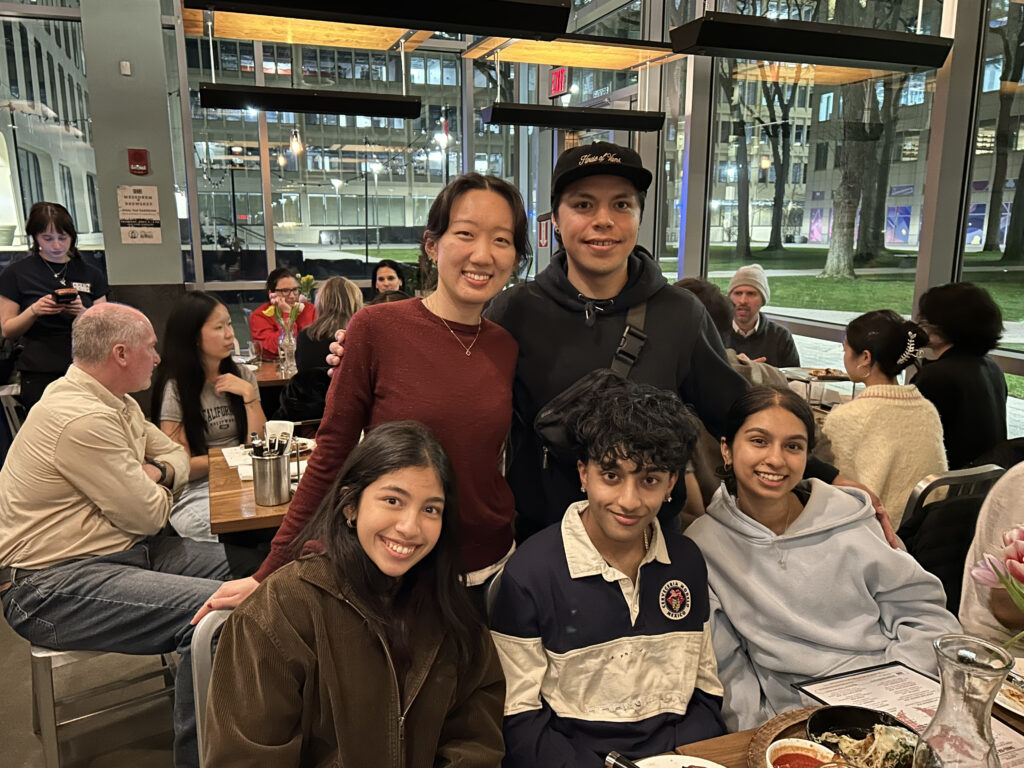
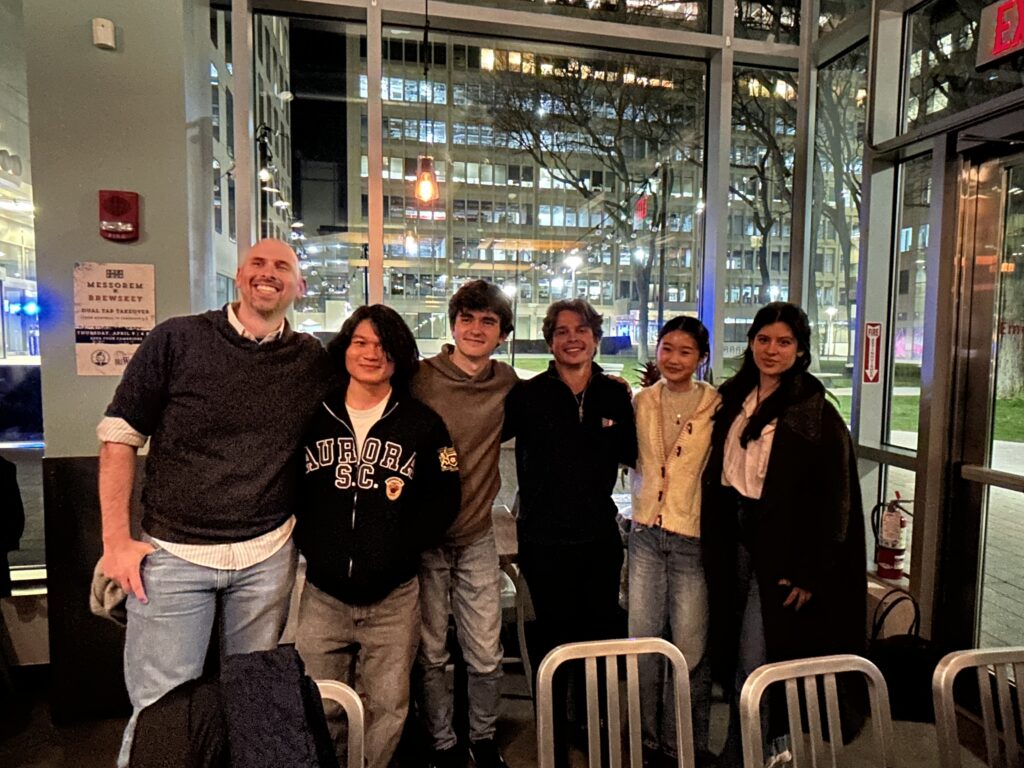
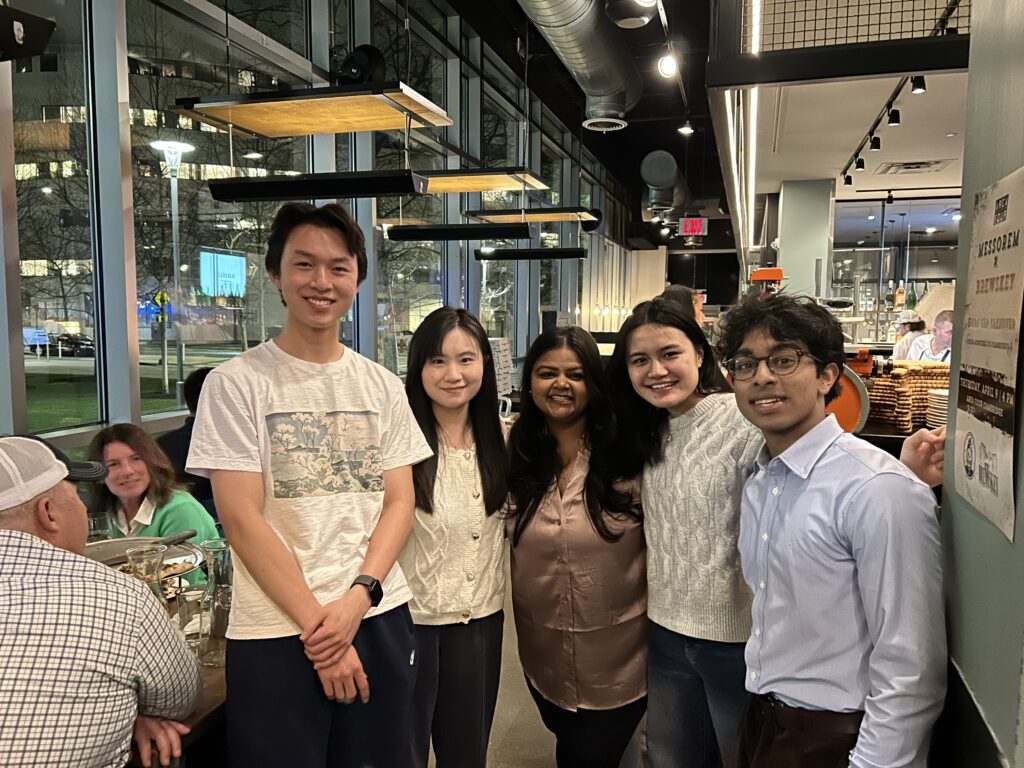
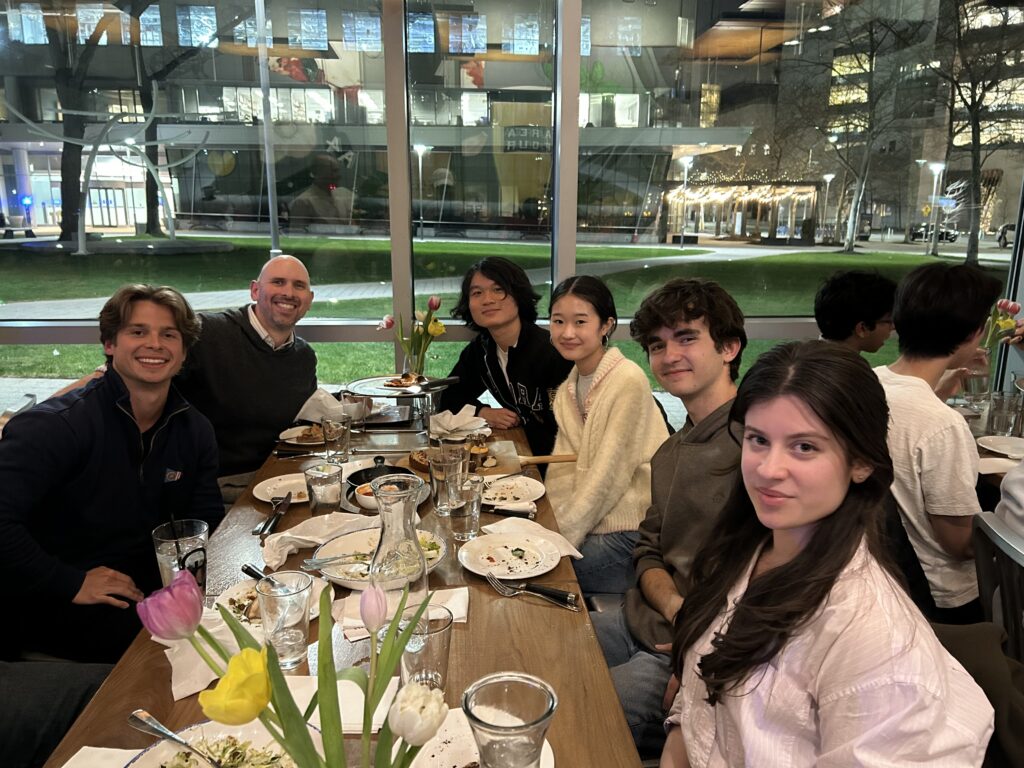
Recently, four of our BASIS Independent Brooklyn alumni generously offered to share their reflections on our school and what they have been up to since their transition to university. We welcomed Sid R. BIB ’22, Johns Hopkins ’26, Courtney H. BIB ’22, Cornell ’26, Yuna S. BIB ’24, Barnard ’26, and Maxim S. BIB ’25, Stanford ’29, to share their thoughts on their years at our school and any advice they could offer to younger students and their families. 

Several themes emerged during the panel, and we wanted to share them in an overview and more detail. 

  • Curriculum Prepares for College: Rigorous coursework and Advanced Placement (AP) classes allow students to skip introductory college courses, focusing on advanced material. 
  • Experiential Learning Through Capstone Courses and Senior Projects: Senior students engage in internships and projects that connect academic learning to real-world applications. 
  • Community Supports Transition: A small, close-knit environment fosters collaboration and lifelong friendships, making college adjustments smoother for alumni. 
  • Balanced Extracurriculars Enhance Skills: Alumni successfully managed academics along with sports and arts while at BASIS Independent Brooklyn, developing essential time management skills for college success. 
  • Parental Encouragement is Key: Parents and guardians are encouraged to support exploration of diverse interests without pressure, aiding student growth and independence. 
  • Technology Use in Learning: Students learn to effectively utilize AI tools, enhancing their understanding and efficiency in academics without superficial reliance on technology. 

College Preparation and Academic Rigor 

Our panelists hit home that the BASIS Independent Brooklyn curriculum effectively prepares students for college through rigorous coursework and strong foundational skills. Alumni emphasized the role of AP courses and Capstone Classes in building a solid academic base, with Maxim crediting AP Physics C and AP Calculus BC for allowing him to skip introductory college courses at Stanford, enabling focus on advanced material he finds challenging and inspiring. 

Sid highlighted that BASIS Independent Brooklyn teaches students how to learn and develop intuition, which helped him adapt quickly to college-level challenges. Yuna and Courtney pointed out that the small class sizes fostered close relationships with teachers, making it easier to seek help and build confidence, which translated well into larger college environments. Maxim also described the curriculum’s upward spiral structure as crucial for managing STEM workload and balancing multiple rigorous classes efficiently. 

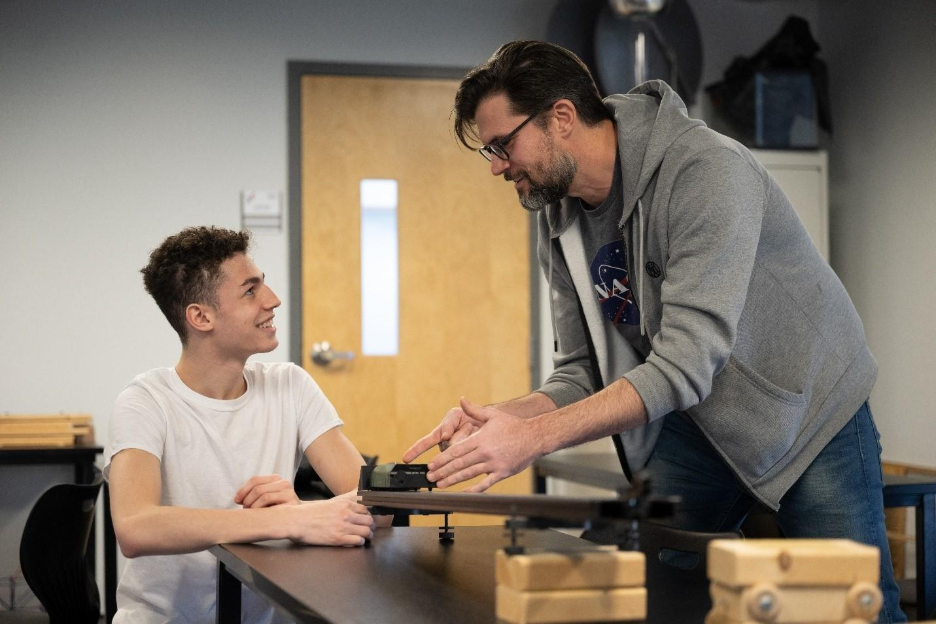
Mr. Winter leading an advanced physics lab with Maddox M. ’25.

Capstone Courses and Senior Project 

The panelists all pointed to Senior Capstone courses and Senior Projects as providing practical, in-depth experiences that link to college and career paths, with students pursuing personalized research and internships during the senior year. 

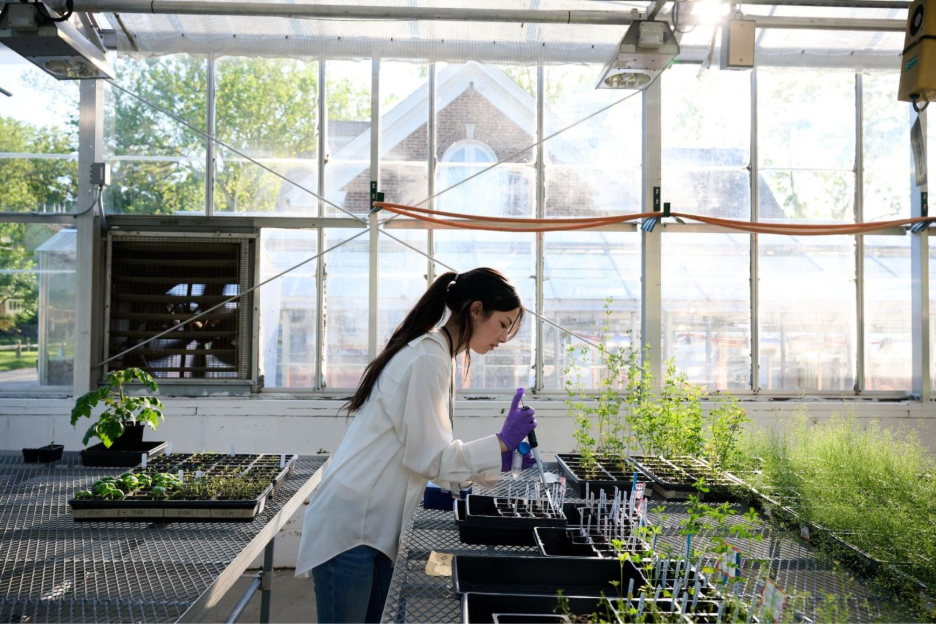
Yuna conducted her Senior Project off-site placement at Cold Spring Harbor Laboratory, focusing on Martian soil simulant and plant cultivation. Courtney’s Senior Project involved documenting the revitalization of NYC Chinatown’s local economy post-COVID througha partnership with a nonprofit. Maxim interned with Ukrainian Railways while studying high-speed rail development in the United States for his Senior Project. Sid worked with a Columbia professor on engineering CAR-T cells for his Senior Project, connecting research exposure directly to his biomedical engineering studies. 

The BASIS Curriculum’s emphasis on interdisciplinary learning extends beyond STEM, offering significant humanities and arts courses, including AP Seminar, AP Research, English literature, history, and art electives, which build critical thinking and communication skills valued in college. 

Maxim noted that humanities courses helped him contribute meaningfully in Stanford’s citizenship class by evaluating multiple perspectives. Courtney and Yuna shared how art and writing opportunities nurtured creativity and independent thinking critical for their academic and personal growth. 

Yuna S. ’24 at work on her Senior Project at Cold Harbor Springs Laboratory.

Community and Social Environment 

The small, close-knit community at BASIS Independent Brooklyn fosters collaboration, diverse interests, and lasting relationships that ease the transition to college. Alumni panelists agreed that the school’s small size encourages peer collaboration over competition, allowing students to pursue unique passions without pressure and build supportive friendships across interests. 

Courtney emphasized that her BASIS Independent Brooklyn classmates became lifelong friends and a strong support network through college and beyond. 

Sid recalled socializing in the senior lounge and group activities, which helped build close bonds and a sense of belonging. Yuna and Maxim reflected on informal group outings such as volleyball games, beach trips, and lunch gatherings that strengthened community ties. 

Going to college with peers from BASIS Independent Brooklyn provides comfort and support during the transition to larger university settings, as multiple panelists reported attending college with classmates and maintaining close connections. Yuna’s freshman year roommate was a classmate from BASIS Independent Brooklyn, which helped her adjust quickly to Barnard. 

The community culture encourages inclusivity across disciplines, supporting students in both STEM and non-STEM interests, and fostering interdisciplinary respect and engagement. Alumni noted that their high school peers excelled in diverse areas such as photography, art, writing, and music, enriching the school’s academic environment. 

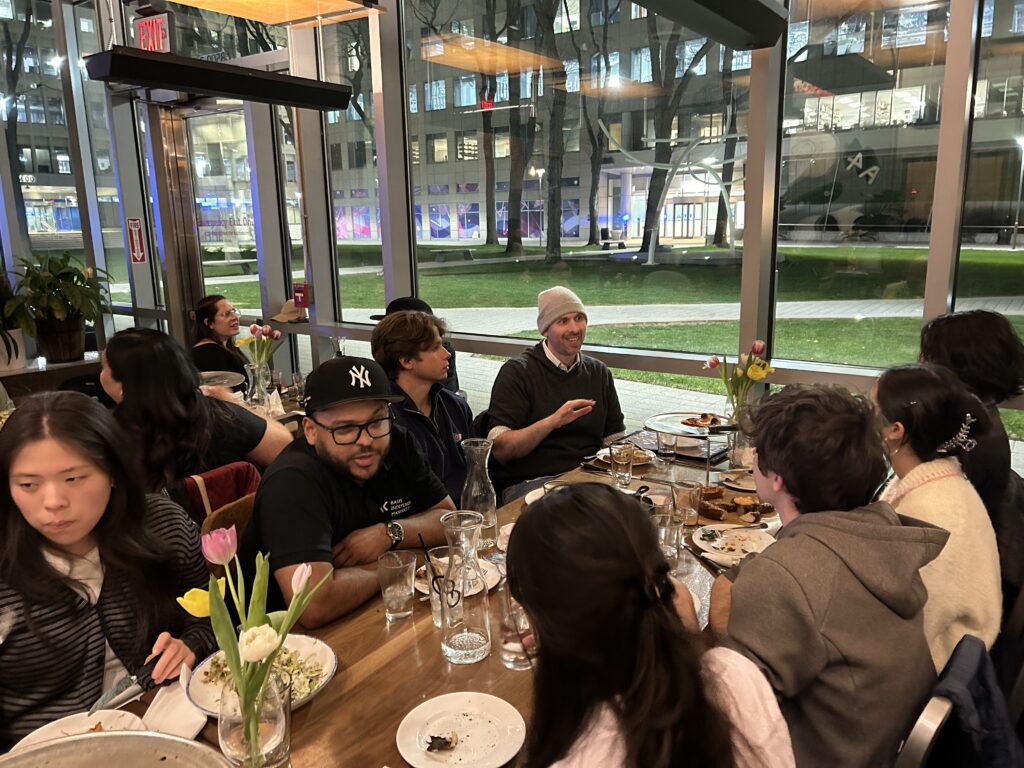
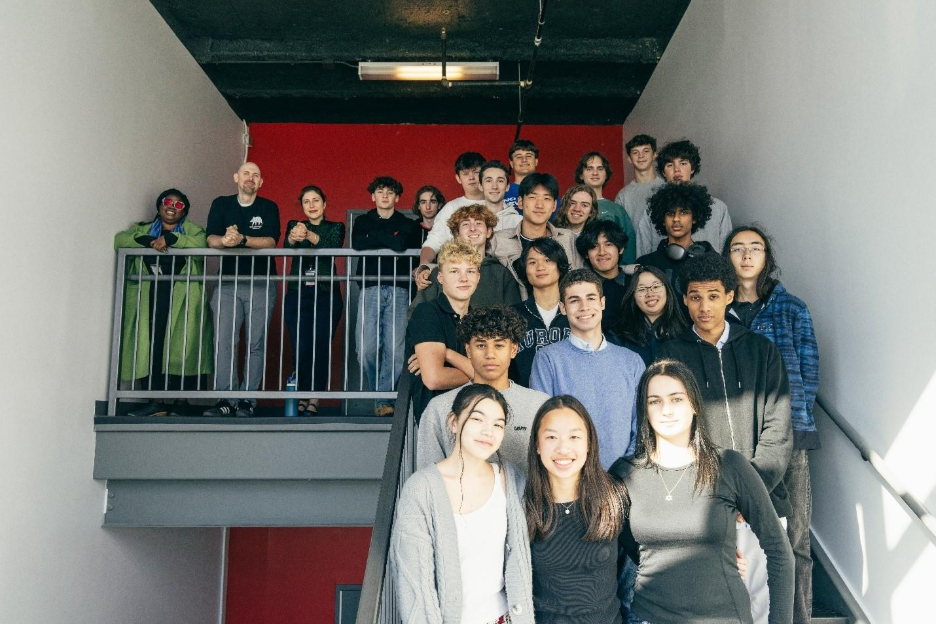
Our Class of 2025 together on campus before their graduation.

Extracurricular Engagement and Time Management 

Extracurricular activities, including arts and athletics, play a vital role in high school student life, contributing to well-rounded development and effective time management. Students successfully balanced rigorous academics with sports, arts, and clubs, supported by structured routines and peer participation. 

Yuna joined volleyball in junior year and continued intramural volleyball in college, finding it a joyful and social outlet. Maxim participated in varsity soccer, basketball, and tennis in high school, and later he led a championship intramural soccer team at Stanford. 

Sid managed music commitments (violin) on weekends alongside martial arts during the week, demonstrating diverse extracurricular involvement. 

The arts program offers multiple in-school and after-school options, including studio art, photography, drama, band, orchestra, choir, and an annual spring musical, enriching student experiences. 

Yuna’s AP Studio Art work earned a Scholastic Art and Writing Award, highlighting the program’s quality and college-preparedness value. Performances and trips, like the band’s planned Disney World visit, create additional engagement and exposure. 

Time management skills developed through balancing academics with extracurriculars are seen as essential for college success, with alumni crediting routine, planning, and support systems for their ability to handle multiple commitments. 

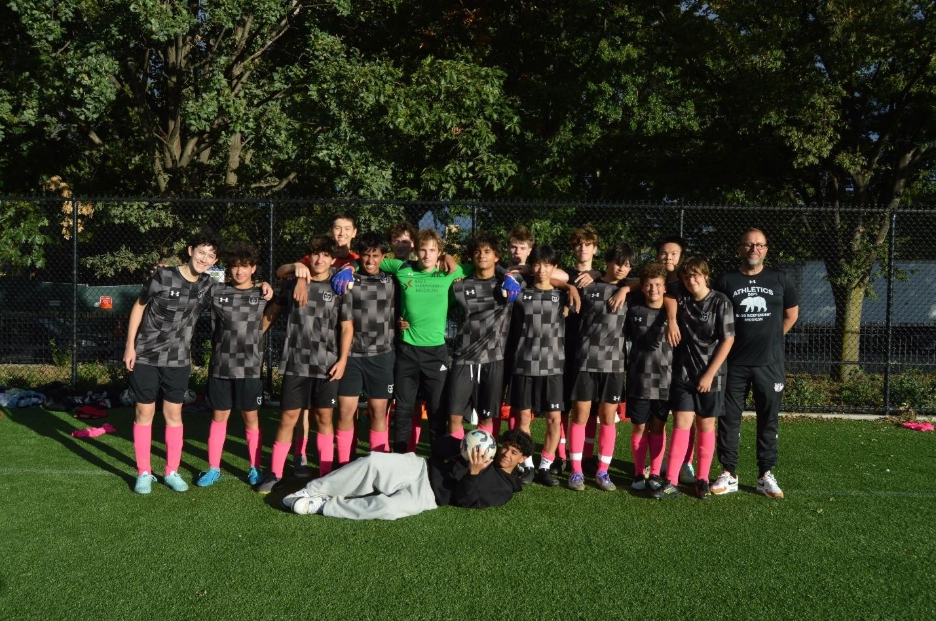
Our Varsity Soccer Team welcomed back alum Nico D. ’25 at a game held over his Fall Break.

Parental Support and Student Mindset 

Encouragement from parents to explore interests and a proactive student mindset are key factors in maximizing the BASIS Independent Brooklyn experience. Alumni recommended that parents encourage exploration without pressure and support diverse interests, allowing students to try electives, clubs, and internships freely. 

Courtney’s parents took a hands-off approach, allowing her to pursue interests organically, which she found beneficial for her growth. 

Panelists stressed the importance of being proactive and asking for help, including seeking academic support, extracurricular opportunities, and college recommendations. Sid advised resilience through challenges, sharing how failing exams early on in middle school did not prevent his success. Courtney and Maxime emphasized leveraging the small community to network with seniors and alumni for guidance on college and beyond. 

Alumni highlighted that BASIS Independent Brooklyn fosters a resilient and curious mindset, teaching students to embrace challenges and seek support resources like office hours and peer study groups. 

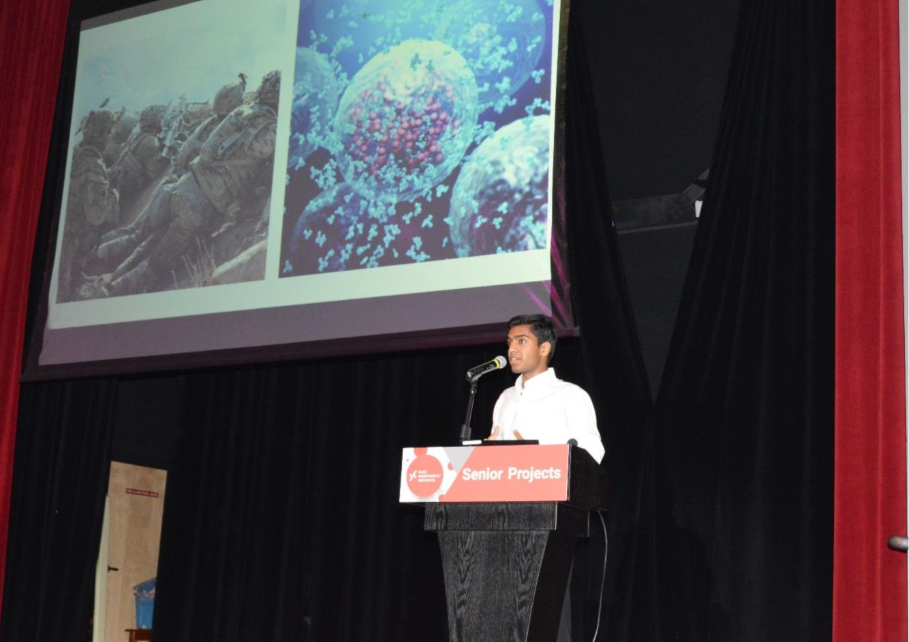
Alum Sid. R. ’22 presented his Senior Project on CAR-T Cell Therapy.

Technology and AI Integration 

Panelists spoke about how BASIS Independent Brooklyn prepares students to effectively use technology and AI tools as part of their learning and research processes.  

Sid shared how the curriculum’s focus on understanding concepts over memorization enables smart AI usage to boost efficiency without losing comprehension. He emphasized that AI tools help with coding and learning but require students to transform the information into personal understanding, a skill BASIS Independent Brooklyn cultivates. 

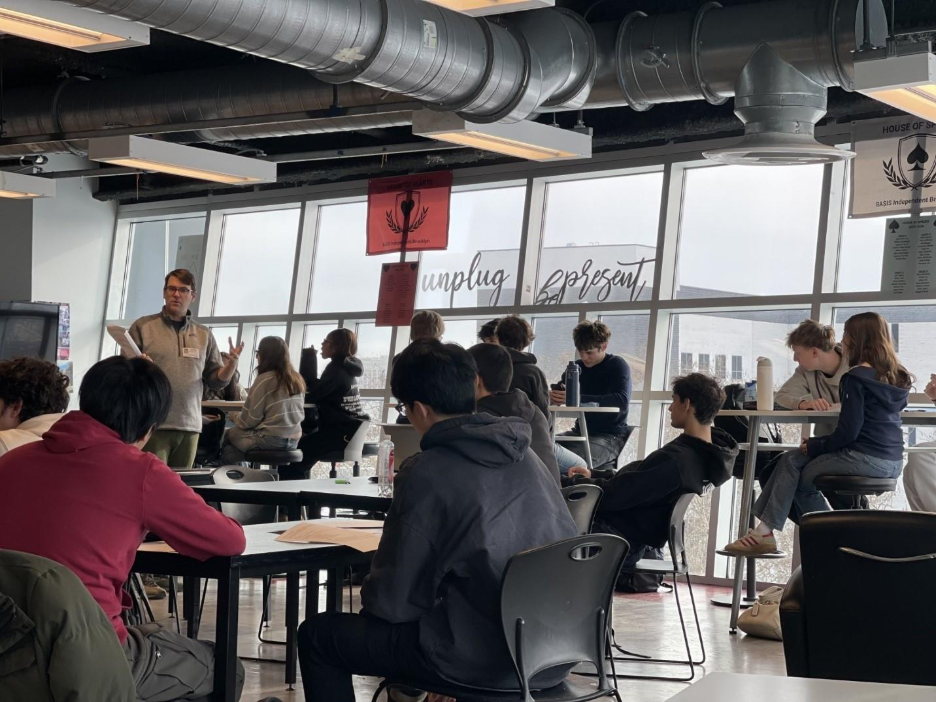
Parent Ian Saville leads a Future-Ready Mentor Program Workshop with our seniors.

Transition and Integration Support 

BASIS Independent Brooklyn supports students joining at various grade levels and helps them adjust through structured support and community integration. 

Students joining in middle school or later grades experience an adjustment period but receive ample support, making integration achievable regardless of entry point. The school’s practice of enrolling new students in every grade creates peer groups that facilitate social and academic integration. 

Familiarity with peers and teachers from BASIS Independent Brooklyn helps students transition smoothly into college and beyond, supported by active alumni networks and ongoing connections. 

# # # 

BASIS Independent Brooklyn is a PreK–Grade 12 private school, providing students with an internationally benchmarked liberal arts and sciences curriculum, with advanced STEM offerings. Considering joining the Bears community? To join our interest list for the next school year and receive admissions updates and more, please click here. 
Filed Under: Academics, Alumni, College Preparation & The Senior Year, Community Values, Culture of Support, Extracurriculars, Featured, Senior Projects, Student Achievement, Student Perspectives

From Curious and Passionate Students to the Ivy League: 5 Takeaways from our 2025 Alumni Panel

January 7, 2026 by christineklayman Leave a Comment

The Full Circle Moment

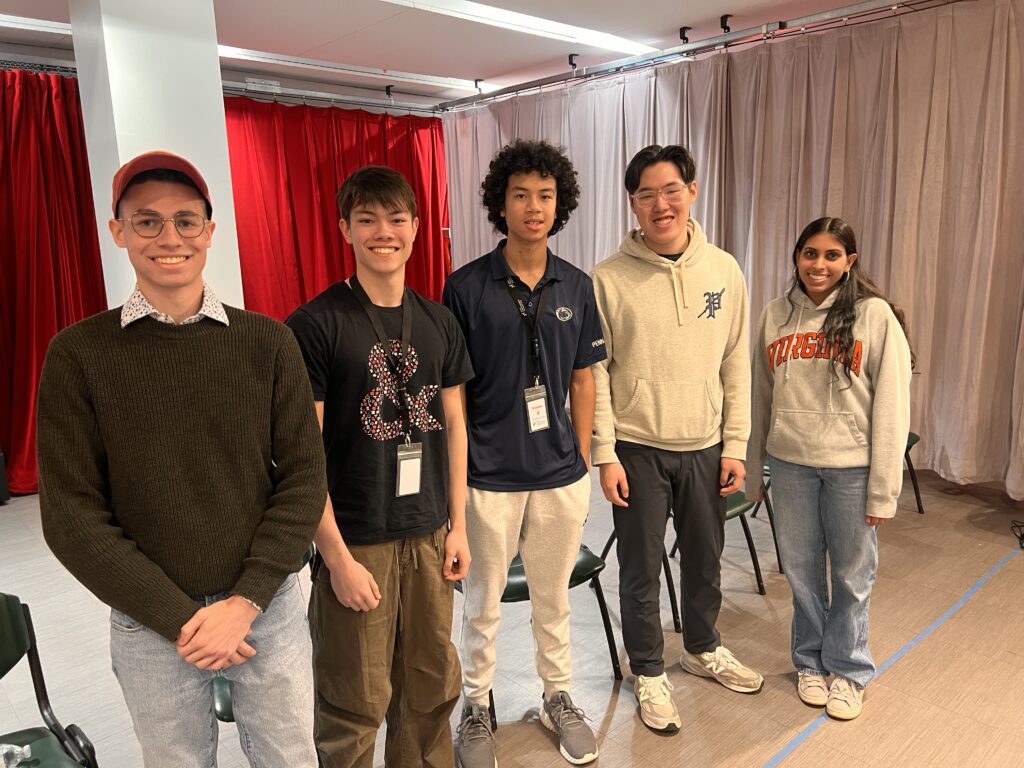
There is no better testament to a school’s mission than the success of its graduates. Recently, the BASIS Independent Manhattan Upper School hosted five alumni (representing Cornell, UVA, Penn State, and Boston University) to share their insights with our current students.

From the “flawless transition” to university-level rigor to the emotional intelligence required to navigate a 20,000-person campus, here are the highlights from our 2025 panel.

the five alumni panelists before they spoke to students
The panel consisted of four BASIS Independent Manhattan alumni and one graduate from BASIS Independent Brooklyn.

1. Small School, Big Advantage

A common theme among the panelists was the value of BASIS Independent Manhattan’s small class sizes. One alum noted that moving from a class of 20 to a lecture hall of 200 made them truly appreciate the deep teacher relationships and personalized letters of recommendation they received. “You have a support system here that is set in stone,” noted Charles D. (Penn State ’25).

2. The “Flawless” Academic Transition

When asked about the jump to college-level work, the consensus was clear: BASIS Independent Manhattan students are ready. One panelist described college as “AP season every week,” but noted that the work ethic they developed in middle and high school made the transition feel manageable and rewarding.

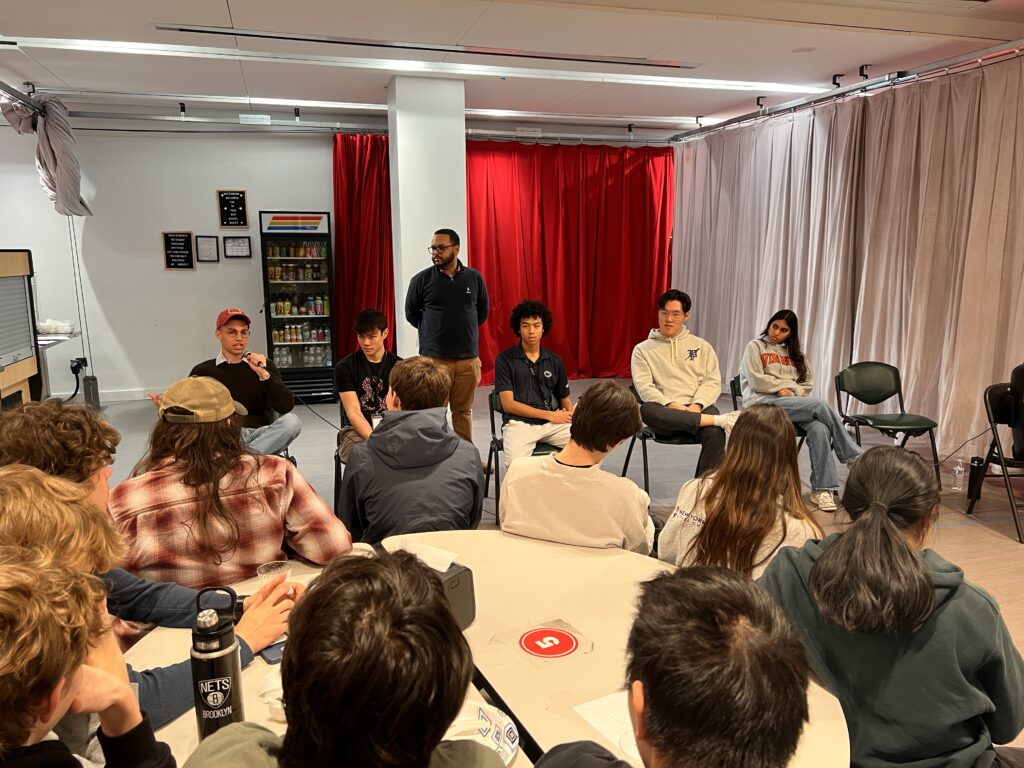
alumni panel

3. Passion Over “Extracurricular Inflation”

In a world of “try-hards” and “sweats,” our alumni gave refreshing advice: Do what you love. Colleges can see through a million superficial activities. Our alumni encouraged students to find 1–2 things they are genuinely passionate about—like the DECA Business Club or running the Pan-Asian Union affinity group—and lead them well.

4. Your Major Isn’t Set in Stone

Mila K. (UVA ’24) shared her journey from being a “Humanities kid” to declaring an Economics major. The takeaway? Use your first year of college to explore. BASIS Independent Manhattan gives you the foundation to be a “math kid,” a “humanities kid,” or both—allowing you to evolve as your interests do.

5. Advice for the Admissions Journey

  • For 8th Graders: Don’t shy away from the challenge; the foundation you build now is what makes college feel easy later.
  • For 11th Graders: Start dialing into your specific interests.
  • For Seniors: Enjoy the ride. “There is a light at the end of the tunnel,” the panelists reminded our current seniors. “Have a plan you love, but keep your hope high.”
Are you looking for a school that prepares students for the world’s top universities?

Visit our school, join our interest list, or meet with our Admissions team!

Learn More

Filed Under: Academics, Alumni, College Acceptances, College Counseling, College Preparation & The Senior Year, Featured, High School, Student Achievement, Student Perspectives

Join BASIS Independent Bothell’s Virtual Student & Alumni Panel on Dec 6!

December 1, 2025 by abisoyetaylor Leave a Comment

Hear Real Stories and Explore Our College-Prep Program.

Looking for insight into what makes BASIS Independent Bothell on of the best private schools in Bothell, WA? Join us for an exclusive Virtual Student & Alumni Panel on Saturday, December 6, from 9:00 – 10:00 AM PST.

This event is your chance to hear firsthand experiences from both current students and graduates who have gone on to thrive in college and beyond. Learn how our advanced academic program and supportive community prepare students for success.

Why Attend?

  • Current Student Perspectives: Discover what daily life is like at BASIS Independent Bothell.
  • Alumni Insights: Hear how our graduates transitioned to top universities and careers.
  • Understand Our Edge: Discover why families choose BASIS Independent Schools for college preparation and global readiness.

Event Details:

Date: Saturday, December 6

Time: 9:00 – 10:00 AM PST

Location: Virtual (link provided upon registration)

Reserve your spot today!

Register Here.

Filed Under: Academics, Admissions Events, Alumni, College Preparation & The Senior Year, Community Events, High School, School Community, Student Life, Student Perspectives

Get to Know Our Alumni: Join Us at Our Upcoming Panels

November 12, 2025 by michaelmertes Leave a Comment

At BASIS Independent Fremont, we believe that one of the best ways to understand our school is to hear directly from those who have walked our hallways—from students who recently moved up to our Middle School Program to graduates now navigating college life.

On Saturday, November 15, we invite prospective families to connect with two unique panels of alumni:

TK–Grade 5 Alumni Panel: 10:00 AM

Current grade 6 students will share their early journey through the Lower School—how curiosity, creativity, and confidence were nurtured here.

Grades 6–12 Alumni Panel (Class of 2025): 11:30 AM

A conversation with recent graduates who will reflect on how their Upper School experience at BASIS Independent Fremont prepared them for college and beyond.

These sessions offer an authentic glimpse into the day-to-day life at BASIS Independent Fremont—from classroom moments to extracurricular adventures to the independence of senior year. Families will have the opportunity to ask questions about curriculum, student life, clubs, and how the community supports students’ growth both academically and personally.

Whether you’re exploring for the first time or comparing schools, this is a chance to hear how BASIS Independent Fremont students think, reflect, and thrive—at every stage of their journey. You’ll walk away with deeper insight into our culture, our approach, and what makes our community distinctly supportive and challenging in all the right ways.

Ready to join us? Register here for the panel that fits your focus—or attend both and experience the full spectrum of the BASIS Independent Fremont journey.

We look forward to seeing you there!

BASIS Independent Fremont is a TK – Grade 12 private school, providing students with an internationally benchmarked liberal arts and sciences curriculum, with advanced STEM offerings. Considering joining the BASIS Independent Fremont community? To join our interest list for the next school year and receive admissions updates and more, please click here.
Filed Under: Admissions, Admissions Events, Alumni

Meet the Winner of the 2025 Fellows Scholarship for Excellence in Senior Projects!

November 5, 2025 by mirandamartinez Leave a Comment

To kick off a new year of Senior Projects, we are sharing a conversation with the inspiring winner of the 2025 Fellows Scholarship, a $10,000 prize awarded annually to one project. Maxim Smelyansky, a Class of 2025 graduate of BASIS Independent Brooklyn, their 2025 Valedictorian, and current Stanford University student, impressed our committee with his project titled The Future of American High-Speed Rail: Analyzing and Discovering the Most Effective High-Speed Rail Development Methods on Promising Rail Corridors in the United States.

The Senior Project is an independent, student-led culmination of our high school experience. After three years of academic preparation, our seniors are ready to spend the last trimester of their high school careers applying the skills and knowledge they have gained to develop a project that is insightful, academically rigorous, and professional in nature. 

Our seniors start by designing a research question that is often centered on a subject they are passionate about or curious about. Then they embark on a journey to answer it, documenting and analyzing their findings as they go. They partner with both an internal and external advisor to support and guide their research. Students may choose to conduct their research in the form of internships or experimental research at university research labs, field work abroad, or research conducted remotely from home. From explorations into new-age technology to cutting-edge medical advancements to social justice, the Senior Project offers students the opportunity to channel their innate curiosity. This experience readies them for the type of self-direction and self-discipline expected in an undergraduate and graduate setting. 

In his Senior Project and accompanying blog, Maxim channeled his lifelong passion for transportation into a compelling case for high-speed rail in the United States. Supported by an externship with Ukrainian Railways, his work demonstrates both rigorous scholarship and a bold vision for a more connected, sustainable future. His blog not only makes the case for high-speed rail—it models the kind of intellectual curiosity, clarity, and purpose we aim to foster in all BASIS Curriculum Schools students. 

In this interview, conducted over the summer, Maxim shares insights into his research process, the real-world impact of his on-site placement, and the academic foundation that helped him bring his ambitious ideas to life. We hope you’ll join us in celebrating the inspiring work of one of our network’s newest alumni. 

Could you give our readers a short introduction to yourself, where you’re from, and what your plan is for after graduation? 
My name is Maxim Smelyansky. I am from the BASIS Independent Brooklyn Campus. I am one of the founding family members from 10 years ago. I was originally born in Eastern Europe, but in grade 2 I joined BASIS Independent Brooklyn, and then since then, I’ve grown with the school. And after graduating, I will be studying Civil Engineering at Stanford University in California. 

Congratulations on being this year’s Fellow Scholarship recipient. What did this award mean to you?  
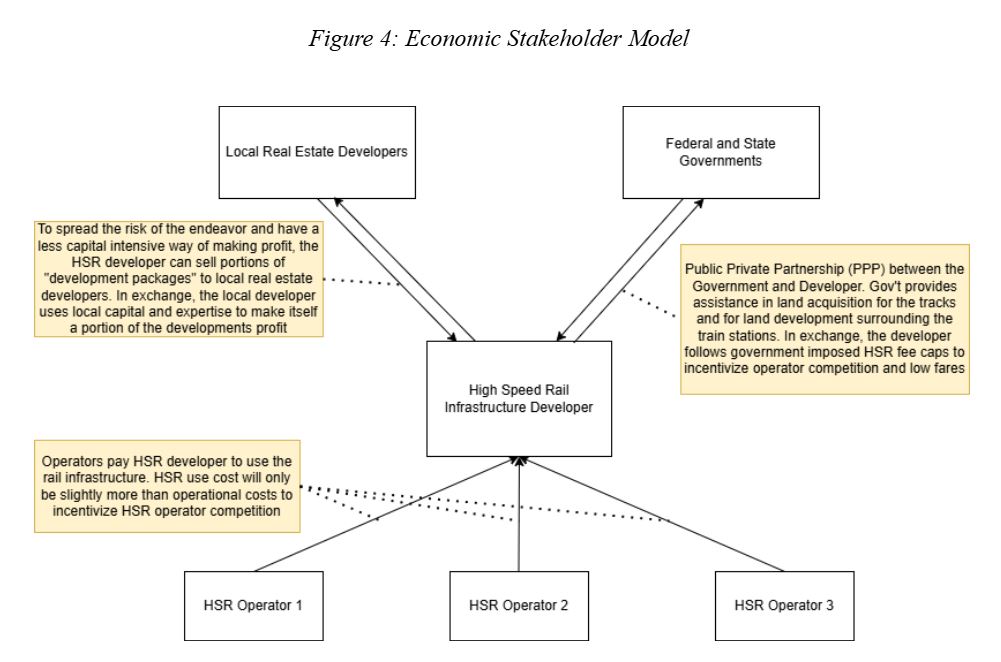
I worked very hard on this project, working with Ukrainian Railways, conducting my own scholarly literature review.  I felt like winning this award was definitely a culmination of my BASIS Independent Schools experience because a lot of the work that I put in was applying the skills that I learned from before, or, for example, from my AP Capstone journey. 

Being the Fellows Scholarship recipient really validated my passion for transportation and my dedication to exploring opportunities for more sustainability and America’s future not being so car-dependent, but rather full of walkable cities.  

Could you introduce your project and its importance to our readers? 
My Senior Project was on the future of high-speed rail in America. Some examples include current projects such as the notorious California High-speed Rail, and semi-high-speed rail, such as Brightline in Florida and Brightline West in Las Vegas, currently in construction. There’s definitely a keen interest in building high-speed rail across America, but there are clear structural and management failures that are visible and could deter America from moving in the more sustainable direction, the direction that would give consumers the freedom to choose which mode of transport they want to use.  

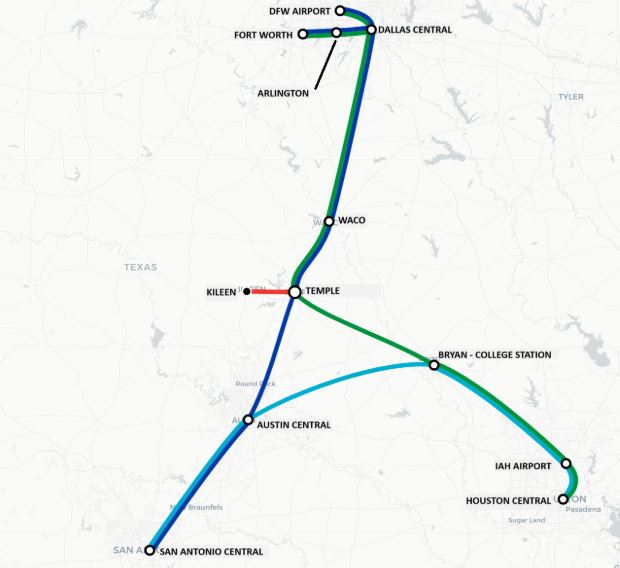
So, my research focused on international high-speed rail development methods, usually in countries where the networks are already well developed on a large scale. My criteria, which I shared in my first senior blog post, were countries with over 1,000 kilometers of high-speed rail built and more than 500 kilometers currently in construction. I analyzed existing methods and determined which one would be the best for the application in the United States. I ultimately applied it through a mock Texas high-speed rail project. 

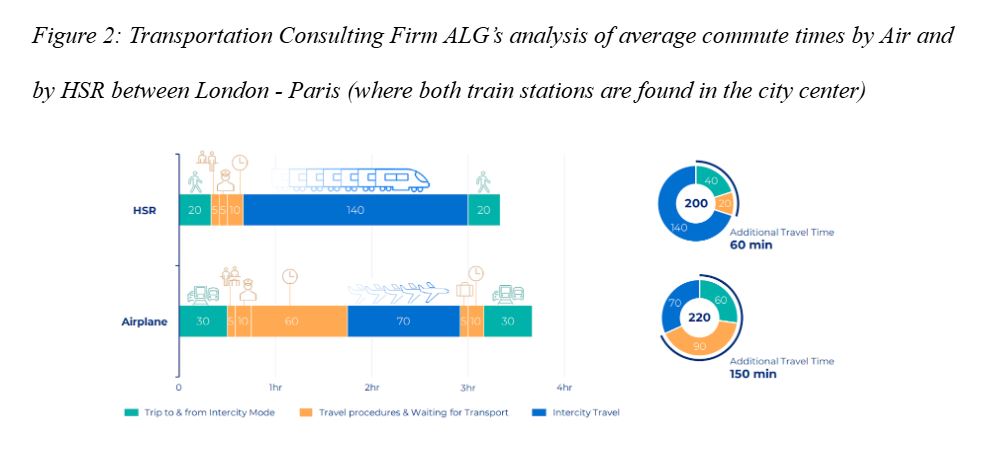
It’s an important topic because, most simply, it saves people money. Why in Europe can you buy flights for $10/$15? Because there are good rail connections that are very competitive. So even if you’re not taking the train, you’re still saving yourself money because airlines will have to adjust by having so many more options on the table. 

The second thing is that for a more sustainable future, high-speed rail is critically needed. If you look at carbon dioxide emissions on a per-kilometer basis, the thing that emits the most is not a cruise ship, it’s not a car, it is short term domestic flights—think 200 to maybe 500 miles. So your New York to DC flight, your Dallas to Houston, Houston, San Antonio, Austin, all those kinds of flights, those are the ones that emit the most per kilometer flown. And if you want to limit emissions, those are the routes you want to target because there is a simple, more sustainable solution to it. 

By caring about high-speed rail, you’re promoting a more sustainable future that also on top of all that, not only makes your flight cheaper—and some of the times makes your commute shorter—but it also creates jobs. It induces development. There’s a reason why most new developments are around where public transit is being built. While that value isn’t seen, the land value that rises around these stations revitalizes their neighborhoods too. 

It really is important to care about this because if done right, the amount of benefits from sociopolitical, from an economic, from an environmental point of view, are just simply immeasurable and they can really help bring America into the future. And I also didn’t even mention the crumbling infrastructure that we have right now, the freeways and everything. We need alternatives. We need to diversify our reliance on cars. High-speed rail is a great solution to this. 

When did you arrive at the idea for your Senior Project? Were there other ideas that you were considering alongside it, or were you pretty set on this idea from the beginning?  
I definitely knew I wanted to continue researching something in the field of transportation. I considered doing something along the lines of continuing my AP Research project, where I studied price discrimination on airline tickets and airline ticketing algorithms.  

But I really wanted to do something that allowed me to build upon my internship from last summer at Ukrainian Railways. Thanks to my work there last summer, I was able to get another externship and gain the experience and the knowledge I really needed to help this more ambitious project come to life.  

Could you shed some light on how you worked with this group? 
I have always been passionate about transportation. And really, after AP Seminar and AP Research, I had some tangible projects under my belt. I’m of Ukrainian origin, so I wanted to use my transportation knowledge to help the betterment of Ukraine and Ukrainian civilians. 

My dad actually works in Ukraine, and to visit us, since there are no commercial flights flying in and out of Ukraine, he has to take the train to the border from Kyiv to Warsaw, which is where the largest and closest international airport is.  

So, I reached out to Ukrainian Railways, wanting to help research some proposals on how to improve the rail commute between Kyiv and Warsaw. After reaching out and saying I was willing to work for free as an unpaid intern, I was tasked with researching and proposing a potential solution to improve this commute.  

The big issue is that Ukraine and former Soviet states have a track gauge or track width wider than their European counterparts. Because of that, the train simply couldn’t go into Poland because Poland had a narrower track width. 

And because of that, they had to change trains at a border town called Chelm. Now, the issue with that is for consumers who want to go directly to the airport and not to Warsaw. They would have to first transfer from the train they just took from Ukraine into this border town, change to another train going to the center of Warsaw, and then change to another train going to the airport. 

So after analyzing, the flights that could be available if you make a more direct link, I proposed a bus shuttle that picks up passengers from Chelm and goes directly to the airport. And this allows consumers to save precious hours, and allows them to catch most night flights. 

So instead of arriving at the airport at maybe 9:00/9:30, they arrived at 7:00/7:30, which allowed them to catch pretty much all the night flights. And that proposal would’ve allowed approximately 22,000 people annually to have a more convenient and daily access to the airport. 

That proposal was approved for implementation. While I obviously wasn’t able to help implement it, as this was already getting into the college application season, it definitely made a profound impression on me, showing me that my research actually had a potential tangible impact. 

Can you tell me a little bit about your on-site advisor whom you worked with at Ukrainian Railways?  
So, he was different from my mentor when I did the internship over the summer. This advisor is the Director of Strategy and Transformation at Ukrainian Railways. And, really, having him as a mentor was definitely very crucial to my success in this project because, simply put, he had a lot of experience, not just domestically, but internationally. 

He is looking into high-speed rail developments across the world, as he is envisioning a post-war future for Ukraine. 

But at the same time, how can we transform Ukraine in the future, and how can we improve Ukrainian railway services right now? Just having those two facets of experience from a more macro point of view and from a more micro point of view really allowed me to consider a lot of factors. 

And even when it comes to something like station locations, if you see in my paper, that just the consideration of those factors on a more micro scale definitely was because of the help I got from my advisor.  

He was able to point me in the right direction, especially at the start, looking at what were best practices were. And in a way, obviously, while I was comparing the results of the development methods. He was also able to point me to resources to see what the general best practices are. In that aspect, I was able to learn a lot, especially from the International Union of Railways handbook on high-speed rail development. 

What was the most challenging aspect, and how did you face that challenge? 
That would be when Russian hackers hacked the Ukrainian Railways Website. This was the week our school came back from Spring Break, and for about two weeks, I did not have contact or support from my on-site mentor because he had to focus on rebuilding the digital infrastructure for Ukrainian Railways to run on time and run smoothly. Doing the project by myself for those two weeks was definitely a bit of a struggle because I couldn’t ask my mentor to point me in the right direction to really figure out what the right sources were 

He was an invaluable resource from the beginning. When I first shared my scope, he suggested I review three sources, and those three sources were frankly the backbone of my future research because he knew exactly what I was looking for—he knew the field that well from his decades of industry experience.  

Losing contact with him, even temporarily—at the time I didn’t know how long it would be—that definitely was a little bit of a struggle, finding the sources I needed to continue my research. But I would say that my resiliency and my skills, again, from AP seminar and AP research of how to find scholarly sources, how do how to utilize EPSCO or Econ Biz, or Google Scholar, thanks to that, I was still able to find critical sources. 

One of them was actually the Transit Cost Project, which was a database that analyzed, I think, 10 or 12 countries. Not all their projects, but all the projects that they were able to find analyzed their high-speed rail development methods on a cost per kilometer basis, which was one of my rubric points. The amount of time they spent per mile of high-speed rail trackage, and also, the percent of the trackage that went through tunnels or bridges, which is more expensive than just on flat land.  

Just finding those sources without the guidance of my mentor was a bit of a struggle. Other students probably had much bigger challenges in their Senior Projects than mine, but I’m still proud I overcame that, and my project continued pretty smoothly to the end. 

Reading your blog each week, it was clear that your voice as a researcher and author was extremely distinct, and your format was very methodical. You also did a great job making this subject accessible and engaging. Did that come naturally?  
When it comes to this topic, it definitely came a little more naturally to me. Even if I wasn’t researching it, I’ve been watching videos on infrastructure construction projects probably since grade 2, maybe even grade 1. I used to play around with subway maps and envision expanding the New York City subway. 

But I definitely realized that just because it comes to me naturally, it doesn’t come naturally to everyone else. When I started doing my research, especially when I was explaining the method and rationale for selecting each of the categories and why I gave a country a certain rubric score, I realized that without sufficient context, without reading the previous week’s blog post, you couldn’t just jump in and understand what was going on. 

I really needed to figure out how I could convey my message in a way that people could understand; it was one of my main priorities for the blog. True mastery of a subject means that you can explain it in simple terms, and I try to push myself to be in a position where I can explain it in simpler terms and make people understand very quickly. 

It helped that the Senior Project allowed me to experiment with visuals and graphics. I found that the only way I was able to explain it very well was through visuals; I even put some in my paper for people to understand and make it as accessible as possible. 

One of the important lessons I learned in the blog was making a short abstract giving the reader the basic information, as well as the context, and a summary of the process: okay, this is what he did the week before, and this is how he builds upon it.  

Keeping a focused narrative not only kept the readers on track but kept me on track. For example, saying, “This is what I’m going to do next week,” – really setting out my goals for the coming week – kept me accountable and prevented me from falling behind. It also kept me somewhat in check because having an online externship rather than a mentor just keeping an eye on me, it can be a bit difficult to keep yourself motivated. Setting out those goals and putting them out in the public definitely helped me achieve them. 

As far as developing your voice as a writer and a researcher, were there any classes you took at BASIS Independent Brooklyn that you want to give a shout-out to? 
AP Seminar and AP Research are definitely some of the most useful classes I’ve taken in my high school career, and to be honest, I probably would recommend them to anyone more interested in STEM courses than the humanities courses. I would say that while AP English Language & Composition and AP English Literature & Composition were definitely good classes that helped me find my voice as a writer, the skills that you learn from AP Seminar and AP Research really develop your academic voice, which is crucial for more non-humanities courses and even some humanities in terms of analysis.  

AP Seminar helps so much in terms of just broadening your perspectives and evaluating multiple perspectives, which is so important because most of academia isn’t black and white; it’s a lot of gray. It also helped cut through political polarization at times, just by understanding people’s perspectives. 

AP Research really helps as well. It’s almost like doing the Senior Project before the Senior Project. You create your own research project, you learn how to develop a proper research question, you develop a method on how to conduct this research and how to even scope your project, you analyze your data, you write a paper, and you present on it. Even if it’s potentially not peer-reviewed journal material, it’s a really good introduction to conducting primary research.  

That entire track really made my process much easier in the whole senior year. In Capstones, I was able to focus on the knowledge that I was learning in each class rather than focusing on how to properly write an academic paper with formatting, citations, and everything.  

With the base knowledge you get in Seminar and Research, you’re saving yourself time when you’re writing college applications too. Looking ahead, applying these skills can help you in your college classes or even help you land that first position or that internship. 

You concluded your BASIS Independent Brooklyn career as both the Valedictorian and the winner of the Fellows Scholarship. That’s a big senior year. As far as the year ahead, do you have any specific academic goals or goals regarding campus involvement? 
My big goal for the year would be getting that next internship. With regard to campus involvement, I didn’t necessarily want to give myself concrete plans just yet because I feel like college is a time for learning and exploring. I want to come in the first quarter at Stanford with an open mind. 

One idea I definitely have in mind is joining the Transportation Research Center at the Transportation Research Institute at Stanford in some sort of role. But I feel like one of the things that has allowed me to be successful so far is that I had an open mind, and honestly, at times it was because I did things spontaneously. I want to let that flow happen in that first quarter. But I’m definitely going to hold myself accountable. And really, the two big things are getting an internship for next summer and establishing a consistent routine. 

Do you anticipate continuing your Senior Project in any form? 
In terms of just the field of transportation research in general, yes. That’s definitely something I do want to continue at Stanford. To be honest, transportation has been my bread and butter since the age of three. Maybe even two. I’m proud to say it’s my passion. 

What shape or form will it take at Stanford? I’m not exactly sure. Will I definitely try my best to look for those opportunities? Definitely. Either transportation research on campus or finding some potential internships. I would love to do something like transportation consultancy or something like that where I can learn best practices just by being surrounded by experts and professionals. 

And I feel like one of the small regrets I have for my Senior Project was that it wasn’t in person. Because I felt like gaining that hands-on experience would’ve definitely helped a lot. But that is something that I would really like to search for at Stanford. 

Do you have any advice for students who are looking ahead to their Senior Project?  
I think the biggest piece of advice would be to do something you’re actually passionate about. Don’t do something that you find is probably the path of least resistance. 

At times during my project, I was questioning myself a lot. If I hadn’t chosen a project I was so passionate about, I probably would’ve given in to the temptations of senioritis.  

The second point of advice I would say in general is obviously I lucked out in terms of my placement or externship, but start thinking ahead regarding on-site placements. Without connections, it will require a lot of outreach—a lot of cold calls and cold emails. That takes a lot of time, so start early. Those are the two things that I would really suggest for the Senior Project.  

Thank you so much for taking the time to sit down with me to share a little bit more about your senior project. Congratulations again on your many accomplishments and best of luck in the year ahead! 
Thank you for giving me the platform. Thank you so much for allowing me to speak proudly of my work and my accomplishments.

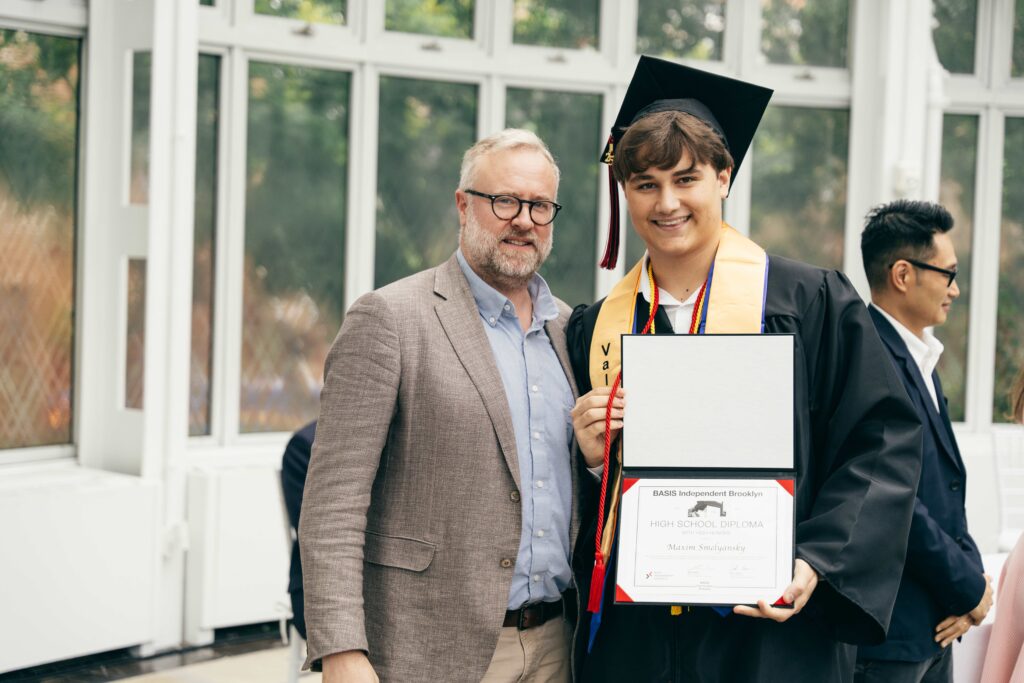
Maxim with BASIS Independent Brooklyn Head of School, Mr. Josh Harmon

Filed Under: Academics, Alumni, Awards & Recognition

Alumna Spotlight: Shreya Shekhar’s Journey from BASIS Independent Silicon Valley to Berkeley Haas and Greylock

August 27, 2025 by ezekielbracamonte Leave a Comment

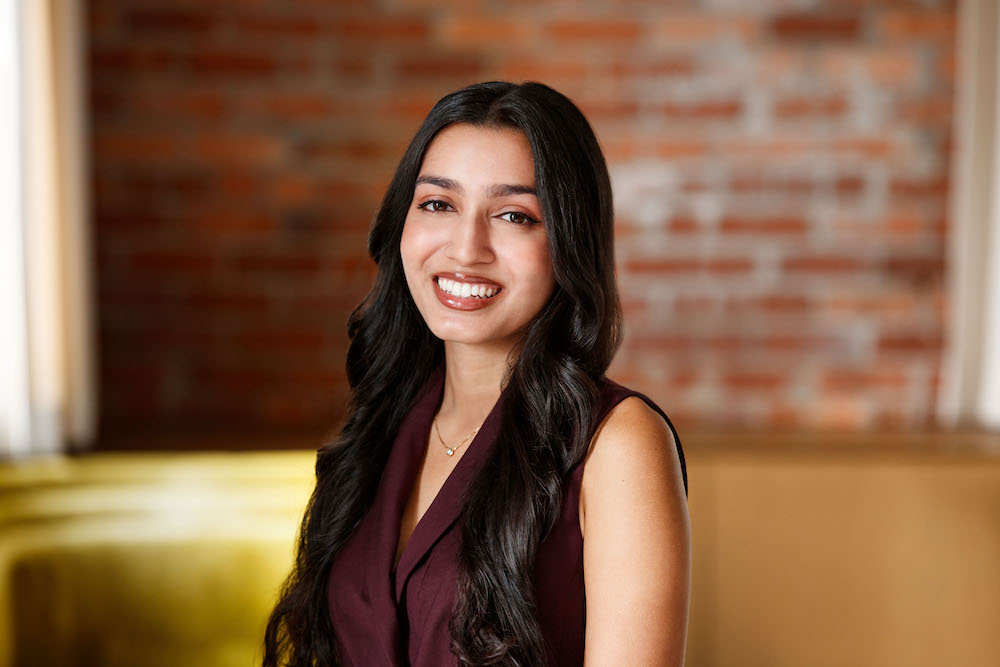
BISV Alumna, Shreya Shekhar. Photo: Greylock Partners

At BASIS Independent Silicon Valley, we take great pride in seeing our alumni go on to thrive at top universities and in their chosen careers. One shining example is Shreya Shekhar, a BISV alumna who has already made her mark as a partner at Greylock Partners, one of the world’s leading venture capital firms.

Recently, Shreya was featured in Berkeley Haas News, where she shared her journey from an AI-obsessed high school student to a leader investing in the next generation of artificial intelligence startups. In the article, Shreya reflects on how her curiosity about AI began right here at BISV, where she read Superintelligence by Nick Bostrom in her AP Lang class and explored the bigger questions about technology, humanity, and the future.

Her story highlights what makes the BISV experience unique: our students are challenged to think critically, explore bold ideas, and pursue passions that will shape their future long before they step foot on a college campus. Shreya’s path—earning dual degrees in electrical engineering & computer science and business at UC Berkeley, founding startups, and now guiding entrepreneurs as a VC partner—demonstrates the confidence, intellectual curiosity, and drive that BISV strives to nurture in every student.

We are proud to see Shreya carrying forward the spirit of BISV into her work at Berkeley and beyond. Her journey is a testament to the foundation our school provides in preparing students not just for college, but for leadership and innovation in the real world.

Read the full Berkeley Haas News feature on Shreya’s story here: Berkeley Haas News – Shreya Shekhar

BASIS Independent Silicon Valley is a TK – Grade 12 private school, providing students with an internationally benchmarked liberal arts and sciences curriculum, with advanced STEM offerings. Considering joining the Bobcat community? To join our interest list for the next school year and receive admissions updates and more, please click here. 
Filed Under: Alumni, STEM

The Alumni Voice: Sean P., Class of 2021

July 25, 2025 by aixuanwang Leave a Comment

Sean P. graduated from BASIS Independent McLean in 2021. He recently graduated from Brown University. In early July, he sat down for an interview with Dr. Hight, our Student Advancement Manager, to discuss his experience at Brown, his time at BASIS Independent McLean, and what’s next for him.

Dr. Hight: You recently graduated from Brown University. Congratulations! What was your favorite thing about college?

Sean: Oh my God… Nothing in high school could have really prepared me for what college is like. It’s so great. Like when they say it’s the best four years of her life, I really do think it is if you make the most of it. Over the past four years, being able to connect with various faculty through research or academics, and being able to meet so many different people from different backgrounds, whether that be through club sports or through clubs or even, meeting someone through another friend at an event. That was so much fun, just building your network and seeing what all these amazing people are pursuing and being able to celebrate their highs and all of that.

Dr. Hight: What did you like about Brown in particular?

Sean: I think the open curriculum suited me really well. Even though my undergrad major was very, very STEM-based, I was able to pursue so many of the other classes and disciplines that I was interested in just because we had no requirements. So I explored psychology very thoroughly. I explored architecture. I explored some history. That was really rewarding. And I got to meet people from other colleges because Brown is near Boston, and so we do like a lot of networking events with other schools in Boston, Harvard in particular. And there are the big games where Brown and Harvard go against each other.  It was just so, so much fun.

Dr. Hight: How was the transition from high school, academically?

Sean: I will say, and I’ve told this to other BIM faculty, that the BIM curriculum prepares you very well for the rigor that is to come in college. I was really nervous entering my first college class as a freshman, not knowing what to expect, but then I end up realizing that the workload and what was expected of me was pretty similar to what I already experienced in high school and so a lot of the adjusting in college was more social and being away from home rather than an academic adjustment.

Dr. Hight: Is there anything about your experience at BIM that you found particularly helpful when you got to college?

Sean: You know, it’s crazy to say this, but the CJ that we had. I think people found that really dumb in high school when I was there, but it’s crazy how organized you have to be in college. You are on your own. There’s no one telling you like what to do, when to do it. You’re getting thrown all these assignments and midterm dates and final dates that are all different by class, and you’re the one responsible for getting those done on time. Also, I think that the capstone classes that we get to take as seniors were really helpful for college. APs are great, and the content tested on the AP exams is very similar to what you’re going to get into a college introduction class, but those capstone classes were more reflective of the classes that I had in college. I think the assignments that I had in my capstone classes, whether that be writing a paper or in a science class presenting a poster, those are things that you would find in college as well. So having those assignments and having done them already in high school really helped prepare me for college.

Dr. Hight: If you had one piece of advice for BIM high school students before they go to college, what would it be?

Sean: I think the most important thing academically, socially, and even clubs as well, is just to be open-minded. Don’t lock yourself in a box and say I’m gonna go down this route or pursue this major. I didn’t really go into college thinking that I wanted to pursue psychology, and then I took a psychology class my freshman year and ended up taking five different psychology classes by the time I graduated, even though I wasn’t a psych major. With clubs, too, when you go to the activities fair, it’s really easy to kind of go to the clubs for things you’ve done before, but trying clubs you might not have your eye on in the beginning, learning what they’re about, going to the first meeting: it’s a great way to meet new people and to just try new things. And that’s the best part about college, I think: discovering a new subject you like or finding new people and becoming friends with them out of a shared new hobby.

Dr. Hight: Let’s take a walk down memory lane. When you think about your time at BASIS Independent McLean, what do you think of? Do you have any particular memories connected to the school?

Sean: I was at BIM when it was still relatively a new school, and so we were kind of adjusting and learning and going through that with everyone in my grade that was just such a memorable experience. I think the class size being small was really helpful. I think my class was like thirty or forty kids, and because it was so small, we kind of all went through it together. It kind of baffles me when I talk with my college friends and they say they’re no longer close with anyone from high school. For me, that’s the opposite case. I still talk every day to some kids from high school, and when I come back home, we study together, we work together, we do things together, and so it’s really that tight knit community that is fostered at BIM and makes me nostalgic about it.

Dr. Hight: Let’s look forward a bit. What are you up to next?

Sean: I’m going to London to get my master’s in public health at Imperial College London, so I’ll be in the heart of the city.

Dr. Hight: That sounds amazing! Why London?

Sean: When it came to schools that I could have chosen for my master’s, I applied to schools abroad, and the reason being was as a pre-med student, it’s really hard to study abroad during your time in undergrad. I ultimately decided to pursue my master’s abroad so I can grow my knowledge of the world and experience different cultures.

Dr. Hight: You’ll be in London, do you have a favorite Premier League team?

Sean: I’m a huge Arsenal fan.

Dr. Hight: Nice. I’m a Fulham fan… But back to you: what comes after the master’s degree? Do you have a vision for where you see yourself in ten years?

Sean: Ultimately, I want to practice medicine.With my master’s, I want to learn the skills that go into pursuing a successful clinical research study, like learning how to deal with public health studies and how to deal with them on a population-based level. I’m hoping that I learn about how other countries tackle health, how the US could also learn from that, and hopefully I have a global perspective on health that I can bring to my experience as a doctor. I plan to go to medical school in the US. In ten years, I’ll probably be in my residency, practicing whatever specialty I choose. Hopefully, I’ll already be designing my own clinical research studies so that by the time I become a physician, I can just kind of roll it out and can somehow contribute to science, because that’s the ultimate goal for me.

Dr. Hight: That sound amazing, Sean. Thank you so much for your time. It was great catching up with you. Good luck in London and keep us posted!

The Alumni Voice is a blog series that explores the post-high school experience for our BIM graduates. We believe that a lasting partnership with our alumni is integral to the continued success and growth of our community. Stay tuned for our next blog of the series, coming up soon!

Filed Under: Alumni, Student Spotlight

Meet the Winner of the 2024 Fellows Scholarship for Excellence in Senior Projects! 

May 27, 2025 by msnyder Leave a Comment

To kick off a new year of Senior Projects, we are sharing a conversation with the inspiring winner of the 2024 Fellows Scholarship, a $10,000 prize awarded to one project per year. Max Polosky, a Class of 2024 graduate of BASIS Independent Silicon Valley (BISV) and current Northwestern University student, impressed our committee with his project titled “Industry-Standard Characterization of Coconut Shell Ash’s Viability as a Supplementary Cementitious Material to Reduce CO2 Emissions”

The Senior Project is an independent, student-led culmination of our high school experience. After three years of academic preparation, our seniors are ready to spend the last trimester of their high school careers applying the skills and knowledge they have gained to develop a project that is insightful, academically rigorous, and professional in nature. 

Our seniors start by designing a research question that is often centered on a subject they are passionate about or curious about. Then they embark on a journey to answer it, documenting and analyzing their findings as they go. They partner with both an internal and external advisor to support and guide their research. Students may choose to conduct their research in the form of internships or experimental research at university research labs, field work abroad, or research conducted remotely from home. From explorations into new-age technology to cutting-edge medical advancements to social justice, the Senior Project offers students the opportunity to channel their innate curiosity. This experience readies them for the type of self-direction and self-discipline expected in an undergraduate and graduate setting. 

Max sat down with Mr. Michael Mandeville, Curriculum Development Specialist for BASIS Independent Schools, to discuss his revolutionary project, his BISV experience, and the impact of his research. 

Mr. Mandeville: Welcome Max, thank you for taking the time to speak with me today. And first off, I want to say congratulations again! And I heard that you found out about winning the Fellows Scholarship the same day that you found out you scored a 5 on AP Calculus. Is that right? 

Max P: Yep, it was a great day for me and my parents. 

Mr. Mandeville: Well, congratulations, that is fantastic. Reading your blog was really amazing, and one of the things that stood out to me was the inspiration of growing up internationally and seeing these big construction projects in the cities where you lived. You also mentioned having a head start on your Senior Project, because you’ve been interested in sustainable concrete for a few years now. With these inspirations spanning back to childhood, my first question is: Did you have other ideas for your Senior project, or did you go into senior year knowing that this was the project you wanted to focus on? 

Max P: I was always pretty interested in architecture and design. Since middle school, I’ve always enjoyed drawing buildings. So that got me interested in civil engineering and building materials. I had been doing some research about concrete since at least the summer before grade 12, and doing experiments whose results didn’t turn out exactly as I wanted them to– there were mysteries in the air. I did have some other ideas for things I could do, because there were interdisciplinary concepts I was interested in. But I learned a lot from the two chemistry Capstone courses I took in my senior year, and it related to my major, Environmental Science. By Trimester 3, I felt prepared for my project, so I definitely wanted to get back in there and continue working on what I had started. 

Mr. Mandeville: And you wrote about your involvement with the Aspiring Scholars Directed Research Program (ASDRP), which you joined in grade 10. How did that come about, and is that where you remember this project beginning for you? 

Max P: I would say that there are multiple ways to view the beginning of my project, but ASDRP was where I got into concrete specifically. I had been doing summer camps and various structured programs forever. And I felt like I wanted to do something more self-driven, more independent, instead of just, going to camp and doing what I was told to. Actually, that year I was accepted into one of the Stanford summer camps as well, along with ASDRP. And I don’t know if it was the correct decision, but it was the decision that I wanted to do research, you know, something more independent.  

I went in not really knowing what to expect, because I didn’t really have experience with this level of research, and I thought it was just a college thing. But they did a good job of introducing resources and advisors with different areas of interest. And, so then I found the person who would become my external Senior Project Advisor through that process. 

Mr. Mandeville: Do you have any advice for students who are interested in getting involved in something like that? 

Max P: There are really all kinds of options, of course, and I think I tried, or I participated in many of the different options. There are more and more of these different kinds of programs that connect you with industry professionals or professors who are willing to help high schoolers. I’ve also seen a lot of different high school and even middle school research journals. Of course, you have to apply to those. And then the other option, which I also did was doing independent research, which is more flexible because you can cater to your own interest, but it also depends on what you want to do. 

Of course, if you’re doing something like math or computer science-related, something that doesn’t need physical equipment as much, it’s probably easier to do that kind of thing remotely or at school. Doing a physical project like mine independently is a bit more difficult. I was cold calling, emailing a whole bunch of different organizations like professors at Santa Clara University, that kind of thing. Actually, I had a good number of replies. I was able to talk to some professors and learn some cool things, but couldn’t find anyone with the time and equipment to help. And then I ended up as a desperate attempt just visiting CEMEX, which has a facility like 15 minutes from our house, and we just kind of walked in there one day. It was kind of weird because they had trucks moving around, they were pouring stuff everywhere, and there was a sign that said “Restricted Area” so I wasn’t even sure if we could go in there. But my dad was like, “We have to at least try.” So, we went in and said we have this project that we want to do, and we need test equipment and someone to help out. And they actually connected us with the people I am still working with for my Senior Project. And it just kind of worked out like that. So, if you’re doing independent research, I guess there’s a lot more reaching out in that kind of thing, but a lot more flexibility as well. My recommendation is to be prepared for rejection, but also be prepared to learn a lot. Be flexible and eventually you find opportunities. 

Mr. Mandeville: And that leads me to my next question, because that’s another thing that stood out to me in your blog was the initiative that you took and the cold calling. That is an experience that I think even adults can struggle with, and I think that can be a major block for people, because you’re really putting yourself out there. And you mentioned hearing “No” a lot, or you’re finding a lot of dead ends out there. So, for students who may be facing a similar thing in their Senior Project, or any project, how did you deal with that? Was there ever a point where you thought, “Man, this is not working?”. 

Max P: The first thing that probably anyone would tell you about Senior Projects or research projects in general is to leave more time to start early, definitely. Don’t think, “Oh I have a whole senior year to do this.” It’s good to start thinking about it beforehand. Start taking stock of your interests early on, and then you can at least start getting in contact with people who have expertise and can advise you. Of course, everyone is busy, and also, they have their own things in their life, they’re working on, and they’re researching. So, of course, it’s going to be difficult. 

In that aspect, my dad really helped out a lot there, because he’s always really willing to go and talk to random people. That really encouraged me to also go out there and talk to people. No one’s going to be condescending and purposefully unhelpful or mean. So often, which actually happened to me with the CEMEX, is that people will suggest things and kind of get you on the right path over time. So, you may start out confused, not knowing where to look, but eventually, you’ll start to zero in on what you need to look for. So, you have to keep going at it. 

Listen to what the people you’re talking to are saying and see if there’s something that’s related. They’ll suggest things that are maybe similar if there’s nothing exactly the same as what you want at first. Nothing’s ever going to be as you want it. It’s important to have that flexibility to change your plan. As always, I guess that’s the name of the game in research, right? If everything went just really simply down the path, where would the fun be? 

Mr. Mandeville: And on the note of plans, did you have your BASIS Independent faculty Senior Project advisor in mind from the beginning? What was important to you in choosing the internal advisor for your project? 

Max P. Yes, I had a general idea that I wanted somebody with whom I had classes with before and had a connection with, ideally. Just because you know how that teacher operates, and they also know you and so it’s easier to get started with a collaboration, if you’ve already collaborated in the classroom environment before. 

So, I started there. And then the project being chemistry, and environmental based, I was looking in that region. I was lucky enough to be able to take two Capstones my senior year, Inorganic Chemistry with Dr. Bozidarevic (affectionally known at BISV as “Dr. B”), and also the Industrial Chemistry course with Dr. Davies. 

Dr. B and I interacted very closely in Inorganic Chemistry, because it was a class of six people that year. It turned out to be a really good thing, because, we already understood each other, we joked around every now and then. I think on my senior project presentation, I was introduced as the biggest complainer Dr. B ever had, but also someone who would turn up and get 100 on all the tests anyway. So, you know, we had this kind of banter and closeness from that class. I guess in general, just because of circumstance, a lot of the options will kind of get narrowed down already. And then it’s just going for whose specialty aligns. And actually Dr. B. did suggest that I talk to Dr. Davies every now and then just for some advice, because she had the industry experience with concrete already. So yeah, all the teachers have different kinds of expertise and backgrounds. And some of them might even have interests that you didn’t even know about. It’s just about asking them, just like looking at research in college, it’s okay to talk to different teachers. You don’t have to limit yourself to one immediately. Because of course, they also want a project that kind of fits with how they work. So, it’s never a bad thing to talk to different advisors and kind of weigh your options. 

Mr. Mandeville: That’s great. And in your project, you faced a lot of challenges. Was there an aspect that you found most challenging or most frustrating as you were going through it? 

Max P: Yeah, with concrete, it just takes time, because concrete turns hard, technically, after 24 hours, it’s hard to the touch. But the curing process literally never ends. The hydration and environmental interactions and chemical changes within the concrete mixture pretty much continue forever. And that’s a big thing in the concrete industry: a lifetime analysis of concrete and how it changes from one day, 10 days, two weeks, years, that kind of thing. And so that was a really big thing, I had to get my schedule written out really early on for when I was going to do the tests. And then when I could get the results from that test, and inform another different test I was going to do. Because the curing time of concrete from the standard, one to 28 days, or even 56 days, that’s half the senior project time of the third trimester. And so, just waiting for that was definitely a challenge. I remember, I was actually doing tests a day before the presentation, and making graphs and results to put on my presentation the night before. But that the long curing times also gave me a lot of time in between, so I could work on the more interdisciplinary aspects with doing my research online. So, it was a challenge, but it was also something I used to my advantage. 

Mr. Mandeville: And speaking of the time that it required, I’m curious to know—if you had a full year to work on it or more time to develop it. What aspect of the project would you have wanted to explore more? 

Max P: I guess, technically, I did get even more than a year to work on it. But, of course, there’s always time constraints. If I had more time, I’d like to look at my project over a longer period, because concrete does tend to change even more over time. I think this time, my tests were 28 days, but you know, 56 days and beyond, would be great. And also analyzing the carbon dioxide reabsorption of the of the concrete variation I made over months or even years, although I think there are ways to use like a special kind of carbonation chamber, kind of like a soda water machine to concentrate the carbon dioxide in the air, therefore, more quickly showing the reabsorption potential of the concrete. 

That would be something I would like to do. Because recently, I was looking at professors at my university, Northwestern, and seeing if there’s any related labs going on, related to concrete, and I was talking to one of the retired professors actually, and they were telling me about this work they were doing with biochar and carbon reabsorption. And how adding a little bit of certain materials can dramatically increase this carbon reabsorption, therefore, making the lifetime emissions of that concrete much lower. And biochar is burnt organic material, which is similar to what I was using. So, I would be interested to see if the carbon reabsorption would be affected by adding what I’m using as well. 

And then, another thing was that there are just a ton of different mysteries that popped up, especially near the end with the tests I was doing in the school lab, where there was unexpected, chemicals precipitating out when I was doing the acid tests, depending on the concentration and that kind of thing. And I hadn’t really had the time to analyze what was happening there. But, of course, there is potential there for being able to separate out the carbon from the useful chemicals we want. So that’s definitely an exciting thing to look at, especially because most of the different kind of biomaterial based supplementary cementitious materials that exist right now to replace cement require some sort of burning to reduce carbon content, and that limits their carbon effectiveness to a certain point. So being able to isolate the chemicals we want from the carbon without burning, of course, would be a super big innovation. So that’s something worth looking into as well. 

Mr. Mandeville: Reading your blog was very engaging—you have all of this technical knowledge, and yet you were able to relate it to familiar things and meet your audience where they were. Did that come naturally to you? Or was that something you worked with advisors as you wrote it? 

Max P: I guess it’s kind of an environmental science, environmental advocacy skill. I’ve been working with adults and children in the community for the last few years, with a nonprofit organization that I founded. Because of course, climate change, recycling, all these other things can be really complicated for someone who’s busy, or someone who’s young. And so it’s important to communicate these complex ideas, which are also very interdisciplinary. Making things concise and also easy to remember is one of the key jobs of doing environmental advocacy. 

I gave a lot of presentations, at various charity concerts, at my old elementary school, and you don’t really have forever to go into all the details. But getting the message across and getting some key data points across is the most important to do. And so, I’ve had a lot of experience distilling the essence of what I want to talk about, and so that came into form when I was making my presentation, just because, my environmental advocacy experience, and also having done so many of these kinds of presentations before about concrete as well. I’ve done at least two poster sessions, two online presentations, and also just spoke to a lot of people about it. From that I was kind of able to gauge what people understand more, what people don’t understand, and then go forward with that, and create something concise, but also meaningful. 

Mr. Mandeville: We talked about some of the challenges you face. Alternatively, what were your favorite aspects of it? Was there a favorite part of the project? 

I mean, of course I love my entire project, because it is my project. It’s kind of a part of me. But I guess, there were some special events that were within my project like getting to go to the various concrete facilities, cement facilities, to see the people and look at the tests being done. I remember, it was actually the summer before my senior project, but I remember my first time going to CEMEX quality control lab—kind of an industrial laboratory in Livermore, which was quite a long drive, but going there we deposited the coconut shell ash. 

They had a whole system already devised for testing this kind of thing, because the concrete industry has been around for so long, and it’s gained this really good efficiency. So, they had a whole team there. And the morning we went back, they got started at 7:30 AM helping to make the mixes. I think they made 36 different-sized cylinders plus some shrinkage mold tests. They made a whole bunch of those of three different variations of the concrete in, I want to say like half an hour, but they worked amazingly, as a team, getting all these different tests done on the fresh concrete while also making it. And also, following the rigorous procedures that the industry has. And it was really amazing to see how the industry actually works, and the efficiency that’s required, because I was also making my own concrete mixes later, during Senior Project at school. And it would take me two to three hours to do one ice cube tray worth of concrete. It really amazes me how good they are at what they do. And then of course, I also got to go to the Forterra Lab and they also had a bunch of cool things going on, because they’re more on the experimental side with the sustainable concrete. And they have a bunch of cool pictures on the walls of micro scale images of the types of concrete they’re making. And they also have a bunch of cool machinery. And because it was a smaller scale, I got to get involved, putting some small concrete cubes in one of their compression test machines. I guess I didn’t get to go many times, just because, you know, concrete takes a long time to cure, but it was always a treat, going to see how things actually work and how the professionals do it. 

Mr. Mandeville: Another thing that really stood out to me was how you highlighted so many interdisciplinary aspects of your project. You tied a lot of that to your experience at BISV. Could you give a few of those aspects?  You talked about the chemistry, the physics, the economics, the geography. 

Max P: Yes, so with BISV, I really enjoyed being able to take high-level, advanced courses in all these different aspects. And I think looking back on it, I really enjoyed having that course load. And also, having some of the choices between the different sciences and the different histories. I guess one thing that was especially on my mind while I was doing the interdisciplinary part of the project was Mr. Meyerowitz’s Colonial and Post-Colonial course. In that class, we talked a lot about the political balances that exist in the world in the past and present. And then also, during our debates, we were free to look at all different aspects of certain issues. I sometimes raised the environmental aspect, and it made it so there was more freedom to explore, like project-style, what you personally wanted to look at. 

And with that, I also got a lot of research experience in literature review regarding politics and economics. With those skills, I knew I wanted to use them in my project to look at the economic and geographic concepts. And I could have gone even more in-depth. But then that would probably be multiple different projects at that point. But that was definitely one thing I was keeping in mind. Of course, AP Environmental Science is also just a very interdisciplinary topic in general. There are all kinds of different things going on there, every unit, something new to look at that’s still connected to all the other units as well. So, you know, I was keeping all of these different things in mind. But I feel like in most of the classes I had, there were opportunities for projects where you could kind of tailor it to your own thing. So, I actually already had ideas in my mind from these classes, because I had actually done environmental related interdisciplinary work relating to the class content already. So, that made my job easier, connecting the different dots. 

Mr. Mandeville: I know that sometimes seniors are excited about a project and ultimately choose not to do a project out of a fear of failure—fear that it’s not going to turn out the way they want it to. What advice would you share with those students?  

Max P: I think I heard this a lot during my college application process, and people say this all the time. You know, as you’re going off to college, you kind of have to take the opportunities, you craft the experience. 

My project, you could view it as a “failure” because I didn’t create this all-new concrete that everyone wants. But even so, I think Senior Projects are more about the experience of higher academia, the culmination of knowledge. And so, it’s mostly a good chance to show off what you’ve learned and show off also your individual interests.  

There were so many different passions there. And everybody ended up getting super involved in their own project, of course, because it’s what they want to do. So, what I’d say is, failure is a part of learning. I failed a lot. But I’d say, failing is probably more fun than just succeeding. I mean, if everyone just succeeded all the time, there would be no learning. So, just sticking to it and also showing off what you know is really important for Senior Projects. And definitely thinking about it beforehand also helps alleviate those anxieties. 

Mr. Mandeville: Definitely. Max, thank you so much for taking the time to talk with me. I really appreciate it. Is there anything else you want to share before we cut off? 

Max P: I guess I’ve got to stand up for concrete still. I think people should be more interested in these things in general, which may seem boring from the outside. I talked about this in my last blog post. Just these things that may not have fancy names like quantum or AI. Of course, those are important, but coming back to Earth and dealing with nitty-gritty issues that can help with environmental problems, especially in the short term to meet our climate goals, is really important. More research efforts should definitely be put into these areas. Integrating these with newer technologies like AI prediction is the way forward. It’s always interdisciplinary, combining things. That’s very important because everything’s connected at the end of the day. 

Filed Under: Academics, Alumni, Awards & Recognition, College Preparation & The Senior Year, Senior Projects

The Alumni Voice: Eric M., Class of 2021

April 25, 2025 by aixuanwang Leave a Comment

Eric M., a BIM 2021 graduate, is about to graduate from Duke University in May 2025. Double majoring in Mechanical Engineering and Electrical Engineering, he is known for his amiable energy, humorous personality, and dedication towards his goals. As ambitious about his school academics as he normally is, outside of class, Eric can be found working on personal projects, exercising in the gym, or spending leisure time with friends. For Alumni Voice this month, we had the pleasure of learning some of his acute insights and lasting tips for high school and early college students.

Let’s start with the big one: How did your time at BIM prepare you for college?

Taking difficult classes and accumulating AP credits were crucial, as well as building discipline and a strong work ethic with the learning community at BIM. Classes at college are harder, but by a manageable amount. What is difficult is that they are around five times faster, which can be challenging to manage. Developing the ability to learn during high school is what really matters.

“Developing the ability to learn during high school is what really matters.”

I appreciated the fact that BIM faculty put a lot of attention on their students’ growth. Small class sizes net attention from teachers. As long as you put in the effort to let them know who you are, they are great go-to people for references.

Additionally, there were opportunities to do literally anything from resume-building to personal development by just asking the right person and proposing your request in the right way. At BIM, I have been able to set up projects, events, and executive positions for myself by working with the right staff and going through the logistics with them. Essentially, you can get the right support and propel yourself forward by knowing how to navigate the system.

If you could go back in time, what advice would you give to your high school self and why?

Buy Nvidia stock!

No, I would not do anything different in high school even if I had advice from the future, because everything was part of the process. However, for current high school students, I would say that high school is a very important preparatory period before university, so be active in your community, be consistent, and build a strong resume and academic record. Also, be willing to learn and always be looking for ways to improve yourself personally or professionally. Don’t stop resume building.

At the end, there are no correct answers, so do whatever you think will advance yourself. I will not sugarcoat it—you really do just have to push through it.

Lastly, a few things that can’t be cleanly slotted with a clean transition:

  • Who you know is more important than what you know.
  • Nobody changes the world alone, but no one doesn’t change the world at all.
  • Learn to fit physical exercise into your schedule.

“…high school is a very important preparatory period before university, so be active in your community, be consistent, and build a strong resume and academic record.”

What are your plans after graduation?

I plan to work in the Chicago suburbs. I currently don’t have long-term plans solidified as it is too soon and too volatile to know at this time, but I would like to go back to graduate school at some point. I might part-time for an MBA while working. But for now, I’d like to enjoy living and taking a break from school. (except I also just said I want to do more school!)

How did your college experience shape/influence what you want to do now?

I have always been STEM-oriented, and that’s what I chose to do in college. My college experience did not have a large impact on me since I knew what I wanted to do going in. However, a lot of people discover things that change their minds, so I would say, be confident in yourself—be cautiously ambitious.

Also, meeting new people is super important. Find people that make you better.

“…be cautiously ambitious.”

Is there anything else you’d like to share? Any people you want to greet?

Hi everyone :)

Thank you again, Eric, for your humorous and insightful talk on experience! It was a pleasure to interview you, and we wish you all the best in the next chapter of your life post-college!

The Alumni Voice is a blog series that explores the post-high school experience for our BIM graduates. We believe that a lasting partnership with our alumni is integral to the continued success and growth of our community. Stay tuned for our next blog of the series, coming up soon!

Filed Under: Alumni

The Alumni Voice: Paloma M., Class of 2024

March 25, 2025 by aixuanwang Leave a Comment

Each year, teachers and staff at BASIS Independent McLean watch with pride as our graduating class spread their wings, ready to soar in the next chapter of their lives. This month, we are excited to launch a new blog series featuring our alumni, whose diverse experiences in college and beyond showcase what they’ve carved after leaving BIM. First up, we have Paloma M., Class of 2024, whose contributions as an active journalist of the student-run newspaper The BIM Bulletin left a lasting impact on the high school publications program.

Dr. Pittman, the lead teacher of the Journalism class and founding faculty advisor of The BIM Bulletin, provides her reflections on Paloma:

“For BIM Bulletin, Paloma reported stories about policies affecting students in high school and served as a managing editor, tirelessly reading each reporter’s contributions and offering feedback on their ideas. She also developed excellent skills in navigating the website platform, providing the newspaper staff with technical support.

“In order to establish the library for the Upper School, Paloma coordinated meetings with school leadership to discuss the mission, developed the circulation platform and the volunteer system, and spearheaded the collections and the catalogue system used to track book circulation.

“Paloma’s contributions were integral to the growth and development of these two institutions in the high school program.”

Building on her passion for reporting and writing, Paloma is now pursuing a double major in Journalism and Wildlife and Fisheries Science at Pennsylvania State University. Below, Paloma shares insights about her college experience and how her time at BIM influenced her journey after graduation.

What do you love most about your college (Penn State)?

The opportunities! There is just so much happening all the time that you can get involved in, especially at such a big school like Penn State. It feels like it doesn’t matter how niche your hobbies are, someone will want to do them with you, and everyone just wants to hang out and make connections!

How did your time at BIM prepare you for college life? Is there anything you wish you’d been better prepared for?

BIM helped me figure out what study strategies worked and how to manage my time earlier than many of my college classmates, and it was a lifesaver in many ways. While most freshmen around me struggled to manage their time during their first semester, I was breezing through it and signing up for clubs, making sure to explore what I wanted to do. I would say that being away from my old BIM friends was initially challenging. However, when I realized I needed to adapt to a new social circle, I quickly opened myself up to more opportunities to make friends.

What’s been the best part of living in your dorm or on your own? Share your experience!

I live in a double dorm with one other person. I would say, generally, living in a dorm is fun! All of my friends live with me, and it makes things like hanging out so much easier! Roommate troubles can be complicated, though, and my best advice when running into that is to just go with your gut.

Have you participated in any internships, research, or other professional activities? Tell us about them!

I’m involved in the Daily Collegian, Penn State’s independently run student paper, and TEDxPSU, Penn State’s TEDx event! I’m a news reporter for the Collegian, which means a lot of running around campus for random updates. However, it’s always fun to meet people and attend events I would otherwise not have access to! TEDxPSU is also fun since I do both media and speaker prep for them. In other words, I publish social media posts, and I have an assigned speaker whose speech I help develop. I love connecting with speakers who come with unique backgrounds, voices, and personalities and working side by side with students who have the same passions as me!

What advice would you give to current BIM students?

Go with the flow! College is about figuring things out, so stop worrying about being perfect and just let yourself explore whatever you feel comfortable with! Make new friends, join new clubs, figure out your passions, change your major twenty-five different times (true story: someone at Penn State did this), mess up and learn, and then mess up again because humans aren’t perfect, but we’ll always learn and evolve. Just go for it!

A special thank you to Paloma for sharing her insights into college life after BASIS Independent McLean!

The Alumni Voice is a blog series that explores the post-high school experience for our BIM graduates. We believe that a lasting partnership with our alumni is integral to the continued success and growth of our community. Stay tuned for our next blog of the series, coming up soon!

Filed Under: Alumni

  • Page 1
  • Page 2
  • Go to Next Page »

© BASIS Independent Schools

  • Contact Us
  • Media Recognition
  • Careers
  • Privacy Policy
  • CA Privacy
  • Terms of Use

Headquartered in Campbell, California, Spring Education Group is majority-owned by investment funds administered by Primavera Holdings Limited, an investment firm owned by Chinese persons and principally based in Hong Kong with operations in the United States, China and Singapore.

Sitemap