
• Skip to primary navigation
  • Skip to main content

BASIS Independent Schools

BASIS Independent SchoolsBASIS Independent Schools
  • About
    • Why BASIS Independent Schools?
    • Mission & Philosophy
    • Diversity & Citizenship
    • History
  • Academics
    • Curriculum
    • Early Learning Program
    • Primary Program
    • Middle School Program
    • High School Program
    • The Senior Year
    • Summer Programs
    • International Student Program
  • Achievements
    • International Performance
    • College Admissions
    • Advanced Placement
    • National Merit
  • Find Your School
Inquire

Senior Project Spotlight: Patrick Z. Weeks 3 – 4

Senior Project Spotlight: Patrick Z. Weeks 3 – 4

April 9, 2026 by mirandamartinez Leave a Comment

The Senior Project is an independent, student-led culmination of our high school experience. After three years of academic preparation, our seniors are ready to spend the last trimester of their high school careers applying the skills and knowledge they have gained to develop a project that is insightful, academically rigorous, and professional in nature. This year, we are proud to showcase a senior from one of our neighboring campuses, BASIS Independent Fremont, Patrick Z.

Week 3: My Qubits Can Count, Just Not to Ten

Last week, I hit a major computational roadblock. I had to wait half of an entire day for the quantum simulations to finish. Oftentimes, they did not even work. However, I found my breakthrough with Amazon SageMaker. While I spent the final part of last week struggling with Google Colab’s limitations, this week I decided to port my notebook to Amazon’s machine learning platform: SageMaker. This gave me greater access to more powerful computational abilities. I had been spending hours training models on Colab, but now I could train models in only a fraction of that time. I could experiment, tweak, and retrain much more quickly than before, which is necessary for model development. With SageMaker, I could finally achieve what had been my goal for weeks: training all three models and getting preliminary accuracy numbers on the board.

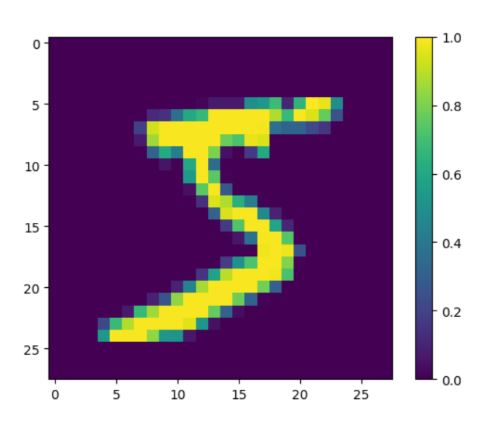
I ran initial training jobs on all three of my models using the clean MNIST dataset from Keras. For the first time, I had actual figures to refer to. The full-resolution CNN was the strongest out of the three models, and this was honestly expected because it had the full 28×28 pixel images. To give you an idea of what this looks like, here’s an example of the input the full CNN receives.
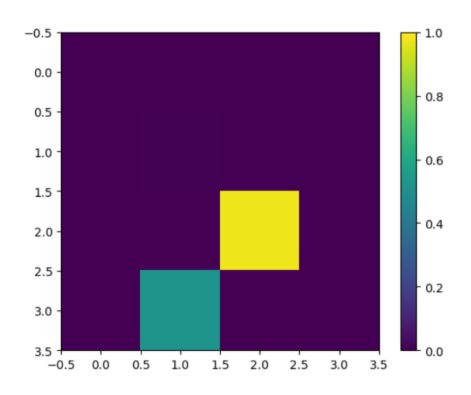
The fair CNN, my MLP running on the same 4×4 binarized input as the QNN, was less performant but still showed the ability of a simple classical neural network to squeeze a decent amount of data out of the compressed input. Here’s what the compressed input looks like.
The QNN also produced its first accuracy figures. While the accuracy was nowhere near as good as the full CNN’s, seeing the quantum circuit learning and improving its accuracy was still exciting. For the first time, my project was more like an actual experiment than a debugging exercise.

But then I got greedy. Feeling good about having working models, I wanted to try to push the limits. I tried to have the QNN classify all ten digits rather than just the simple subset the initial version was trained on. So, I reworked the output layer as well as the loss function and started the training. It was so painfully slow. While the new hardware Amazon SageMaker provides is great, every additional output class of the QNN means more parameters in the quantum circuit, more calculations using the parameter shift rule, and more simulated quantum operations. These simulated quantum operations stacked on top of one another and made the program extremely slow. I tried different learning rates and tweaked the number of entangling layers, but it was just too slow. By the time I realized the ten-class approach was not going to work, I had already wasted the better part of two days on it with very few results to show.

However, I am not discouraged by this setback because I believe that the preliminary results I achieved prior to the ten-digit experiment are promising. In the future, I’m planning to work on optimizing the quantum circuit architecture itself and exploring different combinations of quantum gates beyond just XX and ZZ. I want to see if reorganizing the quantum circuit can help increase the classification power of the same 16 qubits. Specifically, I aim to determine the sweet spot where I can confidently mitigate noise, which is the whole purpose of the project. Beyond that, I am also interested in exploring how the models can be applied to more meaningful datasets than just MNIST. While MNIST is a great benchmark, classifying handwritten digits does not fully capture the challenges of the noisy data that these systems would encounter in more practical applications, such as medical imaging and autonomous driving.

Week 4: The Dataset Dilemma

Last week ended on a pretty high note for me. After many days of frustration, I was finally able to get the ten-digit QNN classification working with Amazon SageMaker. I did this by optimizing batch sizes and being more aggressive with my learning rate schedule to make sure that my quantum circuit was able to converge before my patience gave in. Seeing all ten digit classes separate out in my predictions seemed like a small miracle to me. So, I was looking forward to continuing with more datasets in Week 4. But then, my datasets caused quite a lot of trouble.

After having MNIST in the bag, I was feeling quite confident with my project, so I decided to try to apply my project to some real-world problems beyond just recognizing handwritten digits. So, I decided to test my models out with something more challenging than MNIST. During the first half of this week, I was looking into using the Fashion MNIST dataset, which contains images of various clothing items such as shirts and shoes. I felt like replacing my MNIST data with this new, more complex set of visual data meant more.

The results were a disaster. The full CNN performed reasonably well with the Fashion-MNIST dataset and its full resolution images. However, the fair CNN and QNN plummeted. This was because compressing a t-shirt and a pullover into 16 pixels makes them almost indistinguishable. The loss of information was fine for the digit dataset but disastrous for clothing items with only subtle visual differences. My QNN was basically guessing.

I tried different binarization thresholds and only used visually distinct classes, such as distinguishing between shoes and bags. However, even these simple two-class problems were not reliable. After two days of failed experiments, I gave up and accepted that my 4×4 input resolution was a hard constraint dictated by the limits of quantum simulation. It was simply not capable of capturing enough information to classify more complex images. MNIST worked because of the simplicity of the digit images. Fashion-MNIST did not.

So, I made a decision. I’m temporarily abandoning the Fashion-MNIST dataset and going back to MNIST. But, I might search for some more datasets of traffic lights to experiment with. Looking back, my experiment was never about Fashion-MNIST anyways, it was more about determining whether quantum computing’s properties provide noise resilience. I can still do this experiment with sufficient rigor using other datasets.

Next week, I’m also ready for more in-depth noise injection. Stay tuned.

BASIS Independent Dublin is a Grades 6 – 12 private school, providing students with an internationally benchmarked liberal arts and sciences curriculum, with advanced STEM offerings. Considering joining the BASIS Independent Dublin community? To join our interest list for the next school year and receive admissions updates and more, please click here.
Filed Under: High School, Senior Projects

How BASIS Independent Manhattan Grade 7 Students Impressed NYC Art Educators

April 7, 2026 by christineklayman Leave a Comment

Recounted by Ms. Hill (Subject Expert Teacher, World History)

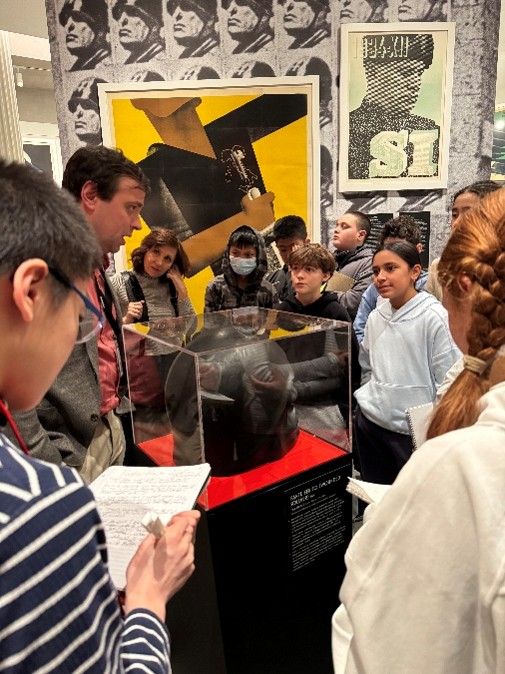
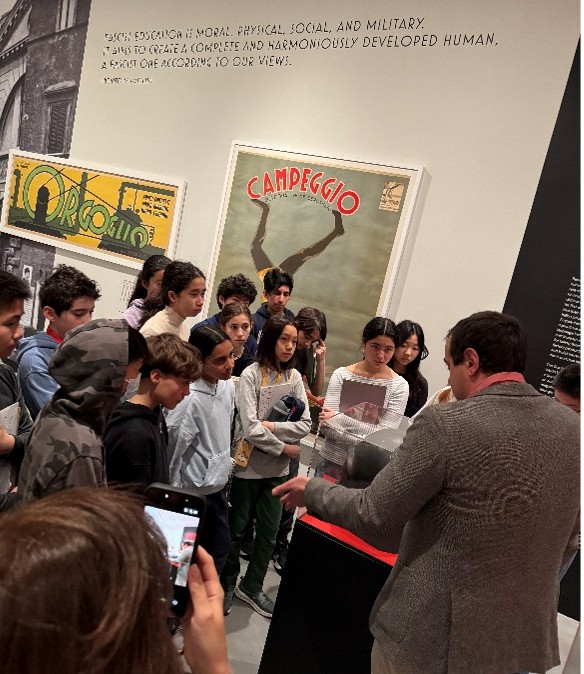
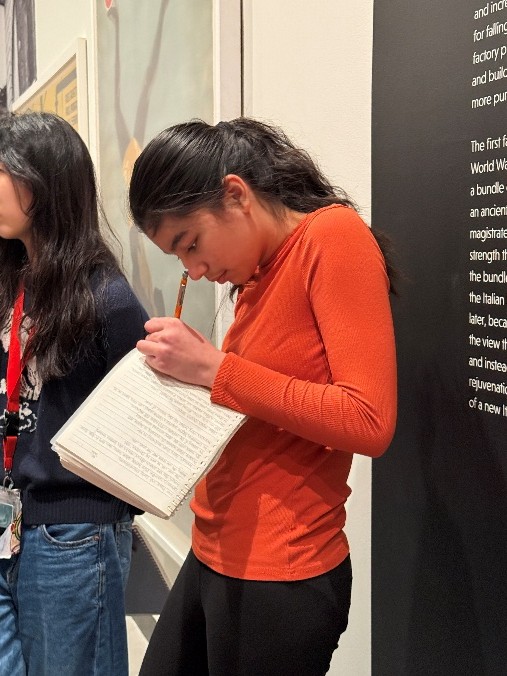
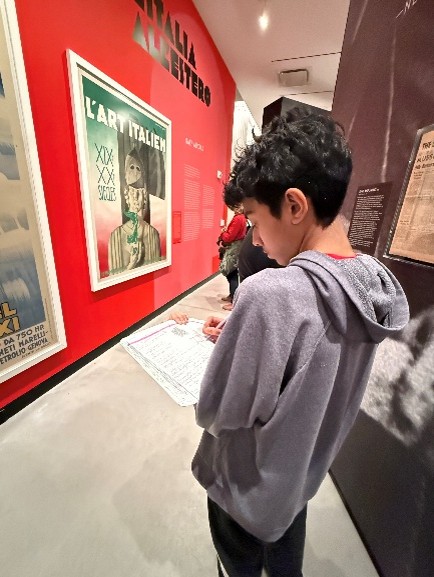
Our grade 7 students stepped out of the BASIS Independent Manhattan Upper School to take an eye-opening field trip to the nearby Poster House, America’s first—and only—museum dedicated entirely to posters. This interdisciplinary field trip to see “The Future Was Then: The Changing Face of Fascist Italy” helped students make connections between World History and visual art by seeing how Mussolini’s government designed posters that shaped Italian culture.

Identifying the Exhibition’s Key Focus

The exhibition featured 75 pieces from the Fondazione Massimo e Sonia Cirulli in Bologna that exposed the intersection of propaganda and art during Mussolini’s rule. The posters were visually stunning, with dramatic designs and vibrant colors that promoted a dangerous political ideology. Many students identified the strangeness of seeing something so artistic on the surface, yet how it was used with malicious intent.

Understanding Propaganda vs. Art

These middle school students were most taken by how much there was to learn from a single poster. Each one had a story to tell. Through deep analysis and thought, students identified the propaganda that the poster was intended to communicate.

By taking on the poster designers’ perspectives, the students weighed what choices they would need to make using just images, colors, and a few words to communicate a specific and complete message. Which colors should be used? How should the text be arranged? What emotions do the images evoke? A student favorite was the “creepy pasta baby,” which demonstrated the lie that Italy was flourishing economically and could support and feed such a vast population in its Empire.

Difficult Questions and Important Lessons

Our students took away from this field trip a key lesson that governments, activists, and companies have used posters to influence public opinion over time. After understanding that some posters encouraged people to buy chocolate with added ingredients to save money, or showed how chocolate and colonialism were connected, group discussions ensued about how even history can be used to change people’s minds.

With this newfound understanding, students are writing essays using propaganda posters from the exhibition. Their goal is to show how Fascism manipulated art and twisted history for its harmful ends.

Final Thoughts

Our grade 7 students found that a small museum can make a big impact, and our students made a lasting impact at the museum, too. The exhibition curator was so impressed by their knowledge, curiosity, and insights that he thought they were high school students in an AP class!

Experience Joyful Rigor Firsthand

Join us for our April Open Houses

We invite you to see our curriculum in action and meet our passionate educators:

Lower School (PreK–Gr. 5)
Saturday, April 25 at 10:00 AM
795 Columbus Ave. (UWS)

Upper School (Gr. 6–12)
Sunday, April 26 at 10:00 AM
556 W. 22nd St. (Chelsea)

Save Your Spot!

BASIS Independent Manhattan, a private school offering PreK through Grade 12, is based in Manhattan, New York. Students thrive alongside Subject Expert Teachers as they engage in a liberal arts program with STEM offerings. 

Filed Under: Academics, Field Trips, History, Middle School, Student Learning, Student Perspectives

Senior Project Spotlight: Aarohi G. Weeks 3 – 4

April 7, 2026 by mirandamartinez Leave a Comment

The Senior Project is an independent, student-led culmination of our high school experience. After three years of academic preparation, our seniors are ready to spend the last trimester of their high school careers applying the skills and knowledge they have gained to develop a project that is insightful, academically rigorous, and professional in nature. This year, we are proud to showcase a senior from one of our neighboring campuses, BASIS Independent Silicon Valley, Aarohi G.

Week 3: A Party Problem

This week, I prepare to replicate my methodology for the next legislative variable: Automatic Voter Registration, a policy with similar intentions to Same-Day Voter Registration, boosting voting and increasing accessibility. But before I seek these results, I aimed to research a major challenge to my findings and how I could correct for it.

Political Parties & The Youth Vote

Does the political party in charge influence efforts to appeal to the youth vote? The Democratic and Republican parties have historically prioritized it differently according to their reach with these age groups; In 2024, around two-thirds of 18-24 year-old voters aligned themselves to the Democratic Party, indicating a clear advantage gained by the youth vote for Democrats (Pew). As a result, great divides have formed on the opinions surrounding early voting or decreasing registration requirements. Where 84% of Democrats and Democratic-leaners agree with the concept of Automatic Voter Registration, only 38% of Republican and Republican-leaning responders agree (Pew, 2021).

So time and time again, we see legislation specifically catering to the youth vote and needs during elections. The Youth Voting Rights Act, sponsored by the Democratic Sen. Warren and Sen. Williams, exemplifies this as it proposes pre-registration and on-campus polling sites among other additions. And as Sen. Warren was quoted claiming Republicans responsible for voter suppression laws that “silence youth voices,” the issue of target demographic reflects in policy-making and both parties’ agendas.

Correcting This Influence

So how do I ensure that the changes I notice are from the laws themselves and their effects over time, not simply due to the political party in charge? First, the current method of comparing a treatment state to a control group helps, and can be improved by creating a treatment group of similar states as well. The treatment states would all have to adopt the policy simultaneously, offering a more limited view to compare my previous results to, rather than a new method to rely on.

As a secondary analysis after checking for the effects of legislation, I can additionally monitor campaign spending and how it is directed to young voters. In this way I can assess if it differs between parties, and identify periods of constant campaigning to use for my studies (rather than times with more fluctuation).

AVR Data Collection

Once again, I’ll be referring to the National Conference of State Legislatures for their data on the Automatic Voter Registration laws in each state. With each state implementing AVR in a much more recent range of the past 2 decades, comparing a treatment group to a control group is significantly more practical.

Week 4: Automatic Advantage

It’s time to discuss the second policy under review for impact on voter turnout: Automatic Voter Registration. Let’s get some context on the subject.

What is Automatic Voter Registration?
We’ve discussed how registration is often a barrier to voting, and AVR is just another way to streamline the process. It allows eligible voters can become registered when interacting with certain government agencies, like the DMV, and their information will pass on to election officials as necessary. 24 states and Washington D.C. have adopted this legislation in some form. The main two types are front-end opt-out and back-end opt-out.

Front-end opt-out: Whether the voter is asked to “continue” to register or “decline” to register, the choice is presented to them on a screen at the government agency.

Back-end opt-out: While interacting with said agency, the voter will provide all necessary registration information, later receiving a post-transaction mailer that they will be registered unless they respond and decline.

So, two different approaches, with the intention to reduce time costs and inform people on the official steps leading up to voting.

Current Literature
Like Same-Day Voter Registration, many credit this policy with diversifying a state’s voting population. In 2019, Oregon governor Katie Brown views the success of AVR as a direct factor in the increase of people of color registered to vote. And when it comes to the youth vote, a working paper from 2024 finds that the prescence of AVR increased voting turnout for those aged 18-24 by 3.2% (Christy, Hankins, et al.).

On the note of bureaucratic efficiency, the practice has been studied to reduce confusion and delays, both due to human error in paper forms, and also the fact that voter registration does not update when a voter moves (a fact many learn too late).

Progress
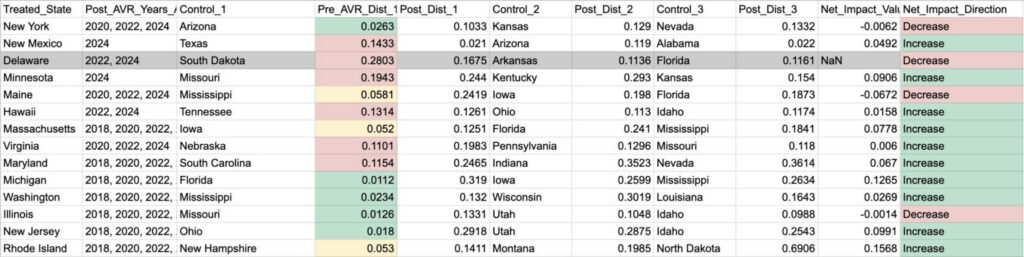
This week, I replicated my methodology from Week 2 used for SDVR, finding treatment states that adopted AVR in the 2014 to 2024 range and comparing them to their three control states. These control states were determined by their Euclidean distance — the smaller it is, the more similar their fluctuations in turnout were.

The color-coding below for the pre-AVR distance of the first control state means:

Green: Within 0 and 0.05 — a very strong match

Yellow: Within 0.05 and 0.1 — a fairly strong match

Red: Greater than or equal to 0.1 — a weak match

We know their distance, but not the direction, so to understand if their subsequent difference in path is positive or negative, I take the average turnout of treated state and the 3 control states to find their difference: the net impact value.

An increase in turnout (as shown in green) means their divergence is positive, and a decrease in turnout (red) means their divergence is negative.

Key Takeaways
First, some states have been ruled out for weak matches. As a potential solution, I’ll look for turnout data older than 2014 for a better range.

Second, AVR seems to overwhelmingly increase turnout rather than decrease, but it’s important to note that the decrease could either mean a real decrease in turnout, or a failure to keep pace with the control group. This should be further studied.

At the moment, I’m re-evaluating Delaware’s data to derive the net impact value.

I’m in the process of repeating this last step of finding the direction for SDVR, and will add it to next week’s update!

BASIS Independent Dublin is a Grades 6 – 12 private school, providing students with an internationally benchmarked liberal arts and sciences curriculum, with advanced STEM offerings. Considering joining the BASIS Independent Dublin community? To join our interest list for the next school year and receive admissions updates and more, please click here.
Filed Under: High School, Senior Projects

2025 – 2026 Subject Advisor of the Year

April 7, 2026 by mirandamartinez Leave a Comment

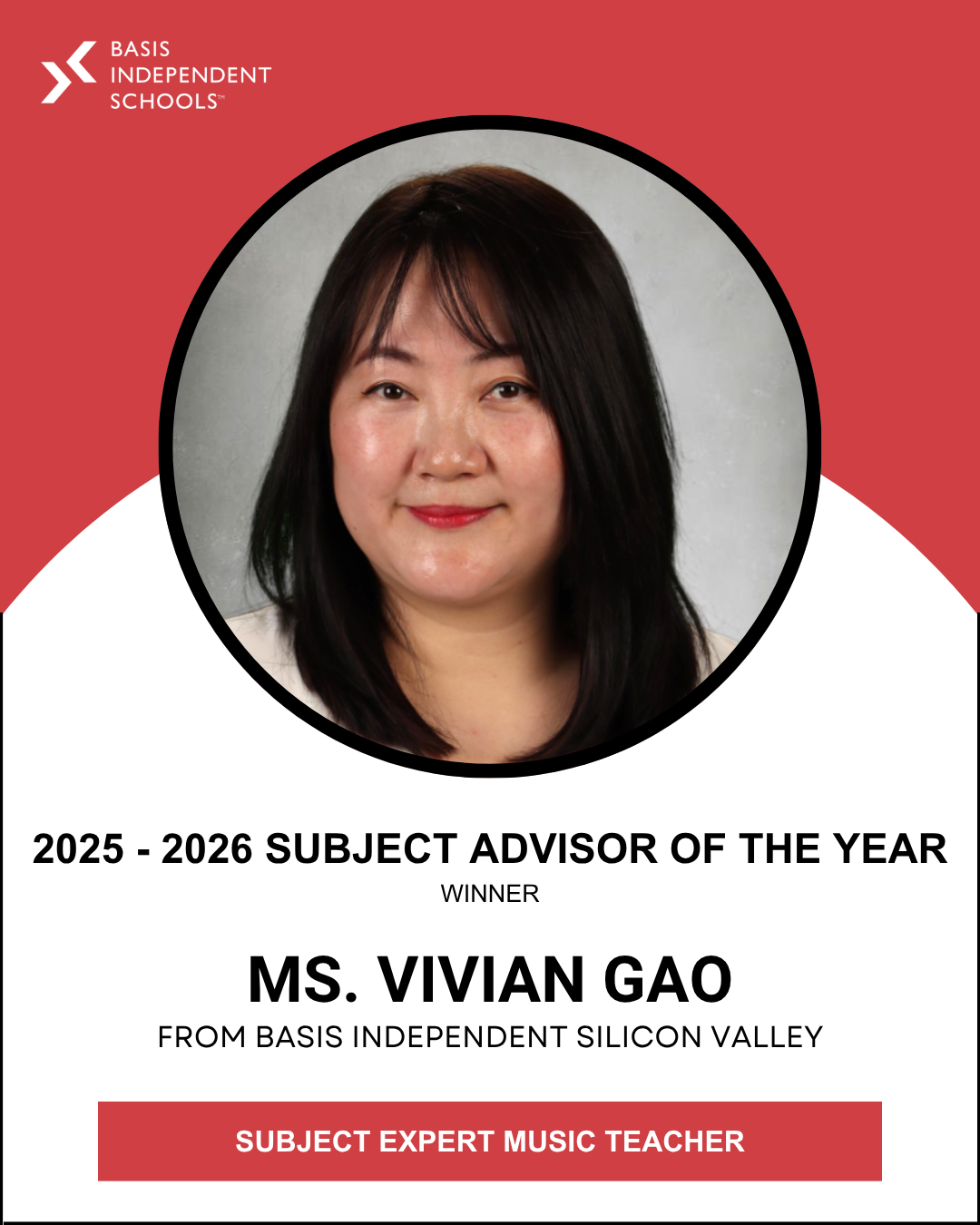
We extend heartfelt congratulations to our 2025 – 2026 Subject Advisor (SAD) of the Year, Ms. Vivian Gao, from BASIS Independent Silicon Valley Lower! Ms. Gao is the Subject Advisor for Music in PreK – Grade 5. 

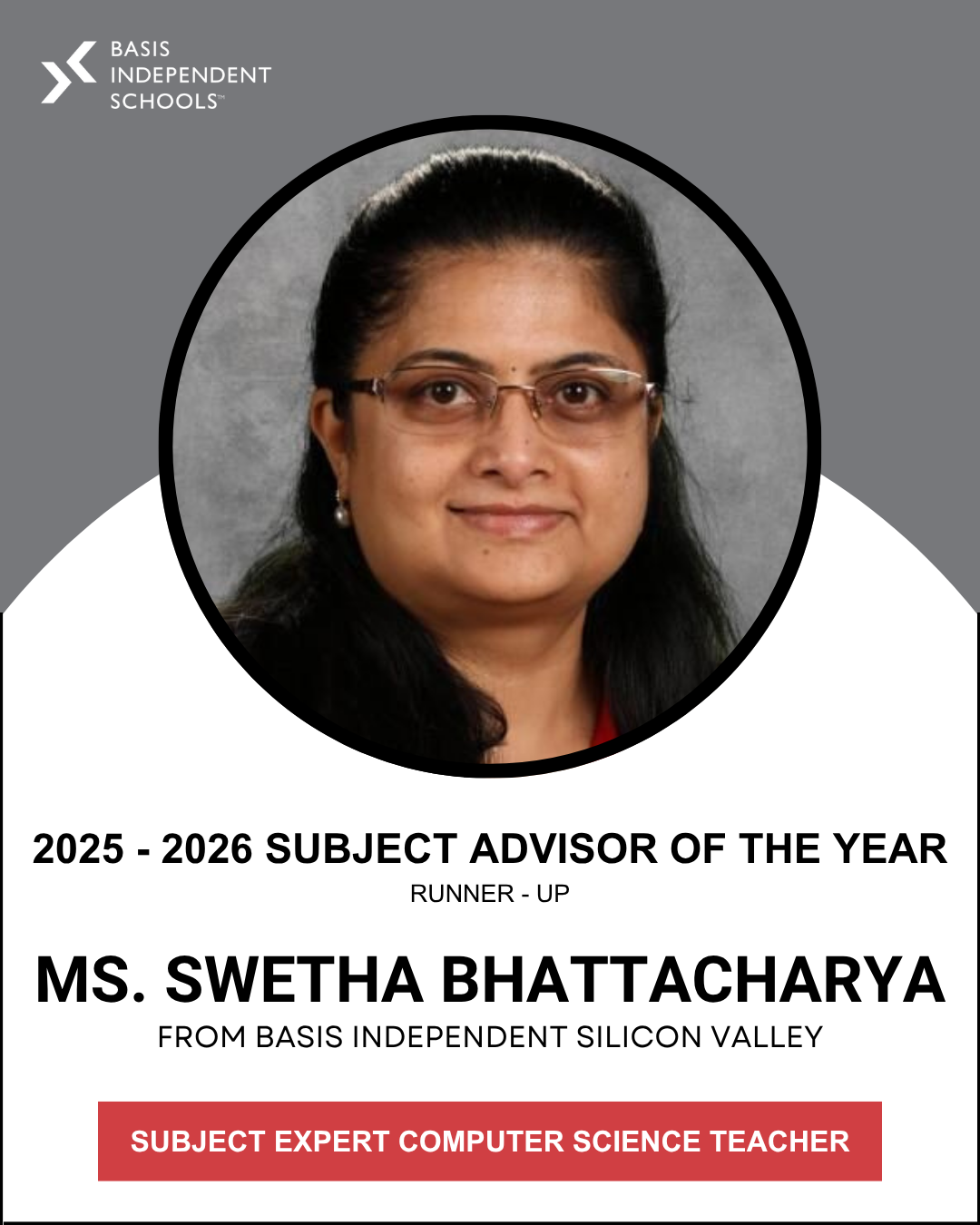
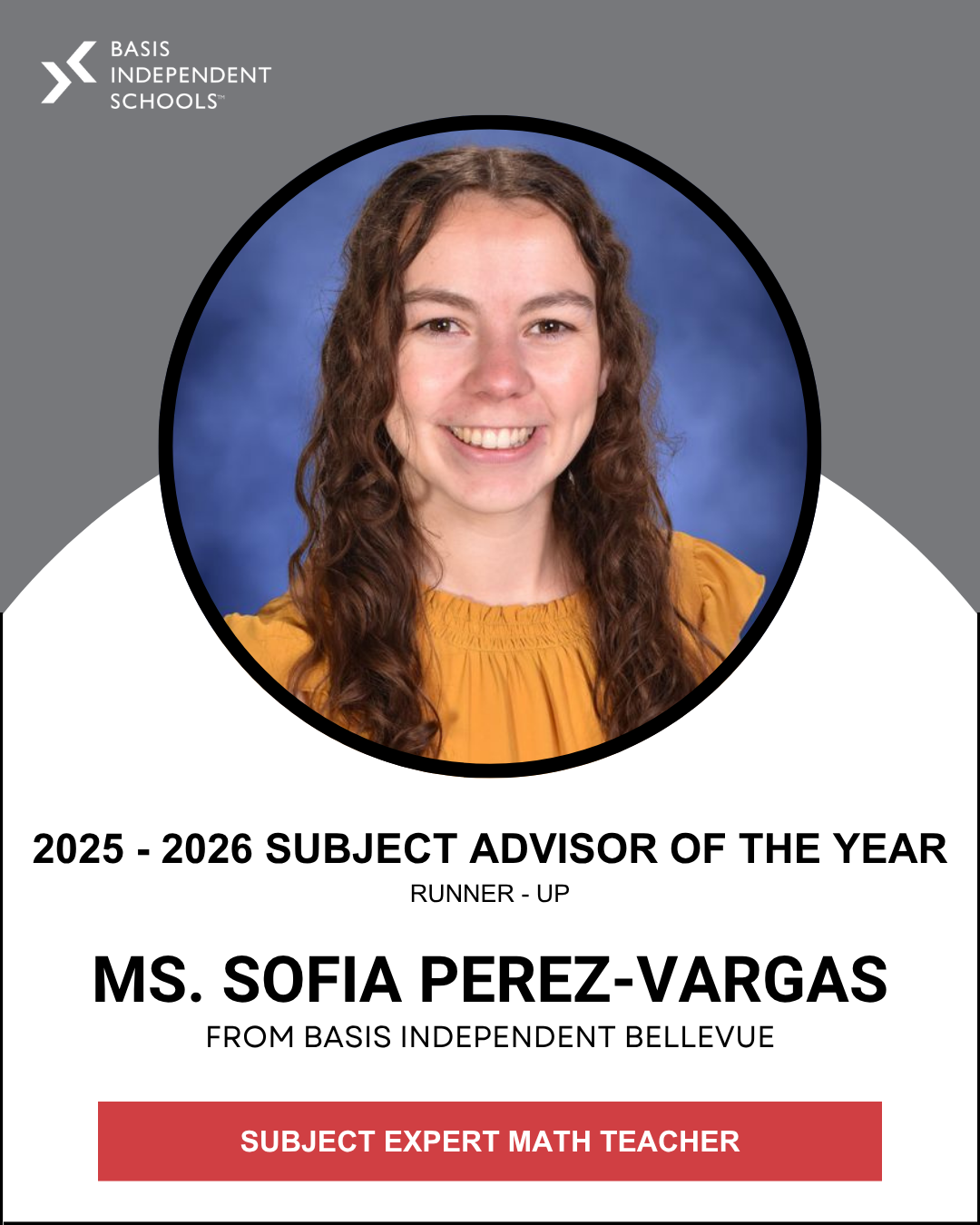
Congratulations, too, to our runners-up, Ms. Swetha Bhattacharya (Computer Science) from BASIS Independent Silicon Valley Upper, and Ms. Sofia Perez-Vargas (Pre-Algebra and Algebra & Geometry I), from BASIS Independent Bellevue!   

The SAD of the Year is a celebration and greater recognition of all the work our Subject Advisors (SADs) do, including providing template syllabi for our Subject Expert Teachers (SET), creating assessments, collaborating with other SETs across the BASIS Independent Schools network, and working incredibly hard to build subject mastery for each of our students.  

“Subject Advisors are a vital part of the BASIS Independent Schools academic model—they embody our reliance on and commitment to our Subject Expert Teachers’ expertise,” explained Ms. Linda Louis, BASIS Independent Schools Senior Director of Curriculum. “It is important to acknowledge the myriad ways they impact our network and to give teachers the opportunity to reflect on how much their work has been positively shaped by their SADs.”  

The Role of a Subject Advisor (SAD): Curriculum and Community  
BASIS Curriculum Schools have a Subject Advisor for each required course and some electives, all the way from STEM Discovery in PreK to Capstone courses for seniors. A SAD is first and foremost a classroom teacher; experienced BASIS Curriculum Schools Subject Expert Teachers apply to take on the SAD role and become extensions of the BASIS Curriculum Team. SADs are responsible for updating the curriculum and refining vertical alignment annually. This task involves looking beyond their classroom experiences, seeking input from teachers across the network of BASIS Independent and International Schools, incorporating insights from assessment data, and considering ongoing conversations in their fields.  

The Power of a Network, Amplified by Subject Advisors  
Throughout the year, SADs provide valuable guidance on the BASIS Curriculum and assessments and offer course-specific discussion prompts in frequent newsletters. In the forums SADs create, teachers can share their unique instructional approaches and request resources or assistance. SADs also host network-wide meetings over Zoom throughout the year to cultivate a community of colleagues, including a half-day of collaboration on the BASIS Independent Schools In-Service Day each fall. Their role in facilitating opportunities for professional growth and development ensures continuous improvement in the educational experience provided to students.  

Ms. Gao had the following to share about the role:  

“Being a Subject Advisor is meaningful to me because it allows me to support our Subject Expert Teachers while strengthening the connection between the BASIS Curriculum and classroom practice. I really value the opportunity to collaborate with educators and grow together to create meaningful learning experiences for our students.” 

Choosing the Subject Advisor of the Year  
Teachers across our network were asked to nominate their SAD in an anonymous, voluntary survey. The BASIS Curriculum Team reviewed all entries, carefully considering responses on several essential criteria, including thoughtful guidance on the BASIS Curriculum, sharing of high-quality resources, and facilitating professional learning communities among their colleagues. Teachers’ enthusiastic endorsements of their course’s Subject Advisor as the most supportive made it difficult to choose a winner, but nominations for Ms. Gao stood out. 

Writes one of Ms. Gao’s advisees: “I really appreciate Ms. Gao’s support as a SAD. She’s always approachable and offers practical and grounded guidance to support young learners. The strategies and resources she shares are clear and immediately usable. She also listens to teachers’ suggestions and collects our questions into key discussion points for our SAD meetings [these are Zoom calls for teachers of the same course throughout the BASIS Independent Schools network]. I really like her as my Subject Advisor!” 

“Working with Ms. Gao is a joy, and we feel incredibly fortunate to have her on the Curriculum Team as a SAD,” expressed Ms. Wen Yang, BASIS Independent Schools Professional Development Manager. “Whether she’s leading professional development workshops, reviewing teachers’ syllabi, or revising the Primary Program music curriculum, she brings a remarkable level of dedication and intention to everything she does. Her impact is especially evident in the way she supports our Subject Expert Teachers. From the thoughtful, high-quality newsletters she creates to the rich, differentiated resources and activities she shares, Ms. Gao consistently goes above and beyond. She also fosters meaningful collaboration through the well-organized and engaging SAD meetings she leads, helping our Subject Expert Teachers feel supported, inspired, and connected.”  

We are incredibly grateful to our exceptional Subject Advisors for their hard work and dedication. Congratulations on the completion of another school year!

Filed Under: Awards & Recognition, Faculty & Staff

Student Spotlight: Ishani D. Advances to the Scripps National Spelling Bee

April 2, 2026 by ezekielbracamonte Leave a Comment

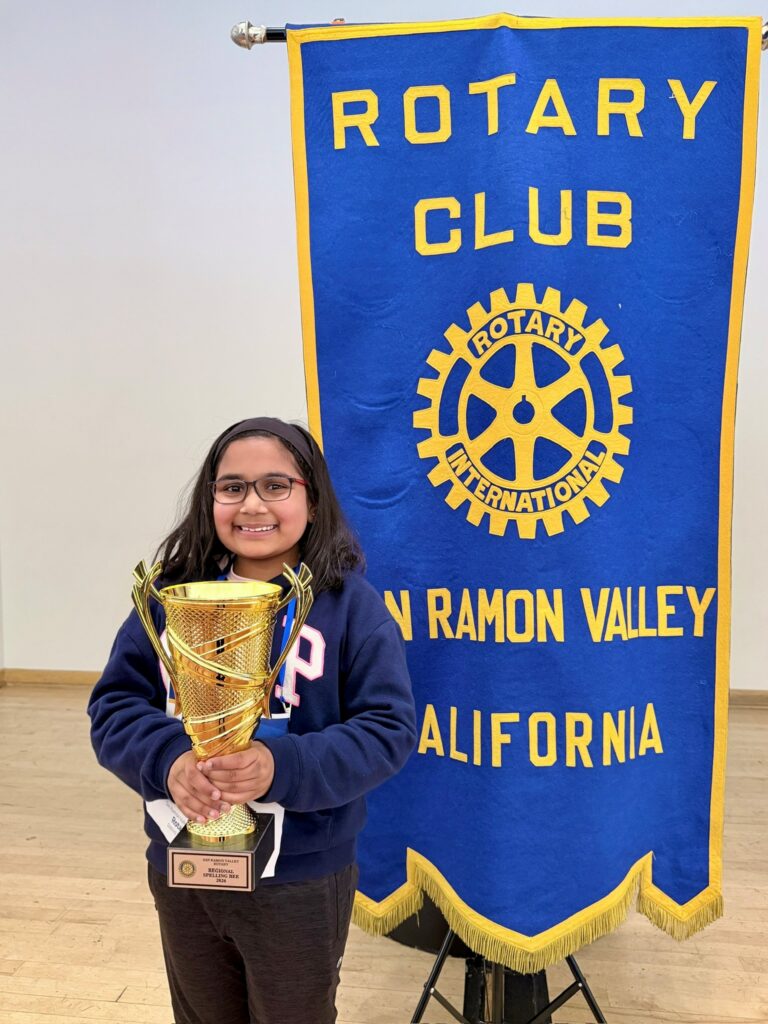
Ishani D. (Grade 6) recently competed in the Scripps Regional Spelling Bee on Sunday, March 29, where she placed among the top four students, qualifying for the Scripps National Spelling Bee in Washington, D.C. this May. The Bay Area regional is known for its high level of competition, bringing together top spellers from across the region.

Ishani has been building toward this achievement over several years, having participated in spelling competitions since Grade 4. Her preparation for the regional bee centered on the Words of the Champions list, a core resource for competitive spellers. Over time, she has developed a strong understanding of spelling patterns and word origins, which helps her approach unfamiliar words with greater confidence—an important skill in later rounds of competition.

“I am really excited that I was able to qualify for the Nationals. It is such a prestigious tournament! I will prepare hard and give it my best shot!”

Following the regional bee, Ishani described an initial sense of surprise at qualifying, which quickly shifted to excitement as she connected with other participants and families and began preparing for the next stage of competition.

In preparation for Nationals, Ishani is using the Merriam-Webster app as a primary study tool. Her plan includes daily practice of about an hour, along with longer study sessions on weekends. This consistent approach reflects the level of commitment typically required to compete at the national level.

“Our school could not be more proud of Ishani’s success at the Regional Spelling Bee. This impressive achievement is a testament to the hard work and dedication of our Bobcats. We look forward to cheering her on at Nationals.” — Mr. Henriquez, Associate Head of School

Ishani will represent the BISV community at the Scripps National Spelling Bee this May, joining top student spellers from across the country.

BASIS Independent Silicon Valley is a TK–Grade 12 private school, offering an internationally benchmarked liberal arts and sciences curriculum, with advanced STEM offerings. Considering joining the Bobcat community? To join our interest list for the next school year and receive admissions updates and more, please click here. 
Filed Under: Awards & Recognition, Competitions, Middle School, Student Spotlight

Grade 3 at BASIS Independent Bellevue Takes Center Stage!

April 2, 2026 by emilyhughes Leave a Comment

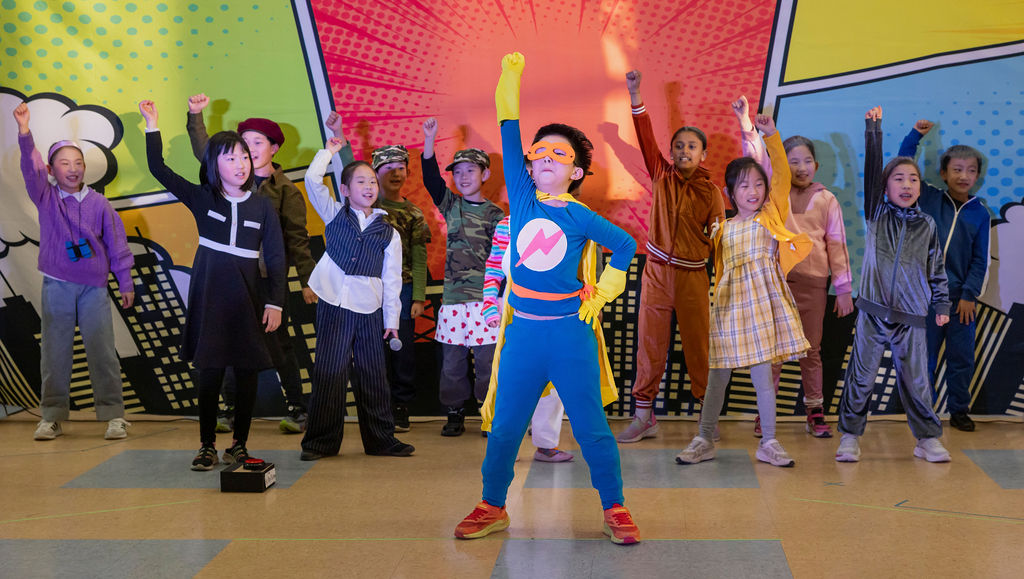
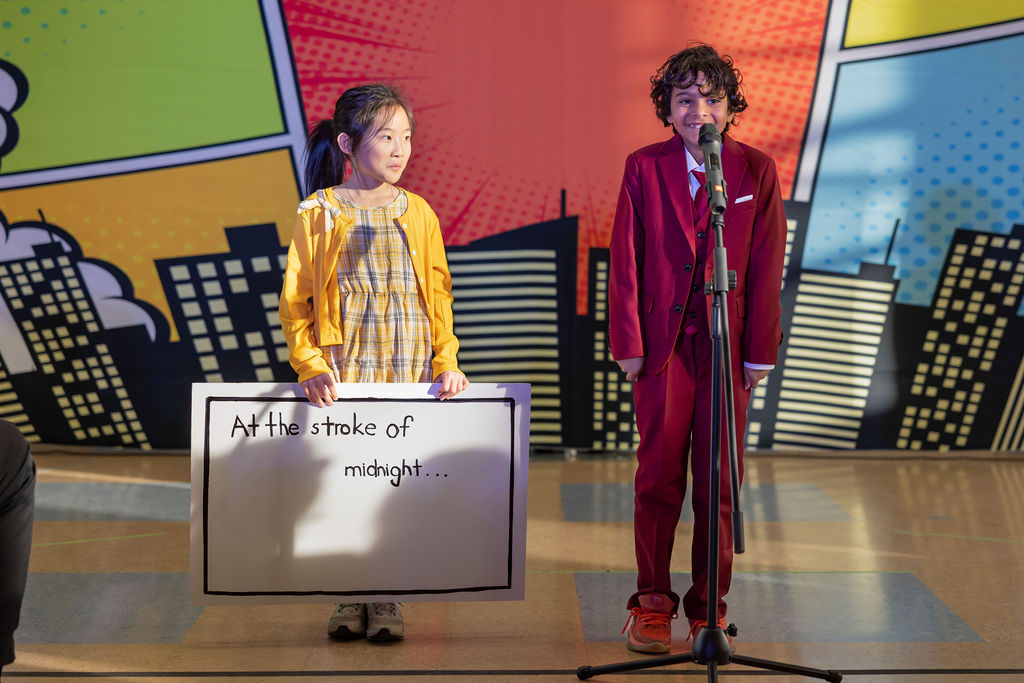
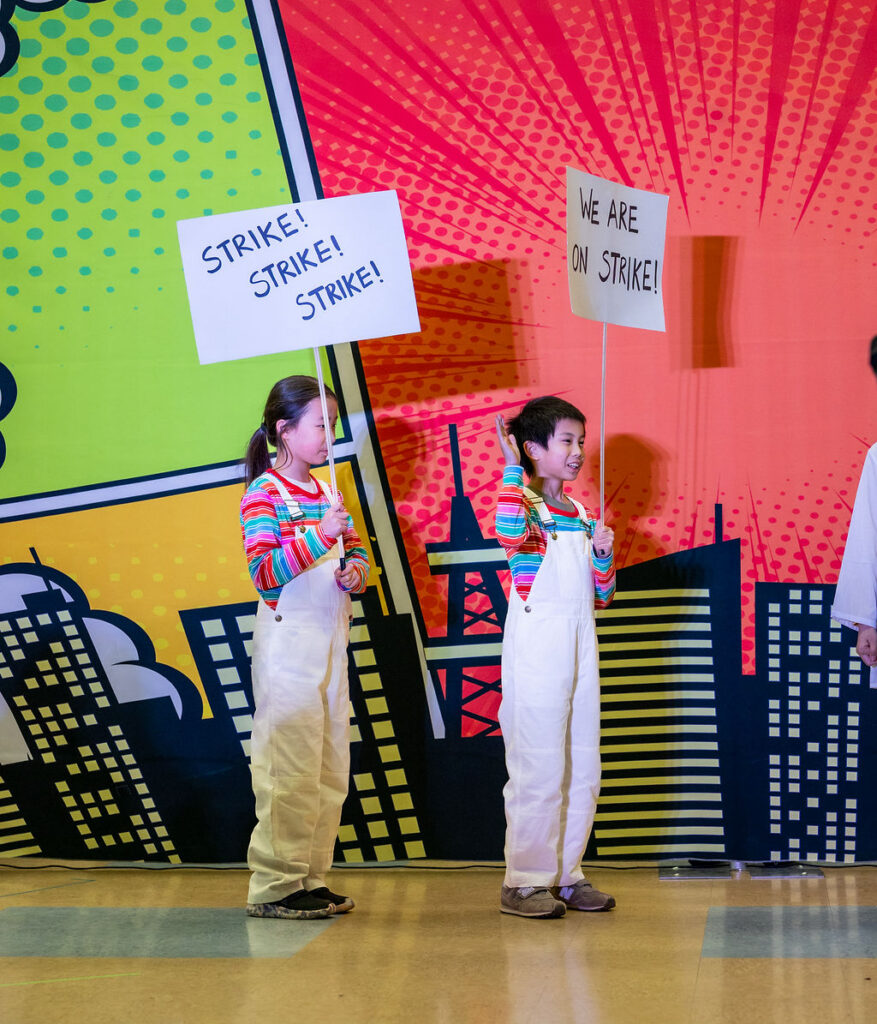
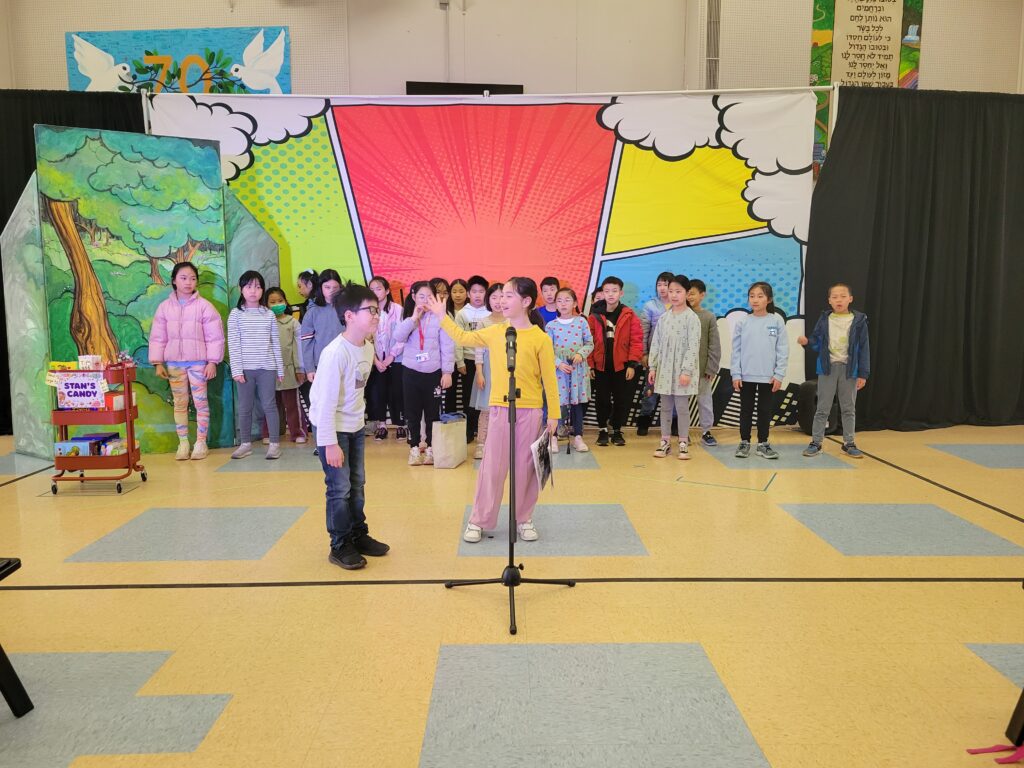
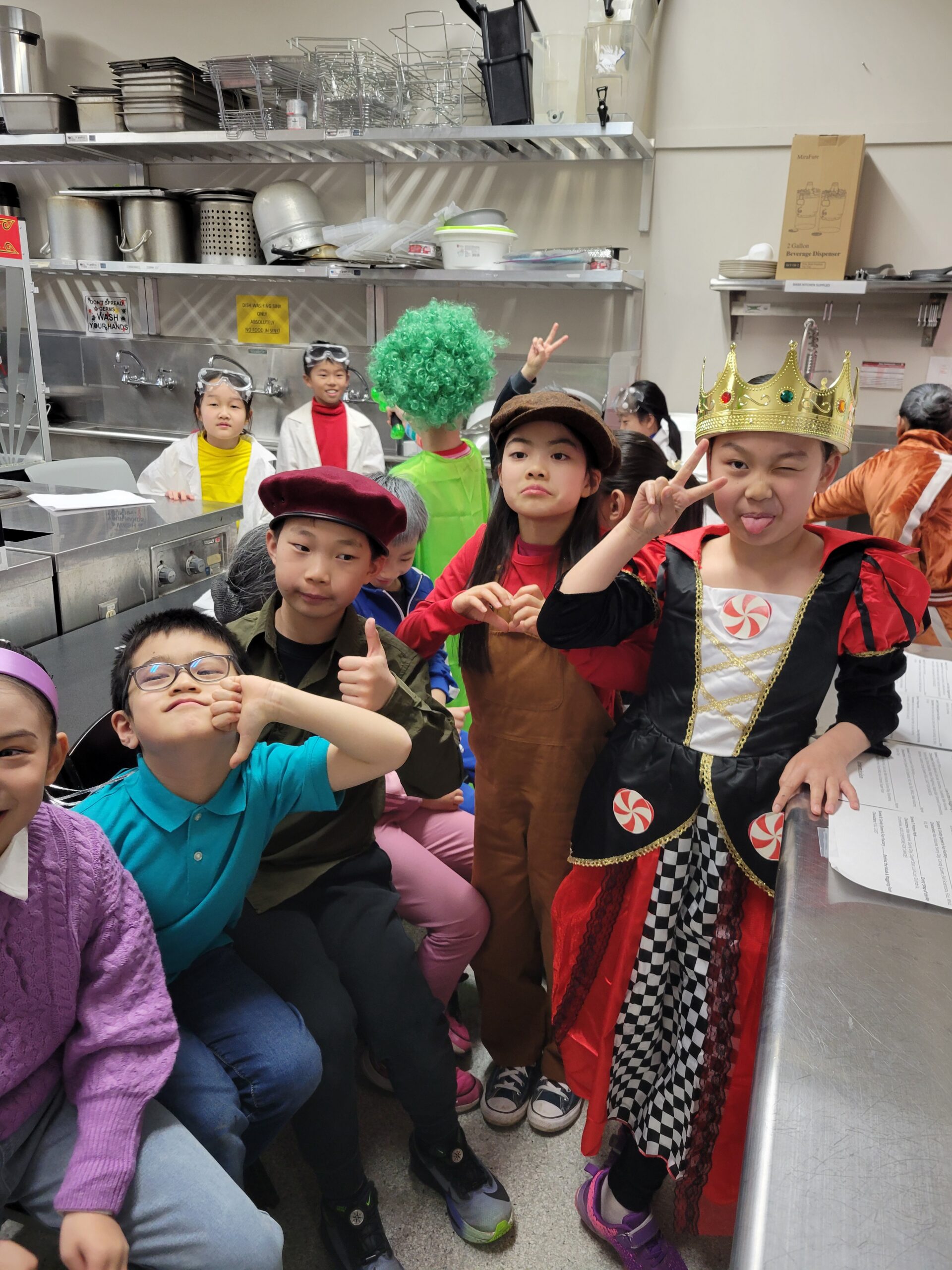
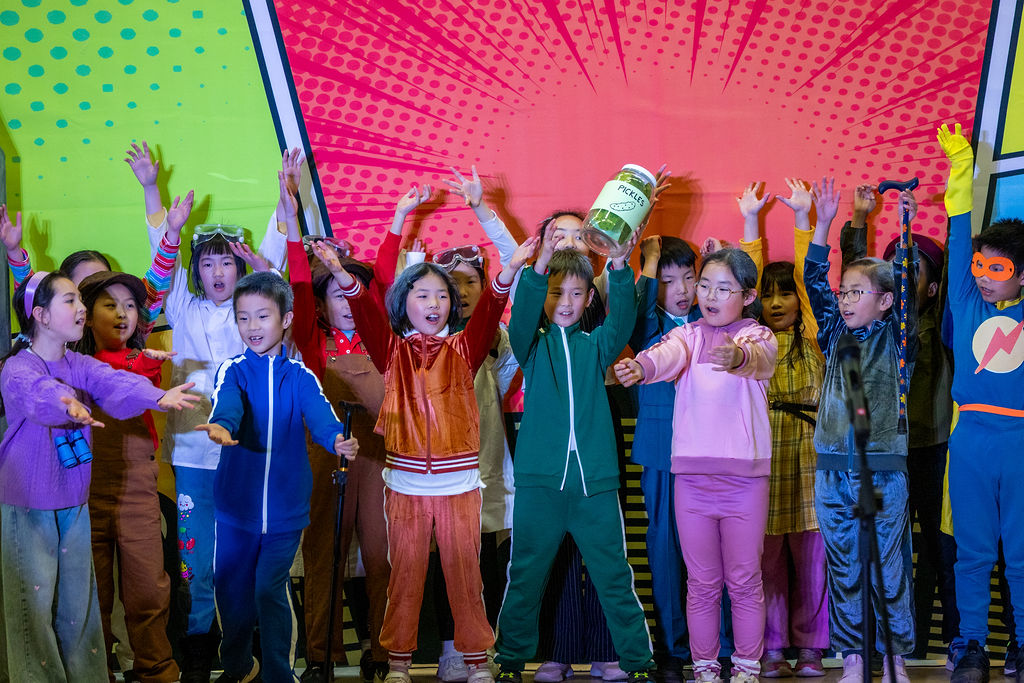
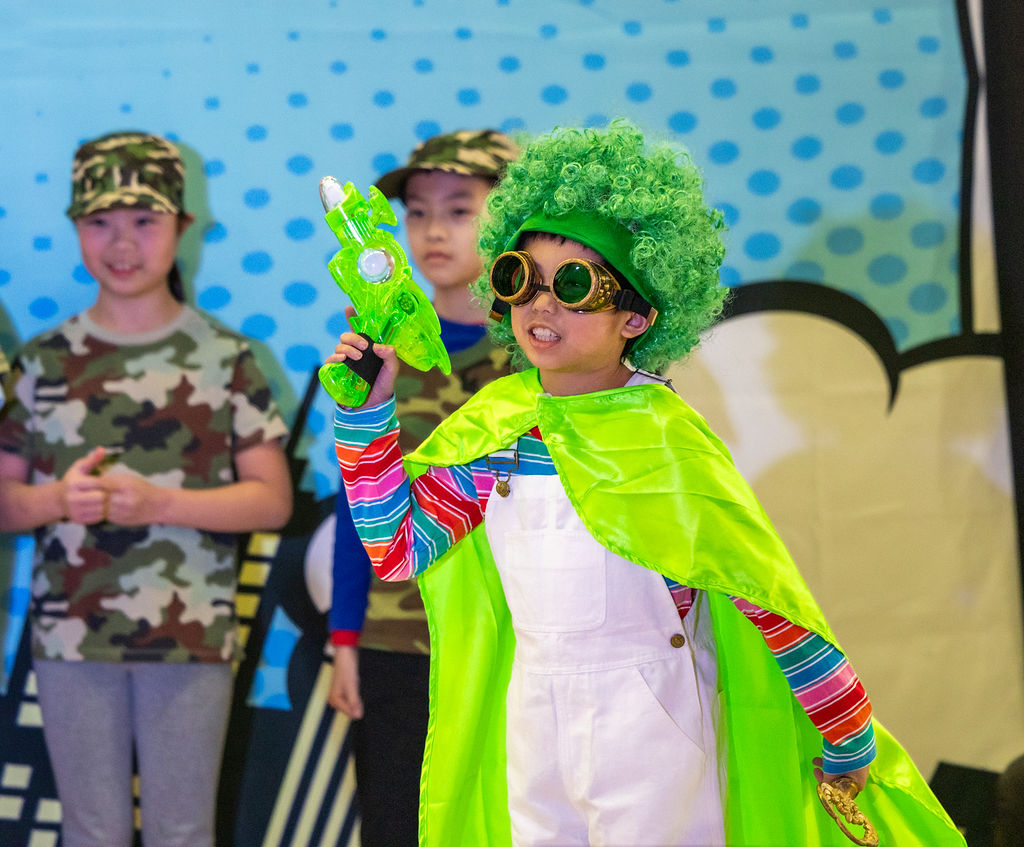
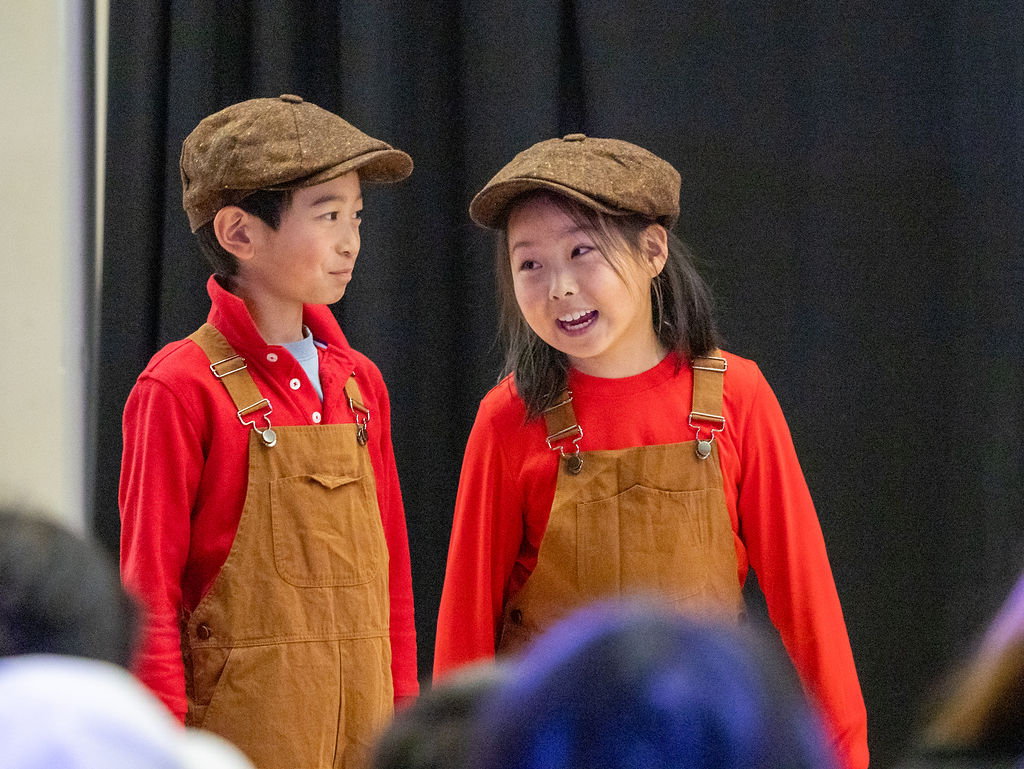
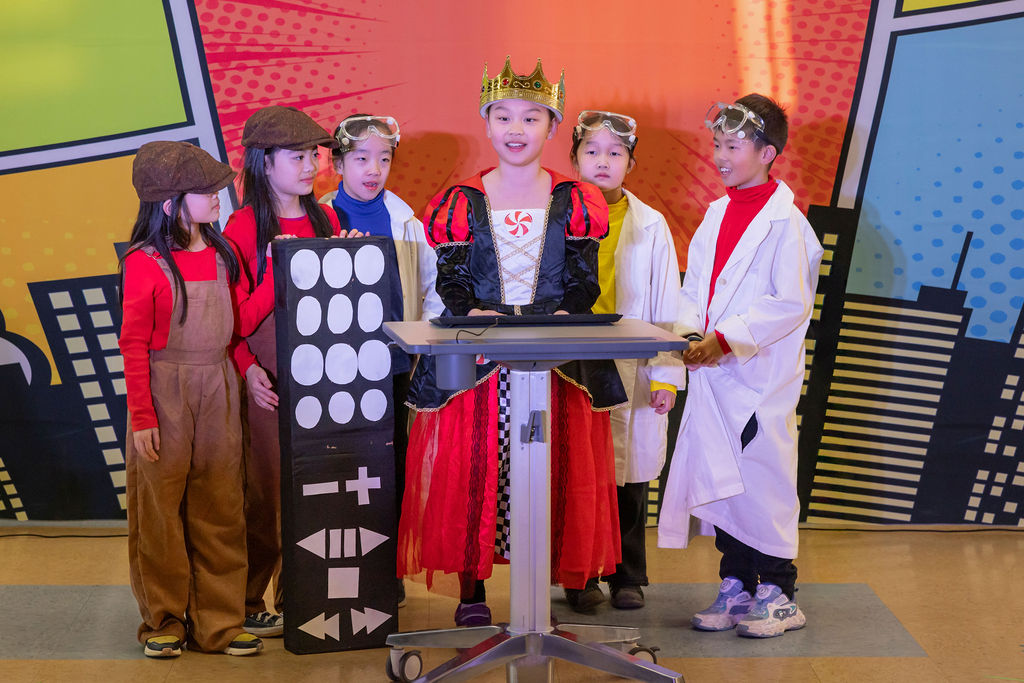
Last week, our grade 3 students took to the stage to bring the city of Megaville to life in our super-charged production of The Amazing Adventures of Super Stan—a wacky musical comedy that is one-half Marvel Comics and one-half Looney Tunes. The show was directed by our wonderful Drama Subject Expert Teacher, Mr. Brad.

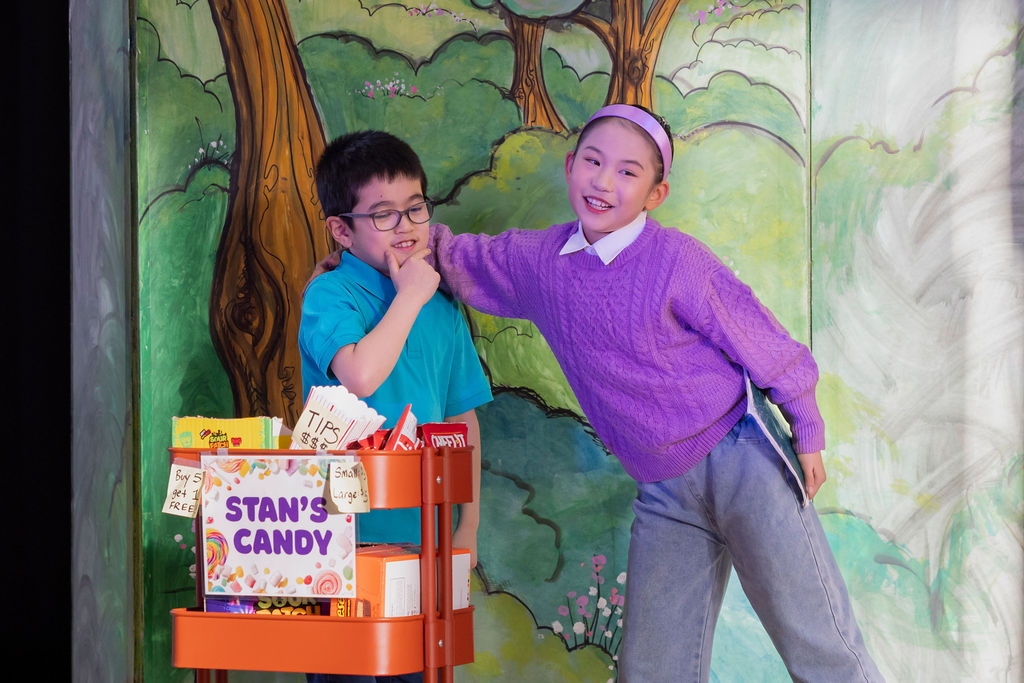
The play stars, Stanley Marvel who has the most boring job in Megaville, but he’s happy to read his comics and dream his life away. That is, until it’s turned upside-down when he discovers that local hero, The Candy Queen, is actually a super villain determined to conquer the world! Thanks to a secret hero-making formula his grandma invented years ago, Stanley becomes Super Stan, a caped crusader fighting for truth, freedom, and justice with the strength to save the day (and open a really tricky jar of pickles!).


Behind The Scenes

In grade 3, the students spent the first month and a half of the school year working on fundamental skills like voice projection, stage directions, and the three tools of an actor: voice, body, and imagination, during their drama class. After the foundations were established the students were ready to audition for the musical in mid-October. When asked what the audition process was like, Mr. Brad shared, “As a director, selecting which actor will play which role can be a challenge. You want to make decisions that play to both the strengths the actors already possess, but also ones that will allow them opportunities to grow and learn new skills and step outside their comfort zones. I was very pleasantly surprised how many strong singers I had to choose from too!”

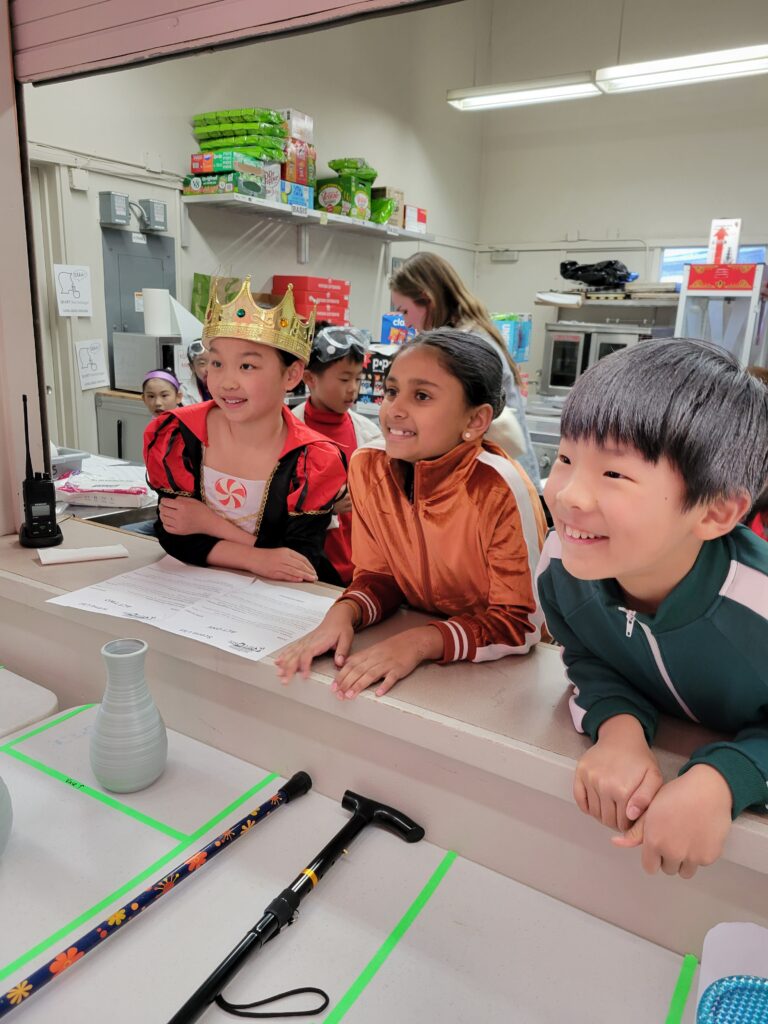
Each grade 3 class got to have their own cast and their own show for the musical. This also allowed for flexibility if a student was sick on the night of their show, their double in the other cast could step in, allowing a system for understudies who knew the show intimately. Thankfully, no one ended up being sick the week of the show.


Show Time!

Finally, March had arrived, the month of the show, and all of their preparation paid off with a show full of energy, laughter, and joy! While adding costumes, props, and set are all exciting stages of the rehearsal process, it is the final addition of the audience that brings it all together; there is no show without an audience to receive it. The casts were both a mix of excitement and nerves, which Mr. Brad reassured his students, was totally normal. Putting aside their fears, these actors bravely stepped onto the stage and gave the show their all.

When asked what his favorite part of the musical was, Mr. Brad shared, “One of the most special parts of this musical was how every single actor had an important role to play. Each student had a character name, lines to remember, and featured moments throughout the show—whether that meant delivering a goofy punchline, small group dances, taking part in comical fight sequences, or singing their own solos.”

During the show the two actors who played the lead of Stanley Marvel, Bryan and Shannon, particularly melted the hearts of the audiences with Stan’s eleven o’clock solo ballad Behind the Mask, where the character psyches himself up for the impending final battle, even though he has lost his powers. When asked what it was like to perform in front of an audience, Shannon shared, “At the start of the show I was feeling shy, but then I got so into the musical I forgot there were people watching me!”


Beyond the Stage

Watching these students support one another on stage and rise to each challenge showed just how much they had learned, not only about performing arts, but also other life skills like teamwork, focus, and perseverance. When mistakes happened, the actors had each other’s back; a line was dropped here and there, and the actors kept the show going. When one actor forgot a major prop, the actor playing the evil Candy Queen that night didn’t miss a beat, and she improvised a line ordering her minion to go and find it—brilliant! Some students who were so shy at the start of the year where confidently shouting their lines out with courage. While an entertaining show is certainly the goal, watching these young actors grow and learn is the most satisfying part of the process by far.

This production also showcased some wonderful collaboration across grade levels. Some highly creative grade 6 students helped design and build props for the show, adding extra imagination and personality to the world of Super Stan.

Congratulations to the cast and crew of The Amazing Adventures of Super Stan on a job well-done! Additionally we are so grateful for Mr. Brad and his hard work to make this show and blog possible. Bravo to all!


Filed Under: Department Spotlight, Fine Arts, Lower School, Primary Program, School Community, Student Learning, Uncategorized

“Everything I Need to Know, I Learned from Kindergarten” – Head of School, Dr. Elizabeth Thies

April 1, 2026 by emilyhughes Leave a Comment

BASIS Independent Bellevue Head of School, Dr. Elizabeth Thies

My first experience with our Early Years program took place in Bangkok and it changed my life as an educator, specifically when it came to Kindergarten.  I have always valued the fact that we offer our teachers autonomy when it comes to the implementation of our curriculum.  But, I don’t think that I ever truly understood the value of this process until I watched learning come to life in a plethora of engaging ways for our Kindergarten students. 

Our curriculum is written in a way that allows us to build key literacy skills while also focusing on strong math foundations, making scientific discoveries, and learning about historical events.  We incorporate music, art, drama, and engineering as a way to help our students have hands-on experiences and engage different learning styles.  In Kindergarten our kids get to explore, play, pretend, and create in such meaningful ways.  But most of all, they get to have so much fun while doing it.

What I loved the most about this was how much I learned as a school leader.  I realized that the emphasis on fun in Kindergarten was only the beginning.  The idea that we could create real-world and meaningful scenarios to supplement the learning process was one that needed to be shared. Kindergarten is where your child’s education journey will begin with us and what a fun adventure it can be!

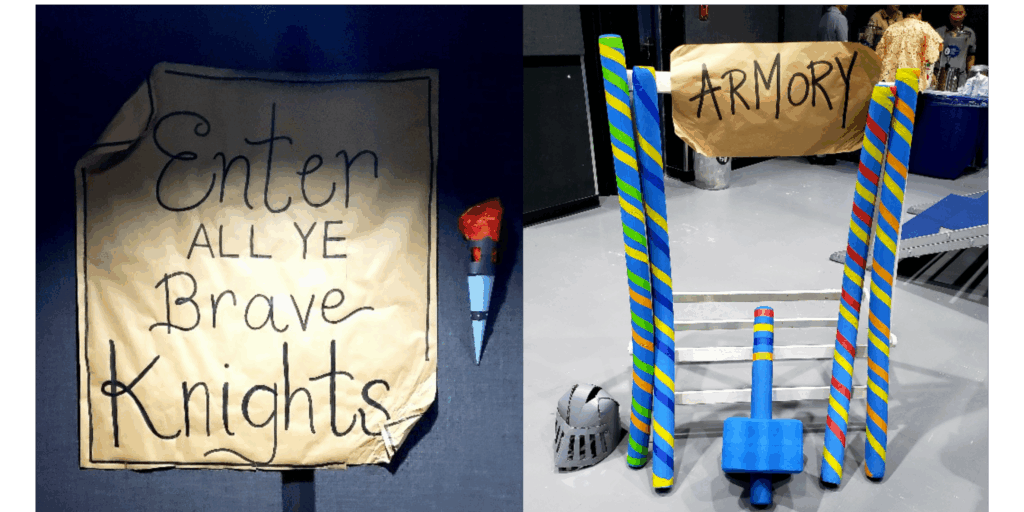
As the Head of School at BASIS International School Bangkok, I loved visiting our Kindergarten classrooms and partnering with those teachers to be creative in their approach to the learning process.  While studying medieval times as a part of their History unit, our Kindergarten students participated in a joust tournament.  Who knew that a history lesson could include skateboards and pool noodles in such a meaningful way!  Our Kindergarten students chose their own knight names, they had crests, and even celebrated victory with a family style feast afterwards.  (I feel like it should be noted that no Kinder knights were harmed in the implementation of the learning)

But the learning didn’t stop there.  As an additional part of this unit, our students built catapults in Engineering and tested them by working as teams to test their catapults and destroy an enemy castle.  I will note that this was the first time as a Head of School that I had to dodge marbles that were being propelled as I observed a classroom!    The hazard was worth the reward of watching our young learners be so actively involved in the learning process.

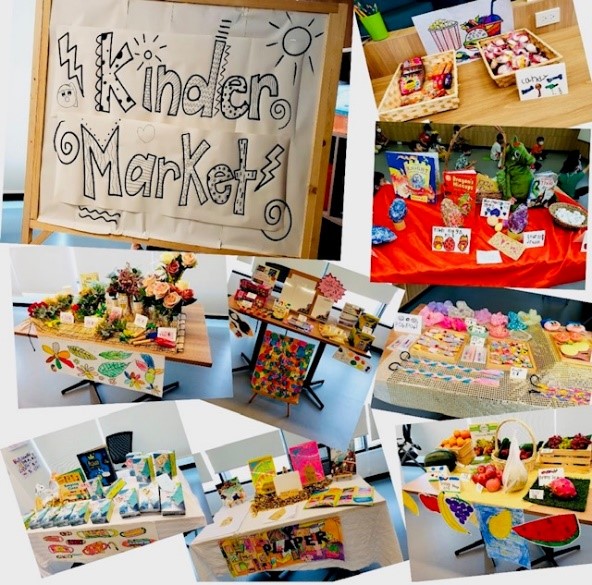
That same year, I got the opportunity to purchase one of my most prized possessions in the Kindergarten Market.  The “streets” of our school library came to life with a variety of vendors selling everything from snacks to rare items.  As a part of this market, our Kindergartners learned to put their math and language skills to work.  I quickly learned not to be fooled by their sweet and smiling faces as they told me that I got a “special deal” as the Head of School.  My experience left me asking the very important question, “What exactly is a fair market price for a genuine dragon egg?”   I was equally concerned when several of them simply avoided my questions about if and when it would hatch.  I am happy to report two things.  The first is that my students did an excellent job calculating the appropriate change, applying discounts, and working on their English speaking skills.  The second is that the same dragon egg still sits in my office (unhatched) as a reminder of how fun it is to be a part of the learning process alongside my students. 

Being a Head of School with a full Early Years Program made me a better school leader. Getting the opportunity to work alongside creative educators and see all of the ways that learning could come to life in fun and engaging ways allowed me to coach my staff and remind them of the importance of maintaining our rigor while never losing sight of the fact that students make the strongest connections to the material they are being taught when they are immersed in an experience that brings them joy.  My Kindergarten teaching team never missed an opportunity to make a connection, build learning skills, or stand out on our campus.  Even their Halloween costumes were exceptional!

Check out Dr. Thies in a beard!

But, the point of this is to highlight how much I love watching students enter our program and grow as individuals and learners.  This phenomenal teaching and active engagement that ensued served as a constant reminder of the importance of being creative in your approach and helping students build important character traits alongside strong foundational skills.  If only every day could feel as fun and rewarding as a day of learning in a BASIS Independent School Kindergarten classroom.  The lesson that I learned as a Head of School was that everything that I needed to know about building community and the learning process was being beautifully demonstrated in my Kindergarten classrooms. 

I am excited about the opportunities that my experience will create when it comes to adding a Kindergarten at BASIS Independent Bellevue.  One of the most exceptional things about our Kindergarten curriculum is that it gives our teachers room to explore imaginative ideas.  Our goal is to combine a child’s natural curiosity with learning outcomes that inspire interest and instill a love of learning. 

We want our students to be challenged so we create a learning environment that is exploratory in nature and allows students to arrive at natural conclusions on their own.  Children learn in a variety of ways and, therefore, it is important to create lessons that allow them to learn and explore.  I love watching my Thai students develop and grow over the course of the year and can’t wait to work with our future Kindergarten teachers to make learning just as meaningful and fun!

Check our Admissions Page for more details on how to apply for our inaugural Kindergarten year in Fall 2026!

Filed Under: Academics, Administration & Staff, Admissions, Department Spotlight, Early Learning Program, Head of School, Lower School, Student Learning

Founding Subject Expert Teacher Spotlight – Mr. Tyler

March 27, 2026 by jaydahsherman Leave a Comment

In Fall of 2022 our school opened it’s doors for the very first time at the direction of our wonderful Head of School, Dr. Thies. What was just a vision grew quickly into a vibrant learning community. In the first year we welcomed students in grades 2–7, as well as a group of dedicated founding Subject Expert Teachers. They turned empty classrooms into spaces filled with curiosity and growth. What began that year was not only just a school, but a community that these educators would build from the ground up. Let’s take a walk down memory lane with one of our founding Subject Expert Teachers, Mr. Tyler!


Introducing Mr. Tyler

Mr. Tyler is one of our incredible Subject Expert History Teachers here at BASIS Independent Bellevue. He currently teaches all AP Courses in our History Department. When he moved to the greater Seattle area, he had just finished up his fifth year of teaching and was halfway through a Master’s program in gifted education. He became familiar with BASIS Curriculum Schools during his time as a teacher in Arizona. At this time in his career, he was at a place where he knew where he wanted to be in education. When he learned that BASIS Independent Schools was opening its first school in Washington, he knew instantly that he wanted to apply and felt the timing was perfect. He had always felt that the philosophy behind BASIS Independent Schools aligned with his beliefs and goals as an educator. When the opportunity presented itself, he took the position without hesitation. He was bound to be a Mountaineer!


The Founding Year

Mr. Tyler described the first day as dynamic. There was an opening assembly where the students met their teachers and were given an introduction to their new school. He candidly stated that when he looked into the crowd of students and parents, he was imagining all the names he’d have to remember. It was an overwhelming feeling, but he knew this year was going to be greatly rewarding. While the students were eager to meet their teachers, their teachers were just as eager to meet them. The giddiness remained for some time over the next couple weeks, as everyone got their footing.

Mr. Tyler described his first cohort of students as surprising. Their ability to think deeper and persevere through challenges shocked him. A distinct memory he recalls from his first year was during a unit on the Americans’ involvement in the Philippines after the Spanish War. He assigned his grade 7 class a college-level article with some quite advanced questions. He shared how they were able to not only keep up with the content, but also added new perspectives and deep inquiry. Throughout the year he often spent a lot of time trying to make his content more challenging. The students had a great ability to complete and conquer work that was beyond what most would expect. He began to realize that these students were different, their affinity for learning was evident. The complex perspectives and nuance of history was welcomed by the students.

Along with new students coming in that year, came a passionate group of educators. Although they’d met weeks before school began, adding all the moving parts really brought them together. At BASIS Independent Bellevue, the Subject Expert Teachers were set up for success from the beginning. Mr. Tyler described the founding group of Subject Expert Teachers as a “Truly great team committed to excellence and creating a environment where everyone would succeed”. That first year fortified the strong connections that make this school great. Mr. Tyler expressed how he not only gained new coworkers that year but also lifelong friends.


Life In The History Department

The History Department at BASIS Independent Bellevue is one we take pride and joy in. The history curriculum is spiraled, from Kindergarten through grade 12, every skill taught before is relevant and crucial to the year following. Our History Department is always asking how does each skill build into the next? There is a clear continuum of skills that are developed as students progress through the BASIS Curriculum. This methodology is intentional to ensure our students success in challenging AP courses and beyond. They are able to think critically because of practice and support from previous lessons years in advance.

Now, of course, none of this would be possible without a strong team behind it, which Mr. Tyler has expressed is his favorite part of the History Department – his colleagues. He works alongside our other wonderful Subject Expert History Teachers, Ms. Rieger and Mr. De Monnin. He feels that they are a great team with similar beliefs and goals. They align in intention and the outcomes of their courses. They meet formally once a trimester, but also have many informal meetings and general day to day discourse. Those meetings include looking at current student successes, lesson planning and talking about their experiences with each different cohort. A short-term aspiration the History Department wants to meet is creating a clearly aligned framework of a students first to last history class and a roadmap to what success looks like along the way. Beyond working together, they are also great friends.

Since the first cohort of grade 9 students joined us, Mr. Tyler has worked diligently to curate an AP program that our students greatly enjoy. He shared that the AP History Program is the thing he is most proud of building. He claims to be a “nerd” for anything and everything AP. Our students share his passion in the AP Program. One of our students, who Mr. Tyler has had since the founding year, describes him as:

“Mr. Tyler is a dedicated and passionate teacher. As a student I find him very knowledgeable. I have really enjoyed being in his class. He immerses his students into the history and creates a great experience.” – Lucas F. Grade 10

Mr. Tyler’s favorite class to teach is AP Government and Politics, particularly the topic of political socialization. He shared how students fall into different parts of the political spectrum, but often don’t think about where those beliefs derive from. When teaching this topic it opens up a lot of conversation and introspection for students. He feels it is very formative for them in discovering who they are and how they have developed their own beliefs. This unit is often the first time students question, “What am I absorbing? What life experiences have shaped my world?” Students get to pause, reflect, and look back. He loves this subject because he gets to watch students have eye-opening moments. He feels it is important to have a solid “Why” behind your belief system.


Thank You, Mr. Tyler

Joining a school in it’s founding year presents it’s own unique challenges. We appreciate our founding Subject Expert Teachers and their confidence in creating the school we know today. Mr. Tyler has been a vital part of that. We look forward to seeing all the amazing things that will surely follow as our school continues to grow!

BASIS Independent Bellevue is a Kindergarten – Grade 12 private school, providing students with an internationally benchmarked liberal arts and sciences curriculum, with advanced STEM offerings. Considering joining the BASIS Independent Bellevue community? To join our interest list for the next school year and receive admissions updates and more, please click here.
Filed Under: Academics, Administration & Staff, AP Scholars, Culture of Support, Department Spotlight, Faculty & Staff, High School, History, Middle School, Student Learning, Uncategorized

Senior Project Spotlight: Patrick Z. Weeks 1 – 2

March 26, 2026 by mirandamartinez Leave a Comment

The Senior Project is an independent, student-led culmination of our high school experience. After three years of academic preparation, our seniors are ready to spend the last trimester of their high school careers applying the skills and knowledge they have gained to develop a project that is insightful, academically rigorous, and professional in nature. This year, we are proud to showcase a senior from one of our neighboring campuses, BASIS Independent Fremont, Patrick Z.

Week 0: It’s a Bit… It’s a Qubit… It’s a Computational Cage Math!

Hi everyone! My name is Patrick Zhou, and welcome to the very first entry of my Senior Project blog. Over the next few months, I invite you to join me as I dive into the complex and often invisible war between classical computing and the emerging frontier of quantum mechanics. My project, formally titled Comparative Analysis of Error Mitigation for Quantum Systems and Artificial Neural Networks under Additive White Gaussian Noise, is a bit of a mouthful, but the core mission is actually quite simple: I want to find out if a quantum brain is sturdier than a classical one when the world gets messy.

My journey into this high-tech rabbit hole didn’t actually start with a love for physics, but rather through a study of cybersecurity and encryption. It was during a high school class on qubits that I had a sudden, slightly frightening realization: quantum algorithms have the theoretical power to render our existing security measures obsolete. That fear quickly turned into fascination. I needed to understand the future of computation before it arrived, which led me to a summer research program at UCSB where I coded my first quantum circuits using Python and Qiskit. Now, I am systematically expanding that experience to answer a burning question about how these systems handle noise.

In the context of machine learning, noise isn’t just loud sounds; it’s static, corruption, and interference that ruins data. Think of a grainy photo taken in low light or a fuzzy MRI scan. Classical Convolutional Neural Networks (CNNs), the kind of AI currently running on your phone, are great at reading clean data, but they often stumble when the picture gets blurry. My project pits these classical networks against a Quantum Neural Network (QNN). The theory is that quantum properties like superposition (being in two states at once) and entanglement (where parts of the system are linked across space) might allow the QNN to see the big picture better than a classical computer, making it more robust against errors.

To test this, I am designing a computational cage match. I will be building three distinct models: a standard high-resolution CNN, a fair low-resolution CNN, and a hybrid QNN. I will first train all three on the famous MNIST dataset, essentially the Hello World of machine learning consisting of handwritten digits, and then bombard them with Additive White Gaussian Noise. By forcing both the classical and quantum models to look at low-quality, pixelated inputs, I aim to level the playing field. This ensures that if the quantum model wins, it’s not because it had superior data, but because its architecture is genuinely smarter at filling in the gaps.

This matters because the real world is rarely noise-free. From autonomous vehicles driving through rain to financial algorithms parsing corrupted data, we need AI that doesn’t break when conditions aren’t perfect. If my research shows that QNNs are naturally more resilient to noise, it could validate the theoretical benefits of quantum computing for industries like healthcare and defense. I have a long road of coding in Google Colab ahead of me, complete with the challenges of simulating quantum hardware on classical machines, but I am ready to see if the future of AI really is quantum. Stay tuned for the results!

Week 1: Building the Quantum and Classical Models

This week, the theoretical planning phase ended and the real construction began. I spent the bulk of my time in Google Colab building the three neural network models that will eventually go head-to-head, and I quickly learned that designing an experiment on paper is a very different beast from wiring it up in code.

The first model I tackled was the full-resolution CNN, which is the heavyweight of this experiment. This is a LeNet-style Convolutional Neural Network that takes in the full 28×28 pixel MNIST images, meaning it gets to see every detail of each handwritten digit. I built it with two convolutional layers, pooling layers to compress the spatial information, and dropout layers to prevent overfitting, which is essentially when a model memorizes the training data instead of actually learning patterns. Getting this one up and running was the smoothest part of the week because classical CNNs are extremely well-documented and the TensorFlow library makes the architecture almost plug-and-play. Think of this model as the student who gets to read the textbook with perfect lighting and a magnifying glass; it has every advantage in terms of input quality, and it will serve as my performance ceiling.

The second model, the fair CNN, was where things got more conceptually interesting. This is a much simpler Multi-Layer Perceptron with just one hidden layer, and the critical twist is that it only receives 4×4 pixel binarized images, the exact same degraded input that the quantum model will see. I talked in my last post about how previous studies comparing QNNs and CNNs often gave the classical model a full high-definition image while the quantum model worked with a pixelated thumbnail, which is hardly a fair fight. This fair CNN is my solution to that problem. By stripping the classical model down to the same resolution, I am isolating the variable of architecture itself. If the quantum model outperforms this one, it won’t be because of an unfair data advantage; it will be because the quantum design is genuinely better at extracting meaning from limited information.

The third and most challenging model is the QNN, the hybrid quantum-classical network that sits at the heart of this entire experiment. Building it required me to dive into TensorFlow Quantum, which is a framework that lets you design quantum circuits and integrate them into a standard machine learning pipeline. The idea is to take each 4×4 binarized image and encode it onto 16 qubits, where each pixel maps to one qubit. From there, a Parameterized Quantum Circuit uses XX and ZZ entangling gates to create correlations between the qubits, theoretically allowing the model to capture global patterns in the data that a classical network might miss. If superposition lets each qubit exist in multiple states at once and entanglement links those states together, then in theory this circuit should be able to see relationships across the entire image simultaneously rather than scanning it piece by piece. In practice, however, setting up the circuit encoding and making sure the data pipeline correctly binarizes and maps each image to the quantum layer took a significant chunk of my week and a lot of debugging.

The biggest challenge I ran into this week was honestly just the sheer difference in workflow between classical and quantum model building. With the classical CNNs, errors were usually straightforward: a mismatched tensor shape here, a wrong activation function there. With the QNN, debugging felt like navigating in the dark because the abstraction layer between the quantum circuit and the classical optimizer made it harder to pinpoint where things were going wrong. I also had a minor scare when I realized how long even a simple quantum simulation takes on a classical machine, which is a reminder that I am not running on an actual quantum computer but rather simulating one, and that simulation cost grows fast. This is why the 4×4 input size is non-negotiable; scaling up to 28×28 would require 784 qubits and an astronomical runtime that my laptop and Google Colab would simply refuse to handle.

Looking ahead to next week, my goal is to finalize the architecture of all three models and begin the training phase on the clean MNIST dataset. I plan to train each model for 10 epochs and start logging the baseline accuracy and loss metrics before any noise is introduced. If all goes well, by the end of next week I will have three trained models sitting in my notebook, ready to be thrown into the noisy gauntlet. Stay tuned for the results, and wish my qubits luck.

Week 2: The Speed Wall

Last week I finished constructing all three models and was eager to jump straight into the training phase. My plan was to start with the QNN first since it is the most complex and unpredictable of the three, get it working well, and then breeze through the two classical CNNs afterward. That plan sounded great on paper. In practice, the quantum model decided to humble me.

When I first attempted to train the QNN on the full 10-digit MNIST classification task, the accuracy was, to put it politely, rough. The model was struggling to meaningfully distinguish between all ten digit classes when each image is compressed down to a 4×4 binarized grid mapped onto 16 qubits. The loss curves were not converging the way I needed them to, and the predictions felt almost random for several of the digit classes. This was not entirely shocking given how much information is lost when you crush a handwritten digit into 16 binary pixels, but it still meant I could not just accept the results and move on. I started experimenting with adjustments to the circuit, tweaking the number of entangling layers, adjusting the learning rate, and modifying how the Parameter Shift Rule interacts with the optimizer to update the quantum circuit’s trainable parameters.

Here is where the real problem hit. Every single one of those adjustments requires retraining the model from scratch, and each training run on the QNN is agonizingly slow. The fundamental issue is that I am simulating a quantum computer on classical hardware, so every quantum gate operation, every state vector update, and every gradient calculation has to be brute-forced through classical linear algebra. A single epoch takes orders of magnitude longer than it would for either CNN. When I was just building and testing the circuit with small batches during Week 1, the slowness was manageable. Now that I am trying to iterate rapidly on a real training set, each failed experiment costs me hours of waiting. I would tweak a hyperparameter, start a run, watch a progress bar crawl, and then discover the change did not help. That debugging loop I described last week is exponentially more painful when every attempt takes half a day to evaluate.

Because of this bottleneck, I have not yet trained the two classical CNNs either. There is no point in collecting their baseline numbers until I have a QNN that actually works well enough to make the comparison meaningful, and I cannot get the QNN to that point when every iteration takes this long. The solution I am currently pursuing is procuring access to a faster server. Google Colab, even with GPU acceleration, is not cutting it for the volume of quantum simulation I need. I have been working on getting access to a more powerful machine that can handle the computational overhead more efficiently, compressing those multi-hour runs into something manageable so I can actually iterate at a reasonable pace.

Despite the frustration, this week has been a grounding reminder of why the quantum computing field is pouring billions into building real quantum hardware. Simulating even 16 qubits at scale already pushes classical machines to their limits. Next week, I am hoping to have the new server set up so I can break through this wall and finally get all three models trained on clean data. Stay tuned.

BASIS Independent Dublin is a Grades 6 – 12 private school, providing students with an internationally benchmarked liberal arts and sciences curriculum, with advanced STEM offerings. Considering joining the BASIS Independent Dublin community? To join our interest list for the next school year and receive admissions updates and more, please click here.
Filed Under: High School, Senior Projects

Vote for Mr. Meyerowitz: America’s Favorite Teacher Competition

March 25, 2026 by ezekielbracamonte Leave a Comment

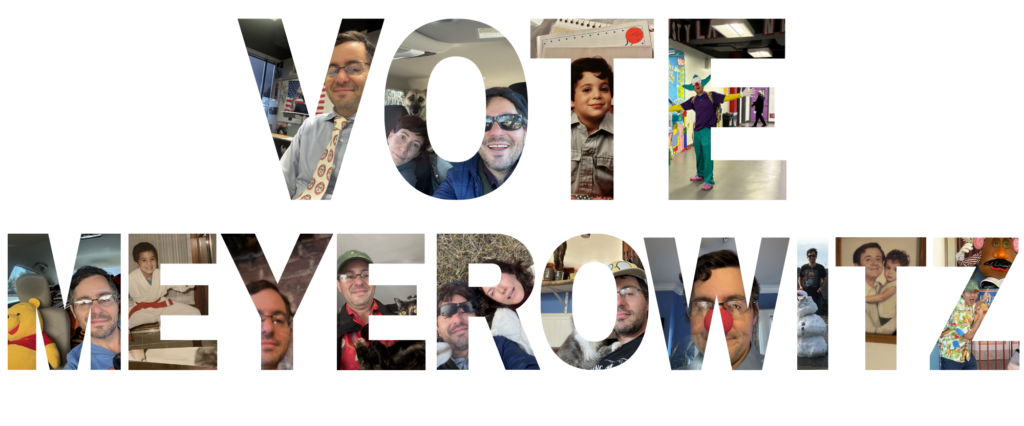
We are proud to share that BISV’s own Mr. Meyerowitz is competing in America’s Favorite Teacher competition. This is a special opportunity to recognize his impact in the classroom and beyond, and we invite our entire community to rally behind him and show their support by voting.

Mr. Meyerowitz brings history, literature, and philosophy to life in his classroom, encouraging students to think critically and engage thoughtfully with the world around them. While the competition is centered on “America’s Favorite Teacher,” he sees it as an opportunity to highlight the collective achievements of our students and faculty and to celebrate the impact of education.

“This opportunity seems pretty amazing since it’s about showing off, building community, and celebrating educators,” he shared. “My real goal in all of this is to highlight our collective accomplishments in the Humanities… and promote literacy of every kind.”

Through his classes and beyond, Mr. Meyerowitz fosters curiosity, discussion, and a genuine love of learning. As part of this experience, he has also launched a YouTube series, Passing Period, where he answers questions from students and alumni on topics across the Humanities—continuing conversations outside the classroom in an engaging and accessible way

The stakes of the competition are exciting for our entire school community. The winning teacher receives an assembly with Bill Nye, a feature in Reader’s Digest, and $25,000—funds Mr. Meyerowitz has already earmarked toward a future library initiative at BISV.

Voting began in mid-March and continues through several rounds this spring, with competitors advancing from the Top 20 through Finals. Each round resets votes and allows one vote every 24 hours, so be sure to vote as often as you can. The final round takes place May 15–21, and the winner will be announced on or around June 5, 2026.

While he humbly notes that this is ultimately a community-driven competition, we know the impact he has made in and out of the classroom is worth celebrating. This is a chance to come together as a school community—students, families, faculty, staff, and alumni—to show our support.

How to Support

  • Vote here: https://americasfavteacher.org/2026/bryan-meyerowitz
  • You can vote once every 24 hours
  • Share the link with your networks to help spread the word!

Every vote makes a difference. Let’s rally behind Mr. Meyerowitz and showcase the strength, spirit, and connection of the BISV community.


BASIS Independent Silicon Valley is a TK–Grade 12 private school, offering an internationally benchmarked liberal arts and sciences curriculum, with advanced STEM offerings. Considering joining the Bobcat community? To join our interest list for the next school year and receive admissions updates and more, please click here. 
Filed Under: Competitions, Faculty & Staff, Humanities

  • Page 1
  • Page 2
  • Page 3
  • Interim pages omitted …
  • Page 42
  • Go to Next Page »

© BASIS Independent Schools

  • Contact Us
  • Media Recognition
  • Careers
  • Privacy Policy
  • CA Privacy
  • Terms of Use

Headquartered in Campbell, California, Spring Education Group is majority-owned by investment funds administered by Primavera Holdings Limited, an investment firm owned by Chinese persons and principally based in Hong Kong with operations in the United States, China and Singapore.
Sitemap