• Skip to primary navigation
  • Skip to main content

BASIS Independent Schools

BASIS Independent SchoolsBASIS Independent Schools
  • About
    • Why BASIS Independent Schools?
    • Mission & Philosophy
    • Diversity & Citizenship
    • History
  • Academics
    • Curriculum
    • Early Learning Program
    • Primary Program
    • Middle School Program
    • High School Program
    • The Senior Year
    • Summer Programs
    • International Student Program
  • Achievements
    • International Performance
    • College Admissions
    • Advanced Placement
    • National Merit
  • Find Your School
Inquire

STEM

Real Questions, Real Investigations: How BIF Students Develop Scientific Thinking Skills

January 22, 2026 by sarahpeterson Leave a Comment

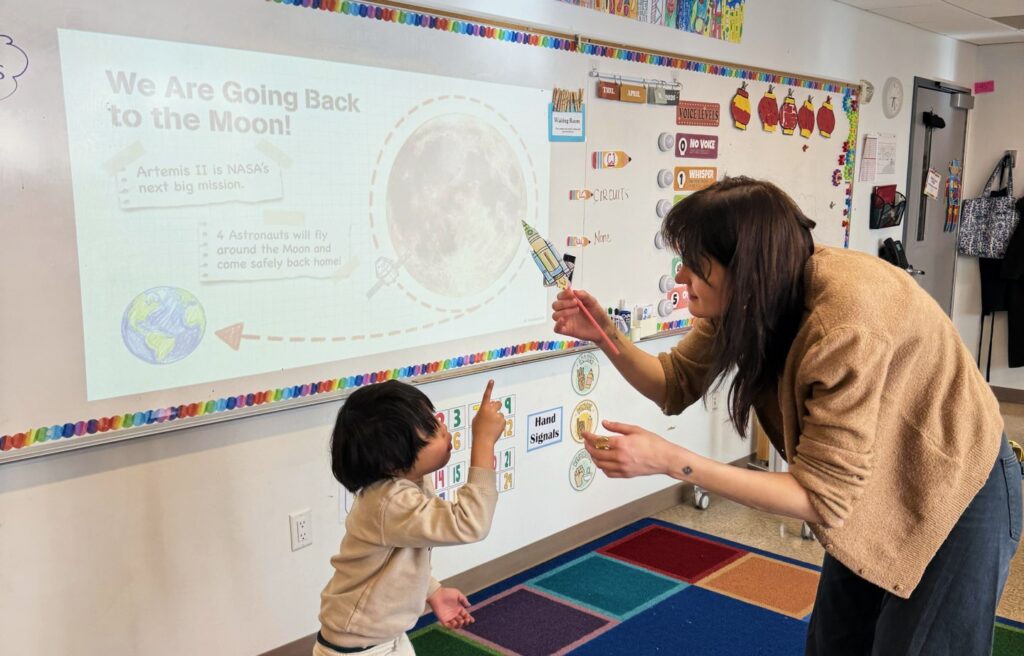
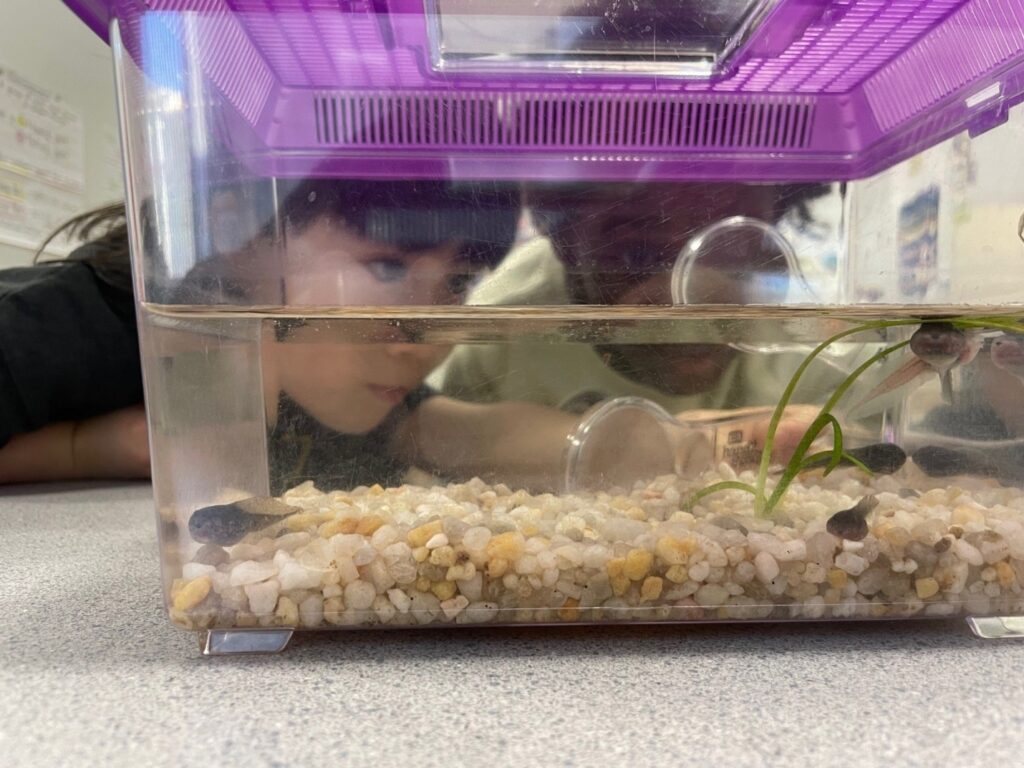
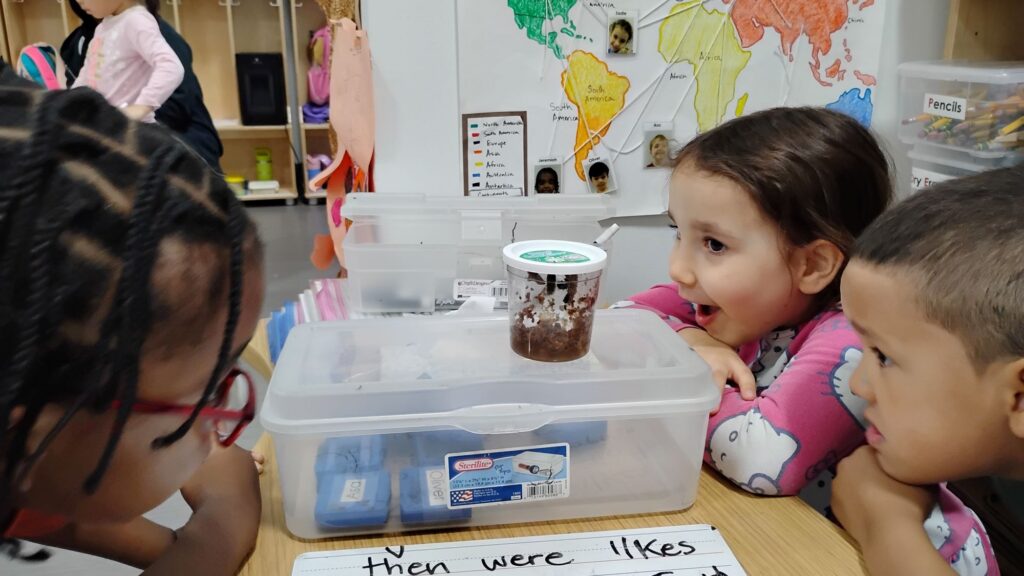
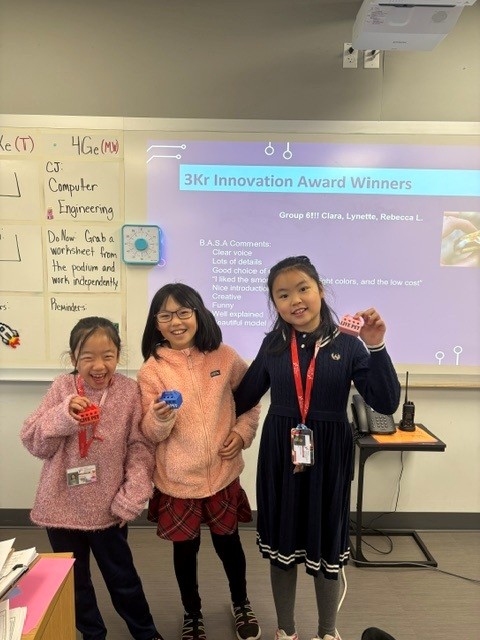
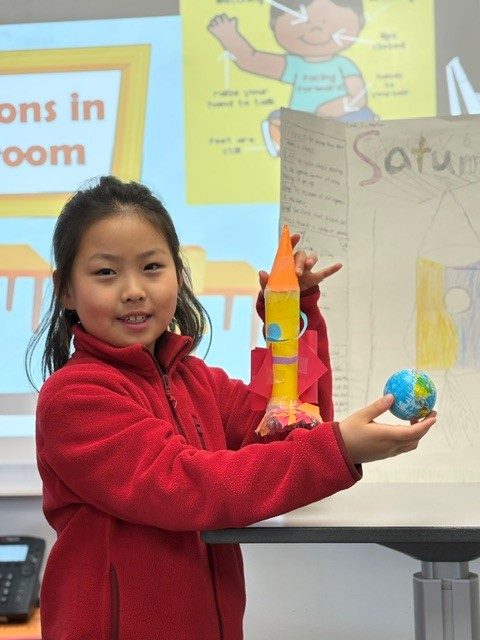
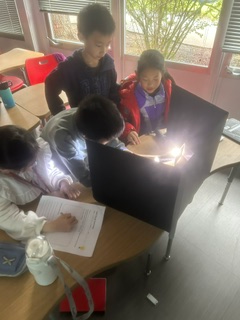
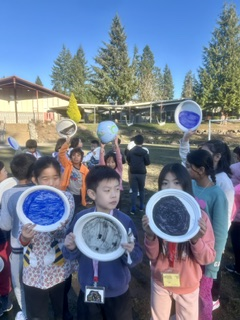
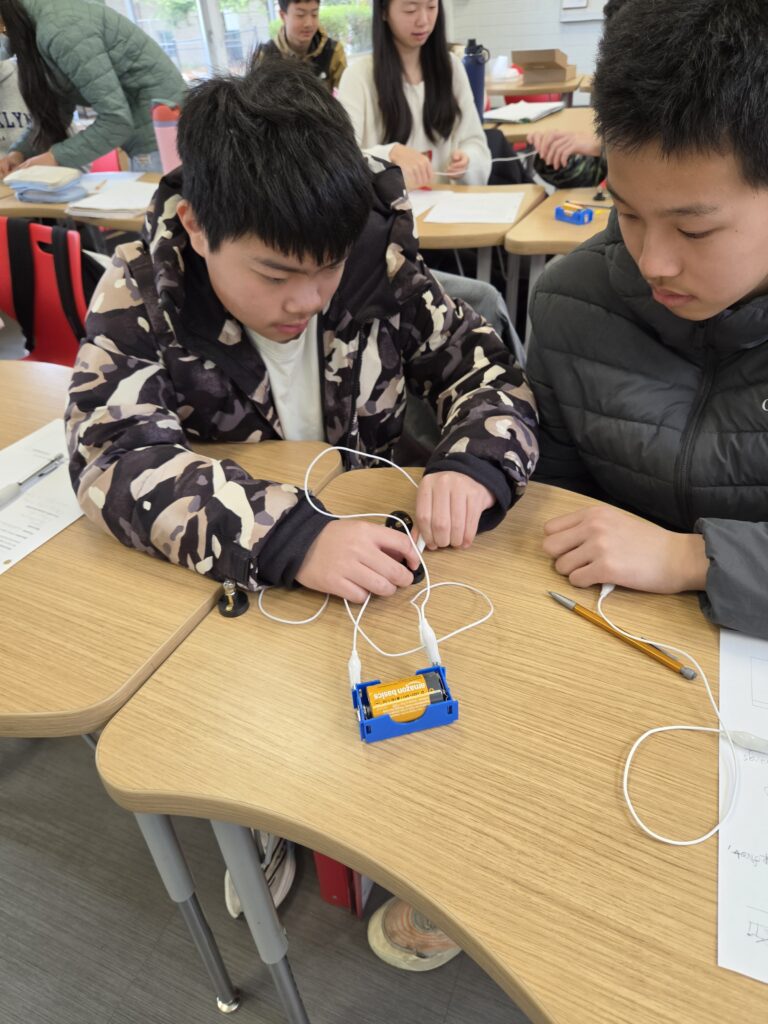
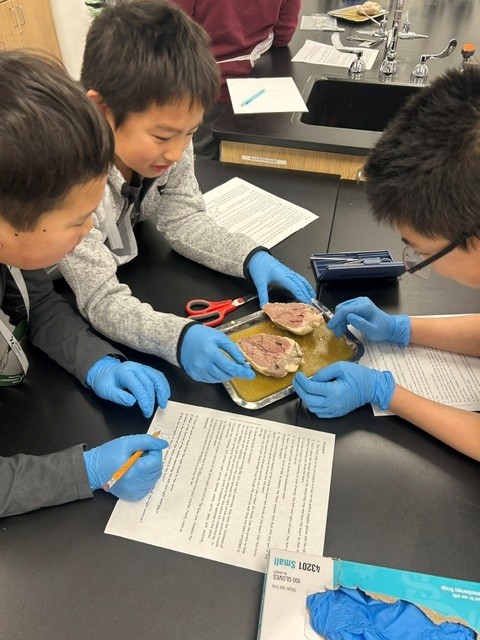
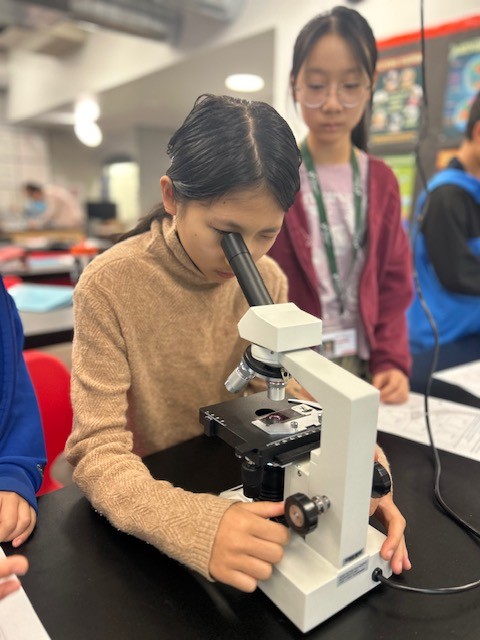
Real scientists don’t start with textbooks. They start with questions about the world around them. At BASIS Independent Fremont, our Lower School students learn the same way: by investigating real phenomena, testing their ideas, and using evidence to support their conclusions. From engineering solutions to ancient problems to exploring why oil and vinegar refuse to mix, BIF students practice thinking like the scientists and engineers they may one day become.

Learning Through Real-World Investigation

At BIF, science education is phenomena-based, meaning students begin with observable events and real-world questions rather than memorization. Our approach develops three essential skills: active investigation (students doing, not just watching), scientific communication (reading, writing, and discussing like scientists do), and evidence-based reasoning (supporting conclusions with data).

This matters because these skills extend far beyond the science classroom. Whatever our students choose to become in life, they need to ask thoughtful questions, analyze information, and solve complex problems. Science at BIF is preparation for thinking critically about the world.

What Scientific Thinking Looks Like at BIF

Students Observe and Question

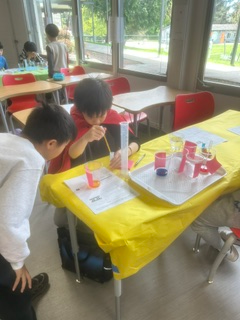
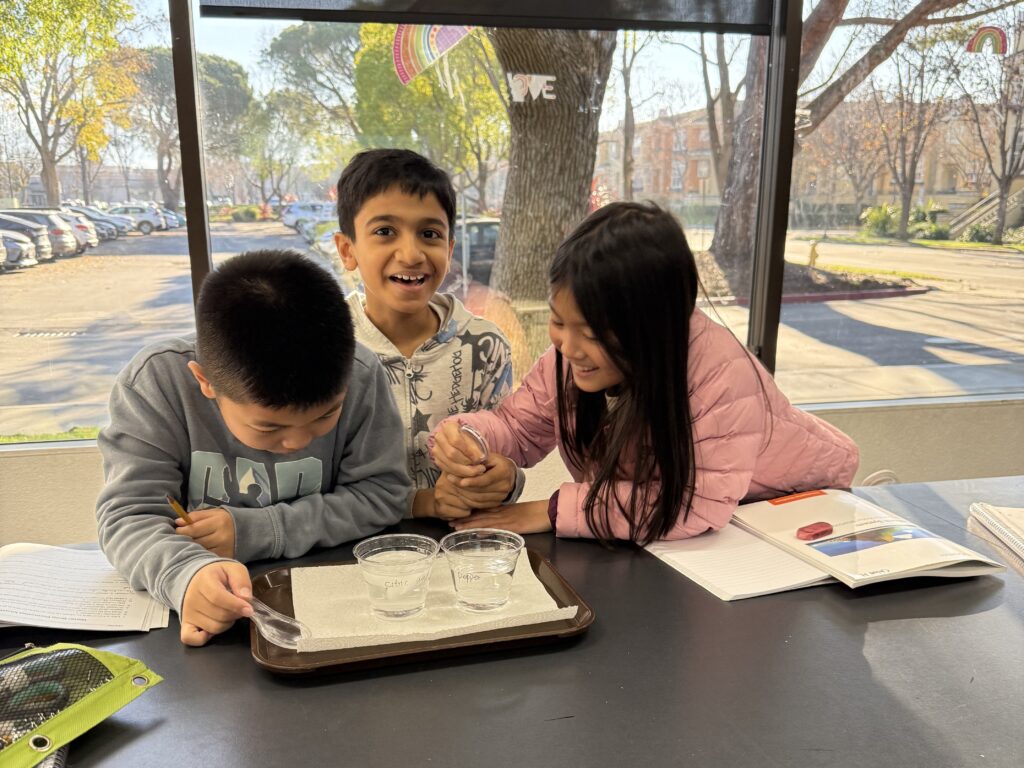
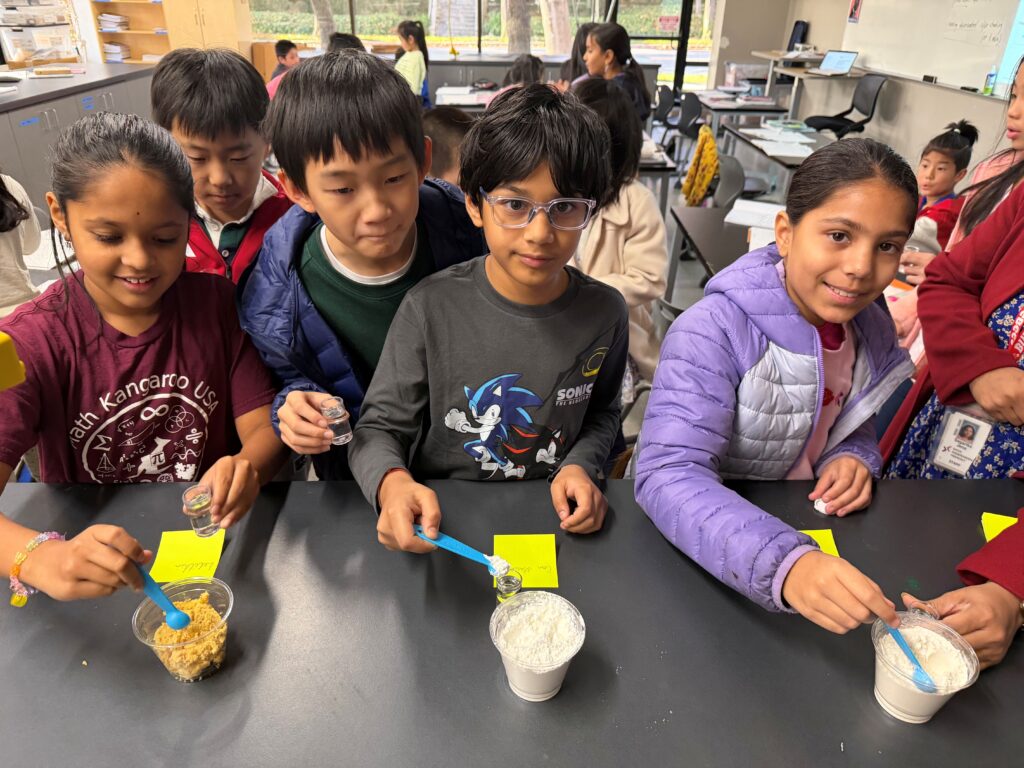
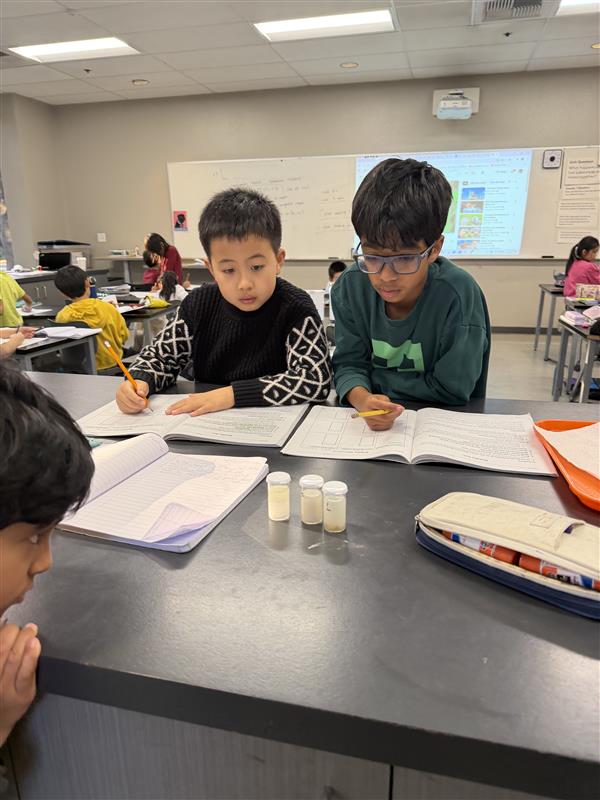
In Dr. Luo’s grade 4 science class, students recently tackled a deceptively simple question: why do oil and vinegar sometimes mix instead of separating into layers? “We started at the observable scale by having students mix oil and vinegar and notice that they don’t mix and instead form layers,” Dr. Luo explains. From that initial observation, students generated their own questions about what was happening at a molecular level—questions that would drive their entire investigation.

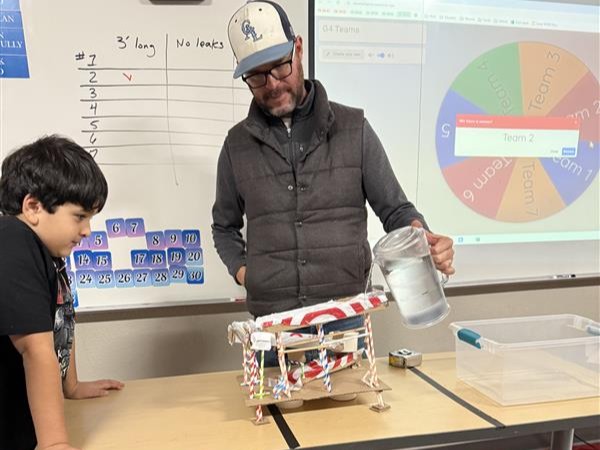
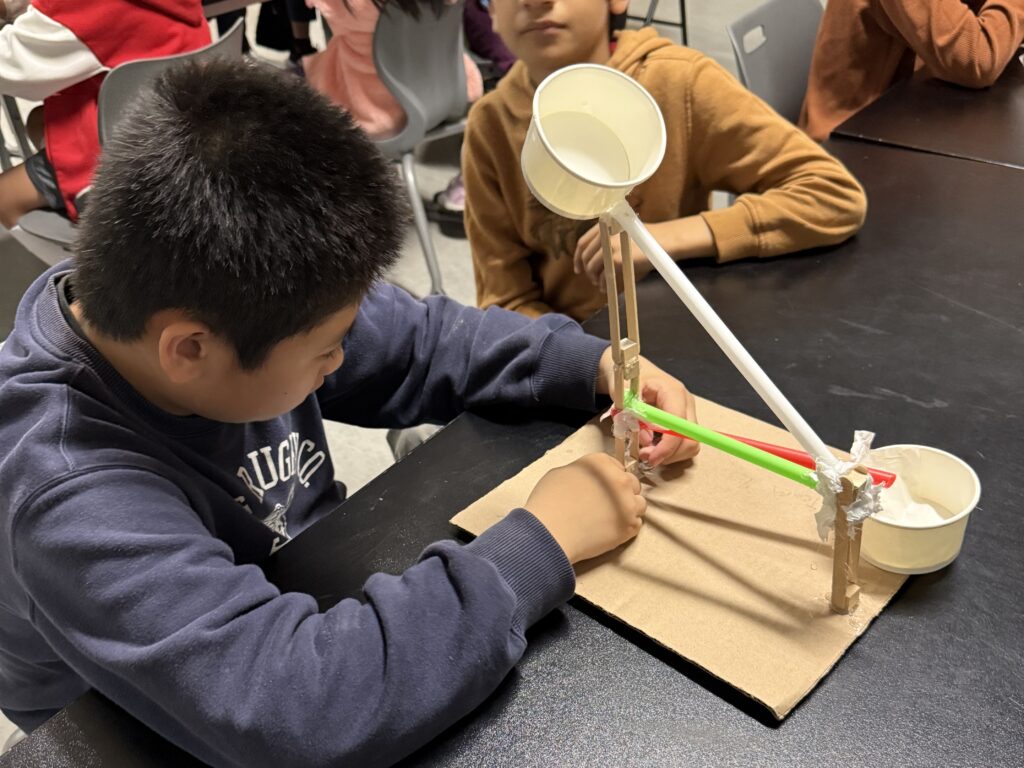
Similarly, in Mr. Kasper’s engineering class, the students face a historical challenge: How did ancient Rome transport fresh water to support its growing population? “Students are guided to ask essential questions such as: Why is this a problem? Who is being affected? What are the possible causes of the water shortage?” Mr. Kasper notes. “Students are encouraged to ask additional questions of their own, deepening their understanding of the challenge.”

Students Investigate and Test

Scientific thinking requires more than curiosity—it demands action. Dr. Luo’s students moved from observation to experimentation, testing various substances to see what would help oil and vinegar combine. “Students experimented with adding lecithin, flour, and cornstarch to oil and vinegar. They discovered that lecithin helps oil and vinegar mix by acting as an emulsifier.”

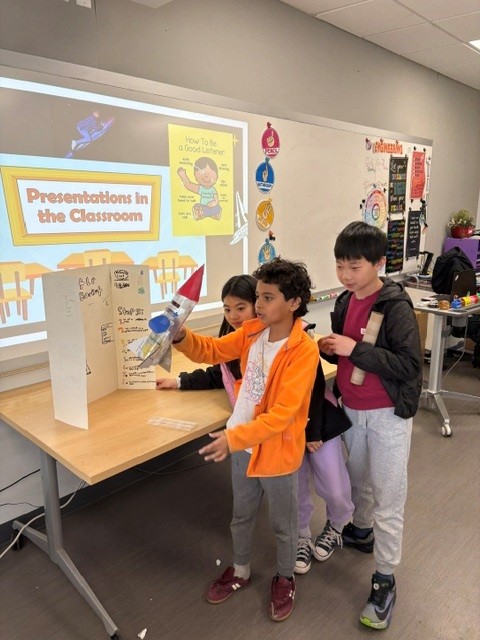
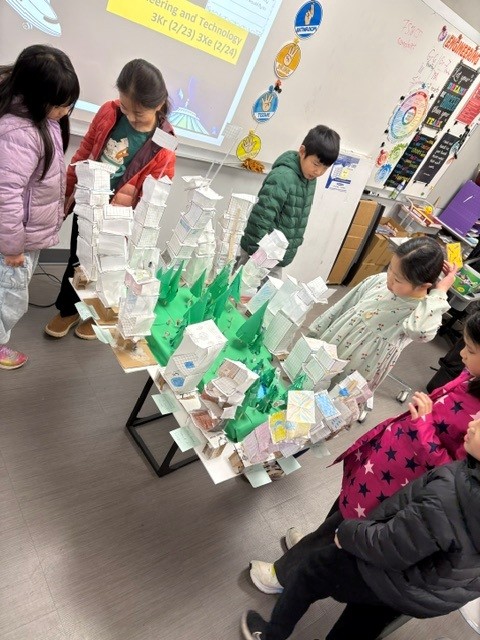
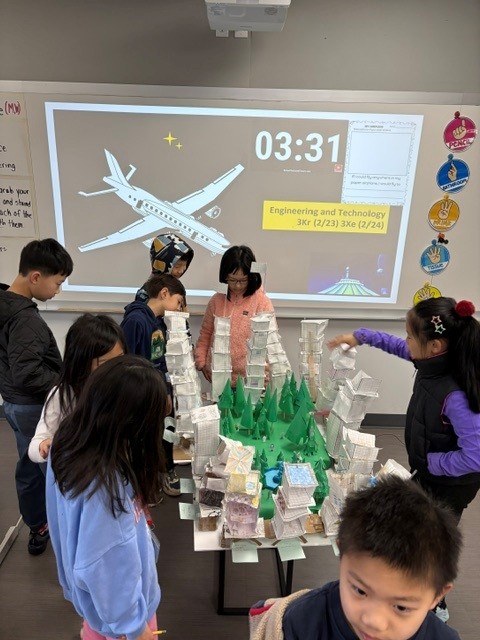
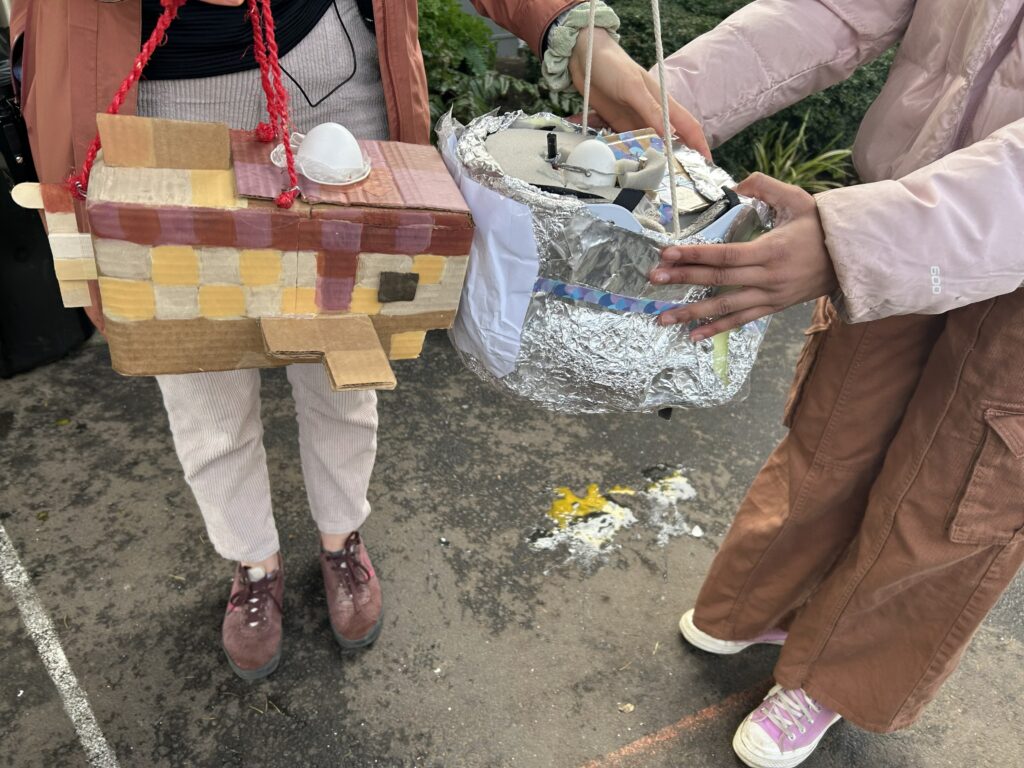
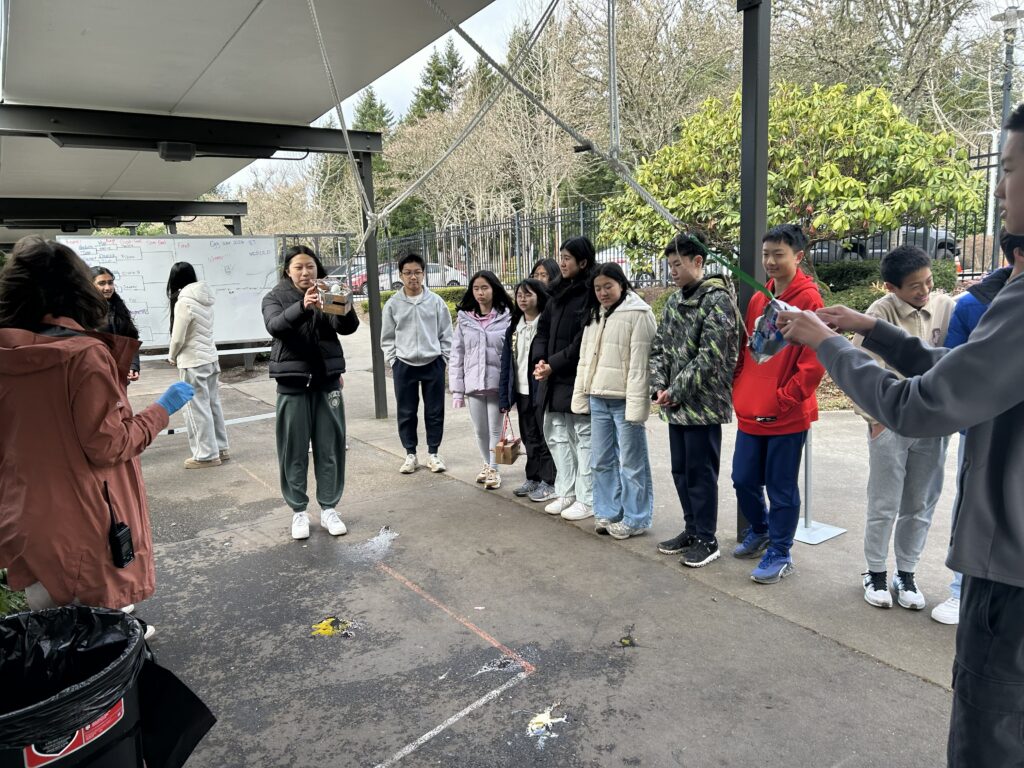
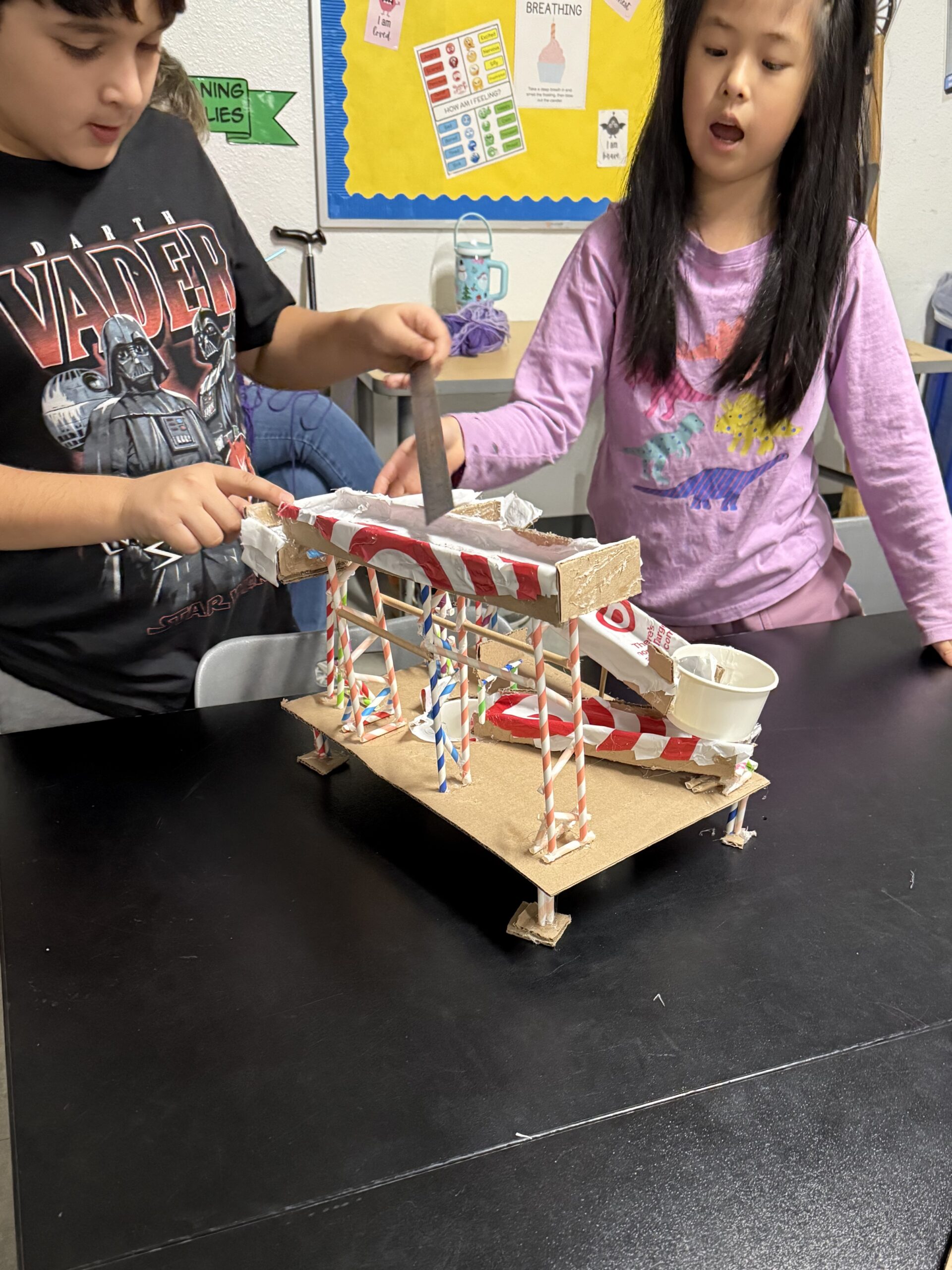
In engineering, Mr. Kasper’s students design and build prototypes of aqueducts, working within budgets and material constraints just as real engineers do. “During construction, they test their structures for strength and for their ability to successfully transport water,” he explains. “Testing is an ongoing process, and students carefully record not only how their prototypes perform, but also the results of each test and the improvements they believe will fix any issues.”

Students Read, Write, and Communicate Like Scientists

Scientific literacy is just as important as hands-on experimentation. Dr. Luo’s students didn’t just conduct experiments—they read scientific texts to deepen their understanding. “Students built their own online models and read texts like Handbook of Food Science and Solving Dissolving to learn about molecular structure and how molecules attract themselves and other molecules,” she shares.

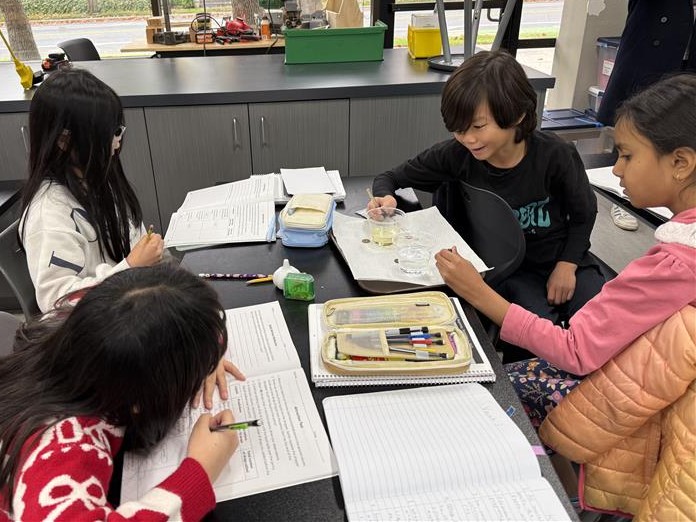
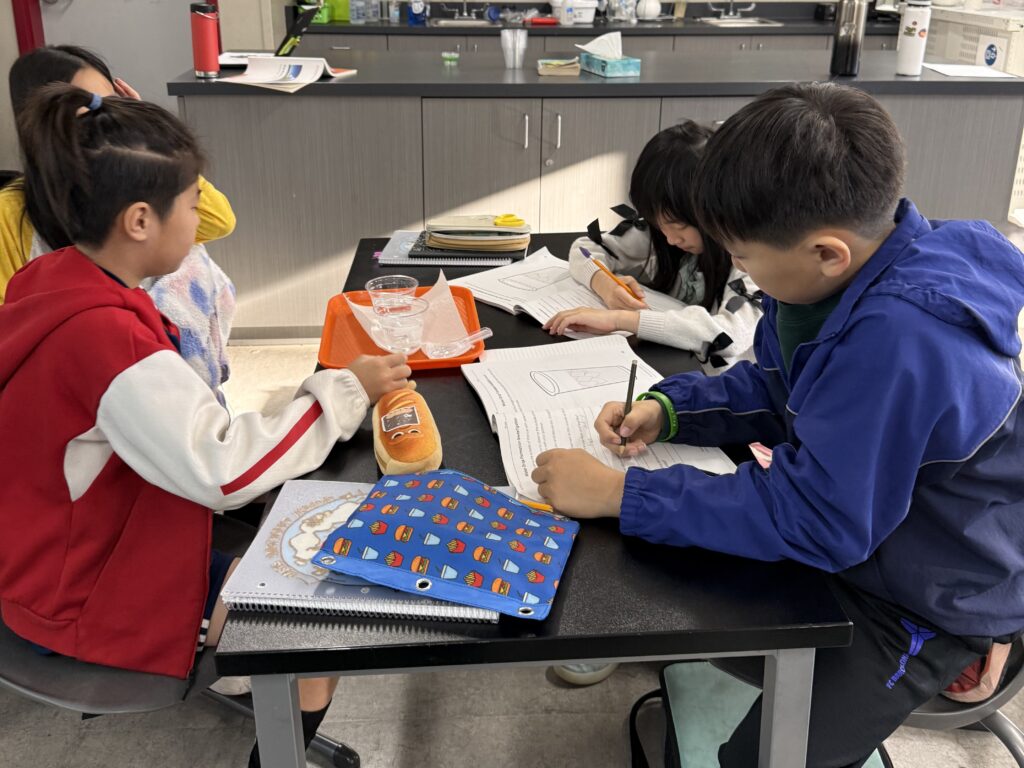
Throughout their investigations, students document their findings in science journals, write lab reports, and present their conclusions to classmates. This mirrors how real scientists communicate their discoveries to the broader scientific community.

Students Use Evidence to Support Their Ideas

Perhaps most importantly, BIF students learn that good ideas must be backed by evidence. When Dr. Luo’s students concluded that lecithin acts as an emulsifier, they could point to specific experimental results and molecular models that supported their claim. They learned about emulsifiers’ special structure—one that can attach to both oil and vinegar molecules—through both reading and hands-on observation.

Mr. Kasper’s engineering students practice the same evidence-based thinking. “Each idea is discussed and evaluated based on the identified constraints and goals, such as efficiency, cost, available materials, and the ability to successfully transport water,” he explains. “Through this process, students learn that engineering is not about choosing the first idea, but about carefully comparing options to determine the best possible solution.”

Building Skills That Last

The sophistication of scientific thinking grows as students do. By grades 4 and 5, students are working with complex concepts like molecular structure and engineering design processes, but the foundation begins much earlier—with kindergarteners observing how materials change and grade 1 students exploring the natural world.

These investigations teach students to approach problems with confidence. They learn that failure is part of the process, that questions are more valuable than quick answers, and that evidence matters more than opinions. As Mr. Kasper notes, “This reflection reinforces the idea that engineering is iterative and that failure is an important part of learning and improvement.”

By the time BIF students reach Upper School, they’ve spent years practicing how to think, not just what to think. They carry forward skills they’ll use for life: asking thoughtful questions, designing investigations, using evidence to support ideas, and communicating findings clearly.

Science as a Way of Thinking

At BASIS Independent Fremont, science isn’t a subject students study. It’s a way of thinking to practice every day. From our youngest Bumblebees to our grade 5 students preparing for middle school, students learn to approach problems like scientists and engineers: with curiosity, creativity, and evidence.

Want to see scientific thinking in action? Schedule a campus tour to visit our Lower School classrooms and discover how BIF students are learning to investigate, question, and solve the problems that matter.

BASIS Independent Fremont is a TK – Grade 12 private school, providing students with an internationally benchmarked liberal arts and sciences curriculum, with advanced STEM offerings. Considering joining the BASIS Independent Fremont community? To join our interest list for the next school year and receive admissions updates and more, please click here.

Filed Under: Academics, Featured, Lower School, Science, STEM, Uncategorized

Build the Future at Our Senior Robotics Camp

December 31, 2025 by jogoldfarb Leave a Comment

This summer, we’re opening the doors to innovation at BASIS Independent Brooklyn with our Senior Robotics Camp—an intensive, hands-on experience designed for students in grades 6–12 who are eager to explore the cutting edge of technology.

From June 29 to July 3, aspiring engineers and problem-solvers will spend their afternoons (12:00–4:00 p.m.) immersed in the fundamentals of robotics at our Upper School campus in Red Hook. Students will master mechanical design, dive into coding, explore circuitry, and learn sensor integration—all while building and programming their own robots from the ground up.

What Makes This Camp Special?

This program isn’t just about following instructions. Campers will tackle real-world challenges, from navigating complex obstacle courses to programming robots to complete automated tasks. Working both independently and collaboratively, students will develop critical STEM skills, including:

  • Critical thinking and analytical reasoning
  • Teamwork and communication
  • Creative problem-solving under pressure
  • Technical proficiency in coding and engineering

Whether your student is taking their first steps into robotics or looking to level up their existing skills, our supportive environment encourages experimentation, iteration, and bold thinking.

BASIS Independent Brooklyn’s Robotics Coach Nicholas will oversee the camp, and he shared: “I’m really excited about the Robotics Summer Camp, where students get hands-on experience building and programming robots using Arduino and other electronics.”

Coach Nicholas continued: “Whether students are new to robotics or have prior experience, this camp is a great opportunity to explore, problem-solve, and build something awesome together.”

Details at a Glance

  • Grades: 6–12
  • Dates: June 29 – July 3
  • Time: 12:00–4:00 p.m.
  • Investment: $850

Allow your teen to turn curiosity into capability. Space is limited—registration opens on January 6, 2026. Watch them build the future, one robot at a time. See our Summer 2026 website for more information.

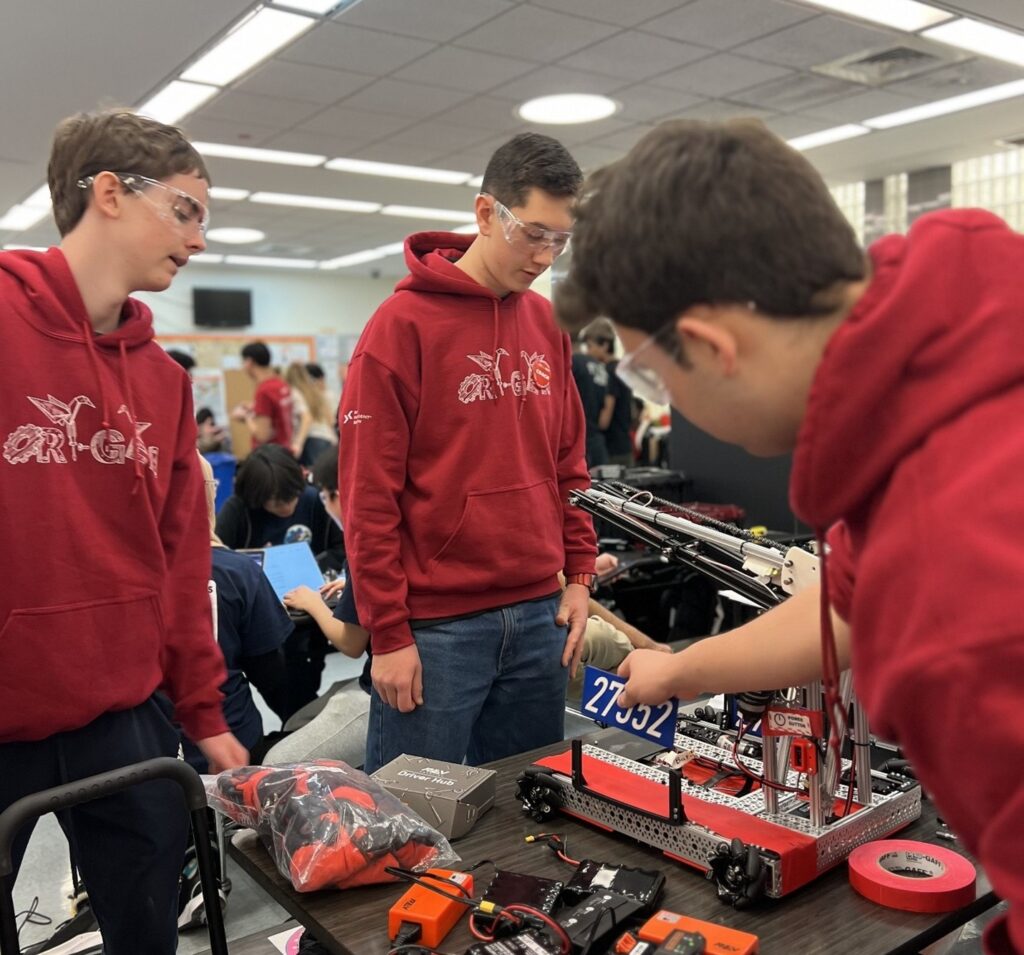
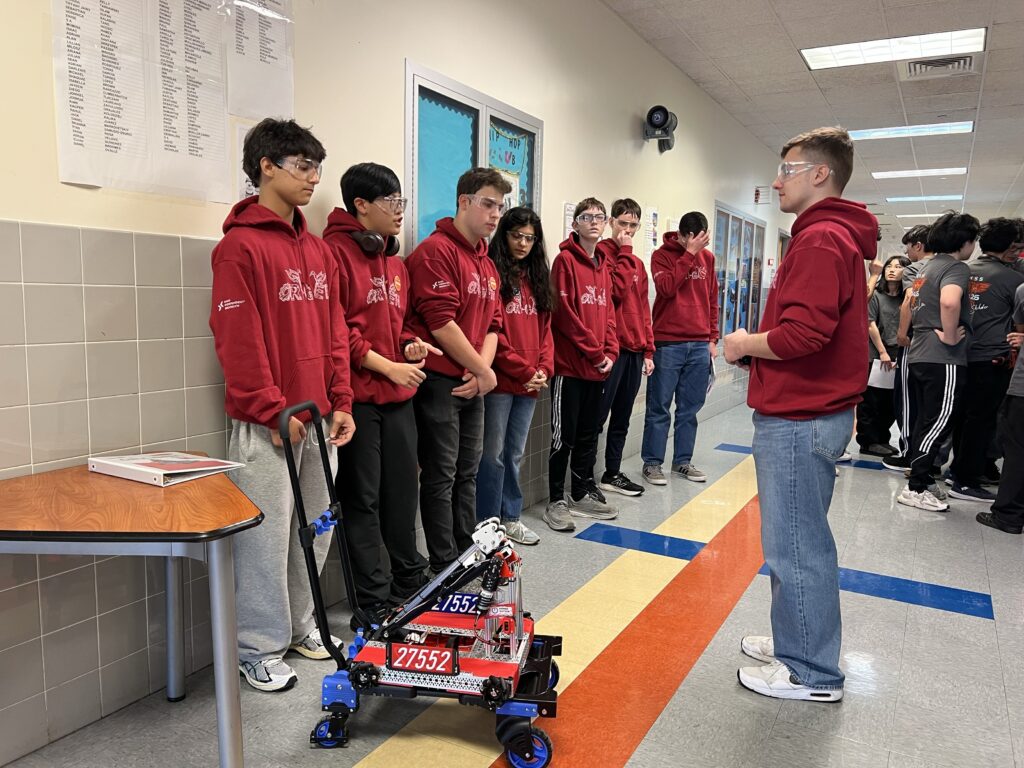
Coach Nicholas and his high school robotics team prepare for their FIRST Competition demonstration.

Filed Under: Academics, STEM, Student Learning, Summer Camp

Student Spotlight: Hera L-Y—Researching Forever Chemicals in Our Water

December 6, 2025 by aixuanwang Leave a Comment

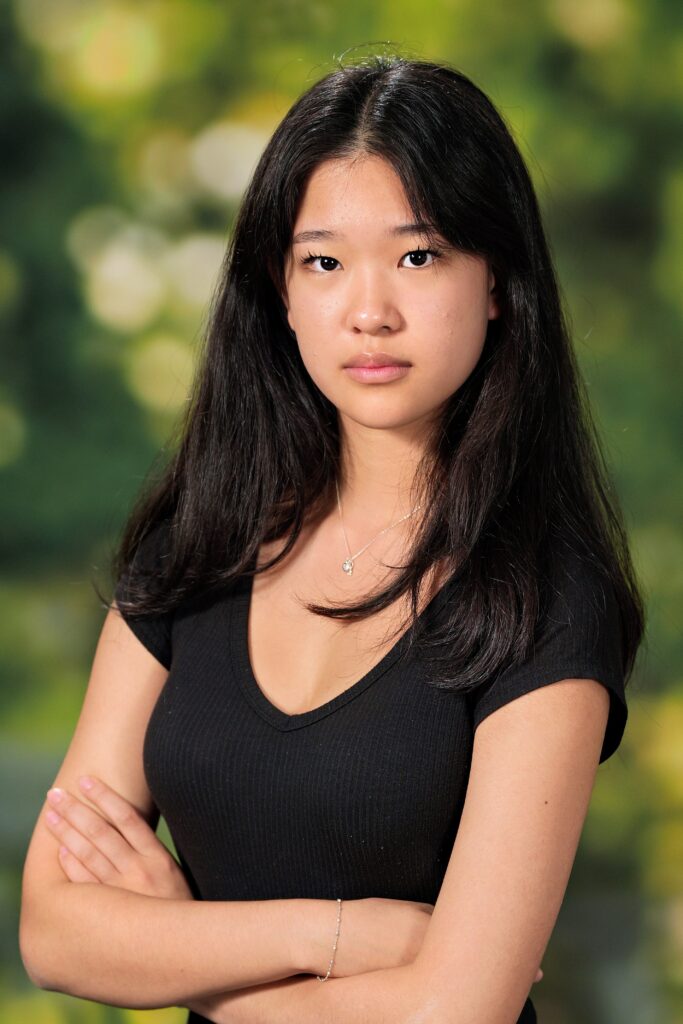
Hera L-Y, a senior at BIM, conducted a series of water-quality analyses on samples collected from several local areas during her free time. After testing samples from Falls Church, Loudoun County, Washington, D.C., Montgomery County (MD), and Alexandria, VA, she discovered a significant discrepancy between Alexandria’s results and those of the other regions. Dr. Hight recently interviewed her about her process and findings.


Hera, I know you’ve been doing your own research on Polyfluoroalkyl substances (PFAS) in our water, and it was recently written about in the Alexandria Times. How did you get started looking into forever chemicals?

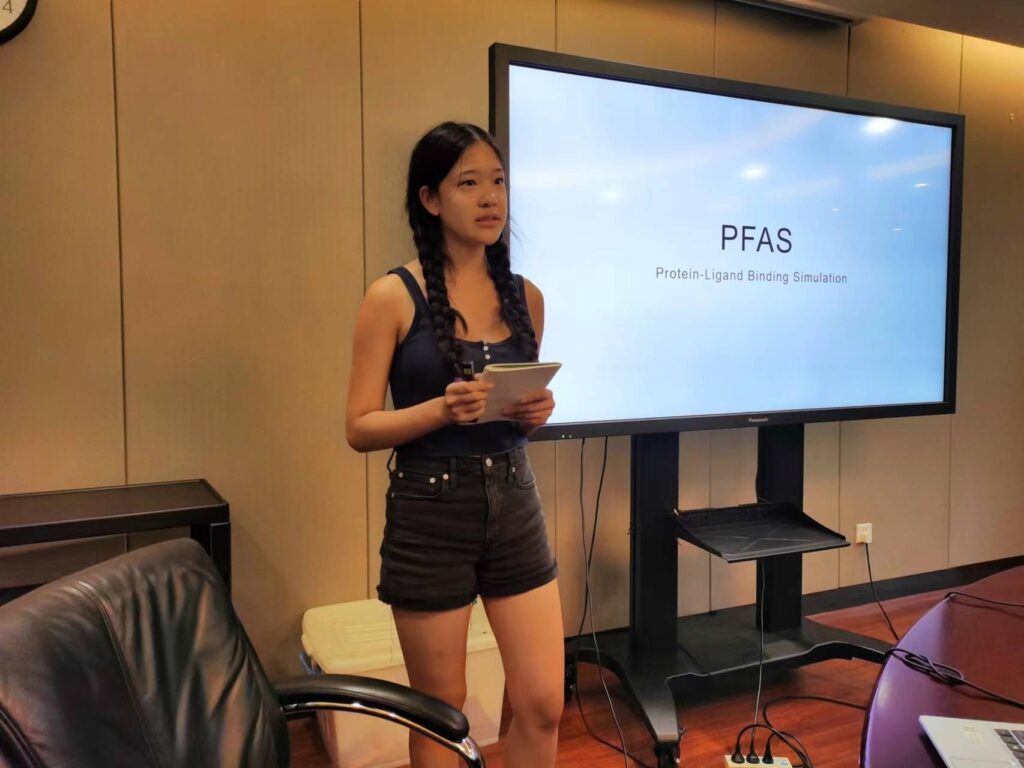
In the summer after my sophomore year, I did an internship in a chemistry lab in China, and the professor who was mentoring me introduced me to PFAS and gave me a project to work on with the help of some graduate students. I learned a bunch of different simulation software and then simulated the interactions between PFAS and proteins. We used Perfluorooctanoic acid (PFOA), which is really common. We studied its interaction with bovine serum albumin, which is a protein in cows very similar to human serum albumin but a bit less complicated.

We found that the binding energy was really strong, which told us that PFOA was really likely to bind to the protein. And then we calculated how much the protein changed after interaction with PFOA and found it hadn’t changed much at all. We realized that because the interaction was so stable, the body wasn’t recognizing it as a foreign particle. But binding to the protein could still knock it out of service.

Hera presenting on PFAS during her internship.

It harms protein function without triggering any sort of immune response? That doesn’t sound good.

Not good.

So your lab work got you interested in PFAS. How did you get from there to testing local water?

After that summer, I knew that this was something that I wanted to continue looking into. I built my own website about PFAS, trying to, like, educate people as much as possible about products that contain them. And then in March or April of 2024, I started this project. What sparked the whole thing was that I found these filters online that let you test your own tap water’s PFAS level. So I bought two and tested my tap water, and then also tested boiled water, because my family drinks a lot of tea.
Then I wondered if the concentration in my home would be different from my friends’ homes. So I tested in a bunch of different towns: Arlington, Alexandria, Loudoun, and Falls Church. The average was around 9-10 PPT, but there were two outliers. Loudoun was really low, around 3.5 PPT. And I actually expected that to happen because they advertised that they are implementing things to filter out PFAS. So I knew Loudoun was going to be lower than the rest, but then I found that my first result for Alexandria was 22 PPT, more than twice the average. At first, I thought it might have been an experimental error, so I tested again at a different location in Alexandria. That one came back 17 PPT, so less, but still way more than average.

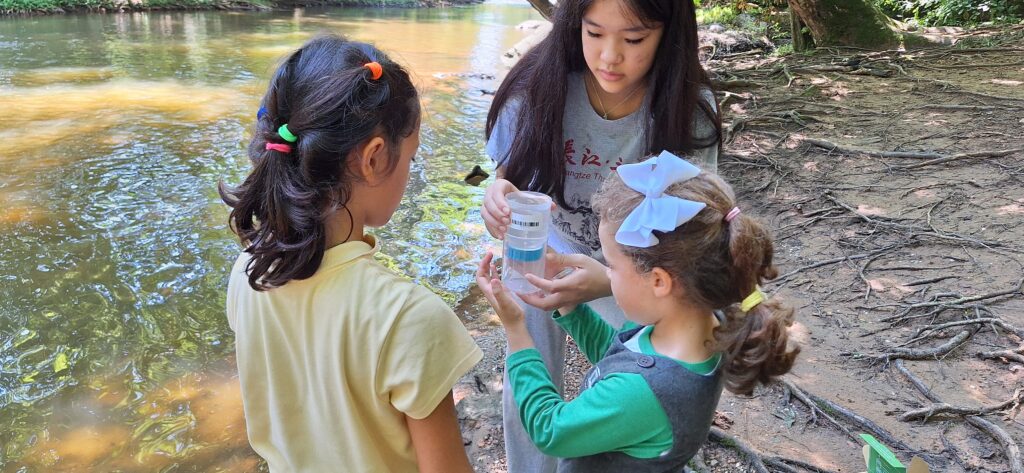
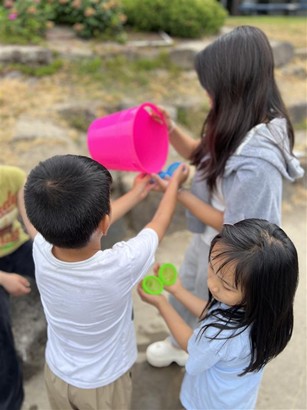
Hera collecting water samples with young campers during the Environmental Science summer camp she led.

So what was going on with Alexandria’s water?

What I did was look into the water sources for all the counties. So I tested the Potomac River and the Occoquan Reservoir, because those are the two main sources of water in Northern Virginia. Both were in double digits. The Potomac was around 15 PPT, and the Occoquan was 21 PPT, both of which are lower than the first Alexandria reading, which was a little confusing. But concentrations do vary with rainfall.

I reached out to a few newspapers because I’ve never seen this covered before, and I got connected with the journalist who wrote the article. We did some research and found an article from 2023 that talked about how Alexandria had an actionable level of PFAS. The mayor at the time was talking about how they were going to do something to stop it, but their levels are actually higher now. So clearly, they didn’t really do anything.

What’s next with this project?

It’s kind of on pause right now for college applications, but I definitely want to continue it in college. Because we know PFAS are bad for us, but we don’t know the extent of how bad. There’s a strong correlation between the concentration of PFAS in someone’s body and liver cancer. I do know that the liver is the main thing that detoxes your body. Because PFAS are so non-degradable, they kind of build up in your liver over time. I’m curious about the biochemistry there.

Sounds fascinating. I look forward to hearing more about it in the future. Thanks, Hera!

You can also read about Hera’s findings in the Alexandria Times.

BASIS Independent McLean is an Age 2–Grade 12 private school, providing students with an internationally benchmarked liberal arts and sciences curriculum, with advanced STEM offerings. Considering joining the Red-Tailed Hawks community? To join our interest list for the next school year and receive admissions updates and more, please click here.

Filed Under: Featured, Science, STEM, Student Achievement, Student Spotlight

More Than a STEM School: Highlighting Our Humanities Curriculum

November 21, 2025 by christineklayman Leave a Comment

At BASIS Independent Manhattan, our reputation for excellence in math and science is well-established. Families often choose us because they know their children will master calculus, physics, and engineering years ahead of national averages.

However, a truly exceptional education requires more than STEM mastery. We are a Liberal Arts school with a distinct focus on STEM, and that distinction shapes every classroom. The same high standards that define our science labs are present in our English and history courses.

Our mission is to cultivate well-rounded students who are as confident analyzing a complex novel as they are solving a differential equation.

two elementary school students read a book together

Why a Content-Rich Curriculum Matters

Our unique approach and advanced academics are supported by research and cognitive science. Studies, such as those highlighted in “The Knowledge Gap” by Natalie Wexler, demonstrate that early exposure to a deep, content-rich curriculum is the key to long-term academic success.

Wexler’s research confirms what we see in our classrooms: when students build a broad base of knowledge in history, geography, and literature starting in the early years, they develop superior reading comprehension and critical thinking skills. This foundation empowers them to excel in high-level courses later on.

This is why we believe in and uphold our curriculum. From PreK through grade 12, every subject is an opportunity to challenge students and expand their understanding of the world.

Consistency Across the Board

To ensure our humanities program consistently meets these high standards, we have made a strategic investment in our curriculum. We have adopted the Savvas/Pearson program for our core English and history instruction. This resource provides the robust structure and depth necessary to support our advanced learning outcomes.

This alignment ensures that rigor is a constant across every grade level.

two male elementary school students read a picture book together
  • Building the Foundation: In the Lower School, we focus on critical reading and writing. Even our youngest students in PreK and kindergarten are engaging with texts that ask them to think, not just decode.
  • Advanced Placement Readiness: Our humanities courses are taught a grade level ahead. This intentional pacing challenges students to take on sophisticated ideas earlier, preparing them for the demands of AP coursework in high school.
  • Connecting Disciplines: By coordinating our curriculum, we create opportunities for students to see connections between subjects. A history lesson on the Industrial Revolution might overlap with a science unit on energy, deepening understanding in both areas.
high school students in English class doing an activity with notecards spread across the floor

Interdisciplinary Curriculum: Preparing for High-Level Coursework

Our grade 4 students recently explored New York State Native American history. Rather than simply memorizing facts, they built detailed dioramas and wrote analytical explanations of tribal societies.

This project required them to use their research and writing skills along with hands-on creativity to connect geography, culture, and economics—the exact kind of multidimensional thinking they will need for future AP History courses.

grade 4 student shows her history diorama and research writing project

Voices from the Classroom

The heart of our program is our faculty. Our teachers are subject matter experts who are passionate about their fields and their students.

Abigail Bandarenko (Director of Student Affairs, Lower School PreK—5)

Ms. Bandarenko brings a wealth of experience to her leadership role, holding a dual master’s degree in elementary education and literacy from Bank Street and a bachelor’s in English. Having served as a Subject Expert Teacher in humanities herself, she possesses a deep, practical understanding of how literacy develops in the classroom.

Ms. Bandarenko interacts smiling with two early learning program students

“In my role, I see firsthand how a strong foundation in literacy powers everything else. At its core, literacy is the ability to communicate clear understanding through language to express needs and ideas. By fostering these skills in the early years, we give students the tools to succeed in every subject, from science to history. It’s not just about reading and writing. It’s about equipping students to be confident communicators and curious, capable learners for life.”

Ms. Bond discussing topics with a student.
Emma Bond (English Subject Expert Teacher, Upper School grades 9—12)

Ms. Bond’s expertise is grounded in her academic background in English and theology, as well as her immersive study of Shakespeare and philosophy at the University of Oxford. With five years of teaching experience, she brings a rigorous, scholarly approach to her high school English classes.
“In our Upper School English courses, we go far beyond plot summaries. We dive into the ‘why’ and ‘how’ of great literature. Whether we are reading Shakespeare or modern dystopian fiction, students are learning to analyze arguments, understand nuance, and articulate their own unique perspectives. These are the skills that shape future leaders.”

The Full Picture of Academic Excellence

True academic success is about balance. The critical thinking skills developed in a rigorous humanities seminar make our students better scientists, just as the logic learned in math makes them sharper writers.


We invite you to see this dynamic education in action. Come explore how BASIS Independent Manhattan prepares students for future success in the real world.

student author holds his book and stands with his parents at a publishing party

Learn More

about our balanced curriculum, join our interest list, and meet with Admissions.

Visit Us

Filed Under: Academics, Humanities, Lower School, Middle School, Primary Program, STEM, Student Learning

Parent Perspectives Shared at Our Fall Open House

November 3, 2025 by jogoldfarb Leave a Comment

At BASIS Independent Brooklyn’s recent Open House, several parents spoke on a panel about what drew them to our school and what stands out most based on their years in our community. We wanted to capture the conversation to help others understand what makes our school stand apart. Many thanks to all our parents for sharing their experiences!

Paul C. (Dad to Jasper in Gr. 10)

We were talking to one of my wife’s aunts, who lives in Arizona, and she told us that they’re building a BASIS [Independent] School in Brooklyn, and she told us that we needed to do whatever we could to get our kid into it. She’s an educator in Arizona, so she was very familiar with the BASIS Curriculum. That’s why we came to the school and took the tour, and it was so inspirational. Literally, my wife was crying because it just felt like this is what we’re looking for.

This school has a reputation for being a really challenging school. However, the truth is, in our experience – and it’s been about 10 years now – that BASIS [Independent Brooklyn] is going to make your kid a better student, no matter what their capabilities are. That’s what’s most important.

The other thing that I loved in this whole process and journey, are the relationships that my son has developed with the teachers along the way. They talk about classes; they talk about movies and more. He’s leaned into a lot of different and varying interests here. I think that is possible when you are at a school that has a smaller student body. The school and the teachers You’re able to have a more meaningful relationship with the students and nurture their interests.

Seema S. (Mom to Sonia in Gr. 6):

My daughter, Sonia, started here in third grade, so this is her fourth year at Basis. Our family is very happy with Basis.  When we started looking at schools, we were looking at different public and private schools. My husband was very keen on BASIS Independent Brooklyn. He’s an engineer by background. So, he was looking for a rigorous STEM education. I was a little bit skeptical because I wanted a more well-rounded, and I thought BASIS [Independent Brooklyn] might be too STEM-heavy.

 We’ve been really impressed with the breadth of the curriculum.   For example, Basis offers classes in creative writing, philosophy, drama, music, and choir. The administration has been building out its sports program as well. In fourth grade, the kids put on a school play – Alice in Wonderland, and it was amazing. It was so impressive. The students even designed the props, and the acting was great. My daughter loves her creative writing class. So, I think it’s a very well-rounded education.

Ralf S. (Dad to Frankie in Gr. 5 and Alba in Gr. 7):

I’m the very lucky father of two daughters here at BASIS Independent Brooklyn. Frankie is a fifth grader, and it’s her eighth year at the school. Alba is a seventh grader, and it’s her tenth year at BASIS Independent Brooklyn. We came to the school for many of the same reasons as the other parents mentioned. In 2014, there was a newspaper article about a new school in Brooklyn with a world-class learning culture and high-level education that combines that with the joy of learning. It sounded great on paper because that’s a virtuous circle: The more they learn, the more they enjoy learning, the more they learn. It’s just this positive upwards spiral, and that’s definitely been proven to be so over the past 10 years.

Let me just pick a couple of specific reasons why we love the school.

One, my daughters learn a lot overall, but they also learn how to learn. And that’s almost more important to me than any specific subject matter. For example, they learn about time management and organizational skills. It is so important that they learn how to organize themselves, how to communicate, and how to deal with “struggle”. These kids have the skills to learn.

Second, we love that the school normalizes failure. I actually think BASIS [Independent Brooklyn] is a super nurturing school. If you look up the word nurturing in the dictionary, it says that it means “to help somebody develop and succeed.” And that’s exactly what the school and the teachers do.

As mentioned, one example is to normalize failure. For example, in science, let’s say you have a project to build a bridge, you build your project while working with your team. Then let’s say the bridge doesn’t hold the weight that you wanted it to hold. Okay, that’s fine. You deal with it. You talk to your classmates. You talk to teachers, you go to student hours, and you just try again. It’s okay to fail. And then you pick yourself up and try again.

In my opinion, one of the most important things to succeed in life is developing resilience and grit and never giving up. And BASIS [Independent Brooklyn] kids have an abundance of that because they’ve just learned this throughout their classes. I think it’s much better to have these experiences and to learn skills dealing with failure now rather than when you’re going into college.

Rajashree C. (Mom to Leandra in Gr. 5):

My daughter has been at BASIS [Independent Brooklyn] from Kindergarten. Now she is in fifth grade, so we are entering middle school. We have a lot of respect for how they manage the transition from primary to middle school. This year, we’re really navigating what it means to not have what they call a Learning Expert Teacher. Students navigate classes of their own, move from one class to another. A couple of weeks ago I came in for the Meet the Teacher Night, and sometimes I’m surprised by all my daughter learning. I went home, and I asked her, “Do you feel like this is okay?” And she responds very confidently, “Yeah, it’s fine.” And this is how it’s been. It’s been an evolution.

Whatever level your students are at, based on my experience, BASIS [Independent Brooklyn] will help your students grow and be more responsible for their own journey and their own sort of pathways. That’s what’s been most interesting to me – how Leandra has grown.

=================

Thank you to our parents for sharing their experiences with prospective families, and thank you for the honor and privilege of educating your children!

BASIS Independent Brooklyn is a PreK–Grade 12 private school, providing students with an internationally benchmarked liberal arts and sciences curriculum, with advanced STEM offerings. Considering joining the Bears community? To join our interest list for the next school year and receive admissions updates and more, please click here.

Filed Under: Academics, Admissions Events, Community Values, Culture of Support, Fine Arts, Humanities, STEM, Student Learning, Uncategorized

Subject Expert Spotlight: How Dr. C Redefines Biology at Our NYC Private School

October 7, 2025 by christineklayman Leave a Comment

At BASIS Independent Manhattan, our passionate Subject Expert Teachers (SET) are the secret ingredient to delivering our advanced curriculum in an engaging way, helping students take intellectual risks and make real-world connections outside of the classroom.

This month, we spotlight Dr. Chubaryov (Dr. C), our Biology SET at the Upper School in Chelsea, who teaches AP and Honors Biology in addition to AP Environmental Science to our high school students. After reading about her approach in the classroom and what makes her one of the best teachers in Manhattan, come and see for yourself at one of our Fall Open Houses.

Dr. Chubaryov

The Spark: From Opera to Observation

In August, Dr. C balanced a full life that brought huge changes at the start of this school year: she graduated from her PhD program at NYU and got married. Yet, her focus remains on the students. Dr. C’s own passion for biology was ignited in high school by an amazing teacher who made the subject exciting—even “cool.” A fond memory that sticks with her is how her biology teacher would play opera music while instructing the class on how to do dissections. This mix of creativity and deep study informs her teaching today.

Two female students performing a dissection in biology class

Thinking Like a Scientist: Beyond Memorization

Once in high school at BASIS Independent Manhattan, students have already completed three years of physics, biology, and chemistry. With this preparation and budding passion for biology, Dr. C can immediately help grow her students’ intellectual curiosity. She also challenges them to take risks that go beyond just learning biology, helping them feel confident to “do biology.”

Dr. C is one of the best subject expert teachers in manhattan, demonstrating a hands-on learning lab for her students

From NYU PhD to Chelsea Classroom

To enable her students to be active participants, Dr. C emphasizes that they are scientists in training. She often brings her doctoral research into the classroom, sharing personal anecdotes about her work in the NYU lab studying Hirschsprung Disease. These stories help her students connect abstract concepts – like cellular signaling or genetics – and their real-world applications. Dr. C notes that this is when she really sees her students thinking like scientists: reasoning through how biological systems interact and discovering both the beauty and relevance of biology in everyday life.

three female students present a biology poster on cell organelles

A Nurturing Academic Environment

When asked about their teacher, students immediately get wide-eyed and say she is great because of her duality. Dr. C’s teaching style is direct, but it is constantly peppered with personal anecdotes about her PhD studies that bring the subject to life. Students also appreciate how she holds them accountable, but does so by consistently performing “checks for understanding” to ensure every student feels supported. This exemplifies the nurturing academic environment at BASIS Independent Manhattan, where students feel inspired to safely take intellectual risks and achieve their highest potential.

student presenting to her peers in the classroom

The Takeaway

BASIS Independent Manhattan’s unique model, featuring passionate Subject Expert Teachers who deliver an advanced curriculum in a nurturing environment, is why we are recognized among the best NYC private schools. It’s designed to empower students to think critically and achieve great success.

Experience the BASIS Independent Manhattan difference!

Join us at one of our upcoming Fall Open Houses to meet Dr. C and the rest of our incredible teachers.
Upper School
Sunday, October 26
Grades 6–12, Chelsea Campus
10:00 AM–12:00 PM

Lower School
Saturday, October 25
PreK–5, UWS Campus
10:00 AM–12:00 PM

Save Your Spot Today

Filed Under: Academics, Admissions Events, Faculty & Staff, High School, Science, STEM, Student Learning

Alumna Spotlight: Shreya Shekhar’s Journey from BISV to Berkeley Haas and Greylock

August 27, 2025 by ezekielbracamonte Leave a Comment

BISV Alumna, Shreya Shekhar. Photo: Greylock Partners

At BASIS Independent Silicon Valley, we take great pride in seeing our alumni go on to thrive at top universities and in their chosen careers. One shining example is Shreya Shekhar, a BISV alumna who has already made her mark as a partner at Greylock Partners, one of the world’s leading venture capital firms.

Recently, Shreya was featured in Berkeley Haas News, where she shared her journey from an AI-obsessed high school student to a leader investing in the next generation of artificial intelligence startups. In the article, Shreya reflects on how her curiosity about AI began right here at BISV, where she read Superintelligence by Nick Bostrom in her AP Lang class and explored the bigger questions about technology, humanity, and the future.

Her story highlights what makes the BISV experience unique: our students are challenged to think critically, explore bold ideas, and pursue passions that will shape their future long before they step foot on a college campus. Shreya’s path—earning dual degrees in electrical engineering & computer science and business at UC Berkeley, founding startups, and now guiding entrepreneurs as a VC partner—demonstrates the confidence, intellectual curiosity, and drive that BISV strives to nurture in every student.

We are proud to see Shreya carrying forward the spirit of BISV into her work at Berkeley and beyond. Her journey is a testament to the foundation our school provides in preparing students not just for college, but for leadership and innovation in the real world.

Read the full Berkeley Haas News feature on Shreya’s story here: Berkeley Haas News – Shreya Shekhar

BASIS Independent Silicon Valley is a TK – Grade 12 private school, providing students with an internationally benchmarked liberal arts and sciences curriculum, with advanced STEM offerings. Considering joining the Bobcat community? To join our interest list for the next school year and receive admissions updates and more, please click here. 

Filed Under: Alumni, STEM

Upcoming Summer Admissions Events!

July 25, 2025 by jacquelineransley Leave a Comment

Join us this summer and learn more about BASIS Independent Manhattan!

As we prepare for the first day of school, we are excited to invite you to meet us throughout the summer at various events! This is a wonderful opportunity for you and your student to participate in fun activities and learn more about our community at BASIS Independent Manhattan, a PreK – Grade 12 Top Private School with locations on the UWS and Chelsea.

FREE SUMMER EVENTS – You Won’t Want to Miss!

Waterfront Wonders: Science and STEM with Ms. Delaney and Ms. Amy (ages 3-10)

STEM with Ms. Delaney: Students will explore foundational coding and computational thinking skills by programming Ozobots using color-coded paths and simple logic sequences. Through hands-on challenges, they’ll learn how to debug, sequence commands, and think like engineers while watching their robots respond in real time!


  • Tuesday, August 5 at 10:00 AM | LIC Waterfront (Long Island City) | RSVP HERE


Science with Ms. Amy: Kids will explore the world of science by creating their own lava lamps and magnetic paintings. We will discuss how science is a part of the world around us everywhere we go!

  • Tuesday, August 12 at 10:00 AM | LIC Waterfront (Long Island City) | RSVP HERE

Paint in the Park:  Art Class with Ms. Carmen (ages 5-16)

Join us for an evening of watercolor painting by the LIC waterfront! Our BASIS Independent Manhattan Lower School Art teacher will be leading two workshops on watercolor techniques: ages 5-11 at 5:30 PM and ages 12-16 at 6:15 PM. Participants will get to take home an original watercolor painting

  • Thursday, August 7 at 5:30 PM | LIC Waterfront (Long Island City) | RSVP HERE

TABLING EVENTS

FlyNYC: Stop by our table for a fun activity and meet our admissions team.

  • Saturday, August 16 at 12:00 PM – 5:00 PM | Pier I at W 70th St


Launch Math + Science Camp: Tabling Event: Come stop by our table and meet our admissions team!

  • Thursday, July 24 at 8:30 AM | 3 W 65th St
  • Thursday, July 31 at 8:30 AM | 3 W 65th St


West Side County Fair: While you are partaking in games and rides, don’t forget to stop by our table and say hi!

  • Sunday, September 7 at 1:00 PM – 5:00 PM | Pier I at W 70th St

UPCOMING ADMISSIONS EVENTS

Virtual Information Sessions

  • Tuesday, July 29 (12:00 PM)
  • Tuesday, August 26 (12:00 PM)

Virtual Admissions Q&A

  • Thursday, August 14 (12:00 PM) | PreK – Grade 1
  • Thursday, August 14 (1:00 PM) | Grades 2 – 10

Join us for a campus tour and learn more about our wonderful community. Interested in applying for the 2026-2027 school year? Our applications go live on August 1! Be sure to sign up for our newsletters to stay informed.

Register Below for Our Upcoming Admissions Events

Click HERE

Filed Under: Admissions, Admissions Events, Community Events, Current Events, STEM, Visual Arts

Sparking Innovation Early: Robotics and Engineering in the Primary School at BASIS Independent Manhattan

April 25, 2025 by christineklayman Leave a Comment

In today’s tech-driven world, preparing students for the future is essential. At BASIS Independent Manhattan, a leading private school in NYC, we are excited to have an enhanced engineering program that includes a Robotics curriculum for primary school students (Pre-K through grade 4). At the head of the classroom for this interactive, engaging, and hands-on learning is Engineering Subject Expert Teacher at the Lower School, Ms. Delaney. She introduced us to the three unique hardware systems—Ozobots, Finch Robots, and LEGO SPIKE kits— and how she uses them to build skills that grow with students through our spiraling curriculum.

Why Robotics?

Beyond just building robots, our program develops critical thinking, creativity, and problem-solving skills vital for future STEM success. Robotics is deeply rooted in computational thinking, the real-world processes behind computer science and engineering. That sounds challenging for early learners, but this hands-on approach seamlessly teaches students how to break down complex problems, identify patterns, develop step-by-step solutions (algorithms), and refine those solutions when needed. It transforms students from passive tech users into active creators!

Ozobots: A Joyful Introduction (PreK–1)

Meet the Robot: A playful, screen-free start to learn the basics of coding! These small, color-sensing robots follow lines and respond to sequences drawn with markers. 

Benefits of Ozobots: Students intuitively grasp concepts like sequencing, logic, and cause-and-effect through creative play for beginners. Ozobot’s complexity keeps older students engaged by using more intricate coding knowledge to create multifaceted behaviors and challenges. Learning feels like play, which is exactly our goal.  

Skills Gained: Sequencing, prediction, visual coding, debugging, and confidence.

coding ozobots

Finch Bots: Creative Coding That Connects (PreK–1)

Meet the Robot: Bluetooth-enabled bots that add movement, lights, and sensors with block-based coding languages like Blockly and Scratch.

Benefits of the Finch: The versatile robot! Highly adaptable and scalable for all ages, Finch robots make abstract coding concepts tangible and provide interdisciplinary connections, reinforcing concepts from music, art, and math. They can be programmed to make music or hold markers, and be used as a drawing tool to sketch shapes, trace patterns, or illustrate coded paths, like a custom maze.

Skills Gained: Sequencing, cause and effect, conditional statements, spatial awareness, and perseverance.  

LEGO SPIKE Kits: Engineering in Motion (Gr. 2–4)

Meet the Robot: A kit of over 400 construction pieces with a programmable Hub that uses a Scratch-style interface to move the motors, sensors, and gears.

Benefits of LEGO SPIKE: Hands-on engineering challenges allow students to design, build, and bring their robots to life. They start with basic machines and move to more advanced projects like in biomedical engineering.

  • A Favorite Project: Grade 4 designing prosthetic hands, which mirror real-world devices, prompting them to think critically about how engineering can improve lives.

Skills Gained: Preparing students for advanced engineering electives, developing collaborative iteration skills, and strengthening their understanding of integrated systems and mechanical design.  

Coding the programmable hub to a mechanical claw.
Grade 4 students display their final LEGO robotic projects.
Students test their tri-motorcars in grade 3 engineering.
We’re thrilled to announce that our engineering program will extend into grade 5 starting in 2025-2026. This expansion will allow students to build on their understanding of engineering and robotics through exciting cross-curricular connections with science.

Ready to see innovation in action?

Our robotics program is just one example of how BASIS Independent Manhattan provides an enriching curriculum led by expert educators. We balance rigorous academics with fun, hands-on, and experiential learning that prepares our students to be inquisitive, solution-oriented, and collaborative problem solvers.  

Discover the difference of a BASIS Independent Manhattan education, where students are empowered to think critically, create fearlessly, and build the future.


We invite you to learn more about our Wildcat community at one of our upcoming admissions events. Interested in joining us for the 2025-2026 school year? Our rolling application cycle is now open — apply here!

APRIL OPEN HOUSES

Upper School
(Grades 6–12)

Saturday, April 26

10:00 AM

Lower School
(PreK–5)

Sunday, April 27

10:00 AM

REGISTER NOW

Filed Under: Academics, Lower School, Primary Program, STEM, Student Learning

Spring Visual Art Exhibit: Interdisciplinary Collaboration in Art, Robotics, and Music

March 31, 2025 by ezekielbracamonte Leave a Comment

At BASIS Independent Silicon Valley, innovation and exploration are at the heart of student learning, encouraging creativity across disciplines. This year, the Spring Visual Art Exhibit highlights an exciting collaboration between the Visual Arts, Music, and Robotics programs, showcasing how technology and artistic expression can intersect in meaningful ways.

The theme for this year’s exhibit, Carnival of the Animals, is inspired by the compositions of Saint-Saëns. Subject Expert Art Teachers Ms. Nichols and Ms. Shi selected the music first before assigning each grade level two pieces as inspiration for their artwork. This theme provided students with an opportunity to explore both the musical and visual aspects of the animals, blending their creativity with themes of nature and sound.

The new Robotics program, introduced this year by Subject Expert Engineering Teacher Ms. Bhatnagar, played a key role in this interdisciplinary effort. It is the first robotics program at any BASIS Independent campus in the Bay Area to be integrated into the curriculum rather than offered solely as an after-school program. Through this program, students in Grades 1-4 have been introduced to the fundamentals of robotics and computer science. Using the Finch Robot by BirdBrain Technologies, students developed computational thinking skills and applied coding concepts in tangible ways. With features such as a micro:bit, sensors, LEDs, motors, and a pen holder, the Finch Robot became an invaluable tool for incorporating robotics into various subjects, including art.

Once the exhibit theme was established, Grade 4 Engineering students collaborated with the Art department, using robots to create animal-themed artwork for the show. They first learned how the robots functioned, explored new coding environments, and applied mathematical concepts such as angles, shapes, and coordinates to program them. As a final challenge, they coded the robots to create circular patterns—an advanced function that required precise speed adjustments. Through this process, students reinforced their understanding of geometry and coding and discovered how technology can enhance creative expression.


Music was also an integral part of the learning experience. Students listened to the musical movements corresponding to the animals in their artwork. For example, students who worked on lions studied “The Royal March of the Lion” from Carnival of the Animals. They followed a listening map to identify which instruments were featured, answered questions about the composition, and learned about Saint-Saëns. These activities were woven into lesson plans across grade levels, allowing students to make deeper connections between music and visual storytelling. Subject Expert Music Teachers, Ms. Gao, Ms. Zhang, and Mr. Robbins, guided students through these exercises, enriching their artistic interpretations through sound.

Across all grades, students explored a diverse range of mediums and techniques to bring their artwork to life. These included making playdoh molds for plaster, wax resist techniques with watercolor, oil pastel drawings, negative space painting, metal tooling, and paper quilling. By experimenting with different materials, students were able to capture texture, movement, and emotion in their representations of the animals from Carnival of the Animals.

Throughout the exhibit, Carnival of the Animals will play on a continuous loop, enhancing the immersive experience and bringing the artwork to life. It is hoped that the musical backdrop enhances the experience, allowing viewers to engage more deeply with the pieces and develop a greater appreciation for the interdisciplinary connections between sound, art, and technology.

Reflecting on the experience leading up to the show, Ms. Nichols shared, “One of my favorite parts of being an art teacher is watching my students experience awe. Awe in not just great works of art, but also in the potential they see in their own creativity as their knowledge expands. The wonderful thing about the art showcase is that parents get to be part of that experience.”

We look forward to welcoming parents to the Spring Visual Art Exhibit on Friday, April 11, as we celebrate the creativity and dedication of our students. We encourage families to listen to Carnival of the Animals beforehand to extend the learning experience at home and gain a deeper appreciation for the inspiration behind the exhibit.


BASIS Independent Silicon Valley is a TK – Grade 12 private school, providing students with an internationally benchmarked liberal arts and sciences curriculum, with advanced STEM offerings. Considering joining the Bobcat community? To join our interest list for the next school year and receive admissions updates and more, please click here. 

Filed Under: Community Events, Department Spotlight, Lower School, Primary Program, STEM, Student Learning, Visual Arts

  • Page 1
  • Page 2
  • Go to Next Page »

© BASIS Independent Schools

  • Contact Us
  • Media Recognition
  • Careers
  • Privacy Policy
  • CA Privacy
  • Terms of Use

Headquartered in Campbell, California, Spring Education Group is majority-owned by investment funds administered by Primavera Holdings Limited, an investment firm owned by Chinese persons and principally based in Hong Kong with operations in the United States, China and Singapore.

Sitemap