
• Skip to primary navigation
  • Skip to main content

BASIS Independent Schools

BASIS Independent SchoolsBASIS Independent Schools
  • About
    • Why BASIS Independent Schools?
    • Mission & Philosophy
    • Diversity & Citizenship
    • History
  • Academics
    • Curriculum
    • Early Learning Program
    • Primary Program
    • Middle School Program
    • High School Program
    • The Senior Year
    • Summer Programs
    • International Student Program
  • Achievements
    • International Performance
    • College Admissions
    • Advanced Placement
    • National Merit
  • Find Your School
Inquire

Ribbon Cutting Celebration at BASIS Independent Bothell

Ribbon Cutting Celebration at BASIS Independent Bothell

November 13, 2025 by chriszefferys Leave a Comment

Making waves since 2025—home of the Orcas! 

We recently celebrated the grand opening of the BASIS Independent Bothell with an official ribbon-cutting ceremony!

Joining this celebration were members of the Spring Education Group leadership team, BASIS Independent Schools leadership, BASIS Independent Bothell administrative team, leaders from our Spring Education Group sister school, representatives from the Bothell-Kenmore Chamber of Commerce, and members of our BASIS Independent Bothell parent community.

BASIS Independent Bothell, a kindergarten-grade 12 private school, opened its doors to over 200 students, and more than 50 faculty and staff in September of 2025. The ribbon-cutting ceremony began outside and in front of the school entrance with celebratory speeches from Mr. Toby Walker, Vice President of BASIS Independent Schools, and Mr. Robert Runyon, Head of School of BASIS Independent Bothell. Their speeches outlined the incredible journey of opening BASIS Independent Bothell and gave praise to everyone who helped make the school opening successful.

“I truly enjoyed speaking with everyone about what the ribbon cutting meant for us as a culmination of so many different people’s work and belief,” Mr. Runyon expressed. “It was not just the end of something; it signaled the beginning of something new and special.”

The ribbon-cutting ceremony marked a proud milestone for BASIS Independent Bothell—a celebration of collaboration, dedication, and shared vision. As the newest addition to and eleventh school of the BASIS Independent Schools network, the campus now stands as a place where curiosity, innovation, and excellence both inside and outside of the classroom will flourish. With the doors officially open, the school community looks forward to building a strong, inspiring foundation for lifelong learning, and bringing to life a program designed for 21st-century learning.

Enjoy a few photos from this special event. 

BASIS Independent Bothell Head of School Robert Runyon, joined by members of BASIS Independent Schools’ leadership team and other distinguished guests, prepares to cut the ceremonial red ribbon.

Toby Walker, Vice President of BASIS Independent Schools, commemorates the opening of BASIS Independent Bothell, the 11th school in the BASIS Independent Schools network.

Robert Runyon, BASIS Independent Bothell Head of School, shares his vision for our K-grade 12 private school during the ceremony.

BASIS Independent Bothell, a K-grade 12 private school, opened in fall of 2025.

Discover BASIS Independent Bothell by attending a Campus Tour or upcoming admissions event. Learn more.

Filed Under: Community Events, Current Events, Head of School, Leadership, School Community

Get to Know Our Alumni: Join Us at Our Upcoming Panels

November 12, 2025 by michaelmertes Leave a Comment

At BASIS Independent Fremont, we believe that one of the best ways to understand our school is to hear directly from those who have walked our hallways—from students who recently moved up to our Middle School Program to graduates now navigating college life.

On Saturday, November 15, we invite prospective families to connect with two unique panels of alumni:

TK–Grade 5 Alumni Panel: 10:00 AM

Current grade 6 students will share their early journey through the Lower School—how curiosity, creativity, and confidence were nurtured here.

Grades 6–12 Alumni Panel (Class of 2025): 11:30 AM

A conversation with recent graduates who will reflect on how their Upper School experience at BASIS Independent Fremont prepared them for college and beyond.

These sessions offer an authentic glimpse into the day-to-day life at BASIS Independent Fremont—from classroom moments to extracurricular adventures to the independence of senior year. Families will have the opportunity to ask questions about curriculum, student life, clubs, and how the community supports students’ growth both academically and personally.

Whether you’re exploring for the first time or comparing schools, this is a chance to hear how BASIS Independent Fremont students think, reflect, and thrive—at every stage of their journey. You’ll walk away with deeper insight into our culture, our approach, and what makes our community distinctly supportive and challenging in all the right ways.

Ready to join us? Register here for the panel that fits your focus—or attend both and experience the full spectrum of the BASIS Independent Fremont journey.

We look forward to seeing you there!

BASIS Independent Fremont is a TK – Grade 12 private school, providing students with an internationally benchmarked liberal arts and sciences curriculum, with advanced STEM offerings. Considering joining the BASIS Independent Fremont community? To join our interest list for the next school year and receive admissions updates and more, please click here.

Filed Under: Admissions, Admissions Events, Alumni

Demystifying Admissions: What to Expect at Your Family Meeting 

November 7, 2025 by jogoldfarb Leave a Comment

At BASIS Independent Brooklyn, we embrace students and families who have an interest in learning at an international level, a desire to make a contribution, a willingness to work hard, and an ambition to join a collaborative, supportive, and inspiring community. We work hard to cultivate a culture where academics are encouraged, learning is celebrated, and students find joy both in class and in our community!  

What is the Family Meeting? 

The Family Meeting is our opportunity to understand each student and family beyond the traditional admissions metrics. That is why Family Meetings are usually led by a member of our Admissions team and last at least 30 minutes.  

In these meetings, we focus on personal interests, problem-solving examples, and social experiences to gauge the student’s character and fit for our school community. Families also share their reasons for choosing BASIS Independent Brooklyn as well as their goals for their student(s).  

These meetings are also a dedicated space for parents and guardians to ask more detailed questions about tuition, electives, transportation, and extracurricular options as they begin to think about joining our community. 

Prior to the Family Meeting, we strongly encourage families to visit our website and blog, attend an Admissions Event, or speak with a member of our Admissions Team. 

Who is required to attend the Family Meeting? 

At least one parent or guardian is required to attend the Family Meeting. Students applying to Grades 2 and above are also required to attend. Students applying for PreK– Grade 1 do not attend the Family Meeting.  

If your child is required to attend the Family Meeting and does not, you will be asked to reschedule.  

What do you recommend parents do to prepare their student(s) for the Family Meeting? 

Preparation is not needed since students get to talk about themselves. One of the things we recommend parents and guardians do is proactively frame this meeting as a friendly conversation with people who work at a school rather than a formal interview.  

Our goal is to have a genuine conversation with a family, and a relaxed environment will better support this.  

What if we are applying for more than one student? 

Only register for one Family Meeting, and bring both students, if required to attend, to the same meeting. 

Primary Program Art Class – Photo by Mark Opirhory

When does the meeting have to take place? 

Families applying during our Early Admissions cycle (siblings of current students and alumni only) must complete their Family Meeting by Wednesday, November 26, 2025. Those applying for Regular Admissions must complete their Family Meeting by Thursday, January 8, 2026. 

How do we register for a Family Meeting? 

Once you have submitted your application on Ravenna, you will be prompted to schedule your Family Meeting directly on the application platform.  

If you’re not ready to choose a date and time, you can always log back in at a later date and register for one. Please note: As we get closer to the application deadline, there are fewer meeting times available. We would suggest scheduling one as soon as you are able. If you wait and are unable to schedule a Family Meeting for one of our offered times, your application will be incomplete, and you will not be considered for admission.  

How long is the Family Meeting? 

Family Meetings are generally 30 minutes long for PreK-Grade 1 applicants and 30-45 minutes long for Grades 2-10 applicants. Oftentimes, those hosting the Family Meeting will have back-to-back appointments and will be unable to go beyond the 30 or 45-minute mark.  

How will the Family Meeting be held? 

Family Meetings can be held on campus or on Zoom. Please note, Family Meetings default to in-person. You must reach out by phone or email to request a virtual meeting. 

Can we ask questions during the meeting?  

Yes! This meeting is just as much an opportunity for you to learn about us as it is for us to learn about you. Please note that some Family Meetings will be led by administrative team members other than the Admissions Team. If their role is not in relation to your question(s), they will let you know and encourage you to reach out to the appropriate person for an answer.  

What happens after the Family Meeting? 

The Family Meeting also serves to prepare families for the next stages of the admissions process, especially for students in grade 5 and above, who may participate in a Shadow Day after applying. Shadow Days offer a deeper immersion and a first-hand experience of our school. 

We look forward to meeting you and your student(s) soon at your Family Meeting! 

If you have any questions, please don’t hesitate to reach out. 

You can contact our Admissions Team at brooklyn-admissions@basisindependent.com. 

PreK Class Morning Meeting – Photo by Troy House

Filed Under: Admissions, Admissions Process, Shadow Program

Mountaineer Athletics Fall 2025 Recap: A Season of Growth and Grit 

November 7, 2025 by emilyhughes Leave a Comment

This fall was one to remember for the BASIS Independent Bellevue Mountaineers. From the volleyball court to the soccer field to our very first swim season, our student-athletes brought energy, teamwork, and heart to every practice and competition. Under the leadership of our passionate coaches, the Mountaineers continue to climb higher, building a foundation of excellence that will carry into our expanding high school program. 


Girls Volleyball

The Mountaineer volleyball program, led by Coach Fischer, embodied the heart of what it means to be a developing athletic program. A program built on growth, teamwork, and skill development over wins and losses. The team finished the season 3–8, but the record was never the measure of success. Coach Fischer emphasized progress, communication, and confidence, and her players responded with remarkable unity and improvement across every level of play. 

Both the D1 and D2 teams grew steadily throughout the season, building chemistry and trust with every match. Their commitment to learning and supporting one another defined the fall and set a foundation that will strengthen the program for years to come. 

One of the most memorable moments came during the Blackout Game, which brought the entire BASIS community together for a night of excitement and pride. Monty the Mountaineer made a special appearance as students, families, and staff filled the gym to cheer on their team. A halftime serving challenge and school raffle added to the fun, creating a celebration that perfectly captured how athletics unites our campus. 

At the October 27 Jamboree, the D1 team showcased their development, earning two hard-fought wins over Eastside Christian. The team’s serving game was anchored by Vivian L., whose accuracy and consistency made her a standout all season, while Yvonne Q. provided steady leadership and inspired her teammates through her composure and hustle. 

The D2 team finished their season with an impressive 4–0 record at the October 28 Jamboree, claiming the championship title. Their teamwork, communication, and consistent serving, led by Carry and Melody, were key to their success and a reflection of the program’s overall progress. 

Coach Fischer shared that her focus this season was on sportsmanship, team bonding, and foundational skill-building, emphasizing that improvement, not the scoreboard, was the true goal. The Mountaineer volleyball teams have set the standard for a culture of growth, effort, and excellence that will continue to elevate the program for years to come. 


Co-Ed Soccer 

The Mountaineer soccer season was a story of endurance, growth, and heart from start to finish. It began with the very first team meeting, when Coach Thies and Coach Abele set the tone for the year. They told the players that they may or may not be the most talented team, but they would be the most conditioned. That message became the team’s identity, a commitment to effort, perseverance, and pride in representing their school. 

Together, Coach Abele and Coach Thies led the Mountaineers through a season defined by determination and growth. Every match tested their endurance, as the team often only had 11 players, yet the players grew stronger with each challenge. Through long minutes and relentless competition, they learned to communicate under pressure, support one another, and play with courage. 

Arosh S. and Aiden S. powered the offense with standout performances that became defining moments of the season. Their chemistry and creativity fueled the attack, highlighted by a thrilling game where Arosh scored five goals. Meanwhile, Mingming G. stepped into a brand-new role as goalkeeper, showing remarkable adaptability and composure. His courage and consistency anchored the defense and reflected the leadership and selflessness that define Mountaineer athletics. 

As the season progressed, the team’s transformation was undeniable. Reflecting on the journey, Coach Abele shared, “It was really cool to see them come together as one. It was night and day from the beginning of the season.” She added, “They were really a team out there. The growth has been incredible to see.”

The Mountaineers closed their season on November 4 against KSDA, finishing 3–5 overall, a record that only hints at how far they came. From that first meeting to the final whistle, this team’s story was one of perseverance, unity, and belief in one another, a season as inspiring as it was competitive. 


Swim Team 

This fall marked the beginning of a new chapter for Mountaineer Athletics with the launch of the first-ever BASIS Independent Bellevue Swim Team, led by Coach EE. What started as an early morning experiment has quickly become one of the most exciting and promising programs on campus. 

The swimmers trained with discipline and focus, meeting for early morning practices on Tuesdays and Thursdays from 6:45–7:45 a.m. and dry-land workouts on Wednesdays after school. The commitment required to show up and train before sunrise showed their dedication and desire to improve every day. 

While this inaugural season was focused on training rather than competition, the team made great strides in technique, endurance, and overall confidence in the water. Each practice built momentum, as swimmers refined their strokes, learned race fundamentals, and supported one another through challenging sets. The sense of teamwork and encouragement within the group set the tone for the future of the program. 

Coach EE has been intentional about building a strong foundation for the seasons ahead, focusing on consistency, technical growth, and team culture. The swimmers have embraced that vision, laying the groundwork for a program that will continue to grow and thrive as BASIS Independent Bellevue expands into high school competition. 

The Mountaineer Swim Team is off to an incredible start, and the waves they have made this fall are only the beginning. 


Looking Ahead 

This fall was a season defined by growth, grit, community, and pride. Our athletes and coaches have built something special, an athletic culture rooted in sportsmanship, camaraderie, and excellence. From thrilling rallies to record-setting goals to 6:00 a.m. workouts, every moment reflected the heart of what it means to be a Mountaineer. 

As our program continues its journey of growth in the winter season, the Mountaineers are ready, stronger, prouder, and united in spirit. 

Go Mountaineers! Onward and upward! 
“We never lose, We either win or we grow.”

Filed Under: Clubs & Activities, Community Values, Current Events, Extracurriculars, Faculty & Staff, Middle School, School Community, Sports & Athletics, Student Learning, Student Life

Meet the Winner of the 2025 Fellows Scholarship for Excellence in Senior Projects!

November 5, 2025 by mirandamartinez Leave a Comment

To kick off a new year of Senior Projects, we are sharing a conversation with the inspiring winner of the 2025 Fellows Scholarship, a $10,000 prize awarded annually to one project. Maxim Smelyansky, a Class of 2025 graduate of BASIS Independent Brooklyn, their 2025 Valedictorian, and current Stanford University student, impressed our committee with his project titled The Future of American High-Speed Rail: Analyzing and Discovering the Most Effective High-Speed Rail Development Methods on Promising Rail Corridors in the United States.

The Senior Project is an independent, student-led culmination of our high school experience. After three years of academic preparation, our seniors are ready to spend the last trimester of their high school careers applying the skills and knowledge they have gained to develop a project that is insightful, academically rigorous, and professional in nature. 

Our seniors start by designing a research question that is often centered on a subject they are passionate about or curious about. Then they embark on a journey to answer it, documenting and analyzing their findings as they go. They partner with both an internal and external advisor to support and guide their research. Students may choose to conduct their research in the form of internships or experimental research at university research labs, field work abroad, or research conducted remotely from home. From explorations into new-age technology to cutting-edge medical advancements to social justice, the Senior Project offers students the opportunity to channel their innate curiosity. This experience readies them for the type of self-direction and self-discipline expected in an undergraduate and graduate setting. 

In his Senior Project and accompanying blog, Maxim channeled his lifelong passion for transportation into a compelling case for high-speed rail in the United States. Supported by an externship with Ukrainian Railways, his work demonstrates both rigorous scholarship and a bold vision for a more connected, sustainable future. His blog not only makes the case for high-speed rail—it models the kind of intellectual curiosity, clarity, and purpose we aim to foster in all BASIS Curriculum Schools students. 

In this interview, conducted over the summer, Maxim shares insights into his research process, the real-world impact of his on-site placement, and the academic foundation that helped him bring his ambitious ideas to life. We hope you’ll join us in celebrating the inspiring work of one of our network’s newest alumni. 

Could you give our readers a short introduction to yourself, where you’re from, and what your plan is for after graduation? 
My name is Maxim Smelyansky. I am from the BASIS Independent Brooklyn Campus. I am one of the founding family members from 10 years ago. I was originally born in Eastern Europe, but in grade 2 I joined BASIS Independent Brooklyn, and then since then, I’ve grown with the school. And after graduating, I will be studying Civil Engineering at Stanford University in California. 

Congratulations on being this year’s Fellow Scholarship recipient. What did this award mean to you?  
I worked very hard on this project, working with Ukrainian Railways, conducting my own scholarly literature review.  I felt like winning this award was definitely a culmination of my BASIS Independent Schools experience because a lot of the work that I put in was applying the skills that I learned from before, or, for example, from my AP Capstone journey. 

Being the Fellows Scholarship recipient really validated my passion for transportation and my dedication to exploring opportunities for more sustainability and America’s future not being so car-dependent, but rather full of walkable cities.  

Could you introduce your project and its importance to our readers? 
My Senior Project was on the future of high-speed rail in America. Some examples include current projects such as the notorious California High-speed Rail, and semi-high-speed rail, such as Brightline in Florida and Brightline West in Las Vegas, currently in construction. There’s definitely a keen interest in building high-speed rail across America, but there are clear structural and management failures that are visible and could deter America from moving in the more sustainable direction, the direction that would give consumers the freedom to choose which mode of transport they want to use.  

So, my research focused on international high-speed rail development methods, usually in countries where the networks are already well developed on a large scale. My criteria, which I shared in my first senior blog post, were countries with over 1,000 kilometers of high-speed rail built and more than 500 kilometers currently in construction. I analyzed existing methods and determined which one would be the best for the application in the United States. I ultimately applied it through a mock Texas high-speed rail project. 

It’s an important topic because, most simply, it saves people money. Why in Europe can you buy flights for $10/$15? Because there are good rail connections that are very competitive. So even if you’re not taking the train, you’re still saving yourself money because airlines will have to adjust by having so many more options on the table. 

The second thing is that for a more sustainable future, high-speed rail is critically needed. If you look at carbon dioxide emissions on a per-kilometer basis, the thing that emits the most is not a cruise ship, it’s not a car, it is short term domestic flights—think 200 to maybe 500 miles. So your New York to DC flight, your Dallas to Houston, Houston, San Antonio, Austin, all those kinds of flights, those are the ones that emit the most per kilometer flown. And if you want to limit emissions, those are the routes you want to target because there is a simple, more sustainable solution to it. 

By caring about high-speed rail, you’re promoting a more sustainable future that also on top of all that, not only makes your flight cheaper—and some of the times makes your commute shorter—but it also creates jobs. It induces development. There’s a reason why most new developments are around where public transit is being built. While that value isn’t seen, the land value that rises around these stations revitalizes their neighborhoods too. 

It really is important to care about this because if done right, the amount of benefits from sociopolitical, from an economic, from an environmental point of view, are just simply immeasurable and they can really help bring America into the future. And I also didn’t even mention the crumbling infrastructure that we have right now, the freeways and everything. We need alternatives. We need to diversify our reliance on cars. High-speed rail is a great solution to this. 

When did you arrive at the idea for your Senior Project? Were there other ideas that you were considering alongside it, or were you pretty set on this idea from the beginning?  
I definitely knew I wanted to continue researching something in the field of transportation. I considered doing something along the lines of continuing my AP Research project, where I studied price discrimination on airline tickets and airline ticketing algorithms.  

But I really wanted to do something that allowed me to build upon my internship from last summer at Ukrainian Railways. Thanks to my work there last summer, I was able to get another externship and gain the experience and the knowledge I really needed to help this more ambitious project come to life.  

Could you shed some light on how you worked with this group? 
I have always been passionate about transportation. And really, after AP Seminar and AP Research, I had some tangible projects under my belt. I’m of Ukrainian origin, so I wanted to use my transportation knowledge to help the betterment of Ukraine and Ukrainian civilians. 

My dad actually works in Ukraine, and to visit us, since there are no commercial flights flying in and out of Ukraine, he has to take the train to the border from Kyiv to Warsaw, which is where the largest and closest international airport is.  

So, I reached out to Ukrainian Railways, wanting to help research some proposals on how to improve the rail commute between Kyiv and Warsaw. After reaching out and saying I was willing to work for free as an unpaid intern, I was tasked with researching and proposing a potential solution to improve this commute.  

The big issue is that Ukraine and former Soviet states have a track gauge or track width wider than their European counterparts. Because of that, the train simply couldn’t go into Poland because Poland had a narrower track width. 

And because of that, they had to change trains at a border town called Chelm. Now, the issue with that is for consumers who want to go directly to the airport and not to Warsaw. They would have to first transfer from the train they just took from Ukraine into this border town, change to another train going to the center of Warsaw, and then change to another train going to the airport. 

So after analyzing, the flights that could be available if you make a more direct link, I proposed a bus shuttle that picks up passengers from Chelm and goes directly to the airport. And this allows consumers to save precious hours, and allows them to catch most night flights. 

So instead of arriving at the airport at maybe 9:00/9:30, they arrived at 7:00/7:30, which allowed them to catch pretty much all the night flights. And that proposal would’ve allowed approximately 22,000 people annually to have a more convenient and daily access to the airport. 

That proposal was approved for implementation. While I obviously wasn’t able to help implement it, as this was already getting into the college application season, it definitely made a profound impression on me, showing me that my research actually had a potential tangible impact. 

Can you tell me a little bit about your on-site advisor whom you worked with at Ukrainian Railways?  
So, he was different from my mentor when I did the internship over the summer. This advisor is the Director of Strategy and Transformation at Ukrainian Railways. And, really, having him as a mentor was definitely very crucial to my success in this project because, simply put, he had a lot of experience, not just domestically, but internationally. 

He is looking into high-speed rail developments across the world, as he is envisioning a post-war future for Ukraine. 

But at the same time, how can we transform Ukraine in the future, and how can we improve Ukrainian railway services right now? Just having those two facets of experience from a more macro point of view and from a more micro point of view really allowed me to consider a lot of factors. 

And even when it comes to something like station locations, if you see in my paper, that just the consideration of those factors on a more micro scale definitely was because of the help I got from my advisor.  

He was able to point me in the right direction, especially at the start, looking at what were best practices were. And in a way, obviously, while I was comparing the results of the development methods. He was also able to point me to resources to see what the general best practices are. In that aspect, I was able to learn a lot, especially from the International Union of Railways handbook on high-speed rail development. 

What was the most challenging aspect, and how did you face that challenge? 
That would be when Russian hackers hacked the Ukrainian Railways Website. This was the week our school came back from Spring Break, and for about two weeks, I did not have contact or support from my on-site mentor because he had to focus on rebuilding the digital infrastructure for Ukrainian Railways to run on time and run smoothly. Doing the project by myself for those two weeks was definitely a bit of a struggle because I couldn’t ask my mentor to point me in the right direction to really figure out what the right sources were 

He was an invaluable resource from the beginning. When I first shared my scope, he suggested I review three sources, and those three sources were frankly the backbone of my future research because he knew exactly what I was looking for—he knew the field that well from his decades of industry experience.  

Losing contact with him, even temporarily—at the time I didn’t know how long it would be—that definitely was a little bit of a struggle, finding the sources I needed to continue my research. But I would say that my resiliency and my skills, again, from AP seminar and AP research of how to find scholarly sources, how do how to utilize EPSCO or Econ Biz, or Google Scholar, thanks to that, I was still able to find critical sources. 

One of them was actually the Transit Cost Project, which was a database that analyzed, I think, 10 or 12 countries. Not all their projects, but all the projects that they were able to find analyzed their high-speed rail development methods on a cost per kilometer basis, which was one of my rubric points. The amount of time they spent per mile of high-speed rail trackage, and also, the percent of the trackage that went through tunnels or bridges, which is more expensive than just on flat land.  

Just finding those sources without the guidance of my mentor was a bit of a struggle. Other students probably had much bigger challenges in their Senior Projects than mine, but I’m still proud I overcame that, and my project continued pretty smoothly to the end. 

Reading your blog each week, it was clear that your voice as a researcher and author was extremely distinct, and your format was very methodical. You also did a great job making this subject accessible and engaging. Did that come naturally?  
When it comes to this topic, it definitely came a little more naturally to me. Even if I wasn’t researching it, I’ve been watching videos on infrastructure construction projects probably since grade 2, maybe even grade 1. I used to play around with subway maps and envision expanding the New York City subway. 

But I definitely realized that just because it comes to me naturally, it doesn’t come naturally to everyone else. When I started doing my research, especially when I was explaining the method and rationale for selecting each of the categories and why I gave a country a certain rubric score, I realized that without sufficient context, without reading the previous week’s blog post, you couldn’t just jump in and understand what was going on. 

I really needed to figure out how I could convey my message in a way that people could understand; it was one of my main priorities for the blog. True mastery of a subject means that you can explain it in simple terms, and I try to push myself to be in a position where I can explain it in simpler terms and make people understand very quickly. 

It helped that the Senior Project allowed me to experiment with visuals and graphics. I found that the only way I was able to explain it very well was through visuals; I even put some in my paper for people to understand and make it as accessible as possible. 

One of the important lessons I learned in the blog was making a short abstract giving the reader the basic information, as well as the context, and a summary of the process: okay, this is what he did the week before, and this is how he builds upon it.  

Keeping a focused narrative not only kept the readers on track but kept me on track. For example, saying, “This is what I’m going to do next week,” – really setting out my goals for the coming week – kept me accountable and prevented me from falling behind. It also kept me somewhat in check because having an online externship rather than a mentor just keeping an eye on me, it can be a bit difficult to keep yourself motivated. Setting out those goals and putting them out in the public definitely helped me achieve them. 

As far as developing your voice as a writer and a researcher, were there any classes you took at BASIS Independent Brooklyn that you want to give a shout-out to? 
AP Seminar and AP Research are definitely some of the most useful classes I’ve taken in my high school career, and to be honest, I probably would recommend them to anyone more interested in STEM courses than the humanities courses. I would say that while AP English Language & Composition and AP English Literature & Composition were definitely good classes that helped me find my voice as a writer, the skills that you learn from AP Seminar and AP Research really develop your academic voice, which is crucial for more non-humanities courses and even some humanities in terms of analysis.  

AP Seminar helps so much in terms of just broadening your perspectives and evaluating multiple perspectives, which is so important because most of academia isn’t black and white; it’s a lot of gray. It also helped cut through political polarization at times, just by understanding people’s perspectives. 

AP Research really helps as well. It’s almost like doing the Senior Project before the Senior Project. You create your own research project, you learn how to develop a proper research question, you develop a method on how to conduct this research and how to even scope your project, you analyze your data, you write a paper, and you present on it. Even if it’s potentially not peer-reviewed journal material, it’s a really good introduction to conducting primary research.  

That entire track really made my process much easier in the whole senior year. In Capstones, I was able to focus on the knowledge that I was learning in each class rather than focusing on how to properly write an academic paper with formatting, citations, and everything.  

With the base knowledge you get in Seminar and Research, you’re saving yourself time when you’re writing college applications too. Looking ahead, applying these skills can help you in your college classes or even help you land that first position or that internship. 

You concluded your BASIS Independent Brooklyn career as both the Valedictorian and the winner of the Fellows Scholarship. That’s a big senior year. As far as the year ahead, do you have any specific academic goals or goals regarding campus involvement? 
My big goal for the year would be getting that next internship. With regard to campus involvement, I didn’t necessarily want to give myself concrete plans just yet because I feel like college is a time for learning and exploring. I want to come in the first quarter at Stanford with an open mind. 

One idea I definitely have in mind is joining the Transportation Research Center at the Transportation Research Institute at Stanford in some sort of role. But I feel like one of the things that has allowed me to be successful so far is that I had an open mind, and honestly, at times it was because I did things spontaneously. I want to let that flow happen in that first quarter. But I’m definitely going to hold myself accountable. And really, the two big things are getting an internship for next summer and establishing a consistent routine. 

Do you anticipate continuing your Senior Project in any form? 
In terms of just the field of transportation research in general, yes. That’s definitely something I do want to continue at Stanford. To be honest, transportation has been my bread and butter since the age of three. Maybe even two. I’m proud to say it’s my passion. 

What shape or form will it take at Stanford? I’m not exactly sure. Will I definitely try my best to look for those opportunities? Definitely. Either transportation research on campus or finding some potential internships. I would love to do something like transportation consultancy or something like that where I can learn best practices just by being surrounded by experts and professionals. 

And I feel like one of the small regrets I have for my Senior Project was that it wasn’t in person. Because I felt like gaining that hands-on experience would’ve definitely helped a lot. But that is something that I would really like to search for at Stanford. 

Do you have any advice for students who are looking ahead to their Senior Project?  
I think the biggest piece of advice would be to do something you’re actually passionate about. Don’t do something that you find is probably the path of least resistance. 

At times during my project, I was questioning myself a lot. If I hadn’t chosen a project I was so passionate about, I probably would’ve given in to the temptations of senioritis.  

The second point of advice I would say in general is obviously I lucked out in terms of my placement or externship, but start thinking ahead regarding on-site placements. Without connections, it will require a lot of outreach—a lot of cold calls and cold emails. That takes a lot of time, so start early. Those are the two things that I would really suggest for the Senior Project.  

Thank you so much for taking the time to sit down with me to share a little bit more about your senior project. Congratulations again on your many accomplishments and best of luck in the year ahead! 
Thank you for giving me the platform. Thank you so much for allowing me to speak proudly of my work and my accomplishments.

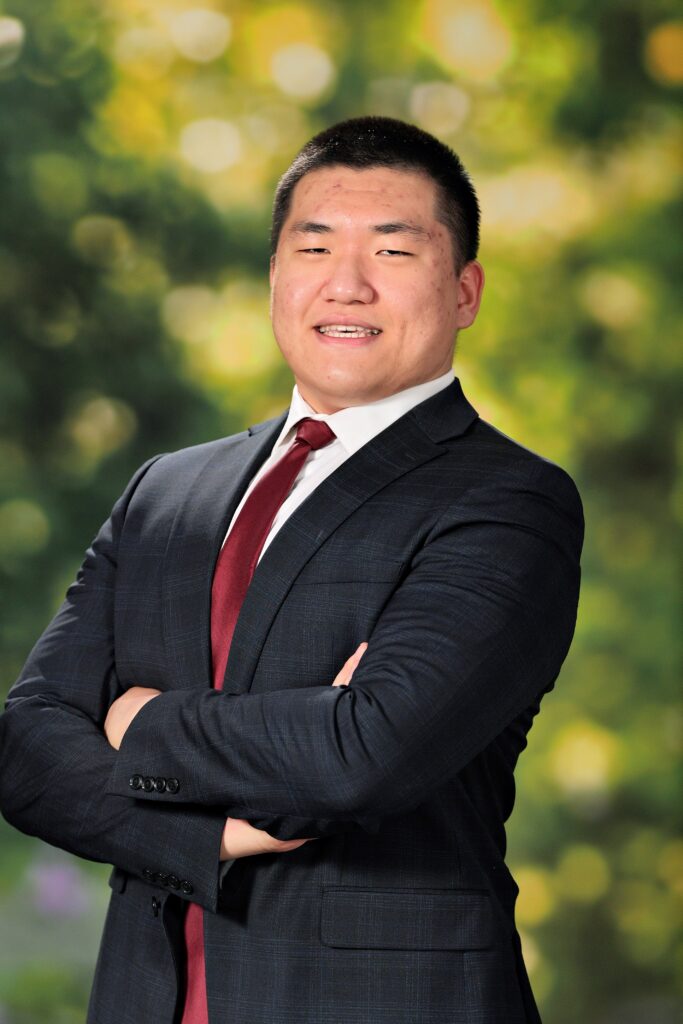
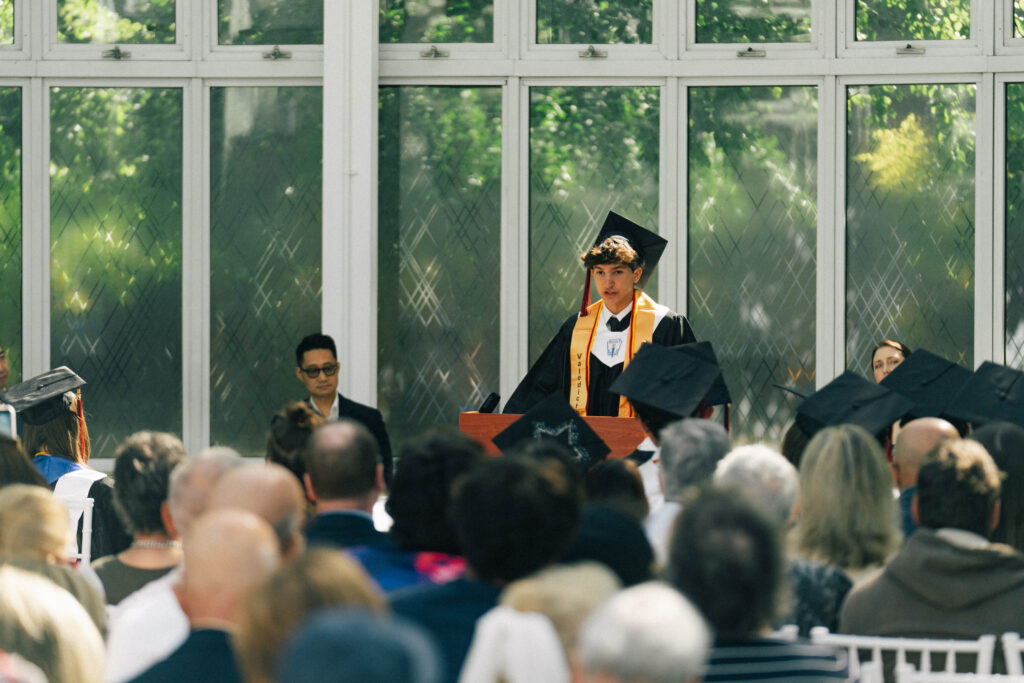
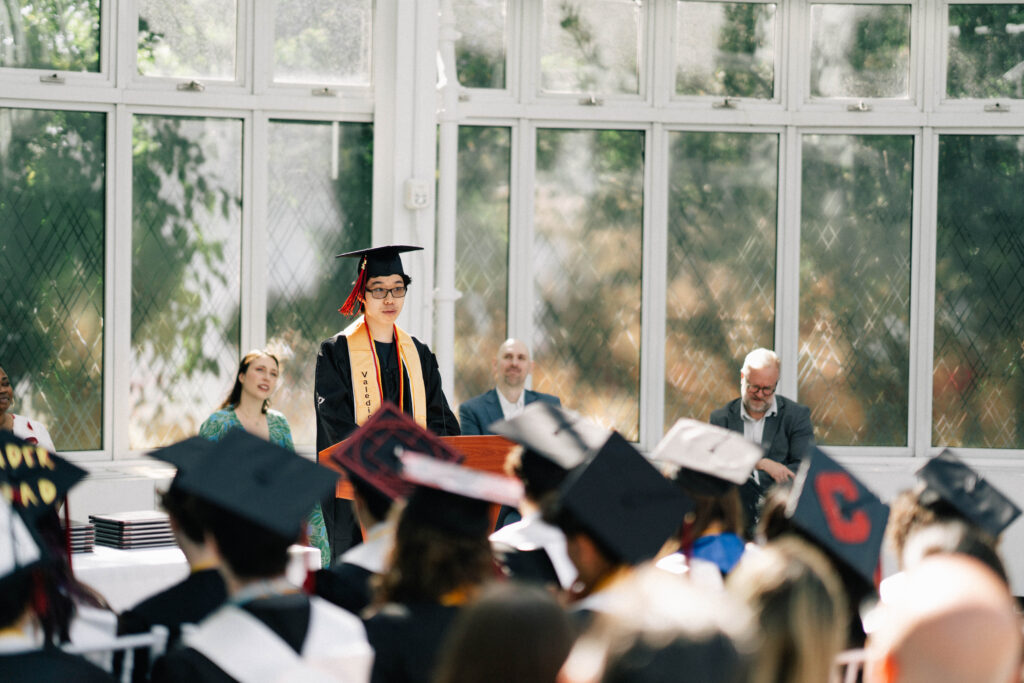
Maxim with BASIS Independent Brooklyn Head of School, Mr. Josh Harmon

Filed Under: Academics, Alumni, Awards & Recognition

Why BASIS Independent Manhattan is the Essential Bridge to High School Success

November 5, 2025 by christineklayman Leave a Comment

The transition to middle school is one of the most exciting shifts in a student’s academic life. For our grade 5 Wildcats in New York City, the “Bridge Years” (grades 4–5) have already marked a powerful trajectory toward independence and abstract thinking. By focusing on skills like self-advocacy, growing responsibility, and enhancing a fundamental love of learning, your student is uniquely prepared.

Staying at BASIS Independent Manhattan for grades 6–8 ensures that this momentum continues. Our private middle school in NYC is engineered to be a college preparatory pathway, teaching students to use knowledge as fuel for deeper understanding, unlimited exploration, and a strong basis for high school.

male student holiding up a latin project

The Grade 6 Academic Advantage

Our grade 6 curriculum intentionally introduces a level of rigor and organization that builds the intellectual foundation for our High School Program, which is designed for AP success.

Your grade 6 student’s schedule shifts to a fully departmentalized model guided by our Subject Expert Teachers:

  • Advanced STEM Curriculum: Students participate in a full course covering biology, chemistry, and physics three days per week. This integrated science sequence gives them a significant head start.
  • Differentiated Math Daily: Students are placed into either Pre-Algebra or the accelerated Algebra and Geometry I track, ensuring they are challenged at their precise level.
  • Core Humanities: Students receive daily instruction in English, Latin IB, and World History and Geography I.
  • Well-Rounded Student Experience: The week includes three days of electives (art, band, or drama), plus Physical Education and Sports at our partner facility Chelsea Piers.
students conducting a hands on activity in grade 6
female student in a lab coat mixing a solution in chemistry
grade 6 students looking through a microscope
upper school students act out math with their teacher in the classroom

Mastering Executive Functioning and High-Stakes Assessments

Exposure to a challenging curriculum is strategically coupled with intentional lessons that develop critical executive functioning skills. Grade 6 is where students adopt study habits and organization systems that lead to success in high school, college, and beyond.

To prepare students for college-level final exams, our middle school utilizes Pre-Comprehensive Exams (Pre-Comps), which are formative assessments, and Comprehensive Exams (Comps), which are summative. Students learn how to manage and synthesize a large body of knowledge in a supportive environment.

This growth succeeds through our robust student support system, including:

  • Peer Tutoring: One-on-one study help from experienced high school students who have mastered the material.
  • Homeroom and Advisory: Structured time for community building and guidance.
  • Student Hours: Opportunities to meet directly with Subject Expert Teachers for personalized academic support.

Our Middle School is intentionally designed as a safe place to explore, take risks, make mistakes, and find passions, all while gaining exposure to the content and skills that will set them up for future success.

two female students in front of their organized lockers

What Our Parents Say

Word of mouth, online reviews, and parent testimonials are an important part of the search for the best middle schools in NYC. One Wildcat family, who are in their seventh school year with us, shares why they chose BASIS Independent Manhattan middle school for their current grade 9 student, as they prepare for their younger daughter to make the transition to middle school in 2026-27.

“We are so happy we stayed for middle school. Our ninth-grade daughter, Emma, is thriving in high school because of the strong foundation built throughout her school experience at BASIS Independent Manhattan.
While the academics are advanced, I see how students, including my daughter, are now truly ahead of the game in life skills—she’s come a long way and has acquired fantastic organizational systems and time management skills. She takes ownership for her failures as much as her successes, which is huge.
All of this happens in a supportive environment provided by the teachers and staff, but even more so among her classmates. I love seeing how much they root for one another and work to build each other up.”
— Leila G., Parent of Emma (Grade 9) and Lina (Grade 5)

Another middle school parent Alex B., explains why our students are “monumentally more prepared” for high school rigor, AP coursework, and critical thinking challenges—because they’ve been building those skills since middle school. Watch the video:


Learn More

See how the BASIS Independent Manhattan Middle School Program prepares students for a competitive high school and college path.

Visit Our School
four students playing chess and socializing on the roof

Filed Under: Academics, Culture of Support, Featured, High School, Middle School, Student Learning, Student Support

A Day in the Life: Grade 7

November 4, 2025 by mirandamartinez Leave a Comment

Meet Aarohi!

Aarohi A. is a Grade 7 student at BASIS Independent Silicon Valley who approaches each day with curiosity, creativity, and a love of learning. She enjoys exploring new ideas, connecting with friends, and challenging herself academically. We had the chance to shadow Aarohi and see what a typical school day looks like, from her first class to the last.

All BASIS Independent Schools utilize the BASIS Curriculum, an internationally benchmarked program designed to challenge students while equipping them with the skills, knowledge, and support they need to excel academically, think critically, and succeed in high school, college, and beyond. Continuously refined by curriculum experts, it ensures students like Aarohi are supported in every subject and fully prepared for the academic challenges ahead.

Period 1 | 8:25 AM – 9:10 AM | French I A

Aarohi starts her day in French class, developing listening, speaking, reading, and writing skills while building cultural awareness. Students engage in conversations and practice grammar and vocabulary to communicate effectively in real-world situations. Aarohi enjoys the energy of morning classes and starting her day with something creative and interactive.

Grade 6 students take Latin as their World Language, and beginning in Grade 7, they have the opportunity to choose between French, Latin, Mandarin, and Spanish.

Period 2 | 9:15 AM – 10:10 AM | World History & Geography II + Homeroom

History is Aarohi’s favorite subject, and it’s easy to see why. During World History & Geography II, she explores the histories of Africa, Asia, Europe, the Americas, and Oceania from 1450 to today. “I’ve enjoyed the National History Day project we just kicked off this week,” she shared. “We’ll be creating presentations based on this year’s theme, and I’m hopeful about the possibility of advancing to the competition.” The last 10 minutes of the period are dedicated to homeroom, where students catch up on announcements and connect with classmates.

Period 3 | 10:15 AM – 11:00 AM | Algebra & Geometry II

In Algebra & Geometry II, Aarohi tackles equations and problem-solving exercises that build her mathematical reasoning. She enjoys collaborating with peers and exploring creative ways to solve challenging problems.

*Grade 7 students take either Algebra and Geometry I, II, or Pre-Calculus as their math course.

Period 4 | 11:05 AM – 11:50 AM | Lunch

Aarohi’s favorite part of the day is lunch. “It’s the perfect time to relax and connect with friends from different classes before the afternoon sessions begin,” she said. Her lunch breaks are never dull — she and her friends often play Truth or Dare or, on more adventurous days, “simulate the Hunger Games in a style similar to Dungeons and Dragons!”

Period 5 | 11:55 AM – 12:40 PM | English 7

In English class, Aarohi strengthens her reading, writing, and critical thinking skills. She explores poetry, novels, speeches, and other texts while analyzing literary devices and practicing advanced vocabulary. Outside of class, Aarohi enjoys writing poems and short stories — and one of her biggest goals is to publish her own book or an anthology someday.

Period 6 | 12:45 PM – 1:30 PM | Elective MS: Computer Science II

In Computer Science, Aarohi develops her computational thinking through text-based programming projects. She learns about algorithms, web technologies, and game development while designing her own unique projects that encourage creativity and problem-solving. She’s also part of the school’s Robotics and Algorithm Problem Solving and Data Structures clubs, where she enjoys applying what she learns in class to real-world challenges.

*Grade 7 elective options can include Band/Orchestra, Computer Science, Creative Writing, Introduction to Engineering, Piano, Stagecraft, and Visual Arts

Period 7 | 1:35 PM – 2:20 PM | Physics 7

In Physics, Aarohi explores motion, forces, energy, momentum, and waves. She applies math to real-world scenarios, conducts experiments, and learns how physical laws govern the world around her.

Period 8 | 2:25 PM – 3:10 PM | Biology 7

Aarohi ends her academic day in Biology, studying the diversity of life from cells to ecosystems. She investigates natural selection, classification of organisms, and interactions between living things and their environments. During class, a group of Aarohi and her classmates were working on a biology simulation game, which made learning the concepts interactive and fun.

Office Hours | 3:15 PM – 4:00 PM

Teachers hold Office Hours throughout the week, providing flexible one-on-one or small-group support. During this time, students can ask questions, review challenging material, or dive deeper into subjects that interest them. This extra support helps students strengthen their understanding, build confidence, and stay on track with their learning.


In Middle School, students take three separate science classes: Biology, Chemistry, and Physics. On the day we shadowed Aarohi, she had Biology and Physics, while Chemistry is scheduled on other days of the week. Health and PE & Sports are also held on select days throughout the week. Taking science as three distinct courses allows students to focus on each discipline in depth, make connections across concepts, and build a strong foundation for high school science.

Beyond her academic life, Aarohi enjoys playing tennis and piano and takes pride in her leadership roles on campus. “This year, I’m proud of two particular accomplishments: speaking as a Student Ambassador at the Middle School Curriculum Night and being selected for this Student Spotlight,” she said. When asked what she loves most about being a BASIS Independent Silicon Valley student, she shared, “The amazing teachers and the supportive environment created by the staff.”

Looking ahead, Aarohi hopes to continue nurturing her creativity through writing and says her best advice for younger students is: “Study hard and do what you know you’re going to like and excel at!”

BASIS Independent Dublin is a Grades 6 – 12 private school, providing students with an internationally benchmarked liberal arts and sciences curriculum, with advanced STEM offerings. Considering joining the BASIS Independent Dublin community? To join our interest list for the next school year and receive admissions updates and more, please click here.

Filed Under: Academics, Student Life, Uncategorized

Introducing the BASIS Independent Dublin Mascot

November 3, 2025 by nathanielyinger Leave a Comment

We are thrilled to announce that our school mascot will be the BASIS Independent Dublin Timberwolves!

A school mascot is much more than a symbol. It represents the heart and spirit of the entire community. It unites students, teachers, and families under a shared identity, creating a sense of belonging and pride that extends far beyond the classroom. The mascot helps build tradition and school spirit, inspiring students to support one another, celebrate achievements, and face challenges together. Whether it’s cheered for at games, displayed in hallways, or worn on school swag, the mascot reminds everyone that they are part of something bigger – a community that values teamwork, perseverance, and pride in who they are.

Why did we choose the Timberwolf?

In many ways, the Timberwolf perfectly encapsulates the spirit of our community — strong, loyal, and united. Timberwolves are known for their teamwork and intelligence. They rely on one another, move together as a pack, and face every challenge with courage and determination.

Just like a Timberwolf pack, our students, staff, and families will support one another, celebrate each other’s successes, and grow stronger together. The Timberwolf reminds us that we are bold, resilient, and unstoppable — especially when we move forward as one community, one pack!

Selecting our mascot has been a community effort, with ideas and inspiration coming from future students, families, and faculty alike. This process gave everyone a chance to share what they felt best represented the heart of BASIS Independent Dublin — a brand new school that values curiosity, collaboration, and perseverance. By choosing the Timberwolf together, we’ve taken an important first step in shaping the traditions and shared identity that will define our school for years to come.

In these early years, the Timberwolf will serve as a symbol of pride and unity, inspiring our students to lead with integrity, work as a team, and strive for excellence both inside and outside the classroom. As our community grows, this shared symbol will continue to remind us of where we began — as a small but mighty pack, coming together to build something extraordinary.

What’s next?

As we begin our inaugural school year, students will have the opportunity to name the Timberwolf mascot! This will be an exciting step that will further strengthen our connection to the symbol that represents who we are and who we aspire to become.

Filed Under: High School, Middle School, School Community, Student Life

Parent Perspectives Shared at Our Fall Open House

November 3, 2025 by jogoldfarb Leave a Comment

At BASIS Independent Brooklyn’s recent Open House, several parents spoke on a panel about what drew them to our school and what stands out most based on their years in our community. We wanted to capture the conversation to help others understand what makes our school stand apart. Many thanks to all our parents for sharing their experiences!

Paul C. (Dad to Jasper in Gr. 10)

We were talking to one of my wife’s aunts, who lives in Arizona, and she told us that they’re building a BASIS [Independent] School in Brooklyn, and she told us that we needed to do whatever we could to get our kid into it. She’s an educator in Arizona, so she was very familiar with the BASIS Curriculum. That’s why we came to the school and took the tour, and it was so inspirational. Literally, my wife was crying because it just felt like this is what we’re looking for.

This school has a reputation for being a really challenging school. However, the truth is, in our experience – and it’s been about 10 years now – that BASIS [Independent Brooklyn] is going to make your kid a better student, no matter what their capabilities are. That’s what’s most important.

The other thing that I loved in this whole process and journey, are the relationships that my son has developed with the teachers along the way. They talk about classes; they talk about movies and more. He’s leaned into a lot of different and varying interests here. I think that is possible when you are at a school that has a smaller student body. The school and the teachers You’re able to have a more meaningful relationship with the students and nurture their interests.

Seema S. (Mom to Sonia in Gr. 6):

My daughter, Sonia, started here in third grade, so this is her fourth year at Basis. Our family is very happy with Basis.  When we started looking at schools, we were looking at different public and private schools. My husband was very keen on BASIS Independent Brooklyn. He’s an engineer by background. So, he was looking for a rigorous STEM education. I was a little bit skeptical because I wanted a more well-rounded, and I thought BASIS [Independent Brooklyn] might be too STEM-heavy.

 We’ve been really impressed with the breadth of the curriculum.   For example, Basis offers classes in creative writing, philosophy, drama, music, and choir. The administration has been building out its sports program as well. In fourth grade, the kids put on a school play – Alice in Wonderland, and it was amazing. It was so impressive. The students even designed the props, and the acting was great. My daughter loves her creative writing class. So, I think it’s a very well-rounded education.

Ralf S. (Dad to Frankie in Gr. 5 and Alba in Gr. 7):

I’m the very lucky father of two daughters here at BASIS Independent Brooklyn. Frankie is a fifth grader, and it’s her eighth year at the school. Alba is a seventh grader, and it’s her tenth year at BASIS Independent Brooklyn. We came to the school for many of the same reasons as the other parents mentioned. In 2014, there was a newspaper article about a new school in Brooklyn with a world-class learning culture and high-level education that combines that with the joy of learning. It sounded great on paper because that’s a virtuous circle: The more they learn, the more they enjoy learning, the more they learn. It’s just this positive upwards spiral, and that’s definitely been proven to be so over the past 10 years.

Let me just pick a couple of specific reasons why we love the school.

One, my daughters learn a lot overall, but they also learn how to learn. And that’s almost more important to me than any specific subject matter. For example, they learn about time management and organizational skills. It is so important that they learn how to organize themselves, how to communicate, and how to deal with “struggle”. These kids have the skills to learn.

Second, we love that the school normalizes failure. I actually think BASIS [Independent Brooklyn] is a super nurturing school. If you look up the word nurturing in the dictionary, it says that it means “to help somebody develop and succeed.” And that’s exactly what the school and the teachers do.

As mentioned, one example is to normalize failure. For example, in science, let’s say you have a project to build a bridge, you build your project while working with your team. Then let’s say the bridge doesn’t hold the weight that you wanted it to hold. Okay, that’s fine. You deal with it. You talk to your classmates. You talk to teachers, you go to student hours, and you just try again. It’s okay to fail. And then you pick yourself up and try again.

In my opinion, one of the most important things to succeed in life is developing resilience and grit and never giving up. And BASIS [Independent Brooklyn] kids have an abundance of that because they’ve just learned this throughout their classes. I think it’s much better to have these experiences and to learn skills dealing with failure now rather than when you’re going into college.

Rajashree C. (Mom to Leandra in Gr. 5):

My daughter has been at BASIS [Independent Brooklyn] from Kindergarten. Now she is in fifth grade, so we are entering middle school. We have a lot of respect for how they manage the transition from primary to middle school. This year, we’re really navigating what it means to not have what they call a Learning Expert Teacher. Students navigate classes of their own, move from one class to another. A couple of weeks ago I came in for the Meet the Teacher Night, and sometimes I’m surprised by all my daughter learning. I went home, and I asked her, “Do you feel like this is okay?” And she responds very confidently, “Yeah, it’s fine.” And this is how it’s been. It’s been an evolution.

Whatever level your students are at, based on my experience, BASIS [Independent Brooklyn] will help your students grow and be more responsible for their own journey and their own sort of pathways. That’s what’s been most interesting to me – how Leandra has grown.

=================

Thank you to our parents for sharing their experiences with prospective families, and thank you for the honor and privilege of educating your children!

BASIS Independent Brooklyn is a PreK–Grade 12 private school, providing students with an internationally benchmarked liberal arts and sciences curriculum, with advanced STEM offerings. Considering joining the Bears community? To join our interest list for the next school year and receive admissions updates and more, please click here.
Filed Under: Academics, Admissions Events, Community Values, Culture of Support, Featured, Fine Arts, Humanities, STEM, Student Learning, Uncategorized

Top 10 Questions Asked Every Admissions Season: Part Two

October 31, 2025 by aixuanwang Leave a Comment

The Early Admissions deadline is only two weeks away! Every admissions season, we field hundreds of questions about the admissions process, our program, the transition, student life, electives, extracurriculars, and much more! We are always happy to hear from and speak with every one of our families, and we have found that many of the same questions tend to come up often.

Keep reading below to learn more about the second half of the top ten questions asked every admissions season. Click here to read Part One.

5. How much homework should students expect in Middle and High School?

This depends on the student, their core classes, electives, after-school activities, and even what time of year it is, especially in High School. Grade 5 students will typically see an hour to an hour and a half of homework every night, but that will depend on the day and the student. Grade 6 -7 students will have 60 to 90 minutes of homework. Grade 8 students, as they prepare for our High School program, could have 90 to 120 minutes of homework each night, but that once again depends on the student and their schedule.

Our Student Affairs Team assists in monitoring homework, but since each student, their work habits, and their personal schedules can vary, it is hard to say an exact time for each grade.

6. With such a demanding course load, do students even have time for clubs and sports?

Absolutely! Over 80% of our student body participates in at least one extracurricular activity at our school every year, including clubs, competitive teams, and interscholastic athletics, but our answer to this is, “it always depends on the student.” We have High School students taking 6 AP classes and participating in 2 to 3 extracurricular activities, but we also have Lower School students who take their required coursework and only have time to participate in one club.

Students are given the tools to learn and practice organization, time management, and work and study habits, but no two students are alike. It is more important to us that our students learn to take on only what they can handle, challenge themselves when appropriate, and learn when and if they need to turn their focus elsewhere. Many students may play a sport or participate in a club on campus ,but also engage in an activity outside of school, such as ballet or martial arts.

Our students learn to manage their time while exploring and enjoying their extracurricular interests and passions.

7. What is your teacher hiring process?

We believe academic degrees or experience in the disciplines taught, and a passion for that subject, are the most important tools for inspiring deep content understanding in students. Our selective hiring process screens for candidates who are committed to sharing their expertise and helping students become the best versions of themselves. All final candidates are invited to conduct a Teacher Demo, where the Head of School assembles a classroom of our students to observe.

Candidates are given the opportunity to teach a lesson, challenge students, showcase their passion for their subject area, as well as show their ability to communicate high-level subject matter to young students. Our students take these sessions seriously; they know their feedback weighs heavily on our hiring decisions. Some new faculty members have been teaching for years in college preparatory or university settings. Others are leaving a research lab or corporate job to leap into a new career and share their experience and applied knowledge with BASIS Independent students.

8. What is your student-to-teacher ratio in the classroom?

Our overall student-to-teacher ratio is 7:1, but class sizes vary according to division and course content. Our Early Learning Program (Toddler-Kindergarten) will have around 20 students to two teachers (3 teachers for Toddlers) per classroom. Grades 1–4 will have around 25 students per class with a Learning Expert Teacher (LETs) who stays with them throughout the day, and will travel to classrooms with different Subject Expert Teachers (SETs) for each subject. Class sizes in Middle and High School are around 25 students and are taught by Subject Expert Teachers.

9. How do you teach soft skills, such as time management, self-control, and self-awareness?

At BASIS Independent McLean, we incorporate social-emotional learning (SEL) across all divisions. In Toddlers – Grade 4, we use a research-based program to guide our SEL instruction. Topics include problem-solving, friendship skills, and emotional literacy. LETs, as well as Deans and the Director, supplement by focusing on specific SEL topics as well as our EPIC Character Traits: Empathy, Perseverance, Integrity, and Curiosity. Middle School students have an advisory class each day and participate in a weekly advisory lesson that focuses on social-emotional support and executive functioning. Topics of discussion have included compassion, test anxiety, interpersonal conflict, collaboration, time management, effective study habits, organization, and homework planning. Grade 9 students have a block each week called EQ, which stands for Emotional Quotient, focusing on emotional intelligence. Students participate in activities and learning engagements focused on leadership, self-awareness, conflict resolution, and general social interactions.

Additionally, all BASIS Independent McLean students are part of a learning community—one that provides opportunities for young people to better themselves, take risks, achieve, experience failures, learn lessons, and more. Whether it be their behavior in the hallways, participating in class discussions, or connecting with friends during lunchtime or after school, students are learning these lessons through their relationships with their teachers and fellow students. It’s a daily journey, and one that sometimes requires students to be reminded of the community they are a part of, the respect they deserve, and the respect they are expected to show to others. This is where their relationships with their teachers, fellow students, and the Student Affairs Department really come into play.

10. How does the school work with families to help students discover their full potential?

It’s all about striking the right balance, which is different for every student, even students in the same household. At home, we encourage parents and students to have an open and honest dialogue about how they are doing, handling stress, what new passions and interests they want to pursue, how they want to challenge themselves, and even what they need to cut back on.

We take pride in highlighting our students’ skills in self-advocacy. This is why we believe that having “too much on your plate” is just as valuable a lesson as having a fully optimized schedule. At BASIS Independent McLean, we believe that a thorough and well-rounded education is one that embraces failure as a natural part of the learning process. Through failure, students are able to engage in critical skills, such as self-analysis and flexible thinking. Finding the balance in your personal life, social life, responsibilities, school, work, etc., is a journey that our students will take for their entire lives. We believe it is critical to encourage their enthusiastic exploration of these areas through their education.

We don’t see failure as a negative but rather as an opportunity to learn a different lesson than the one you intended. At school, we help students feel supported and encouraged to pursue something, whether it be starting a club or planning a Senior Project. If they succeed, we celebrate with them. However, far more is learned in those times when a student realizes they pushed themselves too hard, stretched themselves too thin, and did not accomplish what they initially intended to. Especially in those times, in partnership with their home, we are there to help them learn those important lessons, develop resilience and grit, and come back better than before.


BASIS Independent McLean is an Age 2–Grade 12 private school, providing students with an internationally benchmarked liberal arts and sciences curriculum, with advanced STEM offerings. Considering joining the Red-Tailed Hawks community? To join our interest list for the next school year and receive admissions updates and more, please click here.
Filed Under: Admissions, Early Admissions, Featured, High School, Middle School

  • Page 1
  • Page 2
  • Page 3
  • Interim pages omitted …
  • Page 32
  • Go to Next Page »

© BASIS Independent Schools

  • Contact Us
  • Media Recognition
  • Careers
  • Privacy Policy
  • CA Privacy
  • Terms of Use

Headquartered in Campbell, California, Spring Education Group is majority-owned by investment funds administered by Primavera Holdings Limited, an investment firm owned by Chinese persons and principally based in Hong Kong with operations in the United States, China and Singapore.

Sitemap