
• Skip to primary navigation
  • Skip to main content

BASIS Independent Schools

BASIS Independent SchoolsBASIS Independent Schools
  • About
    • Why BASIS Independent Schools?
    • Diversity & Citizenship
    • History
  • Academics
    • Curriculum
    • Preschool
    • Kindergarten
    • Elementary School
    • Middle School
    • High School
    • The Senior Year
    • Summer Programs
    • International Student Program
  • Achievements
    • International Performance
    • College Admissions
    • Advanced Placement
    • National Merit
  • Find Your School
Inquire

Student Learning

A Day in the Life of a Grade 4 LET – Ms. Strider!

October 23, 2025 by emilyhughes Leave a Comment

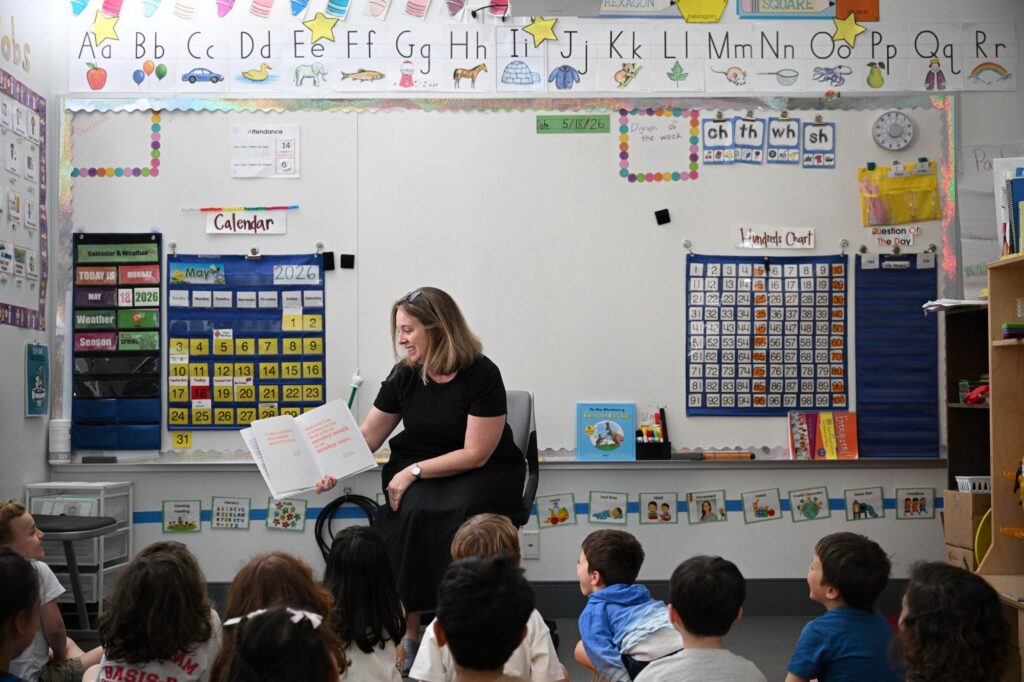
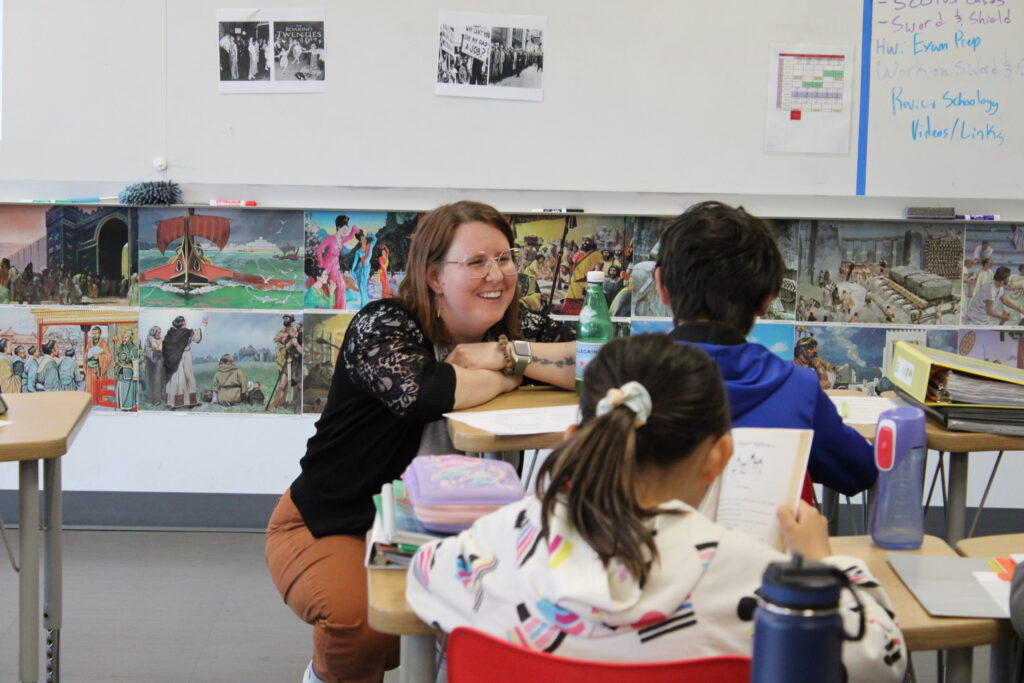
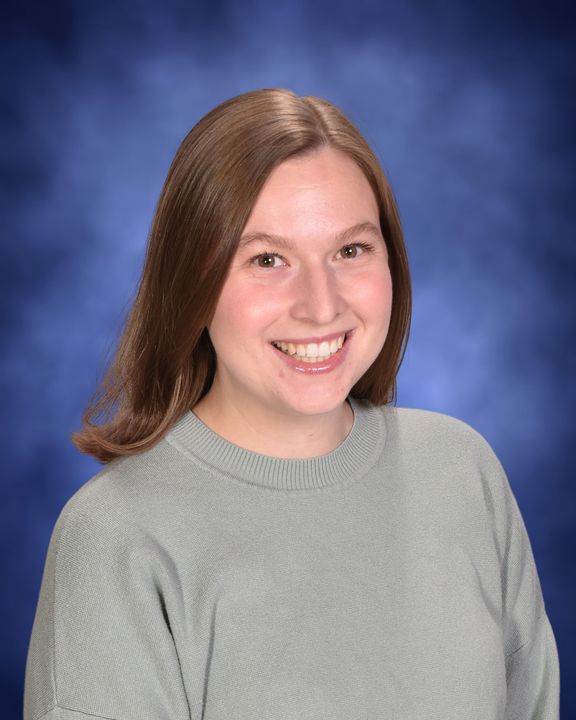
My name is Ms. Strider and I am the Grade 4 LET (Learning Expert Teacher) at BASIS Independent Bellevue. I stay with my class of students throughout the day, supporting both their academic development and personal growth. While Grade 4 students follow a full schedule similar to upper grades, my role is to help them build responsibility and independence as they prepare for Grade 5. I work closely with our Subject Expert Teachers (SETs) to collaboratively teach each subject, ensuring lessons are engaging and connected across disciplines. Because I see my students in every class, I gain a deep understanding of their learning needs and strengths. This allows me to form meaningful relationships with families and provide thoughtful, and accurate updates on student progress throughout the year.
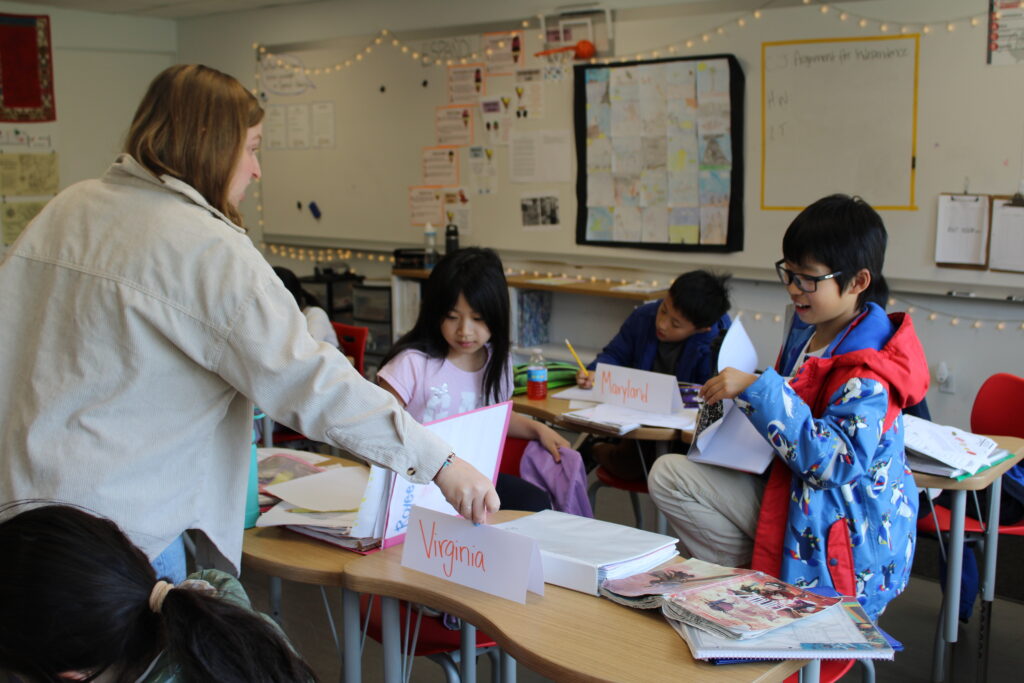
My day with Grade 4 begins at 7:55 AM when I pick my students up from the multi-purpose room and we head to our lockers to get ready for our day. Students get to say hello to their friends each morning, catch each other up on their fencing practice or dance rehearsal, and get the last of their wiggles out before it is time for class.

Period 1: Science with Ms. Delp!

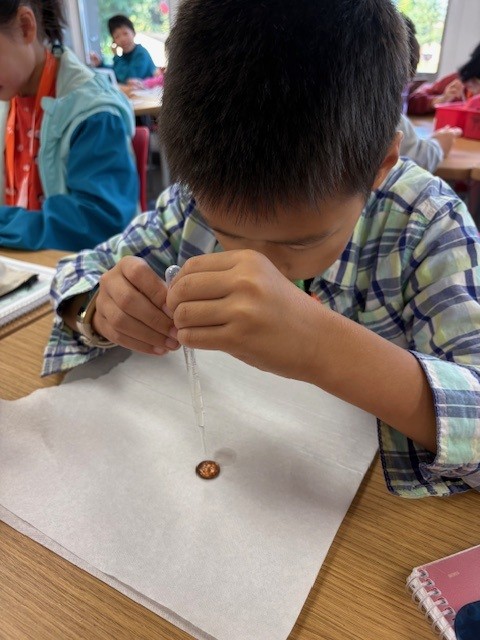
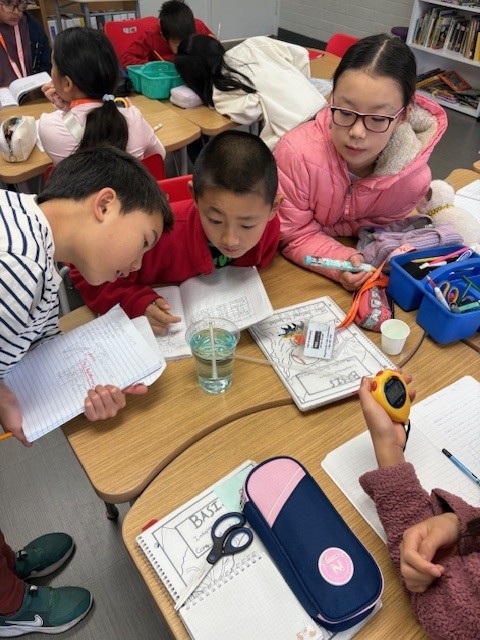
The first five minutes of each class look fairly similar throughout the day. Students are filling out their CJs (communication journals) and following any directions on the board as a warm up. In Science, students’ daily warm up is to copy down the notes from the board into their science folders so they have all the necessary information ready to go when it is time for a discussion or to start collecting data. Ms. Delp and I work together to provide Grade 4 students with materials, guidelines, and data points for a variety of different scientific activities. In the first month of school, we have measured our wingspans and compared our lengths to that of birds, tested if double stuffed Oreos are actually doubled stuffed, and explored surface tension by adding singular water droplets to pennies. Once we have our notes, completed our experiments, and graphed our data, it is time to clean up, pack up, and line up for our next class.
Period 2: Specials—Music, Art, Drama or Engineering!

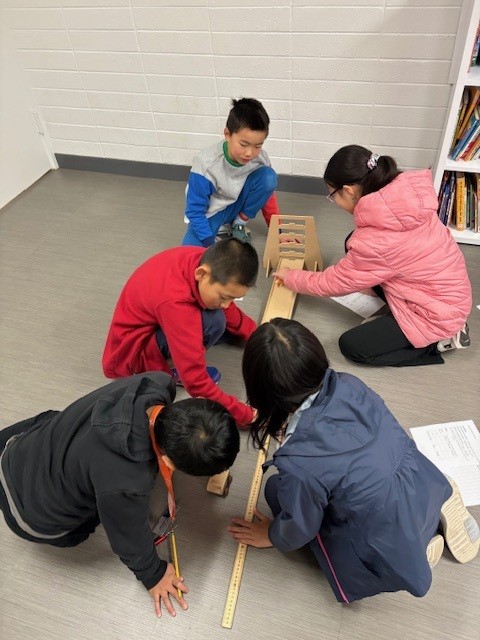
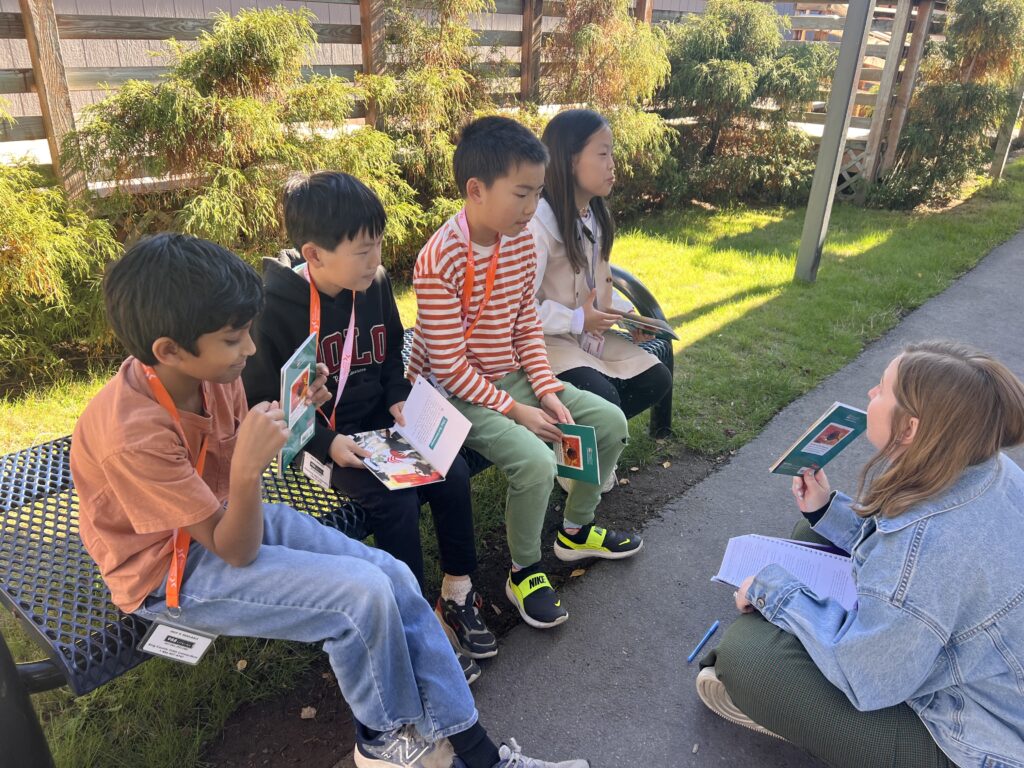
Primary students have a variety of specials throughout the week. This morning’s special is Engineering with Ms. DiBattista! Our Specials classes look different than the classic LET/SET model. During these classes, I sometimes work with small groups of students in various levels of reading groups conduct interventions or enrichment. Today, I pulled a few of my students to conduct a reading intervention activity, while the rest of my class did an engineering lesson with Ms. DiBattista. Students’ reading levels are decided by our process of reading assessments that happen once per trimester. With that data, students are placed into small groups, of 3–5 students, and work directly with me on various reading strategies such as identifying the main idea, providing text evidence, or determining character motivation. Building these skills will help students in English class, advance their literacy skills, and most importantly, allow them to be able to read and understand texts independently.

Period 3: English with Ms. Tseng!

Just like in Science class, students begin class by filling out their CJ’s, noting any homework or upcoming assessments, and working independently on their warm ups. Ms. Tseng and I usually collect this work and begin getting students ready for their Novel Study. Currently, we are reading The Phantom Tollbooth! We take turns reading pages in the book between Ms. Tseng, myself, and the students. Learning to annotate texts is a skill we are building and growing in Grade 4. The Phantom Tollbooth is great practice for these skills, as it has several settings and characters. Ms. Tseng may pause the reading to point out a vocabulary word that we need to write down. I may also pause when we meet a new character to take notes about their description and add a sticky note annotation. English class flies by when everyone is so invested in the story! Time to clean up, pack up, and line up for lunch and recess.


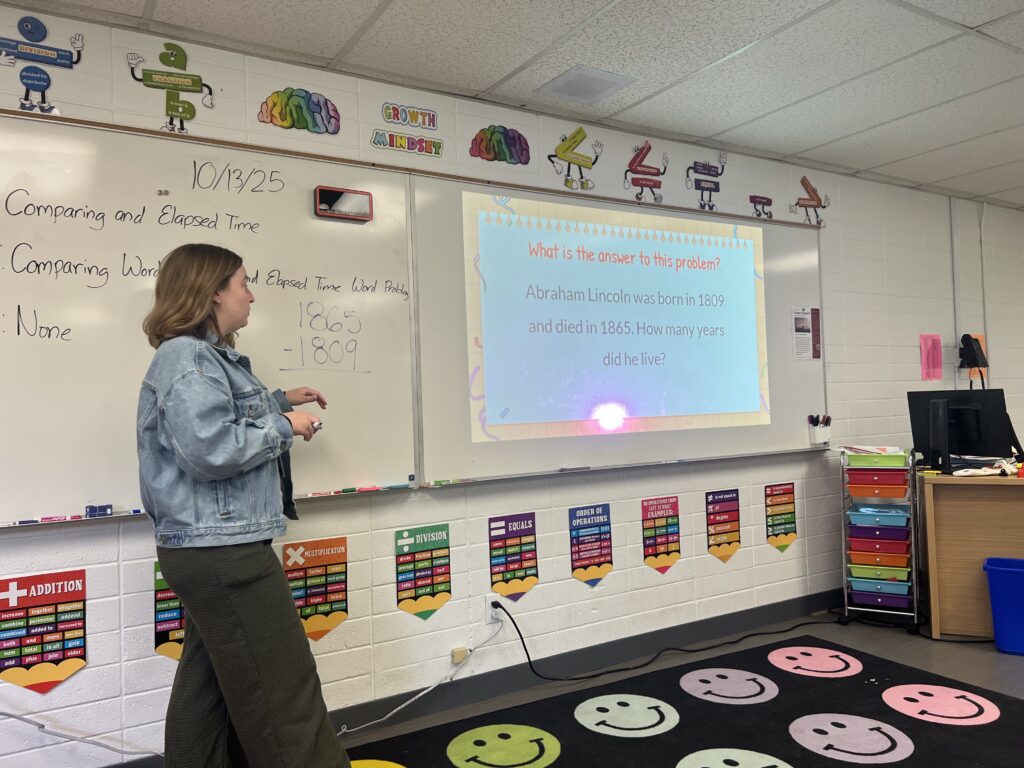
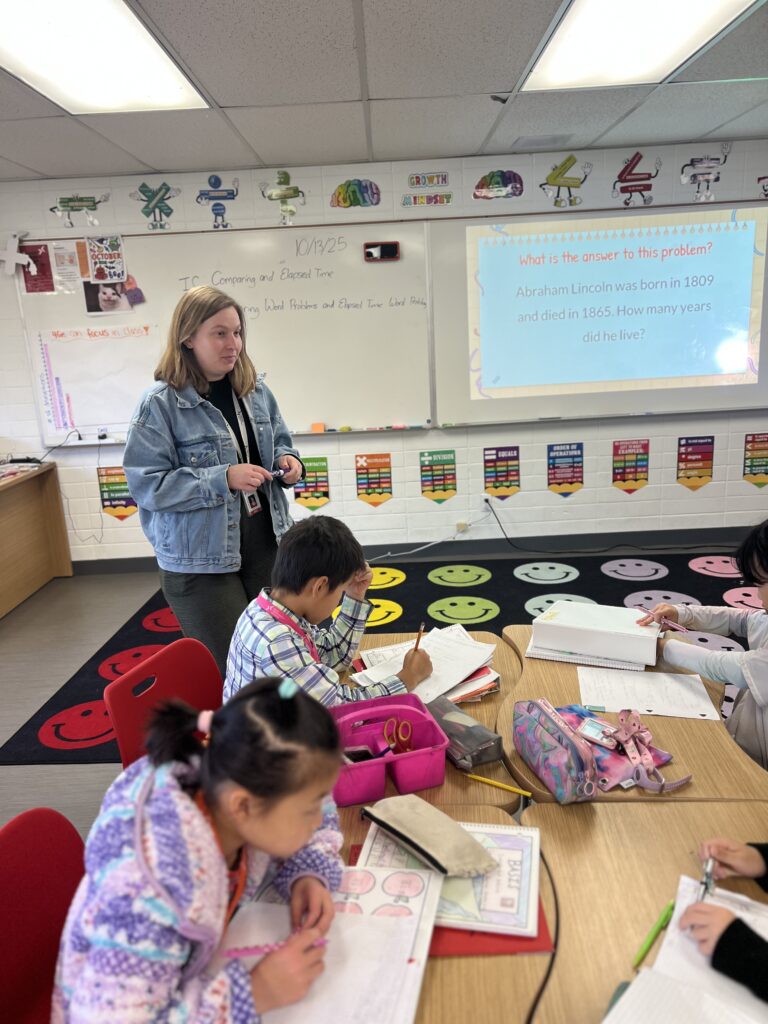
Period 5: Math with Ms. Tessler!

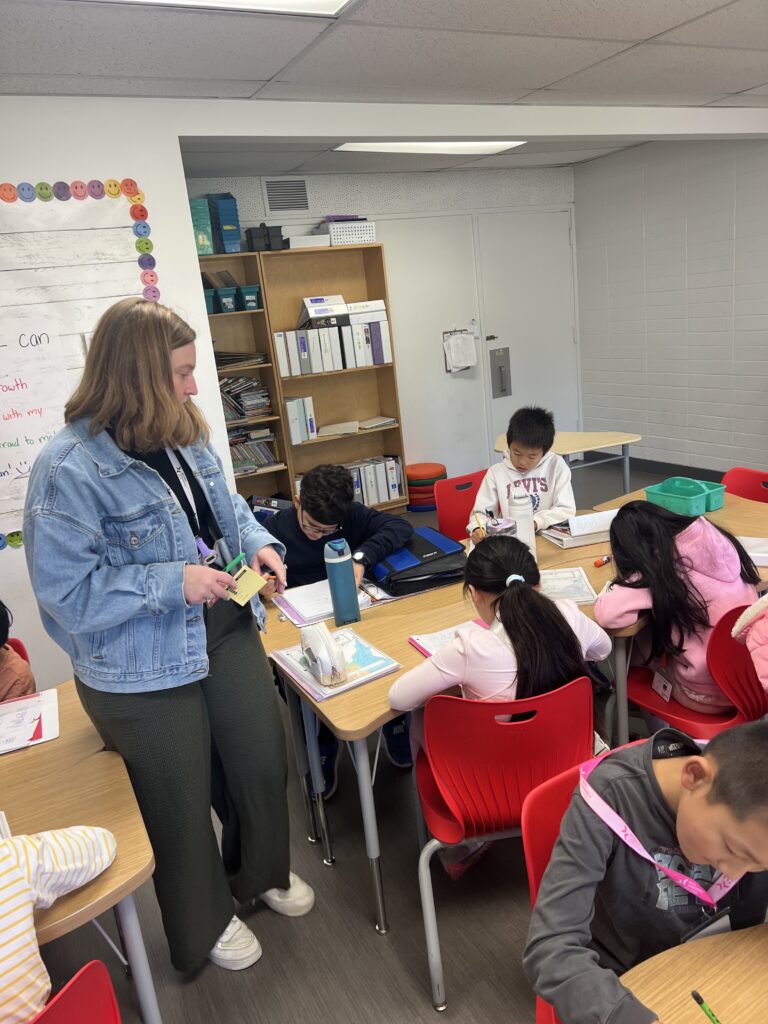
These consistent classroom routines make a huge difference in the lives of the students and the teachers. No matter what subject, students know exactly how each class is going to start and exactly what each teacher is expecting their behaviors should be. Grade 4 enters math class, fills out their CJs, and begins their math warm up. Math warm ups are usually a set of problems covering material that we learned the day before. I will go over the warm up with the class, model the work on the board, and answer any questions. Ms. Tessler will get the class set up and ready for notes in their math notebooks. As students are taking notes or working on their independent math assignment, this is a great time for me to look for students who are exhibiting qualities of P.A.C.E (perseverance, active, community, and empathy). Students who show one or more of these qualities at any time during the day receive a PACE Pass. Students turn in their earned passes to the front office to enter the grade level weekly raffle for a chance to win a small prize every Friday. Once all of our daily math tasks have been completed, it is time to clean up, pack up, and line up!
Period 6: Specials or Mandarin!

Three days of the week, Grade 4 has Mandarin class. There are two different Mandarin classes that students are sorted into from the beginning of the year based on ability-level. I do not attend Mandarin class, so I spend this time meeting with SETs, planning reading groups, or having an extra cup of coffee and a snack.

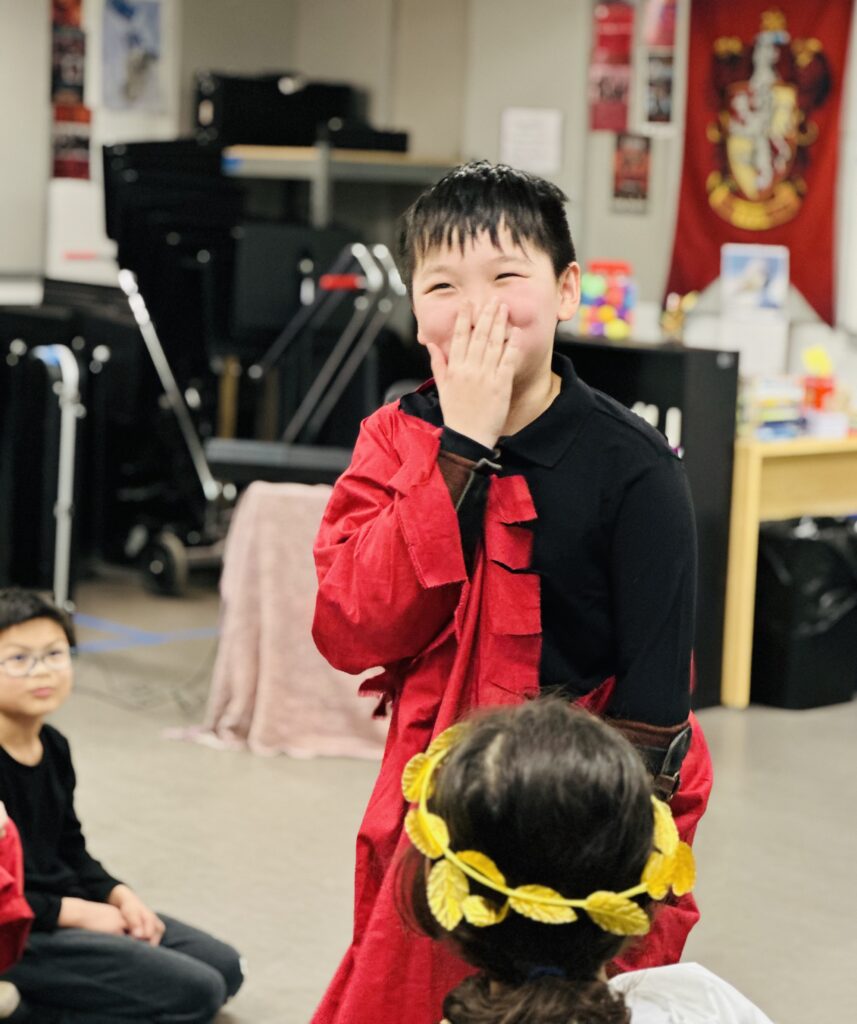
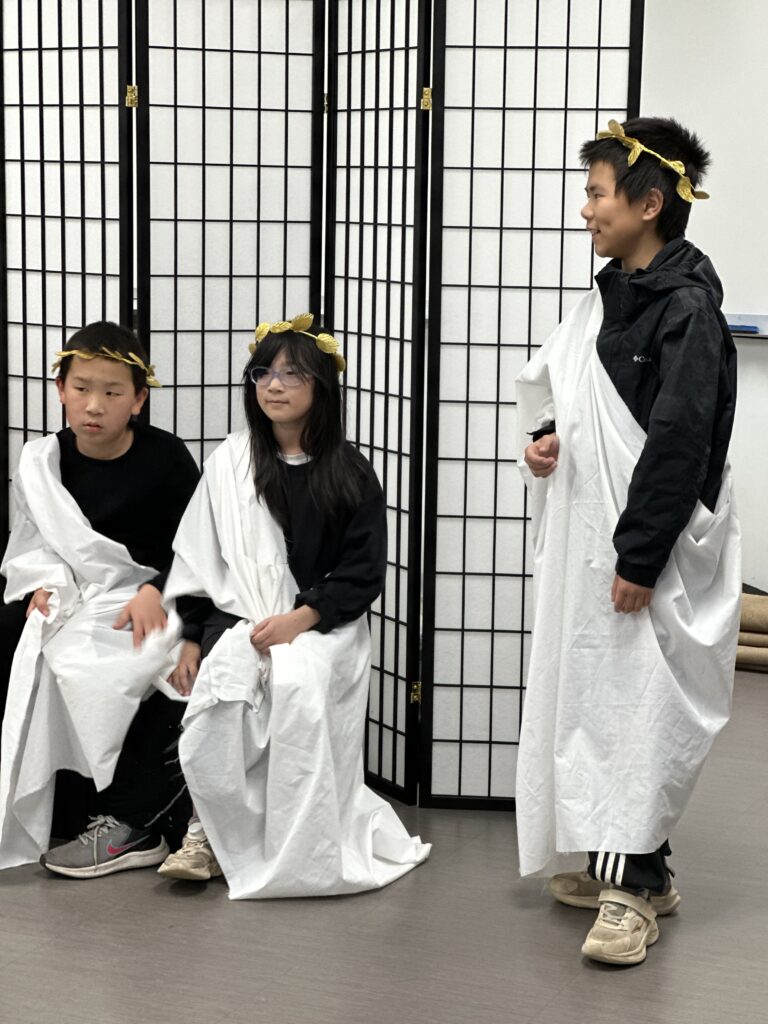
However, this afternoon is Drama with Mr. Mullens! Once all of the students have entered the drama space, filled out their CJs, and listened to Mr. Mullens’ daily expectations, I begin pulling another round of small reading groups. Groups can meet once, twice, or three times a week depending on students’ needs for reading and decoding texts. In Drama class, students are working in three different casts to write their own scripts for the upcoming spring performance. Even though some students are pulled away during the script writing, the entire cast works collaboratively and is able to quickly and effectively fill in any students upon their return to the classroom.
AE (Academic Enrichment) Time!

All students Grade 4 and above have a 20-minute AE period each afternoon. There are a variety of ways to spend a Grade 4 AE period: study hall, brain breaks, or most often, SEL (Social Emotional Learning), lessons and activities. For our SEL lessons we utilize a program called CharacterStrong at BASIS Independent Bellevue. Each month is centered around a character trait theme—October’s is Responsibility. Throughout the month, our class engages in mini-lessons, discussions, videos, and games designed to help students learn about and practice being responsible in their daily lives. Because academic expectations are high on this campus–even in the primary grades–it’s important to remind students that they are more than their grades, and that being a kid is about learning and growing in all areas of life.


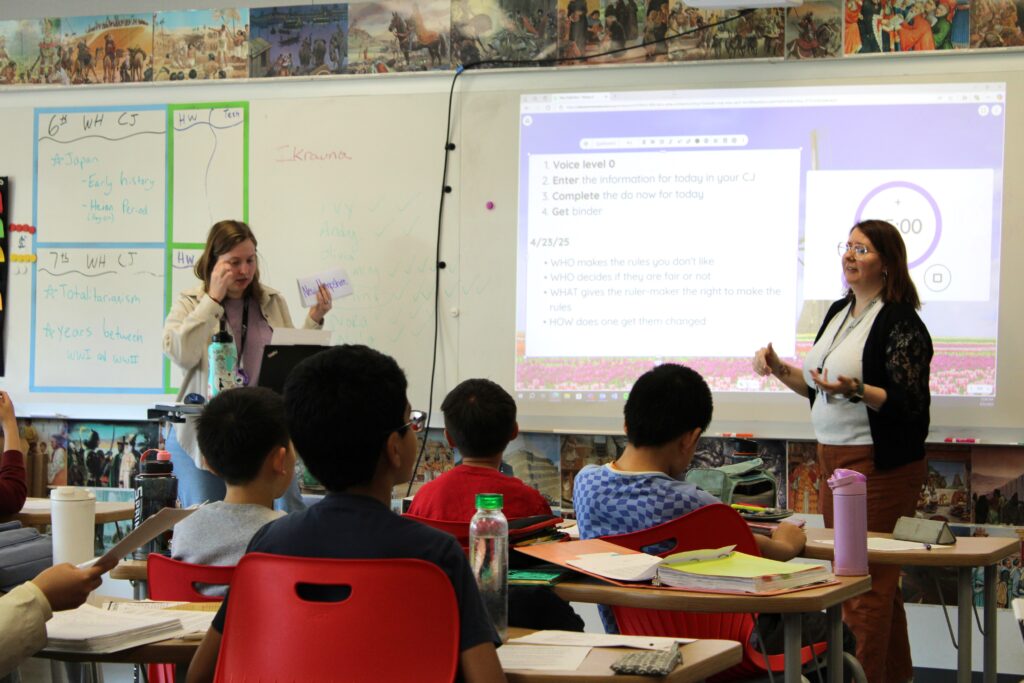
Period 7: History with Ms. Rieger!

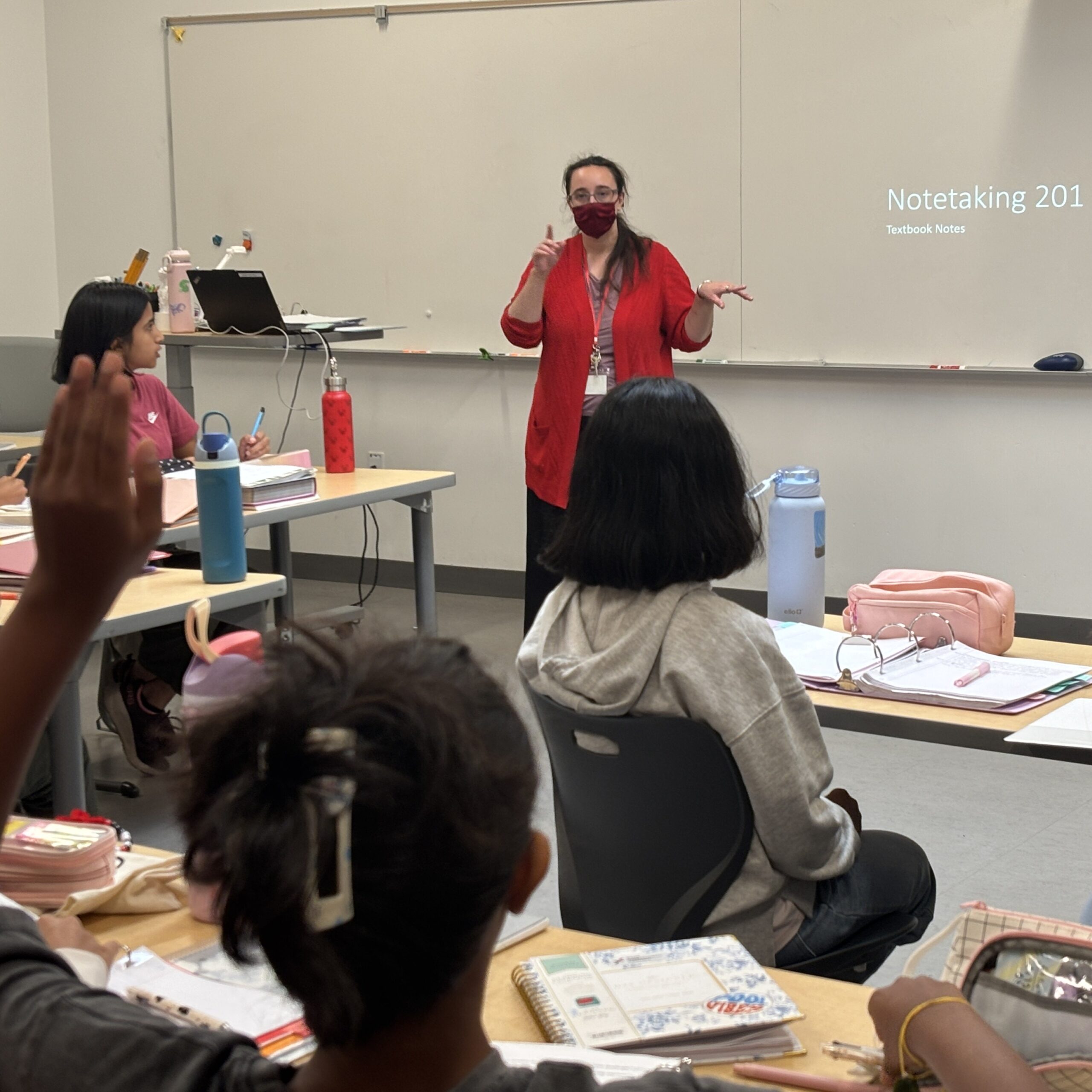
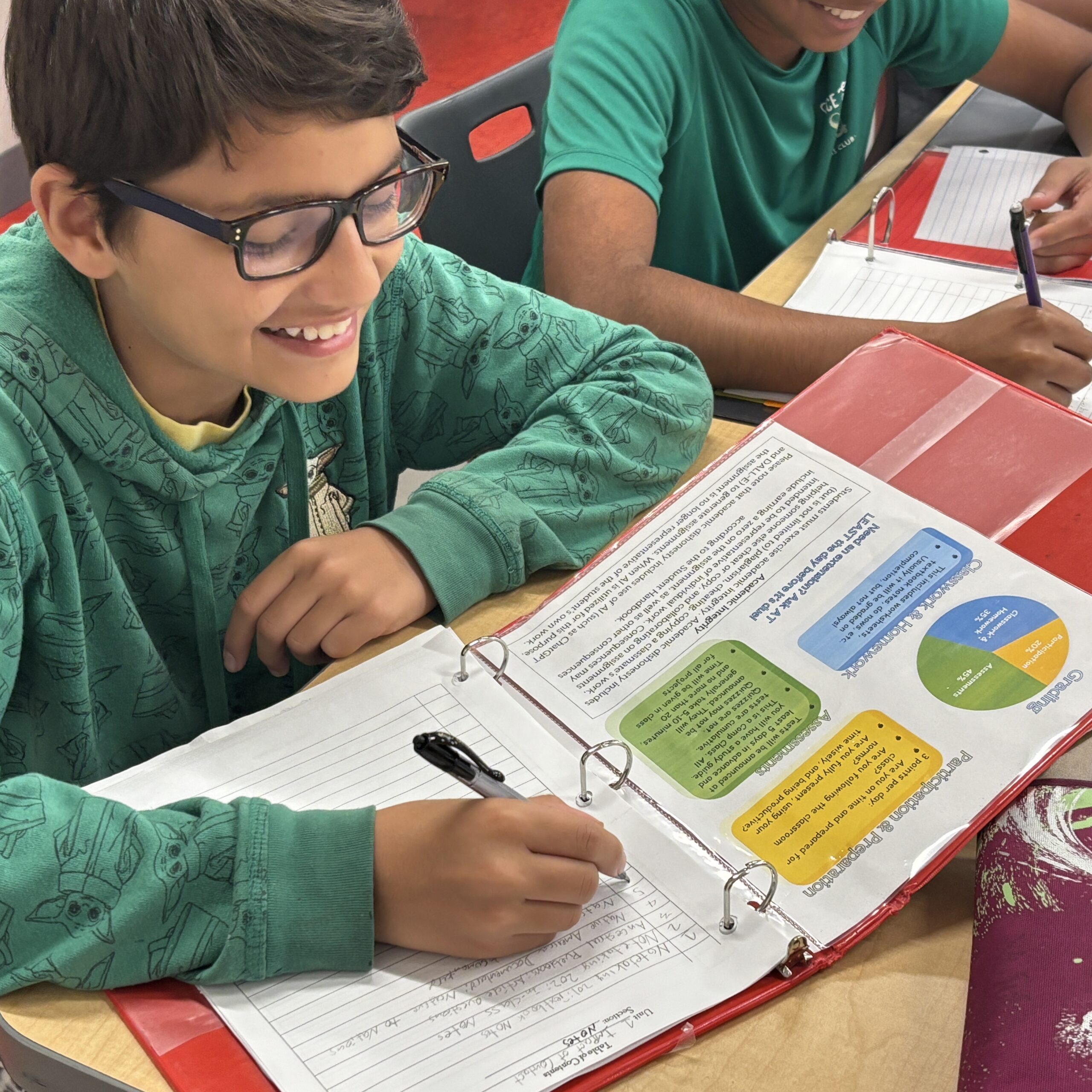
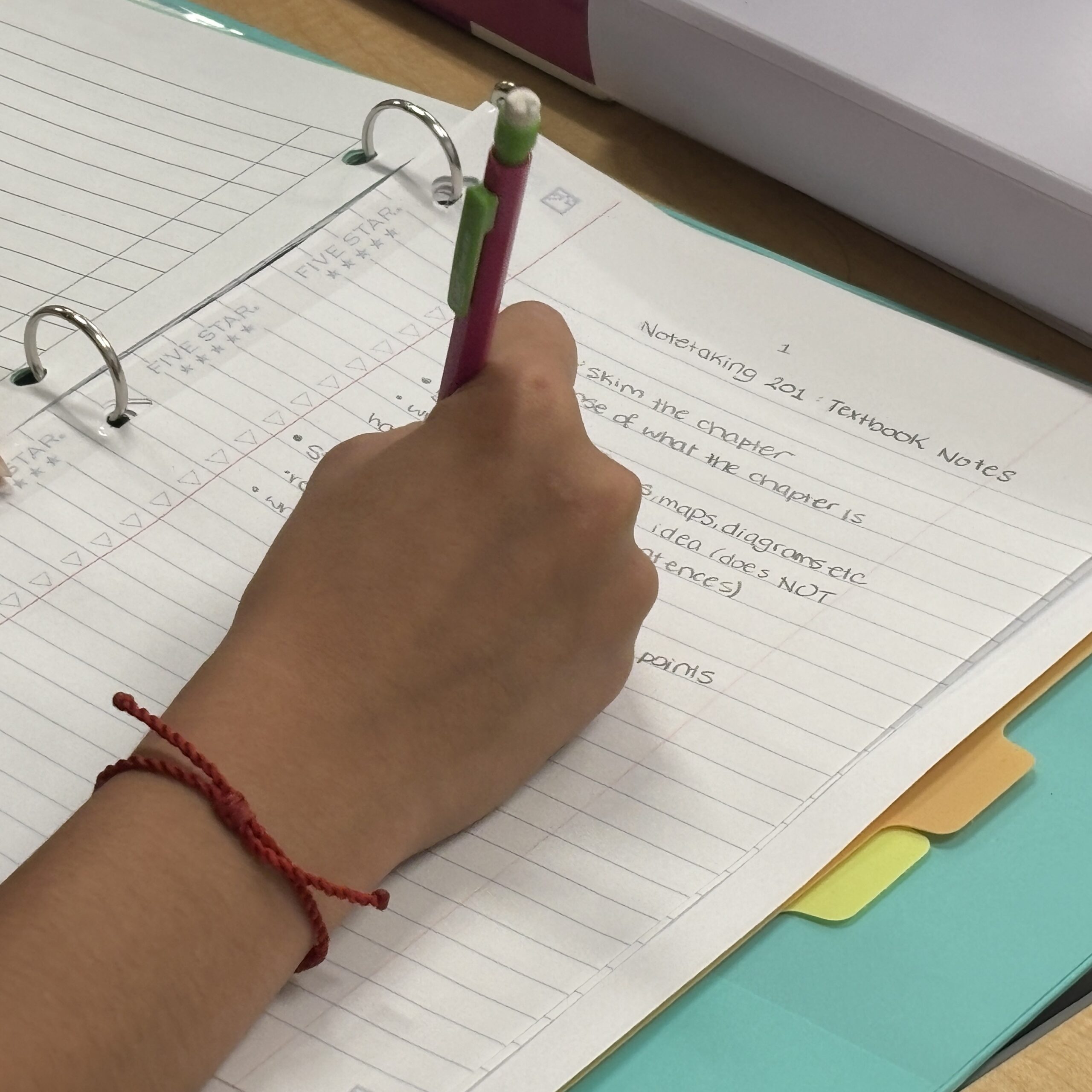
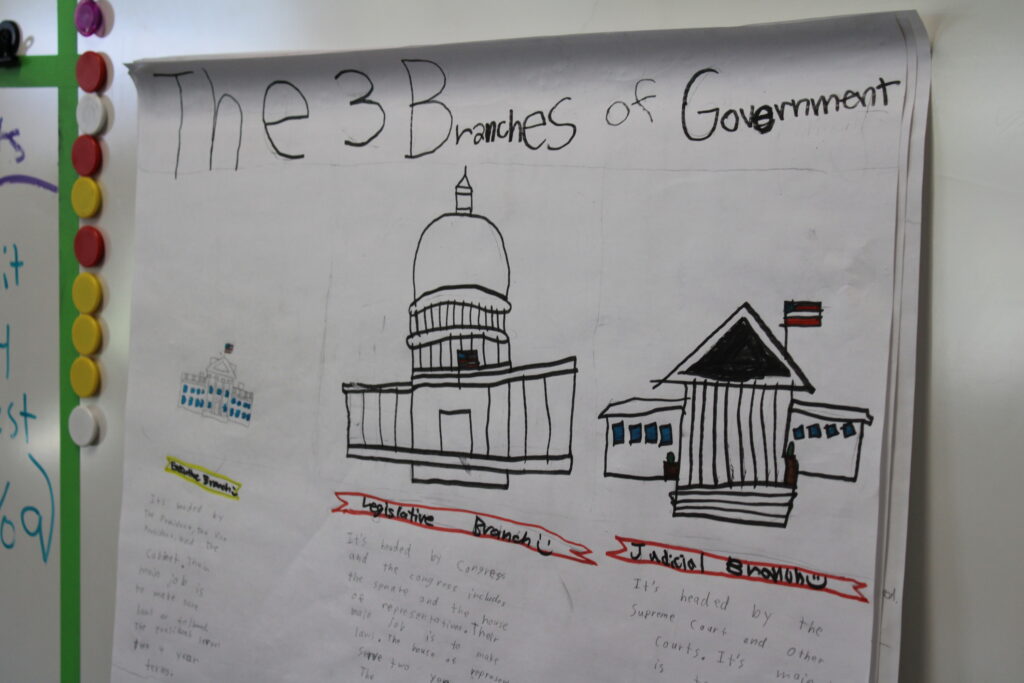
Our last core class of the day, but procedures and expectations remain the same. Students enter the classroom quietly, fill out their CJs with today’s topic, homework, and upcoming tests. Warm ups in History require students to have their binders and answer the questions on the board neatly on a piece of notebook paper. When the five–minute timer goes off, I read each question with the students and go over the answers. Often in this course there is some background information to read before students can dive deep into the new content, analyze cause and effects, and collect evidence. At the beginning of class I will read the passages with the students and have some student helpers annotate for vocabulary and important details. Then Ms. Rieger will share her slides, photographs, or stories about the time period we are focusing on and begin to ask critical thinking questions to the class. After notes, worksheets, or discussions, it is time to clean up, pack up, and line up once again.

Period 8: PE with Coach Shelp!

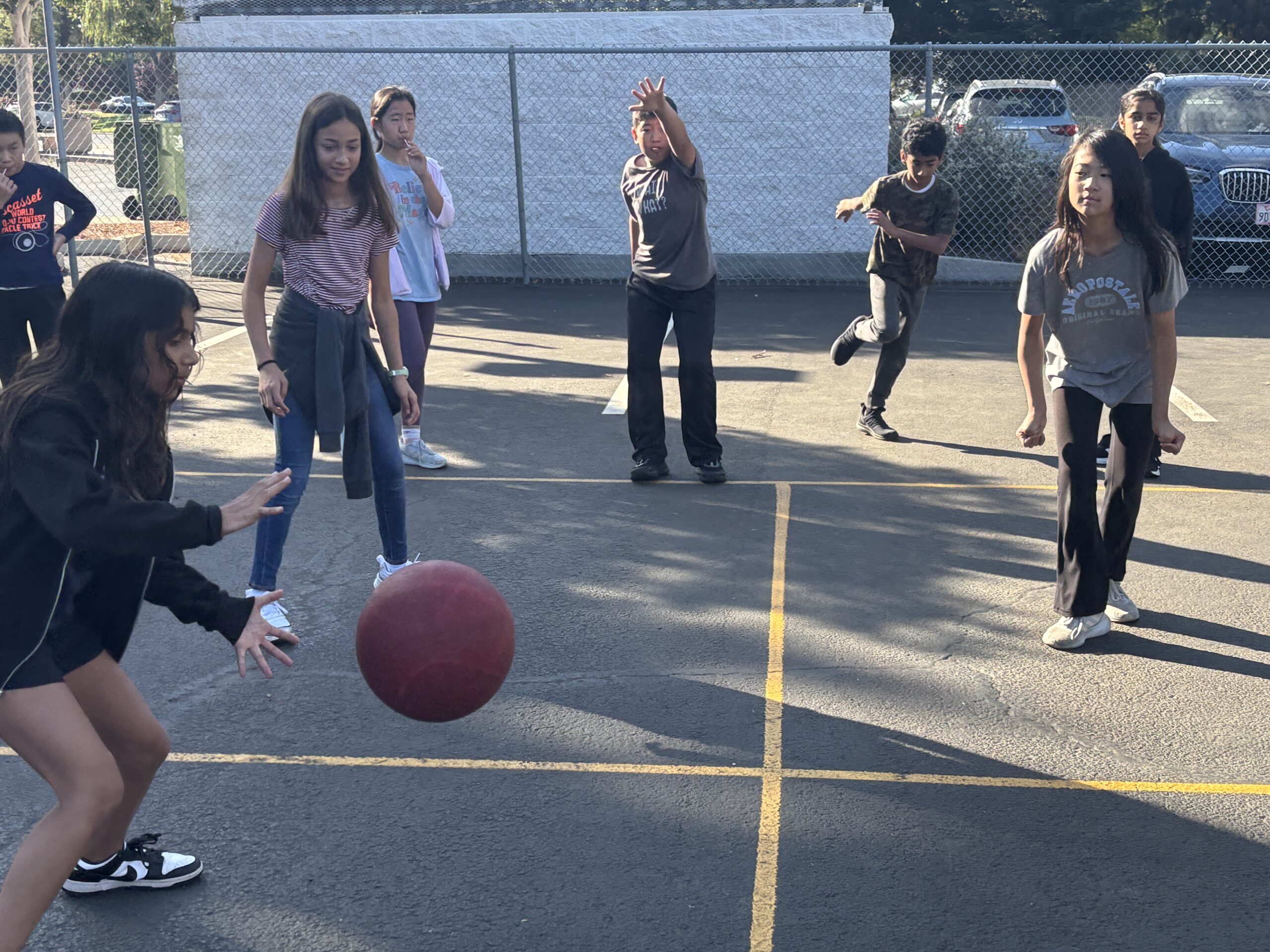
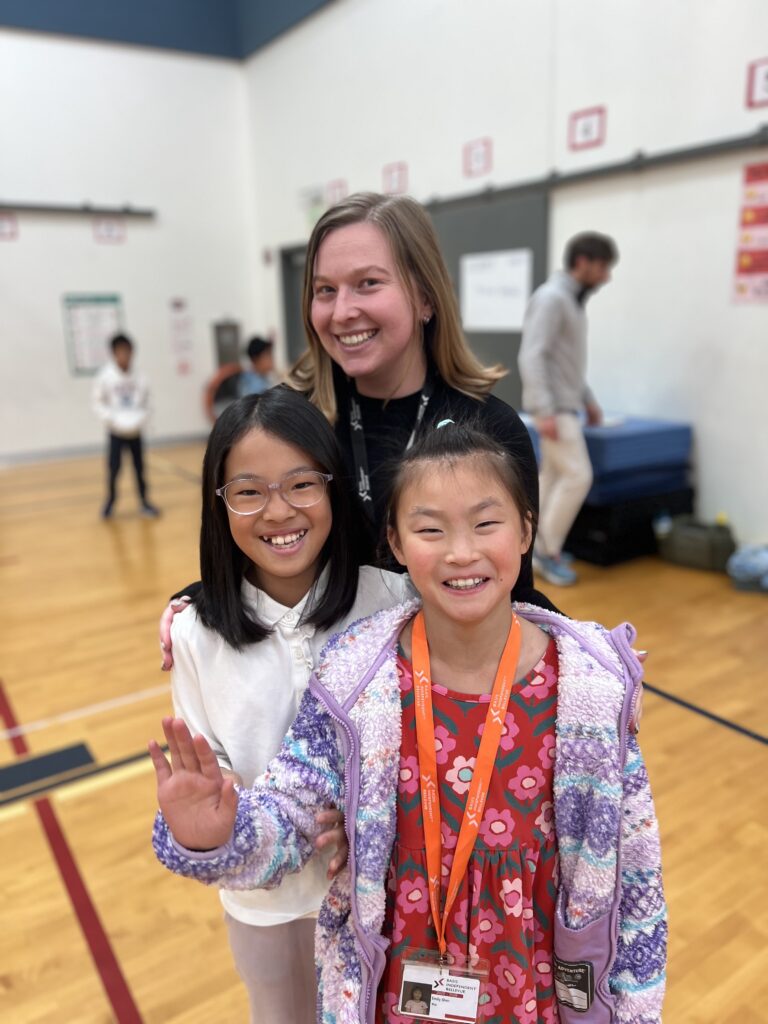
“Welcome to your favorite class!” is the way Coach Shelp begins PE. This class is different from Art, Music, and Drama because I always attend PE with my class. PE is a great way to get moving and learn about sportsmanship. Students begin each PE class by jogging some laps around the gym. Once we are warmed up, it is time to play—dodgeball, soccer, pickleball and more! We congratulate our teammates and exchange kind words with our opponents. Time flies in PE and then it is time to grab all of our belongings from our lockers and go home!
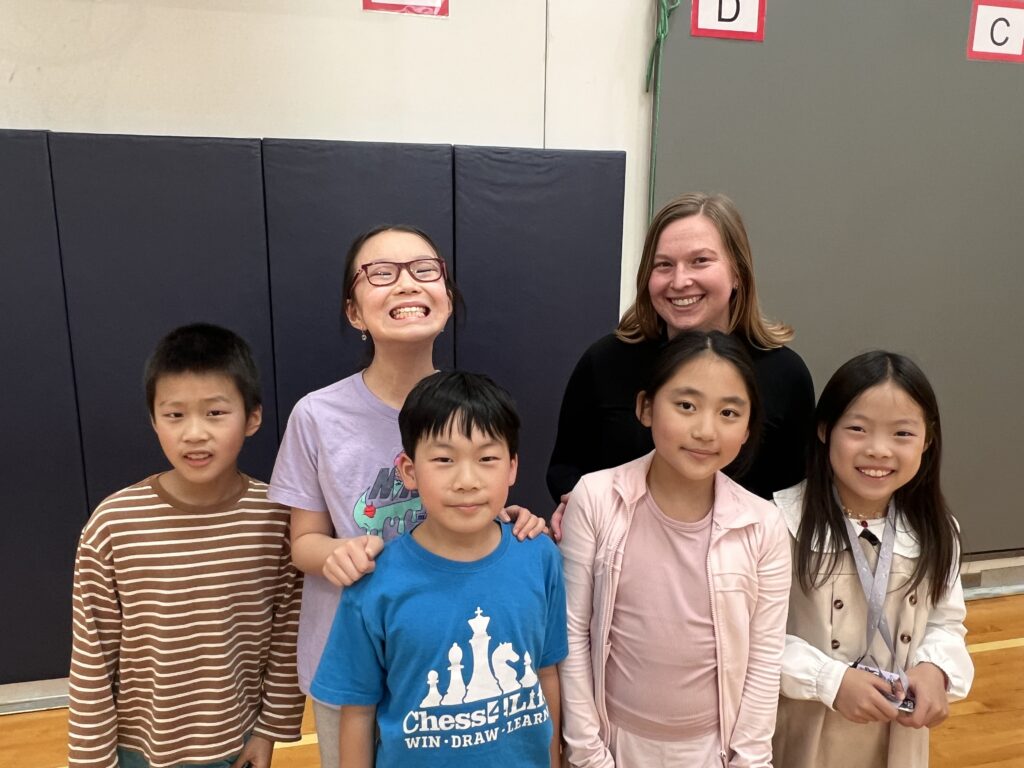
After all of my students have been picked up from dismissal, I meet with my co-teaching SETs to collaborate on lessons for the following week. After school you will find me at home in the coziest pajamas crocheting or snuggling with my cat. Another great day in Grade 4!
Filed Under: Academics, Community Values, Faculty & Staff, History, Humanities, Lower School, Mandarin, Math, Primary Program, Recess, School Community, Science, Student Learning, Student Life

A Day in the Life: Uma V., Grade 6

October 16, 2025 by sarahpeterson Leave a Comment

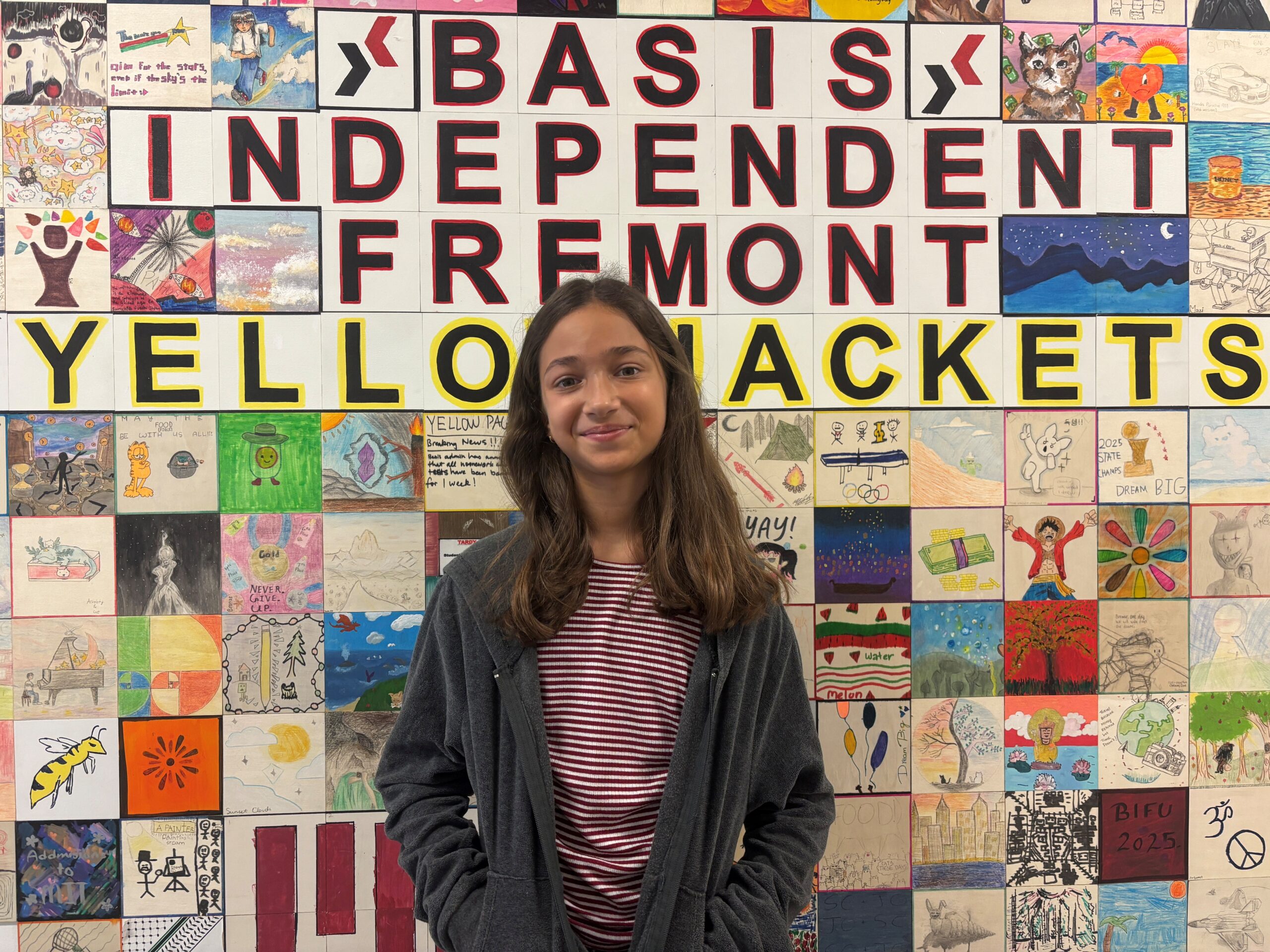
What does a typical day look like for a grade 6 student at BASIS Independent Fremont (BIF)? We followed Uma through her day to find out—and to hear how she navigated the transition from her previous private school to BIF’s rigorous academic environment.

Meet Uma

Uma joined BASIS Independent Fremont in grade 5 after moving from another private school in the area. Like many students who join in middle school, she had questions about what the transition would be like—and whether she’d find her place in a new academic community.

Today, Uma is thriving. Outside the classroom, she balances swimming (breaststroke is her specialty), soccer, piano, and will soon add fencing to her roster. She loves spending time outdoors and has built strong friendships across campus.

But the beginning of her journey looked different. “At first, I did not want to come to BIF. I didn’t want to leave my old school,” Uma remembers honestly. The first day felt overwhelming—until a classmate extended a hand. “This girl came up to me and said, ‘Hey, I’m Sunny. Do you want to sit with me at lunch tomorrow?’ I was just kind of keeping my head down the whole day, but then all of a sudden someone in my class just came up to me.”

That moment changed everything. “Actually, quickly, I really liked it. I met different people, some were from my old school, and I was able to make new friends.”

The academic adjustment took focus and effort. “Classes were obviously harder than in my old school. I struggled a little bit, but I got up to speed after about a month. My teachers were good, and they helped me, and there were Office Hours. Office Hours really help.” With the right support systems in place, Uma found her footing—and then some.

Her advice to families considering BIF? “It seems hard at first to change schools, but you know, BIF has a lot of really nice people. The teachers are kind, they’re supportive, and I’ve really enjoyed my time here.”

So what does a day in grade 6 actually look like? Let’s walk through Uma’s schedule—from Latin translation to physics experiments—and see how the combination of challenging coursework and strong support systems helps students like Uma succeed.


Period 1 (8:25–9:10 AM): Latin IB with Mr. Baldwin

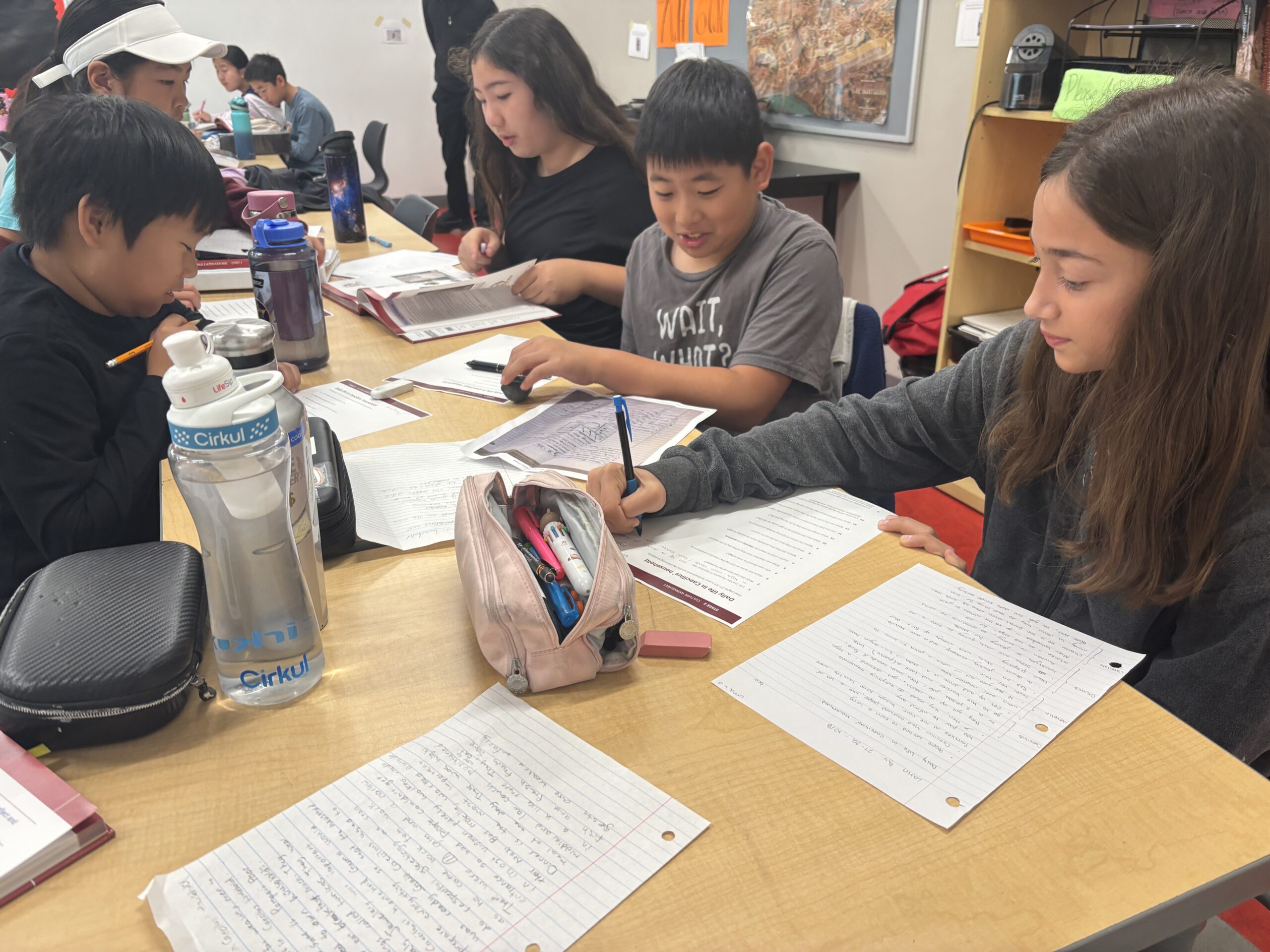
Uma’s day begins with Latin, where students build vocabulary, grammar, and translation skills while exploring life in the Roman Empire. Through Latin texts and historical sources, they investigate how different people—citizens, immigrants, enslaved individuals, and women—lived and contributed to Roman society.

Today, students worked in their “Legions”—collaborative small groups—to answer comprehension questions before sharing insights with the class.

Academic Enrichment (9:15–9:25 AM)

This brief period gives students time to prepare for their day—finishing assignments, studying for tests, connecting with friends, or simply taking a mental break. Academic Enrichment is held outdoors in our Quad and is monitored by a combination of teachers and administrators, specifically our Student Affairs team, ensuring students have a safe and supportive environment to start their morning.

Period 2 (9:30–10:15 AM): PE & Sports 6 with Mr. Mosley

Physical education for grade 6 emphasizes communication, perseverance, and learning to respond constructively to both success and setbacks. Students explore the FITT principle and develop healthy habits that extend far beyond middle school. FITT stands for Frequency (how often), Intensity (how hard), Time (how long), and Type (what kind).

This week introduced flag football, with students learning gameplay fundamentals and building teamwork skills on the field.

Period 3 (10:20–11:05 AM): Pre-Algebra with Ms. Yaru

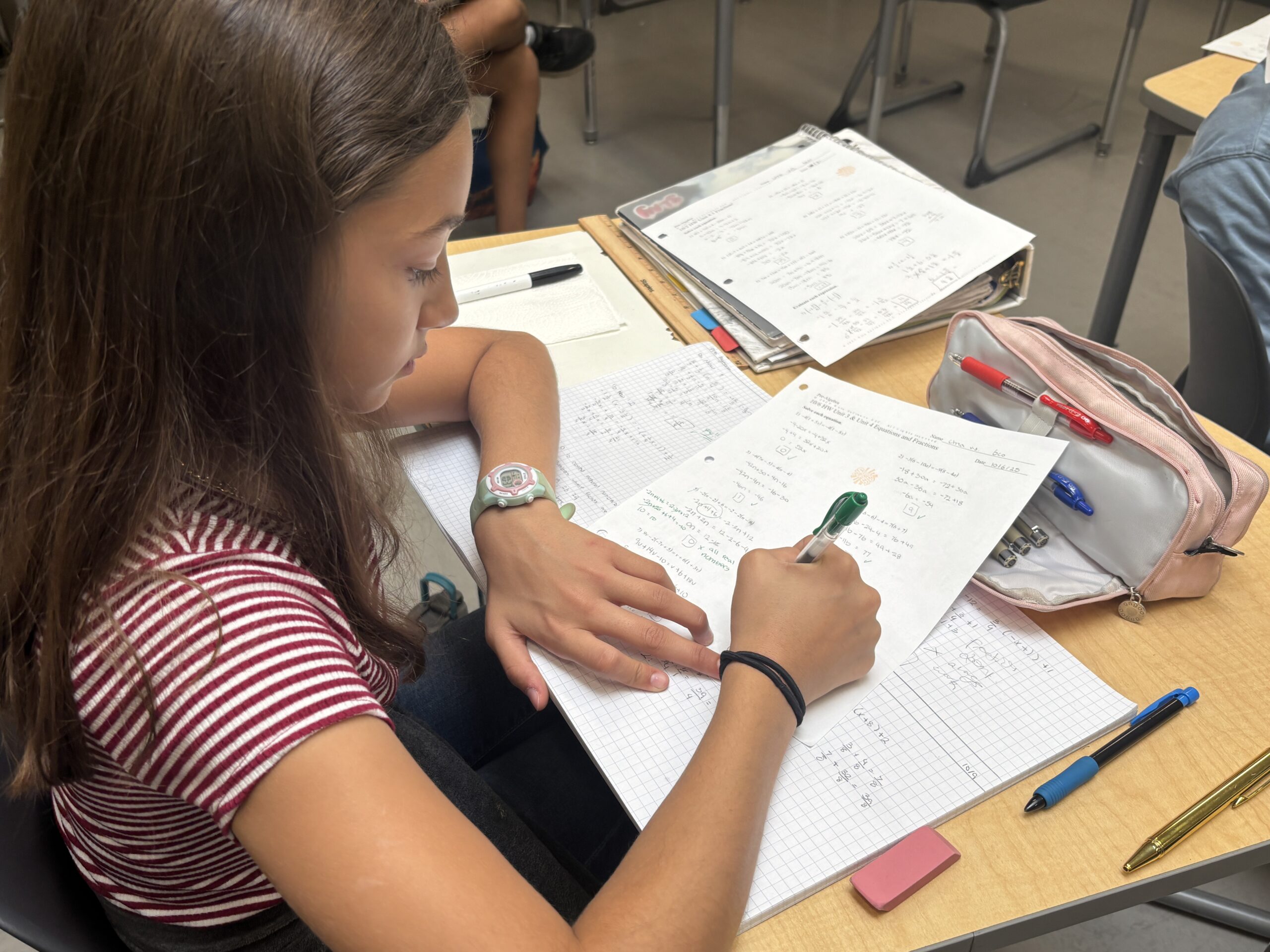
Pre-Algebra bridges arithmetic and higher-level mathematics, preparing students for Algebra I and Geometry. The curriculum covers essential concepts, including fractions, decimals, proportions, algebraic expressions, scientific notation, and real-world problem solving.

Today, students worked through algebraic equations—and Uma has discovered something unexpected. “My favorite class is Math. I never thought I’d say that, but Ms. Yaru makes it nice and easy. I like the way she teaches.”

*Grade 6 students take either Pre-Algebra or Algebra I and Geometry as their math course.

Period 4 (11:10–11:55 AM): Lunch

BIF offers a hot lunch service that caters from several local restaurants, providing multiple menu options from each. The restaurants rotate throughout the year, giving students variety in their daily choices.

During lunch, Uma plays four-square with friends. The competitive game sometimes brings intense moments, but she’s developed perspective. “I think I’ve just gotten a little bit more mature since coming to BIF. I’ve learned how to deal with situations and just go on with it.”

Period 5 (12:00–12:45 PM): Middle School Art with Teacher Danae

Students in grade 6 select a fine arts elective. Uma’s is Art. In this elective, students develop 2-D and 3-D art-making skills through traditional and contemporary techniques. The course emphasizes individual expression, historical perspective, and art as communication, with projects inspired by both contemporary and historical artists.

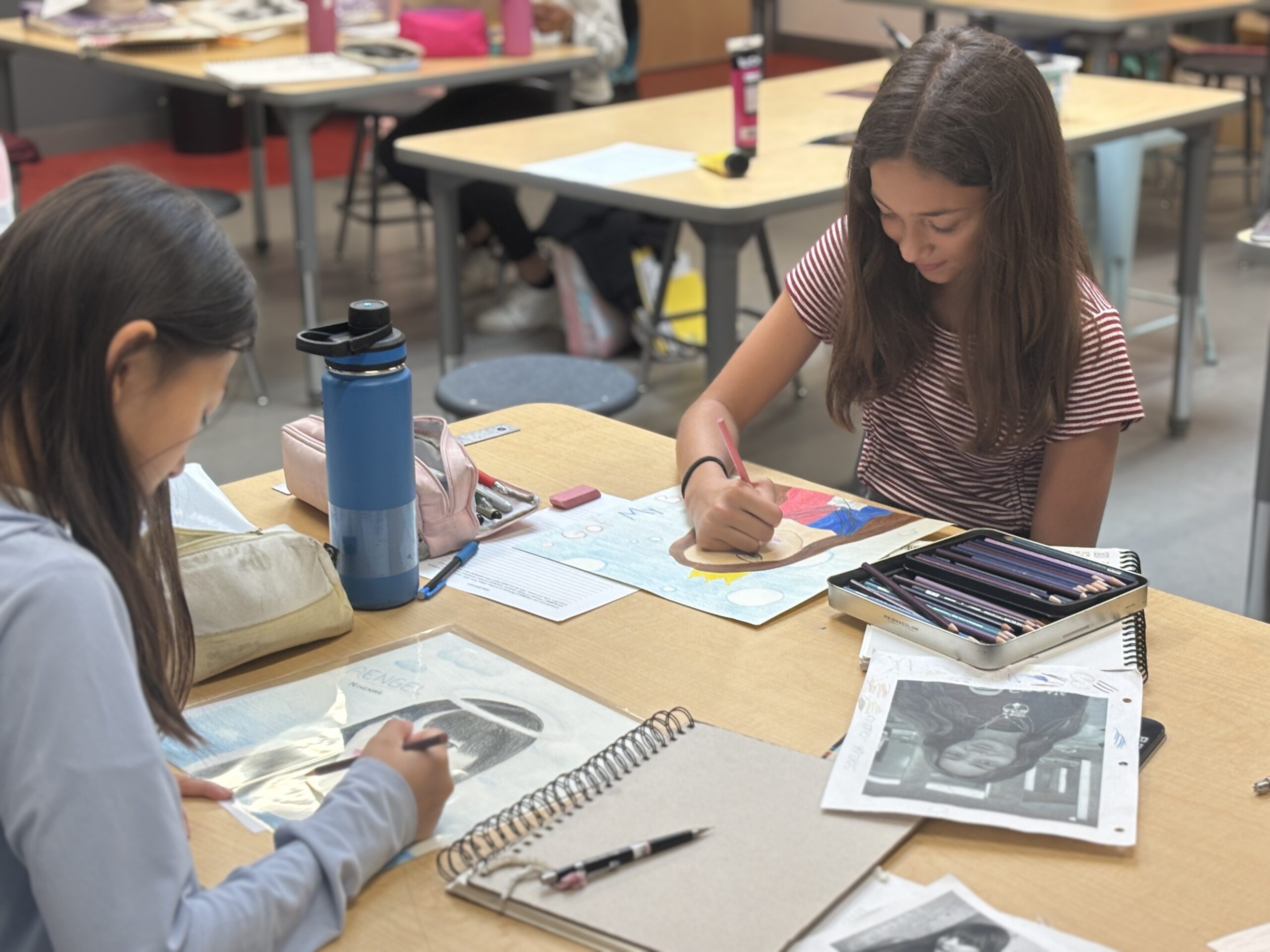
Students are completing their Album Cover Portraits, creating transformative works based on reference photos of subjects meaningful to them. Uma’s portrait features her older sister.

Period 6 (12:50–1:35 PM): English 6 with Mr. Gailliard

English 6 develops lifelong communication skills through five core components: conventions, reading, writing, scholarship, and reasoning. Students strengthen their command of grammar and punctuation while building critical thinking abilities and foundational research skills that support learning across all disciplines.

Today’s focus was on identifying helping verbs—fundamental building blocks of effective writing.

Period 7 (1:40–2:25 PM): Physics 6 with Ms. Yaru

Physics introduces students to the language that describes the physical world around them. Through core topics including motion, forces, energy, and electricity, students learn to apply mathematics to physical relationships. Hands-on demonstrations and laboratory sessions help students investigate everyday physics—from how bicycles work to what happens inside a battery.

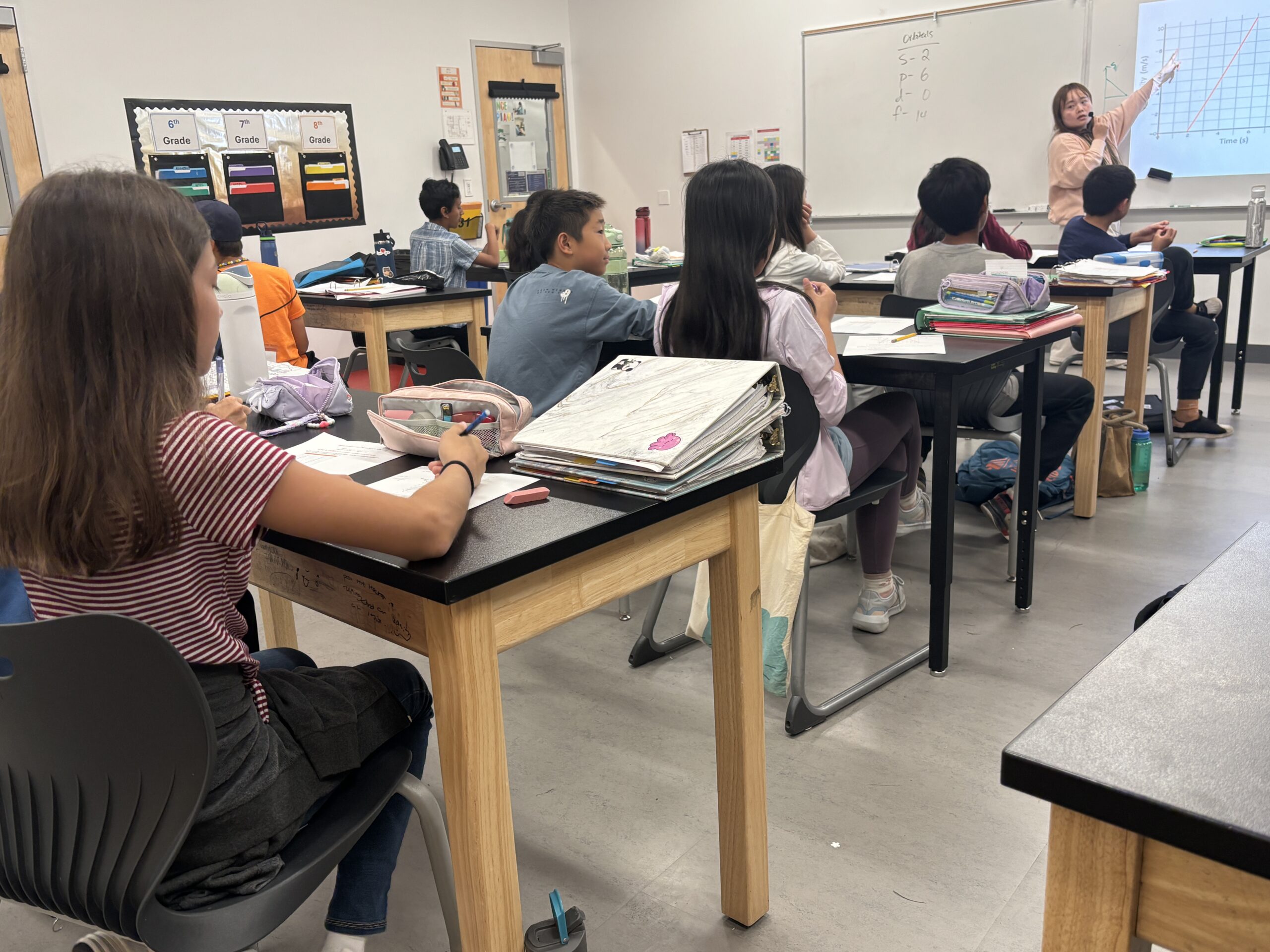
Today, students learned to calculate speed using the gradient of a distance-time graph, connecting mathematical concepts to physical motion.

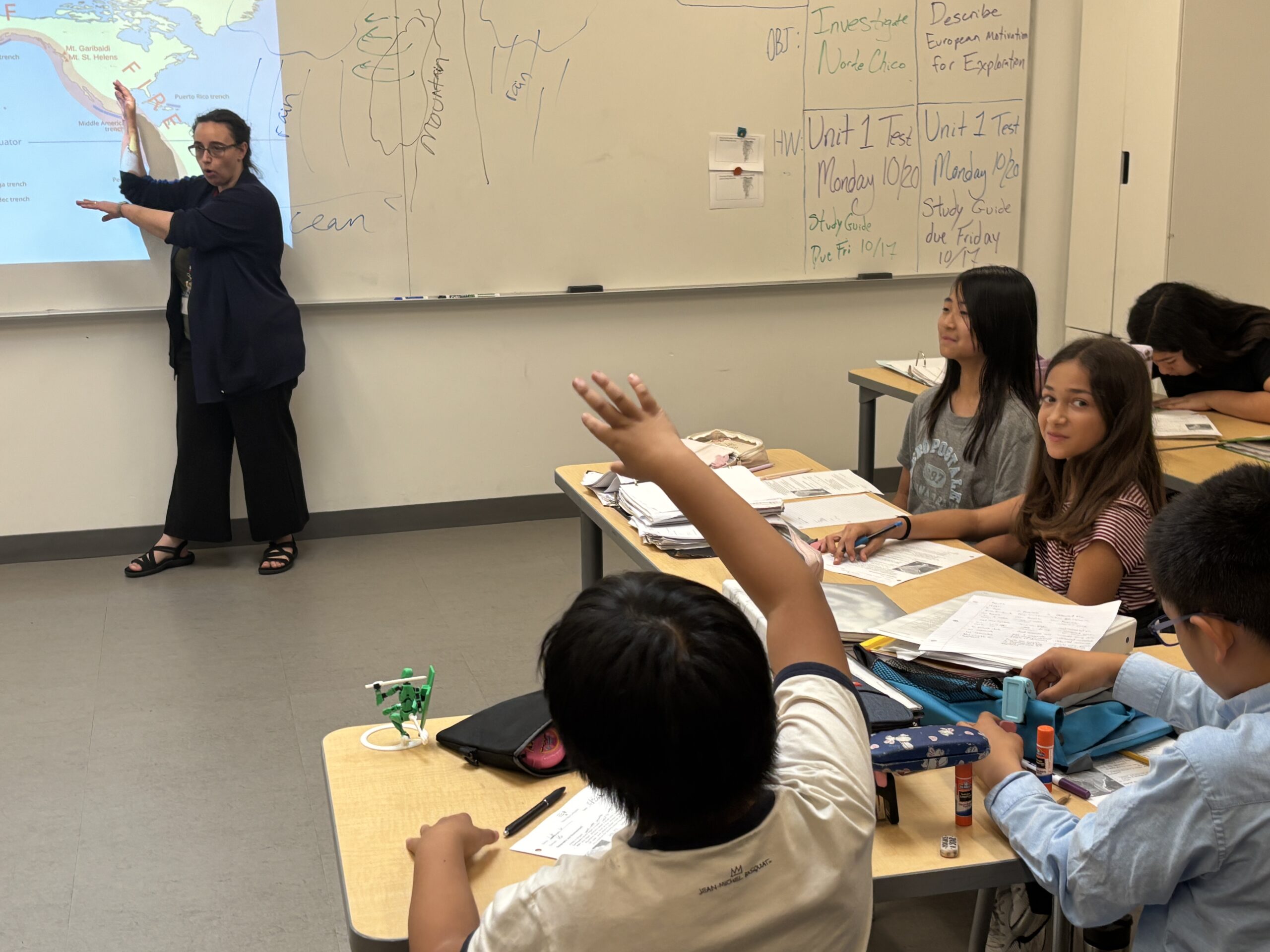
Period 8 (2:30–3:15 PM): World History & Geography I with Ms. Sagal

This course traces global human history from the Paleolithic Era through the Renaissance, examining major events and civilizations across Africa, Europe, Asia, Oceania, and the Americas. Students develop historical thinking skills—comparing civilizations, analyzing causes and effects, and constructing arguments from primary and secondary sources.

Today’s lesson explored the social and political characteristics of the Norte Chico civilization, one of the earliest complex societies in the Americas.

Office Hours (3:20–4:00 PM)

Teachers hold Office Hours throughout the week, for both students and parents, offering flexible one-on-one and small group support. Students use this time to ask clarifying questions, work through challenging material, or explore subjects more deeply. One day each week, grade 6 students enjoy unstructured outdoor time during this period.

While today is an outdoor day, Uma typically spends Office Hours with Ms. Yaru, working on math. “I did not want to do Office Hours at first, but this year, I’ve gone to all the math office hours, and it’s really helped me. I was not good at math before, but now I think I’m doing pretty well.”


After school, Uma heads to swim practice to work on her breaststroke technique, soccer training, or piano lessons. With fencing starting soon, she’s adding another dimension to her already active schedule—proof that rigorous academics and rich extracurricular experiences go hand in hand at BIF.

Learn more about our Middle School Program here.

BASIS Independent Fremont is a TK – Grade 12 private school, providing students with an internationally benchmarked liberal arts and sciences curriculum, with advanced STEM offerings. Considering joining the BASIS Independent Fremont community? To join our interest list for the next school year and receive admissions updates and more, please click here.

Filed Under: Academics, Middle School, Student Learning, Student Life, Student Perspectives, Student Spotlight, Uncategorized

Subject Expert Spotlight: How Dr. C Redefines Biology at Our NYC Private School

October 7, 2025 by christineklayman Leave a Comment

At BASIS Independent Manhattan, our passionate Subject Expert Teachers (SET) are the secret ingredient to delivering our advanced curriculum in an engaging way, helping students take intellectual risks and make real-world connections outside of the classroom.

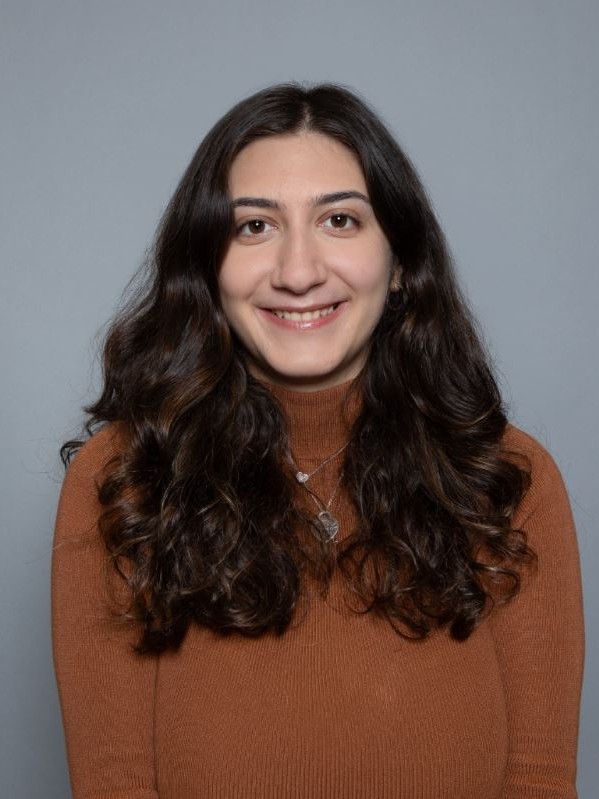
This month, we spotlight Dr. Chubaryov (Dr. C), our Biology SET at the Upper School in Chelsea, who teaches AP and Honors Biology in addition to AP Environmental Science to our high school students. After reading about her approach in the classroom and what makes her one of the best teachers in Manhattan, come and see for yourself at one of our Fall Open Houses.

Dr. Chubaryov

The Spark: From Opera to Observation

In August, Dr. C balanced a full life that brought huge changes at the start of this school year: she graduated from her PhD program at NYU and got married. Yet, her focus remains on the students. Dr. C’s own passion for biology was ignited in high school by an amazing teacher who made the subject exciting—even “cool.” A fond memory that sticks with her is how her biology teacher would play opera music while instructing the class on how to do dissections. This mix of creativity and deep study informs her teaching today.

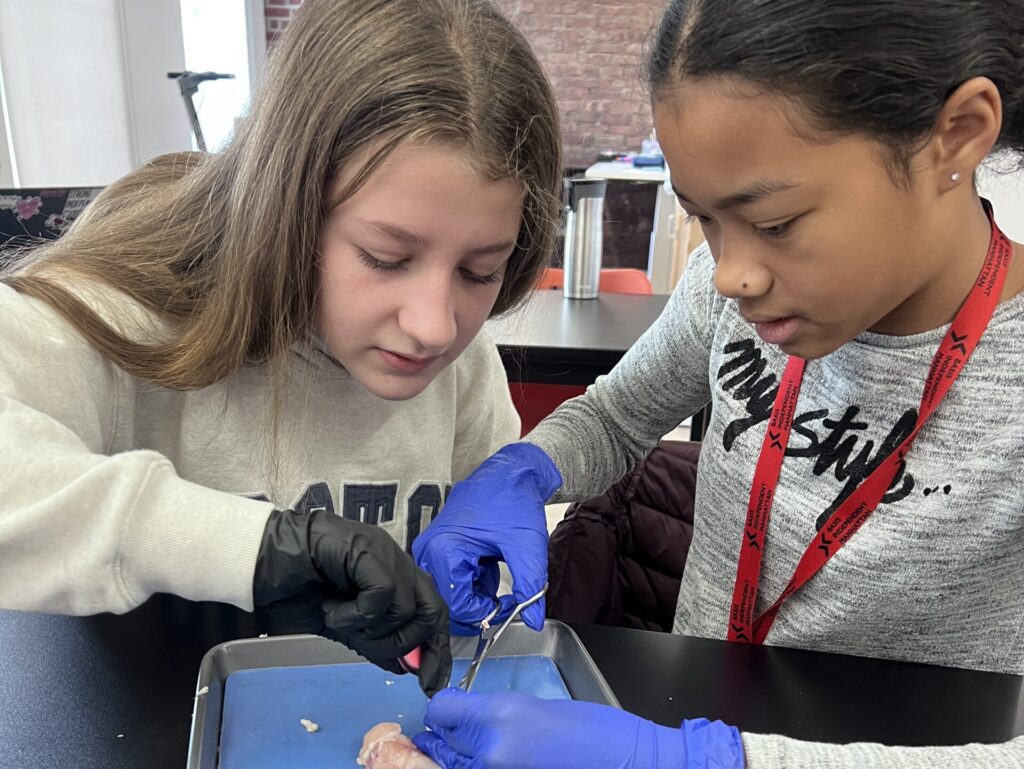
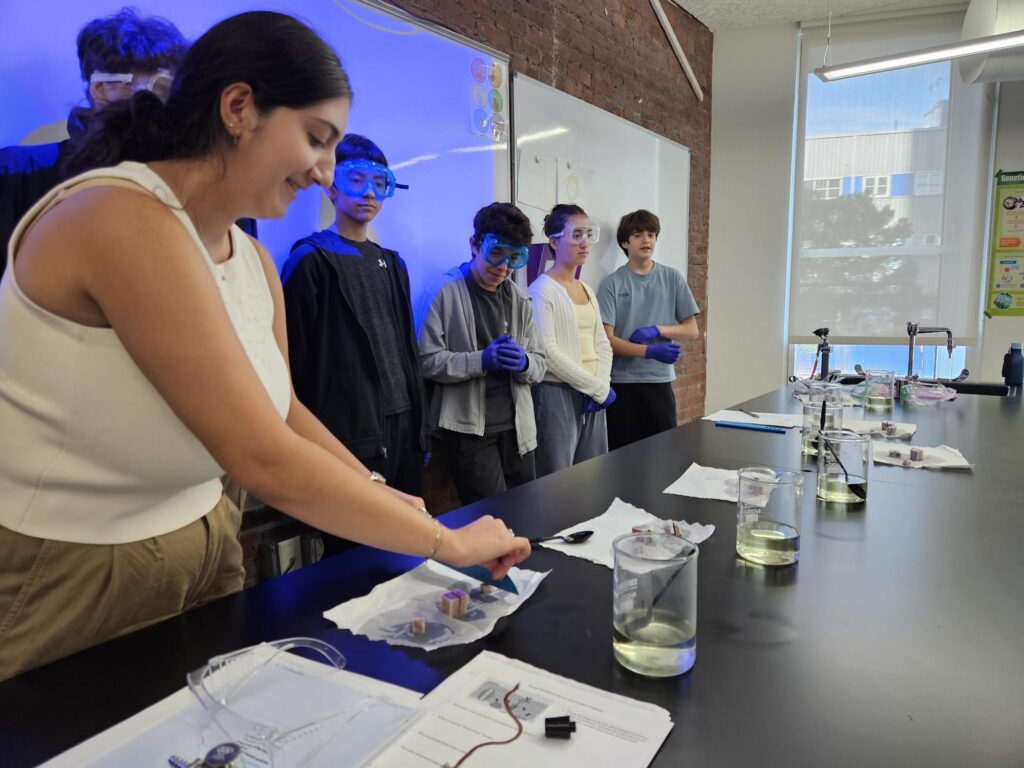
Two female students performing a dissection in biology class

Thinking Like a Scientist: Beyond Memorization

Once in high school at BASIS Independent Manhattan, students have already completed three years of physics, biology, and chemistry. With this preparation and budding passion for biology, Dr. C can immediately help grow her students’ intellectual curiosity. She also challenges them to take risks that go beyond just learning biology, helping them feel confident to “do biology.”

Dr. C is one of the best subject expert teachers in manhattan, demonstrating a hands-on learning lab for her students

From NYU PhD to Chelsea Classroom

To enable her students to be active participants, Dr. C emphasizes that they are scientists in training. She often brings her doctoral research into the classroom, sharing personal anecdotes about her work in the NYU lab studying Hirschsprung Disease. These stories help her students connect abstract concepts – like cellular signaling or genetics – and their real-world applications. Dr. C notes that this is when she really sees her students thinking like scientists: reasoning through how biological systems interact and discovering both the beauty and relevance of biology in everyday life.

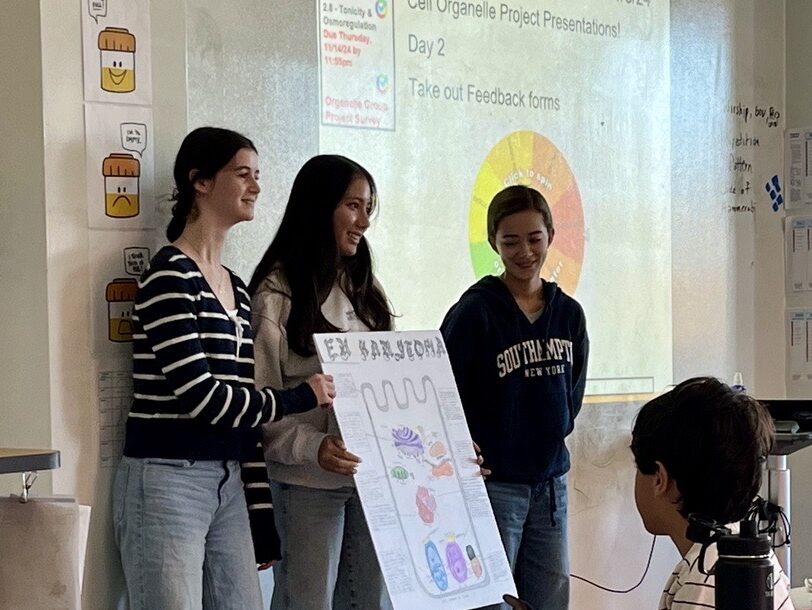
three female students present a biology poster on cell organelles

A Nurturing Academic Environment

When asked about their teacher, students immediately get wide-eyed and say she is great because of her duality. Dr. C’s teaching style is direct, but it is constantly peppered with personal anecdotes about her PhD studies that bring the subject to life. Students also appreciate how she holds them accountable, but does so by consistently performing “checks for understanding” to ensure every student feels supported. This exemplifies the nurturing academic environment at BASIS Independent Manhattan, where students feel inspired to safely take intellectual risks and achieve their highest potential.

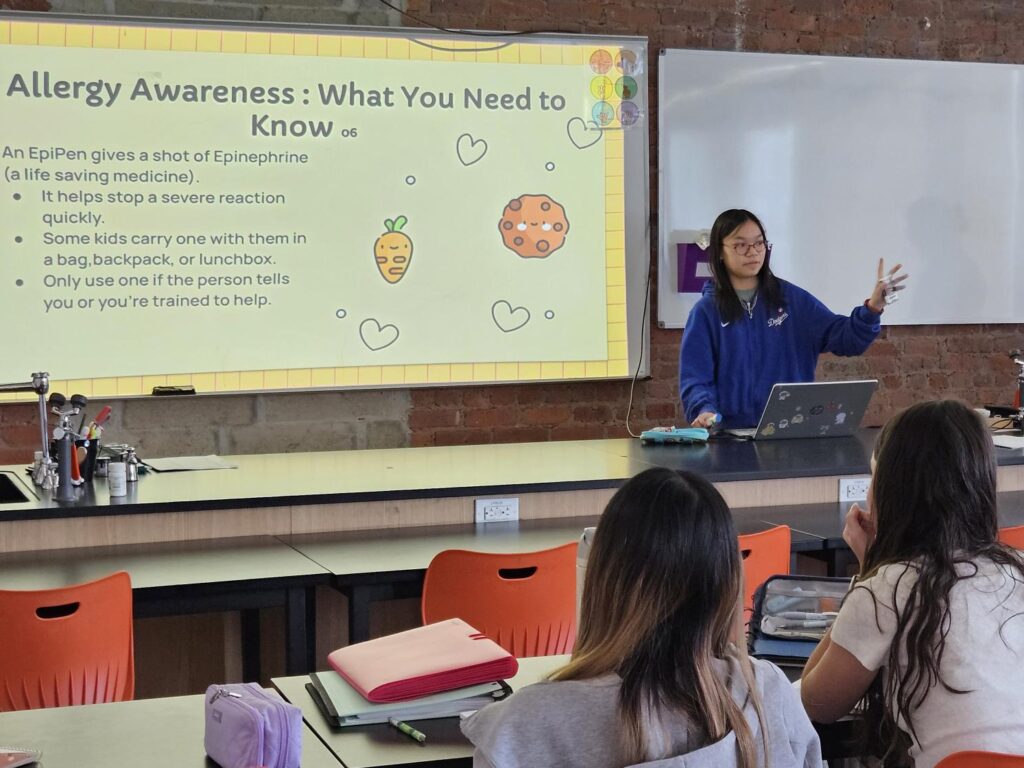
student presenting to her peers in the classroom

The Takeaway

BASIS Independent Manhattan’s unique model, featuring passionate Subject Expert Teachers who deliver an advanced curriculum in a nurturing environment, is why we are recognized among the best NYC private schools. It’s designed to empower students to think critically and achieve great success.

Experience the BASIS Independent Manhattan difference!

Join us at one of our upcoming Fall Open Houses to meet Dr. C and the rest of our incredible teachers.
Upper School
Sunday, October 26
Grades 6–12, Chelsea Campus
10:00 AM–12:00 PM

Lower School
Saturday, October 25
PreK–5, UWS Campus
10:00 AM–12:00 PM

Save Your Spot Today

Filed Under: Academics, Admissions Events, Faculty & Staff, High School, Science, STEM, Student Learning

Our Entire Class of 2025 and Approximately 70% of High School Students Awarded AP Scholar Distinction

October 3, 2025 by jogoldfarb Leave a Comment

At BASIS Independent Brooklyn, we prioritize celebrating our students’ accomplishments. Today, we can proudly share that all members of our Class of 2025 and nearly 70% of our high school students qualified as Advanced Placement (AP) Scholars during their tenure at our school. Students move from AP Scholar to AP Scholar with Honor and then AP Scholar with Distinction. With the 2025 scores, BASIS Independent Brooklyn students earned the highest-ever average AP test score of 3.94 as well as the highest-ever passing rate of 94%.

“We reached a milestone this year with every one of our seniors receiving an honor of AP Scholar or higher this year at BASIS Independent Brooklyn,” said Josh Harmon, Head of School for BASIS Independent Brooklyn’s Upper School. “When looking at all students in grades 9-12, our students earned the highest average score yet of 3.94 across all the exams and a pass rate of 94%. This is possible due to a number of factors: the strong drive of our students, an outstanding curriculum that spirals through the years, the expertise of our teachers, and the overall support offered by our faculty and Student Affairs team.”

AP Scholar awards recognize students who have demonstrated both a depth and breadth of knowledge and whose work has shown college-level mastery across multiple disciplines. The College Board awards the following distinctions for AP exams, and we have students who have achieved all levels.

AP Scholar: students who received a score of 3 or higher on 3 or more AP exams.

AP Scholar with Honors: students who received a score of 3 or higher on 4 or more exams, and have an average score of at least 3.25 across all exams taken.

AP Scholar with Distinction: students who received a score of 3 or higher on at least 5 exams, and an average score of 3.5 across all exams taken.

Nationwide, only about 10% of students earn the distinction of AP Scholar or higher by the time they graduate (based on historic data provided by the College Board). We are thrilled to share some of the top accomplishments here:

80 students in our high school were named AP Scholar (or higher distinctions), representing approximately 67% of our high school, after the exams were taken in May 2025.

Approximately 63% of our seniors received the AP Scholar with Distinction, the highest award offered by the College Board.

Congratulations to all our students who have earned an AP Scholar Award for their performance on the exams during their High School tenure. See the full list of student recipients updated to include the 2025 results below:

AP Scholar: Students who received a score of 3 or higher on 3 or more AP exams.

Victor Bergman-B. ’25

Dana B. ’26

Matthias B. ’25

Leo B. ’25

Leonardo C. ’27

Joaquim H. ’26

Gabriel H. ’26

Rachel K. ’25

Ethan L. ’27

Summer L. ’26

William M. ’28

Hendrix. N. ’25

Jason P. ’25

Saajan P. ’26

Ishan P. ’28

Julia R. ’28

Gabe S. ’26

Willa S. ’27

Sasha T. ’25

Vivian W. ’27

Victor Y. ’27

Erica Z. ’26

AP Scholar with Honors: Students who received a score of 3 or higher on 4 or more AP exams and have an average score of at least 3.25 across all exams taken. Nationwide, only about 6% of students will graduate high school with this degree of recognition or higher. Nearly all of these honorees have done so well before graduation.

Bodhi D. ’27

Laith J. ’25

Audrey L. ’27

Viola L. ’25

Noah N. ’27

Nolan S. ’27

Isabella Y. ’27

AP Scholar with Distinction: Students who have a score of 3 or higher on at least 5 exams, and an average score of 3.5 across all exams taken. These students have already completed at least a semester’s worth of college credit while still in high school. Only about 4% of graduating seniors nationwide receive this award, and less than 1/10th of 1% of students receive it after sophomore year.

Overall, in our high school, more than 50 students received this honor:

Wyatt A. ’26

Orsen A. ’27

Iris Autier-B. ’27

Maya B. ’27

Philip B. ’26

Henry B. ’27

Jack C. ’25

Nathaniel C. ’26

Mia C. ’26

Nicolas D. ’25

Colin D. ’25

Axel F. ’25

Petra G. ’27

Alexa G. ’26

Abraham G. ’27

Douglas H. ’27

Archie H. ’26

Maxwell H. ’25

Mateo K. ’25

Sofia K. ’27

Katherine K. ’26

Lianna L. ’26

Aidan L. ’25

Harrison L. ’27

Thomas M. ’25

Sabrina M. ’26

Varick M. ’27

Maddox M. ’25

Sefir O. ’26

Talin P. ’26

Crosby P. ’27

Gustavo P. ’25

Kanika R. ’26

Noah R. ’26

James R. ’25

Skye S. ’25

Zahra S. ’26

Hudson S. ’27

Nadia S. ’25

Xinyi S. ’26

Bowen S. ’27

Gregory S. ’26

Maxim S. ’25

William S. ’27

Hugo S. ’27

Jasmine S. ’26

Indi S. ’27

Olivia S. ’27

Ryan T. ’25

Beckham V. ’26

River W. ’26

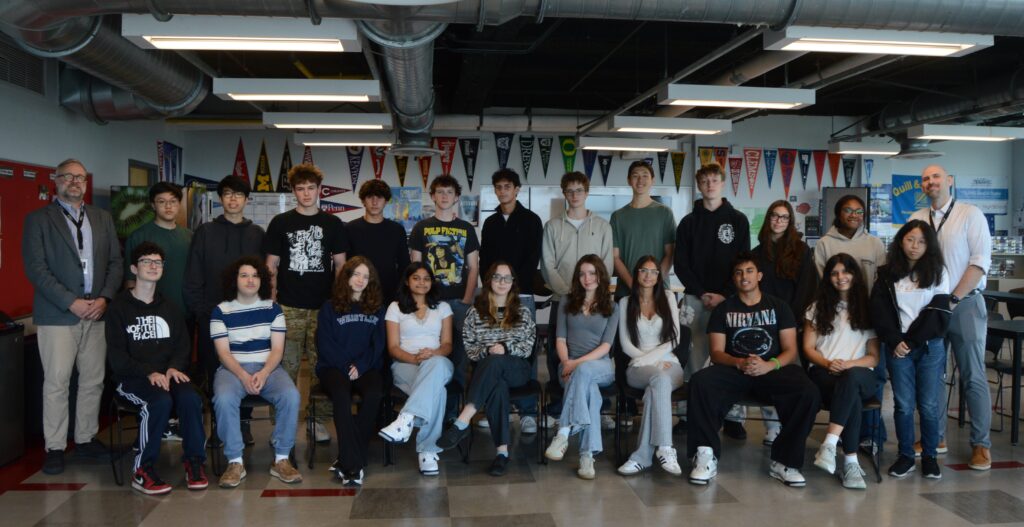
Photo (above): Our Class of 2026 posing with Head of School Josh Harmon and College Counselor Matt Brauch.

Please join us in congratulating our Bears!

BASIS Independent Brooklyn is a PreK–Grade 12 private school, providing students with an internationally benchmarked liberal arts and sciences curriculum, with advanced STEM offerings. Considering joining the Bears community? To join our interest list for the next school year and receive admissions updates and more, please click here.

Filed Under: Academics, AP Scholars, Awards & Recognition, High School, Student Achievement, Student Learning

The Skills Behind the Skill: Executive Functioning at BASIS Independent Fremont

August 29, 2025 by sarahpeterson Leave a Comment

At BASIS Independent Fremont, academic rigor is central to our program, but it is only one part of what makes our students exceptional. Just as essential are the skills that help students manage their learning effectively: time management, organization, sustained attention, planning, and flexibility. These “executive functioning” skills are the mental processes that allow students to set goals, monitor progress, and adapt when challenges arise. For many children, especially in an advanced curriculum, these abilities don’t come automatically. They must be taught, practiced, and reinforced over time.

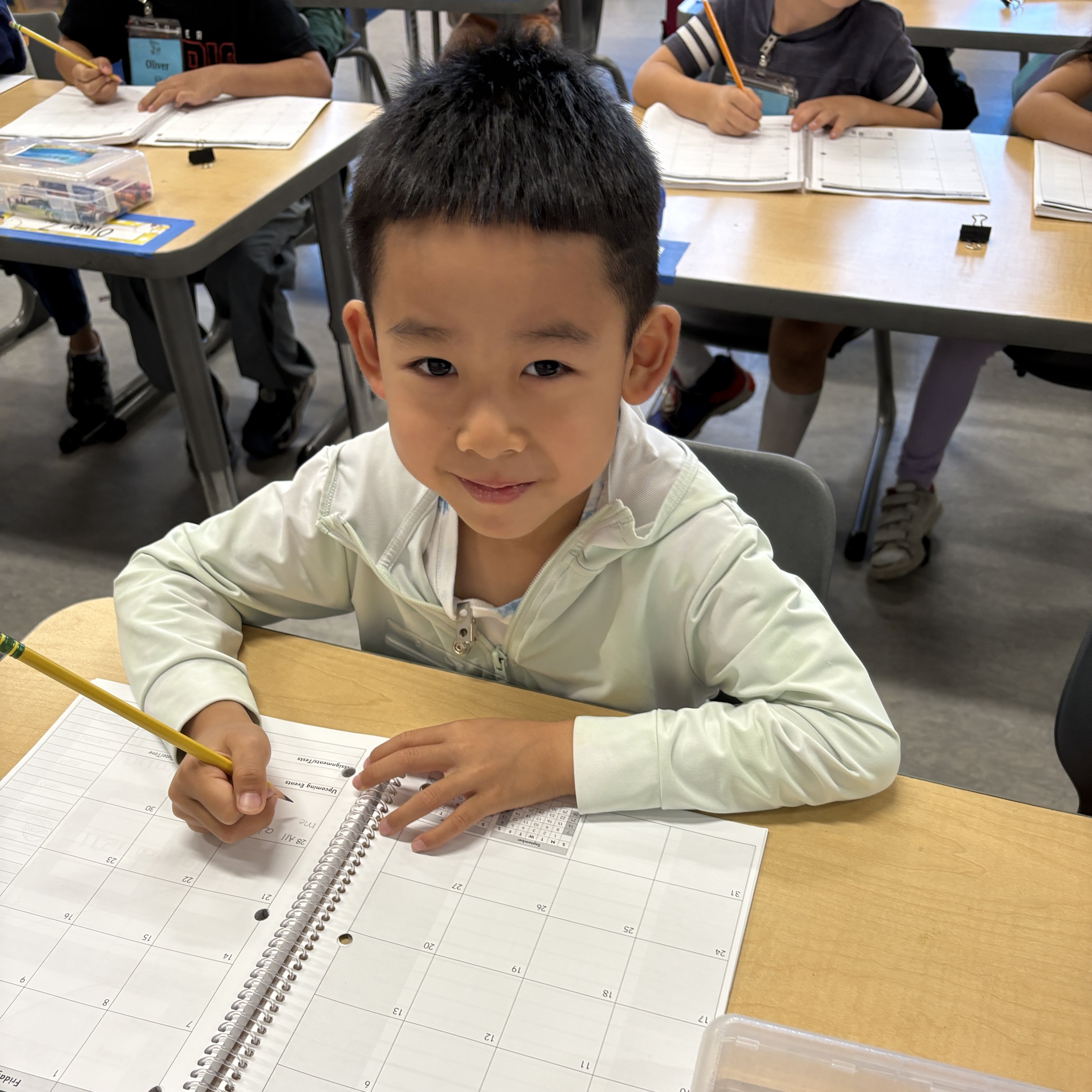
This year, we are placing a special focus on directly instructing students in executive functioning skills. In the classroom, this looks like a teacher guiding students through the steps of breaking a complex project into manageable tasks, or modeling how to use their Communication Journal planner effectively. It means setting aside time for students to reflect on their work habits, identify what helped them succeed, and make a plan for improvement. By embedding these skills into our daily routines, we help students internalize strategies they can use not only in school, but throughout their lives.

Executive functioning also plays a vital role in helping students navigate the pace and depth of our curriculum. Strong time management allows them to balance multiple assignments without becoming overwhelmed. Organization skills keep materials, notes, and resources accessible and ready for use. Sustained attention supports deep engagement with challenging material, while flexibility helps students adapt when the unexpected happens. Together, these skills form the foundation for resilience.

Our goal is for every student to leave BASIS Independent Fremont with exceptional academic knowledge and the tools to manage their learning independently and confidently. Parents play an important role in this process, too, by encouraging consistent routines at home, modeling problem-solving strategies, and celebrating the small victories that build lasting habits. Year after year, we have witnessed how when school and home work together, executive functioning becomes more than a set of skills. It becomes a mindset that empowers students to succeed in any challenge they choose to pursue.

Learn more about how BASIS Independent Fremont prepares students to excel academically, thrive as independent learners, and build the foundation for lifelong success.

BASIS Independent Fremont is a TK – Grade 12 private school, providing students with an internationally benchmarked liberal arts and sciences curriculum, with advanced STEM offerings. Considering joining the BASIS Independent Fremont community? To join our interest list for the next school year and receive admissions updates and more, please click here.

Filed Under: Culture of Support, Early Learning Program, High School, Middle School, Student Learning, Uncategorized

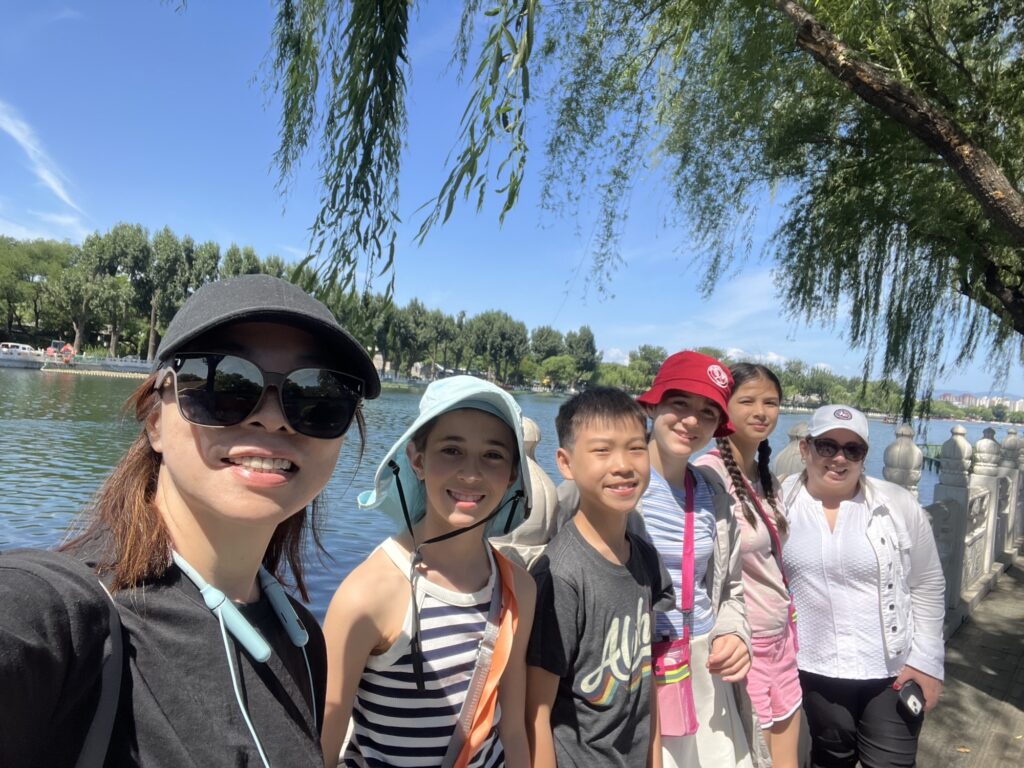
Project Week Trips 2025: China

August 8, 2025 by jogoldfarb Leave a Comment

During the final week of the school year, BASIS Independent Brooklyn students have time set aside for Project Days, a period when they have a unique platform for collaborative, multidisciplinary projects and engaging activities or trips without the stress of exams or assessments. Students select their project of interest and then are grouped with dedicated teachers who guide and facilitate their learning throughout the week. This year, we hosted three international trips for Middle School and two for High School during Project Week, and today, we wanted to showcase the Middle School China trip led by Ms. Collins and Ms. Ye.

Ms. Collins is our International Student Program Coordinator, who opens our school up to the world as much as we go out into it. Ms. Ye is a Subject Expert Teacher in our Mandarin Department.

Below, please enjoy the trip recap from our wonderful chaperones. The trip to China represented the culmination of grade 6 and 7 World History classes for our student explorers. It brought to life many of the lessons they had learned in Middle School.

Beijing: The Capital of History and Culture

Beijing was our first stop, and it truly lived up to its reputation as a city rich in history and culture. We began with a visit to Tiananmen Square, the largest public square in the world, and the Forbidden City, the former imperial palace of the Ming and Qing dynasties. The grandeur and historical significance of these sites were truly awe-inspiring. We also visited the Temple of Heaven, where ancient emperors prayed for good harvests, and participated in a tai chi exercise session, which was a unique and enriching experience.

One of the highlights of our time in Beijing was a visit to the Great Wall of China. Standing on the Great Wall was an unforgettable experience, and the view was breathtaking. We also visited the Ming Tombs, where we explored the mausoleums of the Ming emperors. Our visit to the Beijing Zoo to see the pandas was another highlight, and the pandas were absolutely adorable. The Hutong tour, where we visited a local family, offered a glimpse into the traditional Beijing lifestyle.

Xi’an: The Cradle of Chinese Civilization

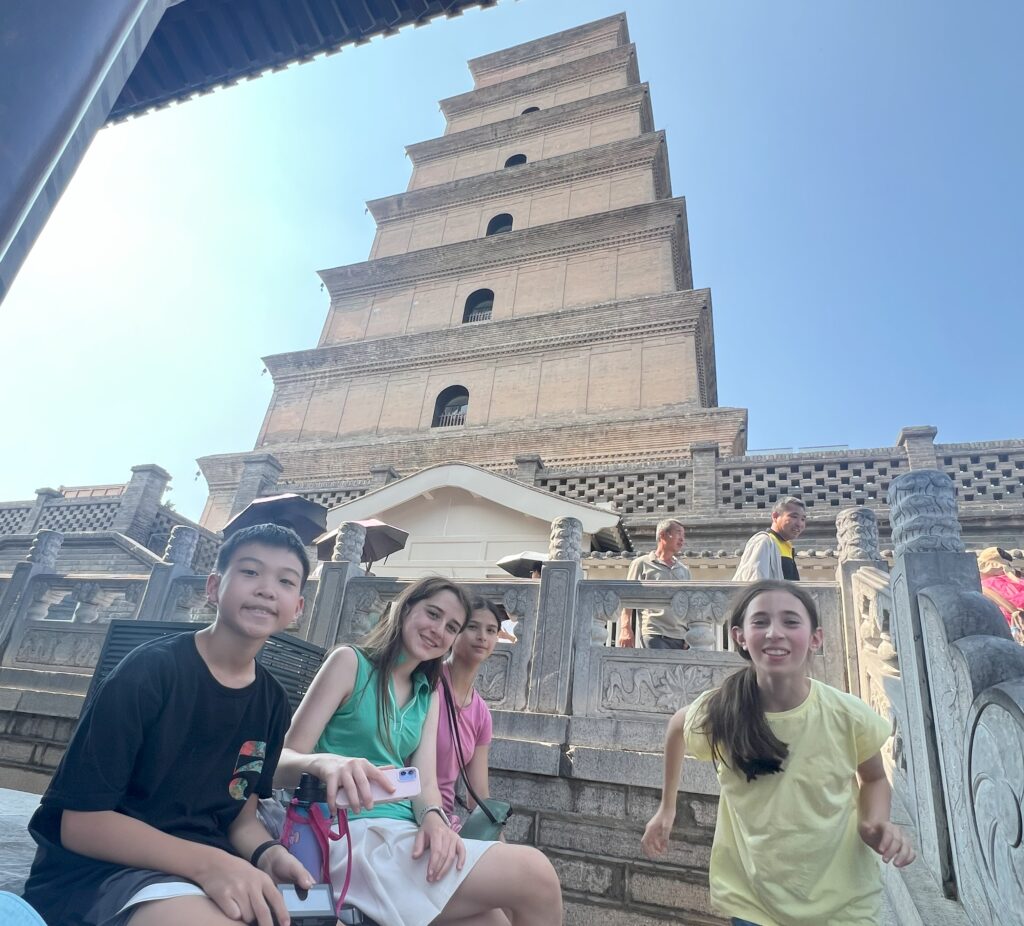
Our next destination was Xi’an, a city steeped in history and culture. We visited the Ancient City Wall, where we had the opportunity to walk along the wall and take in the views of the city. The Greater Wild Goose Pagoda, a UNESCO World Heritage Site, was another highlight.

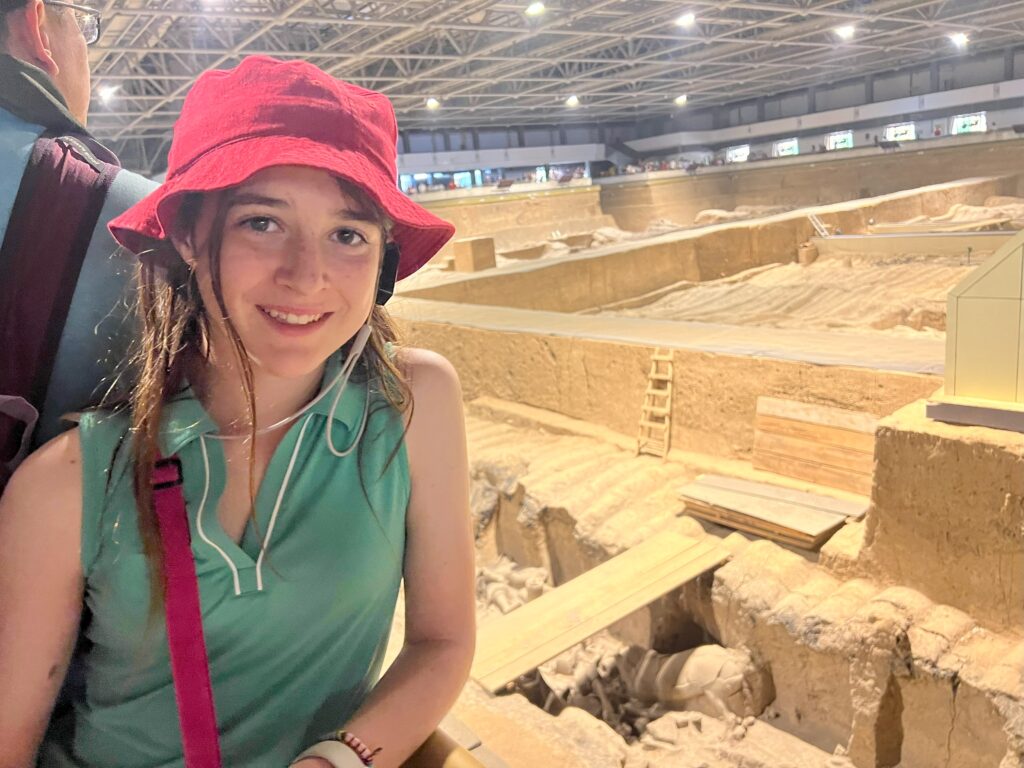
Stopping by the Terracotta Warriors Museum

The Terracotta Warriors Museum was the highlight of our time in Xi’an. The sheer scale and historical significance of the Terracotta Army were truly astounding. It was a once-in-a-lifetime experience to see these ancient artifacts up close. The Tang Dynasty singing and dancing show was a delightful cultural experience that showcased the rich traditions of the region.

Shanghai: The Modern Metropolis

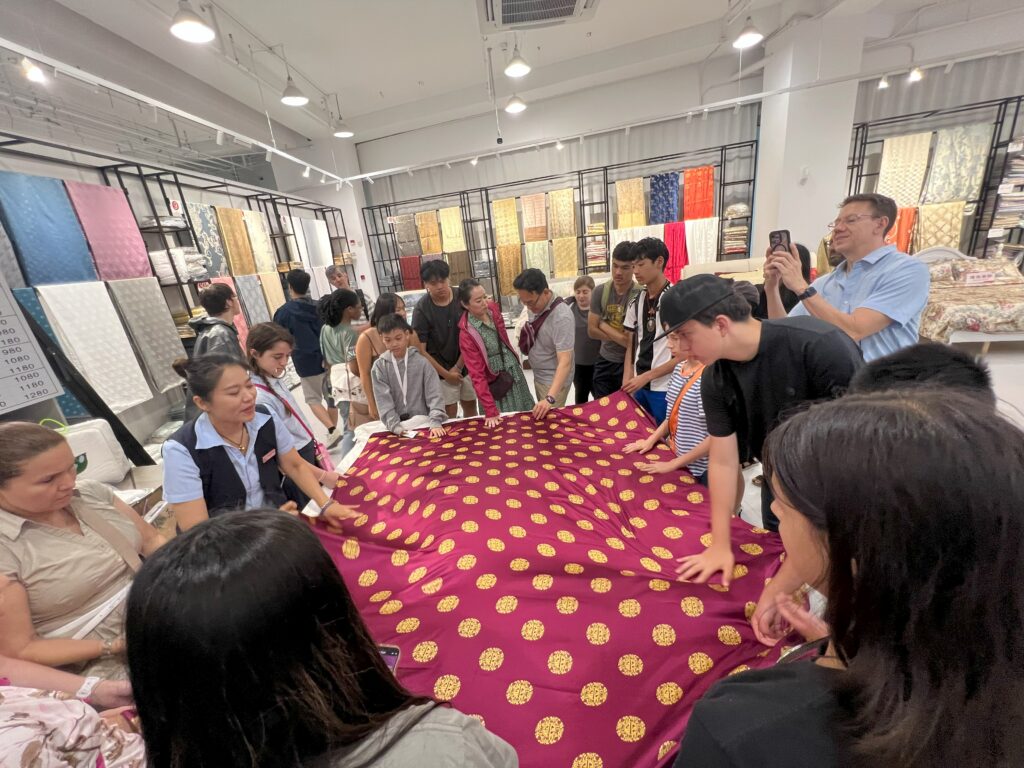
Our final stop was Shanghai, a modern metropolis with a rich history. We began with a visit to the Yu Yuan Garden, a classical Chinese garden with beautiful pavilions and ponds. The Jade Buddha Temple, a famous Buddhist temple, was another highlight. We also visited a silk factory, where we learned about the production process and had the opportunity to purchase silk products.

Learning about silk production

The Bund, Shanghai’s iconic waterfront area, offered stunning views of the city’s skyline. We also explored Tian Zi Fang, a trendy cultural district filled with art galleries, cafes, and boutiques. The Huangpu River cruise in the evening was the perfect way to end our trip, providing a breathtaking view of the city’s illuminated skyline.

Throughout our journey, we were particularly impressed by the students’ maturity and their enthusiasm for learning about Chinese culture. Their curiosity and respect for the places we visited made the trip even more meaningful.

BASIS Independent Brooklyn is a PreK–Grade 12 private school, providing students with an internationally benchmarked liberal arts and sciences curriculum, with advanced STEM offerings. Considering joining the Bears community? To join our interest list for the next school year and receive admissions updates and more, please click here. 

Ms. Ye and Ms. Collins enjoyed exploring China’s rich culture and history with their students!

Filed Under: Field Trips, History, Mandarin, Middle School, Project Week, School Community, Student Learning, Student Life, Uncategorized

Leadership Spotlight: Lower School Director of Student Affairs

August 5, 2025 by jogoldfarb Leave a Comment

Today, our Leadership Spotlight series focuses on Ms. Allison Sandhu, who joined BASIS Independent Brooklyn this past school year as the Director of Student Affairs for our Lower School campus in Downtown Brooklyn. Ms. Sandhu brings years of experience as both an educator and a school administrator. She joined school leadership at our Lower School campus last year, and we wanted to share her insights, given her role as Director of Student Affairs, while shedding light on her interests and accomplishments.

Director Sandhu

Director Sandhu started her career in the classroom with Teach for America after graduating from the University of Missouri-Columbia, and she went on to be a founding teacher at a charter school in New Jersey, where she led her students to exceptional results. While teaching, Ms. Sandhu gained experience creating curriculum and utilizing data to drive differentiation for students. After four years of teaching, Ms. Sandhu was promoted to administration as a Department Head, where she led a team of educators in developing academic plans as well as unit and lesson plans. She regularly coached on instructional practices and classroom management.

Director Sandhu’s knowledge of our school runs deep, since she is also a proud parent of a Gr. 3 Bear at our Upper School campus. That perspective has informed her work at the Lower School campus. In the past school year, Director Sandhu spent time connecting with teachers and observing classes to help offer suggestions and ways to enhance learning. She also introduced new community events, particularly the BASIS Independent Brooklyn “Becoming a Bear Ball” for students in grade 2 stepping up to the Upper School campus next year. Director Sanhu has already made an impact on our school, and we had a chance to catch up with her to ask some questions we hope will help families get to know her better.

What drew you to BASIS Independent Brooklyn?

I originally found BASIS Independent Brooklyn as a parent in PreK. My husband and I were looking for a school for our son where strong academics lived alongside joy—where kids could be intellectually curious, challenged, and love coming to school each day. We wanted a diverse and inclusive community, with compassionate educators who truly knew and supported their students. The two-teacher model and commitment to differentiation stood out right away—it signaled that the school prioritized both high expectations and individual attention, which felt like exactly what we wanted for our son.

Tell us about what excites you in the year ahead?

I’m really excited to help enhance the student experience—looking closely at the systems and routines that help kids thrive and ensuring that rigor and joy show up in every classroom. I’m especially looking forward to building some new schoolwide traditions that celebrate academics in fun, community-building ways. Most of all, I’m eager to partner with teachers and families so that every student feels known, supported, and challenged every single day.

Director Sandhu reading to PreK Xenon

You spent some time focused on areas other than education. Tell us about some of your other interests.

I’ve spent time outside of the classroom working in a few different creative fields. I founded a travel startup that connected travelers with locals to create more authentic, meaningful experiences. I also worked as a documentary photographer, creating and publishing multimedia pieces for a variety of outlets. Across all of that work, there was a common thread: I was always trying to notice and elevate the beauty in everyday life. That same mindset is what brought me back to education—there’s nothing more powerful than seeing what makes a child unique and then doing the work to cultivate that.

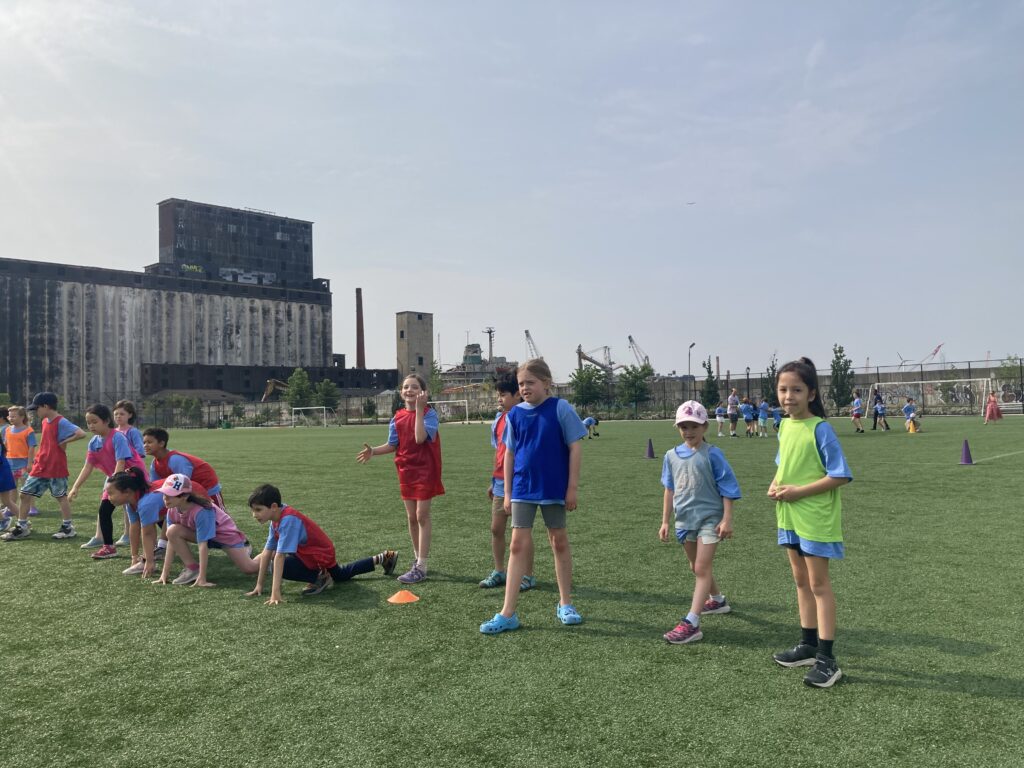
Field Day 2025 – Director Sandhu helped lead our oldest Cubs over to Red Hook Fields to join our Bears!

Families might not know this, but you started as a parent at our school. What difference does that second perspective bring to your current role?

My family was part of the BASIS Independent Brooklyn community for years before I joined the staff, and that experience continues to ground my work as Director of Student Affairs. I know firsthand how important clear communication, consistent expectations, and trust are to families. As parents, we want to feel confident that our children are both cared for and challenged—and that belief shapes everything I do. It’s also why I truly value hearing from families. I know it’s easy to hesitate before reaching out, but I want everyone to know I’m always here as a partner. Please don’t ever hesitate to connect!

You are very well acquainted with the world of youth sports as a parent, since we always hear about a certain game or championships with your son. Can you tell us a bit about that and how that can help in your current role?

My son is incredibly passionate about soccer—or football, as he prefers to call it. He currently plays for the Red Bulls academy team, so when we’re not at BASIS Independent Brooklyn, there’s a good chance we’re on a field somewhere. One of the biggest takeaways from being around youth sports at that level is how much great coaching overlaps with great teaching. The best coaches—like the best educators—create safe, structured environments where kids can take risks, stretch themselves, and be creative. Clear expectations, timely feedback, and a deep belief in a child’s potential go a long way—on the field and in the classroom.

Do you mind sharing a fun fact that families might not know about you?

I love to cook and have bookshelves full of cookbooks. Even when I don’t have time to make something elaborate—or anything at all—I find it incredibly relaxing to flip through them and get inspired. One of my favorite weekly rituals is making my own yogurt from scratch—it’s shockingly easy and always so satisfying.

# # #

Thank you, Director Sandhu, for dedicating your time and focus on making our school community impactful and meaningful. We look forward to another great year ahead!


BASIS Independent Brooklyn is a PreK–Grade 12 private school, providing students with an internationally benchmarked liberal arts and sciences curriculum, with advanced STEM offerings. Considering joining the Bears community? To join our interest list for the next school year and receive admissions updates and more, please click here. 

Filed Under: Leadership, Lower School, Student Learning, Student Support

Project Week Trips 2025: Galapagos

July 24, 2025 by jogoldfarb Leave a Comment

During the final week of the school year, BASIS Independent Brooklyn students have time set aside for Project Days, a period when they have a unique platform for collaborative, multidisciplinary projects and engaging activities or trips without the stress of exams or assessments. Students are grouped with dedicated teachers who guide and facilitate their learning throughout the week. This year, we hosted two different international trips for Middle School and two for High School during Project Week, and today we wanted to showcase the Middle School Galapagos trip led by Mr. Chen, along with Ms. Garcia, Ms. Repetto, and Mr. Syetta.

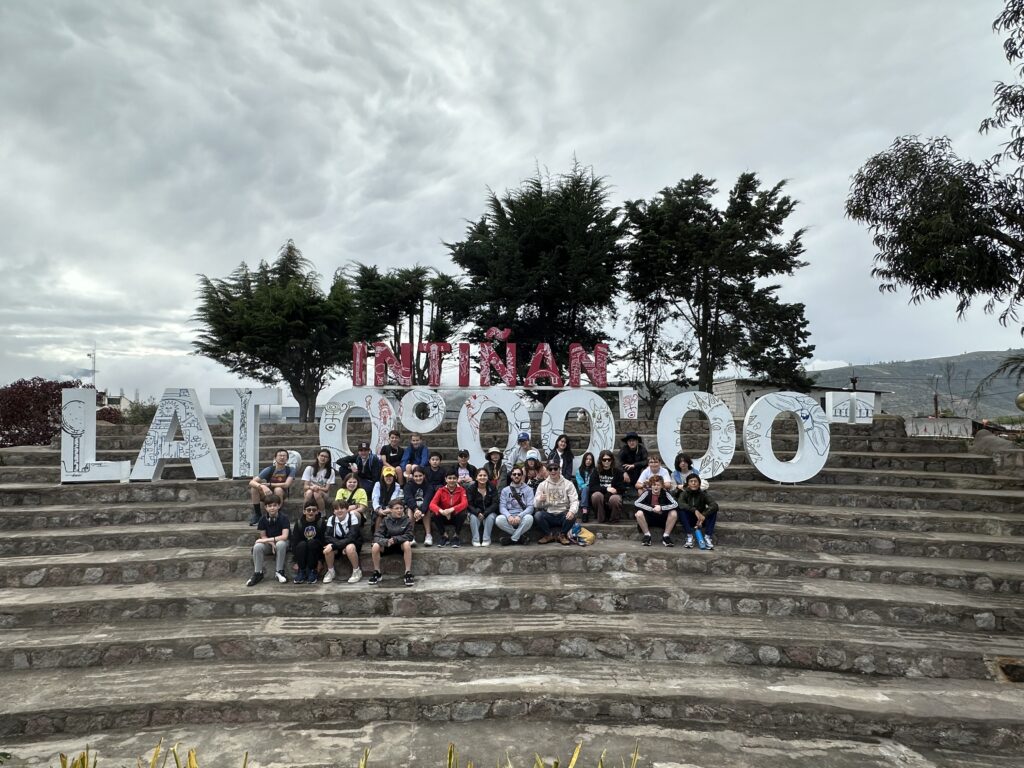
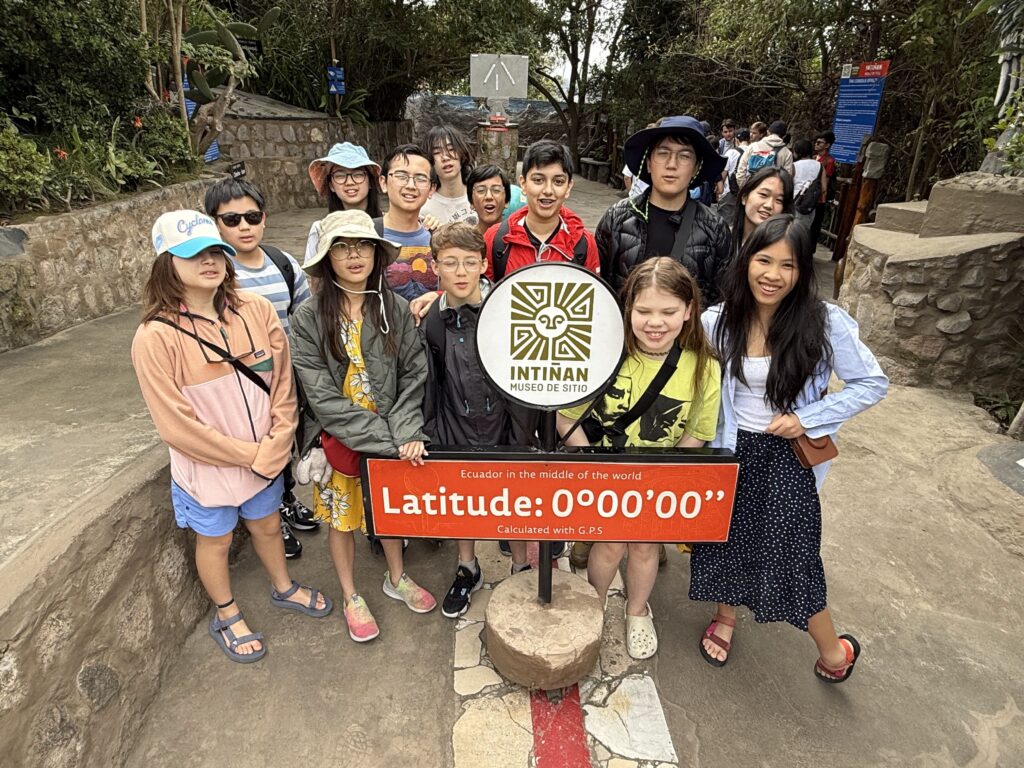
Day 1: After a long and eventful day of travel, the group arrived safely in Ecuador. They met their fantastic tour director, who took them out to explore the vibrant city of Quito, which is home to the Intiñan Equator Museum. Photo opportunities on the equator were a great way to start the trip, and our travelers even sent a special Father’s Day message home to their families.

Mr. Chen reported to families that they are not just learning about the culture and environment, but also about how to adapt to new ways of doing things. For example, they learned not to drink tap water or even use it for brushing teeth, and they were told to dispose of toilet paper in bins instead of flushing it. These little adjustments were all part of the adventure!

Students posed at the equator.
Ecuador in the middle of the world!

Day 2: The group traveled to Santa Cruz Island, the second largest in the Galapagos archipelago. Their adventure began with an exploration into the misty highlands, where they encountered a diverse array of ecological communities.

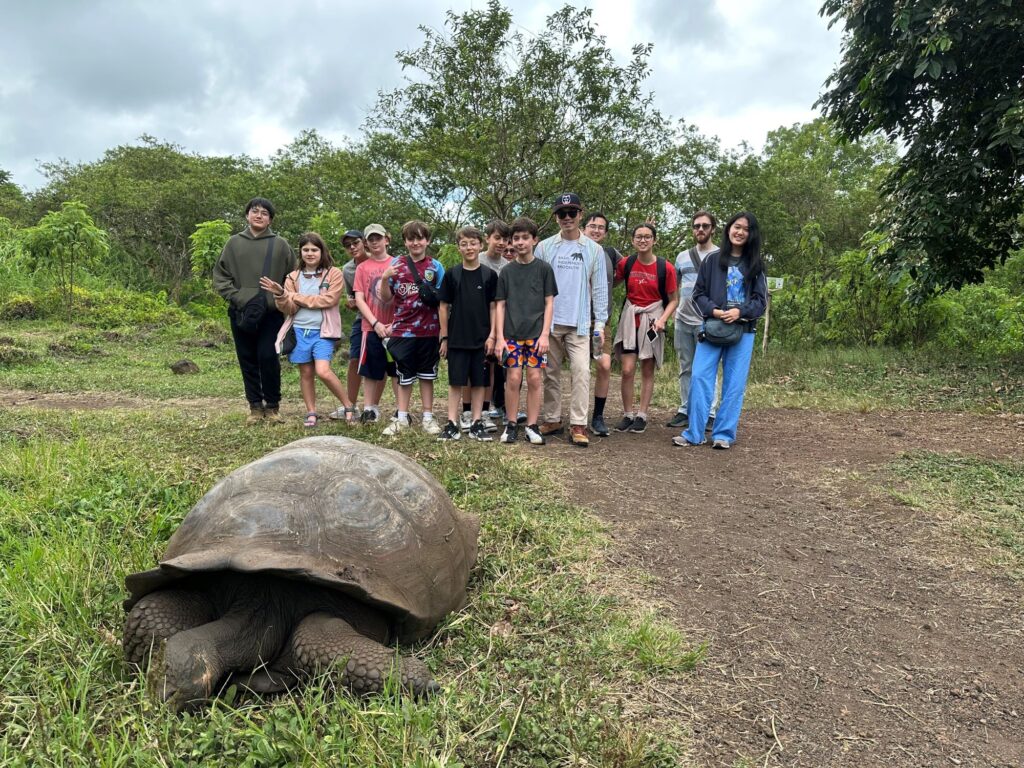
During their highland expedition, they paused at a ranch and witnessed giant tortoises in their natural habitat. Later in the day, they explored lava tunnels, where they learned about volcanic landforms and tectonic plate dynamics. Their day culminated with a visit to the Darwin Research Center, where they deepened their understanding of the islands’ climate, geography, and ecology.

Spotting giant tortoises out on a hike.

Day 3: Students explored Isabela Island, focusing on its estuaries and endemic mangroves in the Wetlands. Their first stop was Playa de Amor, where they observed flamingos and gained insights into Darwin’s finches. Following this, they visited the Giant Tortoise Breeding Center, dedicated to safeguarding the species throughout its life cycle. There, they conducted species differentiation studies and engaged in ecological relationship activities with their host.

The day concluded with a memorable snorkeling experience at Concha Perla, an underwater haven teeming with fish, sea lions, and the Galapagos penguin, providing an ideal snorkeling opportunity.

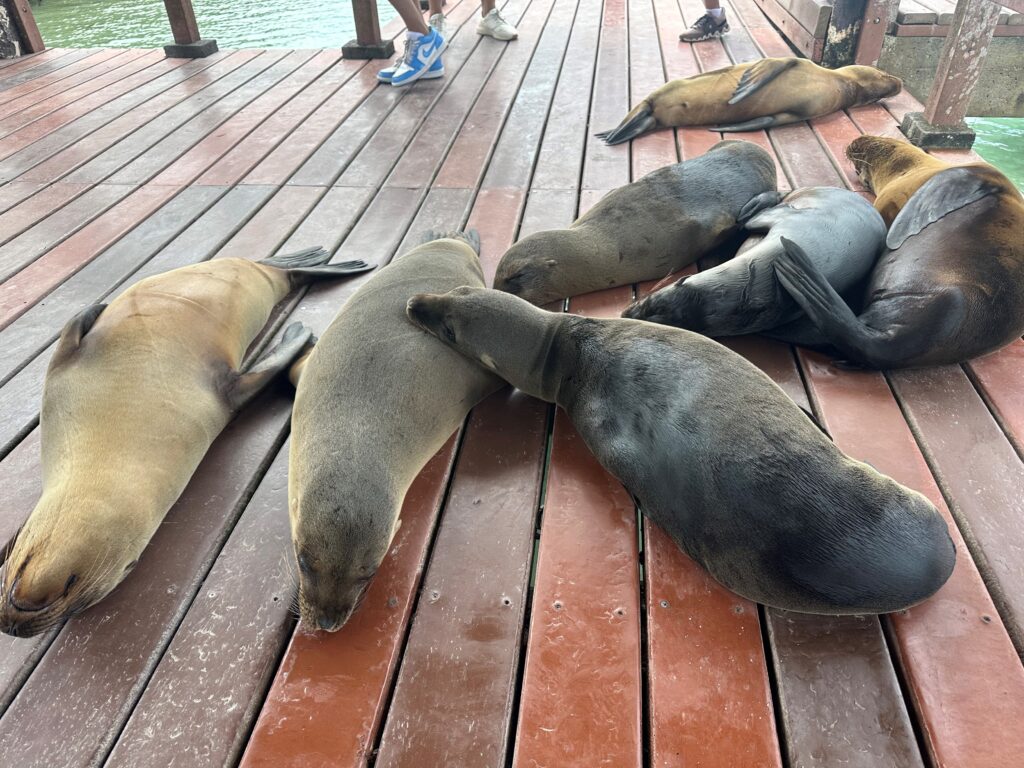
Our explorers found some very relaxed seals lounging on the docks.

Day 4: The students went on an immersive excursion to explore the Sierra Negra Volcano area. They hiked along the six-mile crater rim, where they closely viewed lava fields and fumaroles. As they explored the area, their guide educated them on the distinctive ecological terrain and how to identify various types of volcanic rock.

Following their exploration, the group headed to Las Tintoreras where they enjoyed some time in the water and snorkeled.

Exploring Isabela Island.

Day 5: Students explored Isabela Island, where they came face-to-face with some of the Galapagos’ most intriguing residents, such as marine iguanas, Galapagos penguins, lightfoot crabs, green sea turtles, and resting whitetip reef sharks. After exploring Isabela Island and its wildlife, they returned to back to Balta on Santa Cruz Island by boat. 

Day 6: Mr. Chen shared a lovely recap of the trip to families at this point in the trip:

“What an unforgettable experience it has been to date. The students are exhausted in the best way possible—physically from the roller-coaster speedboat rides (two hours each way!) and the scenic treks (over one hour each way to Tortuga Bay Beach), and emotionally from the sheer amazement of everything they’ve seen.”

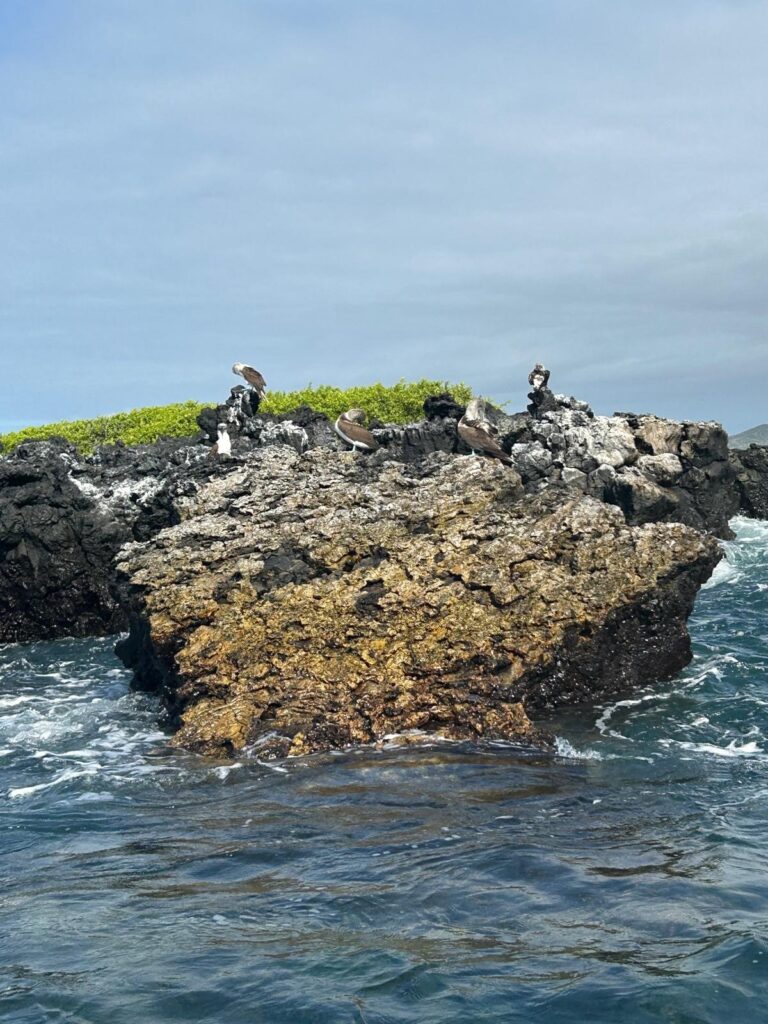
“Imagine this: enormous sea turtles gliding so close you can feel their gentle presence, colorful parrotfish darting all around, sea lions playfully blocking our paths, marine iguanas sunbathing like they own the place, the famous blue-footed boobies showing off their vibrant feet—and of course, the awe-inspiring giant tortoises roaming peacefully on land, reminding us of the timeless beauty of this ecosystem. It’s the kind of adventure that’s hard to describe in words—you truly have to live it!”

“I’m beyond proud of our young travelers. We’ve crossed paths with many high school groups on this trip, and our students have shared how lucky they feel to experience this unique destination at their age. They’ve pushed their limits and achieved incredible feats, like the day we all walked over 26,000 steps! They’ve also connected deeply with nature and each other, creating memories that will stay with them for a lifetime.”

Day 7: On their last full day, the group had a busy day in Otavalo, Ecuador. They explored a lively open market in the morning and then visited Cuicocha Volcanic Lake and Peguche Waterfall. Lunch was at a unique Pachamanca ceremony, where they helped cook food underground. Then they headed to the airport for their flight back to JFK. 

BASIS Independent Brooklyn is a PreK–Grade 12 private school, providing students with an internationally benchmarked liberal arts and sciences curriculum, with advanced STEM offerings. Considering joining the Bears community? To join our interest list for the next school year and receive admissions updates and more, please click here. 

Filed Under: Middle School, Project Week, Student Learning, Student Life

Leading with Purpose: Meet the Director of Student Affairs at BASIS Independent Bothell

June 25, 2025 by chriszefferys Leave a Comment

Ms. Andrea Sheffield joins the founding staff of BASIS Independent Bothell as the Director of Student Affairs after more than a decade with BASIS Curriculum Schools in Arizona. She graduated from Arizona State University with a Bachelor’s in Family and Human Development and a Master’s in Psychology in Education. At BASIS Curriculum Schools, she taught public speaking, led clubs, advised the National Honor Society chapter, and served as a Dean, Director of Student Affairs, Director of Academic Programs, and Assistant Head of School.

Ms. Sheffield the Director of Student Affairs (DSA) for BASIS Independent Bothell

“I have served a BASIS Curriculum School in almost every leadership capacity,” shared Ms. Sheffield. “I founded our Firebird Library; taught the American Sign Language club; advised our National Honor Society; ran a Raqs Sharqi Term Project; and designed a curriculum for a grade 7 public speaking class and taught that for a year.”

Working directly with students is what Ms. Sheffield loves best. She is excited to return to the Director of Student Affairs role and join the Orca community.

We had an opportunity to connect with Ms. Sheffield and introduce her to our BASIS Independent Bothell community.

Ms. Sheffield, it is terrific to have you on the founding administrative team. Tell us about yourself!

I am a military brat and the second oldest of four children. My sister and I are administrators, and my brothers are both artists. In my spare time I love to read, craft, scrapbook, and dance. I have been dancing for almost 20 years, and I was in a professional dance troupe in Phoenix, AZ. I am also learning to cook!  I now have four dinners I can reliably make (and, surprise to me, they are good!) and I am building a recipe book so that I can continue adding to my skills.

You have worked in schools before, what has been your favorite day in your school career?

It is hard to pick one favorite day out of 15 years. I think I love graduations the most. Going from grade 5 to grade 6, going from grade 8 into high school, and going from high school to college, each step feels so big. The students work hard every single day, and they can’t always imagine a future where they make it, so when it happens, it is magical. They realize that even when it is hard, they are so capable of getting where they want to be.

From your lens in Student Affairs, how are students able to thrive in a challenging academic program?

The biggest piece to understand is that learning should be approached like any other discipline—whether it be a sport or fine art. Learning is a skill and you have to practice at it. The BASIS Curriculum can only be successfully navigated if you embrace the belief that you can always learn more and improve—by adopting a growth mindset. Student support is about a toolset, through student-teacher office hours, parent support, and more. To succeed, students need to be ready for the full cumulative knowledge aspect of the curriculum; being smart is something you build and if you put in the work, and use the tools available, students get better at navigating their learning experience. In our program, students will learn how to take notes, build organizational skills and work habits, key tools that support their success and help them discover their potential. Our students are capable, and with the right support and effort, they can thrive. Learning is a fun thing that anyone can do, and you just need to put your mind to it!

What are the three things that are important to you with student support?

Primarily, it is working with students and parents to build trust and community. The core themes are fairness, consistency, and an open partnership. First, when students know that you will treat them fairly, they are more likely to engage positively and persevere through challenges. Second, having consistency creates reliable boundaries and builds relationships. Third, having an open and collaborative partnership to ensure students and teachers are comfortable to meet with me, ask questions, have conversations, and just take a break as needed.

Tell us, what is the primary focus of a Director of Student Affairs (DSA)?

I like to say the DSA is the calmest person in the room. They have the big umbrella and big picture of the social, emotional and academic well-being of all students. As DSA I work with my team and school leadership on how we define the toolset and strategies for students and teachers to support students, with the goal of helping students build strong connections and relationships. Additionally, my role is to help teachers work with our spiraling curriculum and partner with parents to help them get through the big picture. Through these activities, this is how we build culture. It is also important to maintain a healthy balanced approach to academics and social life, and my team I work with students to help them manage both effectively.

How are students supported throughout the school year?

Putting routines into place is essential to creating a culture of support. What has worked is Academic Enrichment or ‘AE’ as we call it. This is intended to be quiet study time. Student hours are another way we support students. Each teacher offers two hours a week for student-teacher office hours. Through the school year, my team and I will begin to identify students who may need more support either through organization or behavior, that may impact their success academically. It is important to me to get them through the process, which includes developing academic support plans as needed. The Student Affairs team will identify methods for students to be successful and have a partnership with parents, too.

What excites you about this new school and role?

I am looking forward to working alongside a passionate team of faculty, administrators, and families who are committed to bringing our program to life for students who are eager to participate in this new campus community. The team is energetic and looking forward to building a wonderful school. What also excites me is that our program offers a great curriculum. It teaches students something about themselves and prepares them to take on challenges as they get older. In their academic experience, they will learn failure and how to get past that failure, and how to represent themselves and stand out, and lead. I am excited to know the new students, learn names, and their parents. It is a new beginning with many opportunities!

What are you most excited about, moving to the Seattle metropolitan area?

Listening to the rain, growing plants in the Pacific Northwest climate instead of the desert from which I traveled, and exploring all the unique coffee shops.

BASIS Independent Bothell is a K-12 private school in Bothell, Washington. Join our interest list for updates on upcoming admissions events, application details, program information, and more.

Filed Under: Administration & Staff, Meet School Leadership, School Community, Student Learning, Student Support

History Education at BASIS Independent Bellevue

May 15, 2025 by mirandamartinez Leave a Comment

History is the study of change over time. The history program at BASIS Independent Bellevue exemplifies the usefulness of historical study as it trains our students in ways that benefit them throughout their academic journeys and beyond. As they progress through our spiraling curriculum, students develop the skills to interpret the past and engage critically with the present.

Our Spiraling Curriculum and Scaffolding Skills for Long-term Success

Our Mountaineers are exposed to history lessons in their humanities course work but take their first dedicated history class starting in grade 4. Aided by the Learning Expert Teacher, students have their first foray into working with a History Subject Expert Teacher who helps guide them into the study of the past through a hands-on, inquiry-based class. The course taken by our grade 4 students introduces our Mountaineers to historical study in a class with 12 units. Topics in this course range from the beginning of human civilization and world geography to Washington State history and family history. As part of our spiraling curriculum, each of the topics covered will later be touched upon throughout their time at BASIS Independent Bellevue. The scaffolding of historical thinking skills for long-term academic success begins in the Primary Program years as they start working on critical analysis, writing, and argumentation by working on class components like close readings of documents and constructing a five-paragraph, thesis-driven essays.

As students enter our Middle School Program, they deepen their exploration of the ancient world in grade 5 with Classics, studying civilizations like Greece, Mesopotamia, Egypt, and India. Our Mountaineers examine key figures, myths, belief systems, political structures, and innovations that shaped human history giving them a strong sense of the larger narratives and major problems of human history. Simultaneously, students begin Latin, creating a rich interdisciplinary experience that ties language to culture and history. Studying Latin alongside ancient history also helps them engage more deeply with concepts like Roman architecture, mythology, and philosophy. It also builds connections to subjects like mathematics, economics, and visual arts. This multilayered exposure not only strengthens their historical understanding but also sharpens analytical thinking and fosters an appreciation for the interconnectedness of human development. 

Grade 4 History SET Ms. Rieger works with students to introduce them to the field of historical study. Discussing the scaffolding of skills through our spiraling curriculum early on in our program she states, “Each level builds on the last, ensuring that by the time students reach AP classes in high school, they are not learning foundational skills from scratch. Instead, they refine the notetaking, argument-building, critical reading, and research abilities they have practiced since elementary school.”
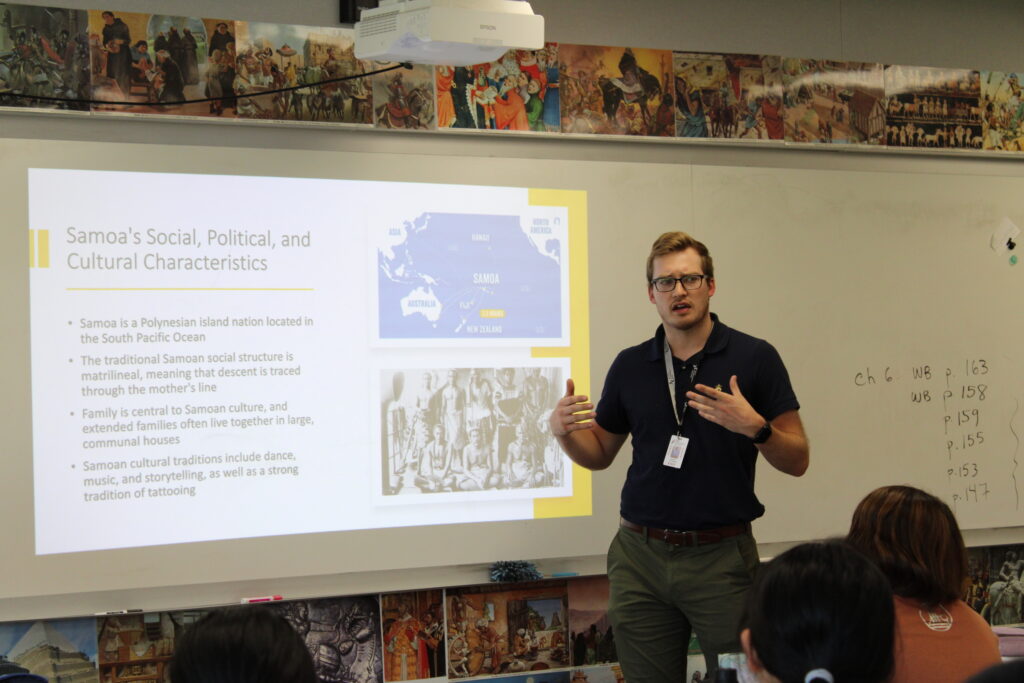
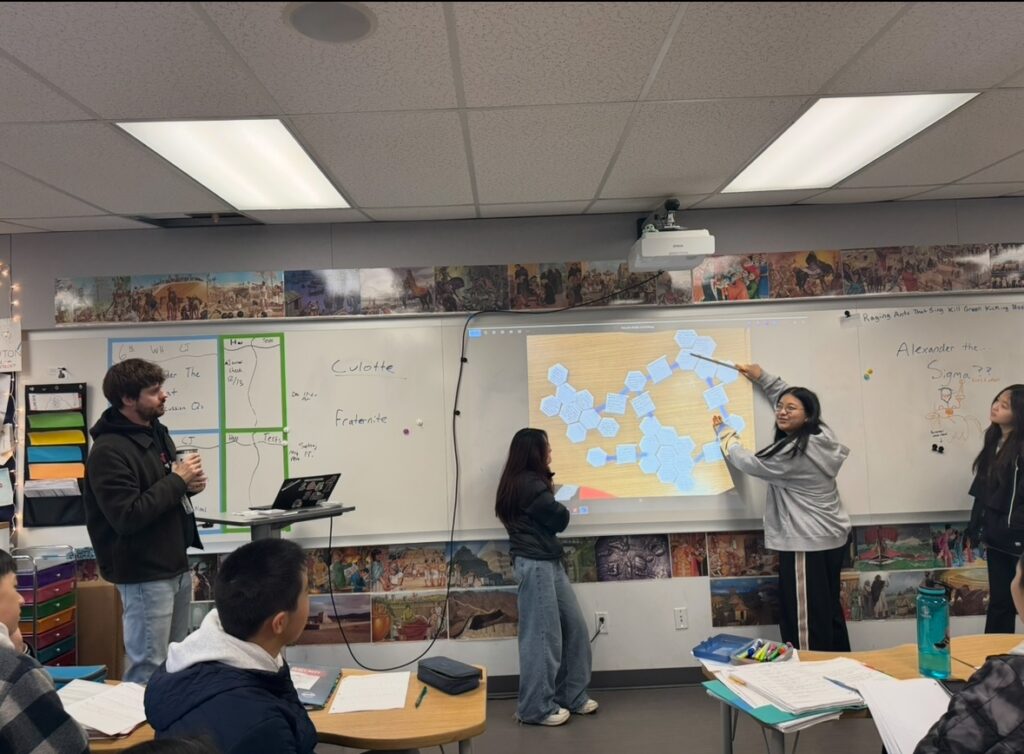
Grade 6 History SET Mr. De Monnin teaching students about Polynesia in World History I. Talking about how students engage in his class, Mr. De Monnin mentions, “Of course, history is eye-opening. Taking this subject is also important for many of our students because it enables them to have an interest in a field that might not be their future career but will help them spark new interests as well as grow in their ability to learn-quickly and talk about change, complexity, and culture.”

Grade 6 students then move on to World History I, the first part of a two-year sequence that follows the trajectory of human civilization from the earliest migration of humans out of Africa. The course is structured around a mix of discussion, guided instruction, activity-based learning, primary and secondary source analysis, and creative critical thinking projects. Students actively engage with big content—such as early agriculture, belief systems, and the rise of political institutions—while developing strong skills in asking insightful historical questions and thinking deeply about the sources of our knowledge. At every level, our students are not just learning to memorize facts about the past but gaining perspective on how knowledge is created, stored, and interpreted that benefit them no matter what subject area they are engaged with.

In grade 7, Mountaineers continue the global journey stretching up to the modern era with themes such as empire-building, revolution, industrialization, and decolonization. Students engage with more complex texts, begin to learn how to perform Document-Based Questions (DBQs), and are expected to write multi-paragraph essays of the types of prompts they will encounter in AP-level courses. Students learn how to trace change and continuity though time, evaluate evidence from a variety of sources, and imagine the perspectives of people who lived in different times and places. By the end of grade 7, students are not only extremely well-versed in the course of world history—they are also equipped with the analytical, research, and writing skills that will carry them through high school and beyond.

In grade 8, our students take on U.S. History with a special focus on building the skills they will need for success in grade 9 AP Government and Politics and grade 10 AP US History. Students dive into key moments, movements, and foundational documents that have shaped the United States, developing a strong understanding of the nation’s key principles, government structures, and historical transformations. Through close reading of primary and secondary sources, robust class discussions, and argumentative writing assignments, students learn to think critically about American stories—recognizing achievements and complexities. Special attention is given to analyzing foundational documents, understanding historical context, and strengthening research and writing skills. With an eye toward their future AP Government course, Grade 8 students leave U.S. History ready to navigate more advanced coursework with confidence.

Studying history as the BASIS Curriculum is designed to develop 21st century learning skills. The combination of World and US History not only helps students take on a global approach to the discipline as they begin to digest the broad strokes of historical study but our focus on close reading, writing, and critical thinking skills in these sessions begin to help them be ready for AP-level classes in high school while also strengthening their analytical and intellectual fundamentals which carries over into other classes.    

Our High School Program and the Advanced Placement Track


“As much as possible we want our students to be good citizens of the world. History is a great place to develop soft skills that are necessary in the real world and help them thrive in social settings. Developing compelling arguments, digging deep into sources, and thinking critically about questions beyond what seems like the most apparent answer.” – Mr. Tyler, History SET & AP Instructor on the goal of our history program


History SET Mr. Tyler (left) leading a class of AP students. Mr. Tyler, and many of the students in his AP class this year, have been at BASIS Independent Bellevue since its inaugural year. Mr. Tyler also helps lead World Travelers Club where students learn about the history and culture of a place and then take a fun, educational trip to the destination they have been studying.

In high school, our Mountaineers take on the study of history through the Advanced Placement (AP) program. Students flourish in our AP program because of our curriculum’s spiraling structure and our emphasis on scaffolding instrumental skills. The framework of BASIS Independent Bellevue’s history program means students are well-prepared for the demands of AP coursework. By the time they enroll in AP classes, students are comfortable analyzing complex texts, synthesizing information, and producing thoughtful, analytical essays. “The benefit of our AP History track is that it moves students beyond surface-level learning to develop critical analysis skills,” said Mr. Tyler, “They learn to see trends, extrapolate data, and think deeply about how historical narratives are constructed.”

Beyond content mastery, Mountaineers going through the AP-track build essential academic skills that prepare them for college and beyond. They learn to ask thoughtful questions and investigate how historians construct knowledge from evidence. Our focus on AP coursework equips them with the habits of mind needed to excel in higher education: close reading, persuasive writing, and critical interpretation. At every step, they are supported by passionate educators who believe in pushing students to think independently and with purpose. Led by our top-tier Subject Expert Teachers, the AP curriculum helps our students gain the critical thinking and writing skills that are necessary for success in college and in the workplace. The typical trajectory is taking AP US Government, AP US History, AP World History, and a Senior Seminar. By the time they graduate, Mountaineers will be ready for what seminar-style social studies and humanities classes will look like as they venture into higher education.


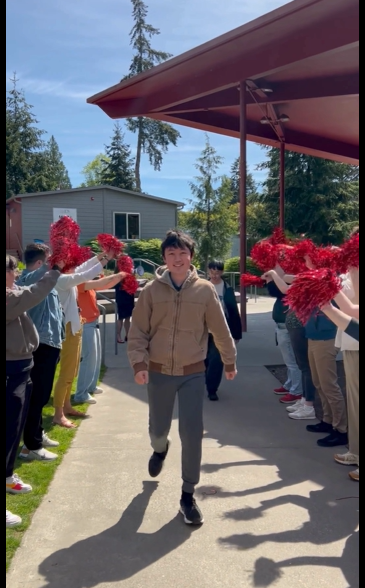
Grade 9 students head through a tunnel of faculty and staff cheering them on before the AP Government and Politics exam that took place early-May 2025. The AP Tunnel is a tradition at many BASIS schools that was accompanied by a pep-talk from our Head of School. Amidst AP exams, our HOS wanted to remind our Mountaineers that, “Rather than place all of the focus and emphasis on the grades received, I wanted to take a moment to recognize the brilliant young men and women that walk into that testing room, take a seat, and represent themselves and our school in such an exceptional way. I am proud of these students from the moment they begin to the moment that they finish each one of their tests. I don’t need to see their scores to understand the hard work and dedication that they put into preparing for them. It is no small feat.” Check out the full video on our Instagram page.


Studying history at BASIS Independent Bellevue equips students with the tools to understand complex issues, think critically, and become engaged global citizens who can navigate the challenges of the future. The social and emotional part of history is important for developing maturity and empathy in our students as they explore the lives and experiences of people from diverse backgrounds and time periods. Part of this also means studying heavier topics, Mr. Tyler stated, “It is important to take on the heavy topics in history and we have had tremendous support from the parents in our community—it is a way to build trust by addressing serious topics and decipher the ways we can best look at them through inquiry-based learning.” Knowing that you can trust your teachers to deliver this content with expert-level knowledge is part of the BASIS Independent Bellevue difference.

BASIS Independent Bellevue equips students with essential academic and analytical skills that serve them far beyond the classroom. Through a carefully sequenced, content-rich curriculum, students learn to examine evidence, build arguments, and write with clarity and purpose. As they progress into our Advanced Placement courses, they do so with confidence—already practiced in the habits of historical thinking. Ultimately, a huge difference maker is the amazing faculty we have recruited to lead the delivery of this program. Mr. Tyler, who is also a subject-advisor for the network, stated, “Collaboration is key. We work as a department to outline the specific skills we want each grade and class to work on. Our department keeps our channels open to develop our students and give the extra attention they deserve in a small school. At an academically advanced private school, history education needs to be something that makes our students stronger, and it requires the teamwork of department faculty to deliver a top-tier program at each level.” Thus, our Mountaineers leave each year more well-rounded and a fruitful foundation in research, reasoning, and communication that prepares them for success in academics, in their social lives, in work, and in their understanding of themselves and others in the world.


Grade 4 students working on a project on the 13 colonies declaring independence from Great Britain. Students wrote their own declarations as well to try and get into the mindsets of people living in Colonial America. Our Grade 4 History SET, Ms. Rieger, notes, “Students get more excited when they can apply history to their own life. The students were able to write their own Declarations of Independence and advocate for things that were important to them. Taking thought patterns and seeing how they work in the present. Projects and hands on learning with history lead to them actually taking the material and processing it in a useful way.”

Filed Under: Academics, Culture of Support, Department Spotlight, History, Student Learning

  • « Go to Previous Page
  • Page 1
  • Page 2
  • Page 3
  • Page 4
  • Page 5
  • Page 6
  • Page 7
  • Go to Next Page »

© BASIS Independent Schools

  • Contact Us
  • Media Recognition
  • Careers
  • Privacy Policy
  • CA Privacy
  • Terms of Use

Headquartered in Campbell, California, Spring Education Group is majority-owned by investment funds administered by Primavera Holdings Limited, an investment firm owned by Chinese persons and principally based in Hong Kong with operations in the United States, China and Singapore.

Sitemap