• Skip to primary navigation
  • Skip to main content

BASIS Independent Schools

BASIS Independent SchoolsBASIS Independent Schools
  • About
    • Why BASIS Independent Schools?
    • Diversity & Citizenship
    • History
    • Benefits of Small Class Sizes
  • Academics
    • Curriculum
    • Early Learning Program
    • Primary Program
    • Middle School Program
    • High School Program
    • The Senior Year
    • Summer Programs
    • International Student Program
  • Achievements
    • International Performance
    • College Admissions
    • Advanced Placement
    • National Merit
  • Find Your School
Inquire

Academics

Senior Project Spotlight: Arry J. – Horizontal Gene Transfer in Microalgae for Wastewater Treatment

June 26, 2025 by alexlevin Leave a Comment

At BASIS Independent Manhattan, senior year culminates in a transformative experience that prepares students for the independence and rigor of college academics. Seniors benefit from a daily college counseling class that supports every aspect of the application process—from building college lists to making final decisions. Throughout the year, students take a range of advanced courses, including AP classes and Capstone courses that allow them to explore subjects in greater depth. In the final trimester, students shift their focus to either the Senior Project or AP Research track—immersive, student-driven experiences that reflect their passions and equip them for success beyond high school.

The Senior Project Experience 

The BASIS Independent Manhattan Senior Project challenges students to move beyond the classroom and apply their knowledge to real-world topics. In their final trimester, students conduct independent research, collaborating with an internal faculty advisor and an external mentor. They develop a unique project that reflects their interests and career aspirations. Students blog regularly about their progress and conclude with a presentation to the school community. 

Alternatively, students enrolled in the AP Capstone program take on a two-year research commitment, starting with AP Seminar in Grade 11 and culminating in AP Research in Grade 12. These students conduct original investigations, collect and analyze data, and present their findings in a format similar to a university thesis. This pathway hones advanced research skills, critical thinking, effective communication, and scholarly inquiry. 

Senior Spotlight: Arry J. 

Arry J. (Class of 2025) embodies the spirit of independent inquiry. His AP Research project, “Exploring the Potential for Horizontal Gene Transfer to Enhance Microalgal Efficiency in Wastewater Treatment,” dove into the world of environmental biotechnology. Arry’s work focused on increasing microalgal cell wall permeability to improve gene transfer from bacteria, potentially leading to breakthroughs in sustainable wastewater treatment. 

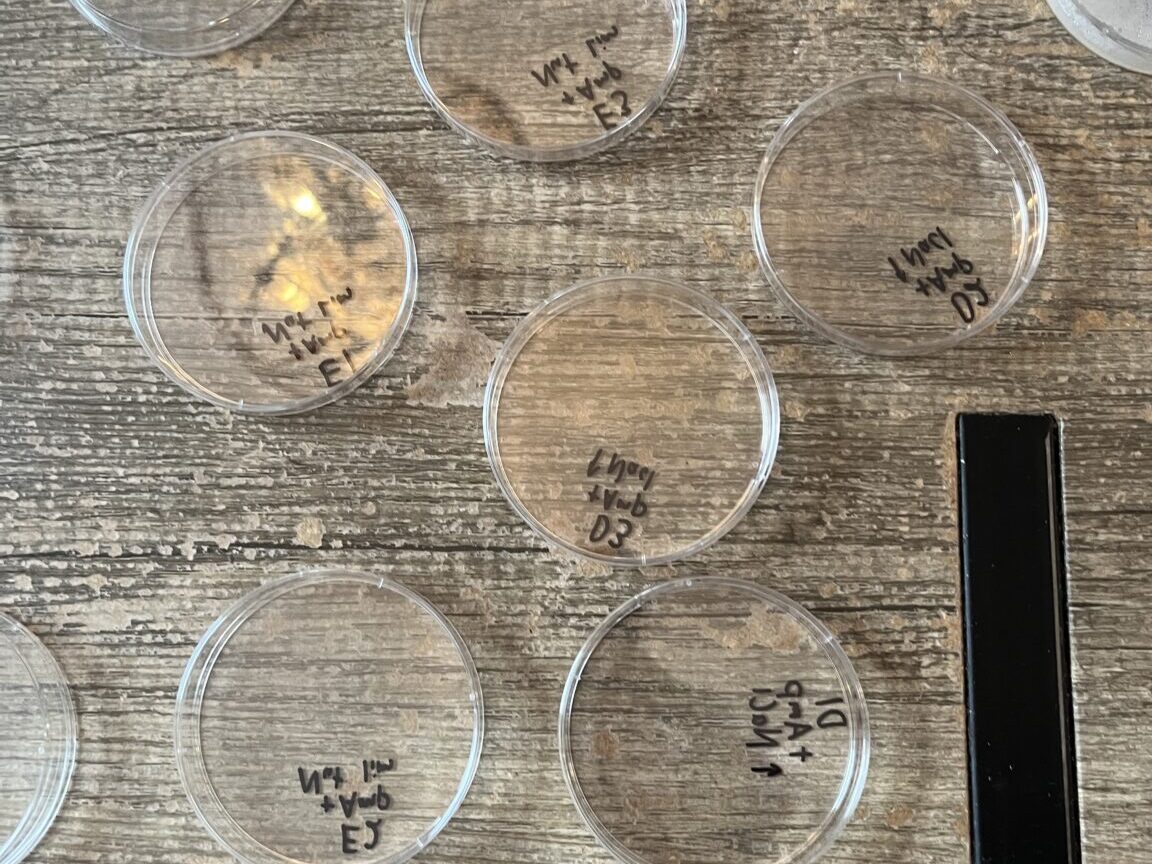
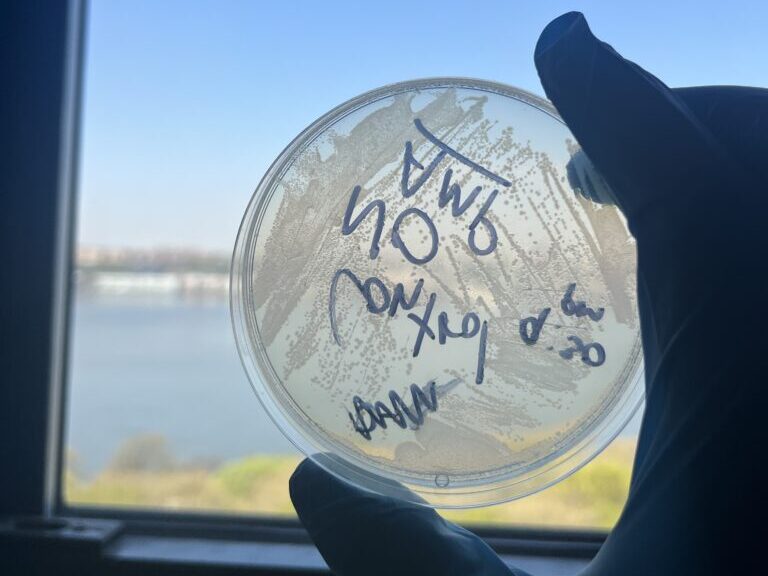
Despite limited lab access, Arry demonstrated creativity and determination. He transformed his kitchen into a functional workspace and improvised with household tools to conduct microbiological experiments. His project reflects not only scientific ambition but also the core outcomes of our program: resilience, critical thinking, and problem-solving. 

Reflecting on the experience, Arry shared, “The biggest surprise for me was realizing how little I knew about the topic. I always thought of myself as pretty biology-oriented. I chose my topic based on biology; however, as I conducted more research, I realized that every subject has numerous small niches, and you have to dive deep to understand most aspects. This is what surprised me because I didn’t realize just how complicated every little thing is.” 

He also recalled the satisfaction of scientific success after initial setbacks: “When doing my project, I ordered everything to my house, and was growing a safe strain of E. coli in my bedroom. My first trial didn’t work. There was no growth on any of the plates. However, I then repeated the entire process, refining some steps and conducting additional research. The second time, it worked! By work, I mean I genetically engineered E. coli to glow in the dark, and it glowed in the dark. I thought that was cool and pretty incredible… and I’m proud of my work.” 

Real Science, Real Impact 

Arry’s project is a powerful example of what BASIS Independent Manhattan students are capable of: research that combines intellectual passion with real-world relevance.  His weeks of late-night incubation checks, improvised lab equipment, and glowing bacterial colonies prove him to be a capable student and a budding scientist. Through the AP Research program, Arry developed a deeper understanding of microbiology along with resilience, resourcefulness, and the analytical skills needed to thrive in college and beyond. 

Preparing Students for the Future 

Whether through an AP Research or Senior Project, our students take ownership of their learning, preparing them for higher education and real-world impact. These projects foster academic independence, deepen subject matter expertise, and give students a platform to explore professional interests before graduation. 

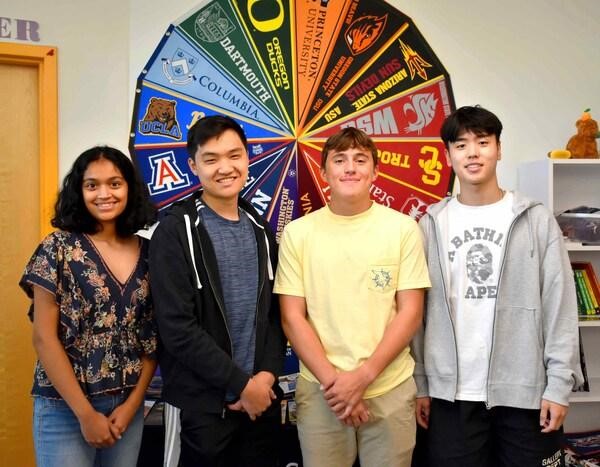
Arry’s work—like that of his peers—reinforces how the high school at BASIS Independent Manhattan can be a launching point for meaningful, original contributions to today’s most pressing challenges. This fall, after being accepted into 11 of the nation’s top 25 universities, Arry will bring that same spirit of inquiry and impact to the University of California, Berkeley.

Curious to Learn More? 

Explore Arry’s full blog and follow the work of other BASIS Independent Manhattan seniors here: Senior Projects at BASIS Independent Manhattan. 

Filed Under: Academics, Awards & Recognition, College Preparation & The Senior Year, High School, Senior Projects, Student Achievement

Mountaineer Futures: Launching College Counseling at BASIS Independent Bellevue

May 27, 2025 by mirandamartinez Leave a Comment

The college application process seems to change every year, affected by global events like COVID-19 as well as more local factors like the national economy. Universities and colleges themselves have been shifting away from (or back towards) accepting standardized testing scores, utilizing different application platforms, and refining what they’re looking for in an ideal student. Some have raised the income ceiling for what would qualify a family for fully subsidized tuition; others have seen such an increase in their applications that their acceptance rates have dropped to single digit numbers. At BASIS Independent Bellevue, we understand that the research and decision-making that goes into choosing the next step in a student’s educational career can feel overwhelming, which is why we offer a robust College Counseling program with various levels of support for both students and parents. 

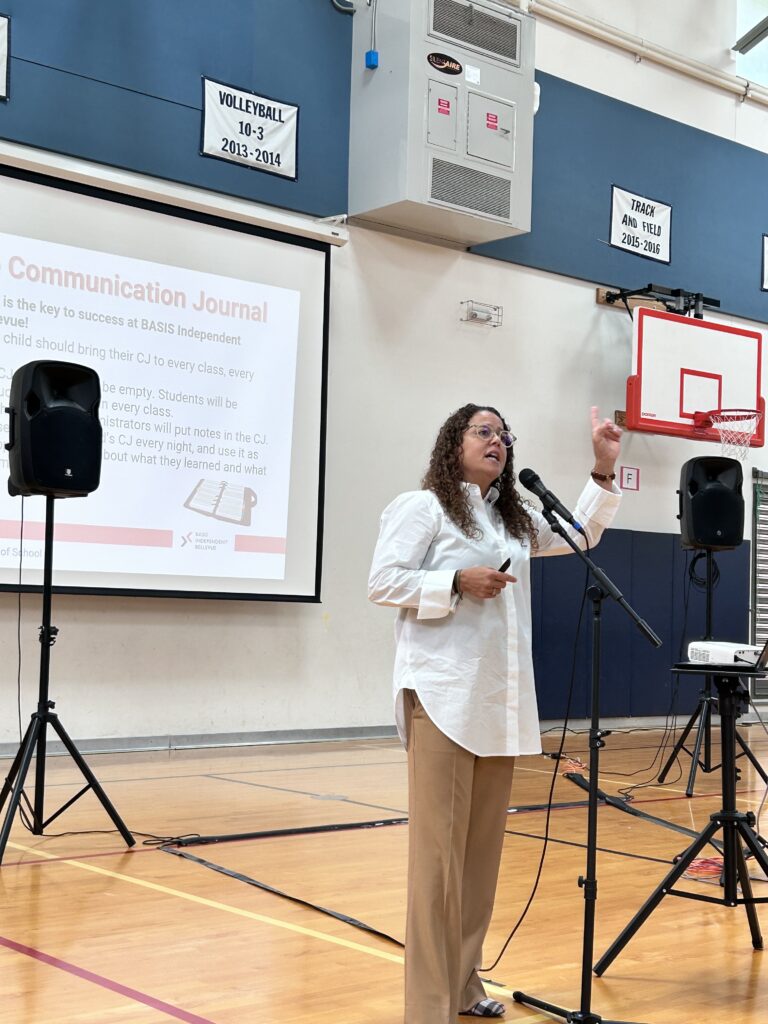
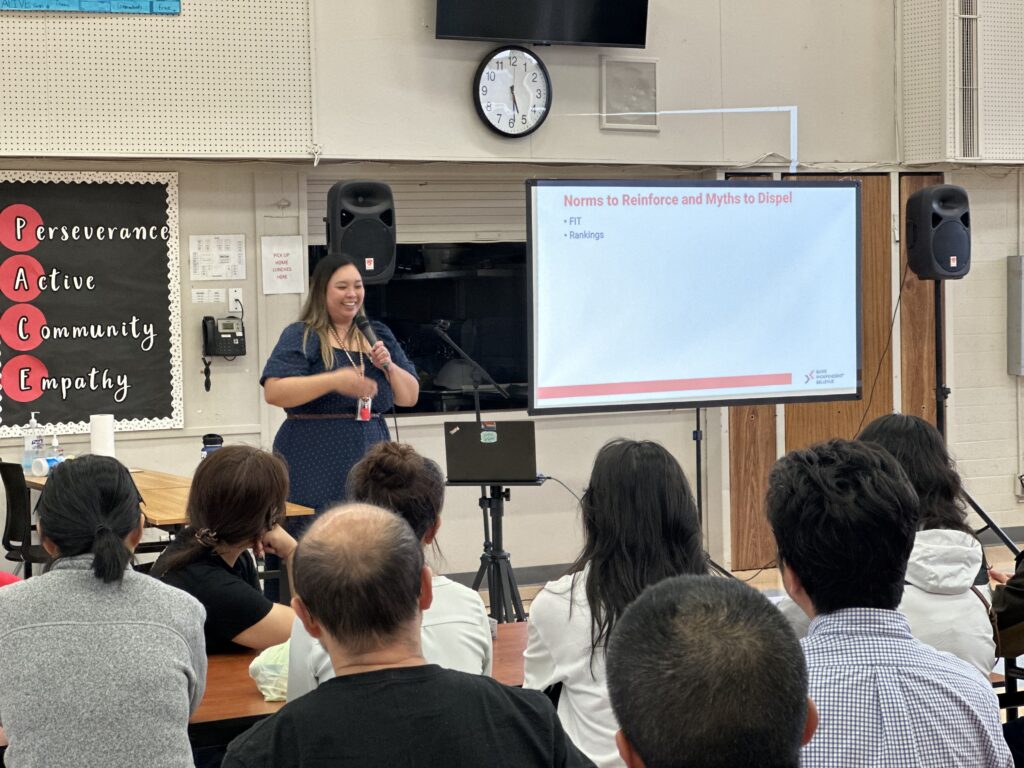
Ms. Angkham seen here leading a college counseling information session for grade 9 families.

This school year, we welcomed Ms. Che Angkham to establish the College Counseling program at BASIS Independent Bellevue, coinciding with our inaugural high school class. Though this is her first year at the Bellevue Campus, this is her 7th year with BASIS Independent Schools and her 17th year overall as an educator. She joins us from our network’s largest high school—the Silicon Valley campus in San Jose, California–where in addition to College Counselor, she had held the roles of English Subject Expert Teacher, Dean of Students, and Associate Head of School. Prior to joining BASIS Independent Schools, she taught elementary and middle school at other independent schools and worked as a private consultant. Her experience has given her unique insight into a student’s journey, all the way from grade 1 through grade 12—from learning phonics to walking in their high school graduation. This breadth of knowledge has served her well in building a College Counseling program from the ground up.  

What makes College Counseling at BASIS Independent Schools so effective is its holistic, collaborative approach. Ms. Angkham works closely with the School Counselor, Dean of Students, Director of Student Affairs, and Subject Expert Teachers as part of a network of support, covering not just academic achievements but also social-emotional learning, executive functioning, and life skills. Furthermore, the team of College Counselors across all the BASIS Independent Schools regularly collaborate with one another as well as meet monthly with counselors across the Spring Network. Every College Counselor also belongs to the National Association for College Admission Counseling (NACAC), which provides industry-standard training and up-to-date resources. 

This year, our grade 8 families got a jumpstart into College Counseling with their course selection in the spring. Students and families met with Ms. Angkham to learn more about our high school curriculum and receive individualized planning on their high school trajectory. Those families can enter this summer with the assurance that they have made informed decisions for their teen’s first year of high school. 

Once grade 9 begins, students and families attend a “College Counseling 101” workshop at the start of the year in which Ms. Angkham gives them an overview of what to expect with advising and counseling throughout high school. Parents also receive some tips on how to best support students, while students find out what skills and achievements they should focus on as they move through each year of high school. Ms. Angkham also shares industry norms in college admissions and dispels some commonly held myths regarding the process. 

Throughout the year, Grade 9 students have multiple touchpoints and sessions with Ms. Angkham, including the following: 

  • Seattle College Fair in the fall 
  • Trimester check-ins to review academic progress 
  • Additional academic support for students whose grades fell below a certain level 
  • Preliminary major and college research 
  • Aptitudes and interests assessment 
  • Activities and achievements tracking 
  • Reflection and goal-setting 
  • Essay writing practice 
  • Course selection advising 

Parents, along with students, are invited to workshops that review best practices on how to choose an impactful summer experience; financial planning for college; and tips for success on the end-of-year AP tests, finals, and beyond. 

Grade 9 students were accompanied by Ms. Angkham and several of our staff to a College Fair this year. Seen here at Pike Place Market, they used the off-campus opportunity to check out some of the classic sites in Seattle.

Looking ahead to grades 10 and 11, students and families will continue with similar support, but of course scaled to that specific year in high school. Additionally, we will offer standardized testing practice and visits with college admissions representatives so that students can make individualized connections and find out more about a school’s application process, beyond what can be found online. Grade 11 students can begin their college applications in earnest, including receiving counseling and essay feedback throughout the summer leading up to senior year. 

Grade 12 is where students and families become deeply immersed in College Counseling with open access to the counselor through family meetings and drop-in office hours. Additionally, seniors will have a daily college counseling class with Ms. Angkham during trimesters 1 and 2 in which they will continue with visits from college admissions representatives, learn how to best approach different essays, broaden their knowledge of colleges in general, figure out what financial aid is available to them, and build a balanced college list based on their strengths and interests. Students will also receive robust one-on-one application review and essay feedback.  

After the culmination of the application season, the College Counseling class will pivot to Life Skills where students will learn material that will benefit them in college and beyond, such as university resources and how to be a good roommate. 

During trimester 3 of senior year, students may continue meeting with Ms. Angkham as needed. While they wait for college acceptances to continue rolling in, they will focus on their Senior Research Projects in earnest. This project may have actually started as early as grade 11, depending on whether a student is continuing a passion project or whether they are introducing a brand-new proposal their senior year. Students will spend the trimester doing hands-on original research, writing blogs to update us on their progress along the way, and completing their papers. Those students completing their Senior Projects through the AP Research course will also defend their papers to the College Board. Each senior will then present their findings at an end-of-year conference in which all students, staff, and family members will be invited to be amazed, proud, and humbled by the ingenuity of our soon-to-be graduates.  

As a growing high school with only grade 9 students this year, we have a lot to look forward to. We have been delighted to share in the successes of our sister high schools: BASIS Independent Brooklyn, Fremont, Manhattan, McLean, and Silicon Valley. Students at all campuses received acceptance to their schools of choice. Our industry standard of ensuring students apply to schools based on fit means that BASIS Independent graduates are not only excited to enroll in college; they are also well-positioned to have a satisfying college experience and success in their future classes. They will graduate college with the education and maturity to become the next generation of leaders. Read all about our students’ acceptances in this blog.  

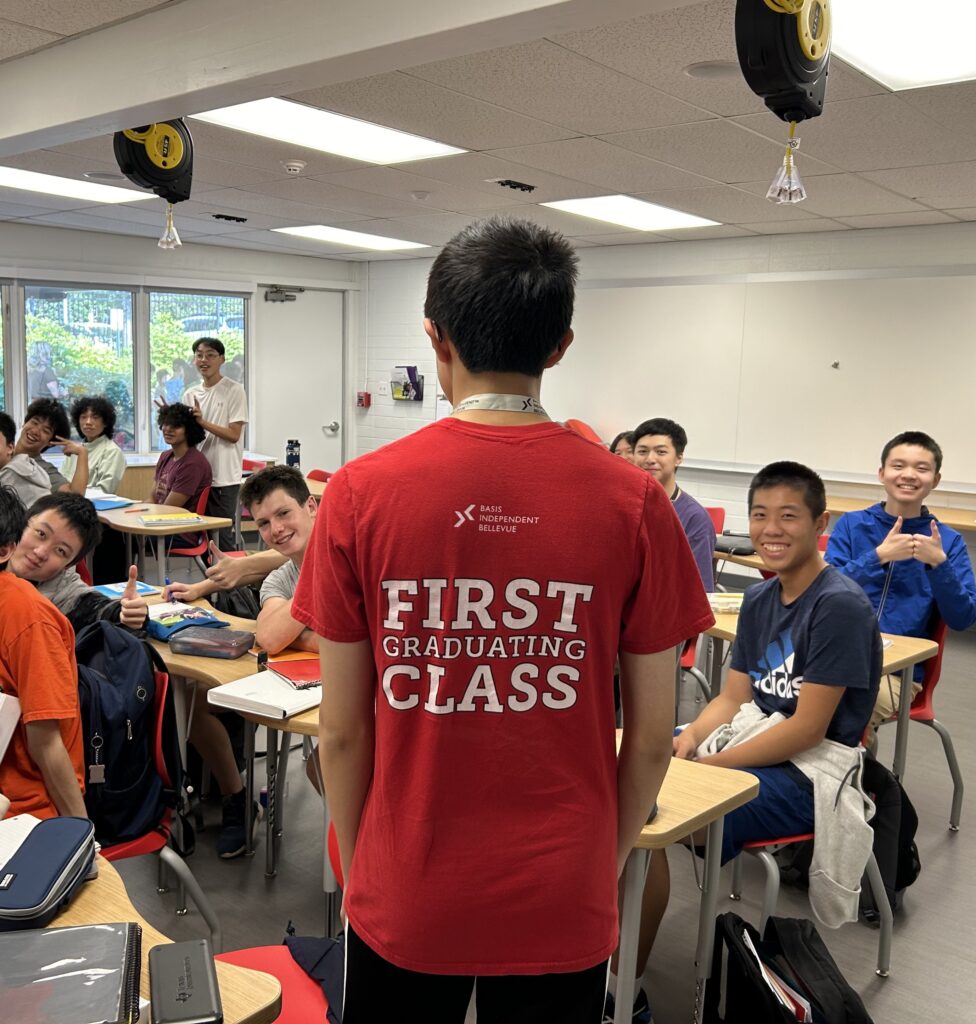
We have amazing students here at BASIS Independent Bellevue. We look forward to seeing them learn and grow over the years, and we cannot wait for our first graduating class to celebrate their achievements in 2028! 

Filed Under: Academics, College Counseling, College Preparation & The Senior Year, Student Support

Meet the Winner of the 2024 Fellows Scholarship for Excellence in Senior Projects! 

May 27, 2025 by msnyder Leave a Comment

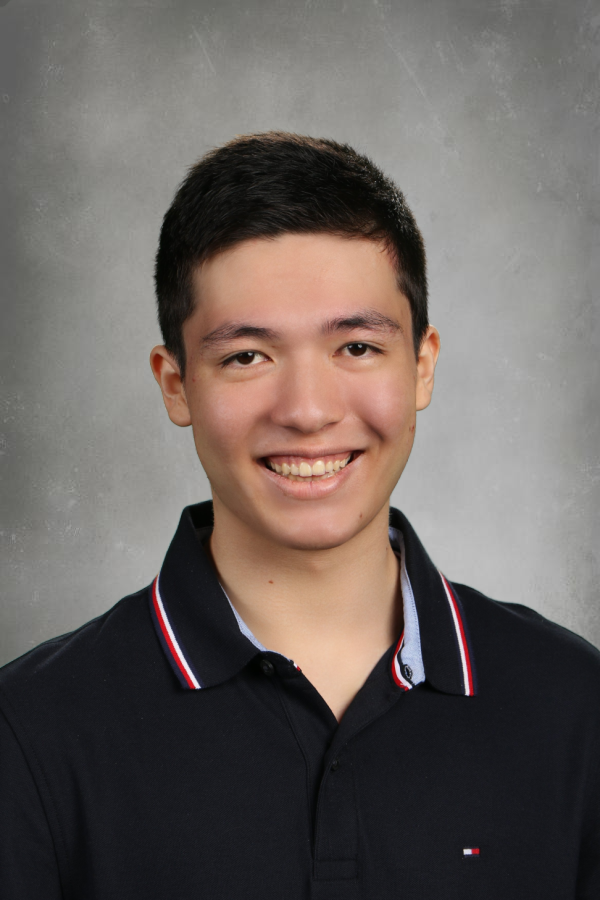
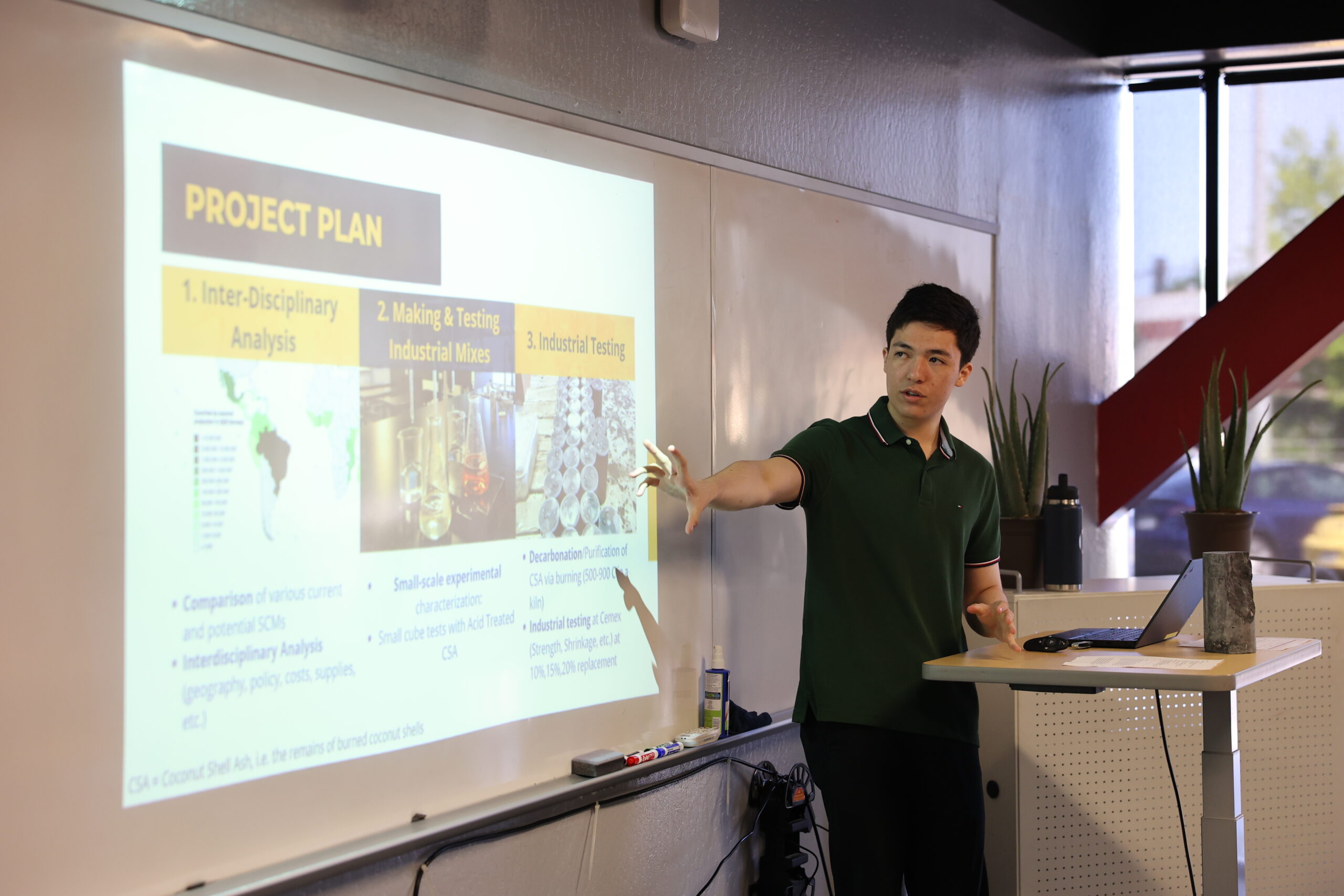
To kick off a new year of Senior Projects, we are sharing a conversation with the inspiring winner of the 2024 Fellows Scholarship, a $10,000 prize awarded to one project per year. Max Polosky, a Class of 2024 graduate of BASIS Independent Silicon Valley (BISV) and current Northwestern University student, impressed our committee with his project titled “Industry-Standard Characterization of Coconut Shell Ash’s Viability as a Supplementary Cementitious Material to Reduce CO2 Emissions”

The Senior Project is an independent, student-led culmination of our high school experience. After three years of academic preparation, our seniors are ready to spend the last trimester of their high school careers applying the skills and knowledge they have gained to develop a project that is insightful, academically rigorous, and professional in nature. 

Our seniors start by designing a research question that is often centered on a subject they are passionate about or curious about. Then they embark on a journey to answer it, documenting and analyzing their findings as they go. They partner with both an internal and external advisor to support and guide their research. Students may choose to conduct their research in the form of internships or experimental research at university research labs, field work abroad, or research conducted remotely from home. From explorations into new-age technology to cutting-edge medical advancements to social justice, the Senior Project offers students the opportunity to channel their innate curiosity. This experience readies them for the type of self-direction and self-discipline expected in an undergraduate and graduate setting. 

Max sat down with Mr. Michael Mandeville, Curriculum Development Specialist for BASIS Independent Schools, to discuss his revolutionary project, his BISV experience, and the impact of his research. 

Mr. Mandeville: Welcome Max, thank you for taking the time to speak with me today. And first off, I want to say congratulations again! And I heard that you found out about winning the Fellows Scholarship the same day that you found out you scored a 5 on AP Calculus. Is that right? 

Max P: Yep, it was a great day for me and my parents. 

Mr. Mandeville: Well, congratulations, that is fantastic. Reading your blog was really amazing, and one of the things that stood out to me was the inspiration of growing up internationally and seeing these big construction projects in the cities where you lived. You also mentioned having a head start on your Senior Project, because you’ve been interested in sustainable concrete for a few years now. With these inspirations spanning back to childhood, my first question is: Did you have other ideas for your Senior project, or did you go into senior year knowing that this was the project you wanted to focus on? 

Max P: I was always pretty interested in architecture and design. Since middle school, I’ve always enjoyed drawing buildings. So that got me interested in civil engineering and building materials. I had been doing some research about concrete since at least the summer before grade 12, and doing experiments whose results didn’t turn out exactly as I wanted them to– there were mysteries in the air. I did have some other ideas for things I could do, because there were interdisciplinary concepts I was interested in. But I learned a lot from the two chemistry Capstone courses I took in my senior year, and it related to my major, Environmental Science. By Trimester 3, I felt prepared for my project, so I definitely wanted to get back in there and continue working on what I had started. 

Mr. Mandeville: And you wrote about your involvement with the Aspiring Scholars Directed Research Program (ASDRP), which you joined in grade 10. How did that come about, and is that where you remember this project beginning for you? 

Max P: I would say that there are multiple ways to view the beginning of my project, but ASDRP was where I got into concrete specifically. I had been doing summer camps and various structured programs forever. And I felt like I wanted to do something more self-driven, more independent, instead of just, going to camp and doing what I was told to. Actually, that year I was accepted into one of the Stanford summer camps as well, along with ASDRP. And I don’t know if it was the correct decision, but it was the decision that I wanted to do research, you know, something more independent.  

I went in not really knowing what to expect, because I didn’t really have experience with this level of research, and I thought it was just a college thing. But they did a good job of introducing resources and advisors with different areas of interest. And, so then I found the person who would become my external Senior Project Advisor through that process. 

Mr. Mandeville: Do you have any advice for students who are interested in getting involved in something like that? 

Max P: There are really all kinds of options, of course, and I think I tried, or I participated in many of the different options. There are more and more of these different kinds of programs that connect you with industry professionals or professors who are willing to help high schoolers. I’ve also seen a lot of different high school and even middle school research journals. Of course, you have to apply to those. And then the other option, which I also did was doing independent research, which is more flexible because you can cater to your own interest, but it also depends on what you want to do. 

Of course, if you’re doing something like math or computer science-related, something that doesn’t need physical equipment as much, it’s probably easier to do that kind of thing remotely or at school. Doing a physical project like mine independently is a bit more difficult. I was cold calling, emailing a whole bunch of different organizations like professors at Santa Clara University, that kind of thing. Actually, I had a good number of replies. I was able to talk to some professors and learn some cool things, but couldn’t find anyone with the time and equipment to help. And then I ended up as a desperate attempt just visiting CEMEX, which has a facility like 15 minutes from our house, and we just kind of walked in there one day. It was kind of weird because they had trucks moving around, they were pouring stuff everywhere, and there was a sign that said “Restricted Area” so I wasn’t even sure if we could go in there. But my dad was like, “We have to at least try.” So, we went in and said we have this project that we want to do, and we need test equipment and someone to help out. And they actually connected us with the people I am still working with for my Senior Project. And it just kind of worked out like that. So, if you’re doing independent research, I guess there’s a lot more reaching out in that kind of thing, but a lot more flexibility as well. My recommendation is to be prepared for rejection, but also be prepared to learn a lot. Be flexible and eventually you find opportunities. 

Mr. Mandeville: And that leads me to my next question, because that’s another thing that stood out to me in your blog was the initiative that you took and the cold calling. That is an experience that I think even adults can struggle with, and I think that can be a major block for people, because you’re really putting yourself out there. And you mentioned hearing “No” a lot, or you’re finding a lot of dead ends out there. So, for students who may be facing a similar thing in their Senior Project, or any project, how did you deal with that? Was there ever a point where you thought, “Man, this is not working?”. 

Max P: The first thing that probably anyone would tell you about Senior Projects or research projects in general is to leave more time to start early, definitely. Don’t think, “Oh I have a whole senior year to do this.” It’s good to start thinking about it beforehand. Start taking stock of your interests early on, and then you can at least start getting in contact with people who have expertise and can advise you. Of course, everyone is busy, and also, they have their own things in their life, they’re working on, and they’re researching. So, of course, it’s going to be difficult. 

In that aspect, my dad really helped out a lot there, because he’s always really willing to go and talk to random people. That really encouraged me to also go out there and talk to people. No one’s going to be condescending and purposefully unhelpful or mean. So often, which actually happened to me with the CEMEX, is that people will suggest things and kind of get you on the right path over time. So, you may start out confused, not knowing where to look, but eventually, you’ll start to zero in on what you need to look for. So, you have to keep going at it. 

Listen to what the people you’re talking to are saying and see if there’s something that’s related. They’ll suggest things that are maybe similar if there’s nothing exactly the same as what you want at first. Nothing’s ever going to be as you want it. It’s important to have that flexibility to change your plan. As always, I guess that’s the name of the game in research, right? If everything went just really simply down the path, where would the fun be? 

Mr. Mandeville: And on the note of plans, did you have your BASIS Independent faculty Senior Project advisor in mind from the beginning? What was important to you in choosing the internal advisor for your project? 

Max P. Yes, I had a general idea that I wanted somebody with whom I had classes with before and had a connection with, ideally. Just because you know how that teacher operates, and they also know you and so it’s easier to get started with a collaboration, if you’ve already collaborated in the classroom environment before. 

So, I started there. And then the project being chemistry, and environmental based, I was looking in that region. I was lucky enough to be able to take two Capstones my senior year, Inorganic Chemistry with Dr. Bozidarevic (affectionally known at BISV as “Dr. B”), and also the Industrial Chemistry course with Dr. Davies. 

Dr. B and I interacted very closely in Inorganic Chemistry, because it was a class of six people that year. It turned out to be a really good thing, because, we already understood each other, we joked around every now and then. I think on my senior project presentation, I was introduced as the biggest complainer Dr. B ever had, but also someone who would turn up and get 100 on all the tests anyway. So, you know, we had this kind of banter and closeness from that class. I guess in general, just because of circumstance, a lot of the options will kind of get narrowed down already. And then it’s just going for whose specialty aligns. And actually Dr. B. did suggest that I talk to Dr. Davies every now and then just for some advice, because she had the industry experience with concrete already. So yeah, all the teachers have different kinds of expertise and backgrounds. And some of them might even have interests that you didn’t even know about. It’s just about asking them, just like looking at research in college, it’s okay to talk to different teachers. You don’t have to limit yourself to one immediately. Because of course, they also want a project that kind of fits with how they work. So, it’s never a bad thing to talk to different advisors and kind of weigh your options. 

Mr. Mandeville: That’s great. And in your project, you faced a lot of challenges. Was there an aspect that you found most challenging or most frustrating as you were going through it? 

Max P: Yeah, with concrete, it just takes time, because concrete turns hard, technically, after 24 hours, it’s hard to the touch. But the curing process literally never ends. The hydration and environmental interactions and chemical changes within the concrete mixture pretty much continue forever. And that’s a big thing in the concrete industry: a lifetime analysis of concrete and how it changes from one day, 10 days, two weeks, years, that kind of thing. And so that was a really big thing, I had to get my schedule written out really early on for when I was going to do the tests. And then when I could get the results from that test, and inform another different test I was going to do. Because the curing time of concrete from the standard, one to 28 days, or even 56 days, that’s half the senior project time of the third trimester. And so, just waiting for that was definitely a challenge. I remember, I was actually doing tests a day before the presentation, and making graphs and results to put on my presentation the night before. But that the long curing times also gave me a lot of time in between, so I could work on the more interdisciplinary aspects with doing my research online. So, it was a challenge, but it was also something I used to my advantage. 

Mr. Mandeville: And speaking of the time that it required, I’m curious to know—if you had a full year to work on it or more time to develop it. What aspect of the project would you have wanted to explore more? 

Max P: I guess, technically, I did get even more than a year to work on it. But, of course, there’s always time constraints. If I had more time, I’d like to look at my project over a longer period, because concrete does tend to change even more over time. I think this time, my tests were 28 days, but you know, 56 days and beyond, would be great. And also analyzing the carbon dioxide reabsorption of the of the concrete variation I made over months or even years, although I think there are ways to use like a special kind of carbonation chamber, kind of like a soda water machine to concentrate the carbon dioxide in the air, therefore, more quickly showing the reabsorption potential of the concrete. 
That would be something I would like to do. Because recently, I was looking at professors at my university, Northwestern, and seeing if there’s any related labs going on, related to concrete, and I was talking to one of the retired professors actually, and they were telling me about this work they were doing with biochar and carbon reabsorption. And how adding a little bit of certain materials can dramatically increase this carbon reabsorption, therefore, making the lifetime emissions of that concrete much lower. And biochar is burnt organic material, which is similar to what I was using. So, I would be interested to see if the carbon reabsorption would be affected by adding what I’m using as well. 

And then, another thing was that there are just a ton of different mysteries that popped up, especially near the end with the tests I was doing in the school lab, where there was unexpected, chemicals precipitating out when I was doing the acid tests, depending on the concentration and that kind of thing. And I hadn’t really had the time to analyze what was happening there. But, of course, there is potential there for being able to separate out the carbon from the useful chemicals we want. So that’s definitely an exciting thing to look at, especially because most of the different kind of biomaterial based supplementary cementitious materials that exist right now to replace cement require some sort of burning to reduce carbon content, and that limits their carbon effectiveness to a certain point. So being able to isolate the chemicals we want from the carbon without burning, of course, would be a super big innovation. So that’s something worth looking into as well. 
Mr. Mandeville: Reading your blog was very engaging—you have all of this technical knowledge, and yet you were able to relate it to familiar things and meet your audience where they were. Did that come naturally to you? Or was that something you worked with advisors as you wrote it? 

Max P: I guess it’s kind of an environmental science, environmental advocacy skill. I’ve been working with adults and children in the community for the last few years, with a nonprofit organization that I founded. Because of course, climate change, recycling, all these other things can be really complicated for someone who’s busy, or someone who’s young. And so it’s important to communicate these complex ideas, which are also very interdisciplinary. Making things concise and also easy to remember is one of the key jobs of doing environmental advocacy. 

I gave a lot of presentations, at various charity concerts, at my old elementary school, and you don’t really have forever to go into all the details. But getting the message across and getting some key data points across is the most important to do. And so, I’ve had a lot of experience distilling the essence of what I want to talk about, and so that came into form when I was making my presentation, just because, my environmental advocacy experience, and also having done so many of these kinds of presentations before about concrete as well. I’ve done at least two poster sessions, two online presentations, and also just spoke to a lot of people about it. From that I was kind of able to gauge what people understand more, what people don’t understand, and then go forward with that, and create something concise, but also meaningful. 

Mr. Mandeville: We talked about some of the challenges you face. Alternatively, what were your favorite aspects of it? Was there a favorite part of the project? 

I mean, of course I love my entire project, because it is my project. It’s kind of a part of me. But I guess, there were some special events that were within my project like getting to go to the various concrete facilities, cement facilities, to see the people and look at the tests being done. I remember, it was actually the summer before my senior project, but I remember my first time going to CEMEX quality control lab—kind of an industrial laboratory in Livermore, which was quite a long drive, but going there we deposited the coconut shell ash. 

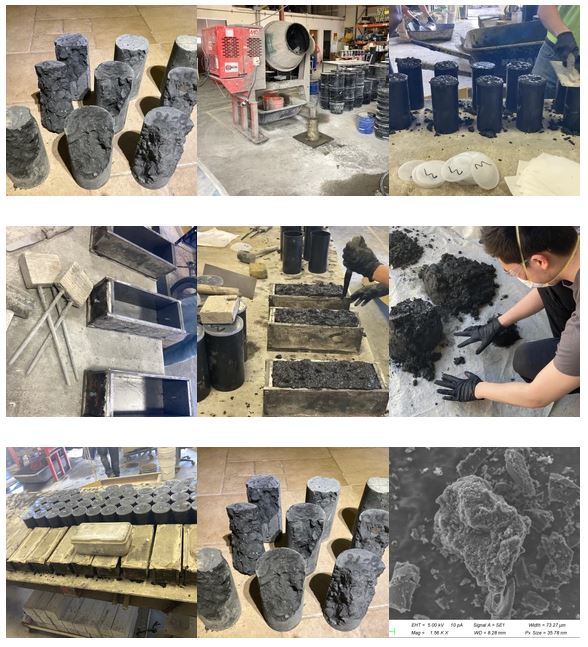
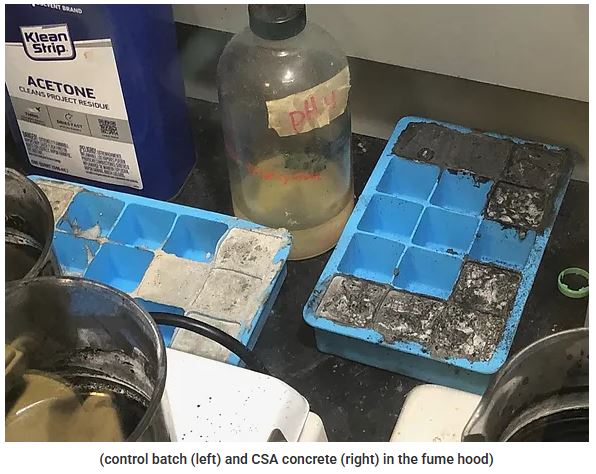
They had a whole system already devised for testing this kind of thing, because the concrete industry has been around for so long, and it’s gained this really good efficiency. So, they had a whole team there. And the morning we went back, they got started at 7:30 AM helping to make the mixes. I think they made 36 different-sized cylinders plus some shrinkage mold tests. They made a whole bunch of those of three different variations of the concrete in, I want to say like half an hour, but they worked amazingly, as a team, getting all these different tests done on the fresh concrete while also making it. And also, following the rigorous procedures that the industry has. And it was really amazing to see how the industry actually works, and the efficiency that’s required, because I was also making my own concrete mixes later, during Senior Project at school. And it would take me two to three hours to do one ice cube tray worth of concrete. It really amazes me how good they are at what they do. And then of course, I also got to go to the Forterra Lab and they also had a bunch of cool things going on, because they’re more on the experimental side with the sustainable concrete. And they have a bunch of cool pictures on the walls of micro scale images of the types of concrete they’re making. And they also have a bunch of cool machinery. And because it was a smaller scale, I got to get involved, putting some small concrete cubes in one of their compression test machines. I guess I didn’t get to go many times, just because, you know, concrete takes a long time to cure, but it was always a treat, going to see how things actually work and how the professionals do it. 

Mr. Mandeville: Another thing that really stood out to me was how you highlighted so many interdisciplinary aspects of your project. You tied a lot of that to your experience at BISV. Could you give a few of those aspects?  You talked about the chemistry, the physics, the economics, the geography. 

Max P: Yes, so with BISV, I really enjoyed being able to take high-level, advanced courses in all these different aspects. And I think looking back on it, I really enjoyed having that course load. And also, having some of the choices between the different sciences and the different histories. I guess one thing that was especially on my mind while I was doing the interdisciplinary part of the project was Mr. Meyerowitz’s Colonial and Post-Colonial course. In that class, we talked a lot about the political balances that exist in the world in the past and present. And then also, during our debates, we were free to look at all different aspects of certain issues. I sometimes raised the environmental aspect, and it made it so there was more freedom to explore, like project-style, what you personally wanted to look at. 

And with that, I also got a lot of research experience in literature review regarding politics and economics. With those skills, I knew I wanted to use them in my project to look at the economic and geographic concepts. And I could have gone even more in-depth. But then that would probably be multiple different projects at that point. But that was definitely one thing I was keeping in mind. Of course, AP Environmental Science is also just a very interdisciplinary topic in general. There are all kinds of different things going on there, every unit, something new to look at that’s still connected to all the other units as well. So, you know, I was keeping all of these different things in mind. But I feel like in most of the classes I had, there were opportunities for projects where you could kind of tailor it to your own thing. So, I actually already had ideas in my mind from these classes, because I had actually done environmental related interdisciplinary work relating to the class content already. So, that made my job easier, connecting the different dots. 

Mr. Mandeville: I know that sometimes seniors are excited about a project and ultimately choose not to do a project out of a fear of failure—fear that it’s not going to turn out the way they want it to. What advice would you share with those students?  

Max P: I think I heard this a lot during my college application process, and people say this all the time. You know, as you’re going off to college, you kind of have to take the opportunities, you craft the experience. 

My project, you could view it as a “failure” because I didn’t create this all-new concrete that everyone wants. But even so, I think Senior Projects are more about the experience of higher academia, the culmination of knowledge. And so, it’s mostly a good chance to show off what you’ve learned and show off also your individual interests.  

There were so many different passions there. And everybody ended up getting super involved in their own project, of course, because it’s what they want to do. So, what I’d say is, failure is a part of learning. I failed a lot. But I’d say, failing is probably more fun than just succeeding. I mean, if everyone just succeeded all the time, there would be no learning. So, just sticking to it and also showing off what you know is really important for Senior Projects. And definitely thinking about it beforehand also helps alleviate those anxieties. 

Mr. Mandeville: Definitely. Max, thank you so much for taking the time to talk with me. I really appreciate it. Is there anything else you want to share before we cut off? 

Max P: I guess I’ve got to stand up for concrete still. I think people should be more interested in these things in general, which may seem boring from the outside. I talked about this in my last blog post. Just these things that may not have fancy names like quantum or AI. Of course, those are important, but coming back to Earth and dealing with nitty-gritty issues that can help with environmental problems, especially in the short term to meet our climate goals, is really important. More research efforts should definitely be put into these areas. Integrating these with newer technologies like AI prediction is the way forward. It’s always interdisciplinary, combining things. That’s very important because everything’s connected at the end of the day. 

Filed Under: Academics, Alumni, Awards & Recognition, College Preparation & The Senior Year, Senior Projects

History Education at BASIS Independent Bellevue

May 15, 2025 by mirandamartinez Leave a Comment

History is the study of change over time. The history program at BASIS Independent Bellevue exemplifies the usefulness of historical study as it trains our students in ways that benefit them throughout their academic journeys and beyond. As they progress through our spiraling curriculum, students develop the skills to interpret the past and engage critically with the present.

Our Spiraling Curriculum and Scaffolding Skills for Long-term Success

Our Mountaineers are exposed to history lessons in their humanities course work but take their first dedicated history class starting in grade 4. Aided by the Learning Expert Teacher, students have their first foray into working with a History Subject Expert Teacher who helps guide them into the study of the past through a hands-on, inquiry-based class. The course taken by our grade 4 students introduces our Mountaineers to historical study in a class with 12 units. Topics in this course range from the beginning of human civilization and world geography to Washington State history and family history. As part of our spiraling curriculum, each of the topics covered will later be touched upon throughout their time at BASIS Independent Bellevue. The scaffolding of historical thinking skills for long-term academic success begins in the Primary Program years as they start working on critical analysis, writing, and argumentation by working on class components like close readings of documents and constructing a five-paragraph, thesis-driven essays.

As students enter our Middle School Program, they deepen their exploration of the ancient world in grade 5 with Classics, studying civilizations like Greece, Mesopotamia, Egypt, and India. Our Mountaineers examine key figures, myths, belief systems, political structures, and innovations that shaped human history giving them a strong sense of the larger narratives and major problems of human history. Simultaneously, students begin Latin, creating a rich interdisciplinary experience that ties language to culture and history. Studying Latin alongside ancient history also helps them engage more deeply with concepts like Roman architecture, mythology, and philosophy. It also builds connections to subjects like mathematics, economics, and visual arts. This multilayered exposure not only strengthens their historical understanding but also sharpens analytical thinking and fosters an appreciation for the interconnectedness of human development. 

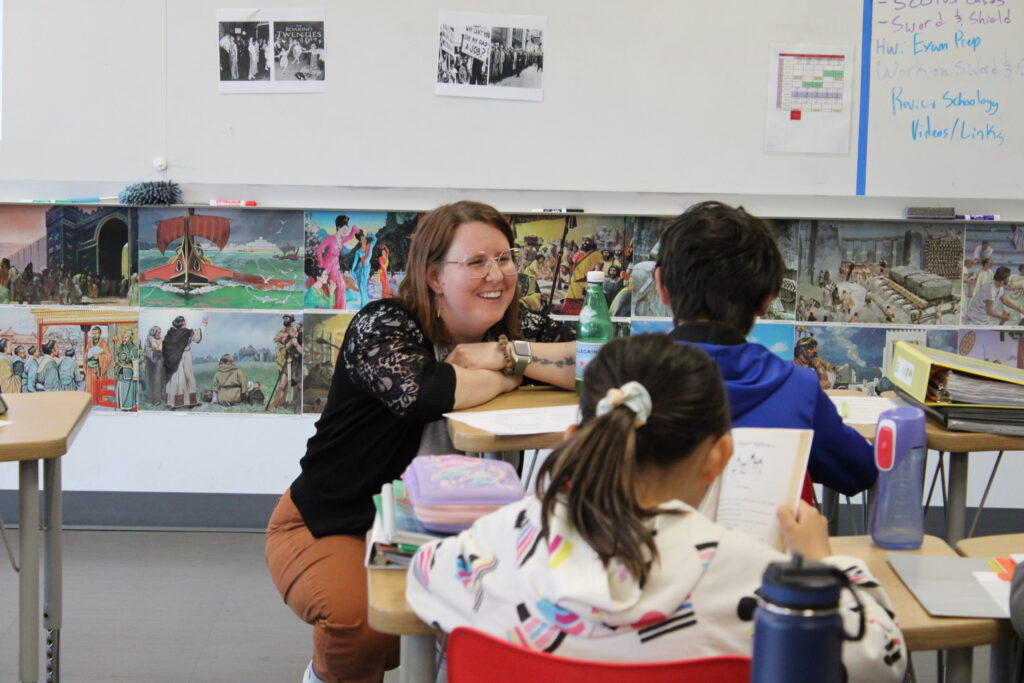
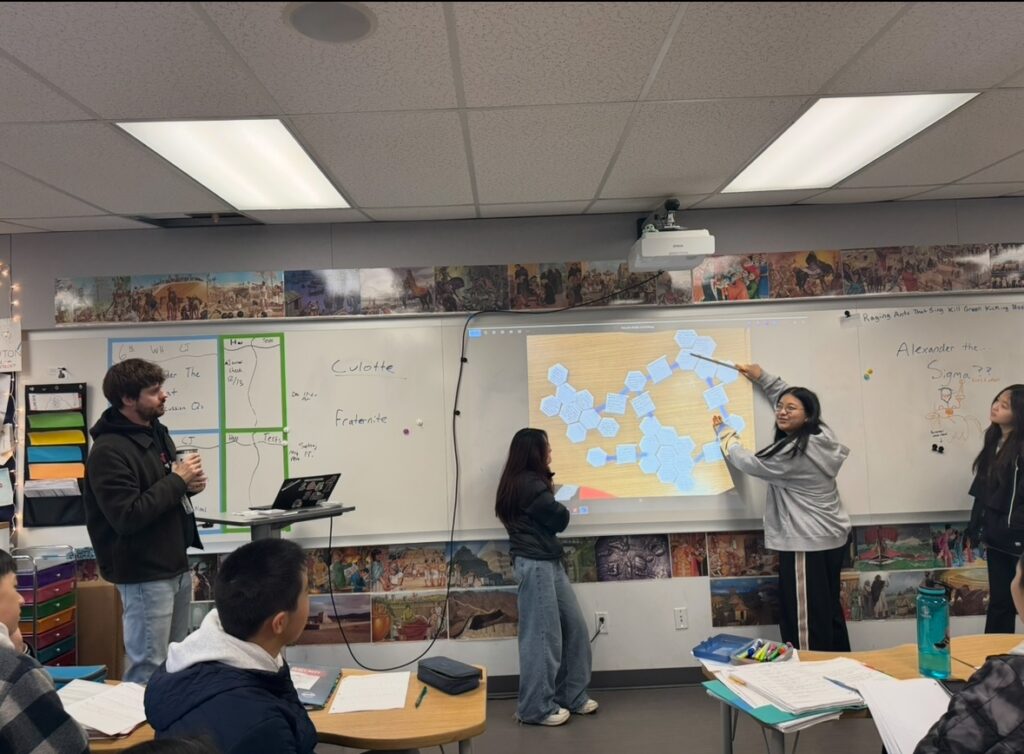
Grade 4 History SET Ms. Rieger works with students to introduce them to the field of historical study. Discussing the scaffolding of skills through our spiraling curriculum early on in our program she states, “Each level builds on the last, ensuring that by the time students reach AP classes in high school, they are not learning foundational skills from scratch. Instead, they refine the notetaking, argument-building, critical reading, and research abilities they have practiced since elementary school.”
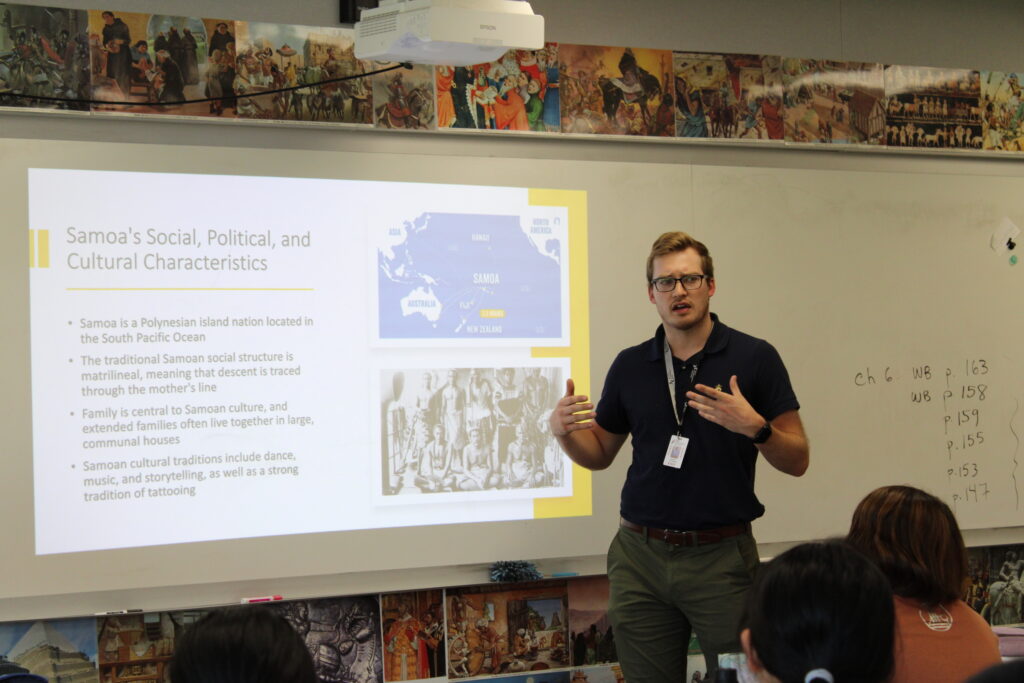
Grade 6 History SET Mr. De Monnin teaching students about Polynesia in World History I. Talking about how students engage in his class, Mr. De Monnin mentions, “Of course, history is eye-opening. Taking this subject is also important for many of our students because it enables them to have an interest in a field that might not be their future career but will help them spark new interests as well as grow in their ability to learn-quickly and talk about change, complexity, and culture.”

Grade 6 students then move on to World History I, the first part of a two-year sequence that follows the trajectory of human civilization from the earliest migration of humans out of Africa. The course is structured around a mix of discussion, guided instruction, activity-based learning, primary and secondary source analysis, and creative critical thinking projects. Students actively engage with big content—such as early agriculture, belief systems, and the rise of political institutions—while developing strong skills in asking insightful historical questions and thinking deeply about the sources of our knowledge. At every level, our students are not just learning to memorize facts about the past but gaining perspective on how knowledge is created, stored, and interpreted that benefit them no matter what subject area they are engaged with.

In grade 7, Mountaineers continue the global journey stretching up to the modern era with themes such as empire-building, revolution, industrialization, and decolonization. Students engage with more complex texts, begin to learn how to perform Document-Based Questions (DBQs), and are expected to write multi-paragraph essays of the types of prompts they will encounter in AP-level courses. Students learn how to trace change and continuity though time, evaluate evidence from a variety of sources, and imagine the perspectives of people who lived in different times and places. By the end of grade 7, students are not only extremely well-versed in the course of world history—they are also equipped with the analytical, research, and writing skills that will carry them through high school and beyond.

In grade 8, our students take on U.S. History with a special focus on building the skills they will need for success in grade 9 AP Government and Politics and grade 10 AP US History. Students dive into key moments, movements, and foundational documents that have shaped the United States, developing a strong understanding of the nation’s key principles, government structures, and historical transformations. Through close reading of primary and secondary sources, robust class discussions, and argumentative writing assignments, students learn to think critically about American stories—recognizing achievements and complexities. Special attention is given to analyzing foundational documents, understanding historical context, and strengthening research and writing skills. With an eye toward their future AP Government course, Grade 8 students leave U.S. History ready to navigate more advanced coursework with confidence.

Studying history as the BASIS Curriculum is designed to develop 21st century learning skills. The combination of World and US History not only helps students take on a global approach to the discipline as they begin to digest the broad strokes of historical study but our focus on close reading, writing, and critical thinking skills in these sessions begin to help them be ready for AP-level classes in high school while also strengthening their analytical and intellectual fundamentals which carries over into other classes.    

Our High School Program and the Advanced Placement Track


“As much as possible we want our students to be good citizens of the world. History is a great place to develop soft skills that are necessary in the real world and help them thrive in social settings. Developing compelling arguments, digging deep into sources, and thinking critically about questions beyond what seems like the most apparent answer.” – Mr. Tyler, History SET & AP Instructor on the goal of our history program


History SET Mr. Tyler (left) leading a class of AP students. Mr. Tyler, and many of the students in his AP class this year, have been at BASIS Independent Bellevue since its inaugural year. Mr. Tyler also helps lead World Travelers Club where students learn about the history and culture of a place and then take a fun, educational trip to the destination they have been studying.

In high school, our Mountaineers take on the study of history through the Advanced Placement (AP) program. Students flourish in our AP program because of our curriculum’s spiraling structure and our emphasis on scaffolding instrumental skills. The framework of BASIS Independent Bellevue’s history program means students are well-prepared for the demands of AP coursework. By the time they enroll in AP classes, students are comfortable analyzing complex texts, synthesizing information, and producing thoughtful, analytical essays. “The benefit of our AP History track is that it moves students beyond surface-level learning to develop critical analysis skills,” said Mr. Tyler, “They learn to see trends, extrapolate data, and think deeply about how historical narratives are constructed.”

Beyond content mastery, Mountaineers going through the AP-track build essential academic skills that prepare them for college and beyond. They learn to ask thoughtful questions and investigate how historians construct knowledge from evidence. Our focus on AP coursework equips them with the habits of mind needed to excel in higher education: close reading, persuasive writing, and critical interpretation. At every step, they are supported by passionate educators who believe in pushing students to think independently and with purpose. Led by our top-tier Subject Expert Teachers, the AP curriculum helps our students gain the critical thinking and writing skills that are necessary for success in college and in the workplace. The typical trajectory is taking AP US Government, AP US History, AP World History, and a Senior Seminar. By the time they graduate, Mountaineers will be ready for what seminar-style social studies and humanities classes will look like as they venture into higher education.


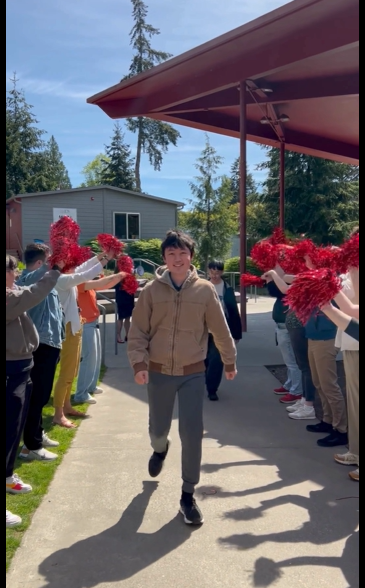
Grade 9 students head through a tunnel of faculty and staff cheering them on before the AP Government and Politics exam that took place early-May 2025. The AP Tunnel is a tradition at many BASIS schools that was accompanied by a pep-talk from our Head of School. Amidst AP exams, our HOS wanted to remind our Mountaineers that, “Rather than place all of the focus and emphasis on the grades received, I wanted to take a moment to recognize the brilliant young men and women that walk into that testing room, take a seat, and represent themselves and our school in such an exceptional way. I am proud of these students from the moment they begin to the moment that they finish each one of their tests. I don’t need to see their scores to understand the hard work and dedication that they put into preparing for them. It is no small feat.” Check out the full video on our Instagram page.


Studying history at BASIS Independent Bellevue equips students with the tools to understand complex issues, think critically, and become engaged global citizens who can navigate the challenges of the future. The social and emotional part of history is important for developing maturity and empathy in our students as they explore the lives and experiences of people from diverse backgrounds and time periods. Part of this also means studying heavier topics, Mr. Tyler stated, “It is important to take on the heavy topics in history and we have had tremendous support from the parents in our community—it is a way to build trust by addressing serious topics and decipher the ways we can best look at them through inquiry-based learning.” Knowing that you can trust your teachers to deliver this content with expert-level knowledge is part of the BASIS Independent Bellevue difference.

BASIS Independent Bellevue equips students with essential academic and analytical skills that serve them far beyond the classroom. Through a carefully sequenced, content-rich curriculum, students learn to examine evidence, build arguments, and write with clarity and purpose. As they progress into our Advanced Placement courses, they do so with confidence—already practiced in the habits of historical thinking. Ultimately, a huge difference maker is the amazing faculty we have recruited to lead the delivery of this program. Mr. Tyler, who is also a subject-advisor for the network, stated, “Collaboration is key. We work as a department to outline the specific skills we want each grade and class to work on. Our department keeps our channels open to develop our students and give the extra attention they deserve in a small school. At an academically advanced private school, history education needs to be something that makes our students stronger, and it requires the teamwork of department faculty to deliver a top-tier program at each level.” Thus, our Mountaineers leave each year more well-rounded and a fruitful foundation in research, reasoning, and communication that prepares them for success in academics, in their social lives, in work, and in their understanding of themselves and others in the world.


Grade 4 students working on a project on the 13 colonies declaring independence from Great Britain. Students wrote their own declarations as well to try and get into the mindsets of people living in Colonial America. Our Grade 4 History SET, Ms. Rieger, notes, “Students get more excited when they can apply history to their own life. The students were able to write their own Declarations of Independence and advocate for things that were important to them. Taking thought patterns and seeing how they work in the present. Projects and hands on learning with history lead to them actually taking the material and processing it in a useful way.”

Filed Under: Academics, Culture of Support, Department Spotlight, History, Student Learning

Celebrating BASIS Independent Brooklyn’s Class of 2025 College Acceptances

May 2, 2025 by jogoldfarb Leave a Comment

We are incredibly proud to share news of college acceptances of BASIS Independent Brooklyn’s Class of 2025! Our seniors have spent the past weeks deciding among the top schools in the country, and they had many wonderful options to explore. Students took time to research and fully assess programs and universities offering resources that will build on their interests nurtured in high school, both in classes and activities outside of school, for years to come.

“Many of the students in this year’s class have been with our school since its founding,” said College Counselor Matt Brauch. “In our High School Program, all these students actively leaned into coursework, clubs, and extracurricular activities to identify and then explore their interests. They aggressively chased after these interests inside and outside of school, starting with course selection (choosing where available to pursue their interests on our campus) and through utilizing resources we created and updated throughout their tenure here to explore their interests off campus.”

“Our seniors embody the character, determination, and care for one another that all of our students should strive for each year,” commented Head of School Josh Harmon. “I know they will benefit the communities and schools they go on to join next year.”

This year was one of the most selective yet in college admissions. Many colleges that were highly selective last year were even more selective this year. We are proud to share the university and college acceptances received by our 24 students who applied to colleges this year:

  • 5/24 students (21%) were offered seats at one of the Top 10 National Universities ranked by U.S. News & World Report. If you extend that to include Cornell (currently the 11th-ranked National University), then the number grows to 7/24 (29%).
  • 67% of students (16/24) were accepted to schools in the Top 30 U.S. National Universities and Liberal Arts Colleges, including Princeton University, Stanford University (2), Duke University, Northwestern University (2), the University of Pennsylvania, Cornell University (3), University of California-Los Angeles, University of California-Berkeley, Washington University in St. Louis, Georgetown University, University of North Carolina-Chapel Hill, University of Southern California (3), Hamilton College, Haverford College, and University of Richmond. Students in this cohort also received offers from Top-20-ranked global universities, including the University College London, Imperial College London, and the University of Toronto (3).
  • Nearly every senior received an acceptance from a school ranked in the Top 50 National Universities and Liberal Arts Colleges as ranked by U.S. News and World Report. If we count Northeastern (#54), then this number jumps to 23/24 seniors (96%), since one of our students applied to Northeastern as their first-choice school via early decision this year. The remaining senior was accepted to an excellent program at their first-choice university through early decision.


“While I am thrilled that all our students have fantastic college options,” shared Mr. Brauch. “I am most proud of this class of seniors for applying to schools that fit what they want out of a college environment and experience. All of our seniors chose the path that fit them best at and outside of our school. They have driven this process, and the results show the effort and time spent focusing on fit for their unique interests and talents. That has served them well at our school and will help tremendously as they take their next steps towards college and beyond.”

CLASS OF 2025 ACCEPTANCES  

Albright College

American University

Bard College

Bentley University

Binghamton University

Boston University

Brandeis University

Bucknell University

Case Western Reserve University

Clark University

Colgate University

Cornell University

CUNY Bernard M Baruch College

Drexel University

Duke University

Duquesne University

Elon University

Emory University

Fordham University

George Washington University

Georgetown University

Georgia Institute of Technology

Goucher College

Hamilton College

Haverford College

Hofstra University

Illinois Institute of Technology

Imperial College London

Indiana University (Bloomington)

Ithaca College

Kenyon College

King’s College London

Lesley University

Loyola Marymount University

McGill University

McMaster University

Miami University (Oxford)

New York University

Northeastern University

Northwestern University

Oberlin College

Oregon State University

Penn State University (University Park)

Pepperdine University

Princeton University

Providence College

Purdue University (Main Campus)

Purdue University Fort Wayne

Reed College

Rensselaer Polytechnic Institute

Rice University

Rochester Institute of Technology

Rutgers University (New Brunswick)

Rutgers University (Newark)

Sarah Lawrence College

Skidmore College

Stanford University

Stony Brook University

SUNY at New Paltz

SUNY at Purchase College

SUNY College at Cortland

SUNY Geneseo

SUNY University at Buffalo

Syracuse University

The London School of Economics and Political Science

The Ohio State University

The University of Edinburgh

The University of Texas at Austin

The University of Warwick

University College London

University of Arizona

University of Bristol

University of British Columbia

University of California (Berkeley)

University of California (Davis)

University of California (Irvine)

University of California (Los Angeles)

University of California (Riverside)

University of California (Santa Barbara)

University of California (Santa Cruz)

University of Colorado Boulder

University of Connecticut

University of Delaware

University of Florida

University of Illinois at Chicago

University of Illinois at Urbana-Champaign

University of Maryland (College Park)

University of Massachusetts (Amherst)

University of Miami

University of Minnesota (Twin Cities)

University of North Carolina at Chapel Hill

University of Oregon

University of Pennsylvania

University of Pittsburgh (Pittsburgh)

University of Rhode Island

University of Richmond

University of Rochester

University of San Diego

University of Southern California

University of Toronto

University of Virginia

University of Washington (Seattle Campus)

University of Wisconsin (Madison)

Vassar College

Villanova University

Virginia Polytechnic Institute and State University

Washington University in St. Louis

Wesleyan University

Western University

Wilfrid Laurier University

William & Mary

Congratulations to our Bears! Our soon-to-be graduates have had a huge impact on our school, and we are confident they will develop further into the leaders our world needs in the years to come.

BASIS Independent Brooklyn is a PreK–Grade 12 private school, providing students with an internationally benchmarked liberal arts and sciences curriculum, with advanced STEM offerings. Considering joining the Bears community? To join our interest list for the next school year and receive admissions updates and more, please click here. 

Filed Under: Academics, College Acceptances, College Counseling, College Preparation & The Senior Year, High School, Student Achievement Tagged With: BASIS Independent Brooklyn, college acceptances, College Preparation, High School

BASIS Independent Manhattan Class of 2025: Celebrating Outstanding College Acceptances

May 1, 2025 by christineklayman Leave a Comment

Join us in celebrating the BASIS Independent Manhattan Class of 2025 and their outstanding college acceptances! Our second graduating cohort reached a significant milestone with the commitment of their stellar college enrollment decisions, and we are overjoyed to share the results. Coming from a challenging high school program at a New York City private school, we are incredibly proud of and inspired by their success.

College Enrollment Reflects Exceptional Achievements

Congratulations to the Class of 2025 on their enrollment at the following colleges and universities (in alphabetical order):

  • Amherst College
  • Babson College
  • Boston University
  • Columbia University
  • Cornell University (Two students)
  • Lehigh University
  • Penn State University (University Park) – Schreyer Honors College
  • University of California, Berkeley
  • University of Connecticut

Head of School Ms. LaNette Hodge reflected on the list, saying,

“The Class of 2025, our remarkable second set of graduating seniors, truly embodies the spirit of BASIS Independent Manhattan. Building upon the high standard set by our pioneering seniors last year, they have faced the highly challenging college admissions process with exceptional hard work, dedication, courage, and resilience. We are brimming with pride for our current seniors because their impressive college acceptances are a powerful testament not only to their incredible talent and academic achievement, but also to the lasting legacy they are creating – one that will undoubtedly continue to inspire the Wildcat students who follow in their footsteps.”

To provide perspective on these results, these statistics speak volumes about the caliber of this graduating class:

  • 40% of students secured spots at top-15 universities and liberal arts colleges, ranked by U.S. News and World Report.
  • 50% received offers from institutions within the top 25 nationally, including prestigious names like Amherst, Cornell, Columbia, and the University of Virginia.
  • An impressive 70% gained acceptance to schools ranked in the top 50.
  • Remarkably, 90% were accepted to colleges within the top 75.

Note: Due to Babson’s academic specialization, it isn’t ranked in U.S. News and World Report’s overall rankings, but it is ranked #1 in Entrepreneurship.

A Class to Be Remembered and Truly Missed

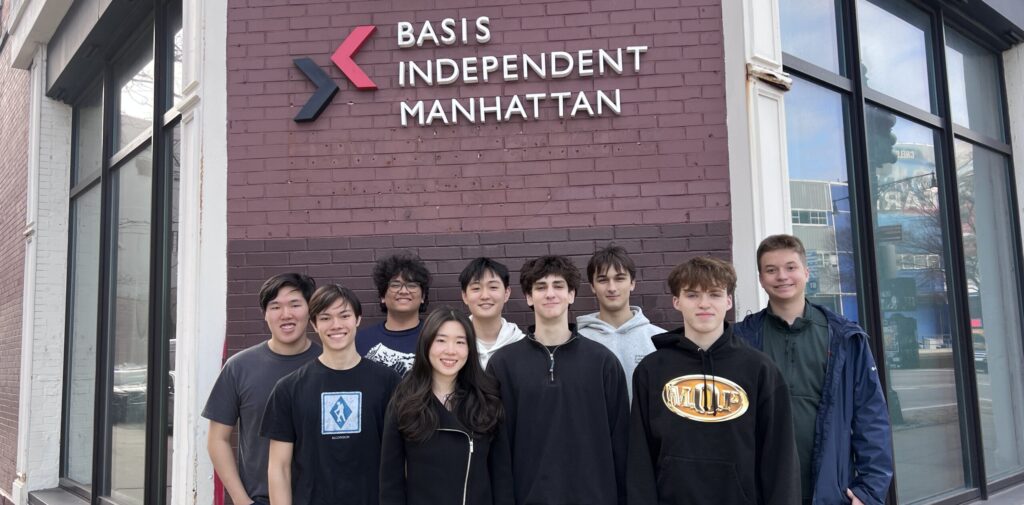
college prep with college counselor in college counseling meeting with senior

Reflecting on his experience with the Class of 2025 and their participation in BASIS Independent Manhattan’s college preparation program, College Counselor Mr. Danny Tejada shared, “This senior class stands out as the most impressive and ambitious group of students I have had the privilege to work with. In addition to daily college counseling classes and weekly individual meetings, they successfully achieved their college application objectives while maintaining their commitment to rigorous senior-year coursework. I am very proud of the adaptability and growth mindset instilled in these seniors that helped them navigate the complexities of the college application process.”

The impressive college acceptances achieved by the BASIS Independent Manhattan Class of 2025 underscore the success of our curriculum and supportive learning environment that unlocks the remarkable potential of our students. This second graduating class has truly set a high bar for future college enrollment, building upon the legacy of our pioneers. We are immensely proud of their hard work, resilience, and the bright futures ahead of them.

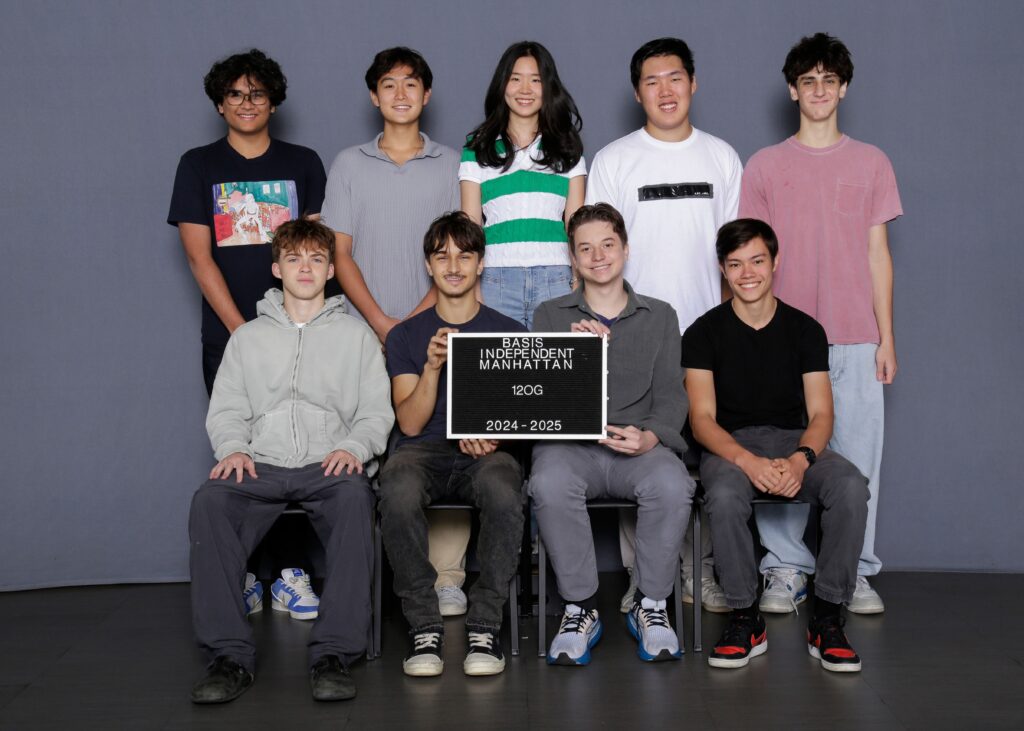
senior class of 2025 college acceptances college decisions at high school

Please find the Full List of College Acceptances below for a comprehensive look at all their achievements in the college admissions process.

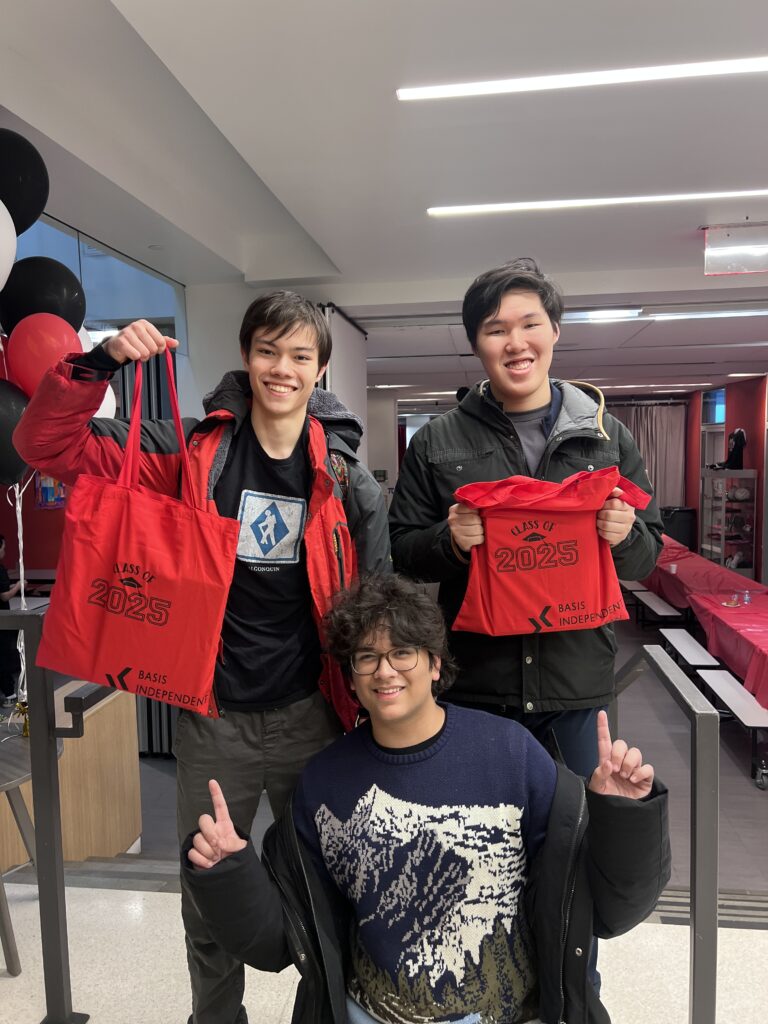
seniors class of 2025 graduation swag basis independent manhattan

American University

Amherst College

Babson College

Binghamton University

Boston College

Boston University

Columbia University

Cornell University

Drexel University

Ferris State University

Fordham University

George Washington University

Imperial College London

Indiana University (Bloomington)

Lehigh University

McGill University

New York University

Penn State University (University Park)

Rutgers University (New Brunswick)

SUNY University at Buffalo

Syracuse University

The University of Edinburgh

The University of Nottingham

Tufts University

University College London

University of California, Berkeley

University of California, Davis

University of California, San Diego

University of California, Santa Barbara

University of Connecticut

University of Nevada (Las Vegas)

University of Southern California

University of Virginia (Main Campus)


Want to learn more about our High School Program?

Discover how BASIS Independent Manhattan prepares students for success in college and beyond.

Engage with our Admissions Team

Filed Under: Academics, College Acceptances, College Counseling, College Preparation & The Senior Year, High School, Results, Student Achievement

Sparking Innovation Early: Robotics and Engineering in the Primary School at BASIS Independent Manhattan

April 25, 2025 by christineklayman Leave a Comment

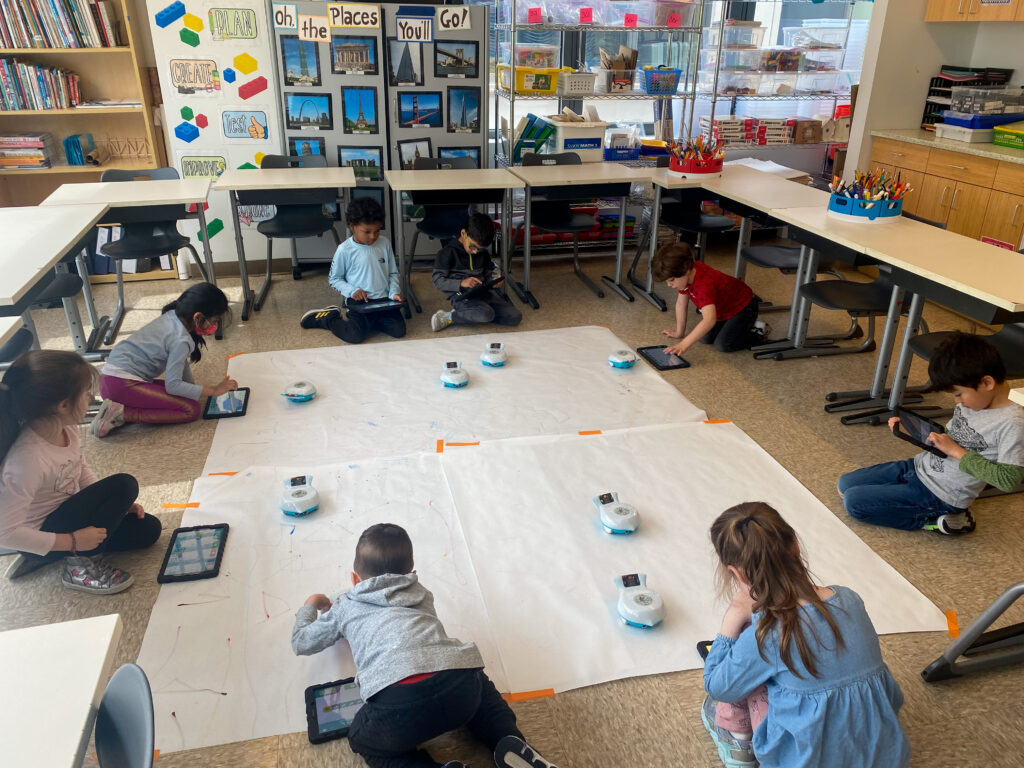
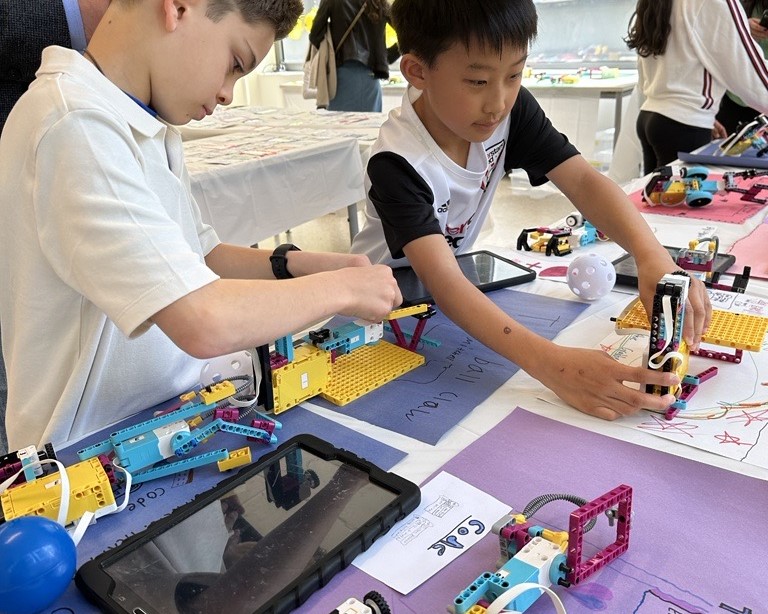
In today’s tech-driven world, preparing students for the future is essential. At BASIS Independent Manhattan, a leading private school in NYC, we are excited to have an enhanced engineering program that includes a Robotics curriculum for primary school students (Pre-K through grade 4). At the head of the classroom for this interactive, engaging, and hands-on learning is Engineering Subject Expert Teacher at the Lower School, Ms. Delaney. She introduced us to the three unique hardware systems—Ozobots, Finch Robots, and LEGO SPIKE kits— and how she uses them to build skills that grow with students through our spiraling curriculum.

Why Robotics?

Beyond just building robots, our program develops critical thinking, creativity, and problem-solving skills vital for future STEM success. Robotics is deeply rooted in computational thinking, the real-world processes behind computer science and engineering. That sounds challenging for early learners, but this hands-on approach seamlessly teaches students how to break down complex problems, identify patterns, develop step-by-step solutions (algorithms), and refine those solutions when needed. It transforms students from passive tech users into active creators!

Ozobots: A Joyful Introduction (PreK–1)

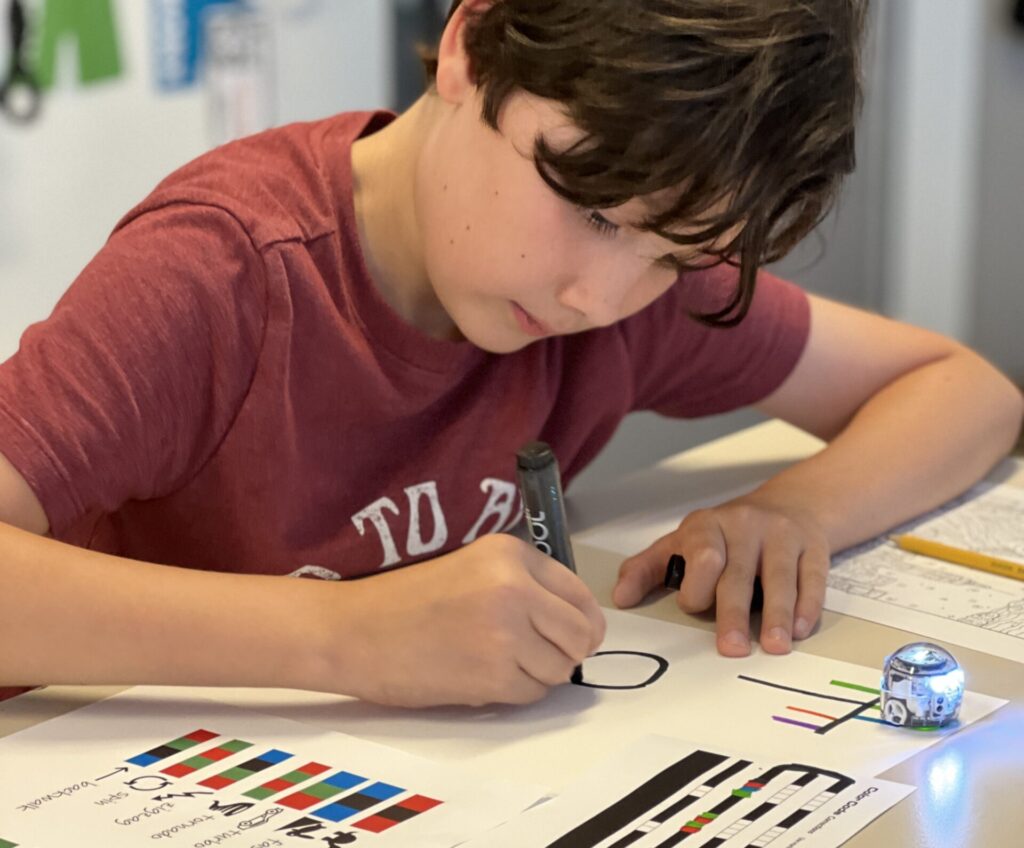
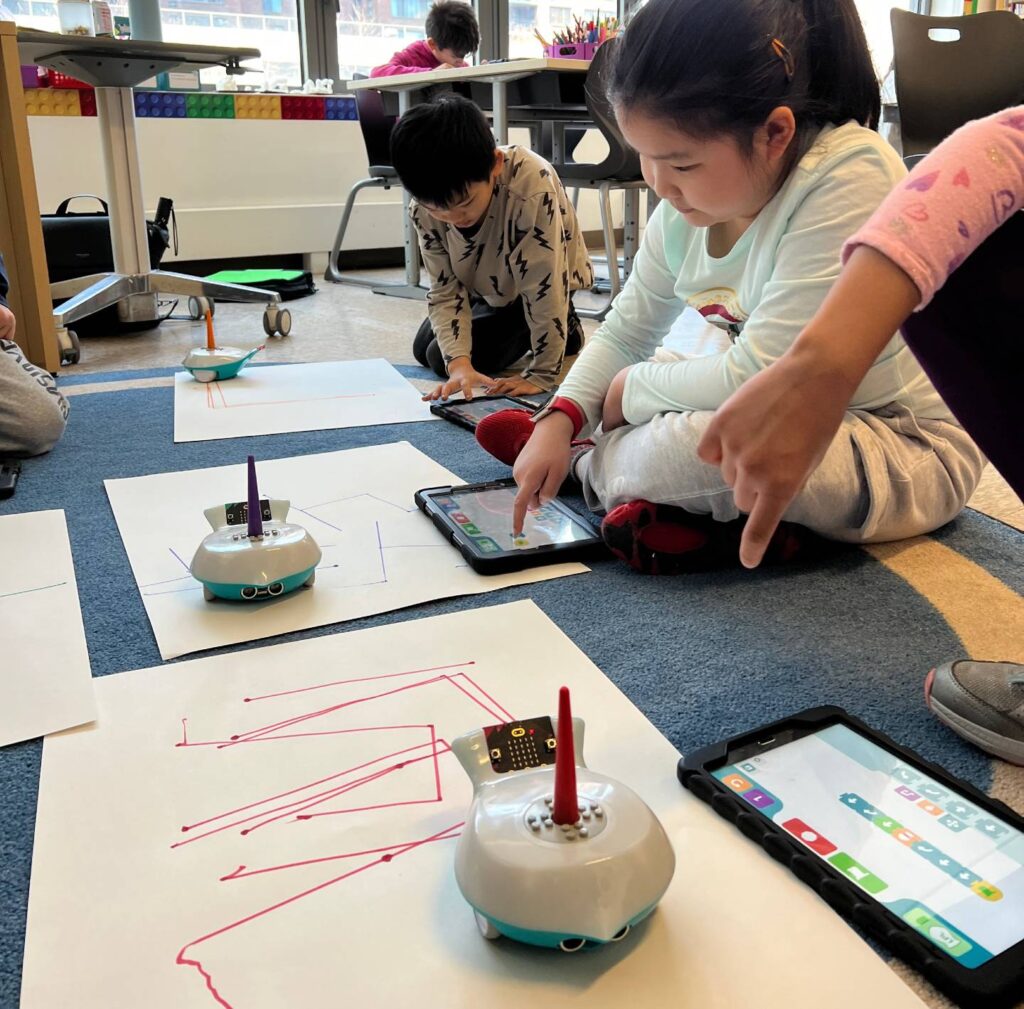
Meet the Robot: A playful, screen-free start to learn the basics of coding! These small, color-sensing robots follow lines and respond to sequences drawn with markers. 

Benefits of Ozobots: Students intuitively grasp concepts like sequencing, logic, and cause-and-effect through creative play for beginners. Ozobot’s complexity keeps older students engaged by using more intricate coding knowledge to create multifaceted behaviors and challenges. Learning feels like play, which is exactly our goal.  

Skills Gained: Sequencing, prediction, visual coding, debugging, and confidence.

coding ozobots

Finch Bots: Creative Coding That Connects (PreK–1)

Meet the Robot: Bluetooth-enabled bots that add movement, lights, and sensors with block-based coding languages like Blockly and Scratch.

Benefits of the Finch: The versatile robot! Highly adaptable and scalable for all ages, Finch robots make abstract coding concepts tangible and provide interdisciplinary connections, reinforcing concepts from music, art, and math. They can be programmed to make music or hold markers, and be used as a drawing tool to sketch shapes, trace patterns, or illustrate coded paths, like a custom maze.

Skills Gained: Sequencing, cause and effect, conditional statements, spatial awareness, and perseverance.  

LEGO SPIKE Kits: Engineering in Motion (Gr. 2–4)

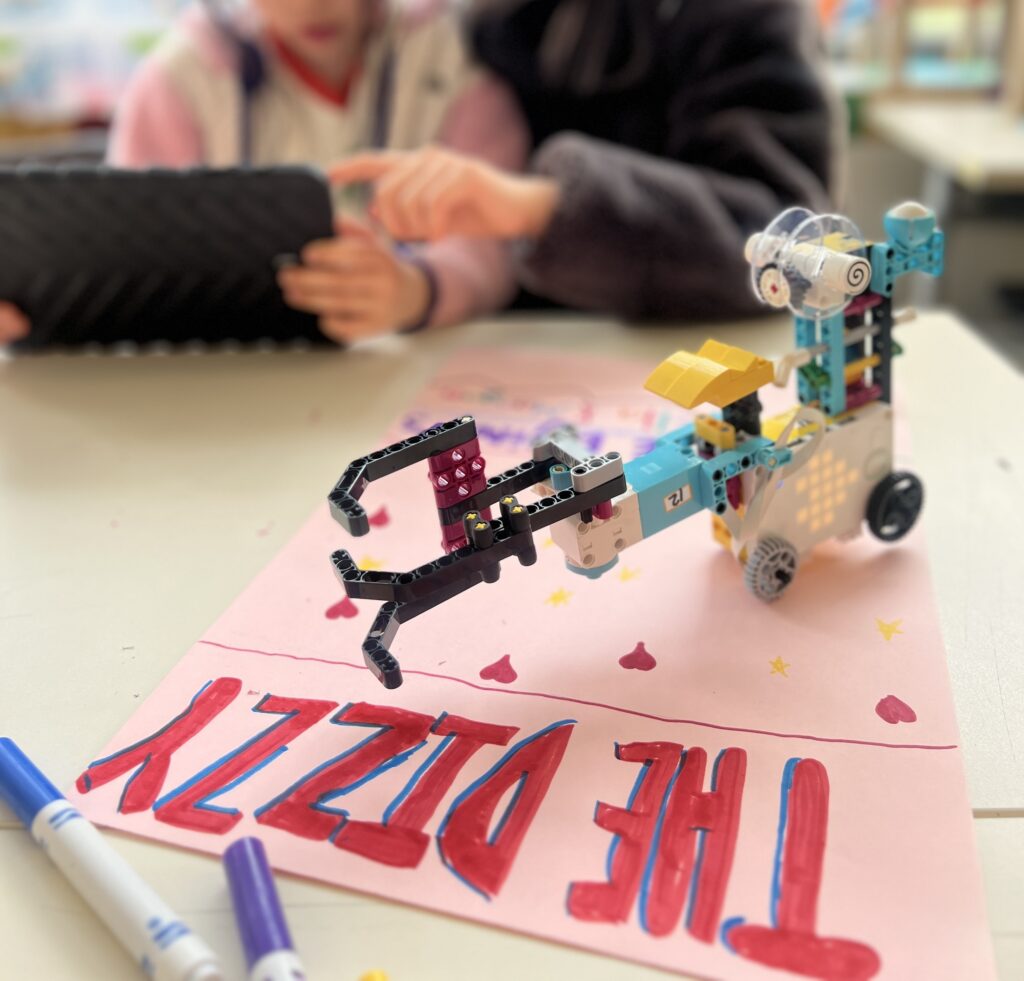
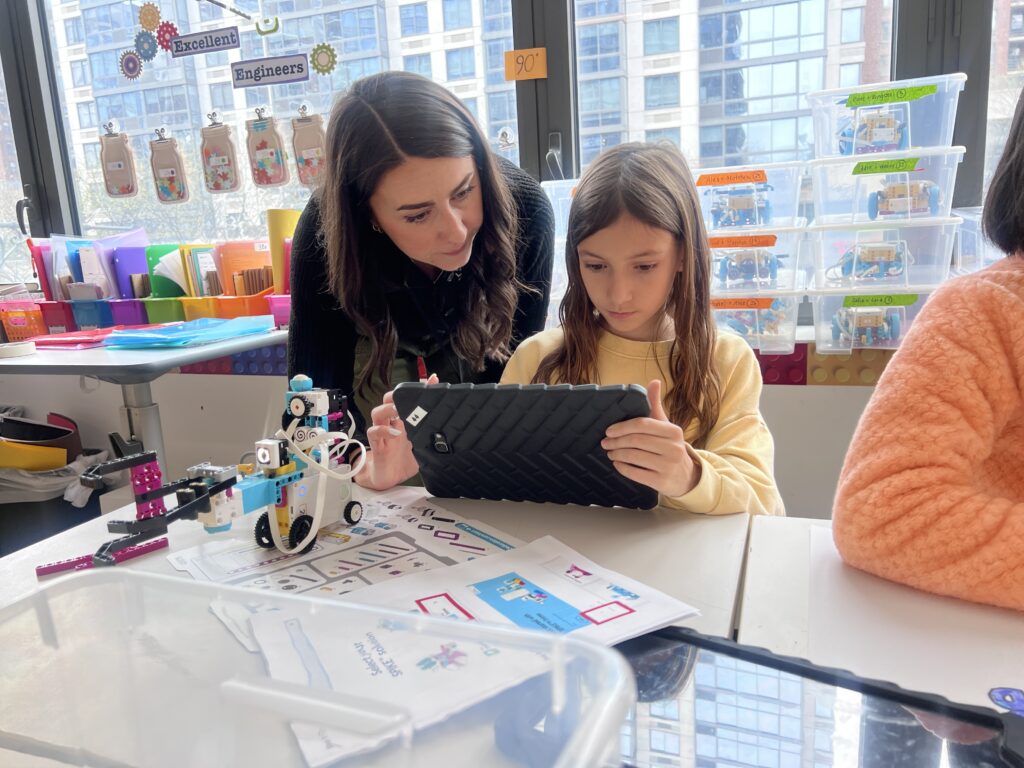
Meet the Robot: A kit of over 400 construction pieces with a programmable Hub that uses a Scratch-style interface to move the motors, sensors, and gears.

Benefits of LEGO SPIKE: Hands-on engineering challenges allow students to design, build, and bring their robots to life. They start with basic machines and move to more advanced projects like in biomedical engineering.

  • A Favorite Project: Grade 4 designing prosthetic hands, which mirror real-world devices, prompting them to think critically about how engineering can improve lives.

Skills Gained: Preparing students for advanced engineering electives, developing collaborative iteration skills, and strengthening their understanding of integrated systems and mechanical design.  

Coding the programmable hub to a mechanical claw.
Grade 4 students display their final LEGO robotic projects.
Students test their tri-motorcars in grade 3 engineering.
We’re thrilled to announce that our engineering program will extend into grade 5 starting in 2025-2026. This expansion will allow students to build on their understanding of engineering and robotics through exciting cross-curricular connections with science.

Ready to see innovation in action?

Our robotics program is just one example of how BASIS Independent Manhattan provides an enriching curriculum led by expert educators. We balance rigorous academics with fun, hands-on, and experiential learning that prepares our students to be inquisitive, solution-oriented, and collaborative problem solvers.  

Discover the difference of a BASIS Independent Manhattan education, where students are empowered to think critically, create fearlessly, and build the future.


We invite you to learn more about our Wildcat community at one of our upcoming admissions events. Interested in joining us for the 2025-2026 school year? Our rolling application cycle is now open — apply here!

APRIL OPEN HOUSES

Upper School
(Grades 6–12)

Saturday, April 26

10:00 AM

Lower School
(PreK–5)

Sunday, April 27

10:00 AM

REGISTER NOW

Filed Under: Academics, Lower School, Primary Program, STEM, Student Learning

Finding an Elementary School in NYC: The Checklist for Parents

March 6, 2025 by christineklayman Leave a Comment

Finding the right NYC private school is challenging, especially on the Upper West Side. With a myriad of options, it is no wonder parents seek guidance. To help you find the perfect Manhattan elementary school for your child, we have created a comprehensive checklist.

  • As a top independent school in Manhattan, we offer a challenging and enriching curriculum led by expert educators.
  • Our approach to lower school education equally emphasizes social-emotional learning, including critical thinking and problem-solving skills.
  • Our convenient UWS location provides a unique and supportive learning environment for families.

Review this checklist to see how BASIS Independent Manhattan checks all the boxes!

Teachers: Passion and Expertise

We believe in the power of expert-led instruction. Our students in grades 1-4 benefit from 50-minute classes in core subjects like math, science, English, and Social Studies/History, taught by passionate Subject Expert Teachers (SETs). These experts bring their deep knowledge to the classroom, igniting a love of learning. Complementing the SETs is our Learning Expert Teacher (LET), a dedicated educator who is the guiding force for students, providing personalized support and ensuring each child thrives. This unique model allows for both expert instruction and individualized attention, a hallmark of our world-acclaimed primary program.

An Advanced Curriculum with Essential Enrichment

Beyond the core subjects, our curriculum includes essential classes: engineering, Mandarin, visual arts, drama, and music, fostering well-rounded development. Our commitment to comprehensive liberal arts-focused education with STEM offerings ensures that students are challenged and engaged.

Social-Emotional Learning: Nurturing the Whole Child

We believe academic excellence goes hand-in-hand with social-emotional growth. Our PurposeFull People curriculum, powered by Character Strong, develops essential soft skills, executive functioning, and emotional regulation for students in PreK-Grade 5. Our dedicated Student Affairs team delivers these lessons, supports students, and guides parents throughout their child’s academic journey.

Active Learning and Play

We cater to the age and stage of children while providing them with what they need — physical activity and outdoor play. They have periods of study and focus, which are broken up by three 20-minute recesses during the school day. Our daily schedule also includes P.E., ensuring students have ample opportunities for play and movement. After-school clubs, ranging from soccer and tennis to arts and STEM, further promote active engagement.

Transparency and Community: A Different Approach

At BASIS Independent Manhattan, transparency and community are at our core. Unlike many NYC private schools, we do not engage in traditional fundraising. We believe in providing an exceptional education without the added pressure of constant requests. This empowers families to invest in our vibrant community in ways that are meaningful and aligned with their commitments, fostering a collaborative and supportive environment.

Get Parent Reviews

Nowadays, more and more families scour the internet for school recommendations to find the perfect fit. Sites like Niche.com use anonymous reviews and rankings to provide “the good, the bad, and the honest.”

Here are a few excerpts from recent BASIS Independent Manhattan reviews written by our current families:

  • “A great school which balances out an academic focus with play and creative time for the kids.”
  • “A hidden gem in NYC, that’s for sure.”
  • “A great choice for families seeking a rigorous academic program with amazing support.”
  • “Academics are second-to-none, teachers are caring and helpful, kids are challenged and happy.”
  • “I would recommend attending an info session. If it doesn’t seem right for your kid, you will know it. If it does, apply, you won’t regret it!”

Visit Our School

Experience BASIS Independent Manhattan firsthand. Meet our passionate teachers, interact with current students and parents, and learn more about our unique approach. Discover why we are among the best schools in Manhattan for grades PreK-5 and a leading choice for UWS families seeking exceptional education.


Open House (PreK – Grade 5)

Join us: Sunday, March 9, 10:00 AM Lower School – 795 Columbus Ave.

Register Now
BASIS Independent Manhattan, a private school offering PreK through Grade 12, is based in Manhattan, New York. Students thrive alongside Subject Expert Teachers as they engage in a liberal arts program with STEM offerings. 

Filed Under: Academics, Culture of Support, Lower School, Primary Program, Recess, School Community, STEM, Student Learning, Student Life

Virtual Campus Tour

February 12, 2025 by mallorykilbreath Leave a Comment

Since our campus is currently an active construction site, we are unable to offer campus tours until Fall 2025. In the meantime, let’s take a virtual tour of the brand-new campus opening in Fall 2025!

The Campus

BASIS Independent Bothell is nestled in the Canyon Park neighborhood in Bothell, WA. It is 123,000 sq. ft. on 6.2 acres to fit all of our Kindergarten – Grade 12 families. This acreage includes a full-sized competition regulation playfield, outdoor sport court, and a brand-new playground!

The Gym

The gymnasium will be fully equipped and will hold up to 600 guests! We expect to host many sporting and large school events in this space.

The Theater

The brand-new theater is a great space for students to express their creativity and put on many different types of performances for an audience.

The Classrooms

Our campus will be equipped with dedicated state-of-the-art laboratories for Biology, Chemistry, and Physics, designed for grades 6—12 students. Other classroom types not pictured here will also be brand new and intentionally designed for student and faculty collaboration. 

The Common Areas

While our athletic and outdoor play facilities allow students to move their bodies and burn energy, our common areas provide a safe environment for students to read a book, work on their studies, and collaborate with their peers. 

The Fields

This amazing space will allow for multiple sports to be taking place at the same time, further driving that ability to host and hold many different sporting events. Additionally, it makes for a great space for students to burn off some energy! 

The Playground

The play area will be a great way for our younger grades to enjoy getting outdoors. It’s a very large area that contains three main zones with active spaces in between as well as a track that can be utilized for Movement and PE classes and recess fun.

Thank you for taking this tour with us! To submit an application for Fall 2025, click here.

Filed Under: Academics, Admissions, Clubs & Activities, Extracurriculars, Facilities, Outdoor, Recess, Student Life

A Day in the Life of a BASIS Independent Manhattan Kindergartener: Where Learning is Playful and Purposeful

January 30, 2025 by editor Leave a Comment

Picture a day filled with laughter, learning, and boundless curiosity. That is a typical day in the life of a kindergartener at BASIS Independent Manhattan. With our small class sizes, outstanding teacher-student ratio, and world-inspired curriculum, we believe in nurturing the whole child through joyful teaching, social-emotional learning, and support for students to achieve their highest potential.

Let us peek into a typical day and find out more about what it is like to be a BASIS Independent Manhattan kindergartner. 

A Schedule Built for Success

Our thoughtfully designed daily schedule ensures a balanced blend of academics, social-emotional learning, and physical activity.

8:00 a.m. Morning Meeting

The day begins with community time in Morning Meeting, where routines like discussing the date, weather, and daily schedule set the tone for learning. Then, kindergarteners dive into a focused math block. On any given day they could cover lessons like adding two numbers, subtracting zero, and subtracting a number from itself. They also use tactile activities to learn how to tell time, skip count, measure, or understand the value of coins.

What are Dojo points?
Dojo is…

a positive behavior reinforcement system that motivates students to earn points for rewards such as a class party, extra recess, or prizes.

Dojo is…

Our Early Learning Expert Teachers (LET) implement differentiation by splitting the class into two groups based on level to provide support and advancement. For example, those eager learners ready for a higher-level concept take on the “Top Ten” grade 1 level problems that prepare them for the next academic year. These activities not only reinforce learning but also motivate students with opportunities to earn Dojo points.

Recess (15 mins)

Now it is time to get outside and get moving! Students head to our spacious outdoor terrace where they have active playtime (developing essential gross motor skills), while also navigating social dynamics (learning the importance of cooperation, sharing, and conflict resolution). After expending the necessary energy, they are ready to return to academics.

9:25 AM – Mandarin and Essentials

Mandarin lessons come alive through singing, storytelling, and hands-on crafts, that immerse students in the vibrant Chinese culture. They actively engage both sides of their brains through visual and creative activities, helping them think critically and connect ideas across different subjects.

The arts are just as important as academics, and students benefit from a daily rotation of our Essentials classes, which include drama, music, visual arts, and engineering. Our unique two-teacher model allows students to dive deep into these subjects with our Subject Expert Teachers (SETs), who have specialized degrees in their respective fields.

10:25 AM – Literacy

Kindergarteners explore storytelling and start writing! A special “Writing Boot Camp” has our budding authors tackling missions to earn star badges. They brainstorm imaginative story ideas, plan narratives, create sentences, and identify nouns and verbs.

Students take on exciting writing adventures, crawl through obstacle courses, go on sentence-fixing hunts, and don ‘writer’s helmets’ for inspiration. By the end of an exhilarating week of boot camp, students have reviewed sentence writing fundamentals and can proudly craft a personal narrative’s beginnings.

11:30 AM – Lunch and Recess

Lunch is a time for social connections, whether students bring meals from home or enjoy healthy options from our partner, Butter Beans. Then, more outdoor play!

12:25 PM – Phonics & Centers

At BASIS Independent Manhattan, we use the Logic of English and Heggerty programs to help students master phonics, surpass reading benchmarks, and build confidence in reading, writing, and spelling. Each day, a “Heggerty Hero” leads a fun warm-up to practice phonemic awareness, with one standout student earning the coveted Hedgie the hedgehog as a reward.

1:30 PM – Physical Education

Having daily P.E. classes means more than just exercise. Here, coaches instill valuable life skills like teamwork, sportsmanship, and following instructions while fostering a love of movement and healthy habits.

Recess (15 mins)

Another chance to recharge with fresh air and free play!

2:30 PM – Civics, History & Science Foundation

These blocks cover everything from space, oceans, and continents, to world discovery and history. Lessons often follow student interests, keeping curiosity at the heart of learning.

One final period allows for activities or crafts. Each Friday, a parent/guardian surprises the class with a read-aloud session in a Mystery Reader series, fostering family involvement in the classroom and a love for reading!

Cross-Curricular Learning in Action

In one interdisciplinary project, kindergarten became ‘Detectives in Training’ seamlessly combining math and literacy to solve a mystery. Using the 5 Ws (Who, What, When, Where, Why), they analyzed clues, solved math challenges, and honed literacy skills like making inferences. This activity exemplifies how our curriculum fosters critical thinking and demonstrates the interconnectedness of different subjects.

Learning Through Play: A Holistic Approach

At BASIS Independent Manhattan, learning is joyful and engaging. Our curriculum is designed to foster a love of learning while nurturing the whole child. By blending advanced academics, social-emotional learning, and creative exploration, our kindergartners develop a strong foundation for future success.

What Our Parents Are Saying

  • Since joining the Early Learning Program, I’ve noticed significant growth in my child’s academic and social skills.
    Tiffany J.
  • When our daughter came to BASIS Independent Manhattan, she did not know English. She is now in her second year here and she has learned to speak English very well. We have been so impressed to see her master the alphabet and begin reading.
    Ekaterina M.
  • We feel that the STEM approach BASIS Independent Schools takes at such an early stage has given our little one a slight edge/a head start as he begins elementary school!
    Ameya B.
0
1
2

These are just a few examples of the positive impact our Early Learning Program has on our young learners. We are proud to provide a nurturing and stimulating environment where every child can thrive.

Ready to discover the BASIS Independent Manhattan difference?

Schedule a visit today and experience the excitement firsthand.

Visit Our School

Filed Under: Academics, Culture of Support, Early Learning Program, Lower School, Mandarin, Math, Recess, STEM, Student Learning

  • « Go to Previous Page
  • Page 1
  • Interim pages omitted …
  • Page 5
  • Page 6
  • Page 7
  • Page 8
  • Page 9
  • Page 10
  • Go to Next Page »

© BASIS Independent Schools

  • Contact Us
  • Media Recognition
  • Careers
  • Privacy Policy
  • CA Privacy
  • Terms of Use

Headquartered in Campbell, California, Spring Education Group is majority-owned by investment funds administered by Primavera Holdings Limited, an investment firm owned by Chinese persons and principally based in Hong Kong with operations in the United States, China and Singapore.

Sitemap